Table of Contents
Bathrooms are one of the hardest rooms to style with plants — not because they lack space, but because they combine everything many houseplants struggle with: steam, shade, and inconsistent lighting.
And if you have a curious cat, the challenge doubles instantly.
1. Boston Fern (Nephrolepis exaltata)
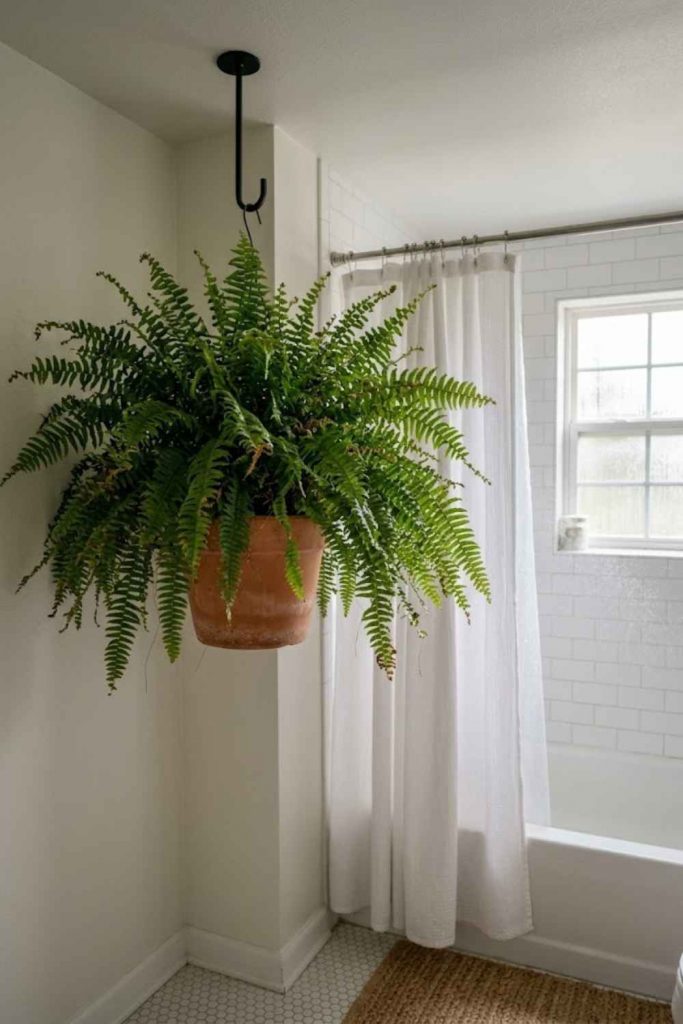
This lush fern thrives in the humidity of a shower zone. While Boston ferns often struggle in dry living rooms, a steamy bathroom can help keep the fronds softer and fuller.
Cats love batting at the bouncy foliage, but the plant itself is completely non-toxic. A hanging basket helps protect the fronds from playful paws while adding softness to empty bathroom corners.
2. Calathea Freddie (Calathea concinna)
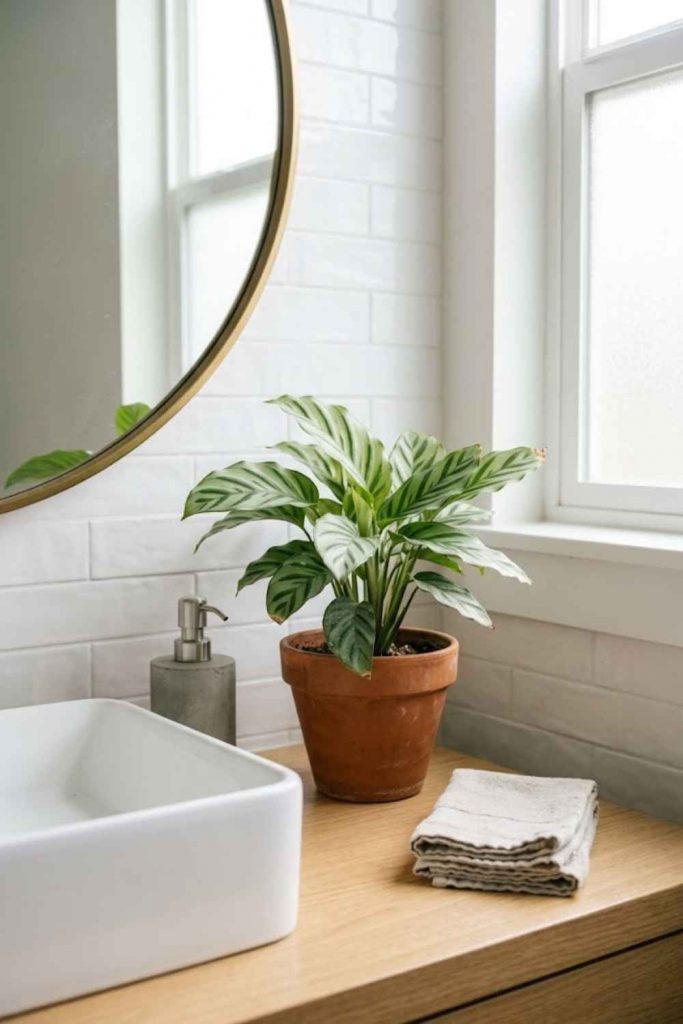
With its striped leaves and compact shape, this plant adds a high-contrast look against white tile and neutral bathrooms. The extra humidity from showers also helps prevent the crispy brown edges calatheas often develop in drier rooms.
It handles lower indirect light well and stays fairly compact, making it a good fit for sink counters or tub ledges. Most cats also tend to ignore the broad leaves.
Not all bathroom plants are decorative. Some are structural.
3. Spider Plant (Chlorophytum comosum)
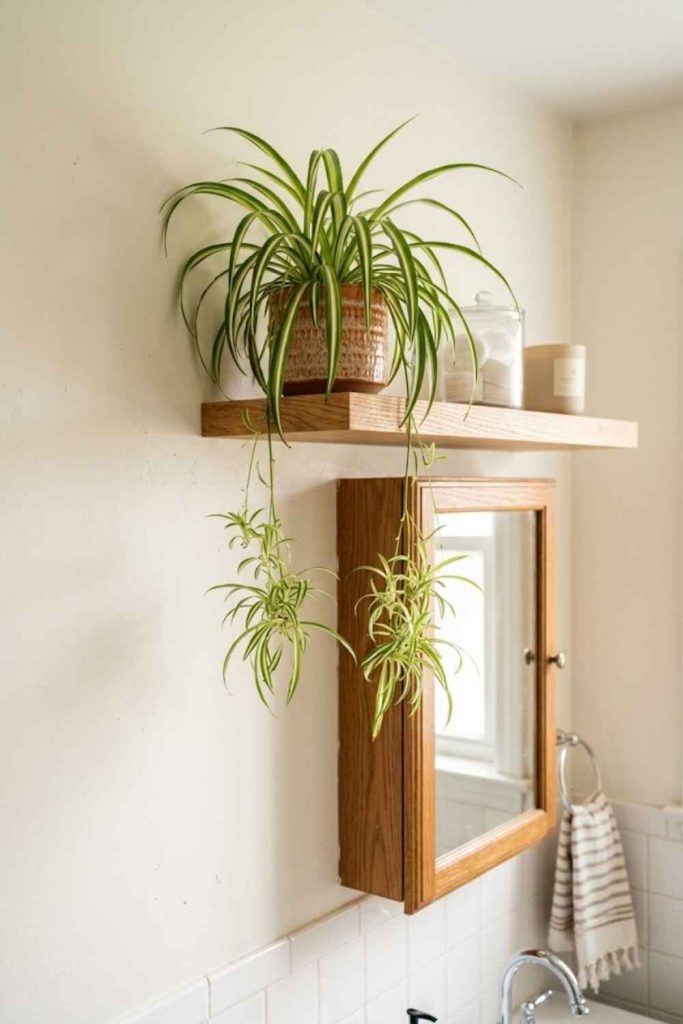
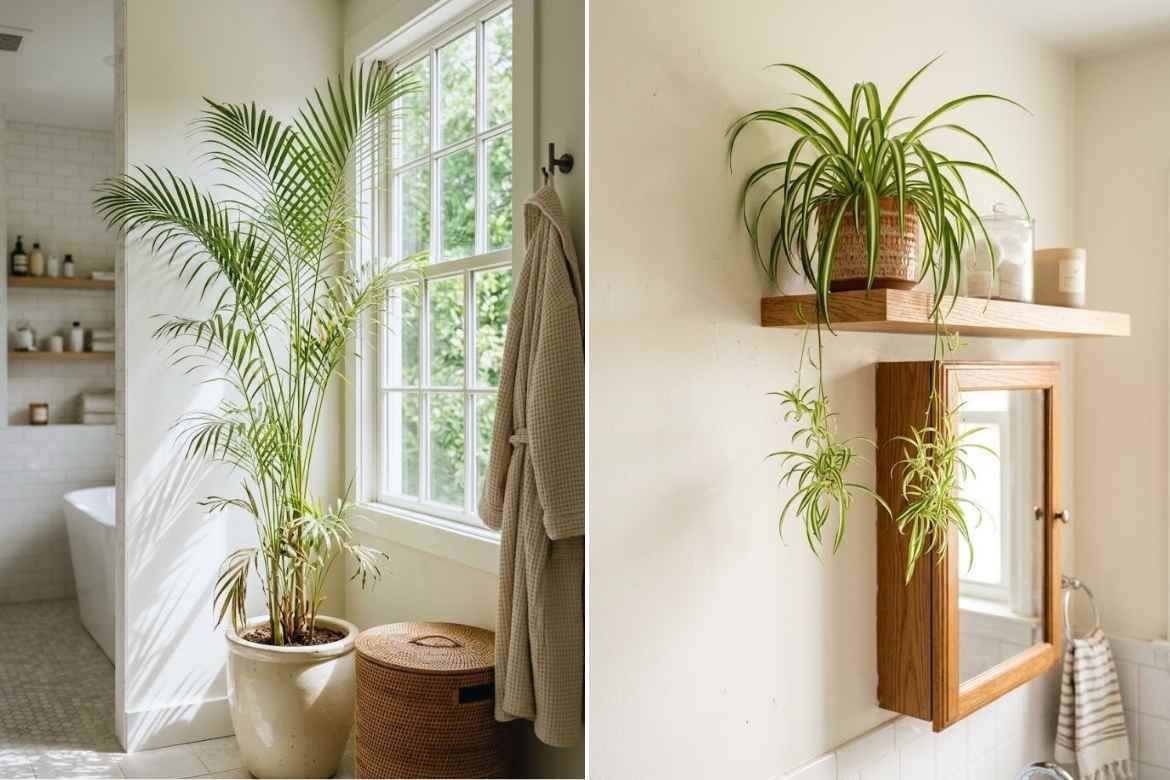
Spider plants are one of the easiest ways to soften the hard lines of mirrors, medicine cabinets, and shower rods. The arching leaves and dangling plantlets add movement without taking up valuable counter space.
This is also the plant most likely to end up in your cat’s mouth — and recover from it surprisingly well.
Spider plants contain mild compounds that many cats seem unusually attracted to, especially the dangling babies. Hanging the basket securely and out of jumping range usually works best.
4. Staghorn Fern (Platycerium bifurcatum)
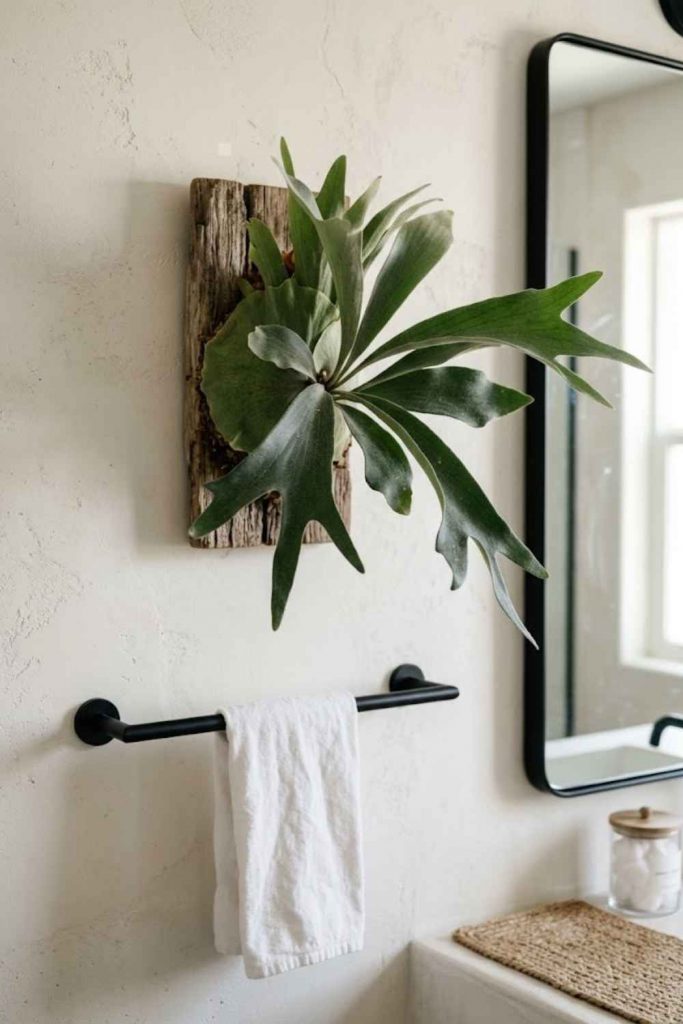
This plant barely looks like a traditional houseplant at all. It grows mounted on wood boards or moss bases, creating a sculptural wall display that works especially well in smaller bathrooms.
Because it absorbs moisture from humid air, it adapts naturally to steamy environments. The velvety antler-shaped fronds are completely pet-safe and tend to be less tempting for cats than softer trailing plants.
5. Cast Iron Plant (Aspidistra elatior)
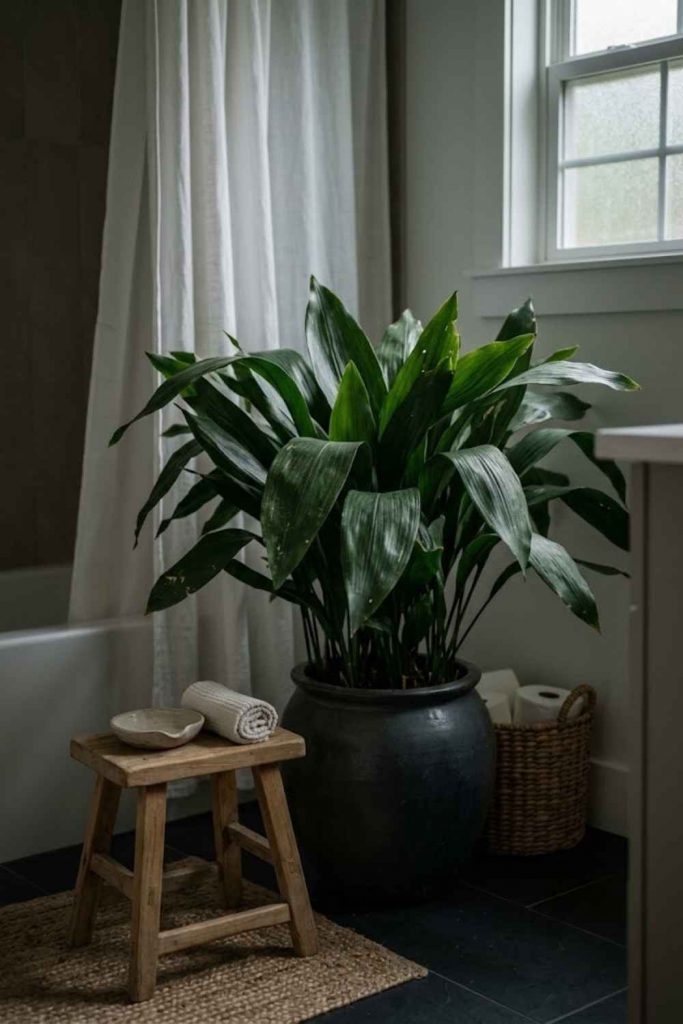
For dim powder rooms or bathrooms with very limited natural light, few plants are more reliable than the Cast Iron Plant. It tolerates fluctuating temperatures, dry spells, and lower light far better than most tropical houseplants.
The upright, paddle-shaped leaves also add visual weight to empty floor corners without feeling overly busy.
Greenery should fit your layout, not your schedule.
6. Baby Rubber Plant (Peperomia obtusifolia)
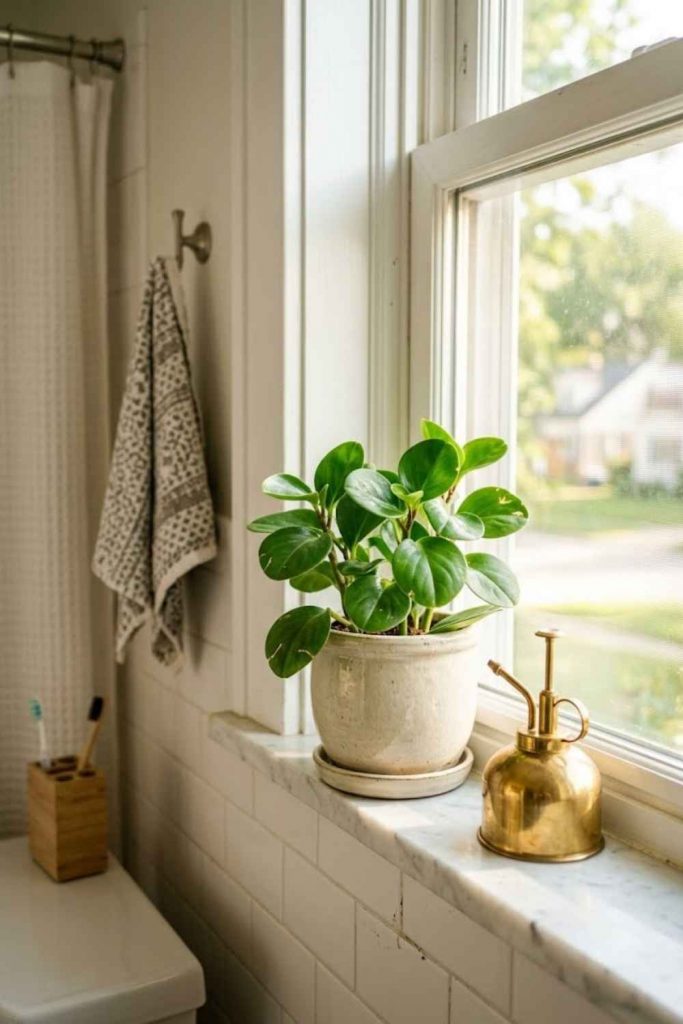
This compact plant features thick, glossy leaves that reflect bathroom light beautifully. It enjoys warm, humid air but stores water efficiently enough that it does not need constant attention.
Because it stays relatively small, it works well on narrow windowsills, floating shelves, or beside a sink where larger plants would feel crowded. Cats also tend to ignore its upright shape and thicker leaves.
7. Areca Palm (Dypsis lutescens)
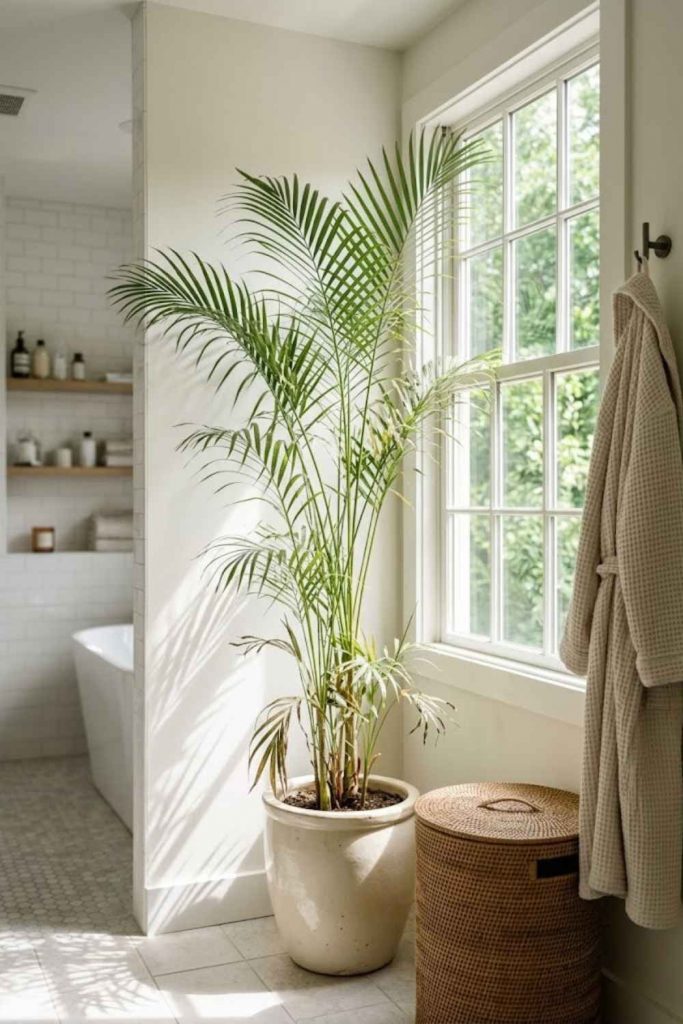
If your bathroom gets brighter natural light, an Areca Palm adds dramatic height without introducing toxicity concerns. The feathery fronds soften hard tile and help larger bathrooms feel more relaxed and layered.
Styling Note: The moving fronds can easily attract playful kittens. A heavier ceramic planter helps stabilize the plant and prevents tipping in tighter spaces.
Conclusion
Your bathroom cheat sheet:
- No windows? Try the reliable Cast Iron Plant.
- Need a hanging plant? Boston Fern and Spider Plant both thrive in humidity.
- Tight counters or narrow ledges? Compact Calatheas and Peperomias fit easily without overcrowding the room.