Table of Contents
Hanging plants can make a room feel softer and more layered, but pet owners often run into the same problem: many popular trailing plants are toxic to cats. And while hanging baskets help, most cats are still curious enough to investigate anything dangling within reach.
That is why pet-safe hanging plants matter — they let you keep the cascading greenery look without constant worry. The best options combine non-toxic foliage with enough durability to handle real everyday life with cats, from occasional chewing to curious paw swats.
1. Boston Fern (Nephrolepis exaltata)
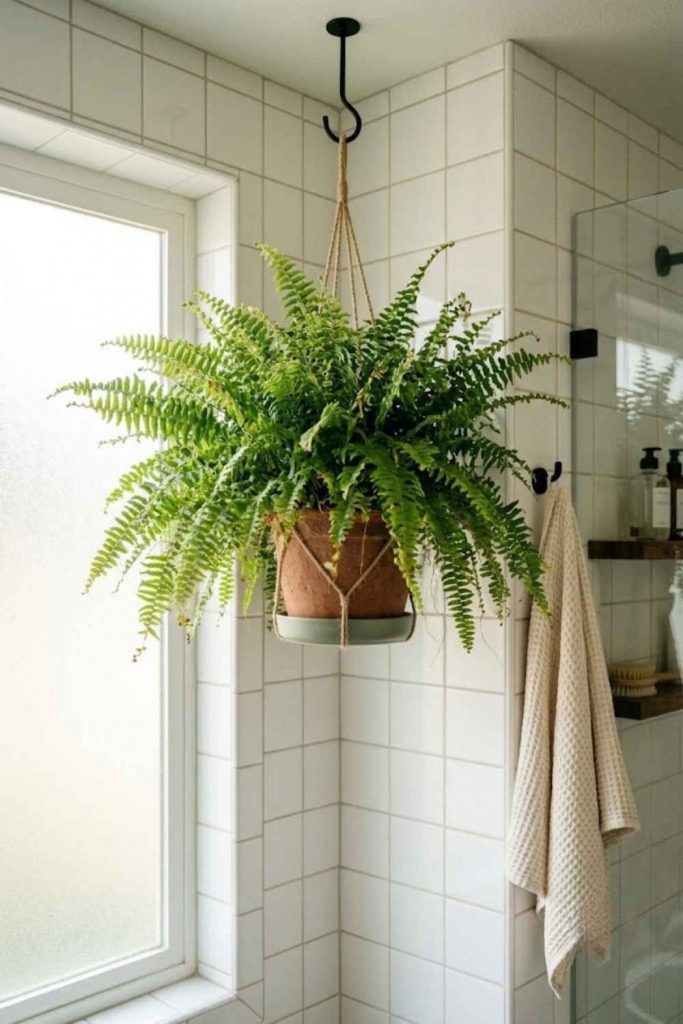
Boston ferns bring instant softness to bathrooms, empty corners, and bright windows. The full, feathery fronds naturally add movement and help hard surfaces feel less stark.
Unlike many houseplants that struggle in humid spaces, Boston ferns actually appreciate moisture in the air, which is why they tend to do especially well in bathrooms with regular shower steam.
Because the plant is non-toxic to cats, it is less stressful if a few fronds end up within reach occasionally.
Styling note: Hanging the basket slightly deeper into a corner usually helps keep the main root ball away from jumping cats.
2. Spider Plant (Chlorophytum comosum)
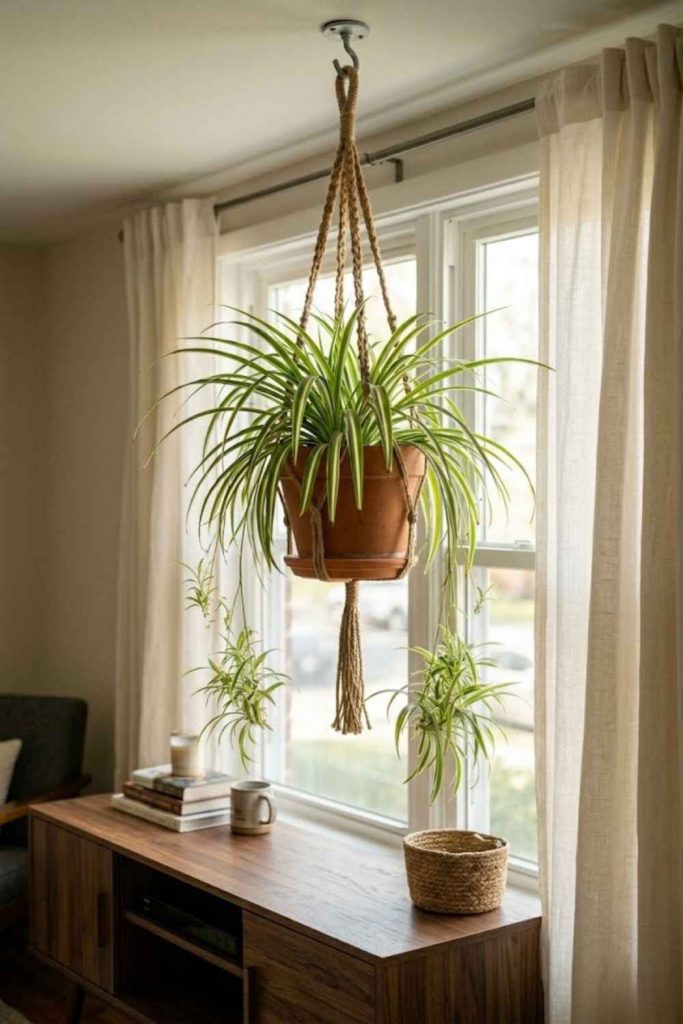
Many cats seem unusually fascinated by spider plants, especially the dangling baby offshoots that develop over time. Fortunately, the plant itself is considered non-toxic.
Spider plants are also tougher than they look. Even if a few leaves get bent or chewed, mature plants usually recover quickly and continue producing fresh growth.
The arching shape works especially well in smaller apartments where you want greenery without visually heavy foliage.
Good to know: Ceiling-mounted baskets generally work better than open shelves if your cat likes batting at hanging leaves.
3. String of Turtles (Peperomia prostrata)
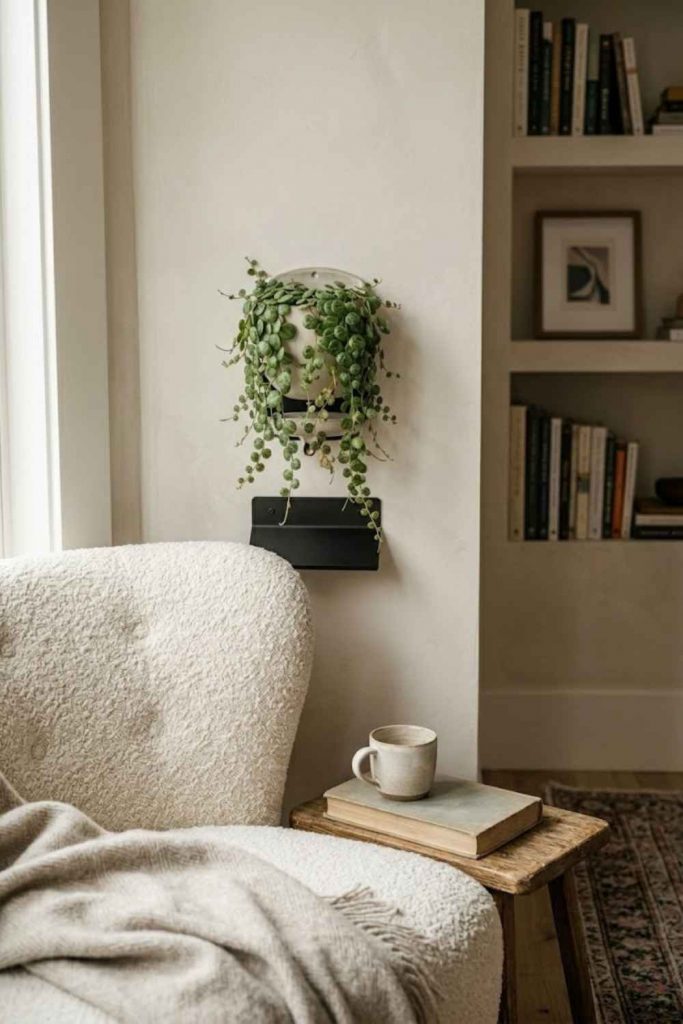
String of turtles offers a completely different look from traditional trailing houseplants. The tiny round leaves are patterned like miniature turtle shells, creating a more detailed, textured appearance that feels subtle rather than overgrown.
Because the vines stay relatively lightweight and compact, the plant works well in smaller hanging planters or narrow wall spaces.
It also tends to be less tempting to cats than grassy or fast-moving foliage.
Greenery should make a room feel easier to live in — not create constant anxiety about broken pots or toxic leaves.
4. Lipstick Plant (Aeschynanthus radicans)
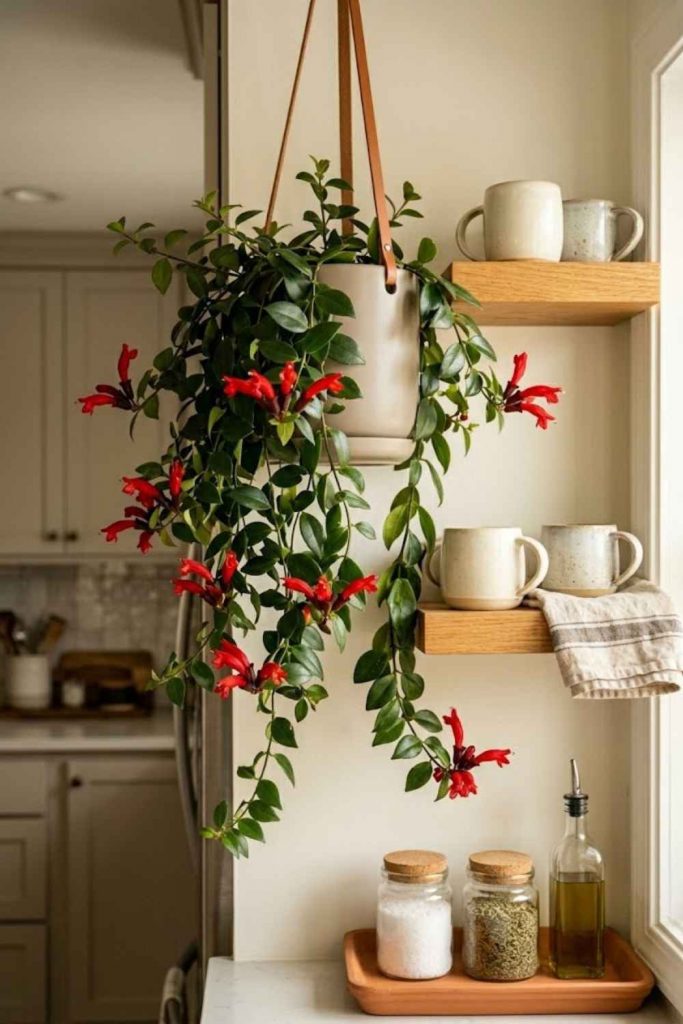
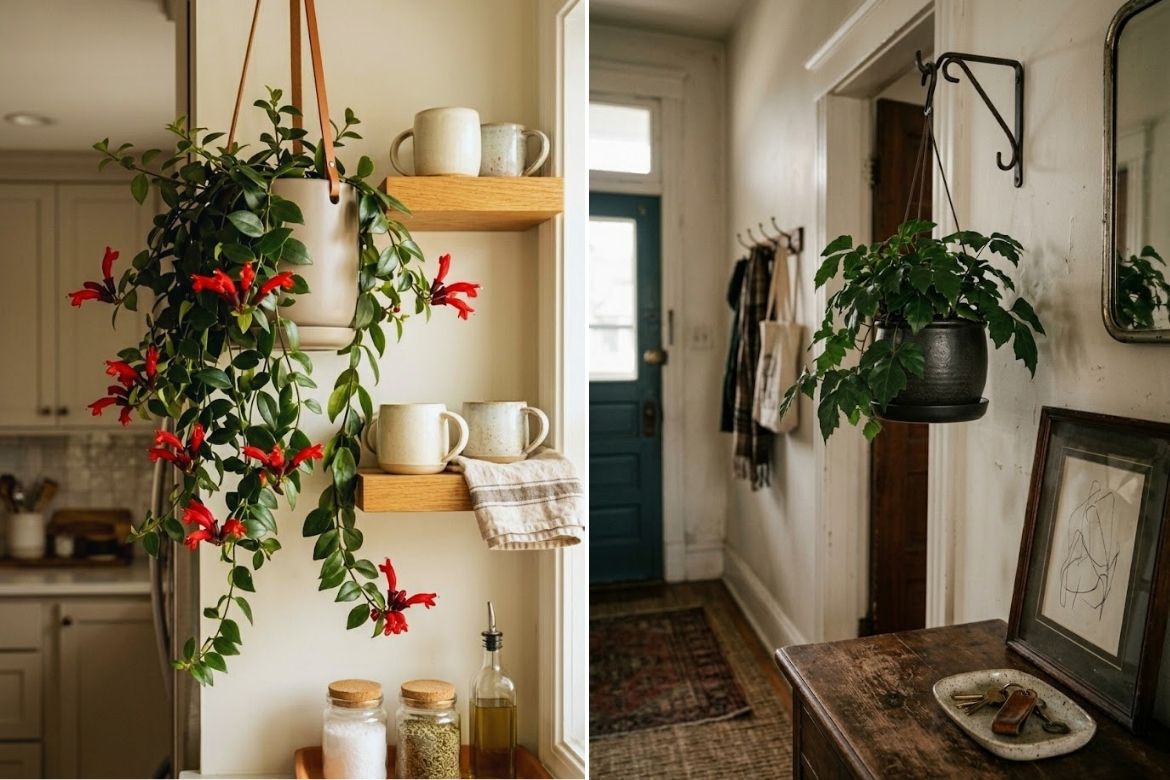
Lipstick plants add something many pet-safe hanging plants lack: color. The trailing vines produce deep red tubular flowers that stand out beautifully against the darker foliage.
The plant also handles normal household wear surprisingly well. The stems are more flexible than delicate trailing succulents, so occasional brushing or movement usually causes less damage.
It grows best with bright indirect light and looks especially good in hanging ceramic planters or near warm-toned walls.
5. Swedish Ivy (Plectranthus verticillatus)
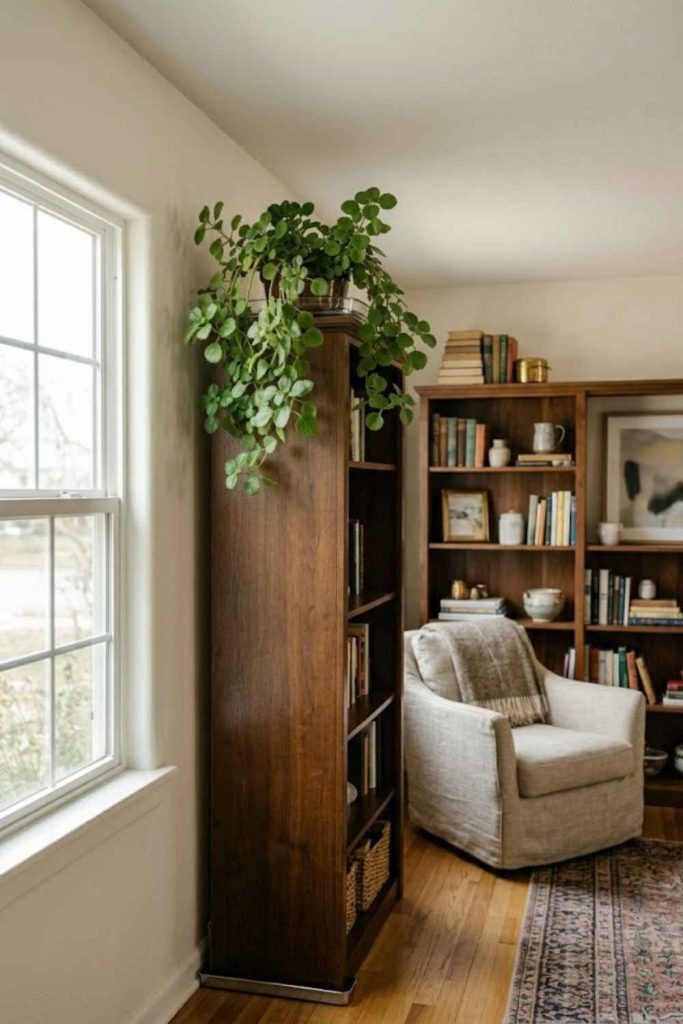
If you like the full, cascading look of English ivy but want something safer for pets, Swedish ivy is one of the easiest alternatives.
The rounded leaves grow quickly and spill naturally over shelves and hanging baskets, helping rooms feel softer without needing constant maintenance.
It also adapts well to average indoor humidity and medium indirect light, which makes it one of the more forgiving plants on this list.
6. Grape Ivy (Cissus rhombifolia)
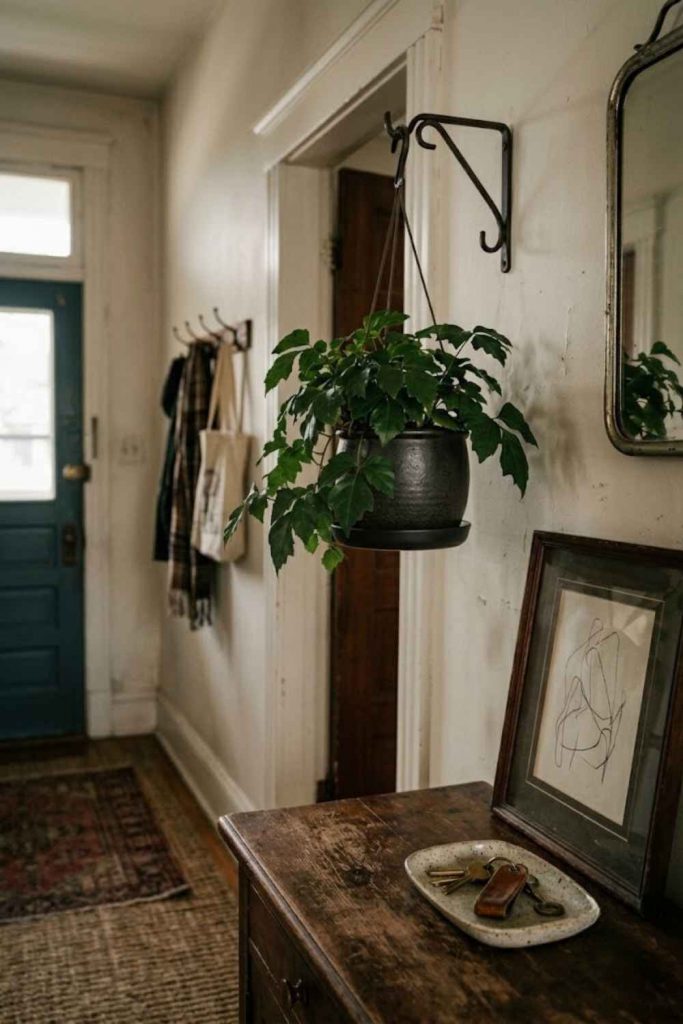
Grape ivy has a slightly moodier, more textured look than many common trailing plants. The deep green leaves feel a bit more relaxed and understated, especially in vintage-inspired or darker interiors.
It also handles cooler rooms and occasional drafts better than many tropical vines, making it useful for entryways, hallways, or older apartments.
The slightly leathery leaves are often less appealing to curious cats as well.
7. Wax Plant (Hoya carnosa)
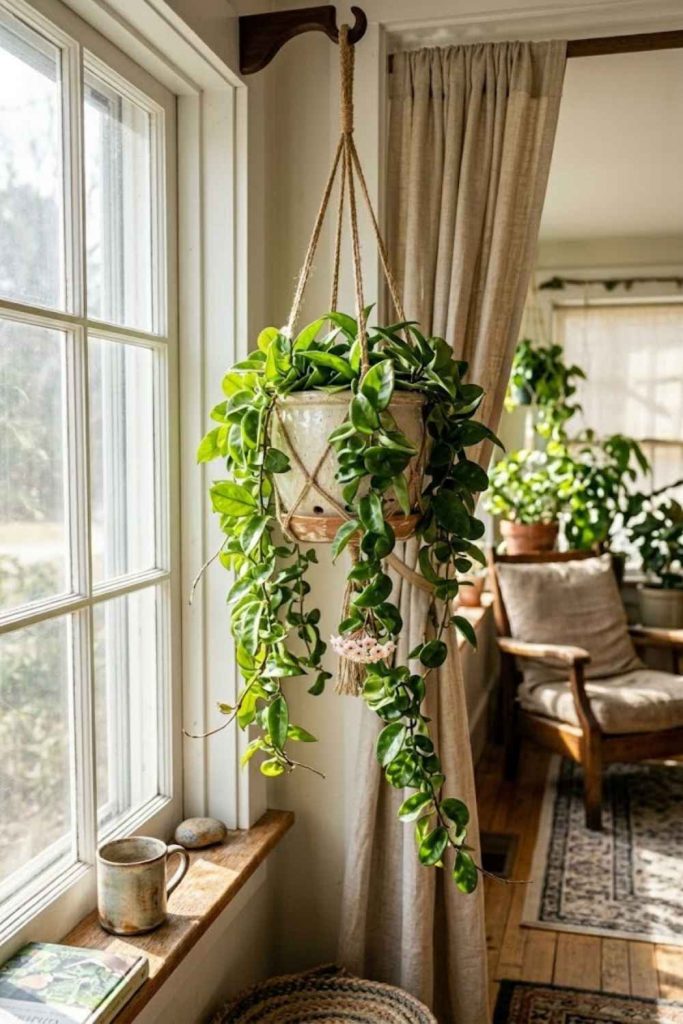
Wax plants, also known as hoyas, are popular for their thick trailing vines and glossy leaves that almost look sculpted.
Because the foliage stores water, hoyas are generally more forgiving if you occasionally forget to water them. That makes them especially appealing for busy households or frequent travelers.
With enough bright light, mature plants may eventually produce clusters of fragrant, star-shaped flowers.
Bloom tip: Hoyas usually flower more reliably when placed close to a bright window with a few hours of direct sun.
A Few Things to Keep in Mind
Even pet-safe plants are usually happier when curious cats cannot constantly tug, chew, or dig at them. Hanging baskets, taller shelves, and heavier planters often make everyday plant care much easier in pet households.
It also helps to remember that “non-toxic” does not necessarily mean pets should eat the plants regularly. While these varieties are considered safe for cats, chewing large amounts of foliage can still upset a sensitive stomach.
The best hanging plants for cat homes are usually the ones that feel easy to live with long term — both for you and for your pets.
FAQs
My cat chewed part of the plant. Will it grow back?
Most trailing houseplants recover well from light pruning or occasional damaged vines, especially during active growing seasons.
How do I water hanging baskets without dripping everywhere?
Many people keep the plant in its plastic nursery pot and remove it for watering in the sink before placing it back into the decorative hanging planter.
What kind of hook should I use for heavier hanging plants?
For larger baskets, ceiling hooks anchored into a stud or joist are usually much safer than adhesive hooks or small nails.