Table of Contents
A dog-friendly home has motion built into it. A tail sweeping the coffee table. A toy sliding across the floor. A happy sprint past the entryway with leashes swinging.
So when you bring home plants, you want options that are considered safe for dogs, plus realistic placement that won’t end in spilled soil or snapped leaves.
This is a short, dog-specific shortlist of dog friendly house plants you can choose from without doing a deep toxicity deep-dive, framed for real living spaces where dogs roam.
Tail-proof giants for dog zones (big, sturdy, better on stands and behind barriers)
Tail-proof giants are the plants that can live in dog zones without constant worry. Think heavier pots, sturdier silhouettes, and placement that’s slightly back from the main traffic lane.
#1 — Money Tree (Pachira aquatica)

Money tree gives you that clean, upright look, especially in a heavy pot beside a media console or behind a side table barrier. The braided trunk reads sturdy and structured.
It’s often referenced as dog-safe, which is why it shows up so often in pet homes. Give it bright, indirect light and water when the top couple inches feel dry. A heavier outer pot helps keep it from tipping if a tail clips it.
#2 — Areca Palm (Dypsis lutescens)
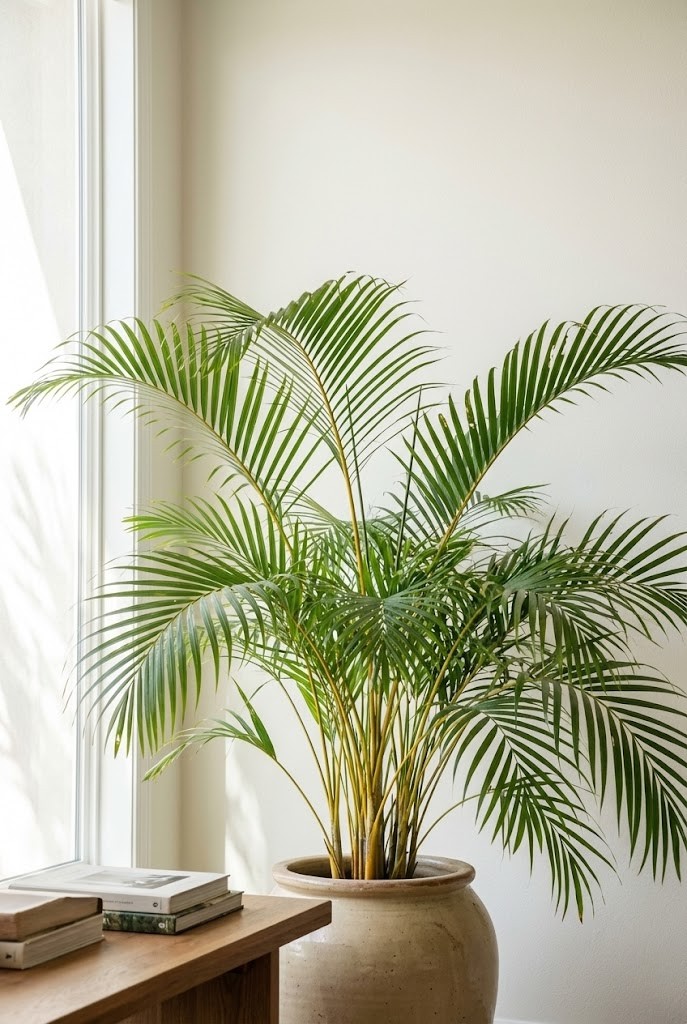
Areca palm is the soft, feathery one that makes a room feel finished. It looks great in a bright corner near the sofa zone, especially when the fronds can spread without being in the main walkway.
It’s commonly considered low-risk for dogs. Keep it in filtered window light and water when the top inch feels dry so it stays full and lush.
#3 — Kentia Palm (Howea forsteriana)
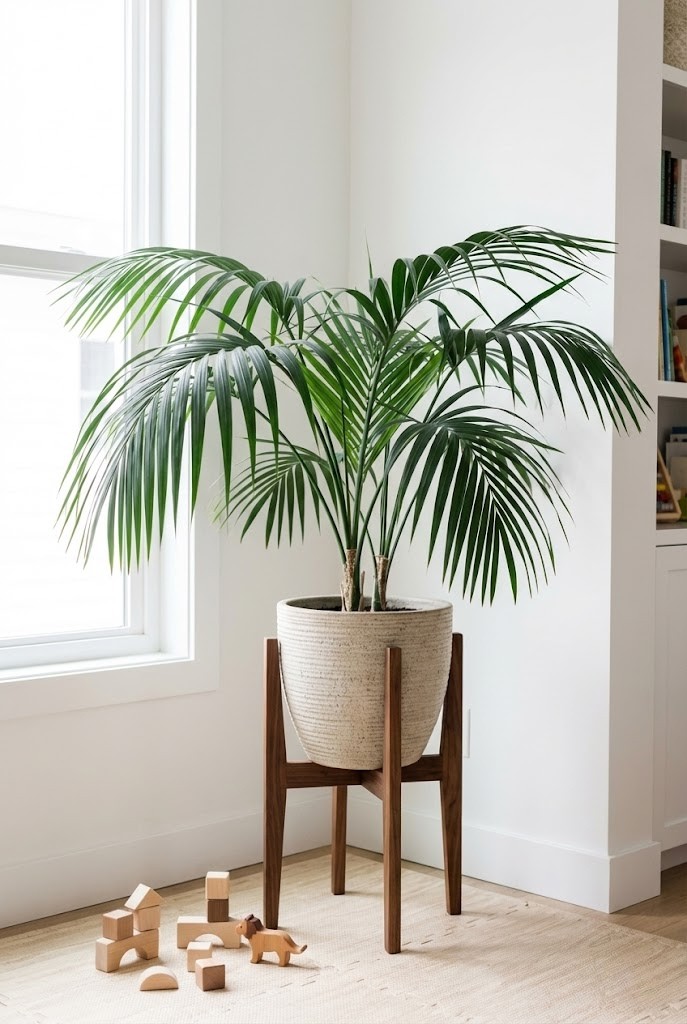
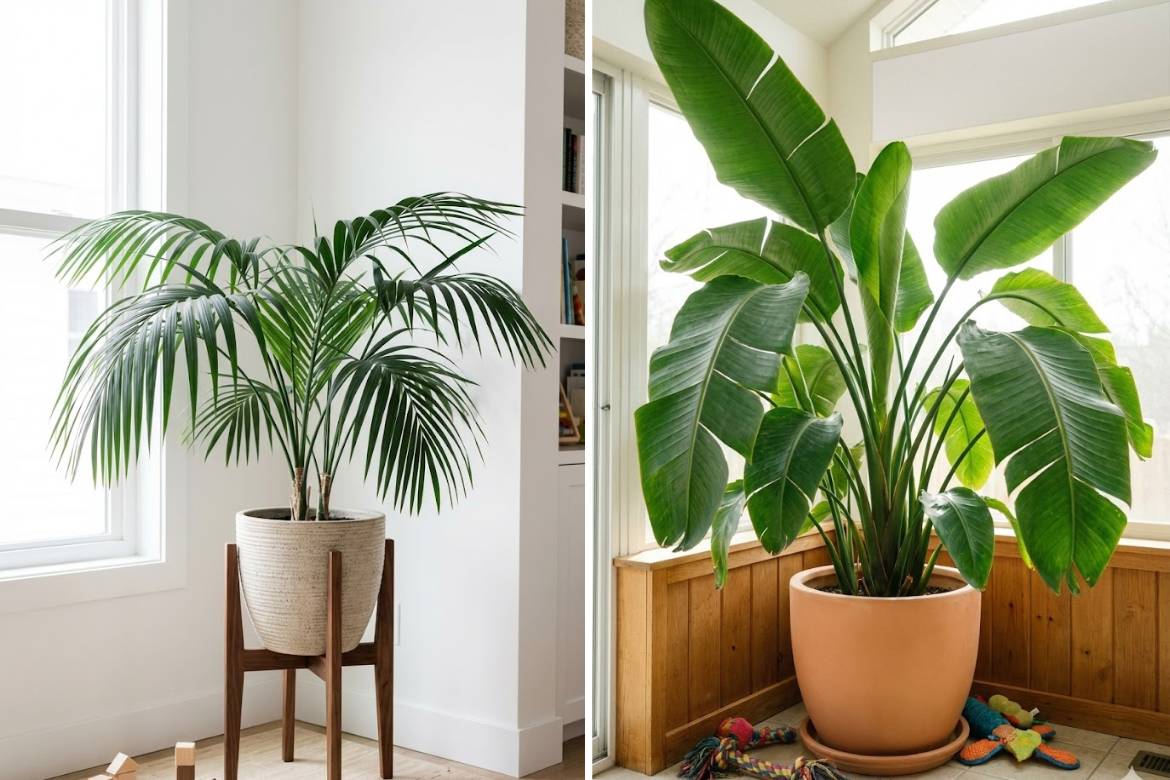
Kentia palm feels like a grown-up statement plant. Long, arching fronds look elegant in a living room corner, and the overall structure tends to hold up better in bigger spaces.
It’s widely cited as dog-safe. Kentia prefers bright, indirect light and a steady watering rhythm, not soggy and not bone dry. Place it slightly back from the main dog path so fronds aren’t constantly tail-whipped.
#4 — Ponytail Palm (Beaucarnea recurvata)
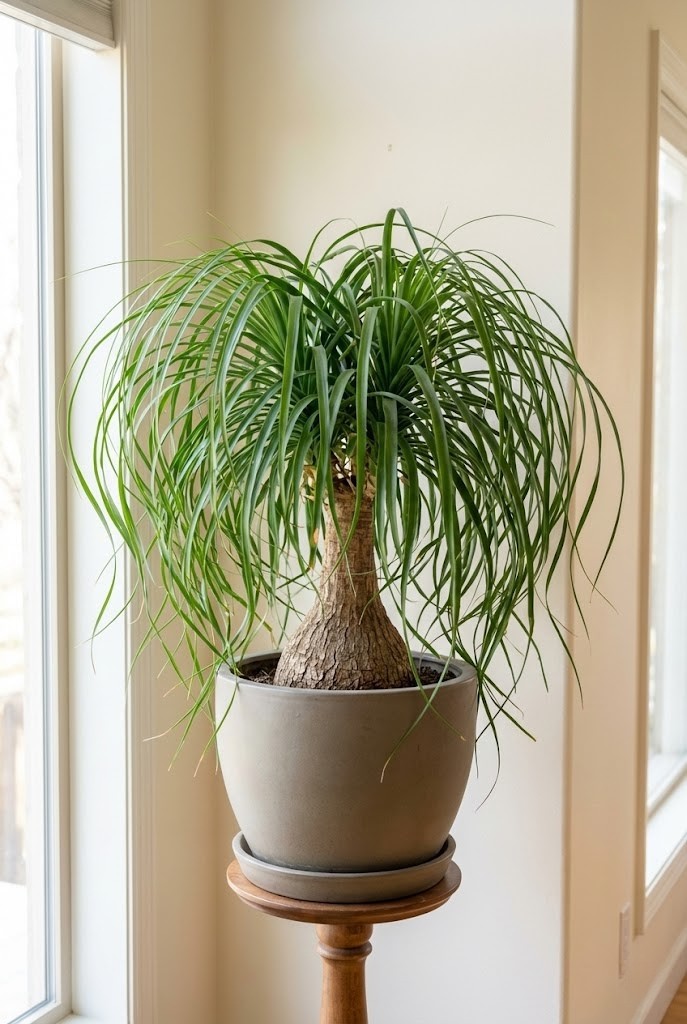
Ponytail palm has a playful fountain shape. The thick base makes it feel stable, and it looks great beside a console or in a corner near a window.
It’s often considered low-risk for dogs and it’s perfect for forgetful waterers. Let the pot dry out fully between waterings. The only must is drainage so it doesn’t sit in water.
#5 — Cast Iron Plant (Aspidistra elatior)
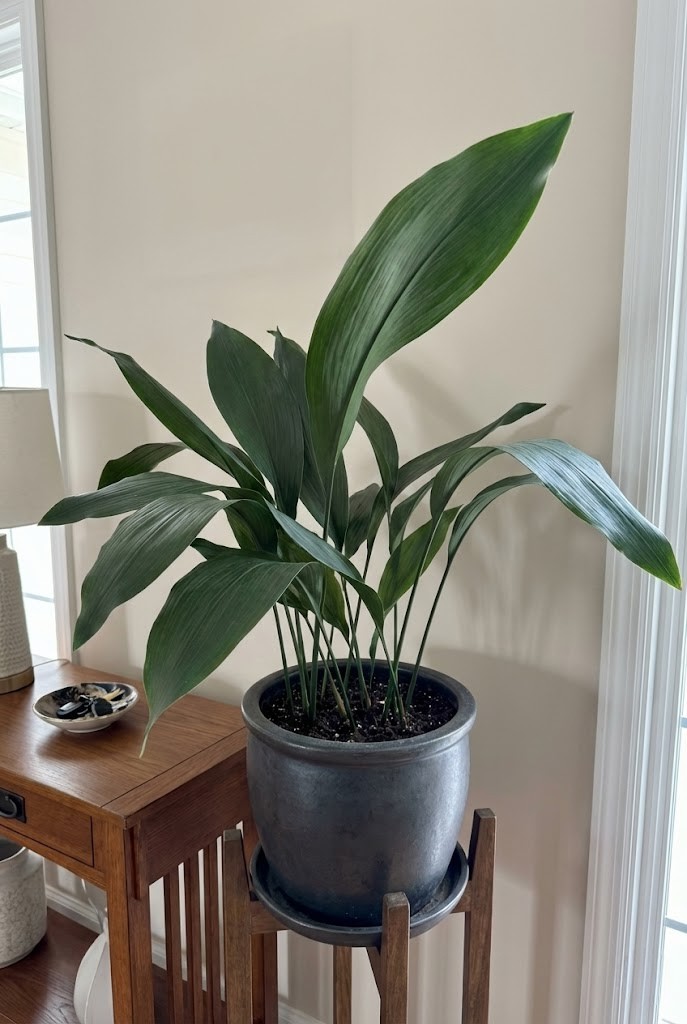
Cast iron plant is the quiet tough one. Deep green leaves look clean in an entryway area near leashes and bowls, especially on a stand that keeps it off the floor but still grounded.
This plant is commonly referenced as dog-safe and it tolerates lower light and irregular schedules. Water when the pot is mostly dry. If you want a plant that doesn’t flinch at real life, this is the pick.
#6 — Banana Plant (Musa spp.)
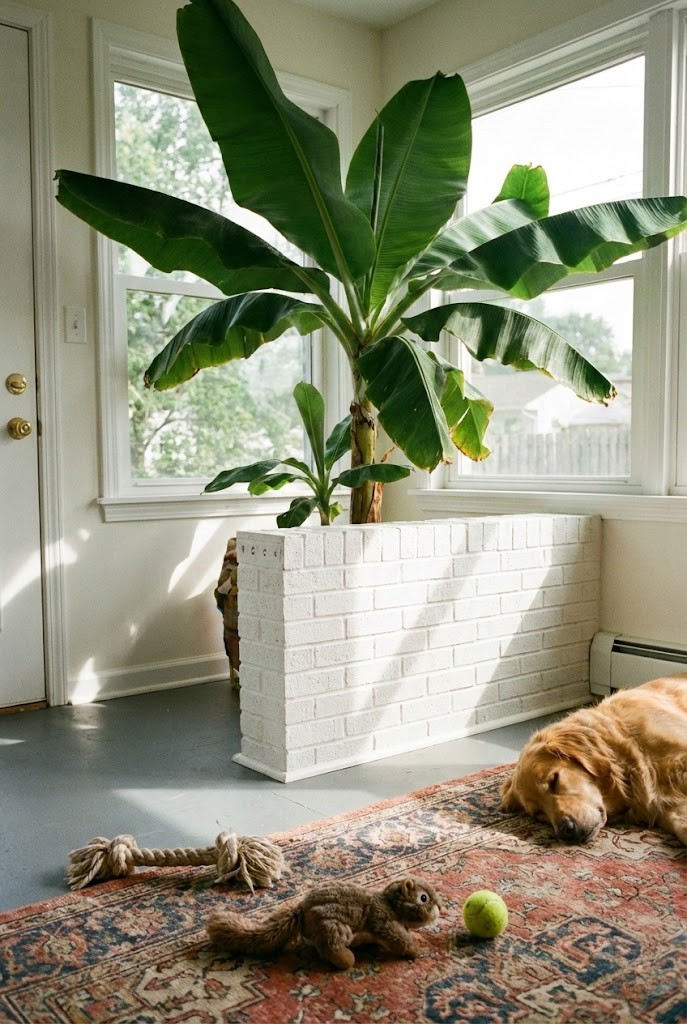
Banana plant brings instant tropical drama. Big leaves make a room feel alive, and it looks right at home in a sunroom or bright indoor corner used as a play area.
Banana plants are commonly cited as dog-safe. Put it near your brightest window, keep the soil lightly moist, and accept that a little natural leaf tearing is part of the look.
Out-of-reach decor (best on consoles, wall shelves, high tabletops, or hanging)
Out-of-reach decor is the easiest win if you have a chewer or a digger. Keep pots on consoles, wall shelves, or hanging planters, and use saucers so your surfaces stay clean.
#7 — Spider Plant (Chlorophytum comosum)
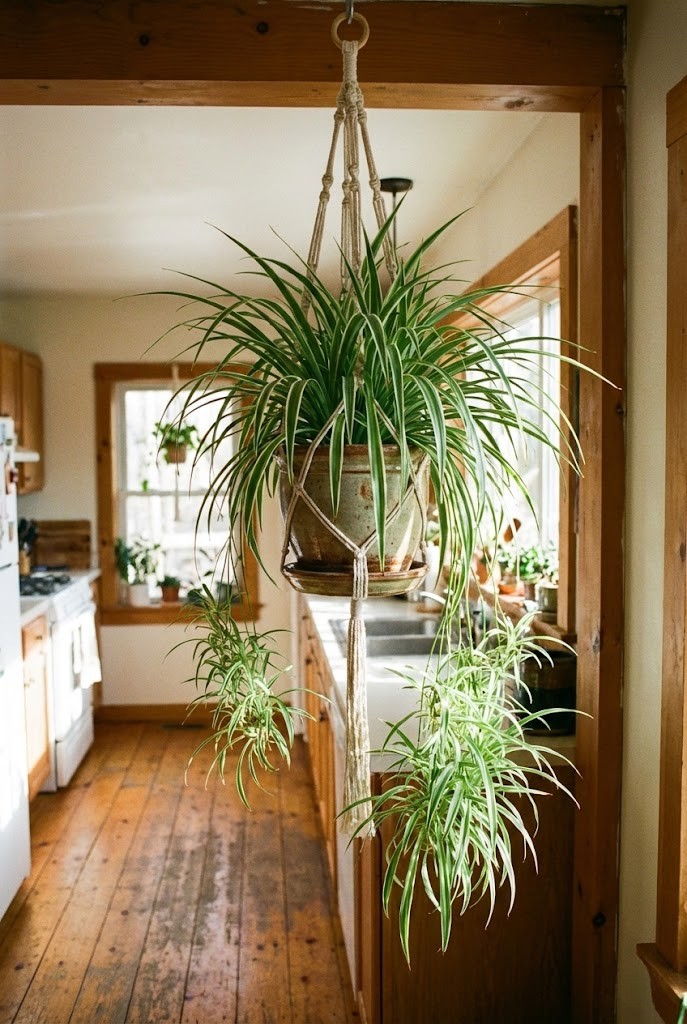
A spider plant looks like a little fountain of leaves, especially in a hanging basket or on a high shelf where the babies can trail. It’s perfect for kitchens and dining areas where your dog passes through constantly.
It’s widely listed as low-risk for dogs, and it’s easy to keep alive. Bright indirect light keeps it looking full. Water when the pot feels light and dry, then let it drain.
#8 — Boston Fern (Nephrolepis exaltata)

Boston fern adds soft, fluffy texture that makes a shelf look instantly styled. It’s best in dog homes where it can spill a little without becoming a digging target.
It’s often referenced as dog-safe, but it likes consistent moisture. Don’t let it dry out completely. If your home runs dry, keep it away from heat vents so the fronds don’t crisp. It’s best up high rather than on the floor.
#9 — Baby Rubber Plant (Peperomia obtusifolia)
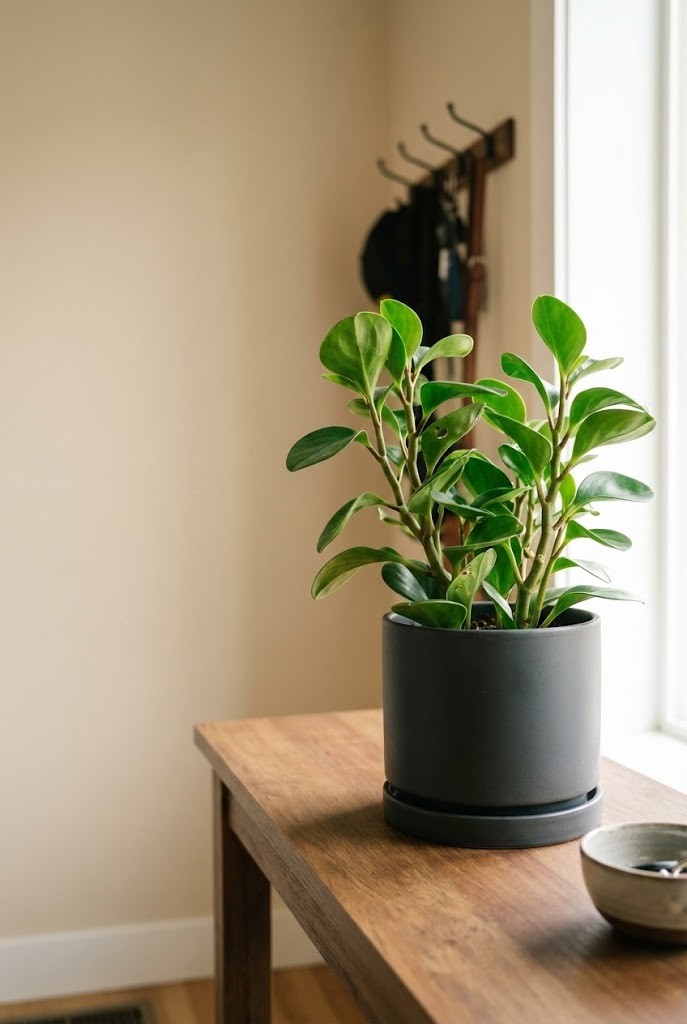
Baby rubber plant stays compact and polished, with thick glossy leaves that look great on a desk shelf or narrow console. It’s one of the easiest small plants to keep looking neat.
It’s widely cited as low-risk for dogs. Keep it in bright, indirect light and let it dry slightly between waterings. The thick leaves mean it doesn’t need constant attention.
#10 — Prayer Plant (Maranta leuconeura)
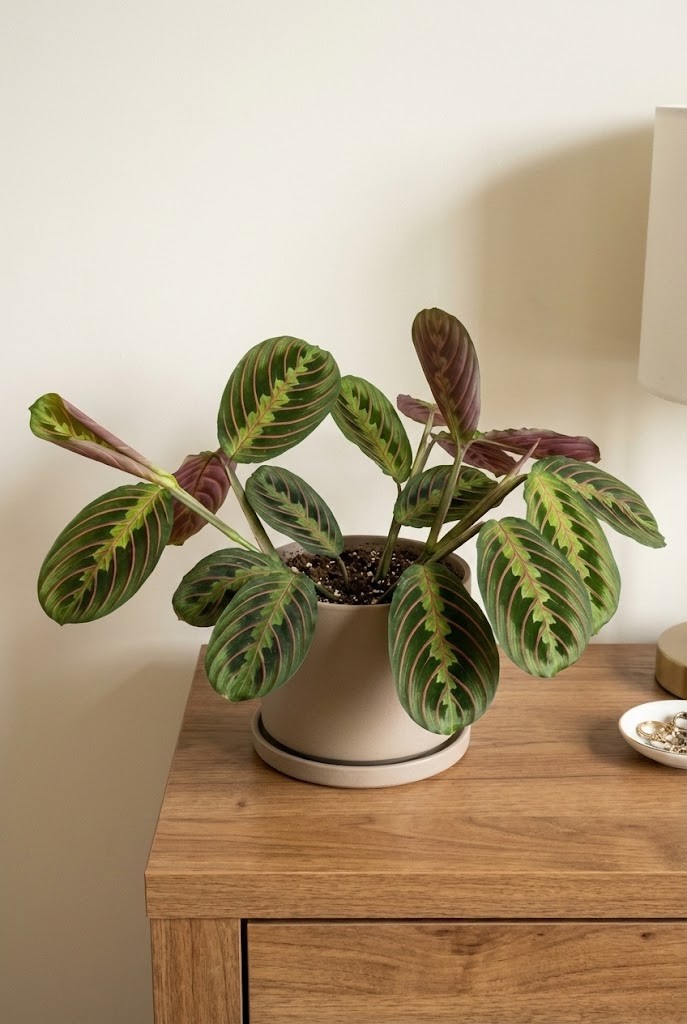
Prayer plant has patterned leaves that feel soft and cozy, like a living textile. It’s a great bedroom pick on a dresser near a window, where a dog can’t casually investigate the pot.
It’s commonly listed as dog-safe. Keep it out of direct sun and aim for lightly moist soil. If the leaves curl, it’s usually asking for a drink.
#11 — Phalaenopsis Orchid (Phalaenopsis spp.)
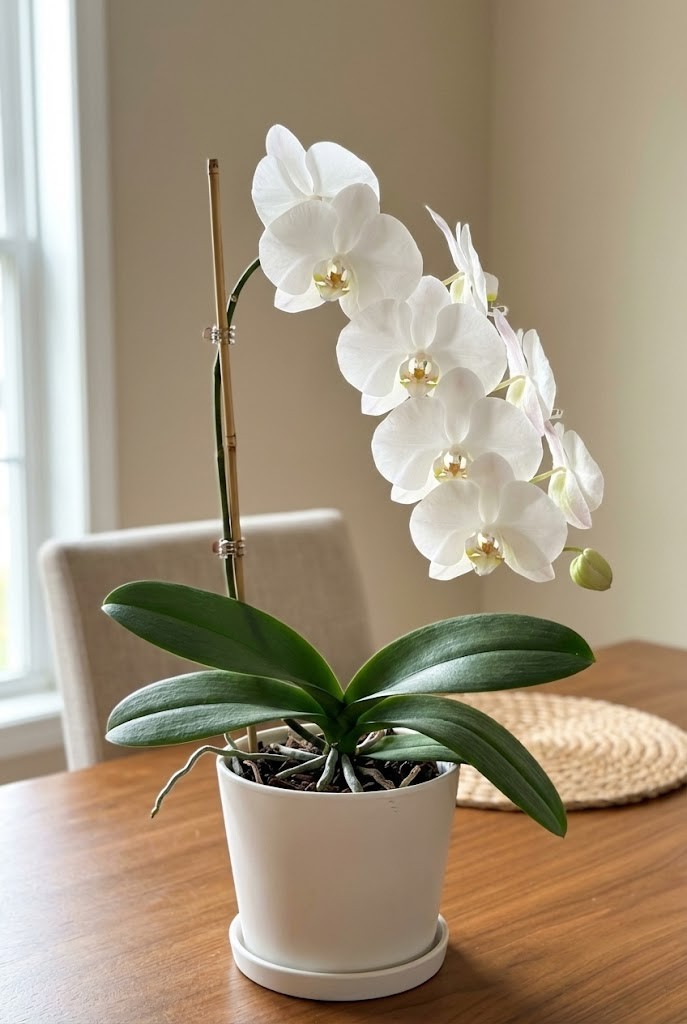
A phalaenopsis orchid looks like a finished centerpiece, perfect for a dining table or high tabletop where your dog can’t reach. It’s the easiest way to add nice without adding chaos.
Orchids like this are often listed as dog-safe. Keep them in bright, indirect light and water lightly when the potting mix is close to dry. A heavier outer pot helps prevent tipping.
Quick dog-proof placement tips (so the plant stays upright)
If your dog is a tail-wagger, place floor plants slightly behind furniture or a low divider, and use heavier pots on sturdy stands. The goal is simple. Keep leaves out of the main swing zone.
If your dog is a digger, avoid leaving any pot directly on the floor. Choose consoles, wall shelves, or raised benches with catch trays, and cover the soil surface with a top layer of smooth stones.
If your dog is a chewer, treat placement like part of the plant choice. Even dog-safe plants are better up high, especially in the first few weeks while your dog is still curious.