Table of Contents
Your cat already has the place mapped out. The warm window ledge. The corner by the sofa. The route across the hallway that somehow belongs to them now.
So when you bring in plants, they need to do more than look good. They need to feel easy to live with, safe around curious cats, and realistic for the kind of light and routines real homes actually have.
This shortlist is for that sweet spot: cat friendly house plants that are widely considered safe around cats, with quick notes on what makes them workable and how to keep them looking good without turning your week into a care schedule.
#1 — Areca Palm (Dypsis lutescens)
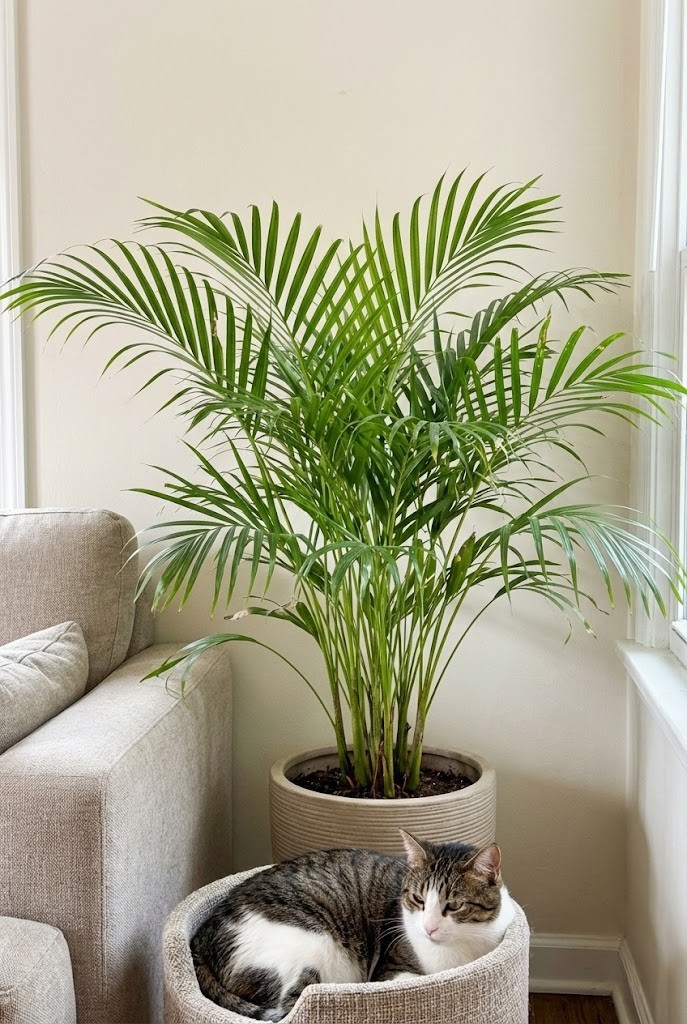
A larger plant does not have to feel risky, and areca palm proves the point quickly. The fronds feel loose and feathery instead of stiff or spiky, so it brings in greenery without making a room feel sharp.
A curious nibble is a lot less stressful here than it would be with many common houseplants. Give it bright, indirect light and water when the top inch of soil feels dry, and it settles in nicely as a bigger plant that still feels relaxed rather than fussy.
#2 — Parlor Palm (Chamaedorea elegans)
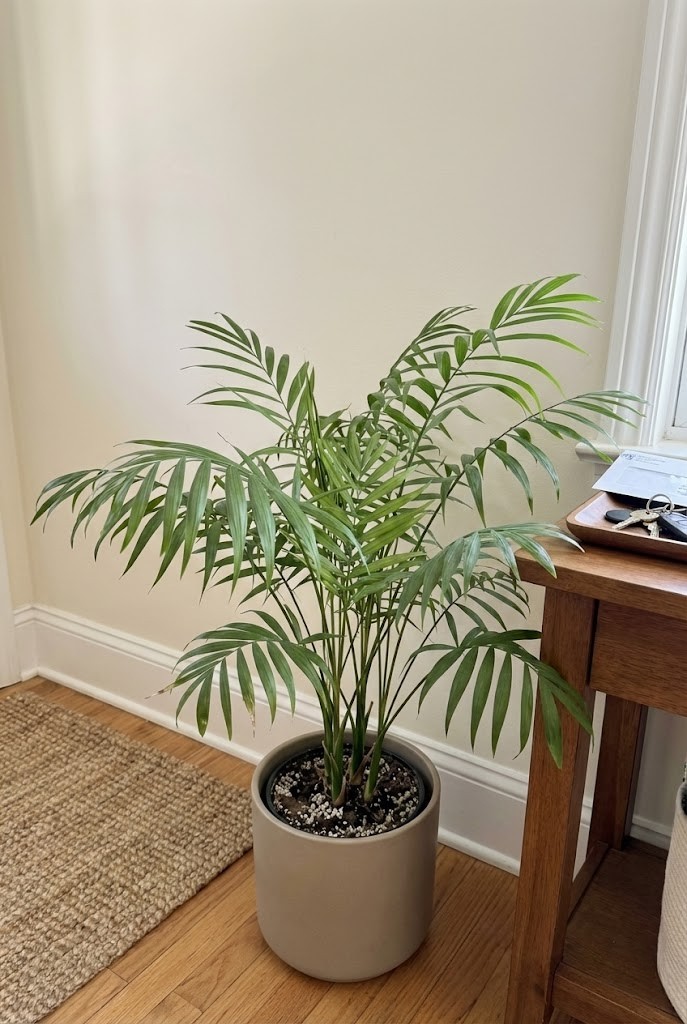
The palm look is appealing until it starts feeling like a pet-owner gamble. Parlor palm is one of the easier ways around that. It has that classic shape, but it handles average indoor conditions better than many plants that try to give the same effect.
It gives you the palm look without the usual fuss. Medium light is usually enough, bright indirect light is even better, and letting the soil dry slightly between waterings keeps it comfortably in the low-drama category.
#3 — Ponytail Palm (Beaucarnea recurvata)
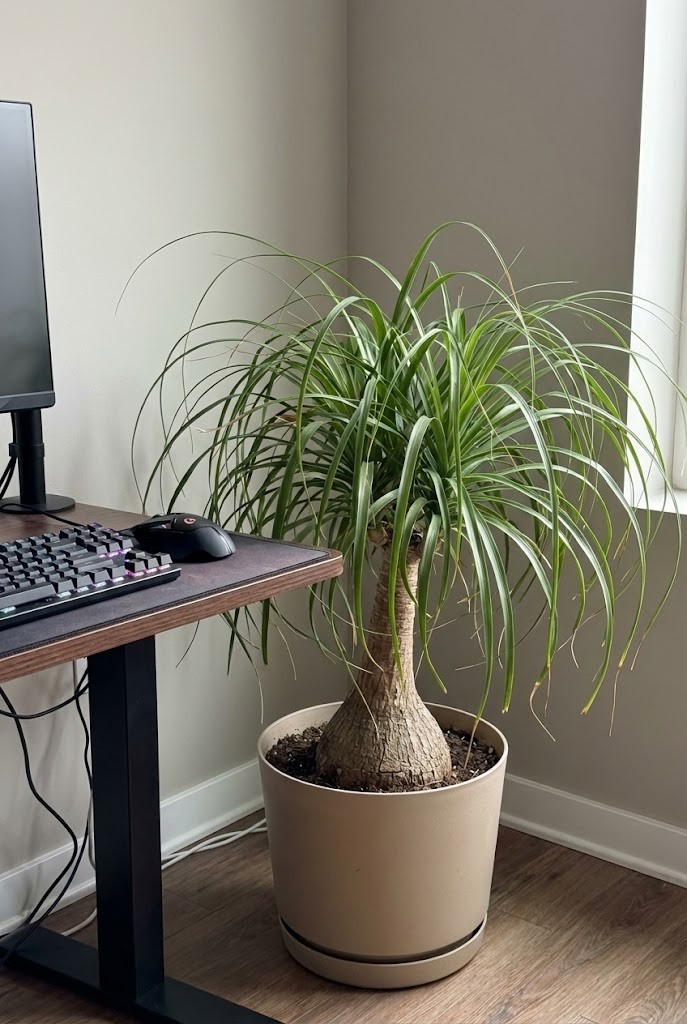
Ponytail palm is a good fit when you want something forgiving. The swollen base stores water, and the fountain of narrow leaves gives it a playful shape without making it demanding.
It works especially well if your watering rhythm is not perfect. Give it a bright spot, let the soil dry well, and never leave it sitting in water.
#4 — Cast Iron Plant (Aspidistra elatior)
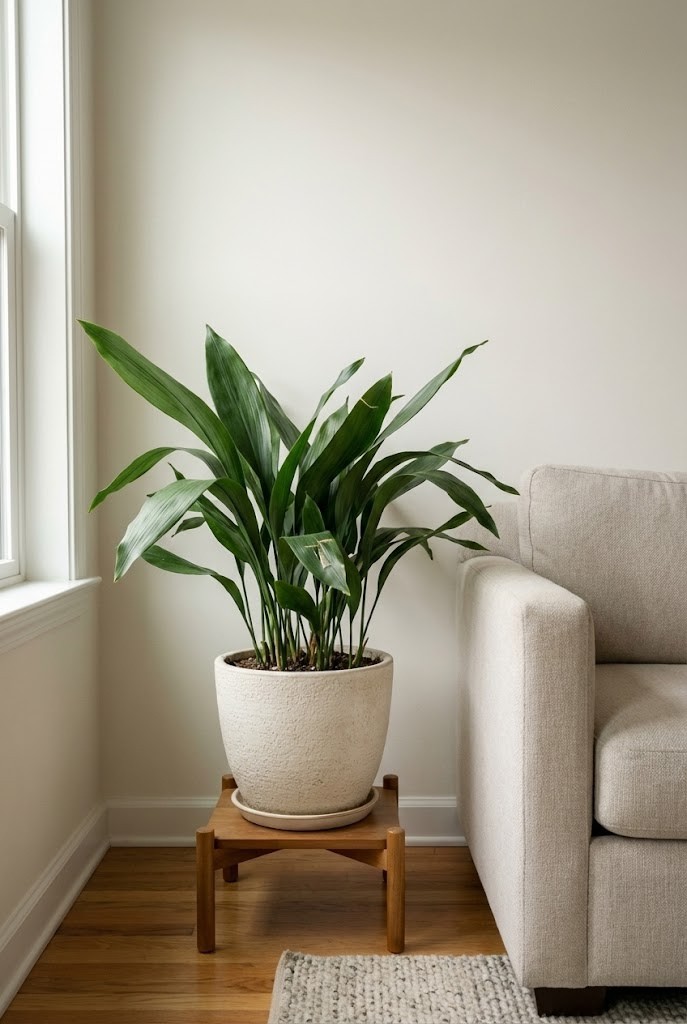
For homes that are not running on a perfect care schedule, cast iron plant makes a lot of sense. It handles duller corners and inconsistent routines without looking immediately offended by either one.
That is a big part of its charm in real life. Lower light is fine, direct sun is not, and watering when the pot is mostly dry is usually enough.
#5 — Boston Fern (Nephrolepis exaltata)
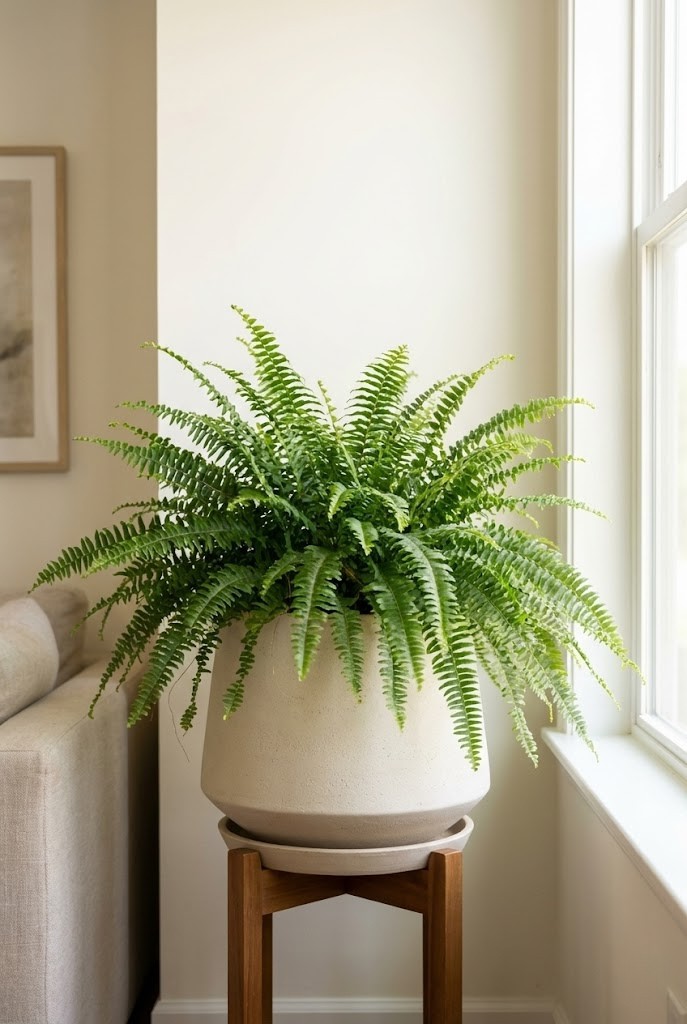
Boston fern is one of the softer-looking options here, and it can change the feel of a room quickly. The fluffy fronds take the edge off a boxy corner almost at once.
It is not the one for dry air or long stretches of neglect, though. Bright indirect light, steadier moisture, and some distance from heat vents make a noticeable difference.
#6 — Money Tree (Pachira aquatica)
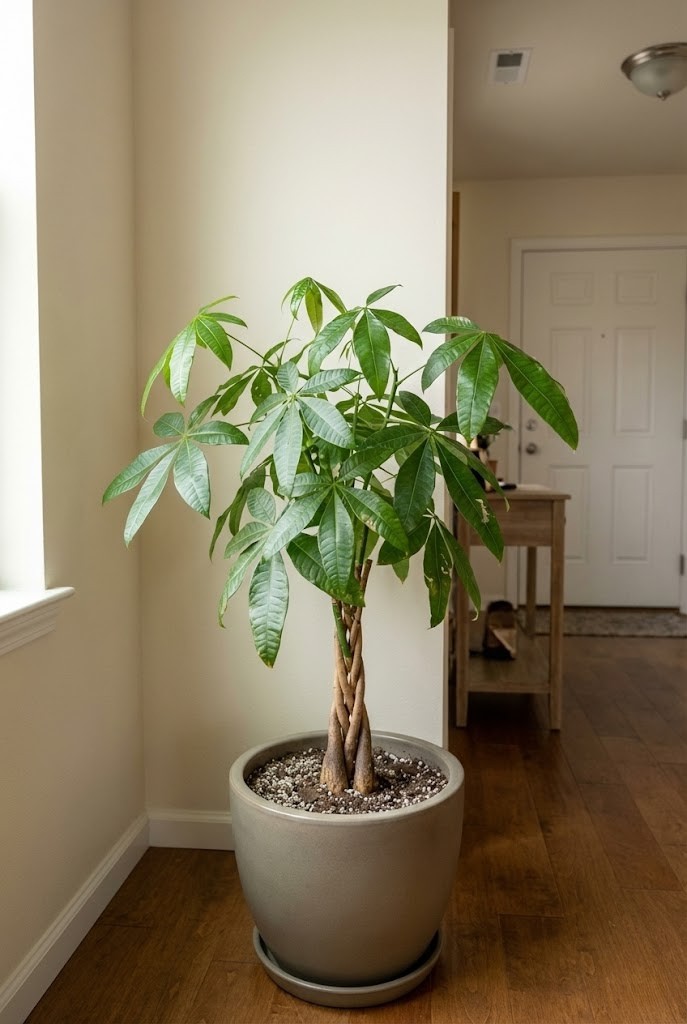
A taller floor plant can still work well with cats around, especially when the shape stays upright and the pot stays put. The braided trunk gives money tree a neater, more structured look than softer palms and ferns, so it works well when you want greenery that feels clean rather than leafy and loose.
In real homes, the bigger concern here is usually stability, not toxicity panic. Let the soil dry a bit between waterings, then drain it well, and use a heavier pot if your cat is the type to brush past floor plants like they own the lease.
#7 — Spider Plant (Chlorophytum comosum)
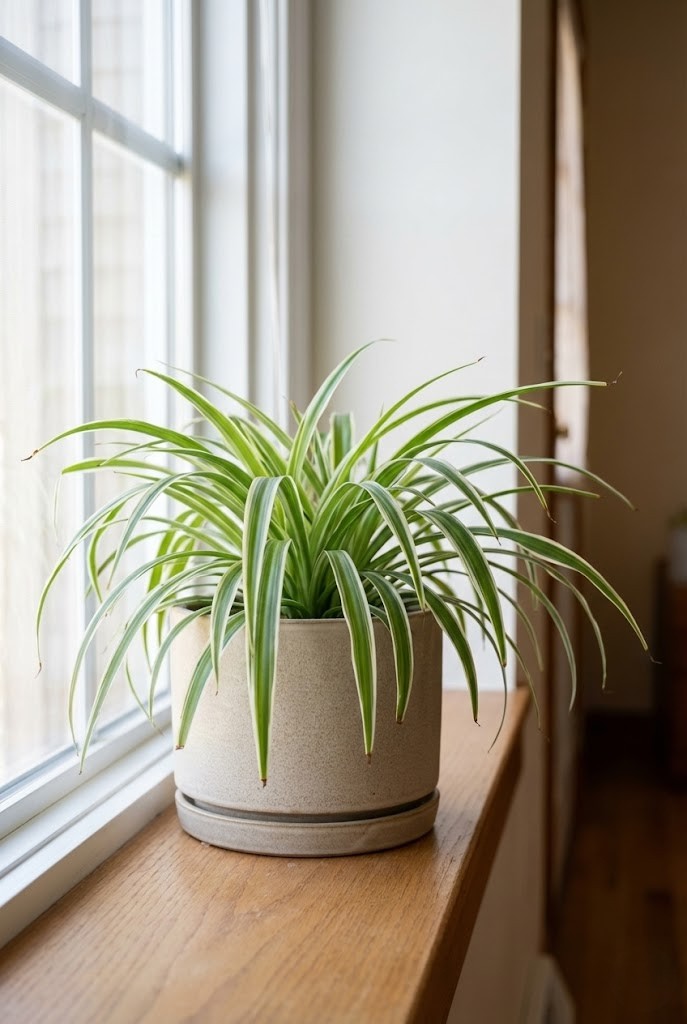
Spider plant is cat-friendly, but it is also one of the plants cats tend to notice first. The arcing leaves and dangling babies give it a lively shape that can look a little too inviting.
That is why placement matters more here than with some of the others. A higher shelf usually makes more sense, and bright-to-medium indirect light with a let-it-dry-a-bit rhythm keeps it easy.
#8 — Baby Rubber Plant (Peperomia obtusifolia)
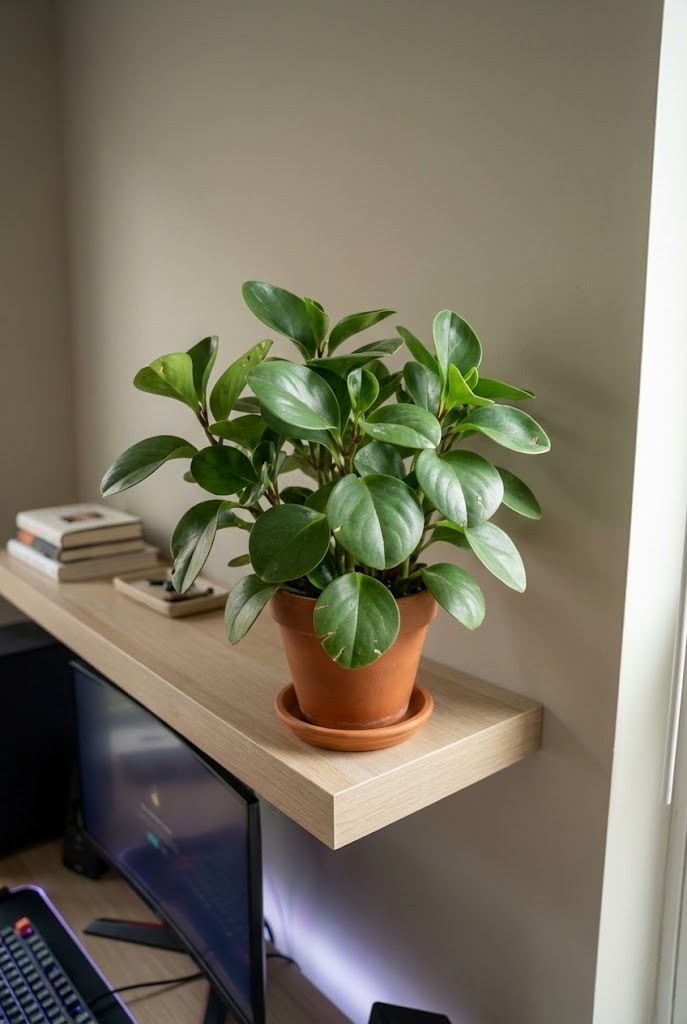
Some plants start looking messy surprisingly fast. Baby rubber plant usually does the opposite, which is part of what makes it so easy to live with when space and surfaces already feel a little shared.
Bright indirect light helps it stay full, medium light is usually fine, and the main thing is not watering too often.
#9 — Chinese Money Plant (Pilea peperomioides)
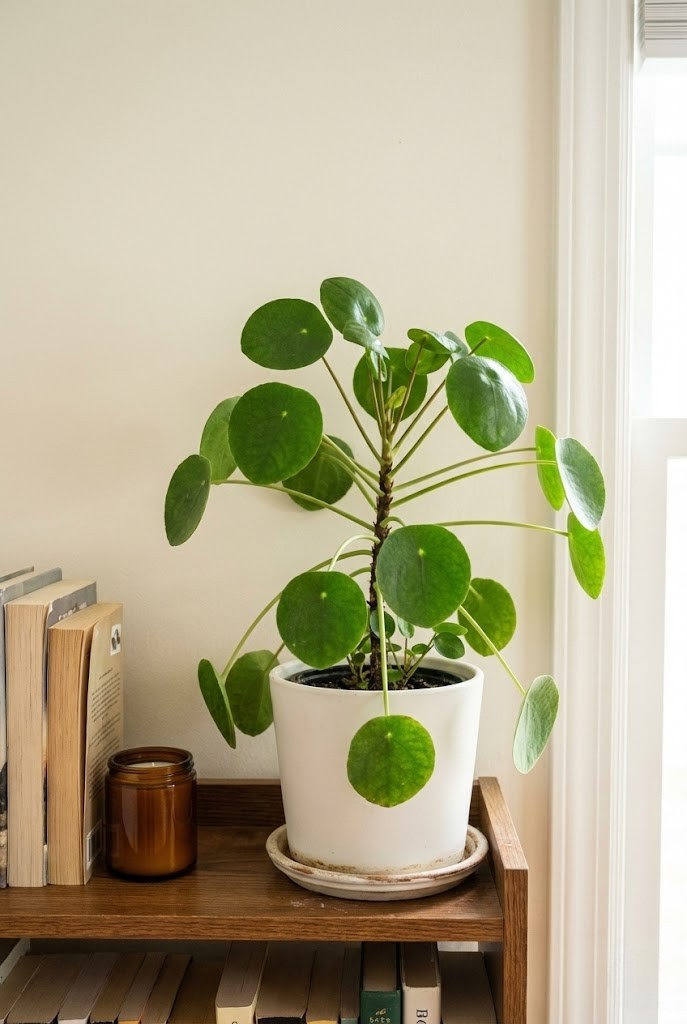
If you like plants that look crisp and graphic, this one does the job fast. The round leaves feel clean and modern, and the whole plant has a nice upright bounce when it’s happy.
Its compact shape helps it stay tidy and easy to place, which matters more than people think once every surface starts feeling shared. Give it bright, indirect light, let the soil dry a little between waterings, and rotate it now and then so it grows evenly instead of making a determined lean for the window.
#10 — Prayer Plant (Maranta leuconeura)
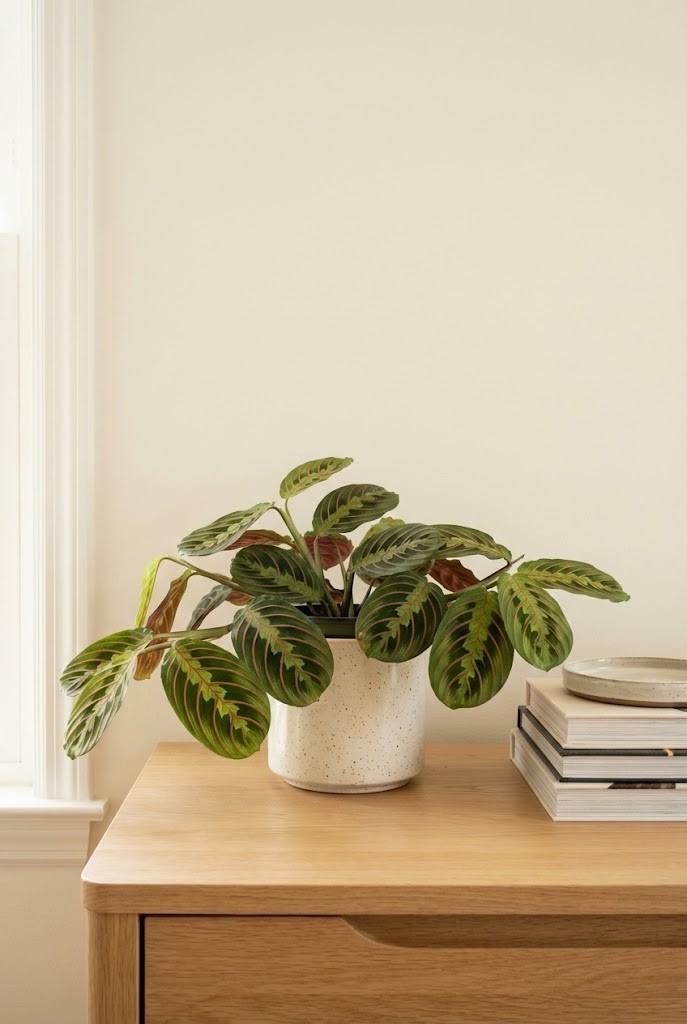
Prayer plant brings pattern without feeling loud. The leaves have that soft painted look that can make a shelf or side table feel more finished without needing flowers to do the work.
It’s a solid pick if you want something that feels a little more decorative, but it does prefer a steadier moisture rhythm than the tougher plants above. Bright-to-medium indirect light suits it best, and curled leaves are usually the first sign that it has been left dry for too long.
#11 — Calathea Orbifolia (Goeppertia orbifolia)

If you want a big-leaf plant without the usual toxicity worry, this is one of the prettier ways to do it. The broad striped leaves look expensive in the best way, and they can make an ordinary room feel more designed very quickly.
It is not the choice for dry, rough corners, though. This one is better for homes that can offer steady moisture, decent humidity, and a spot where those oversized leaves will not get knocked around every other day.
#12 — Hoya (Hoya carnosa)
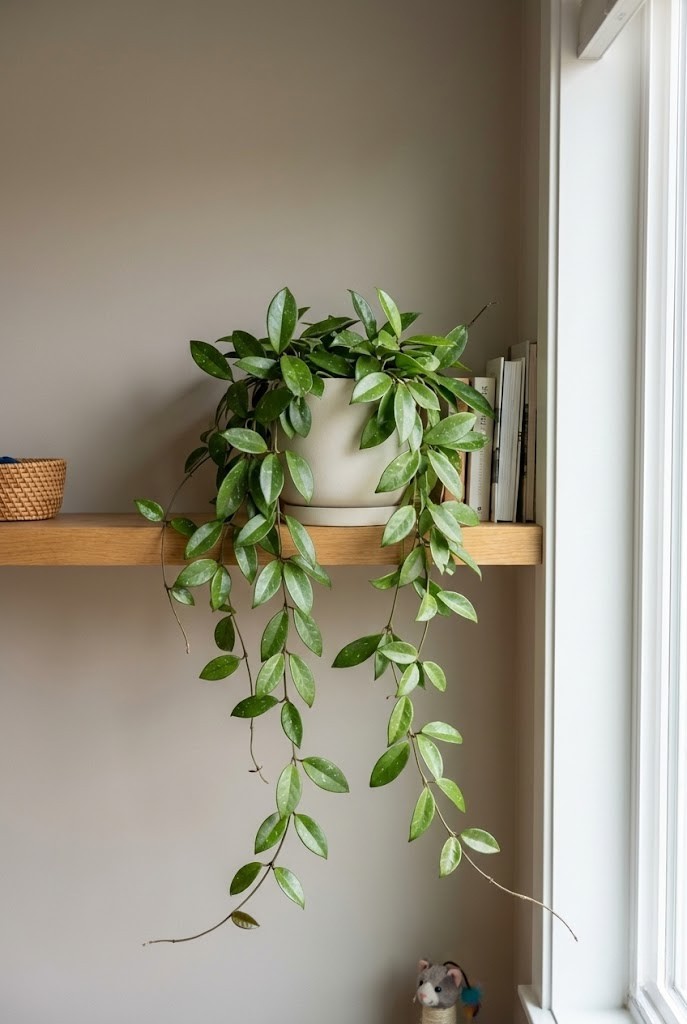
Trailing plants can feel like a questionable choice in cat homes, but hoya makes the idea much easier to live with. The leaves are thick and waxy, so it has that collected, established look while still being fairly low-drama once it settles in.
A higher shelf really suits the way it grows. Bright indirect light is ideal, the soil should dry a bit between waterings, and it usually rewards consistency more than constant fiddling.
#13 — African Violet (Saintpaulia spp.)
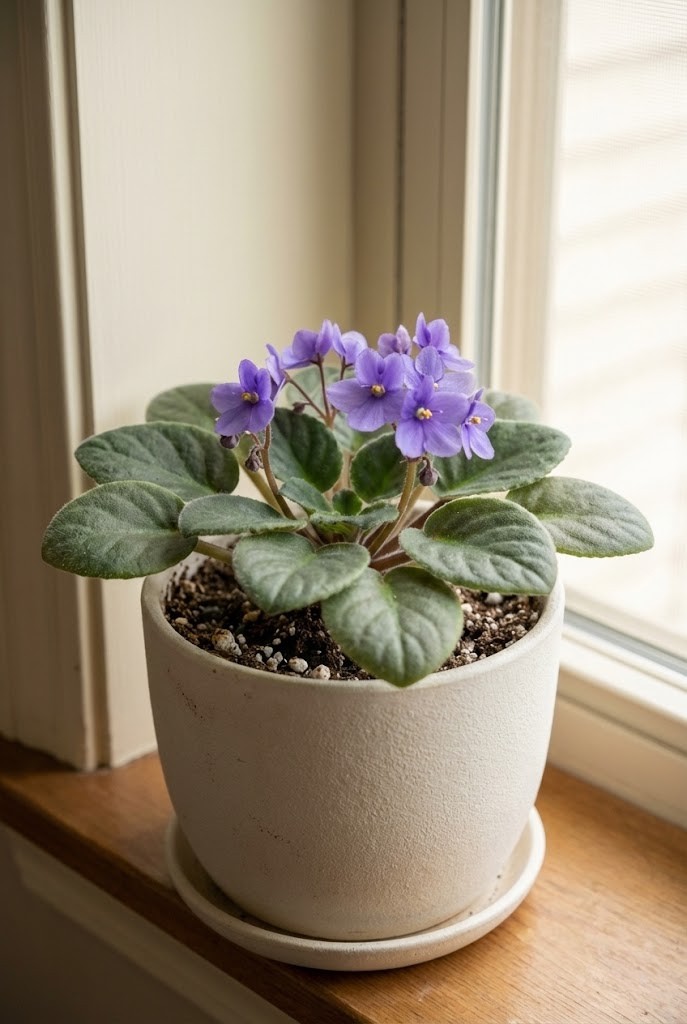
African violets are one of the easiest ways to get a little color onto a sill without giving up much space. They make a space look cared for in a very compact footprint.
They’re one of the nicer flowering options here, especially if you want something that stays small and contained. Bright, indirect light and a tidy watering routine suit them best, and keeping water off the leaves helps them stay as fresh-looking as they should.
#14 — Haworthia (Haworthia spp.)
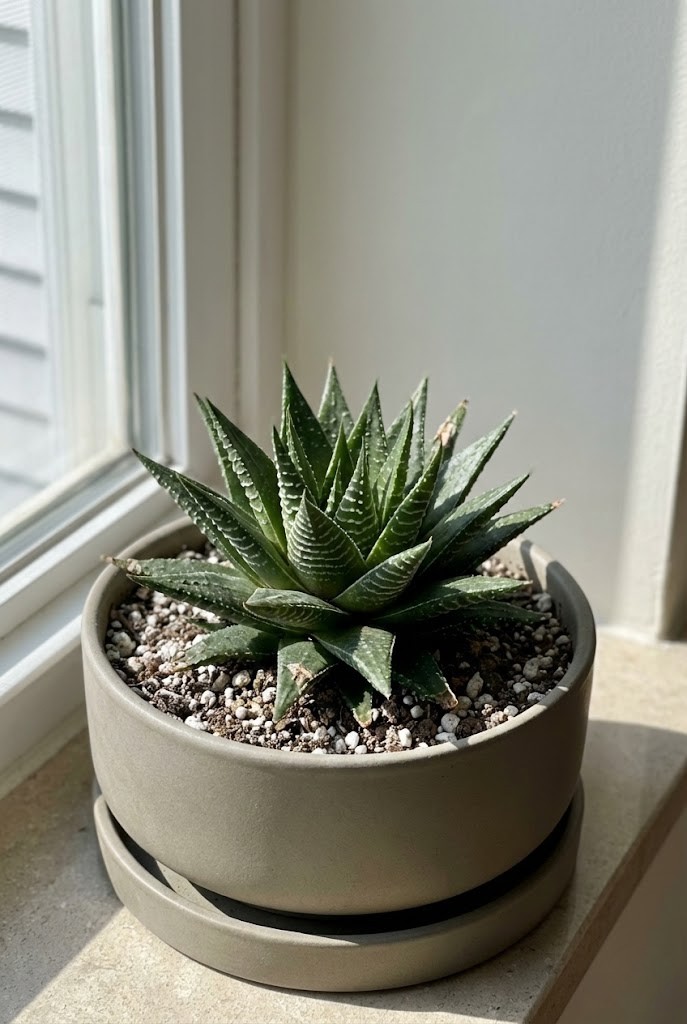
If you want the succulent look without the usual second-guessing, haworthia is one of the easiest answers. It stays compact, keeps its sculptural shape, and does not ask for much space.
Give it bright light, let the soil dry fully, and use a stable pot if your cat likes investigating windowsills.
#15 — Echeveria (Echeveria spp.)
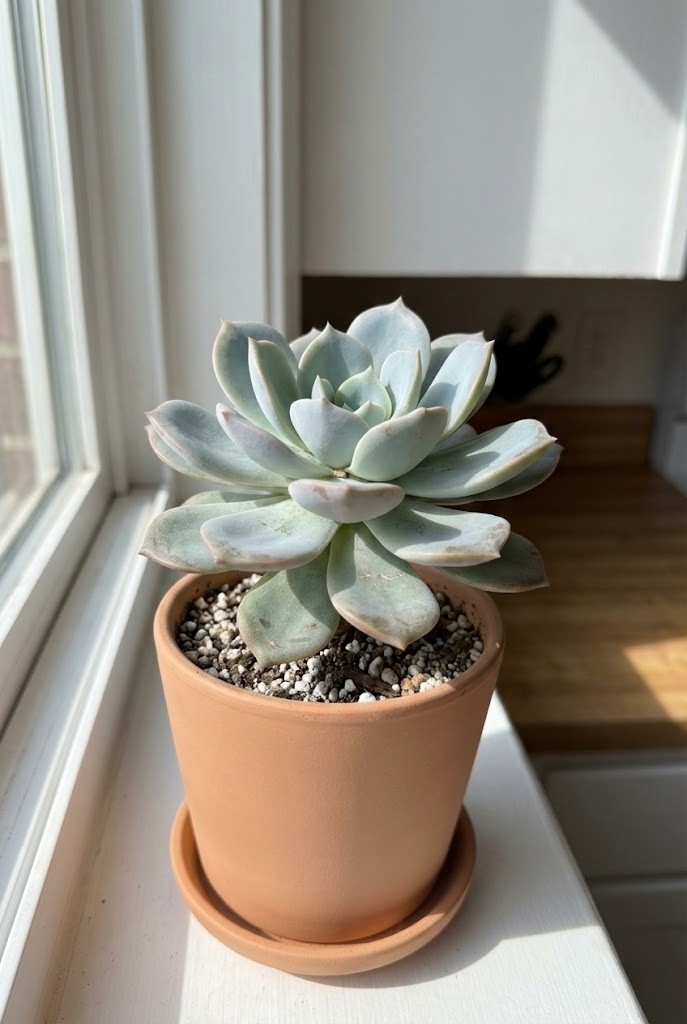
Echeveria can work here, but only if the light is genuinely good. That perfect rosette shape depends on more sun than many people think.
In a truly bright window, it can be one of the prettier safer succulent choices. Let the soil dry fully, and keep water out of the rosette so the shape stays clean.
#16 — Polka Dot Plant (Hypoestes phyllostachya)
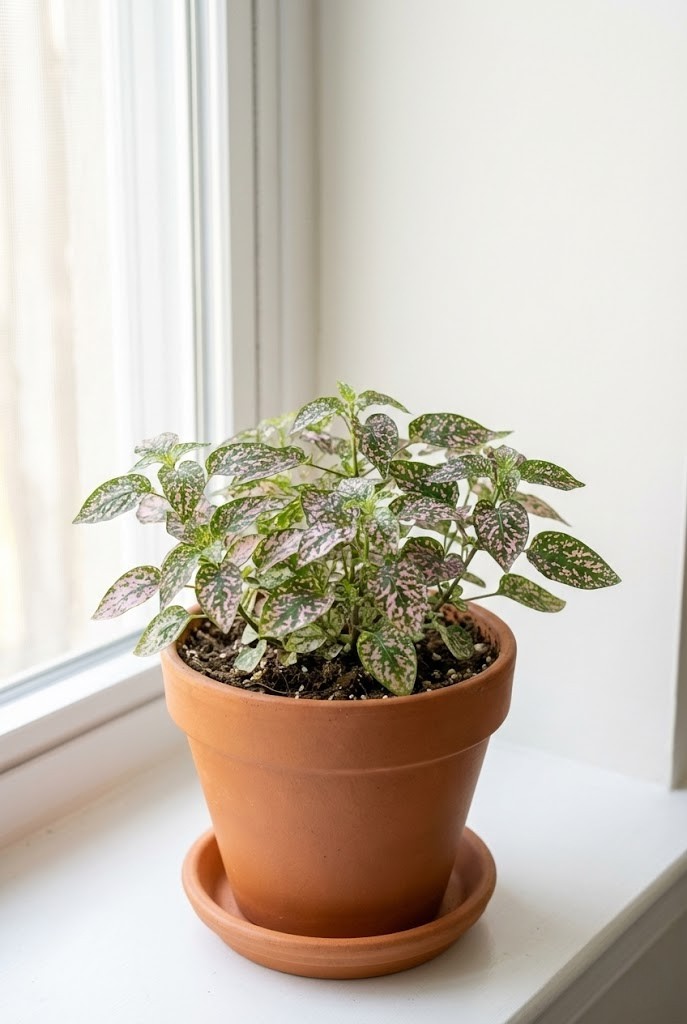
Color is harder to find in cat-safe houseplants than people expect, which is why polka dot plant earns a spot. The speckled leaves brighten a shelf fast and break up all the usual green.
It does need a little more consistency than the tougher plants on this list. Bright indirect light helps keep the color crisp, and watering when the top layer starts to dry usually keeps it looking tidy.
#17 — Christmas Cactus (Schlumbergera spp.)

If you want a plant that can bloom without acting impossible, this is one of the better choices. The segmented stems have a relaxed trailing shape, and when it flowers, it feels festive without being overly precious.
It’s a nice fit here if you want something softer and a little more cheerful than the average cactus. A bright spot out of harsh direct sun suits it well, and watering when the pot is partly dry usually keeps it happier than a constant soak ever will.
#18 — Phalaenopsis Orchid (Phalaenopsis spp.)
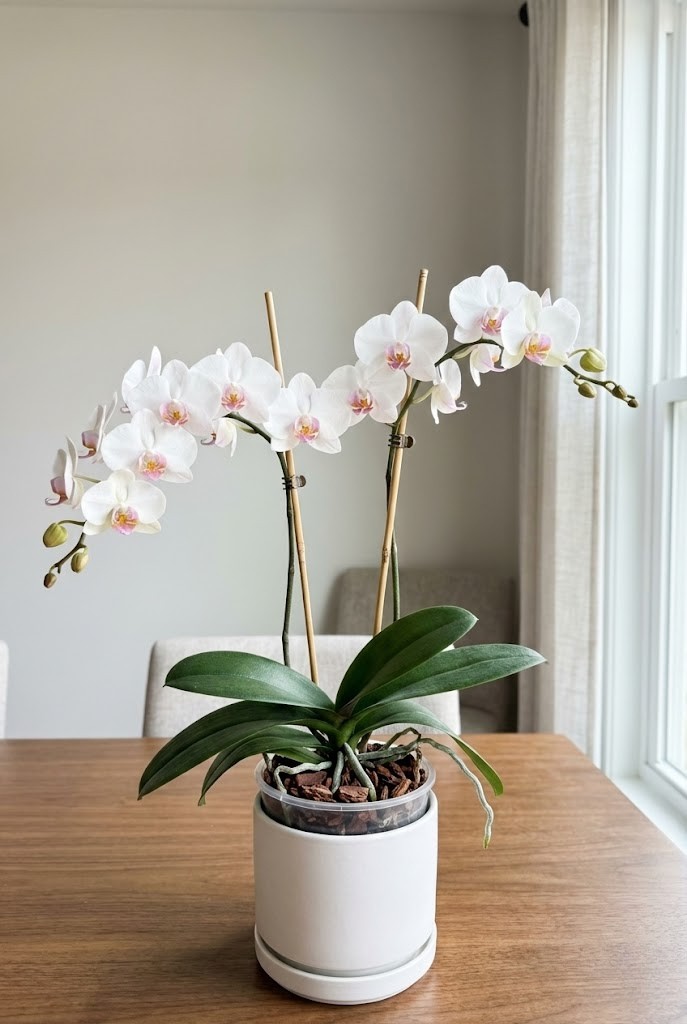
A blooming plant can still work beautifully, and phalaenopsis orchid is one of the prettier examples. One plant can make a table or dresser look finished without needing much else around it.
The main thing is stability, not fuss. Keep it in a spot where curious paws are less likely to knock it over, give it bright indirect light, and water lightly when the mix is close to dry.
#19 — Bromeliad (Guzmania spp.)
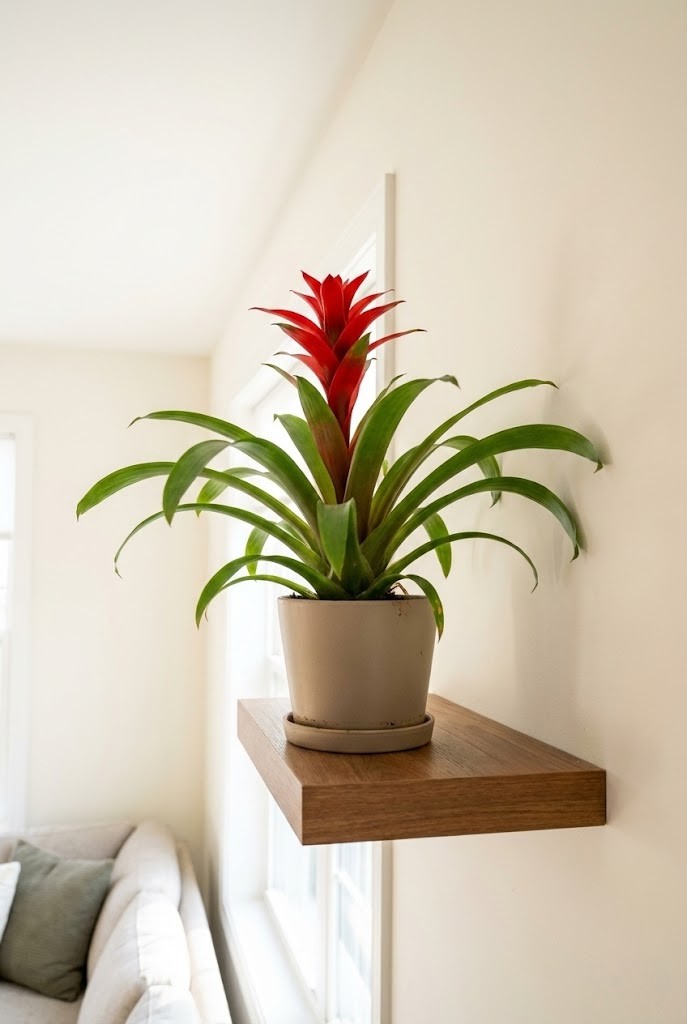
Bromeliads bring color in a cleaner, more architectural way than many flowering plants do. They’re a nice option when you want something bright but still neat-looking.
It gives you color without the fluttery, high-maintenance energy some blooming plants come with. Bright indirect light suits it best, the central cup can be watered lightly, and a stable cachepot is worth it if your cat has a habit of batting at anything that stands upright and looks mildly interesting.
Conclusion
Even with cat-safe plants, placement still matters a little. A heavy pot beats a flimsy stand, a bright spot helps more than constant fussing, and “safe” still doesn’t mean you want your cat treating every leaf like salad.
The goal is not a perfect house. Just a home where the plants and the cat can coexist without either one becoming a problem.
Found this helpful? Save it for later!