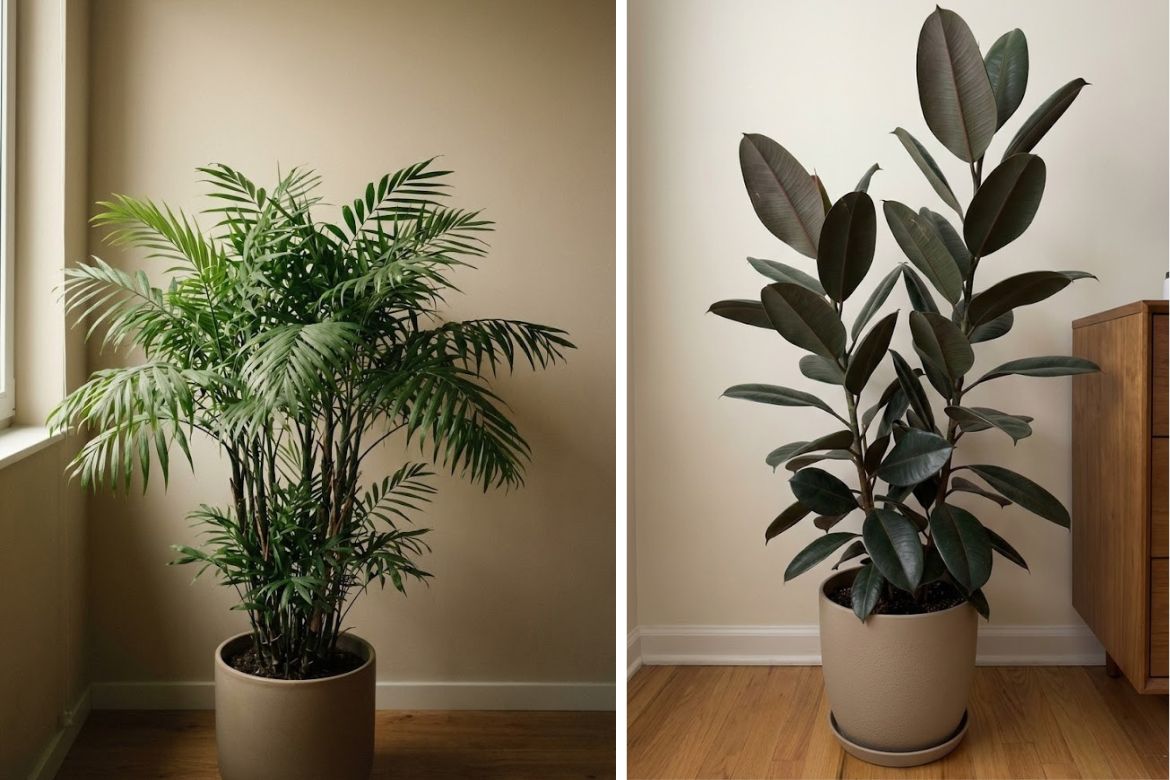
Table of Contents
A dim corner is often where a room feels most unfinished. The floor space is there, but without enough height, that part of the room can look flat, empty, and a little harder to solve than it should be.
That is why the right tall plant matters here. In lower light, it is not just about filling a blank spot—it is about adding structure, softness, or a more finished outline without relying on a sunny window.
This shortlist focuses on tall low-light indoor plants that actually do that well. Some bring a softer, leafier lift, while others add cleaner vertical lines, so you can choose the kind of height that fits your space and the light you really have.
11 Best Tall Low-Light Indoor Plants
#1 — Kentia Palm (Howea forsteriana)
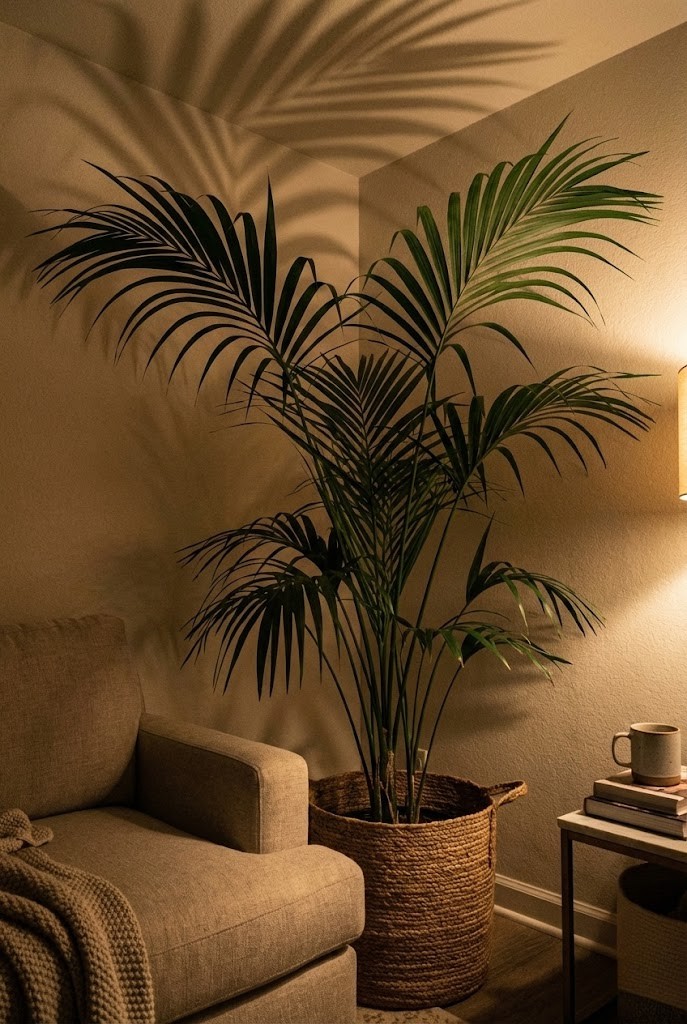
A kentia palm can make a dim corner feel leafier and less severe almost immediately. The fronds arch just enough to bring in soft, airy height, so the room feels taller without taking on that stiff, upright look some low-light plants have.
It is also one of the calmer tall plants to live with. Growth is slow in lower light, but that usually works in its favor, helping the plant hold a balanced silhouette instead of getting messy fast—which is never a bad thing in a dim corner.
#2 — Snake Plant (Dracaena trifasciata ‘Laurentii’)
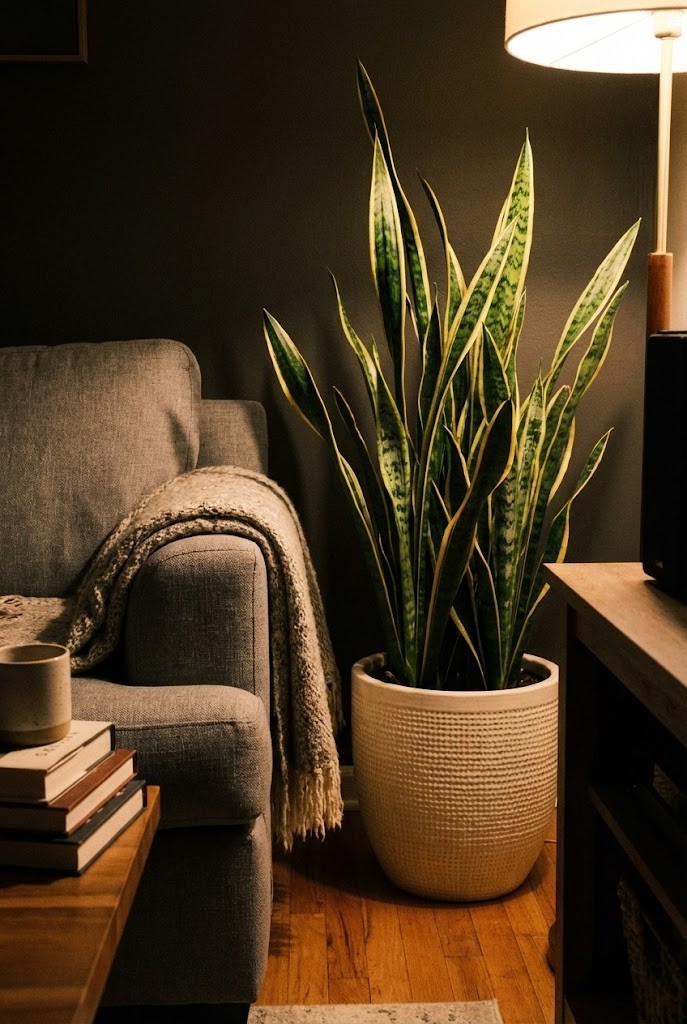
If you want the easiest route to height in a low-light room, start here. A tall snake plant gives you strong vertical structure with almost no sprawl, which is exactly why it works so well in tighter homes.
The leaves grow straight up, so even one good-sized plant can make a dim corner feel more finished without taking over the floor. Few low-light floor plants give you this much height with so little spread.
⚠️ Note: Toxic to pets if ingested. Place where pets can’t chew the leaves.
#3 — Dragon Tree (Dracaena marginata)
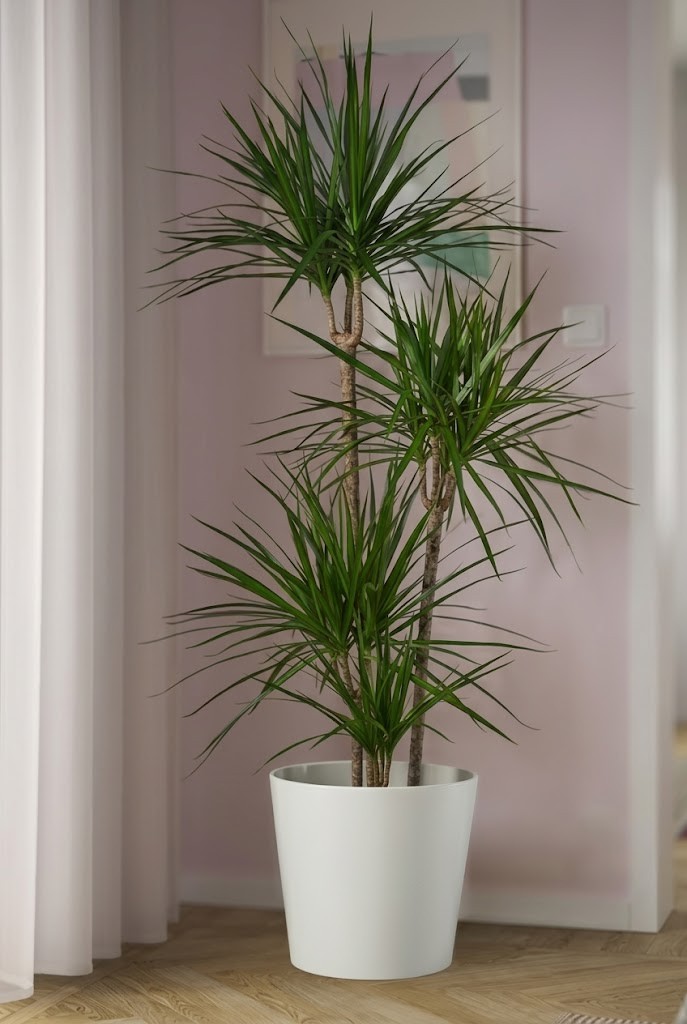
Not every tall plant has to feel lush to make a room look better. A dragon tree works because it brings the eye upward without adding much visual weight, thanks to its slim trunk and narrow bursts of foliage.
That lighter outline is part of the appeal in lower-light rooms. Even when growth slows down, the plant usually keeps its tall, airy shape better than broader tropicals that start to feel bulky or underfilled.
⚠️ Note: Toxic to pets if ingested. Keep it out of reach if pets chew leaves.
#4 — Dracaena ‘Janet Craig’

Janet Craig is the one to choose when a skinny plant would look a little underdressed. The leaves are dark, broad, and slightly arching, so the plant fills vertical space in a way that feels lush rather than sharp.
It still stays upright, but the fuller mass gives the corner more body from the start. That makes it especially useful when you want height that feels substantial, not just tall.
⚠️ Note: Toxic to pets if ingested. Keep out of reach.
#5 — ZZ Plant (Zamioculcas zamiifolia, Mature Form)

A ZZ plant is one of the most low-drama ways to add height indoors. The stems rise cleanly from the base, creating a tidy vertical shape that makes a corner look more finished without adding much visual clutter.
That reliability is a big part of the appeal in limited light. Just be realistic about size: a small ZZ can take a long time to become true floor-plant height, so this works best when you buy it already mature and skip years of waiting for the effect.
⚠️ Note: Toxic to pets if ingested. Keep it out of reach if pets access the room.
#6 — Dracaena ‘Lisa’
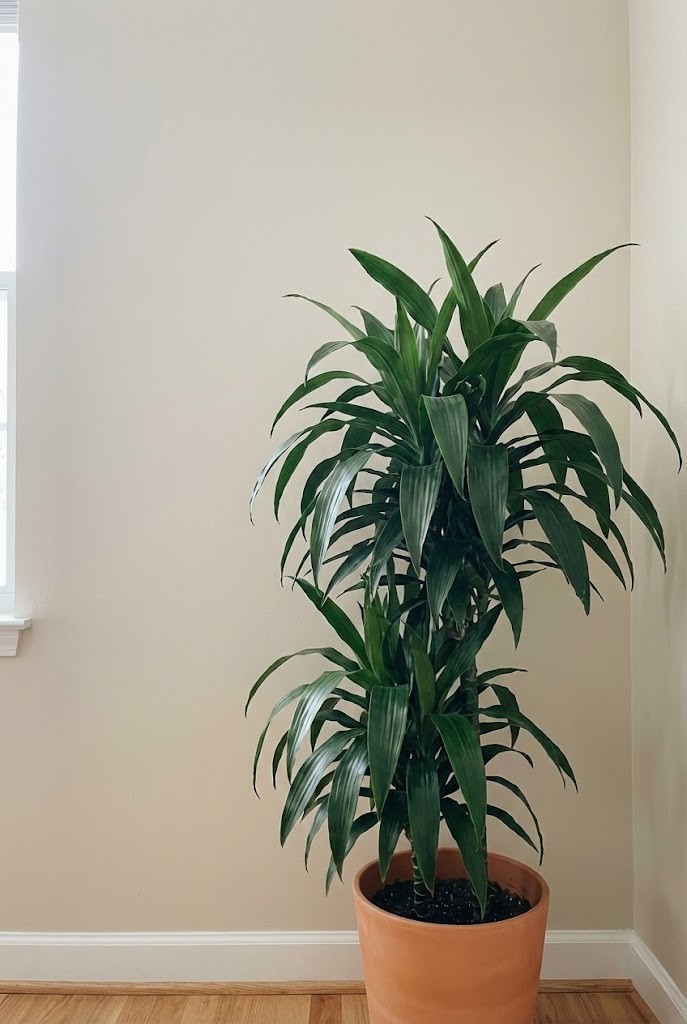
Tighter and cleaner than Janet Craig, Lisa is the version for rooms that already have enough visual activity. Its narrow, column-like growth adds a strong vertical line, so the room feels taller without the plant becoming the whole story.
If Janet Craig feels too full for the space, Lisa usually lands better. It stays fairly contained and keeps that upright shape well, even when the daylight is soft and limited.
⚠️ Note: Toxic to pets if ingested. Keep it out of reach.
#7 — Parlor Palm (Chamaedorea elegans, Floor-Sized Specimen)
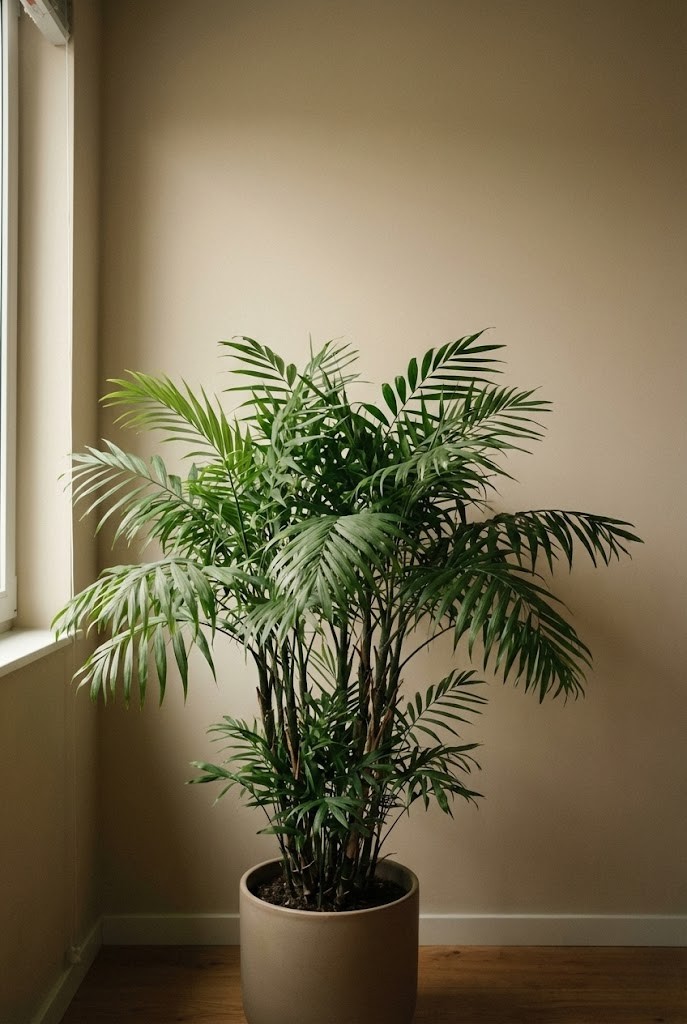
A parlor palm gives you a softer kind of height, which is why it works so well in bedrooms and calmer corners. The fronds have a gentle, feathery look that adds presence without making the space feel busier.
The catch is size. If you want this plant to read as a floor plant, buy it mature from the start—small parlor palms stay small for a long time, especially in lower light, and most people do not want to wait years for a bedroom corner to look finished.
#8 — Rubber Plant ‘Burgundy’ (Ficus elastica)

A Burgundy rubber plant brings darker, stronger height than the palms and dracaenas on this list. The leaves are broad and glossy, so even one plant can make a blank stretch of wall feel more anchored.
It handles lower light better than variegated rubber plants, but this is not the best pick for a truly dark corner. Think of it as a good option for rooms with soft, limited daylight where you want height with a little more weight and drama.
⚠️ Note: Toxic to pets if ingested. Keep it out of reach if pets sleep in the room.
#9 — Lady Palm (Rhapis excelsa)
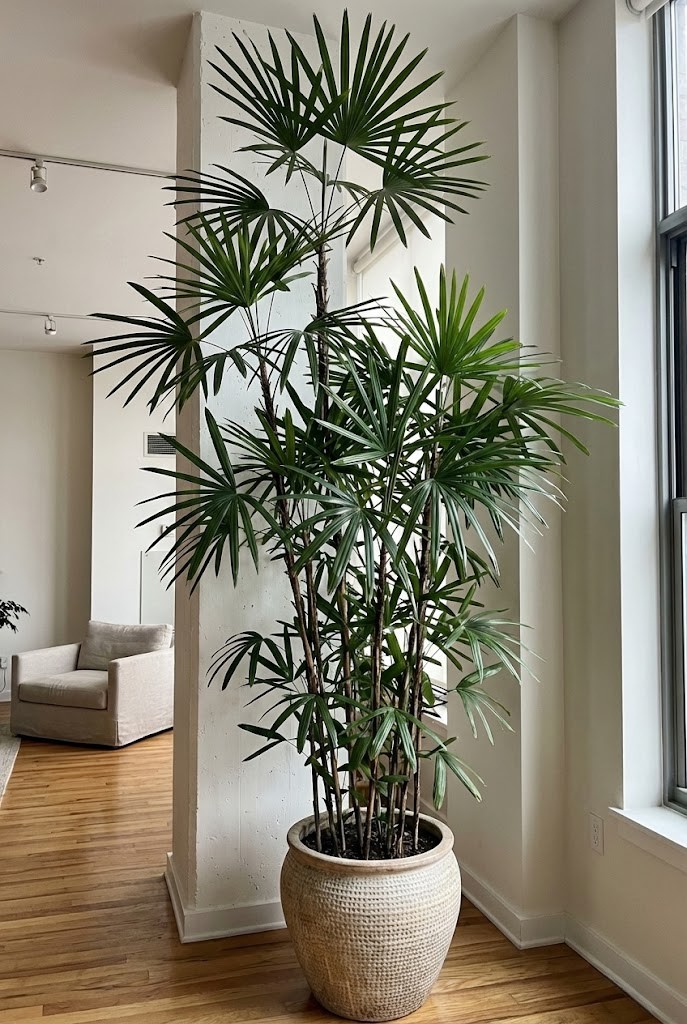
Some tall plants fade into the background. A lady palm does the opposite, but quietly. The clustered stems build a dense, upright shape that feels calm and substantial at the same time.
It lands nicely between softness and structure. Fuller than a bamboo palm and more grounded than a kentia, it adds real presence without turning into visual clutter.
#10 — Corn Plant (Dracaena fragrans)
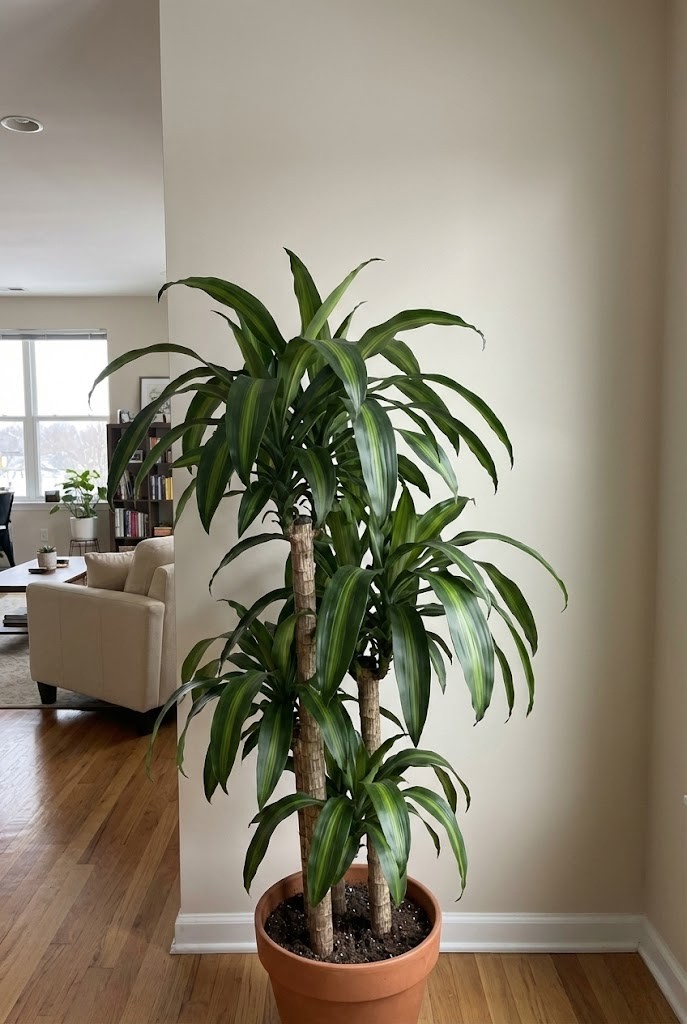
The corn plant has a familiar indoor-tree look for a reason: it brings easy, believable height. The thick canes lift the foliage upward, and the arching leaves create a broader top shape that helps a blank area feel fuller and less flat.
It is worth noticing that this plant reads wider than Lisa or a tall snake plant. Give it enough breathing room, and it adapts well to softer indoor light while still delivering that fuller, lived-in presence.
⚠️ Note: Toxic to pets if ingested. Keep it out of reach.
#11 — Bamboo Palm (Chamaedorea seifrizii)
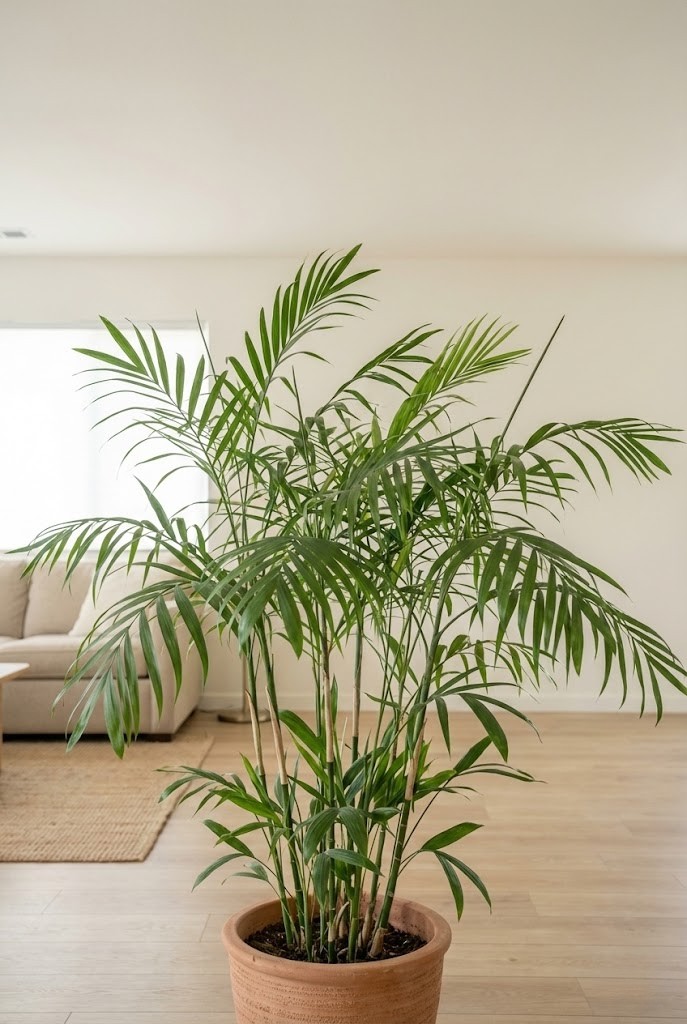
A bamboo palm adds height in a lighter, more textured way than denser floor plants do. The slim stems and narrow fronds create a loose green screen, so the plant gives you vertical presence without turning into a heavy block of foliage.
In lower light, the shape still works, but dry air shows up quickly on this plant. Keep it away from heater vents, and do not be surprised if the tips brown a bit in very dry rooms.
A Quick Care Note for Tall Low-Light Plants
Low light does not mean no light, and even the easiest plants on this list will do better with some natural daylight nearby.
In dimmer spots, growth is usually slower, which also means the soil stays wet longer than many people expect.
That is why overwatering is often the first problem, not underwatering. If you want tall impact right away, buying a mature plant is usually the smarter move—and rotating the pot every so often can help keep the shape more balanced over time.
Conclusion
A room does not need strong sun to benefit from a tall plant. The right pick can still bring height, shape, and a more finished look, even when the light stays soft and limited.
Some of these plants give you narrow, upright structure. Others add softer volume or a fuller floor-plant presence. The key is choosing the kind of height that fits your space, instead of forcing a sun-loving plant into a corner that will never suit it.