Table of Contents
Pets and houseplants can absolutely share a home. The trick is choosing plants that are considered non-toxic, then placing them like you live with curious noses and the occasional zoomie sprint.
Think of this as a low-risk shortlist for shared spaces. These pet friendly house plants are popular, placeable, and easier to live with in real rooms where pets roam.
Sturdy, floor-stand picks for shared spaces (busy living rooms, hallways, pet traffic)
#1 — Areca Palm (Dypsis lutescens)
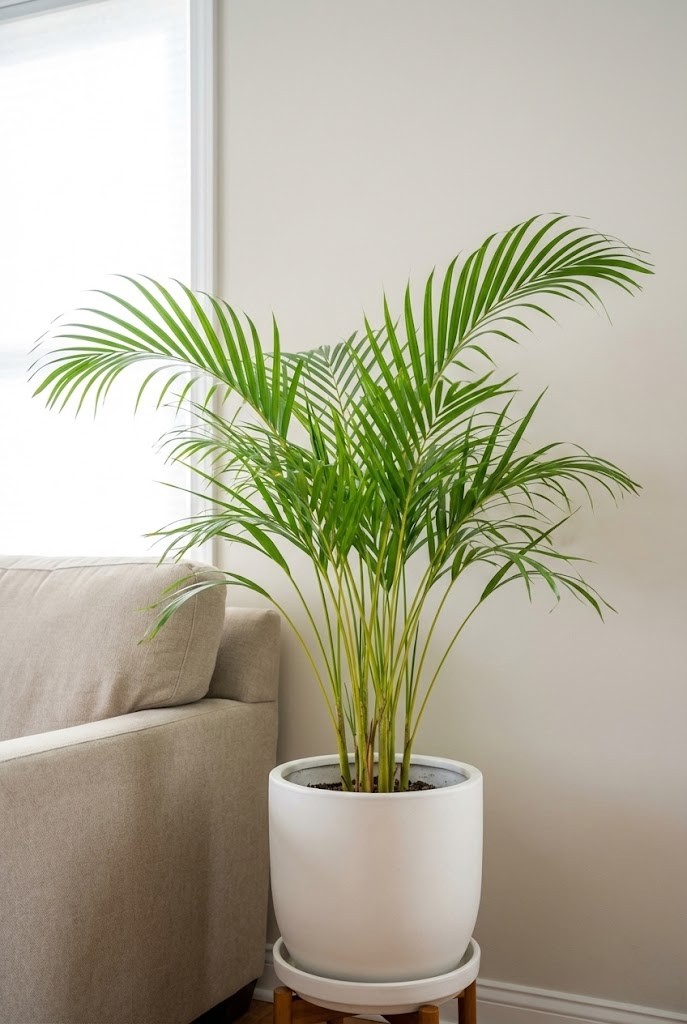
Feathery fronds instantly soften a living room corner beside a media console. It gives that airy, relaxed look without sharp edges.
Low-risk note. Areca palm is widely listed as non-toxic for common household pets. Give it bright, filtered window light and water when the top inch feels dry so it stays full.
#2 — Parlor Palm (Chamaedorea elegans)
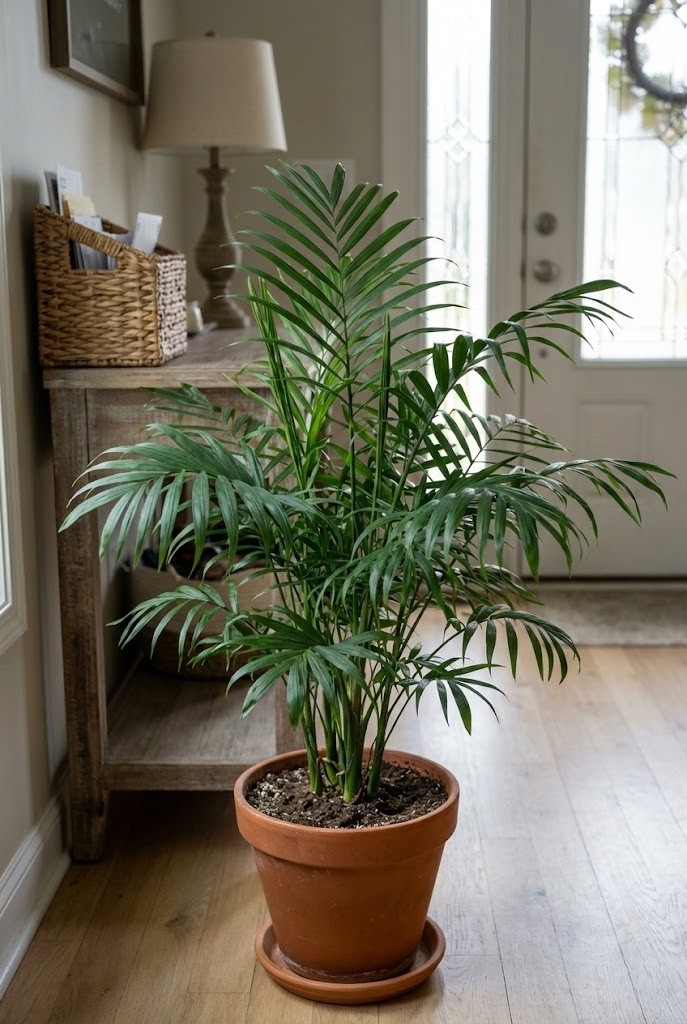
Parlor palm looks calm and classic in a bedroom corner or entryway area. It’s especially nice when you want greenery that doesn’t feel spiky.
Low-risk note. It’s commonly listed as pet-safe and tends to tolerate medium light better than many palms. Let it dry slightly between waterings, and rotate it once in a while to keep growth even.
#3 — Kentia Palm (Howea forsteriana)
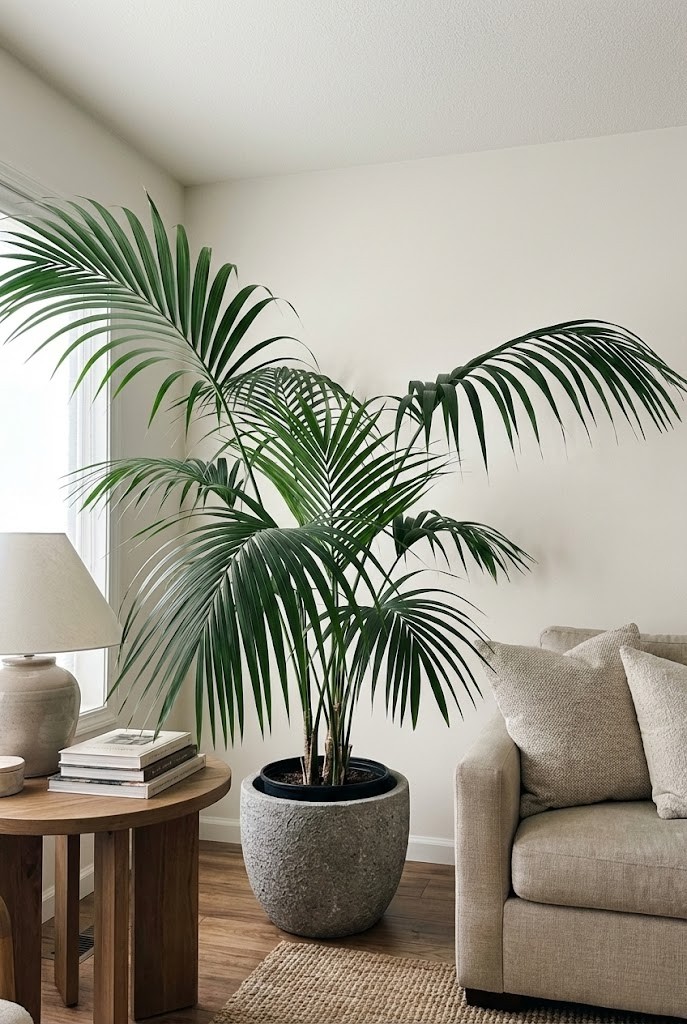
Kentia palm reads grown-up plant. Long, arching fronds look elegant behind a side table barrier near the sofa zone.
Low-risk note. It’s widely listed as non-toxic for pets. Place it near a bright window out of direct sun and keep a steady, not-soggy watering rhythm.
#4 — Ponytail Palm (Beaucarnea recurvata)
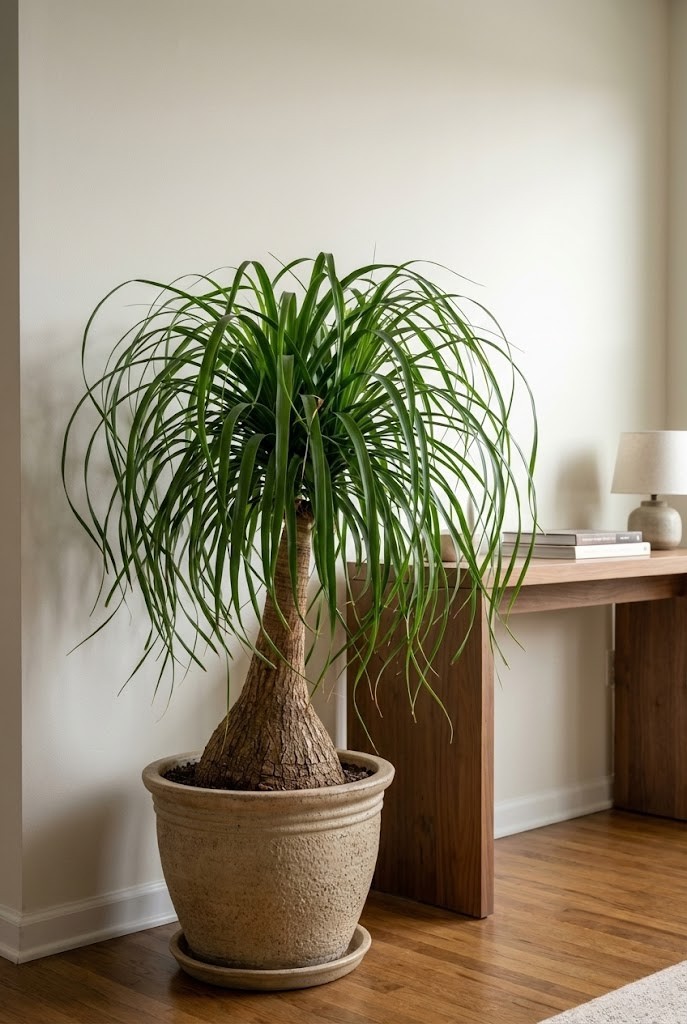
This one has a playful silhouette. A thick base with thin leaves that spill like a fountain, great for a living room corner or office nook.
Low-risk note. Ponytail palm is commonly listed as pet-safe and is forgiving if you forget to water. It prefers brighter light but handles average indoor light too. Just make sure the pot drains.
#5 — Cast Iron Plant (Aspidistra elatior)
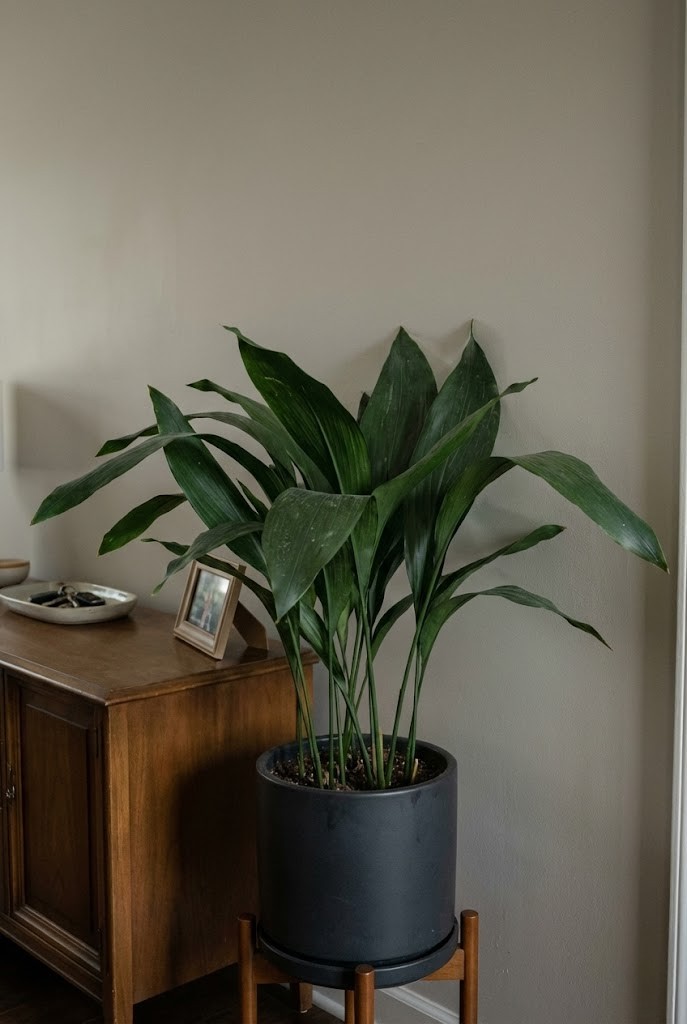
Cast iron plant is the quietly tough option for less-than-perfect light. It looks neat on a low stand near a hallway or entry traffic zone.
Low-risk note. It’s commonly listed as pet-safe and tolerates lower light and missed waterings better than most. Water when the pot is mostly dry and it keeps its shape.
#6 — Money Tree (Pachira aquatica)
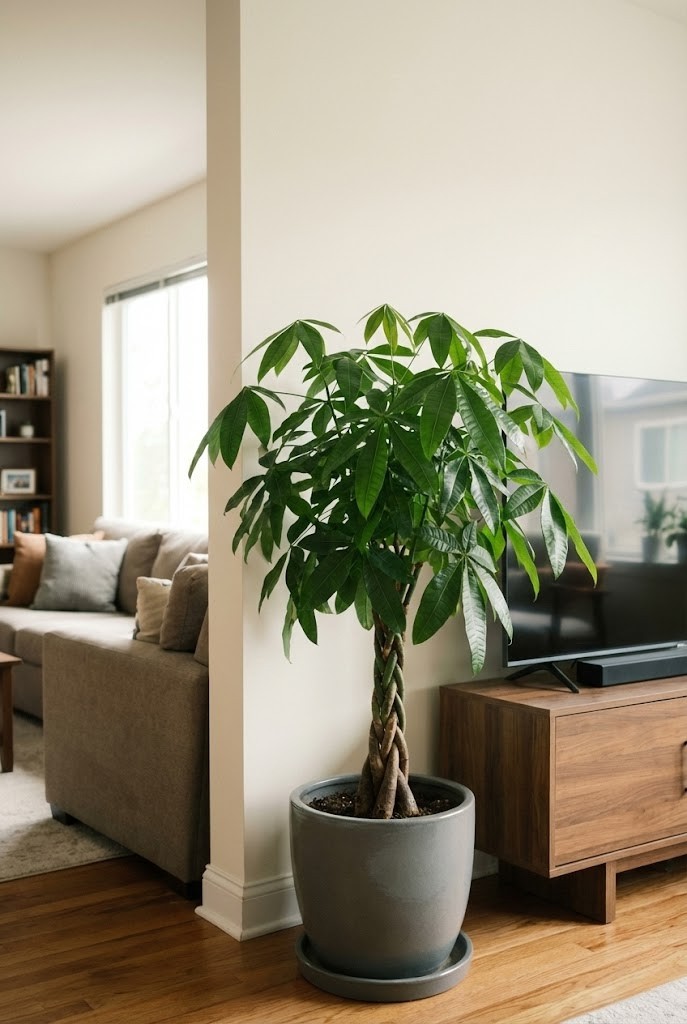
Money tree gives you a clean, upright look, especially in a heavier pot next to a media console or behind a side table barrier. The braided trunk feels structured and tidy.
Low-risk note. Money tree is widely listed as non-toxic for pets. Aim for bright, indirect light and a light-dry cycle. Water when the top couple inches feel dry, then let it drain fully.
Shelf-friendly compact plants (tidy growers in bright indirect light, easy to keep out of reach)
#7 — Spider Plant (Chlorophytum comosum)
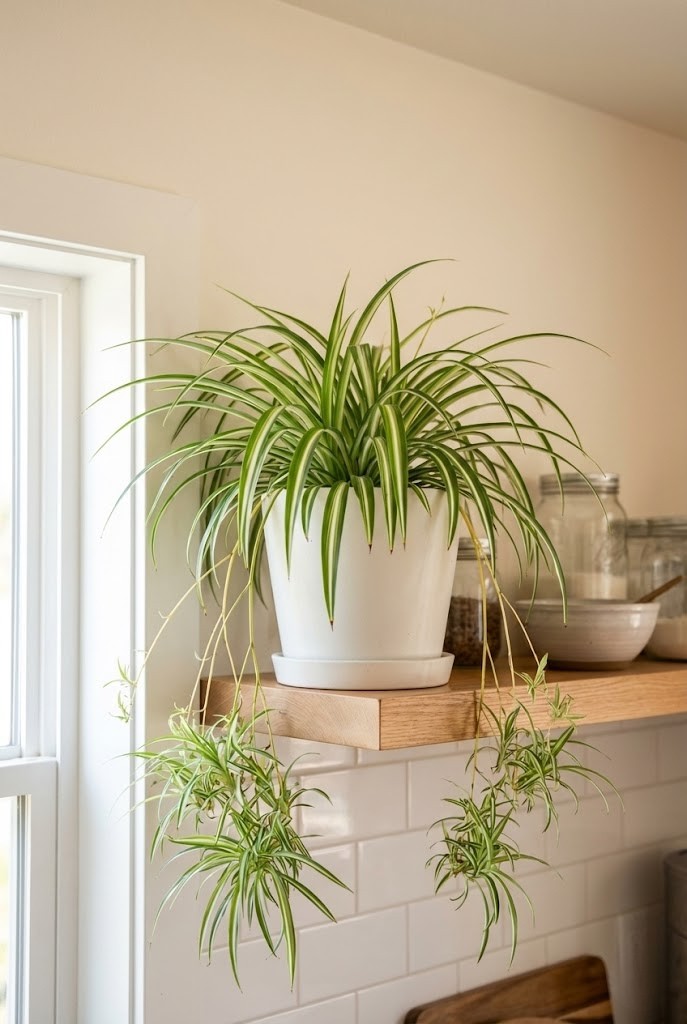
A spider plant looks like a little fountain of leaves on a high shelf or on a kitchen windowsill. When it’s thriving, it sends out baby offshoots that make the whole setup feel lively.
Low-risk note. Spider plant is widely listed as non-toxic for pets, but some cats still love to chew it. Keeping it up high helps. Water when the pot feels light and dry.
#8 — Baby Rubber Plant (Peperomia obtusifolia)
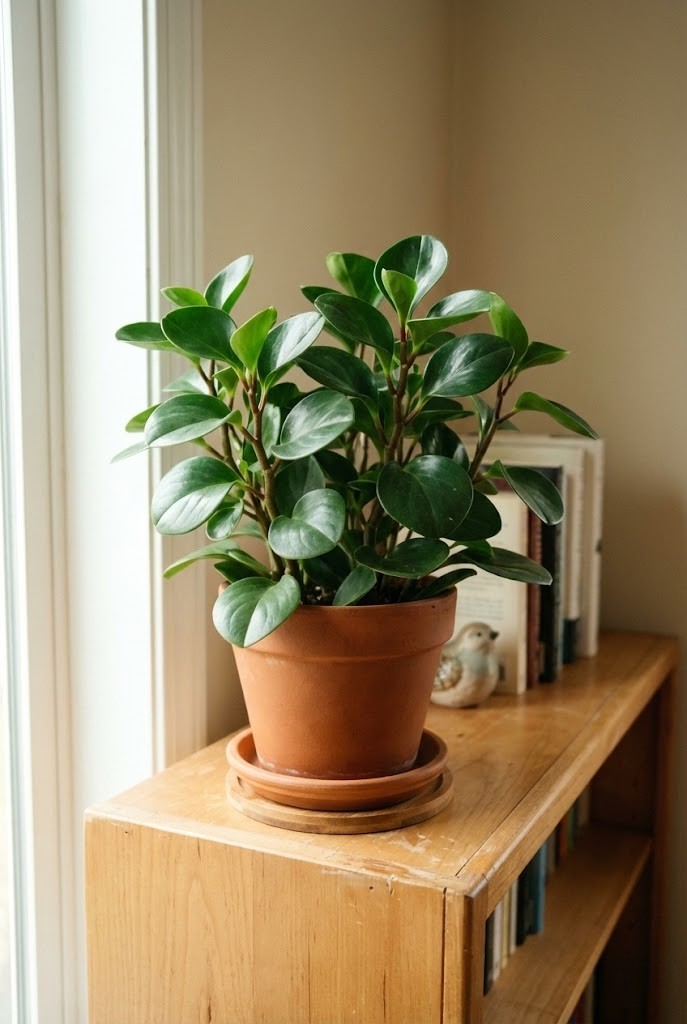
Thick, glossy leaves make this one look polished on an upper shelf near your desk or on a bookcase. It stays compact, so it’s easy to keep tidy in shared spaces.
Low-risk note. Peperomia obtusifolia is commonly listed as pet-safe. Let it dry slightly between waterings, and keep it in bright, indirect light for the fullest growth.
#9 — Chinese Money Plant (Pilea peperomioides)
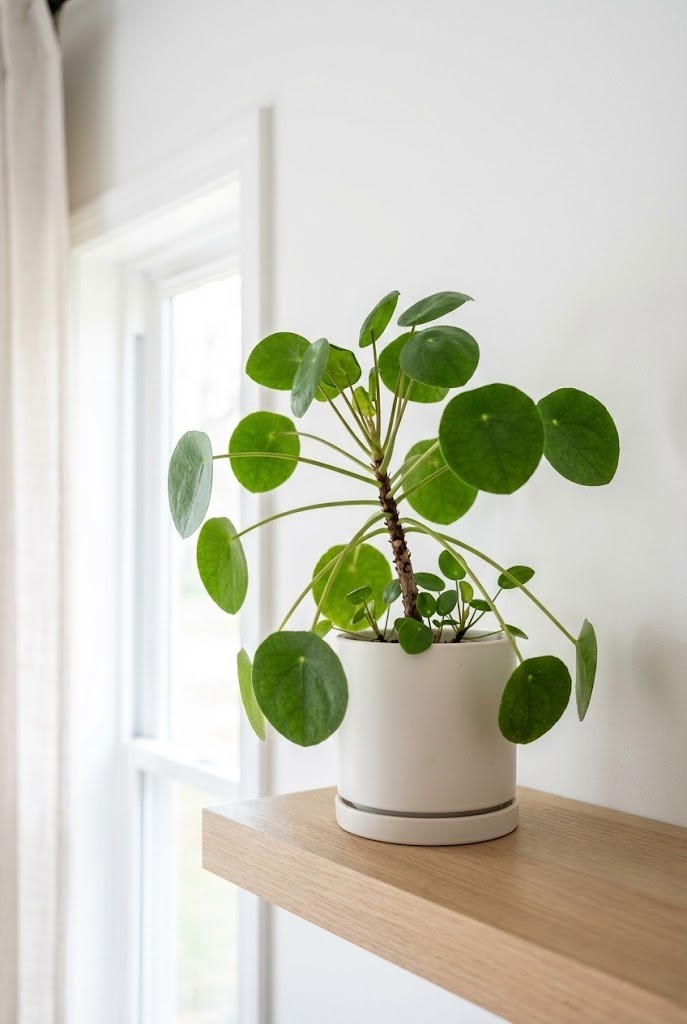
Those round, coin-like leaves look clean and modern on a shelf in the living room. It’s a great small plant with personality that still feels simple.
Low-risk note. It’s widely listed as non-toxic for pets. Rotate the pot occasionally so it grows evenly instead of leaning toward the window.
#10 — Prayer Plant (Maranta leuconeura)
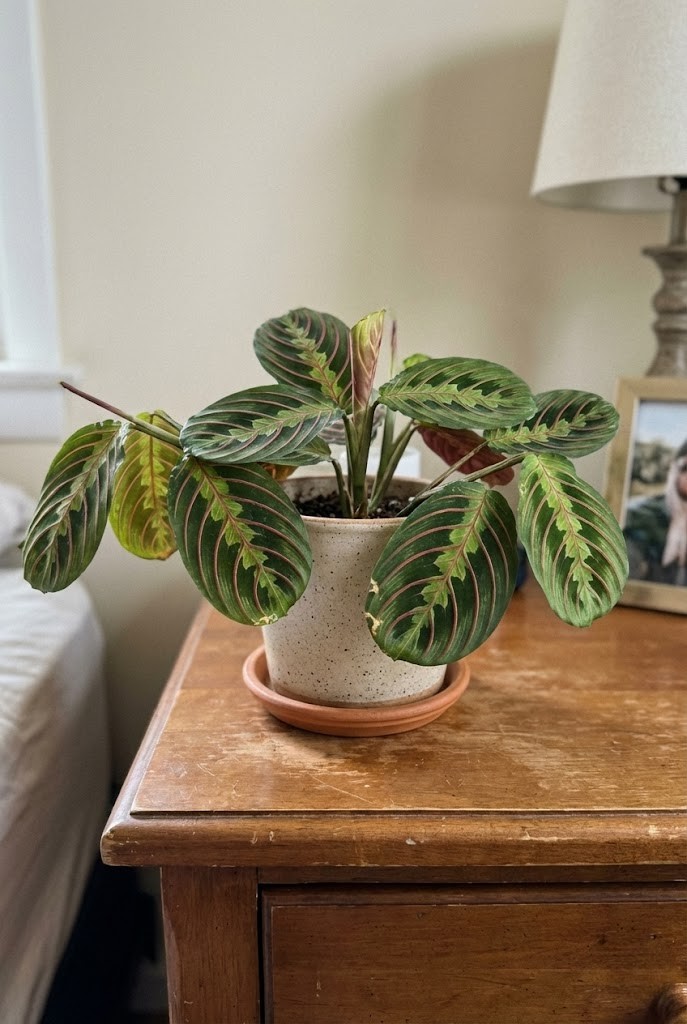
Prayer plant has soft, patterned leaves that look like a living textile. It’s especially pretty on an upper shelf near a window where light is gentle.
This one is commonly listed as pet-safe. Keep the soil slightly moist, not soggy, and avoid harsh direct sun so the leaves don’t crisp.
#11 — Calathea Orbifolia (Goeppertia orbifolia)
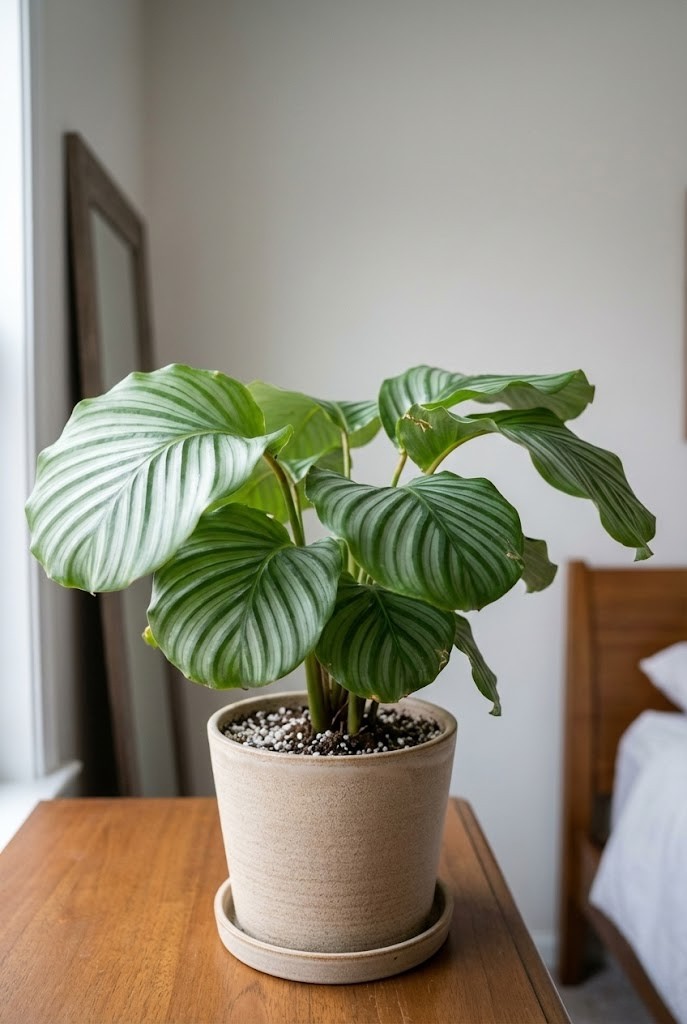
This is the statement leaf option. Big, striped leaves read designer on a dresser or a shelf unit, especially in a bedroom corner shared with pets.
Calatheas are widely listed as non-toxic for pets. They do best in steadier moisture and medium-to-bright indirect light. Keep them away from heat vents if your home is dry.
#12 — Hoya (Hoya carnosa)
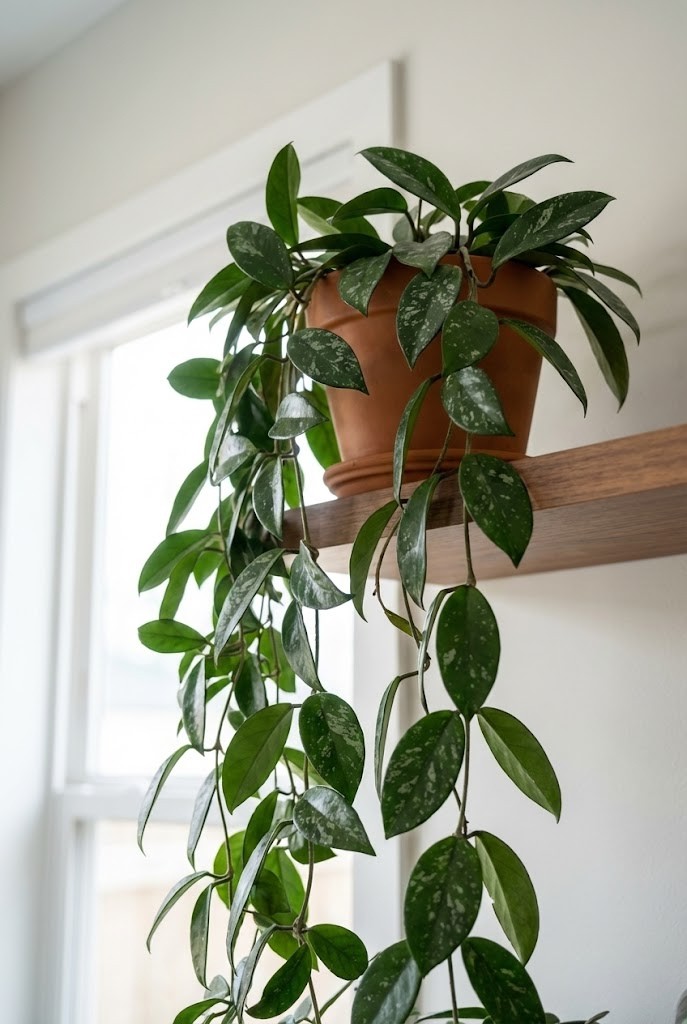
Hoya has thick, waxy leaves and a trailing shape that looks great on a high shelf. It gives you that collected plant feel without being fragile.
Hoyas are commonly listed as pet-safe and tend to be low-drama once settled. Let it dry a bit between waterings, and try not to move it around constantly.
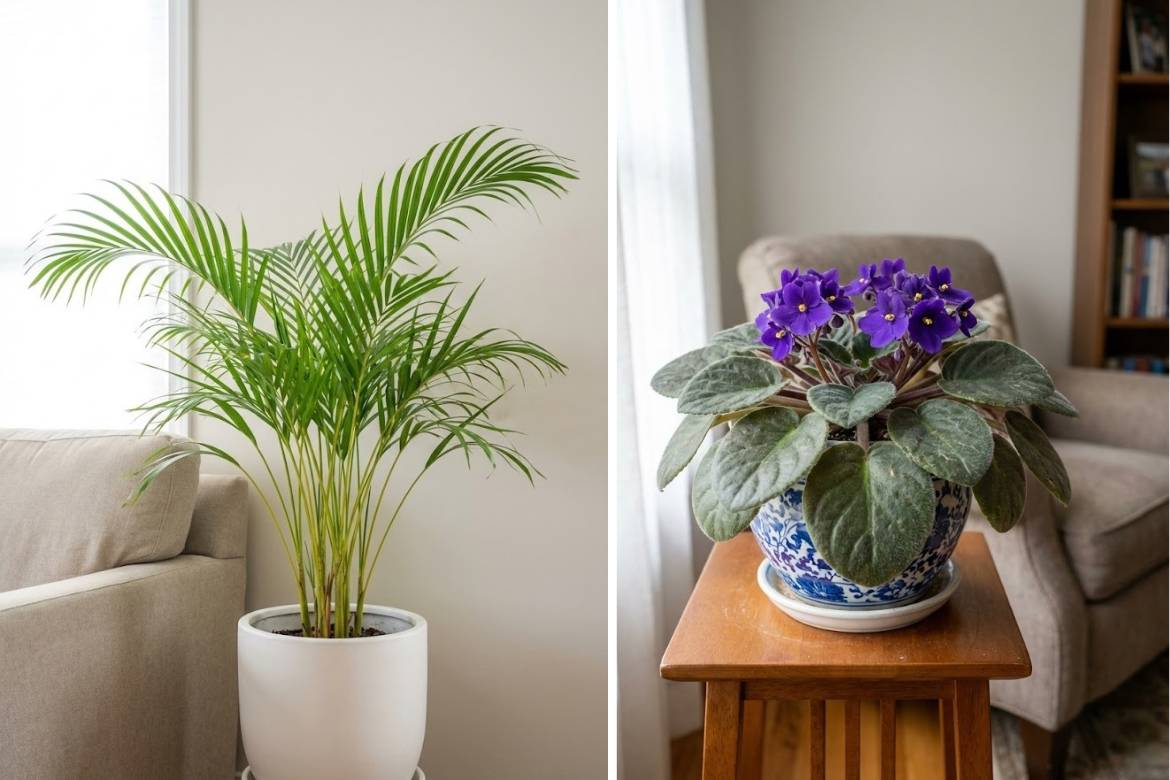
#13 — African Violet (Saintpaulia spp.)
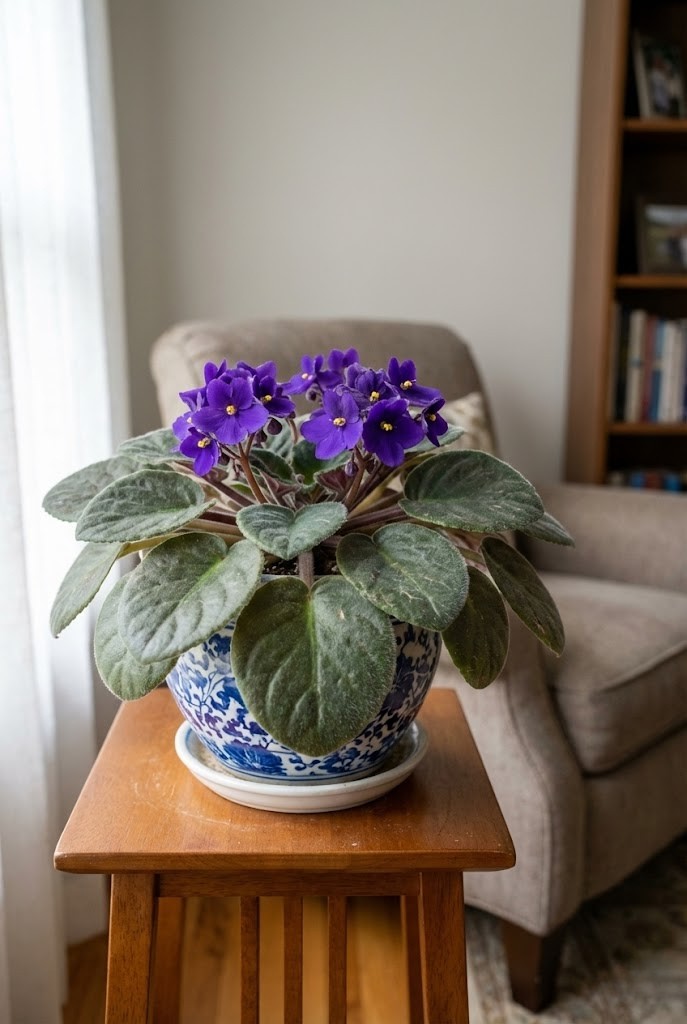
African violets are small and cheerful. They look perfect on a high tabletop or an upper shelf near a window where the light is bright but not direct.
Low-risk note. African violets are widely listed as non-toxic for pets. Water from the bottom or carefully into the soil so the leaves stay dry, and keep a saucer underneath for mess control.
Ferny, humidity-friendly options (kitchen and bath-adjacent, softer leaves, catch-tray friendly)
#14 — Boston Fern (Nephrolepis exaltata)
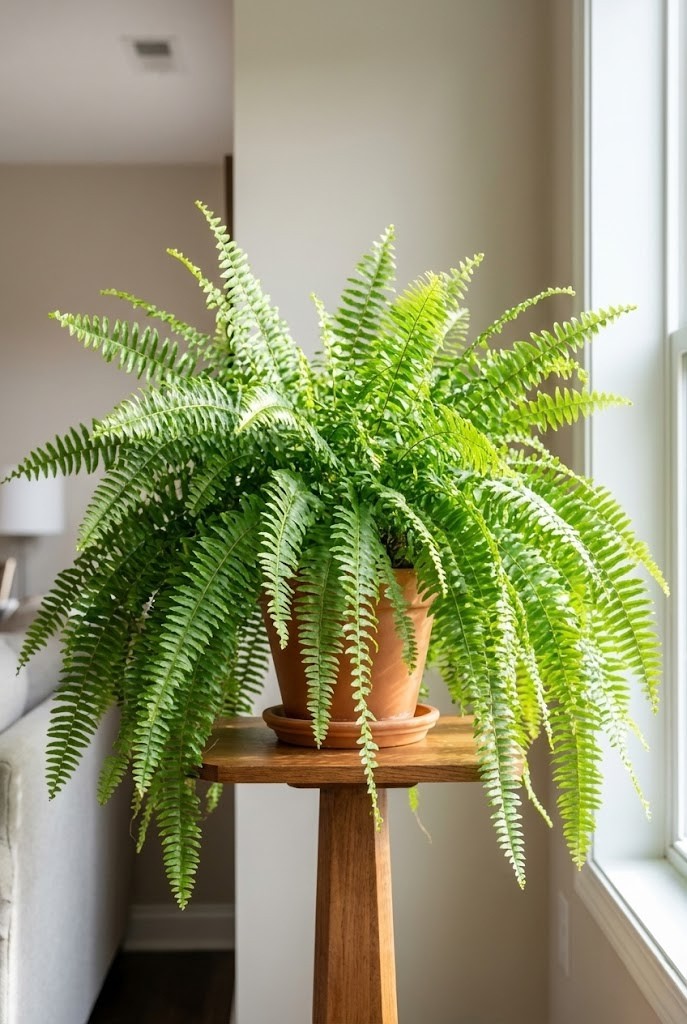
A Boston fern adds soft, fluffy texture that instantly warms up a kitchen or family room. It looks especially good elevated where it can spill a little without becoming a chew toy.
Low-risk note. Boston fern is widely listed as non-toxic for pets. It likes consistent moisture, so don’t let it dry out completely. If your home runs dry, move it away from heat vents.
#15 — Bird’s Nest Fern (Asplenium nidus)
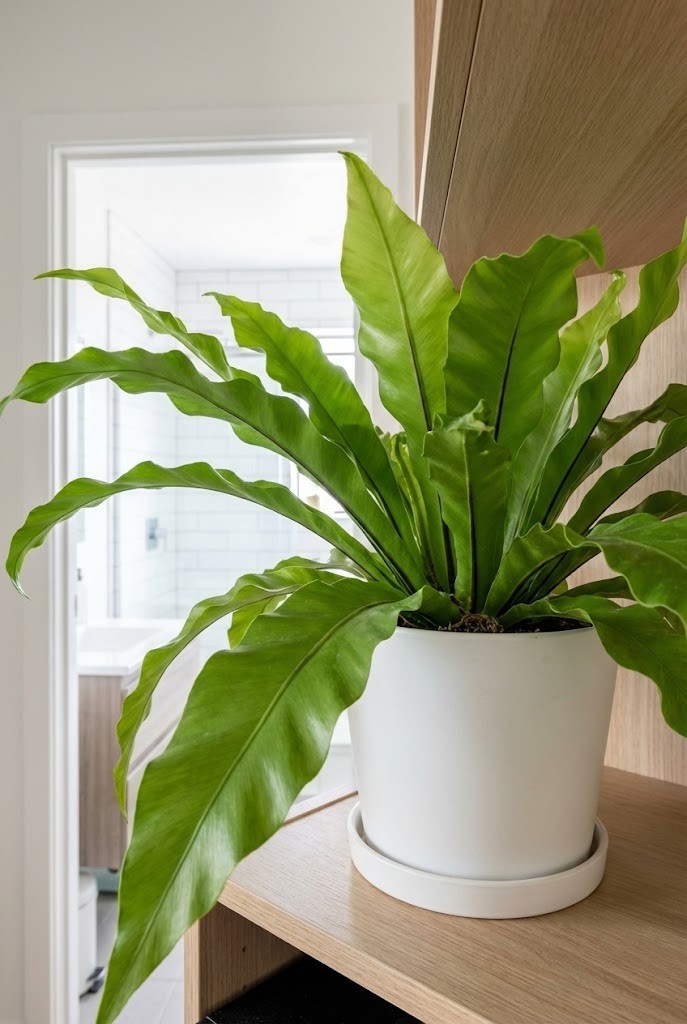
This fern has a clean rosette shape, like glossy green ribbons coming from the center. It’s a great tidy fern for a bathroom-adjacent shelf or bright kitchen corner.
Low-risk note. It’s commonly listed as pet-safe. Keep the soil lightly moist and water the soil, not the center, so the crown stays healthy.
#16 — Staghorn Fern (Platycerium bifurcatum)
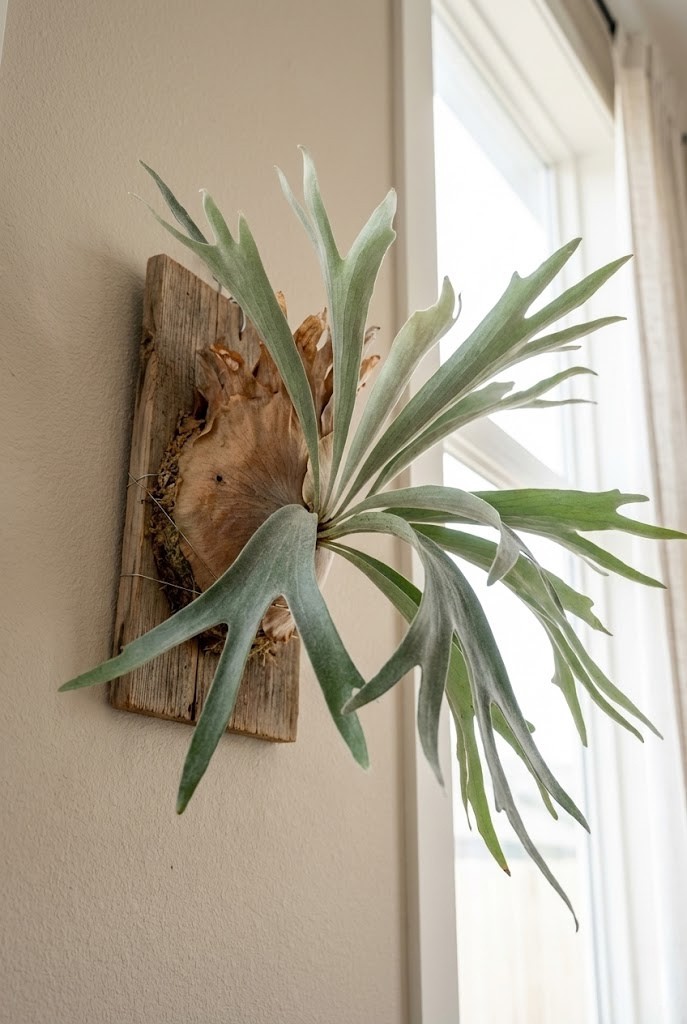
Staghorn fern looks like living wall art. Mounted on a board or set high on a shelf, it adds texture without taking up floor space in pet-heavy rooms.
It’s widely listed as non-toxic for pets. Bright, indirect light works well. Because it’s often mounted, it’s also easier to keep out of nose-level access.
#17 — Maidenhair Fern (Adiantum raddianum)
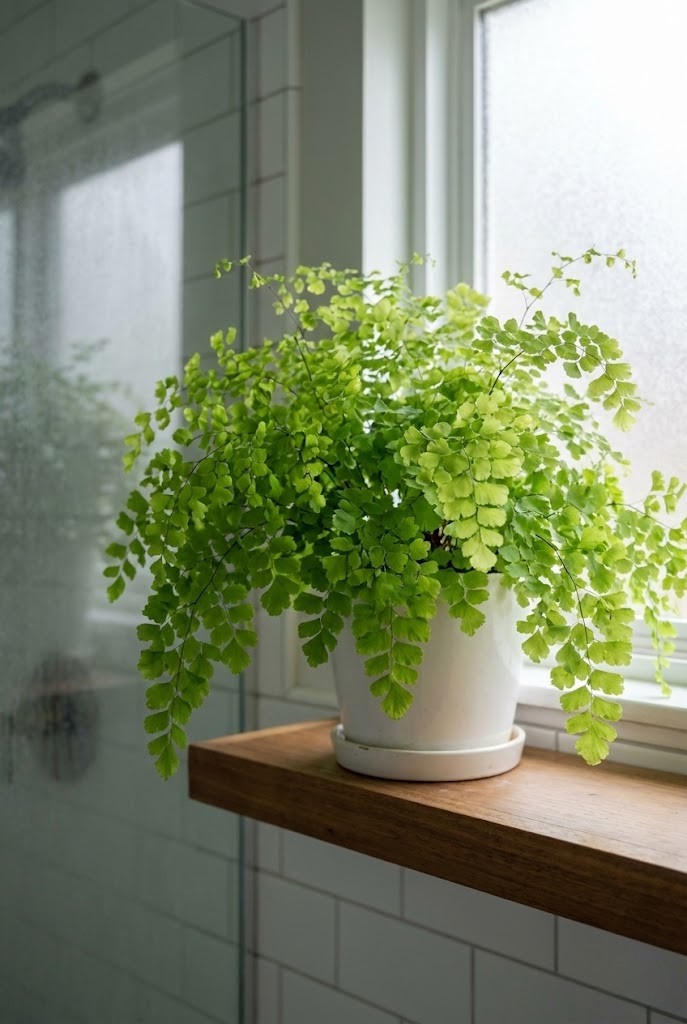
Maidenhair fern is delicate and airy, perfect for a bright bathroom-adjacent spot or a kitchen area where humidity is naturally higher. It looks like a soft green cloud in a pot.
Low-risk note. It’s commonly listed as pet-safe, but it’s not the most neglect-tolerant. Keep it evenly moist and away from dry airflow. If you want a fern look with less fuss, Boston or bird’s nest fern is easier.
#18 — Rabbit’s Foot Fern (Davallia fejeensis)
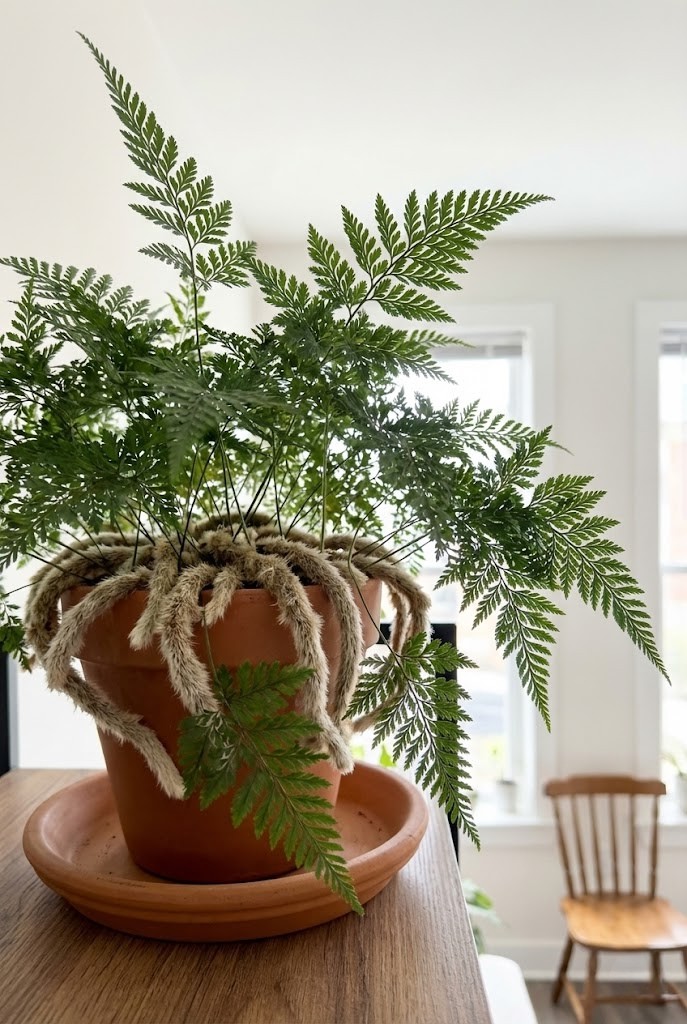
This one has a whimsical look, with soft fronds and fuzzy rhizomes that sometimes creep over the pot edge. It’s great on a high shelf where pets can’t paw at the pot.
Low-risk note. It’s widely listed as non-toxic for pets. It prefers bright indirect light and lightly moist soil. A catch tray helps keep your shelf clean.
#19 — Button Fern (Pellaea rotundifolia)
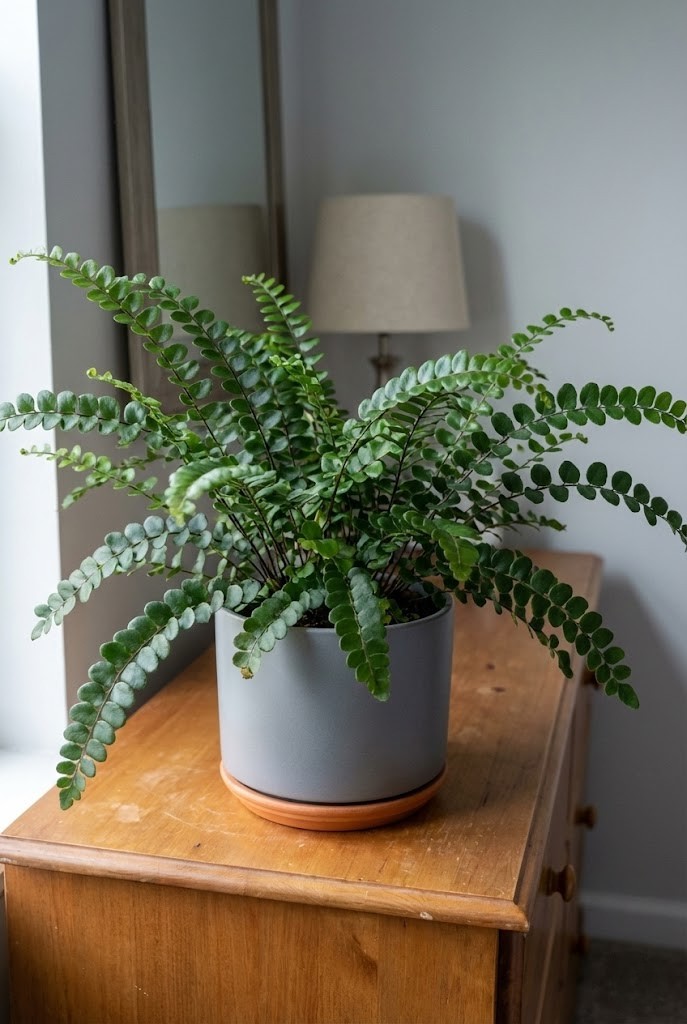
Button fern is compact and neat, with small rounded leaflets that stay more contained than many ferns. It’s a strong pick for shelves in kitchens or bedrooms.
It’s commonly listed as pet-safe. It likes medium-to-bright indirect light and slightly moist soil, but it’s generally easier than fussier ferns.
Bright-window safe picks (sunny sills, bright corners, bloomers and succulents)
#20 — Haworthia (Haworthia spp.)
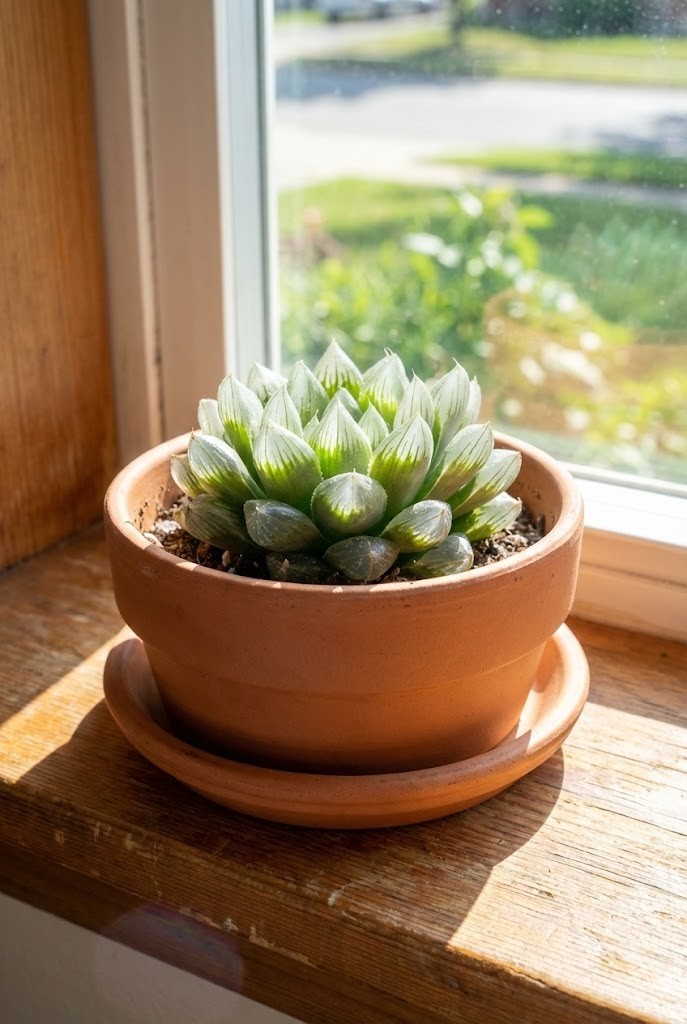
Haworthia is small, sculptural, and perfect for a windowsill. It stays compact, so it’s easy to tuck into a stable planter with a saucer.
Low-risk note. Haworthia is widely listed as pet-safe. Give it bright light and let the soil dry out fully between waterings.
#21 — Echeveria (Echeveria spp.)
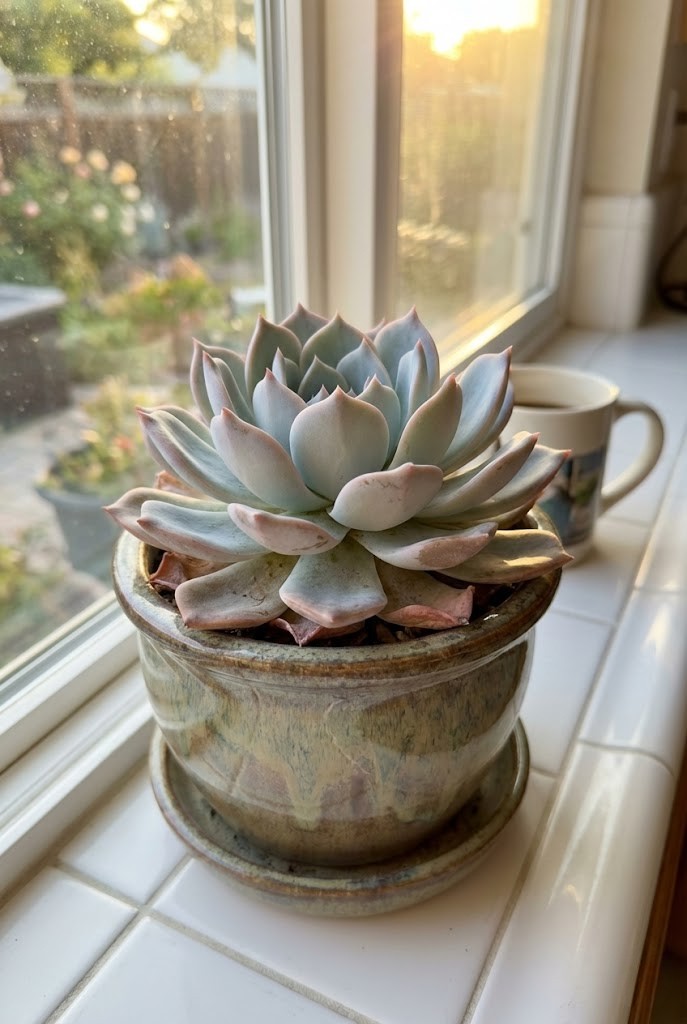
Echeveria looks like a living flower, with a rosette shape that makes a sunny windowsill feel styled. It’s ideal for bright kitchens and dining areas.
Low-risk note. It’s commonly listed as non-toxic for pets. Let it dry completely between waterings and avoid leaving water sitting in the rosette.
#22 — Christmas Cactus (Schlumbergera spp.)
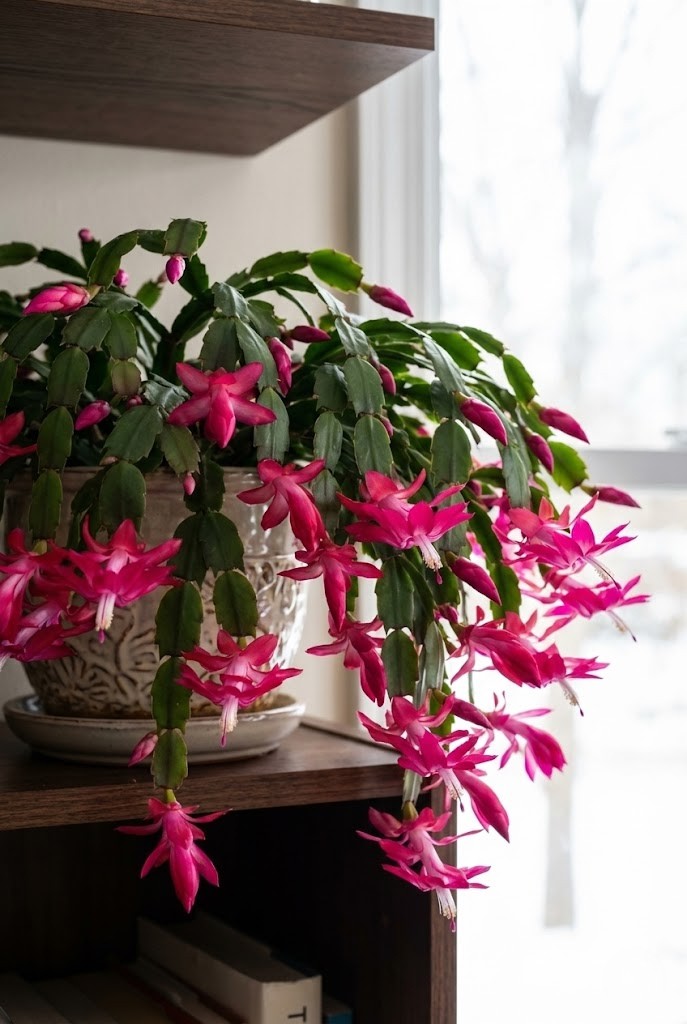
Christmas cactus is a trailing plant with segmented stems that looks great on an upper shelf near a bright window. It’s especially cute in a decorative cachepot with a saucer.
It’s widely listed as pet-safe and easier than many flowering plants. Give it bright, indirect light and water when the pot is partly dry.
#23 — Mistletoe Cactus (Rhipsalis baccifera)
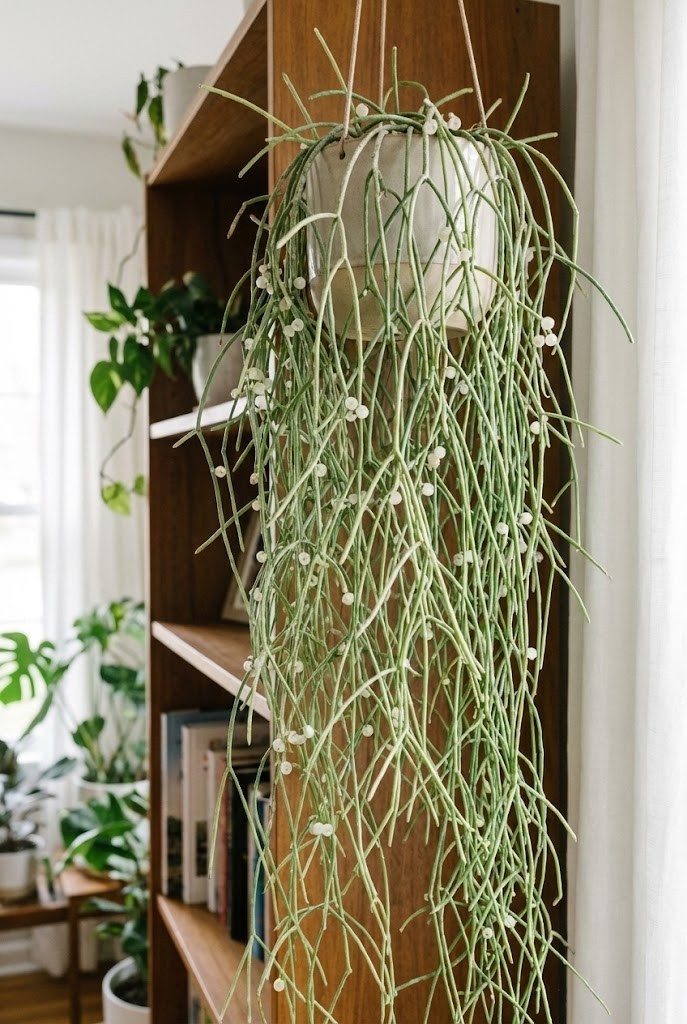
Mistletoe cactus has thin, trailing strands that look cool on a high shelf in a bright room. It gives a modern, sculptural look without sharp spines.
This cactus is commonly listed as non-toxic for pets. It does best near a bright window out of direct sun, and it prefers a light-dry cycle.
#24 — Phalaenopsis Orchid (Phalaenopsis spp.)
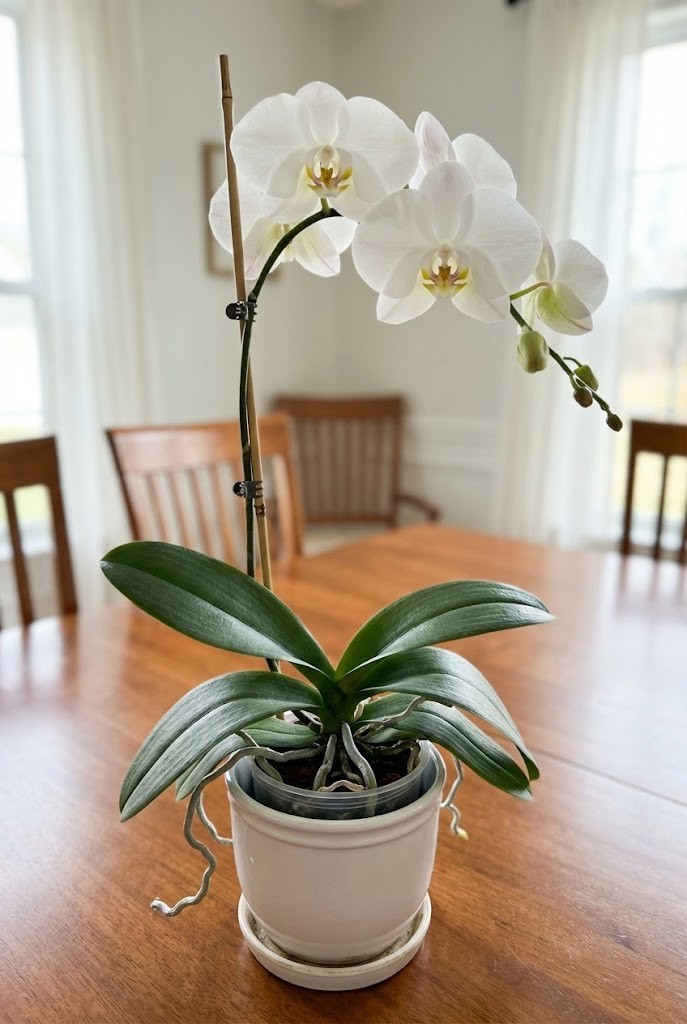
A phalaenopsis orchid looks like a finished centerpiece on a high tabletop or dining area. It’s perfect for bright, indirect light and pet-safe styling.
Low-risk note. Orchids like this are widely listed as pet-safe. Water lightly when the potting mix is close to dry, and use a heavier outer pot if you’re worried about tipping.
#25 — Bromeliad (Guzmania spp.)
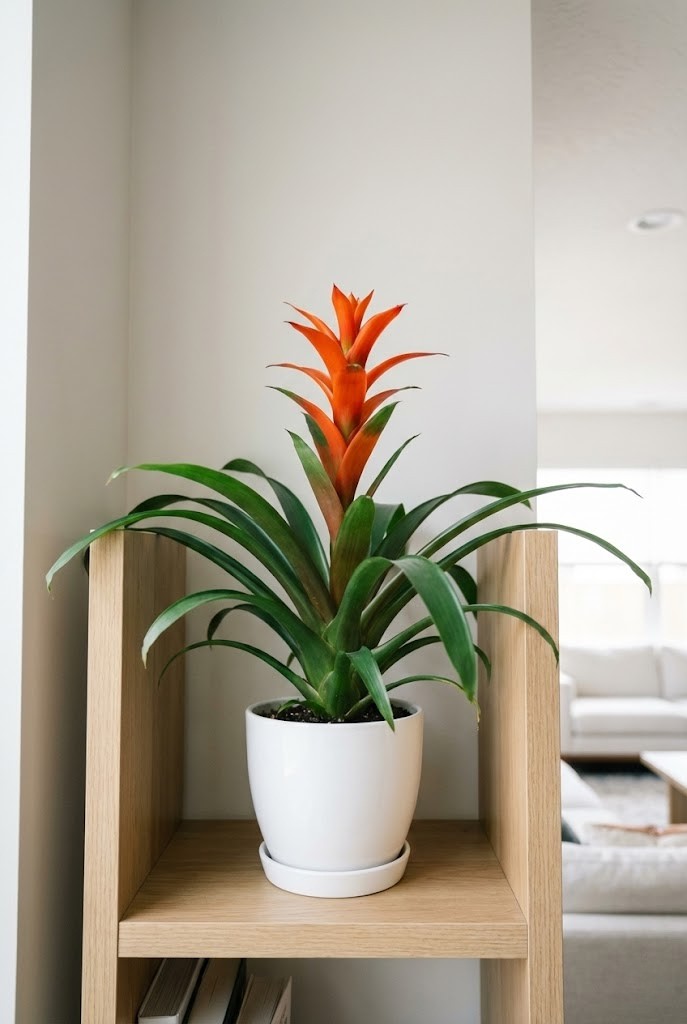
Bromeliads bring instant color with a clean, modern shape. They look great on a shelf near a bright window, especially when you want a pop that still feels tidy.
Bromeliads are commonly listed as non-toxic for pets. Bright indirect light is ideal. Water the central cup lightly and keep the soil only slightly moist.
Quick pet-proof placement tips (so your plant stays upright)
If pets roam the floor, start with sturdier, heavier-pot plants like cast iron plant, money tree, or palms positioned behind a side table barrier. Pot weight matters more than stand height in busy rooms.
If pets jump and climb, keep plants on upper shelves with wide catch trays. Filtered window light is usually the easiest placement for most of the shelf-friendly picks.
And if your pet is a committed chewer, keep even pet-safe plants out of easy reach. Safe doesn’t always mean snack-proof. When in doubt, double-check a plant on the ASPCA list before bringing it home.
Found this helpful? Save it for later!