Table of Contents
Some rooms stay dim no matter how wide the curtains are open. When you’re also living with a curious cat, not every houseplant feels like a smart idea.
You want something green, but not something delicate, dramatic, or suspiciously chewable. Here are pet-safe indoor plants that can handle dimmer rooms and real cat homes.
#1 — Cast Iron Plant (Aspidistra elatior)
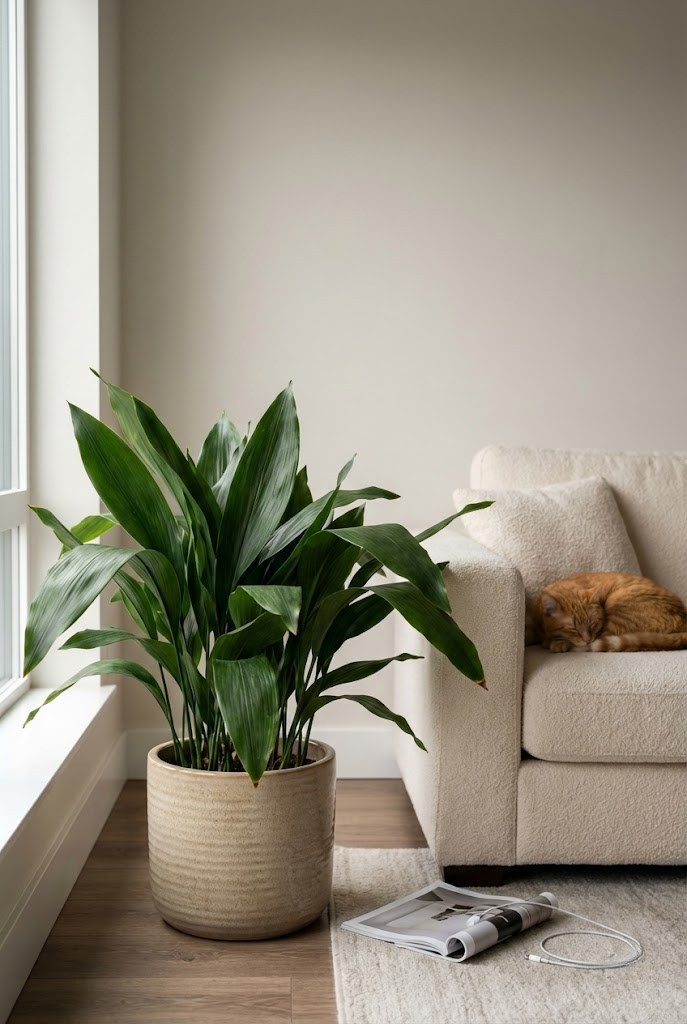
Cast iron plant has real hard-to-rattle energy. In a dim living room, it looks steady, grounded, and completely unfazed — the kind of plant that doesn’t need special handling to hold a room together.
The leaves are broad, deep green, and still, so nothing reads fluttery or toy-like from a cat’s point of view. It also has that rare low-drama quality that makes it especially good for people who forget a watering here and there or just don’t want a plant that needs constant checking.
At floor level, it feels solid and ignore-able in the best way. In a cat home, that quiet sturdiness is part of the appeal, especially when there’s already plenty going on near the ground.
#2 — Parlor Palm (Chamaedorea elegans)
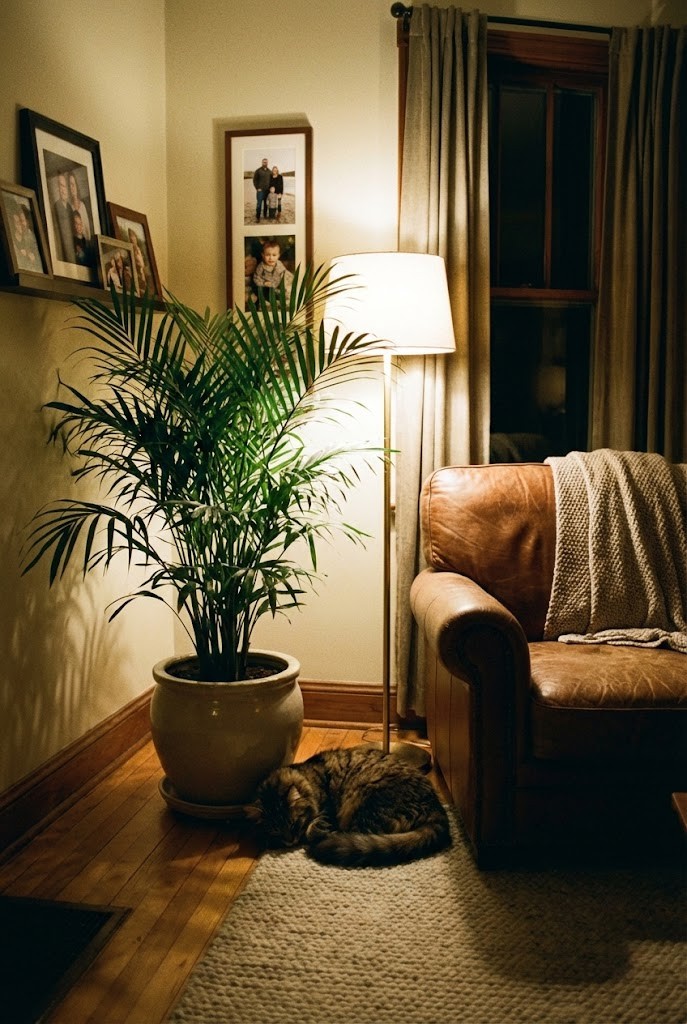
Parlor palm gives you the softness of a palm without the sprawl or drama of a bigger one. In a dimmer room, that smaller feathery shape can make the space feel lighter without turning the plant into the whole event.
The fronds have an airy texture, but the plant usually reads as gentle rather than wildly tempting. In lower light it grows slowly, which helps it stay manageable in cat homes where anything too floppy or overgrown gets noticed fast.
#3 — Rattlesnake Plant (Calathea lancifolia)
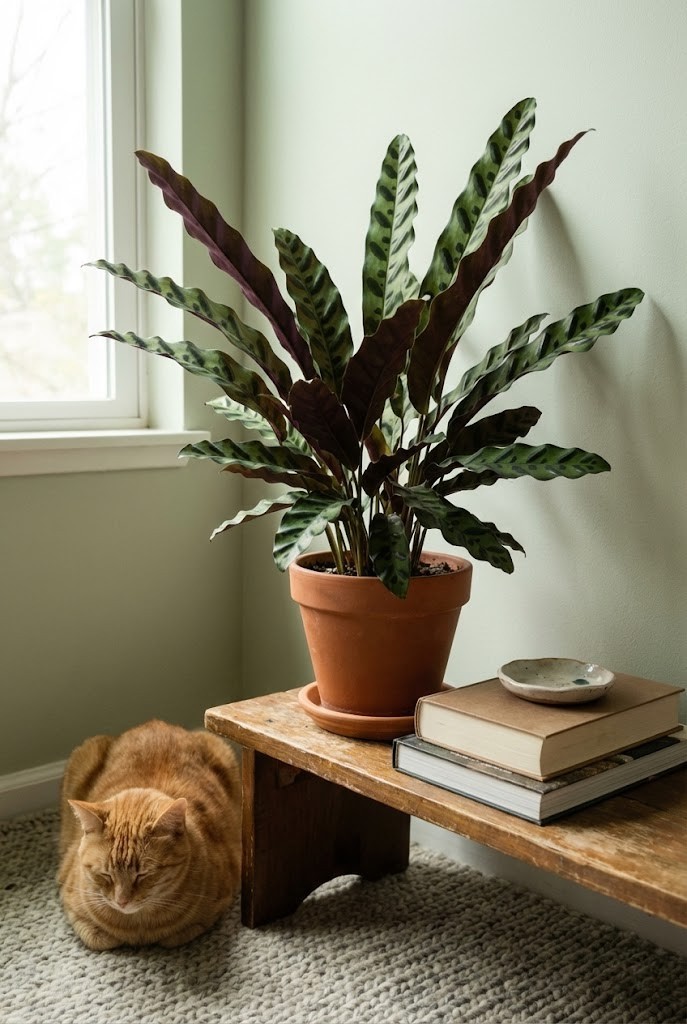
Picture a corner that never gets direct sun — just soft, indirect light bouncing off walls while a cat hops up to inspect anything placed within reach.
Rattlesnake plant fits that scene beautifully. The long, wavy leaves look decorative and patterned rather than grassy, so they’re less likely to invite the same nibbling behavior you’d get from thinner, blade-like foliage.
It’s a strong choice when you want something visually bold that still feels calm in a sleep space. If your tap water is very hard, switching to filtered water can help keep the leaf edges looking better.
#4 — Prayer Plant (Maranta leuconeura)
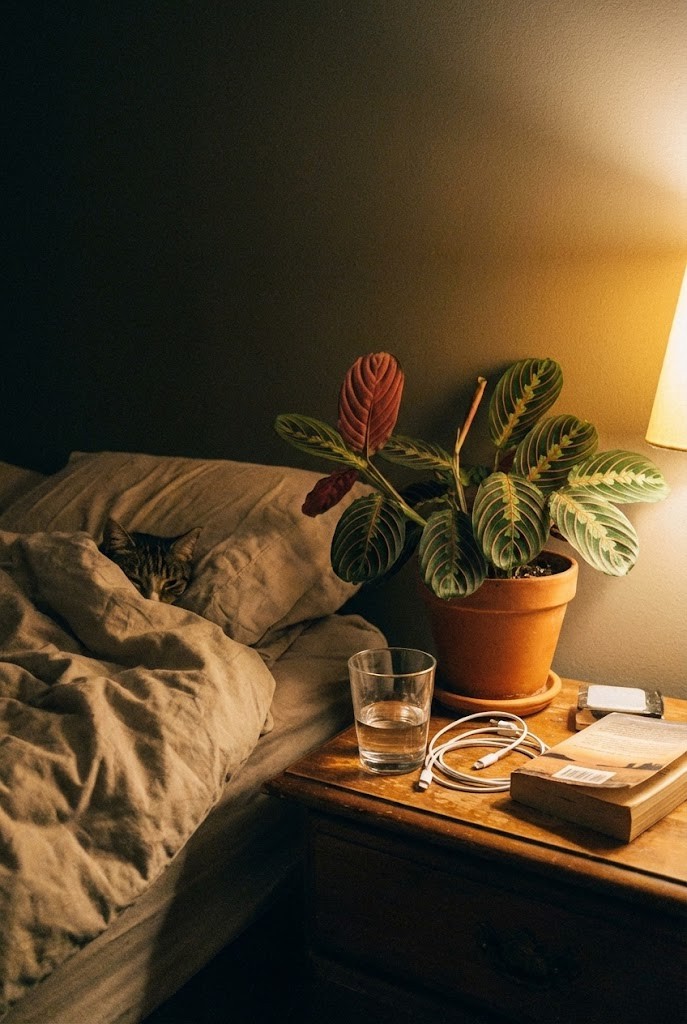
Prayer plants are perfect for spots where you want greenery close by, but not something that trails into paws. The rounded leaves look tidy and contained, like a small living accent rather than a sprawling vine.
In lower light, maranta tends to slow down and stay compact, which makes it easier to keep looking neat. That contained shape matters in a cat home — it’s less likely to brush whiskers or dangle over edges in a way that turns into playtime.
If your air is very dry, this plant looks best when it isn’t placed right next to a blasting vent.
#5 — Money Tree (Pachira aquatica)
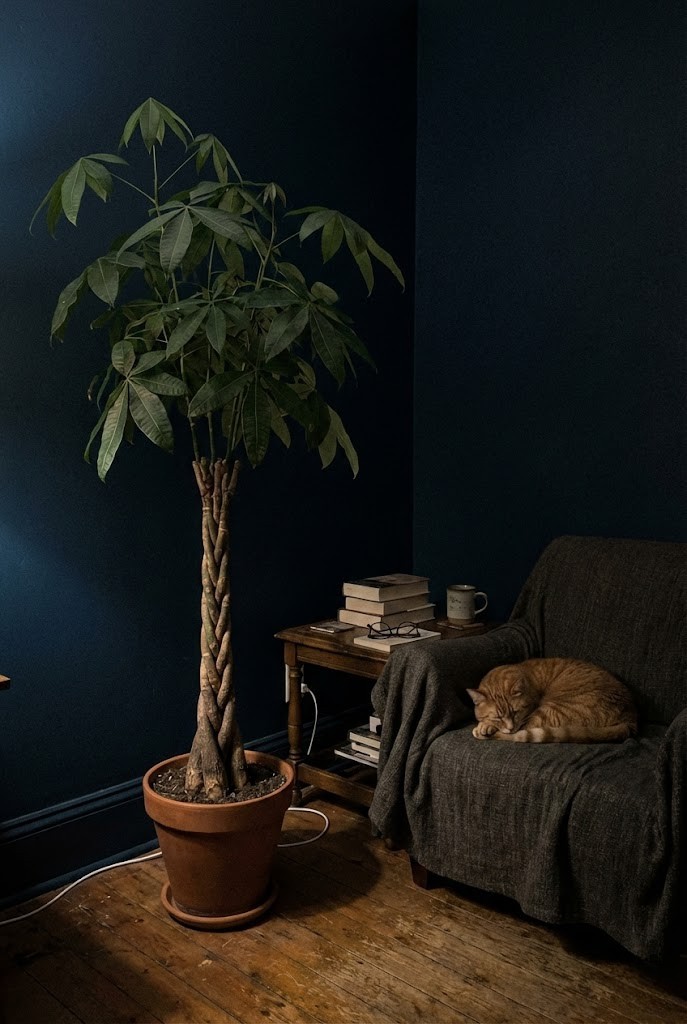
A money tree brings height and structure without feeling fussy. In a work nook that runs more on overhead lighting than bright window light, that kind of clean shape can make the whole area feel more finished.
The braided trunk gives it a sculptural look, and the rounded leaves read as calm rather than wispy. In very low light, growth slows, which can actually be a plus when you want something contained.
Money trees are generally considered pet-safe, but if you have a dedicated chewer, it’s still smart to keep the pot slightly out of reach.
#6 — Peperomia obtusifolia
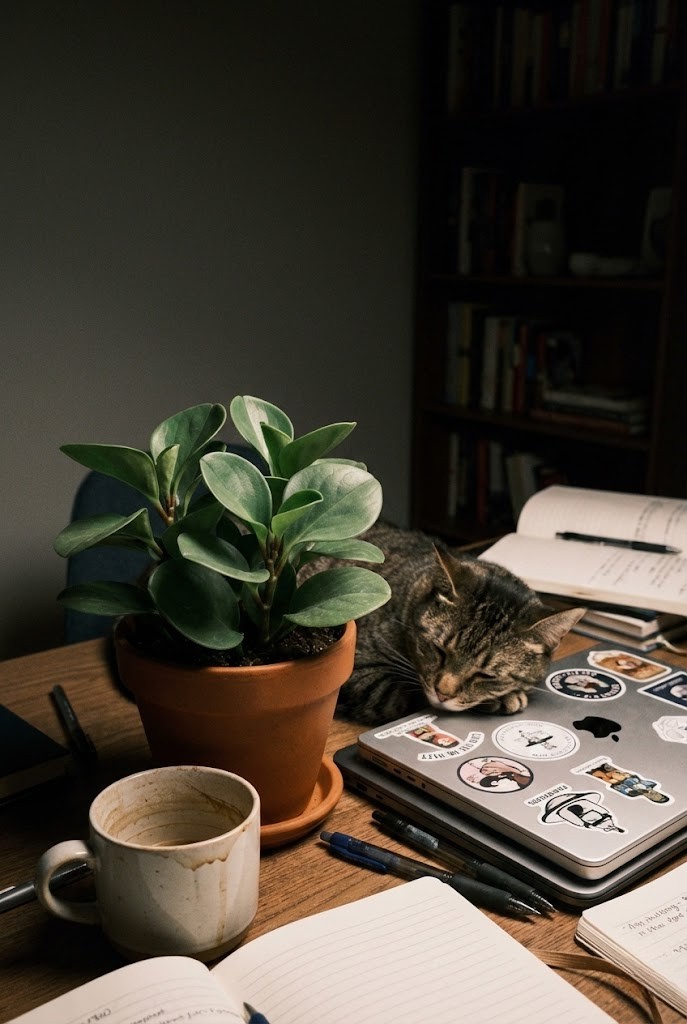
Peperomia obtusifolia is one of the best beginner-friendly plants in this kind of list because it stays small without feeling flimsy. The leaves are thick, smooth, and slightly glossy, so even a compact plant still looks substantial and finished.
That thicker foliage helps it hold a neat shape without seeming delicate, which is useful if you want something easy to live with on a desk, dresser, or nearby shelf. In lower light, it usually stays compact rather than stretching into weak, messy growth.
It’s a particularly good pick for anyone who wants a pet-safe plant that looks polished without acting high-maintenance.
#7 — Kentia Palm (Howea forsteriana)

Kentia palm adds height without making the room feel harder or heavier. In a cat home, that balance matters — you want a floor plant with presence, but not one that turns the whole area chaotic.
The fronds arch with a quiet elegance that changes the room more than you expect. Even in lower light, it keeps that airy vertical shape, so the space feels softer and taller at the same time.
#8 — Lady Palm (Rhapis excelsa)

Lady palm brings order to a darker part of the home. The canes grow in a firm, upright cluster, so the whole plant has backbone — it makes a dim corner look intentional instead of vaguely unfinished.
It feels firmer and more architectural than the softer palms people usually reach for. In low light, it still reads crisp and composed, which helps in hallways, pass-through spaces, and other spots where a plant needs to hold its line.
#9 — Boston Fern (Nephrolepis exaltata)

Boston fern brings soft volume to a dim corner in a way that feels lush rather than heavy. If your cat likes to nap nearby, that fullness can make the space feel layered and alive instead of flat.
Under lamplight, the fronds catch the glow and throw soft shadows on the wall. Because it’s pet-safe, it’s a favorite in cat homes — just choose a heavier pot so it won’t tip if someone gets curious.
#10 — Bird’s Nest Fern (Asplenium nidus)
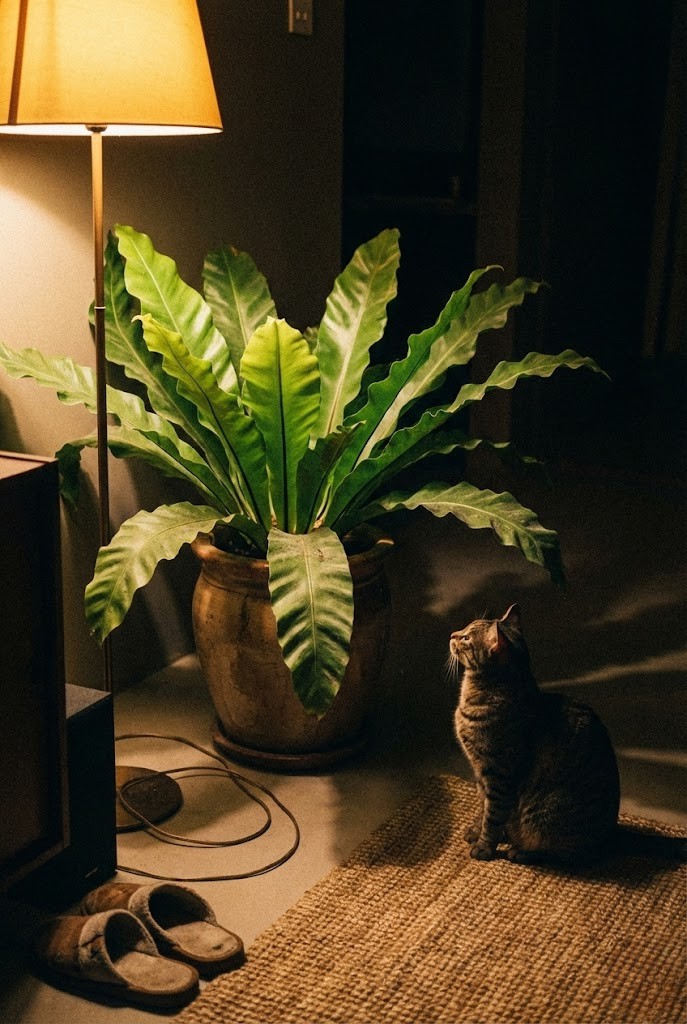
Bird’s nest fern gives a room a cleaner, fresher kind of green than most ferns. The broad leaves rise from the center in smooth, ribbed waves, and the glossy surface catches light beautifully, which helps a shadowy corner feel less dull and flat.
Instead of reading feathery or loose, it feels polished and quietly sculptural. That makes it especially appealing if you want something lush-looking in a cat home, but not a plant that seems overly floppy, fussy, or easy to obsess over.
It’s one of those plants that can make a dim spot feel more finished without asking the whole room to revolve around it.
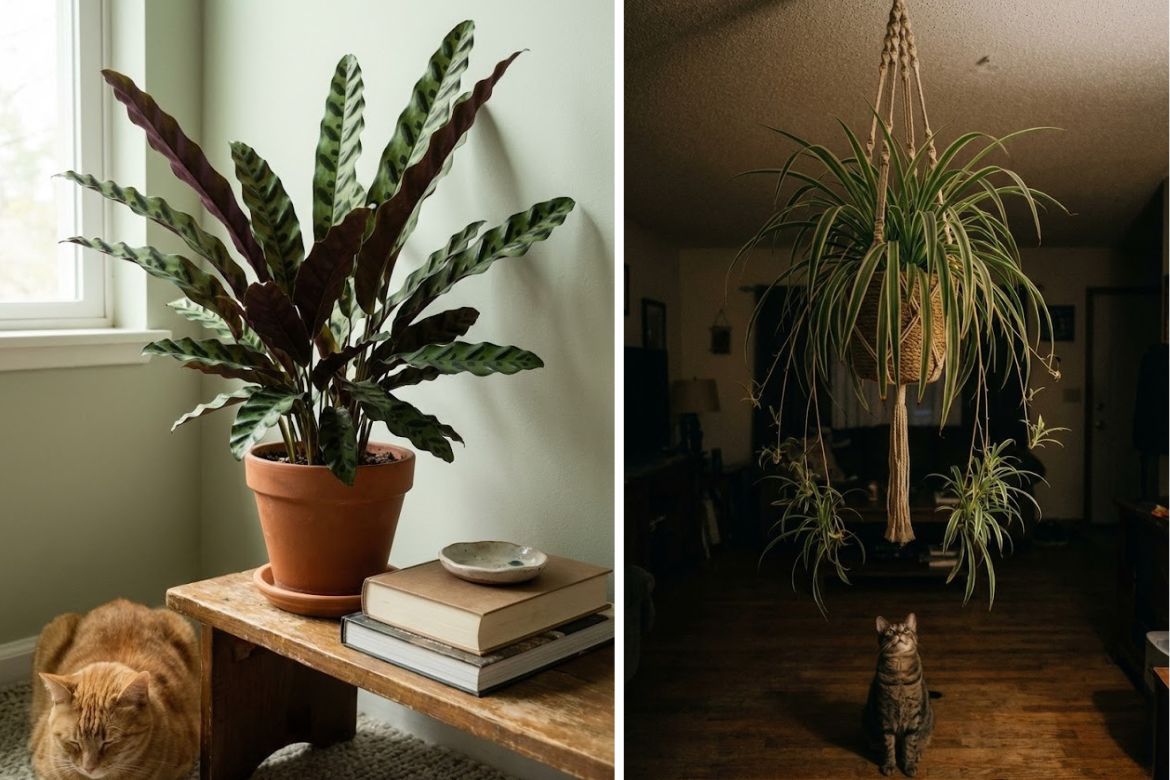
#11 — Spider Plant (Chlorophytum comosum — Hanging or High Shelf Only)
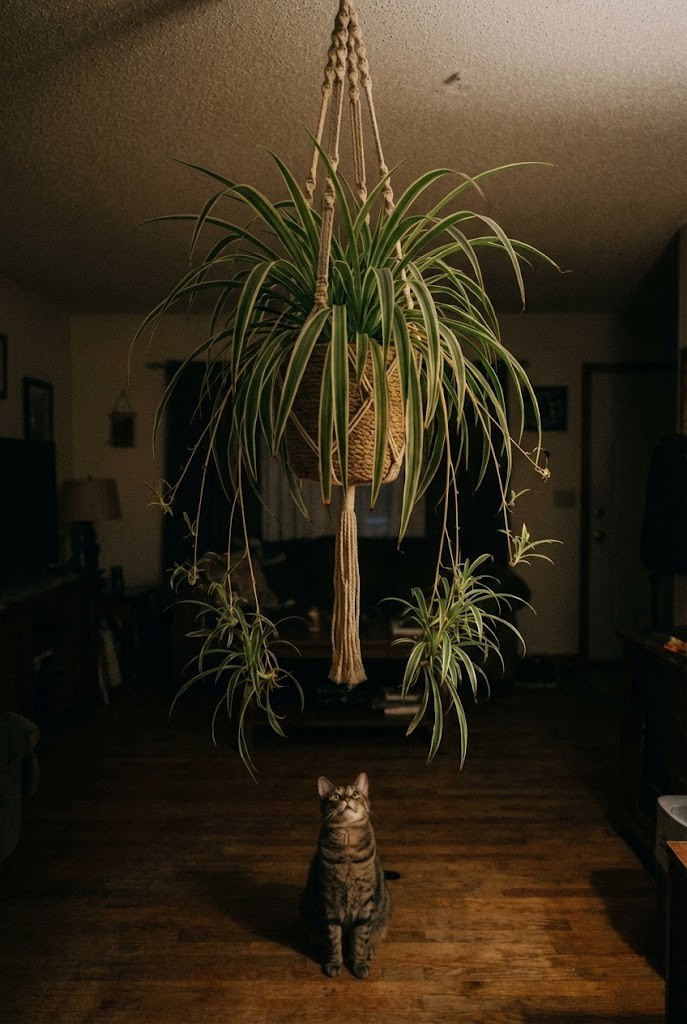
Spider plants are famously pet-safe — and just as famously tempting to chew. In many homes, they trigger a “catnip effect,” which means a floor pot or low shelf placement can quickly turn into a chewed-up mess.
In a low-light cat home, this plant works best as a high-placement-only option. Hung near a lamp or placed on a tall shelf, the arching leaves soften the upper part of the room while staying out of reach.
If you want that airy, trailing look without inviting a nightly buffet, keeping it elevated is what makes spider plant realistic in cat spaces.
A Few Simple Care Notes for Cat Homes
Low light changes the pace of everything. Soil stays damp longer, growth slows down, and a plant that looks thirsty can still be sitting in a pot that hasn’t dried properly. When in doubt, check the soil before you water instead of going by habit.
In cat homes, the pot matters almost as much as the plant. Heavier planters are less likely to tip, and a stable base makes floor-level greenery feel a lot more realistic when something furry decides to investigate.
And even with pet-safe plants, “safe” doesn’t always mean “untouched.” If your cat has a real chewing habit, keep the most tempting foliage elevated or slightly out of reach so the plant can stay looking like a plant.
Conclusion
Living with cats in a low-light home doesn’t mean giving up on indoor plants. It means choosing plants that respect both your lighting conditions and your cat’s behavior.
Use this guide as a reference, not a dare. When plants are pet-safe, well placed, and suited to dimmer rooms, they stop feeling like a gamble — and start feeling like they’ve always belonged there.