Table of Contents
Most of us know that mid-winter “stale” that settles into a house when the windows haven’t been opened in weeks.
It’s the faint, chemical scent of a new area rug, the dry dust from the HVAC vents, or the heavy quality of air that’s been breathed one too many times.
While a plant isn’t a replacement for a high-end air purifier, they act as quiet background players that soften the hard edges of a room while doing the slow, steady work of refreshing your environment.
By matching specific species to the unique light levels and “stale spots” of your home, you can turn a decorative hobby into a daily breath of fresh air.
#1 — Snake Plant (Sansevieria / Dracaena trifasciata)
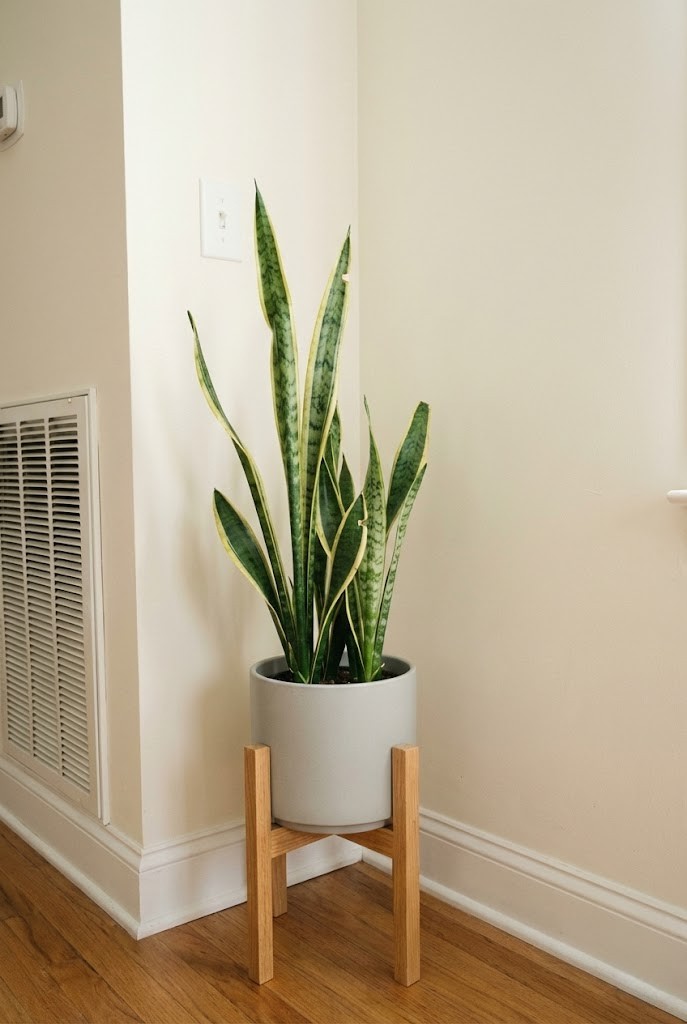
If your bedroom feels stuffy by morning, the Snake Plant is your most reliable nighttime companion. It is one of the few green roommates that continues to exchange gases while you rest, helping the air feel less heavy in a closed room.
Its sharp, vertical columns provide architectural height for those narrow, dust-gathering gaps between the wardrobe and the wall where airflow is usually restricted.
It stays polished even if you only remember to water it once every three weeks, making it as resilient as it is functional. Because its leaves contain calcium oxalate, keep it on a high dresser safely out of reach of nibbling pets.
#2 — Spider Plant (Chlorophytum comosum)
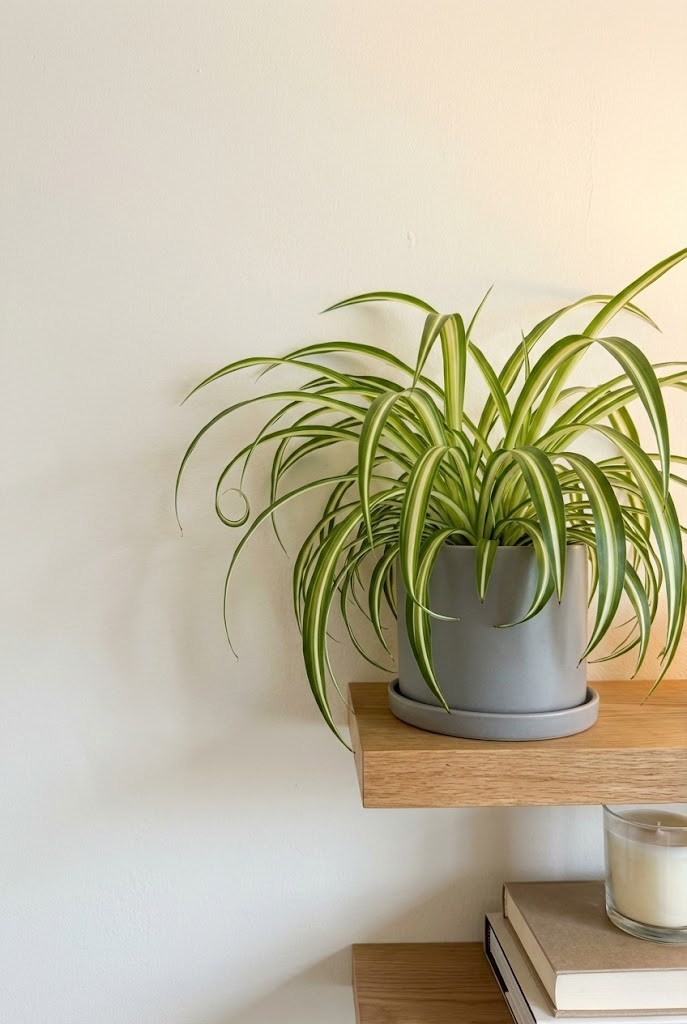
Busy kitchens need a bit of extra greenery to help soften the heavy air that lingers after a long afternoon of cooking.
The Spider Plant is a hardy, non-toxic ally for this job, and it doesn’t just sit in a pot; it produces “babies” on arching stems that fill the vertical dead space above a refrigerator or a high cabinet.
If the leaf tips start to look crispy, a quick switch to filtered water keeps the fountain-like foliage looking fresh for guests.
#3 — Peace Lily (Spathiphyllum)
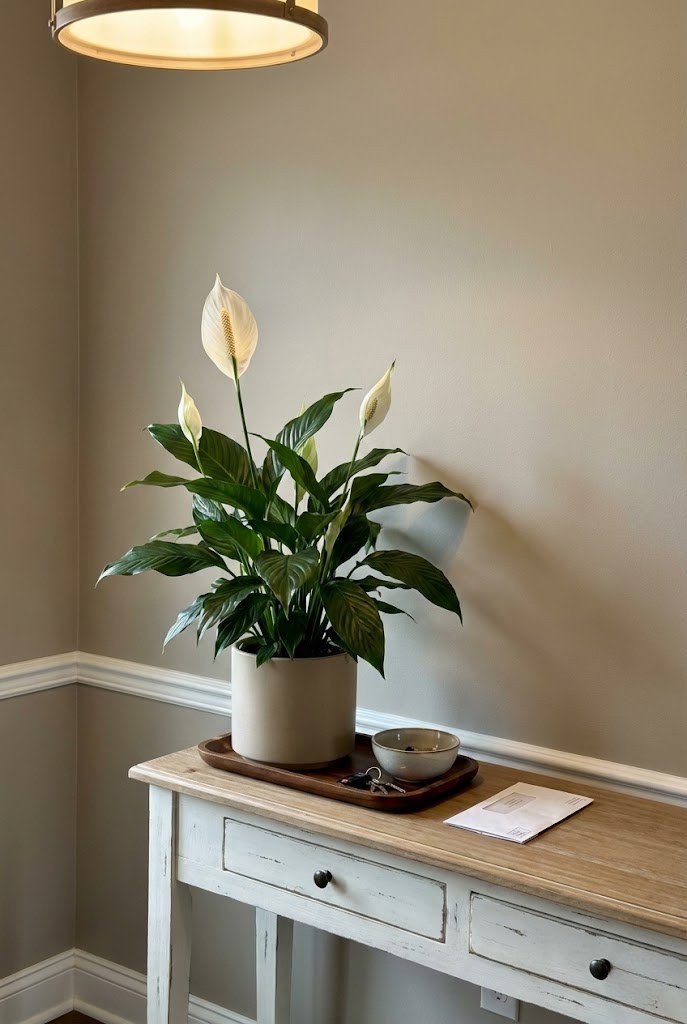
The Peace Lily acts as a natural touch of freshness for a windowless guest bathroom, thriving on the steam of a hot shower.
It helps balance the humidity of small, damp spaces and is one of the few plants that will actually bloom in lower light.
Be aware that it is a “drama queen” that will visibly collapse when thirsty, only to perk back up hours after a drink. Since it is highly toxic to pets, it belongs strictly on an inaccessible ledge or a high vanity.
#4 — Golden Pothos (Epipremnum aureum)
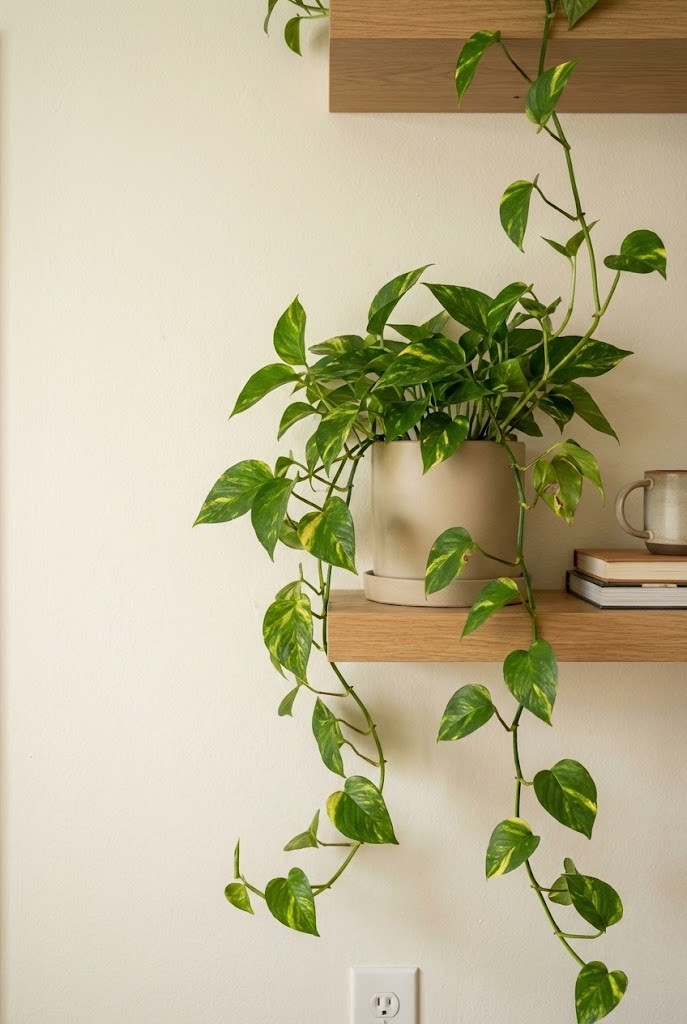
New plywood cabinets and fresh paint often leave a lingering “new house” scent that the Golden Pothos is uniquely suited to handle.
This versatile vine goes where you tell it—trail it along a mantle to hide exposed cords or let it climb a bookshelf to soften the look of a sterile home office.
It is remarkably forgiving of low light, though you’ll want to keep the trailing stems tucked high to remain safely out of reach of curious pets.
#5 — English Ivy (Hedera helix)
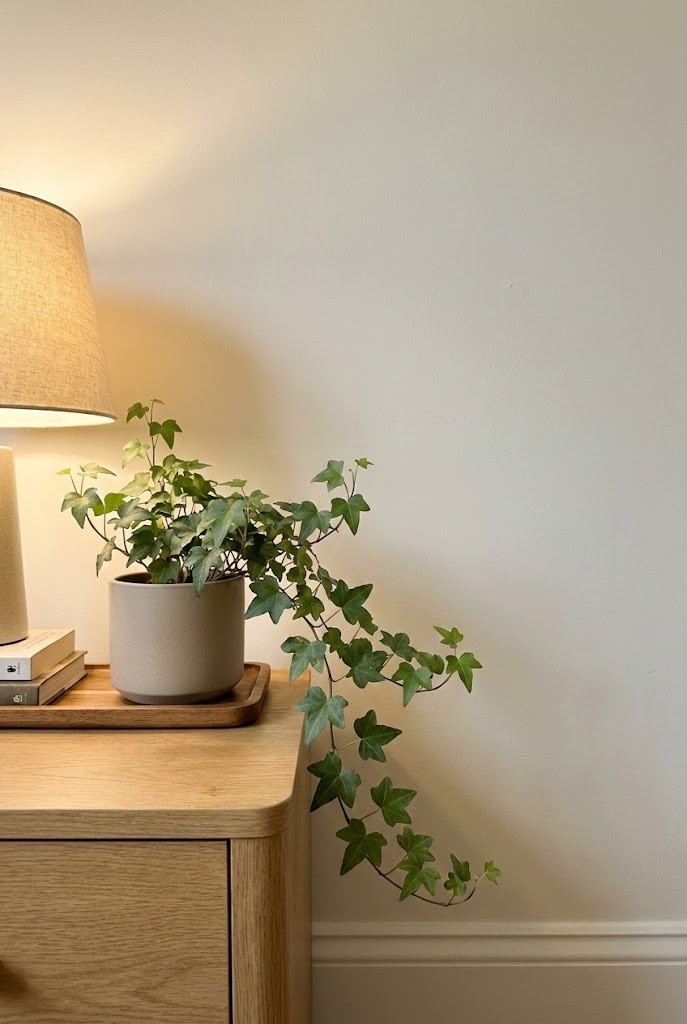
In older homes or laundry rooms with limited ventilation, English Ivy helps discourage that heavy, stagnant feeling that can lead to damp corners. It brings a classic, lived-in garden vibe to a space, but it performs best when the air isn’t bone-dry.
Hang it in a cool, humid spot like a north-facing window, ensuring it’s strictly contained in a basket to keep it away from curious paws.
#6 — Boston Fern (Nephrolepis exaltata)
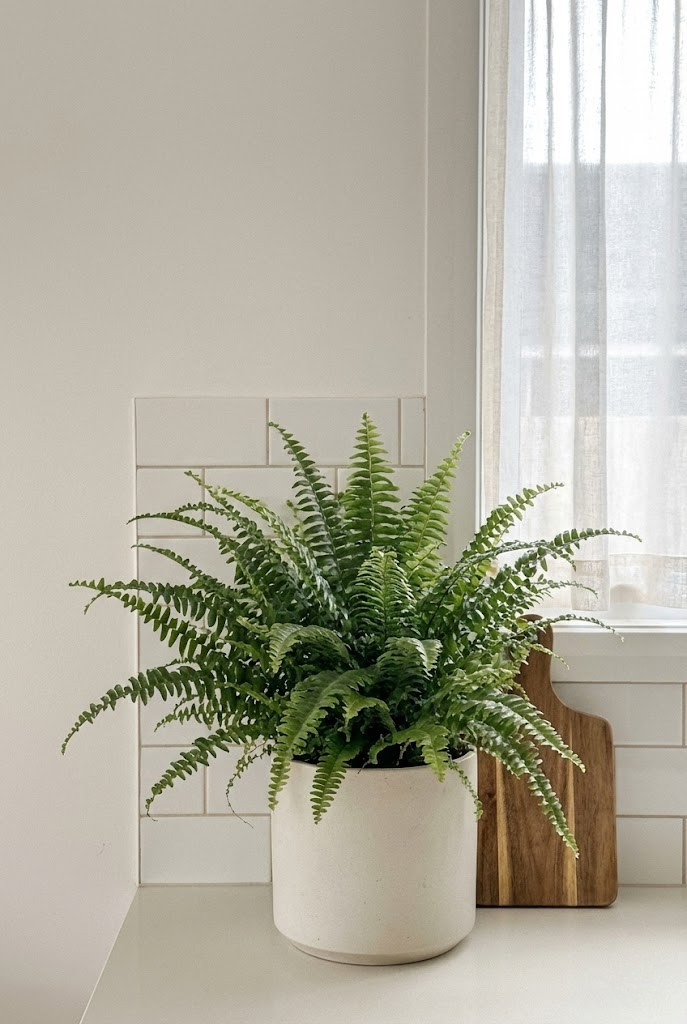
In modern apartments where the heater constantly dries out the air, the Boston Fern acts as a gentle, living humidifier. Its feathery fronds add a massive amount of visual softness to a room, making a sterile space feel much more like a sanctuary.
It is a thirsty plant; if the soil dries out, it will shed tiny brown leaves as a messy protest. In a humid kitchen, it stays lush and full, and since it’s entirely pet-safe, you can hang it anywhere without worry.
#7 — Dracaena ‘Janet Craig’ (Dracaena fragrans)
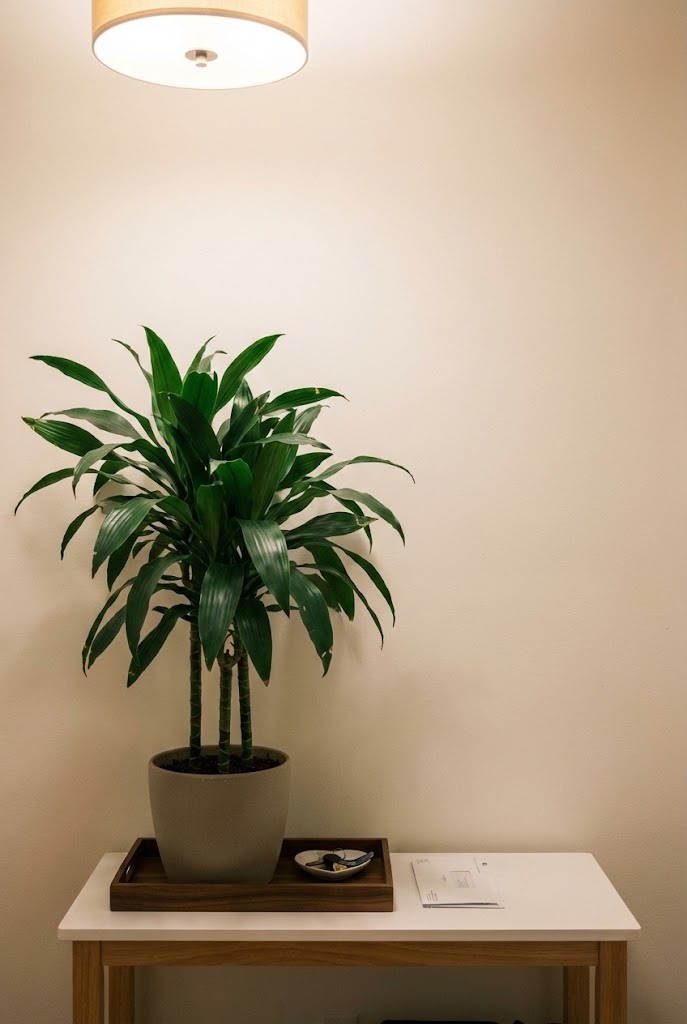
That deep office corner that always feels “thin” or stagnant is the ideal spot for a Janet Craig Dracaena. It is a resilient survivor that helps circulate a sense of freshness in windowless hallways where other plants would fail.
It stays slim and tidy, which is a blessing in narrow walkways. It is a slow grower that thrives on being left alone, but should be kept on an elevated surface to stay out of reach of pets.
#8 — Rubber Plant (Ficus elastica)
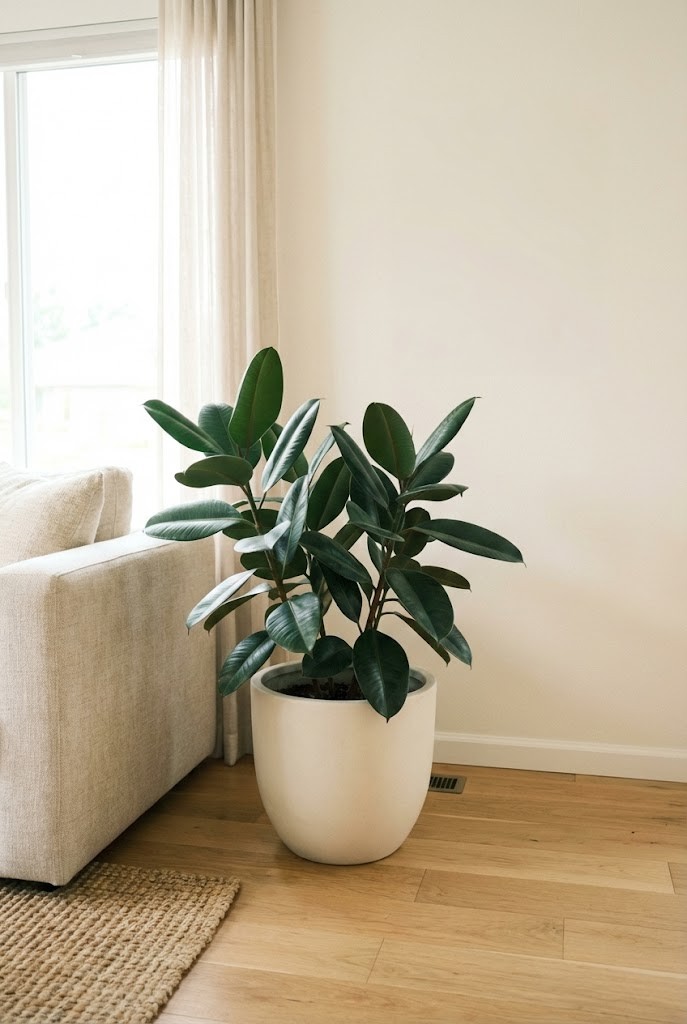
Spacious living rooms with high ceilings require the visual weight of a Rubber Plant to keep the room from feeling hollow. Its massive, waxy leaves provide a large surface area for trapping airborne dust, making the atmosphere feel cleaner in recently renovated rooms.
Give the leaves a quick wipe with a damp cloth every few weeks to keep the plant “breathing.” Wear gloves when you prune it, as the milky sap can irritate skin and is toxic to pets.
#9 — Bamboo Palm (Chamaedorea seifrizii)

Placing a Bamboo Palm next to a media console helps freshen the atmosphere in open-concept living rooms where the family spends the most time. It’s a pet-safe option that prefers bright, indirect light and soil that stays consistently moist.
Because it grows in clumps, it creates a lush, screened effect that helps the air in large spaces feel less still and more vibrant.
#10 — Chinese Evergreen (Aglaonema)
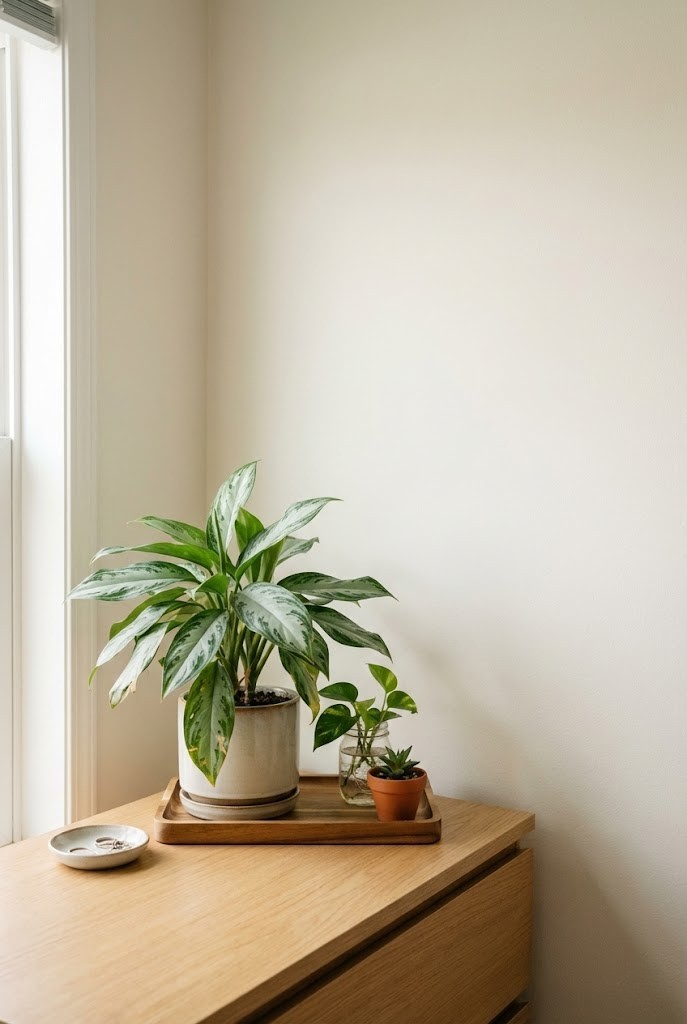
The Silver Bay variety is a reliable, low-light favorite for clearing the “stale” feeling often found around synthetic office carpets.
It provides a necessary splash of silver-green that makes a dim desk feel noticeably more breathable without a demanding care schedule.
It handles lower light and missed waterings with ease, though it should be kept on a high desk to stay safely out of reach of curious pets.
#11 — ZZ Plant (Zamioculcas zamiifolia)
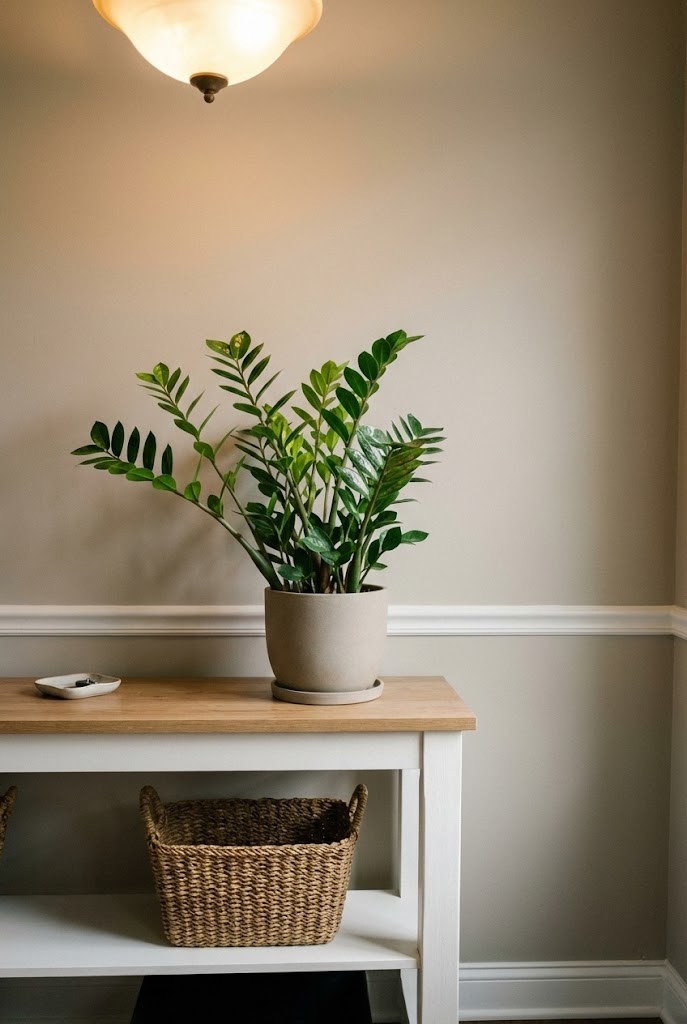
The ZZ plant is a necessity for the “dead zones” of a home—those air-stagnant entryways or basement bedrooms where air movement is zero.
Its thick underground rhizomes store water like a camel, so the only way to fail is by over-watering. Because it is toxic if ingested, keep it on a high console table or a floating shelf to maintain that architectural greenery safely.
#12 — Aloe Vera (Aloe barbadensis miller)
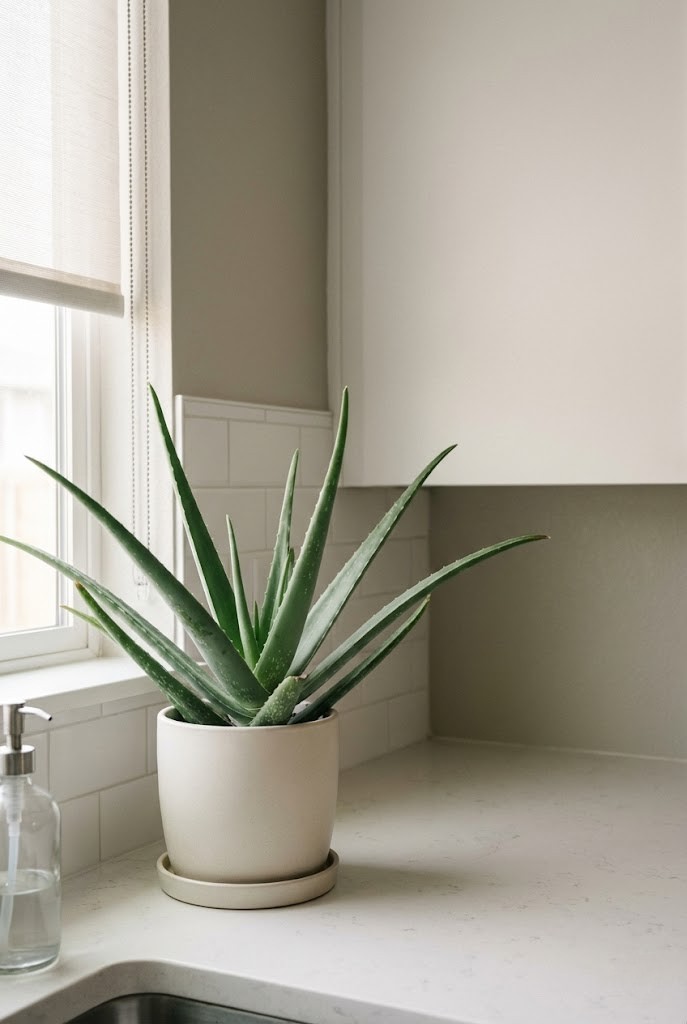
Keep this desert native on your sunniest kitchen windowsill to add a crisp, clean vibe to your cooking space while serving as a living first-aid kit.
While it contributes to a fresher environment, the inner gel is invaluable for treating minor kitchen burns or skin irritations.
Give it plenty of light and let the soil dry out completely between waterings. Note that the outer leaf is toxic to pets, so keep it on a sturdy window ledge out of reach of curious cats.
#13 — Heartleaf Philodendron (Philodendron hederaceum)
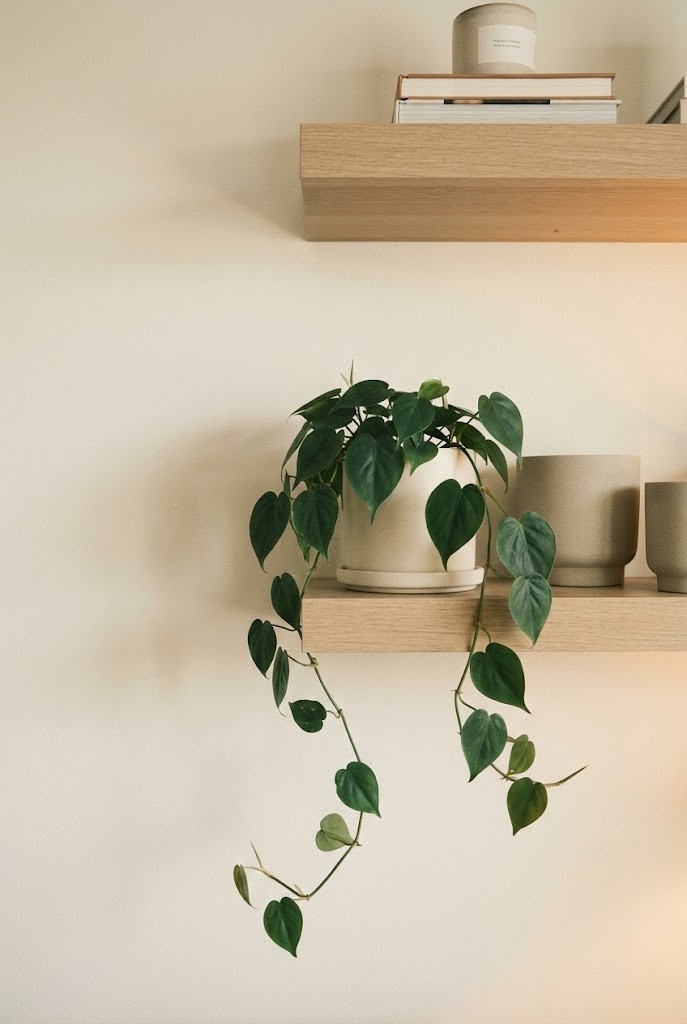
Heartleaf Philodendron excels at softening a glass-heavy room while buffering the indoor environment. Its heart-shaped leaves can easily be trailed along a wall using small clips to break up hard-edged curtains or cold, empty walls.
It thrives on neglect, but those trailing stems must be kept high on a shelf to remain safely away from pets.
#14 — Areca Palm (Dypsis lutescens)
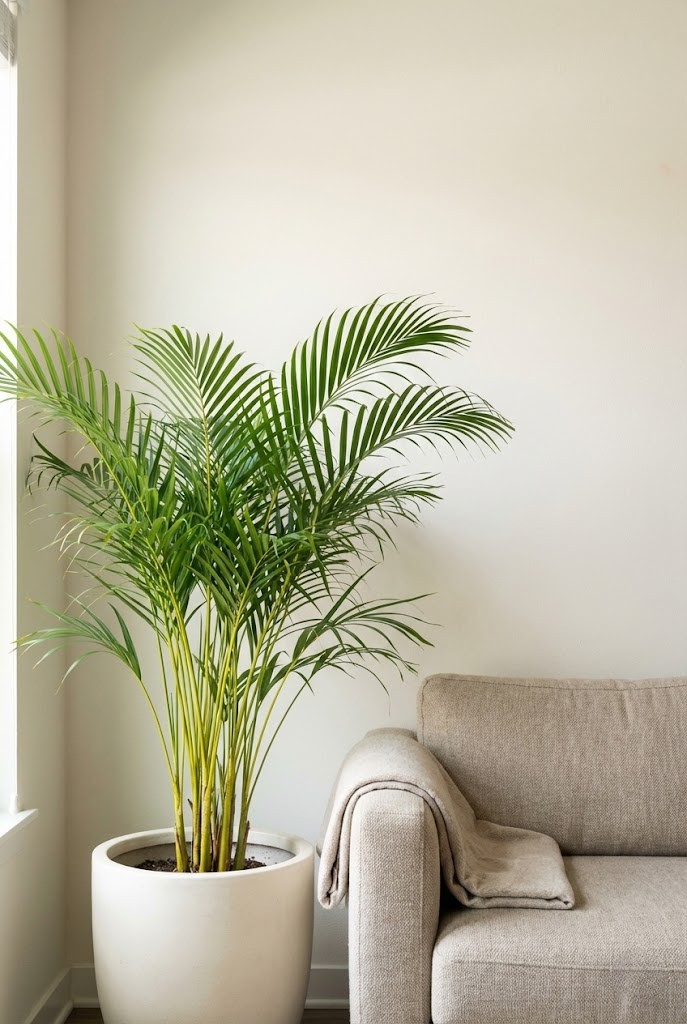
Hard-edged rooms with floor-to-ceiling glass need the Areca Palm to act as a living screen that makes a large space feel less clinical. It provides a massive surface area of leaves to gently add moisture to the room as a natural humidifier.
It is a pet-safe giant that provides the visual impact of a tree without the finicky nature of more delicate tropicals.
#15 — Parlor Palm (Chamaedorea elegans)
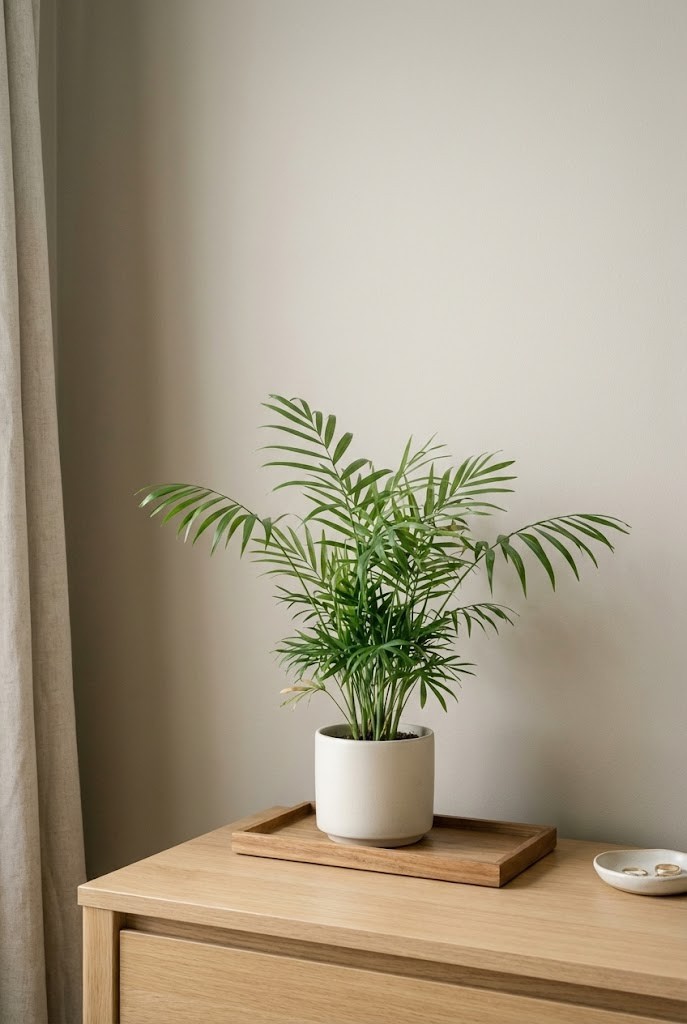
If you need a tropical vibe in a small footprint, the Parlor Palm is elegant enough to freshen a side table without crowding your personal space.
It handles lower light than most palms, keeping small rooms feeling airy and less cramped.
Since it’s completely non-toxic, you don’t have to worry about where you place it, making it a slow-growing vintage favorite for any corner.
Conclusion
A houseplant is a supplement to a healthy home, not a magic cure-all. They work best as teammates to good ventilation and regular filter changes.
But unlike a machine, a plant grows with you and makes a house feel less like a box and more like a home.
- For a gentle overnight refresh, prioritize the Snake Plant near your bed.
- For high-traffic areas with pets, the Spider Plant or Boston Fern offer peace of mind.
- For newly decorated spaces, let a Rubber Plant or Pothos help the room “breathe” through the off-gassing phase.
Pick the one that fits your space’s light and your own routine, and let your home breathe a little easier.