
Table of Contents
Some rooms make plant advice fall apart fast. A basement room with no windows is one of them. The lights are on, the shelf is empty, and there is not a strip of sun anywhere.
No, these are not plants for total darkness. But with steady artificial light, the right ones can still live there and look at home.
If you are trying to add greenery to a windowless bathroom, a blackout bedroom, an interior hallway, or a dim corner that only starts to feel lived-in when the lamp goes on, these are the plants most worth considering.
9 Best Zero Sunlight Indoor Plants
#1 — ZZ Plant (Zamioculcas zamiifolia)
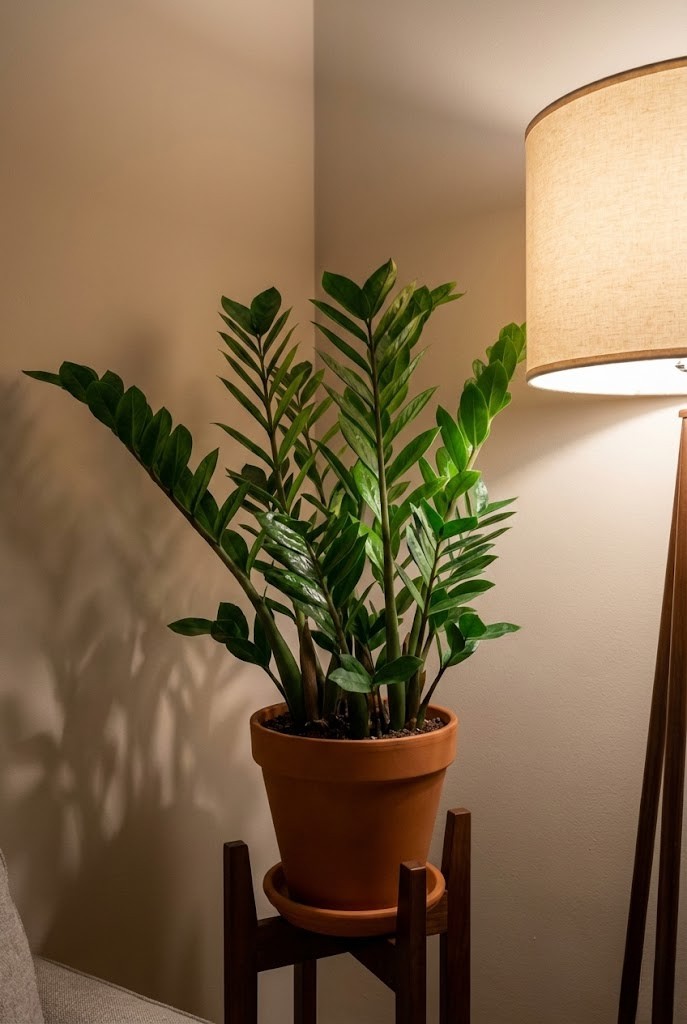
ZZ plant is the one to start with if you tend to forget about your plants for a while. The stems stay upright, the leaves keep their gloss, and the whole thing still looks pulled together even when the only real light comes from a lamp or overhead fixture.
It grows slowly in low light, but that usually works in its favor. You are not choosing this one for fast change. You are choosing it because it holds its shape, asks for little, and does not seem bothered by the lack of sun.
⚠️ Note: Toxic to pets if ingested.
#2 — Snake Plant (Dracaena trifasciata)

Snake plant is what to get when you want structure, not fuss. Even when growth slows right down, the leaves still look crisp, which is a big part of why it works so well in darker spaces.
It also helps that it does not need much water, so you are not dealing with a plant that stays wet for too long in low light. If you want something simple, structured, and hard to throw off, this is one of the safest choices here.
⚠️ Note: Toxic to pets if ingested.
#3 — Cast Iron Plant (Aspidistra elatior)
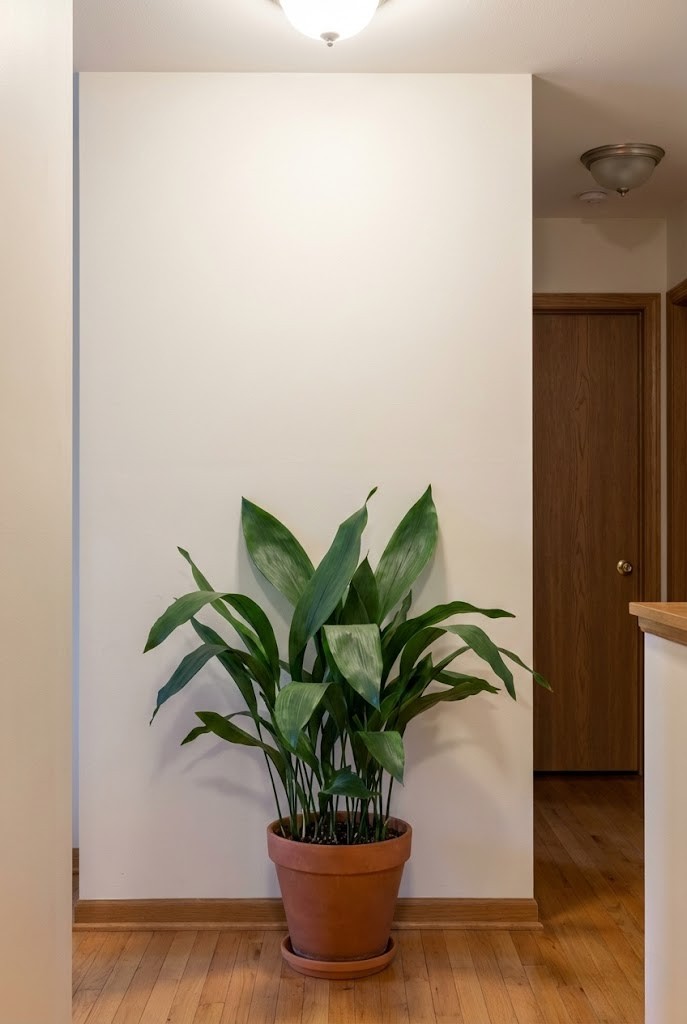
Some plants want attention. Cast iron plant is happier just holding its place. The leaves stay deep green and upright, so even a dim corner can feel more settled with it there.
It does not do much in a hurry, and that is part of why it works. In a truly dark home, a plant that stays steady usually makes more sense than one that needs extra brightness to keep up appearances.
#4 — Chinese Evergreen (Aglaonema — green varieties only)

Chinese evergreen gives you more pattern than most low-light plants without asking for sun to make the leaves readable. In a dim room, the foliage still has enough variation to keep the plant from fading into the background.
The main thing is choosing the right type. Green and green-silver varieties handle darker interiors much better than red or pink ones, which tend to lose color and look tired sooner when the light is too low.
⚠️ Note: Toxic to pets if ingested.
#5 — Golden Pothos (Epipremnum aureum)

Golden pothos is one of the easiest ways to add some softness to a room that feels a little hard or flat. The vines spill instead of sitting stiffly, which helps when you want the space to feel less bare without giving up much surface room.
It is forgiving, but not invisible to bad lighting. If the vines start stretching and the leaves space out too much, that is usually a sign it needs stronger artificial light or a closer spot to it.
⚠️ Note: Toxic to pets if ingested.
#6 — Satin Pothos (Scindapsus pictus)
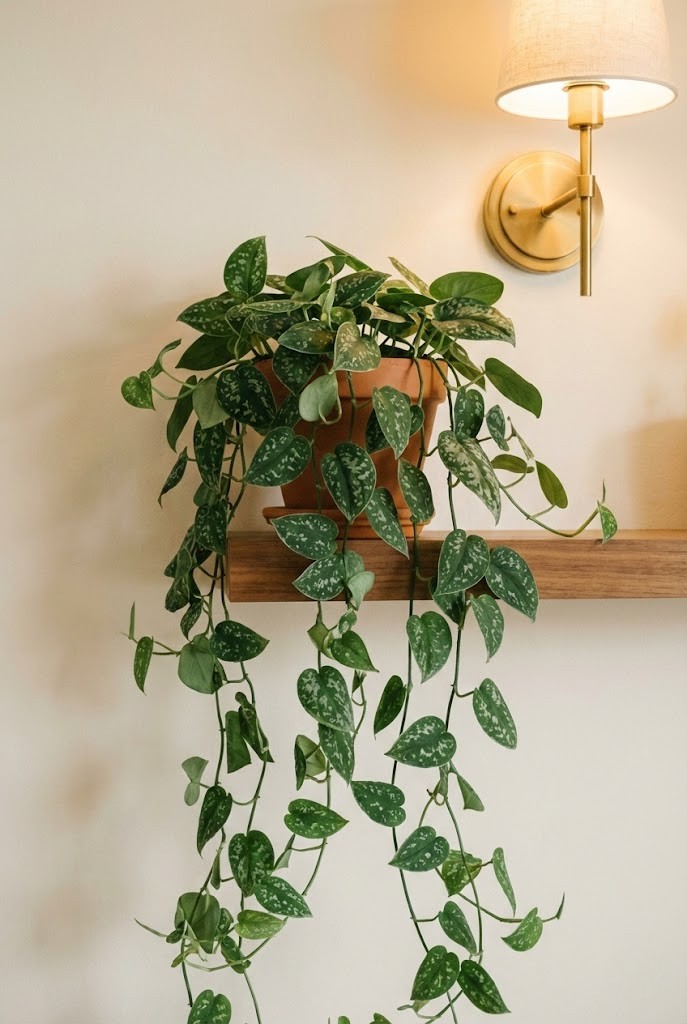
Satin pothos has a more polished look than standard pothos, with velvety leaves and silver markings that soften the whole plant. It is a good choice when you want something trailing, but a little quieter and more refined.
This one does better when the artificial light reaches the leaves directly instead of just lighting the room in general. If the pattern starts looking dull or the growth gets thin, it usually wants to be nearer the light source.
⚠️ Note: Toxic to pets if ingested.
#7 — Lucky Bamboo (Dracaena sanderiana)
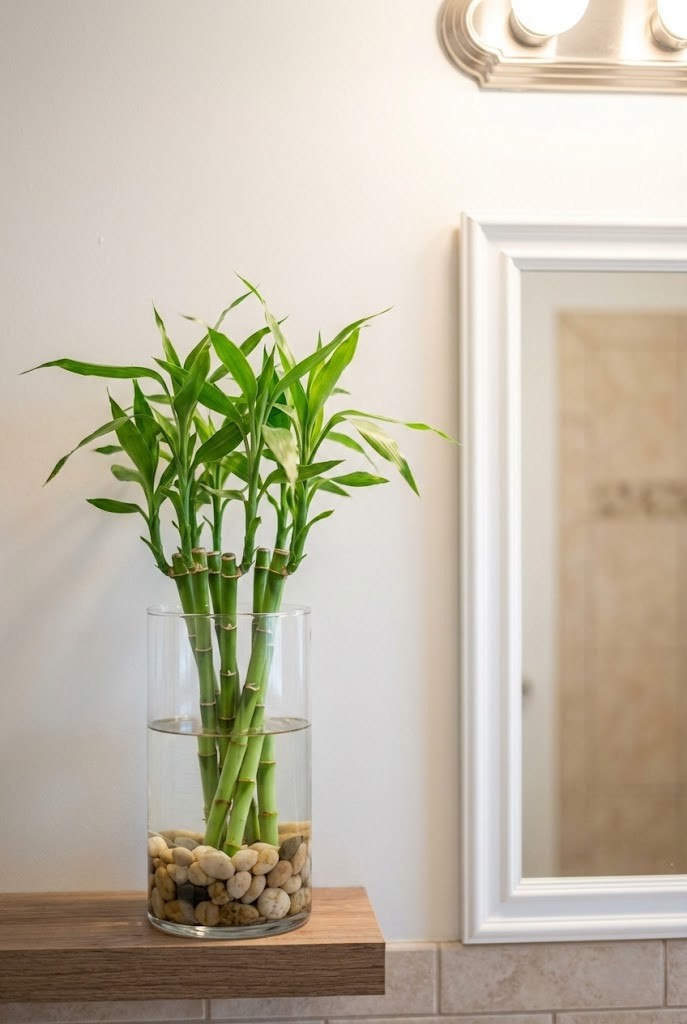
When a room already feels tight or functional, lucky bamboo usually fits better than anything bushy. It stays upright, tidy, and compact, which is part of why it works so well in spaces that do not have much room to spare.
It does best when the lights come on every day and stay on long enough to count. If the room sits dark most of the time, it will not hold up for long, so this is one of the better plants to pair with a timer.
⚠️ Note: Toxic to pets if ingested.
#8 — Corn Plant (Dracaena fragrans)
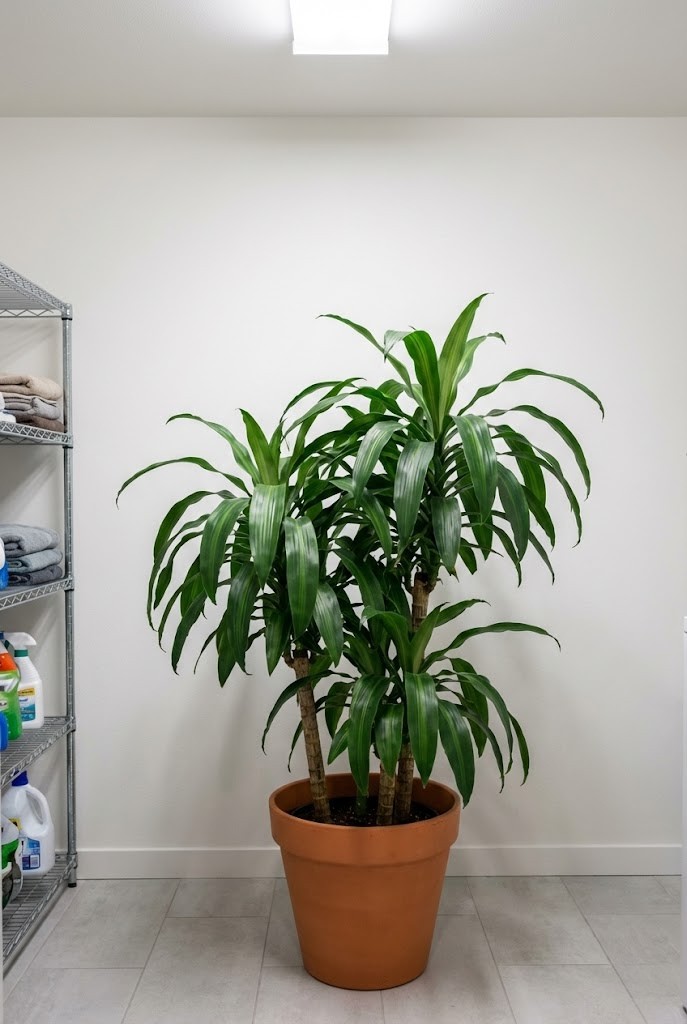
Corn plant is here for one reason many dark rooms need: height. Under steady artificial light, it keeps that upright, tree-like shape and makes the space feel more finished than a smaller plant usually can.
This one does better when the lights come on every day and stay on for a while. It is less for a gloomy corner nobody uses, more for a room with an actual routine.
⚠️ Note: Toxic to pets if ingested.
#9 — Arrowhead Vine (Syngonium podophyllum)
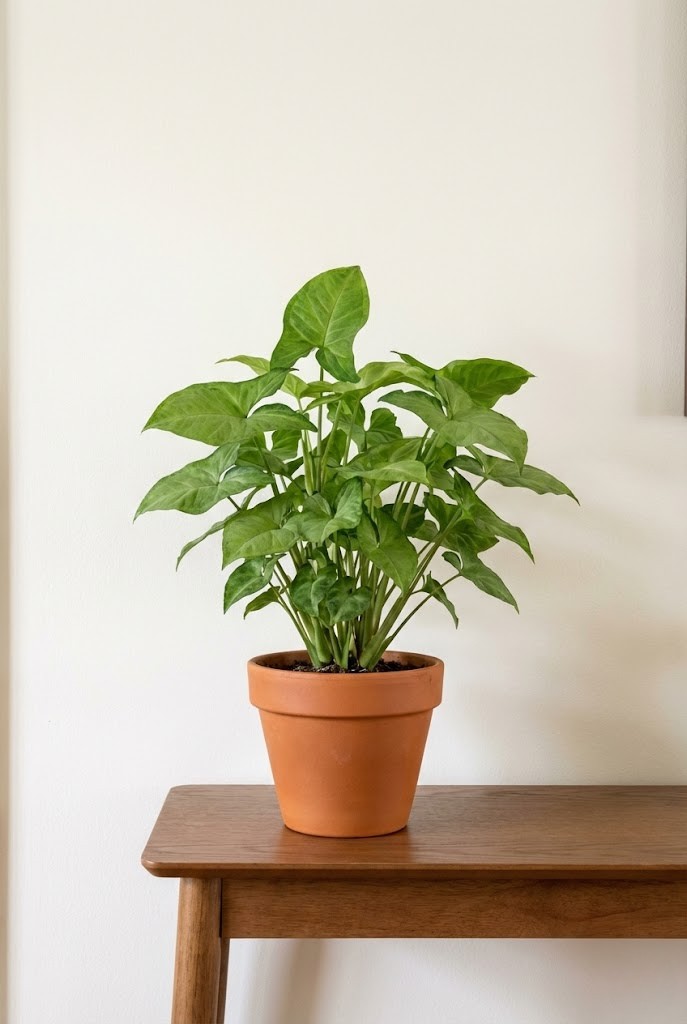
If pothos feels a little too loose for the space, arrowhead vine gives you a tidier kind of softness. The arrow-shaped leaves look a little neater and more styled, without turning into a long, wandering vine too quickly.
In dim conditions, it usually grows more slowly and stays more compact, which can actually be useful in a small space. Just give it a spot that gets regular artificial light, because this is not the plant for the darkest, most neglected corner.
⚠️ Note: Toxic to pets if ingested.
A Simple Lights-On Setup That Helps These Plants Last
If a room stays dark around the clock, plants are not going to make it for long. Zero sunlight is workable. Zero light is not.
A simple setup usually makes the difference:
- Put a lamp or LED grow light on a timer for 8–12 hours a day
- Aim the light toward the plant, not just up at the ceiling
- Keep the plant within a few feet of the light source, because closer usually works better than just buying a stronger bulb
A Few Simple Care Notes
In dark rooms, the most common mistake is watering on autopilot. These plants usually dry out more slowly under artificial light than they would near a window, so it is better to check the soil first than to stick to a fixed schedule.
It also helps to keep expectations realistic. Growth will usually be slower here, and that is not a problem on its own. What you want to watch for instead is stretched stems, wider gaps between leaves, fading pattern, or a plant that starts leaning too hard toward the light.
Conclusion
Zero sunlight does not have to mean zero plants.
With steady artificial light and realistic expectations, you can still add greenery to basements, interior hallways, blackout bedrooms, and other deeply dim spaces that could use something living in them. If you choose the right plant and keep the lights consistent, the result can still feel calm, finished, and easy to live with.