Table of Contents
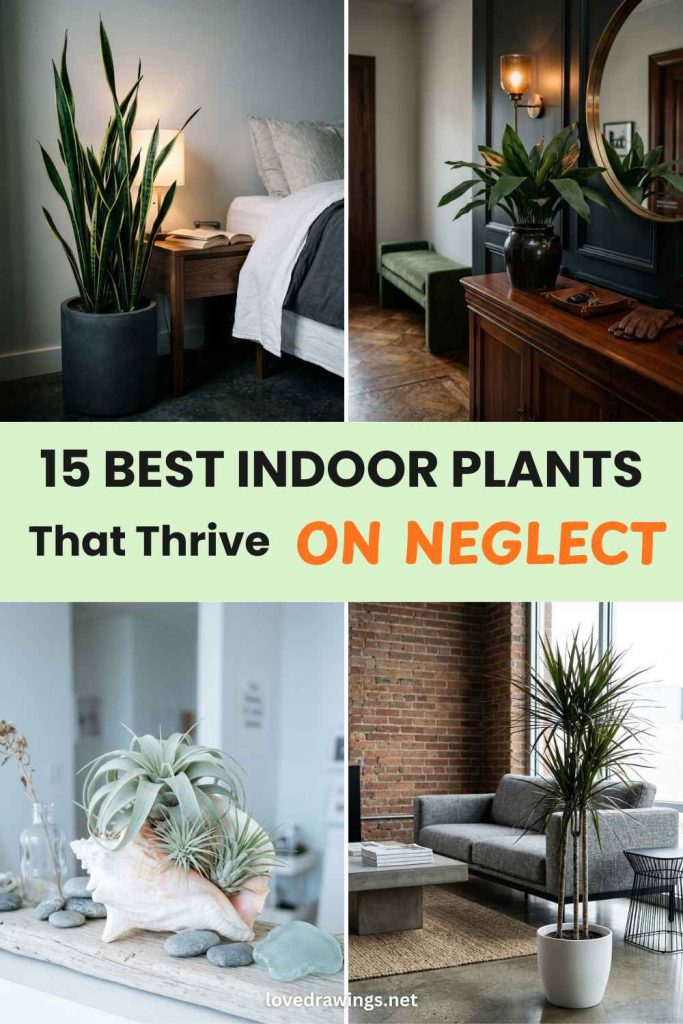
If your plants keep dying because you forget to water them, you’re not the problem.
Most indoor plants don’t fail from neglect — they fail from too much attention in the wrong conditions.
If your home has low light or your schedule is unpredictable, you need plants that can handle being ignored and still look good.
These 15 indoor plants are built for that: tough, low-effort, and able to stay lush even when you’re not paying attention.
#1 — Snake Plant (Dracaena trifasciata)
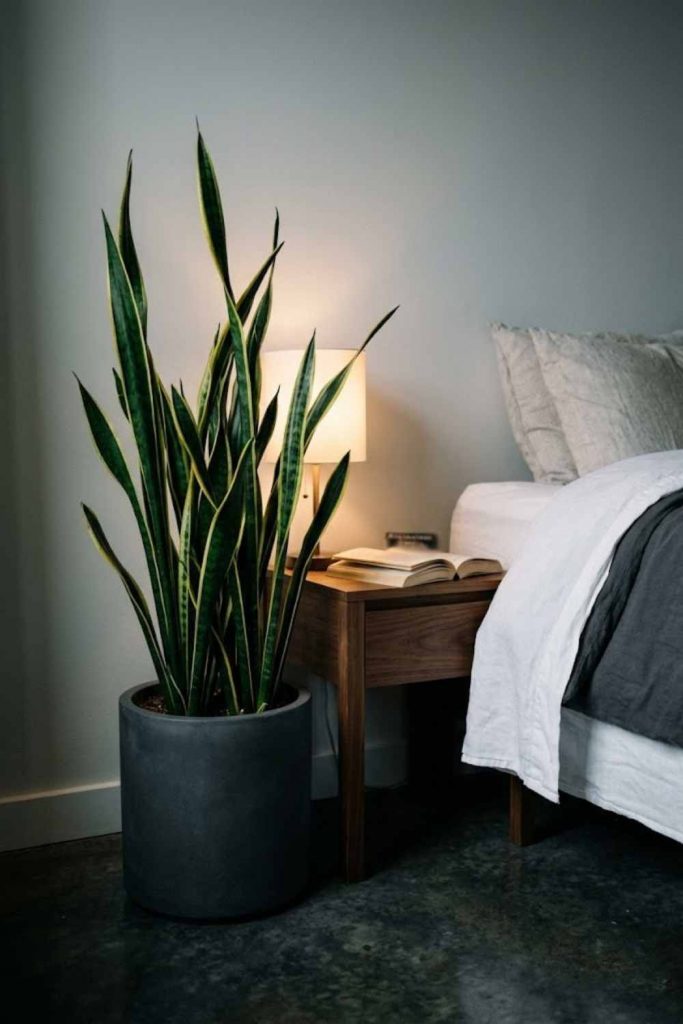
A night-shift oxygenator that doubles as living architecture, the Snake Plant is the definitive choice for windowless bedrooms and dark hallways.
Its stiff, sword-like leaves fill narrow gaps where traditional furniture feels too bulky, converting CO2 into oxygen while you sleep.
A preference for long droughts makes this a strict “water only when bone-dry” species. If the soil feels damp, wait another week.
- Light: Low to bright indirect.
- Water: Every 3–4 weeks; dry soil completely.
#2 — ZZ Plant (Zamioculcas zamiifolia)
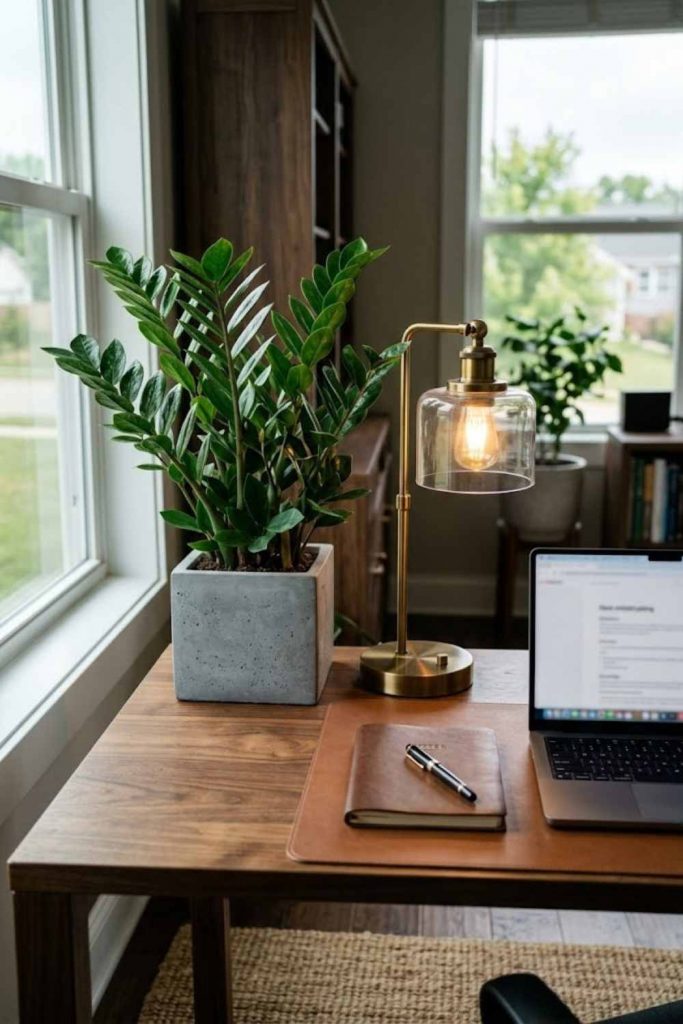
The ZZ Plant is a structural necessity for basement apartments and office cubicles. It stores water in potato-like rhizomes under the soil to survive months of forgetfulness.
Its waxy leaves stay polished even when dusty, adding a high-end feel to a room without a maintenance schedule.
Yellowing leaves are a clear distress signal—usually a sign that the watering can is being used too often.
- Light: Low to medium indirect; tolerates fluorescent light.
- Water: Once a month; drought-tolerant.
#3 — Golden Pothos (Epipremnum aureum)
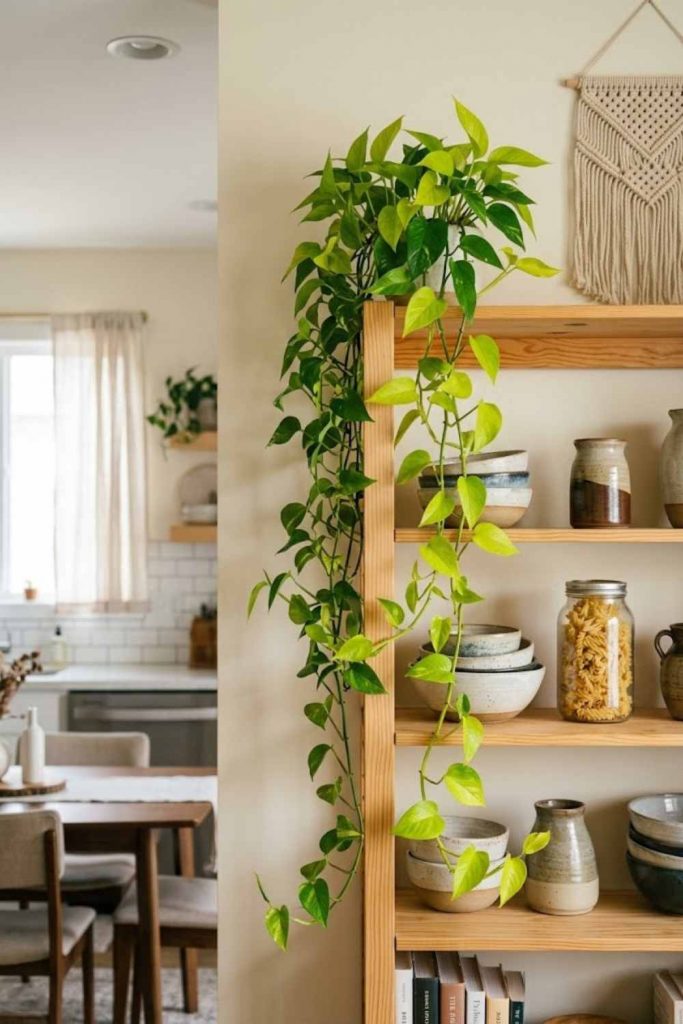
The most forgiving vine in existence, the Pothos grows inches a week with almost no attention.
Its trailing stems soften the hard edges of high bookshelves and camouflage electronic cords behind desks.
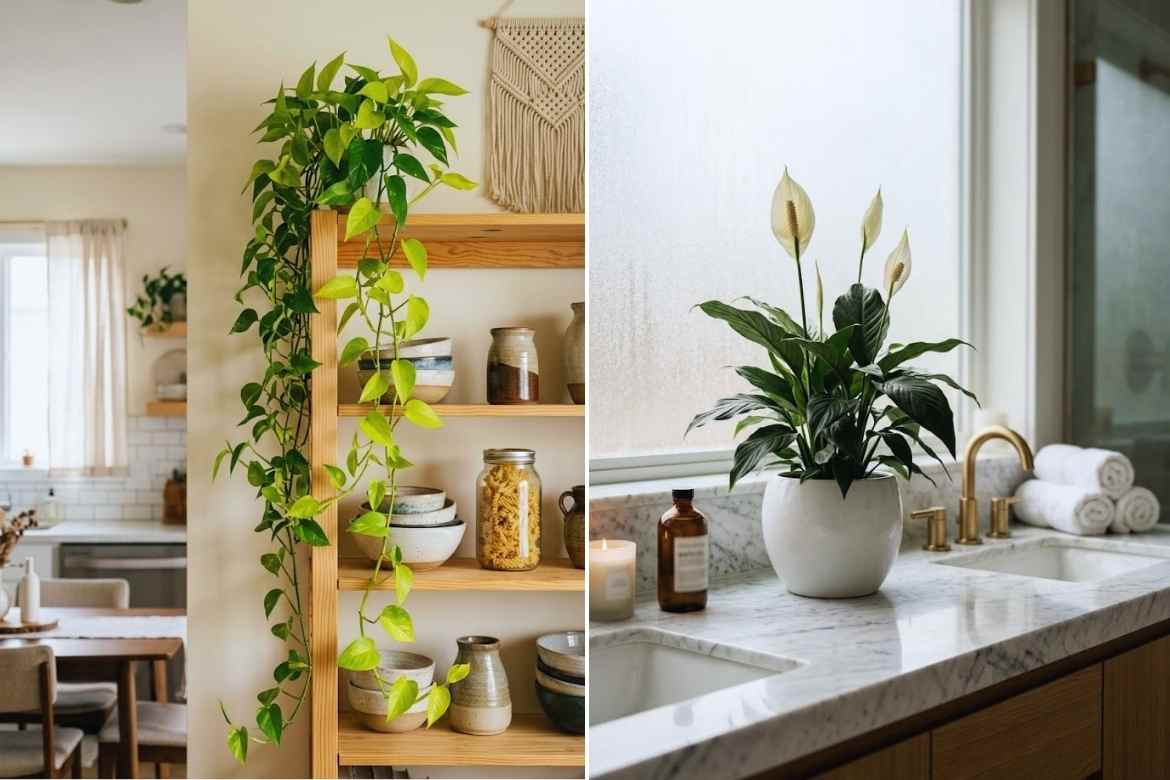
Wilted foliage is a simple request for water; a quick drink usually has the vine standing tall again within hours. Keep vines out of reach of pets.
- Light: Low to bright indirect.
- Water: Every 1–2 weeks; when top inch is dry.
#4 — Aloe Vera (Aloe barbadensis miller)
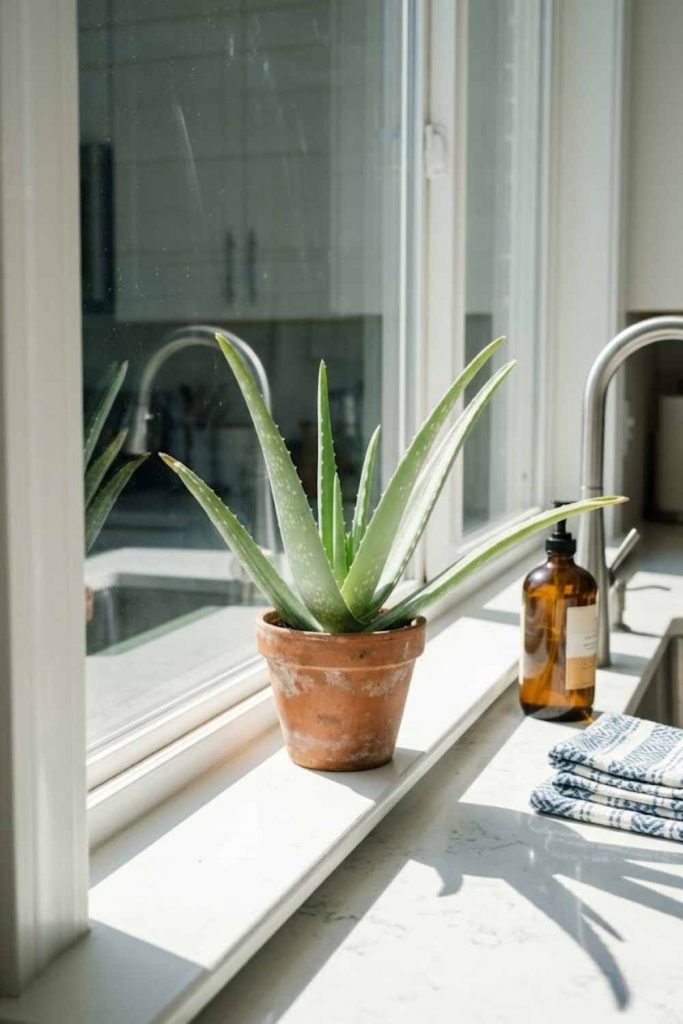
A self-sustaining medic for the sunny kitchen windowsill, Aloe Vera offers a lifetime supply of cooling gel for minor burns.
The sculptural, spiked form fits perfectly in terracotta pots for an earthy, Southwestern aesthetic.
Fast-draining cactus mix keeps the roots dry. Reach for the watering can only when the leaves lose their characteristic plumpness.
- Light: Bright, direct sunlight.
- Water: Every 3 weeks; allow to dry between waterings.
#5 — Peace Lily (Spathiphyllum)
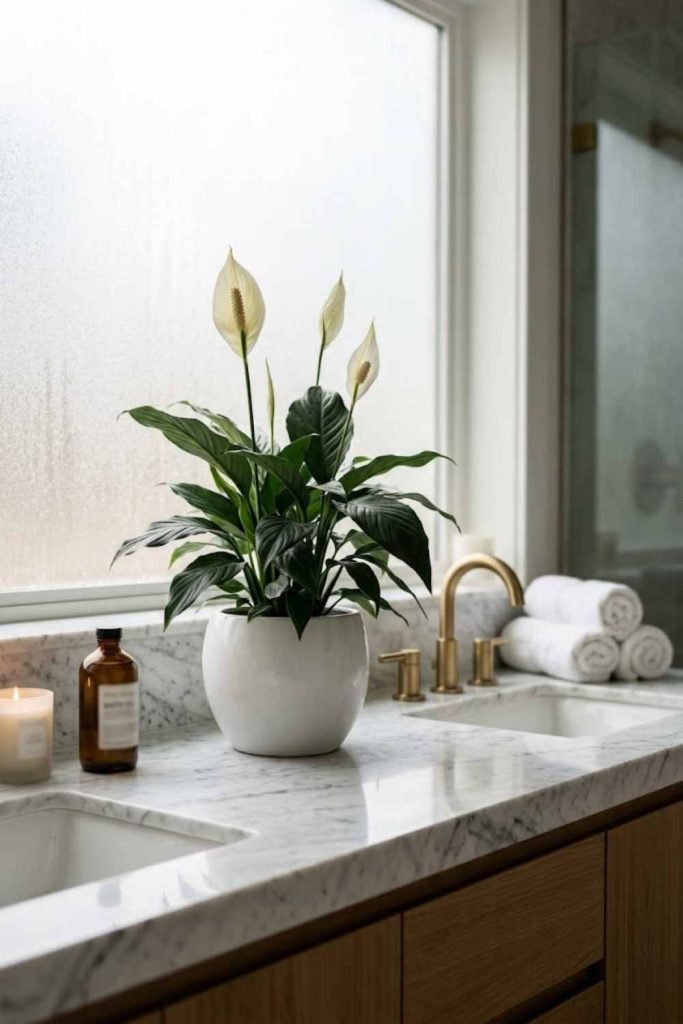
The Peace Lily acts as a visual alarm for those who struggle to keep a schedule, drooping dramatically when thirsty and bouncing back after a drink.
It is one of the few neglect-friendly options that flowers, adding a soft, elegant touch to a nightstand or bathroom.
High humidity is its preference; the steam from a daily shower is often all the maintenance it requires.
- Light: Low to medium indirect.
- Water: Weekly; when leaves begin to droop.
#6 — Spider Plant (Chlorophytum comosum)
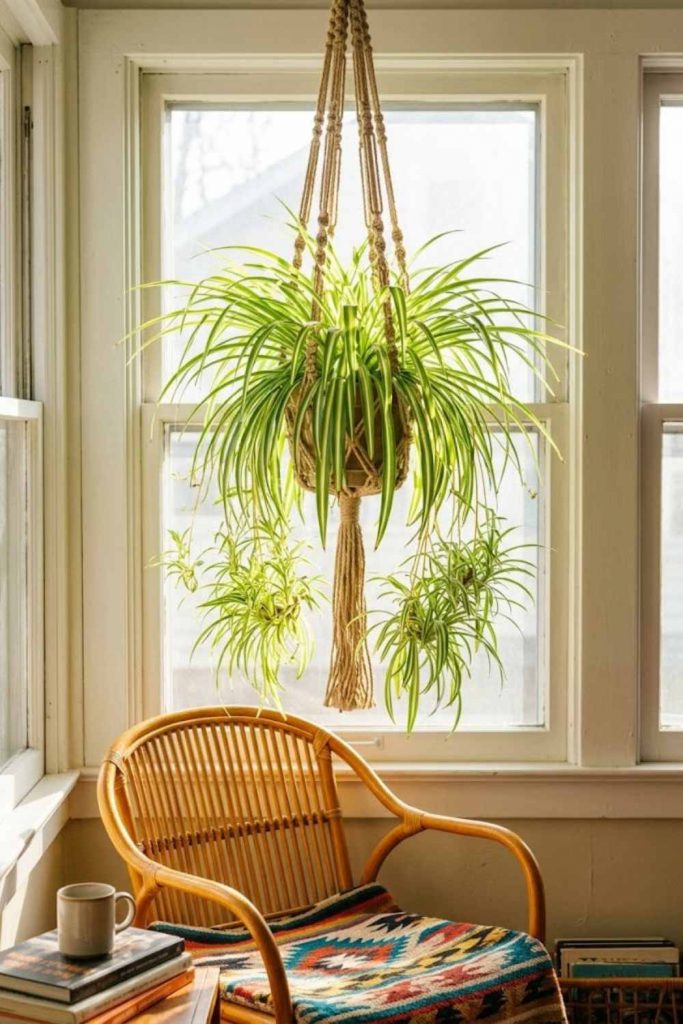
An active, pet-safe classic, the Spider Plant produces “pups”—tiny baby plants—that dangle from the mother like small stars.
Its arching, striped leaves add a soft texture to hanging baskets or high shelves.
Brown leaf tips are typically a reaction to fluoride in tap water; switching to filtered water keeps the foliage pristine.
- Light: Bright, indirect light.
- Water: Weekly; keep soil slightly moist.
#7 — Rubber Tree (Ficus elastica)
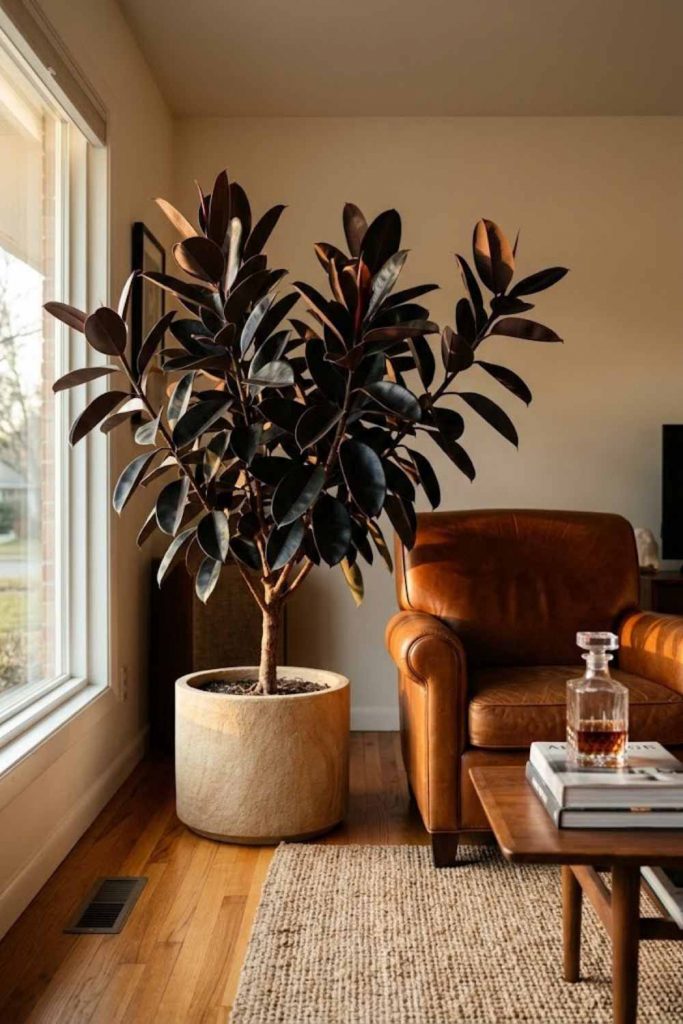
The Rubber Tree is a sturdy, designer-grade choice for filling empty corners with a bold, tree-like silhouette.
Unlike the finicky Fiddle Leaf Fig, it provides deep burgundy or emerald foliage without constant humidity demands.
It prefers a single, permanent spot with bright, indirect light. Water only when the top inch of soil is dry.
- Light: Bright, indirect light.
- Water: Every 1–2 weeks; when top inch is dry.
#8 — Dragon Tree (Dracaena marginata)
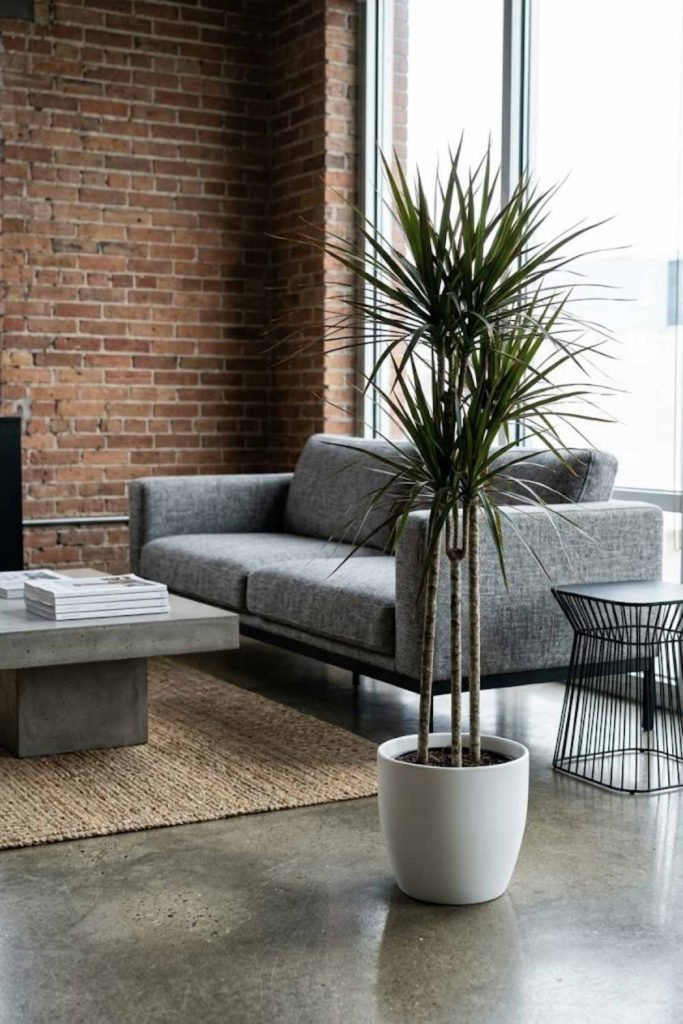
An architectural fix for narrow spaces, the Dragon Tree adds height without a large footprint.
It fits perfectly next to a TV or a minimalist sofa where a bushier plant would feel cluttered.
Drooping lower leaves are a normal part of its growth cycle—the mechanism by which the plant builds its trunk over time.
- Light: Medium indirect light.
- Water: Every 2 weeks; allow soil to dry out.
#9 — Cast Iron Plant (Aspidistra elatior)
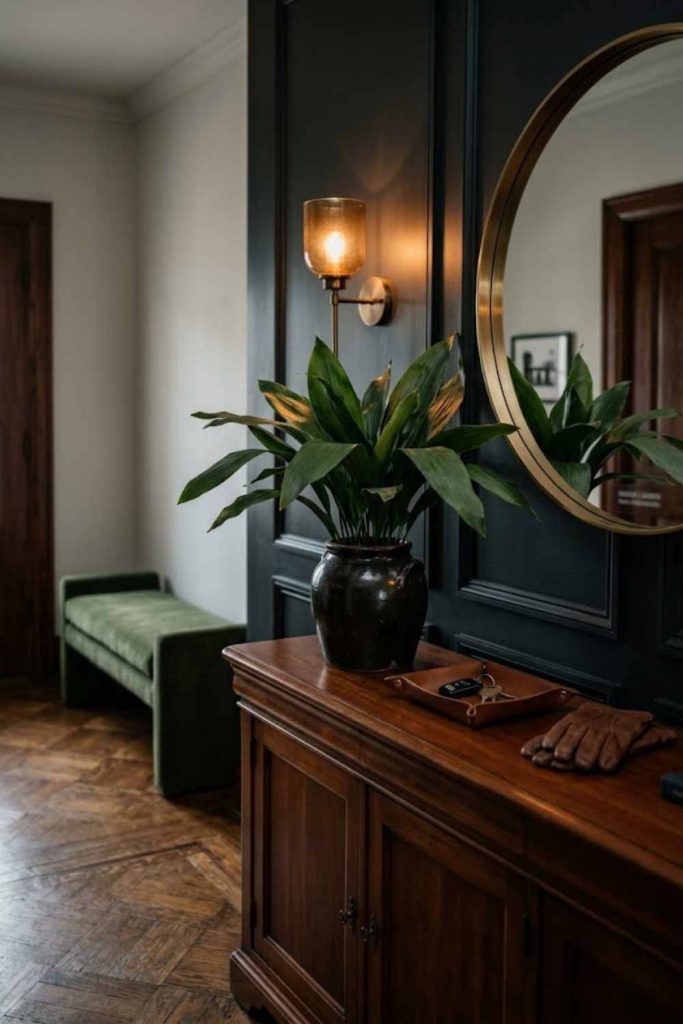
Named for its near-indestructibility, the Cast Iron Plant survives temperature swings, dust, and near-total darkness.
It is the best defender for drafty hallways or neglected entryways. A slow metabolism and a natural aversion to direct sun make this a strict bi-weekly watering routine.
It is completely non-toxic and safe for curious felines and canines.
- Light: Low to medium indirect; avoid direct sun.
- Water: Every 2 weeks; allow soil to dry completely.
#10 — Chinese Evergreen (Aglaonema)
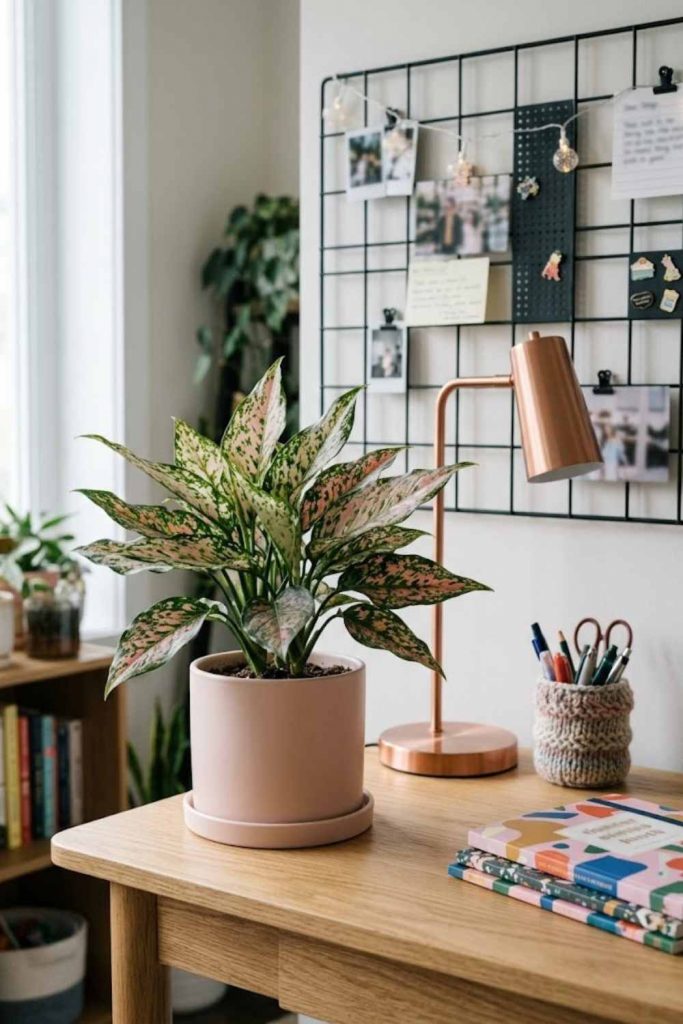
A durable color-pop for dim home offices, the Aglaonema stays vibrant with pinks and reds even in dark corners.
It provides the look of a curated decor piece with the minimal effort of a bi-monthly watering.
To keep the leaves healthy, keep it away from AC vents and cold drafts.
- Light: Low to medium indirect.
- Water: Every 2 weeks; keep soil evenly moist.
#11 — Heartleaf Philodendron (Philodendron hederaceum)
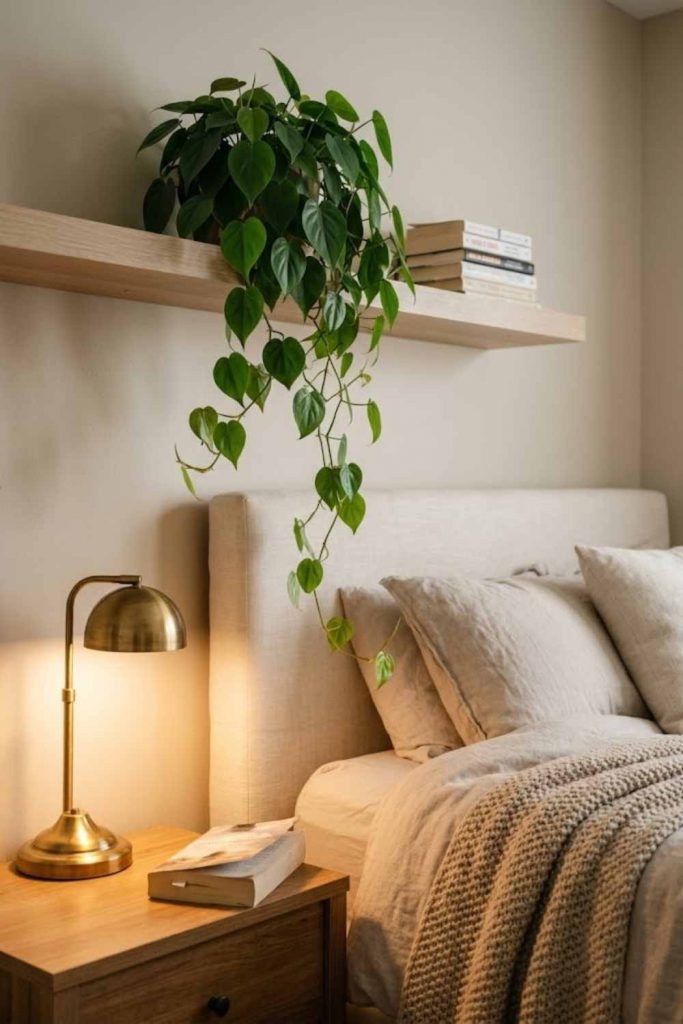
A romantic, heart-shaped trailer, this Philodendron is the ideal greenery for bedroom headboards or dark bookshelves.
It provides a uniform look that creates a “green wall” effect without taking over the room.
It remains very forgiving of missed watering days. Wrap long vines back into the top of the pot for a fuller appearance.
- Light: Medium to low indirect.
- Water: Weekly; when top inch is dry.
#12 — Jade Plant (Crassula ovata)
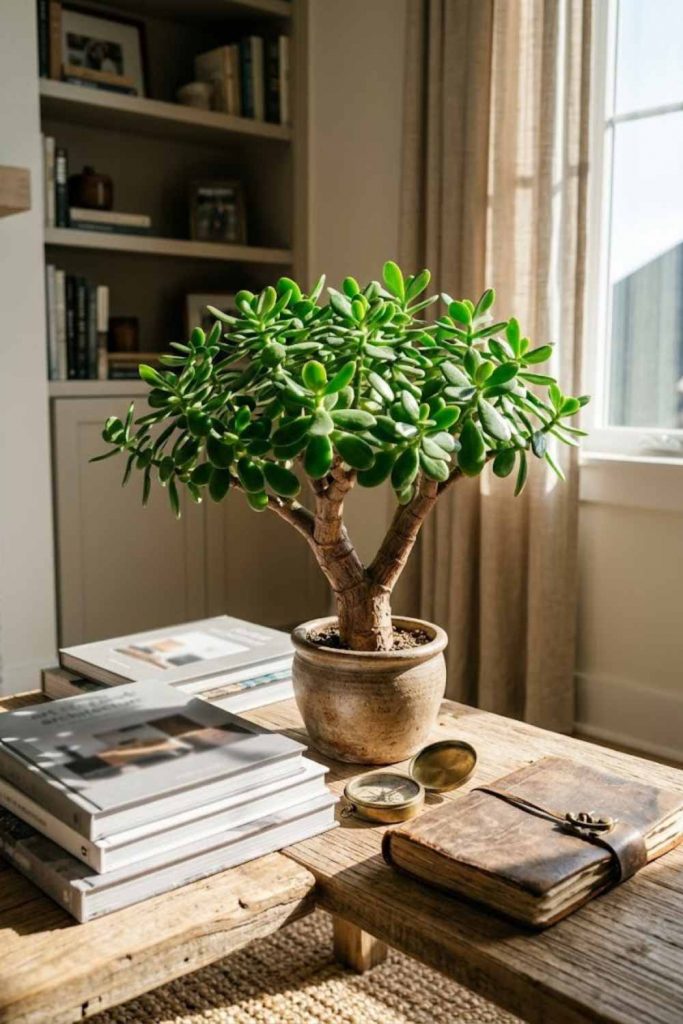
The Jade is essentially living furniture—a succulent that can live for over 50 years and eventually become a woody tree.
Its thick trunk and coin-shaped leaves add a refined aesthetic to sunny coffee tables.
A winter dormancy period means you can stop watering it entirely for several weeks at the end of the year.
- Light: Bright, direct light.
- Water: Every 3 weeks; minimal in winter.
#13 — Ponytail Palm (Beaucarnea recurvata)
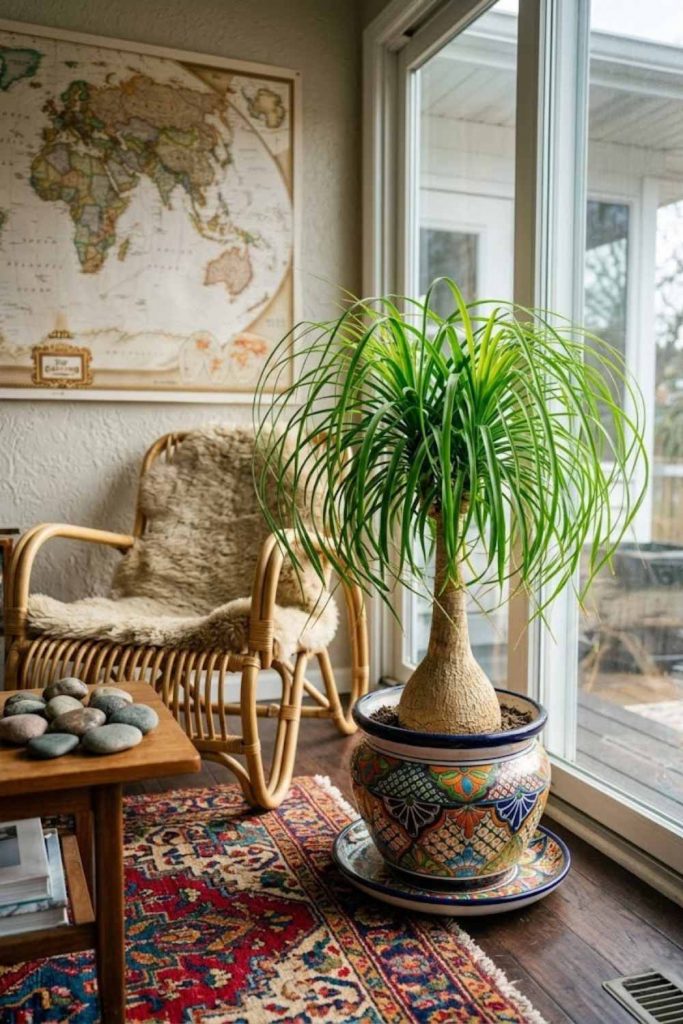
The bulbous, “elephant foot” base of the Ponytail Palm is a water canteen that ensures the plant won’t notice a month-long absence.
Its whimsical, messy-hair leaves make it a conversation piece for side tables and eclectic spaces.
It thrives in a sunny window and prefers bone-dry soil over damp conditions.
- Light: Bright light; full sun.
- Water: Every 3 weeks; stores water in trunk.
#14 — Hoya (Hoya carnosa)
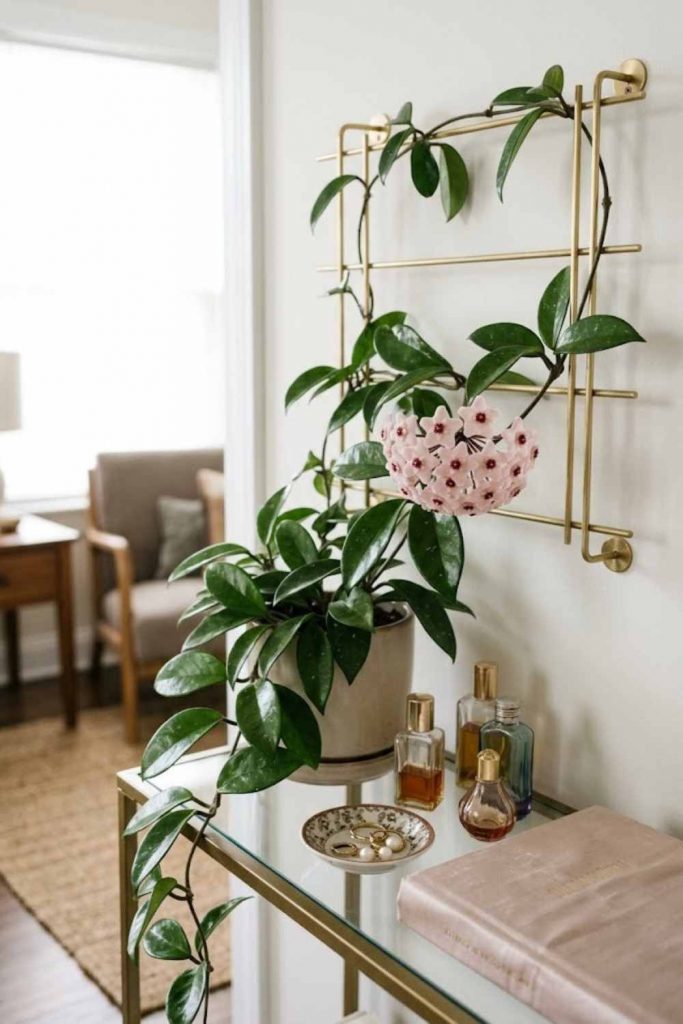
A wax-leaf wonder for those who want flowers without the fuss, the Hoya eventually rewards neglect with fragrant, porcelain-like blooms.
Its thick foliage allows it to go weeks without water. Leaving the old flower stems intact ensures the plant blooms from the same spot next year.
- Light: Bright, indirect light.
- Water: Every 2–3 weeks; allow to dry completely.
#15 — Air Plants (Tillandsia)
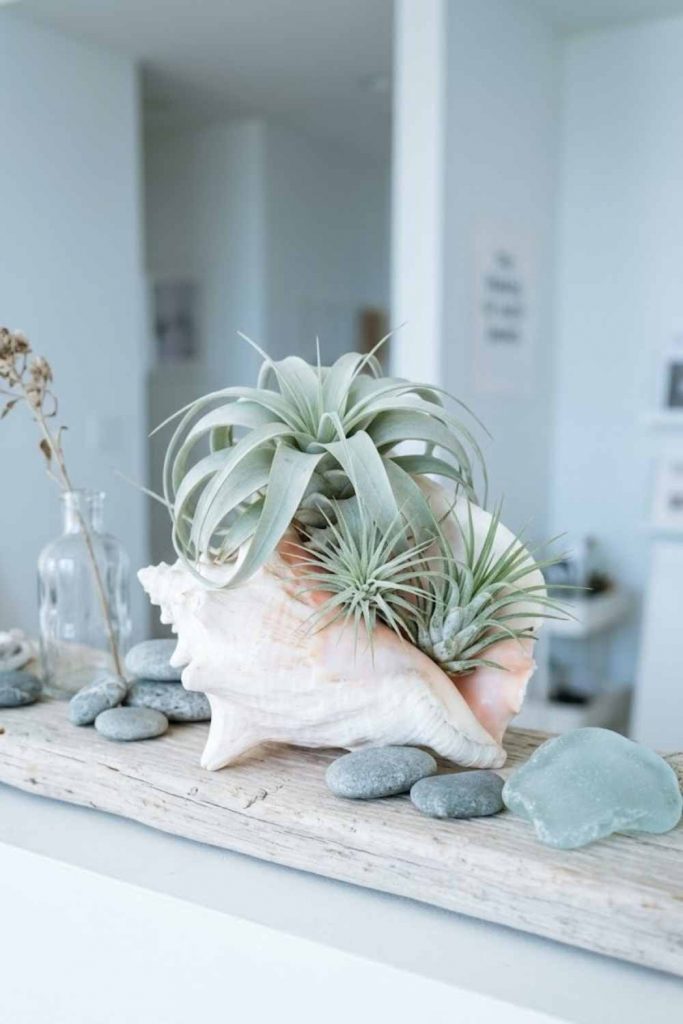
The ultimate zero-gravity decor for small studios, Air Plants live on air and a quick weekly bath.
They are best displayed in shells, glass globes, or on driftwood.
Soak them in a bowl of water for 20 minutes once a week, then shake them well and dry them upside down to prevent water from trapping in the base.
- Light: Bright, indirect light.
- Water: Weekly 20-minute soak; shake dry.
Conclusion
A green home shouldn’t be a source of stress. Success is simply a matter of matching a plant’s natural resilience to the reality of your space rather than trying to change your habits to suit the greenery.
- For low light: Focus on the ZZ Plant or Cast Iron Plant.
- For pets: Stick with the Spider Plant, Ponytail Palm, or Hoya.
- For visual impact: Use the Snake Plant or Rubber Tree.
Match the greenery to your routine, find its permanent spot, and enjoy the aesthetic of a home that takes care of itself.