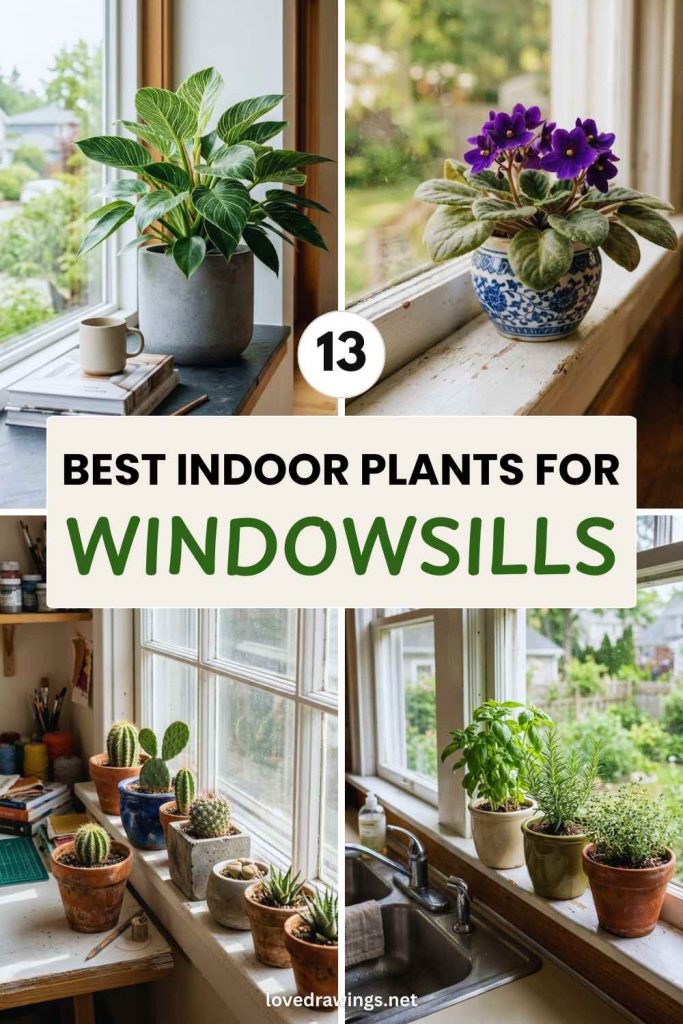
Table of Contents
A bare window sill is a missed architectural opportunity. It is the one spot in your home where the interior design meets the rhythm of the outdoors, making it the perfect stage for a curated collection of greenery. But a window sill can also be a harsh environment—a “micro-oven” on a South-facing ledge or a drafty, light-starved corner in a North-facing bathroom.
This list moves beyond generic greenery to help you match the specific light, space, and routine of your home with plants that won’t just survive, but will actually thrive.
#1 — Pothos (Epipremnum aureum)
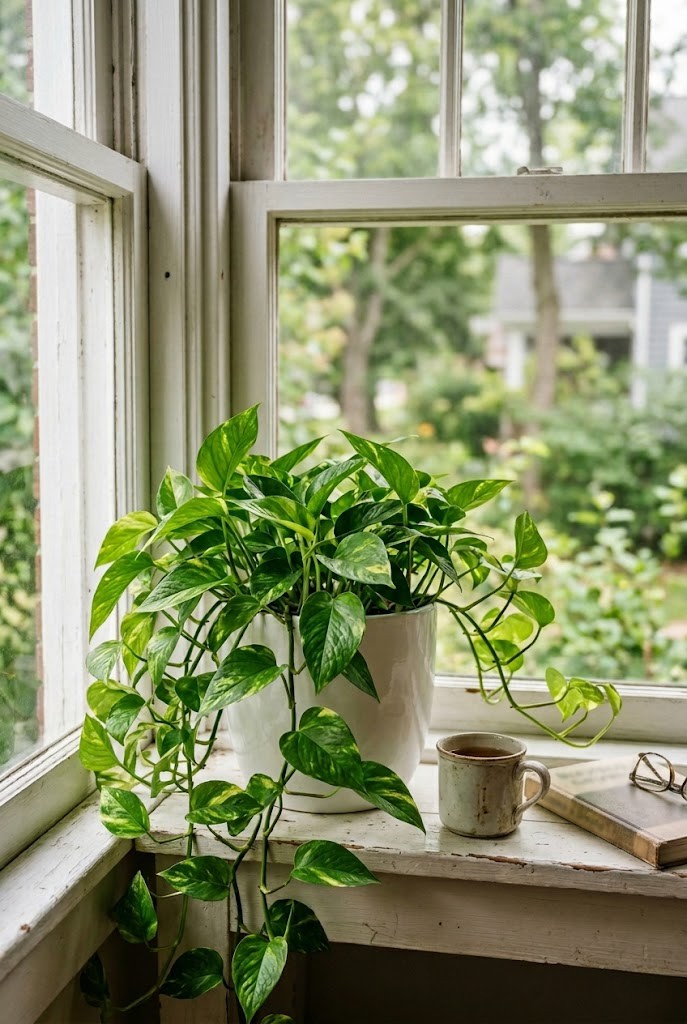
If your goal is to create a living curtain, the Pothos is your most reliable partner. With its heart-shaped leaves and relentless trailing habit, it’s the best choice for softening the hard lines of window molding. You can let it spill naturally over the ledge or use small command hooks to train the vines to climb up the window frame, framing your view in green.
It is nearly indestructible, adapting to everything from low-light corners to bright, indirect sun. Water it only when the soil feels dry to the touch. To keep it from looking leggy on a narrow sill, snip the ends occasionally; this encourages the plant to stay bushy at the base while you can propagate the cuttings in water.
#2 — Snake Plant (Sansevieria)
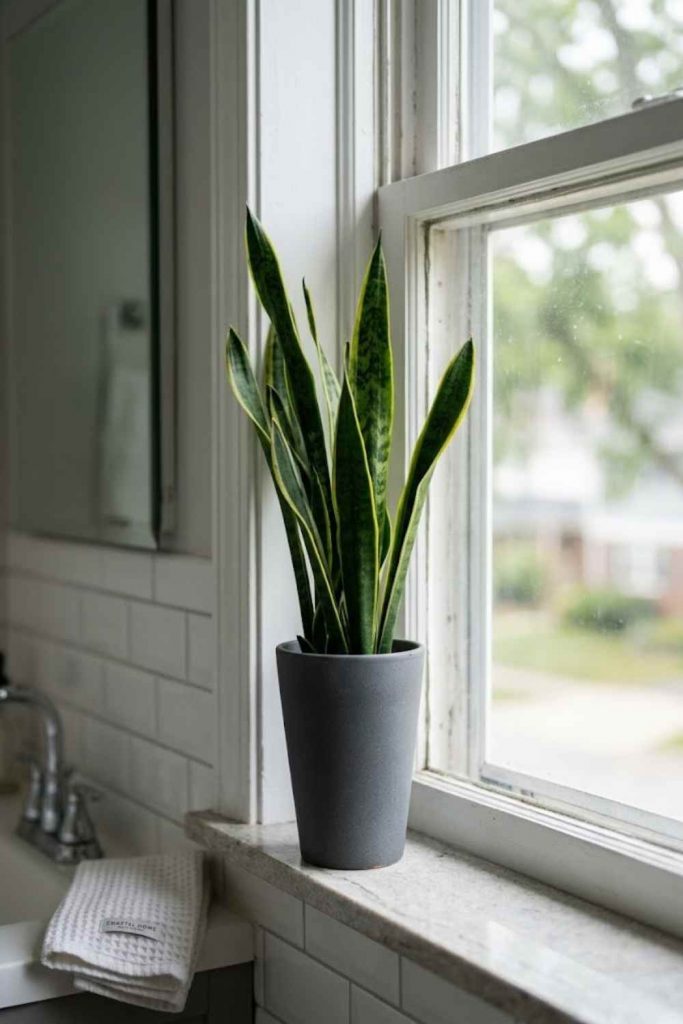
For those narrow, sliver-like sills where a round pot just won’t fit, the Snake Plant is the architectural answer. Its upright, sword-like leaves have a tiny footprint but offer high visual impact. The thick, waxy skin makes it incredibly heat-tolerant, meaning it won’t wilt when the afternoon sun bakes the glass behind it.
These are the champions of low-light survival. If your window faces a dark alley or is shaded by a deep porch, this is your plant. Because it stores so much water in its leaves, you can skip watering for weeks without issue. Just be careful not to overwater, as damp soil is its only real enemy.
#3 — ZZ Plant (Zamioculcas zamiifolia)
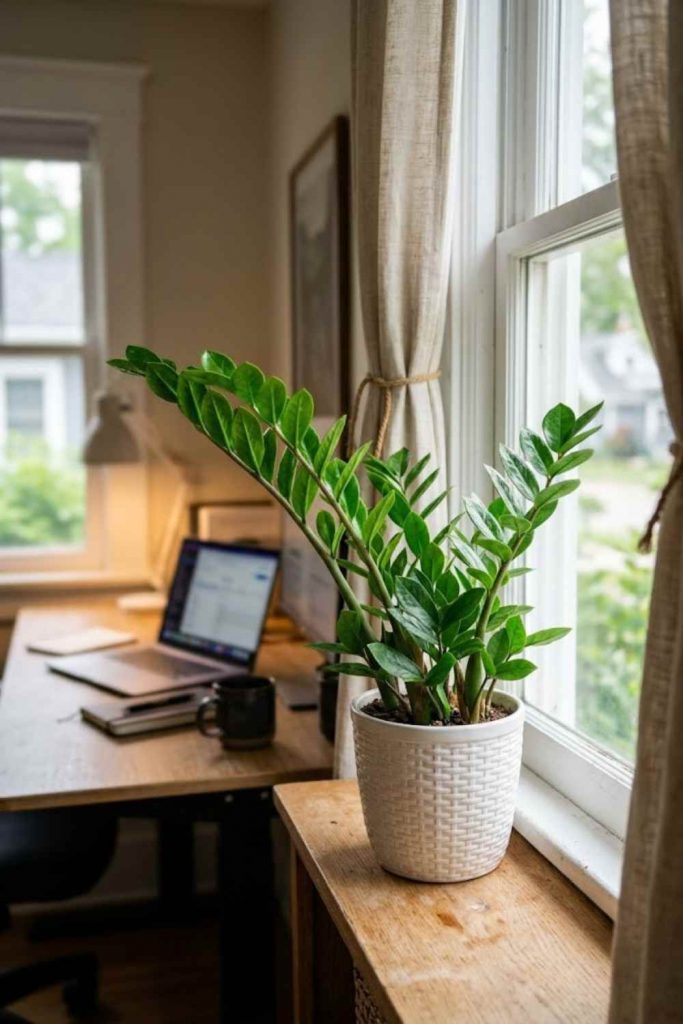
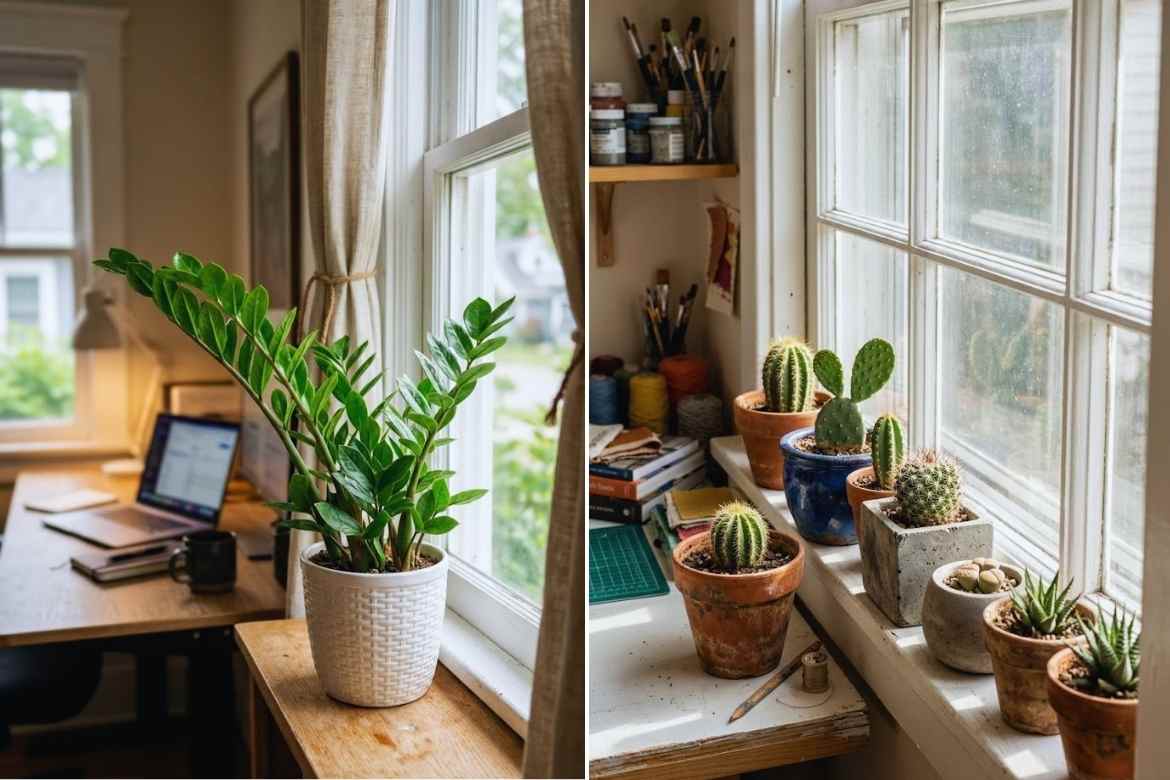
The ZZ plant brings a high-end, polished feel to a sill without the high-maintenance routine. Its glossy, emerald leaves look hand-shined and bring a sense of order to a home office or guest room.
It is the ultimate plant for the “forgotten” corner. It stores moisture in large underground rhizomes, making it extremely forgiving of missed waterings. While it can handle dim light, it truly hits its stride in bright, indirect sun. To keep it healthy, let the soil dry out completely before reaching for the watering can—over-attention is usually what goes wrong here.
#4 — Spider Plant (Chlorophytum comosum)
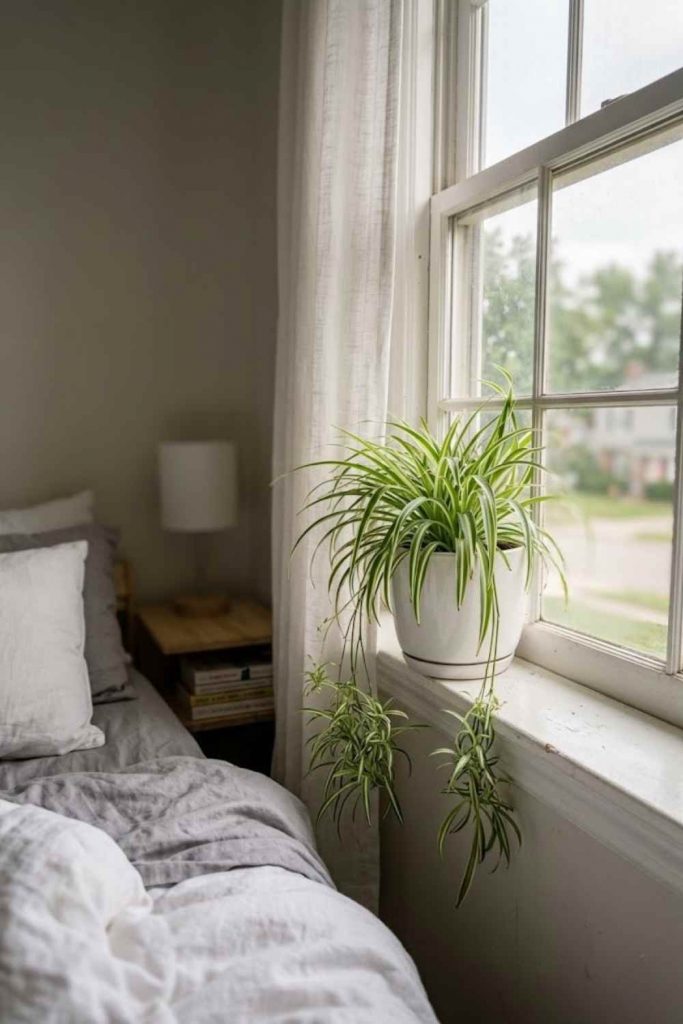
The Spider Plant offers a fountain-like silhouette that adds movement and airiness to a room. As it matures, it sends out “pups”—miniature baby plants that dangle on long stems, creating a playful, tiered look.
It is a great choice for a bedroom window where you want a sense of freshness. It prefers moderate, indirect light and is non-toxic to cats and dogs, making it a stress-free addition to low sills. If the leaf tips turn brown, it’s often a reaction to fluoride in tap water; simply use filtered water to keep the foliage crisp and green.
#5 — String of Pearls (Senecio rowleyanus)
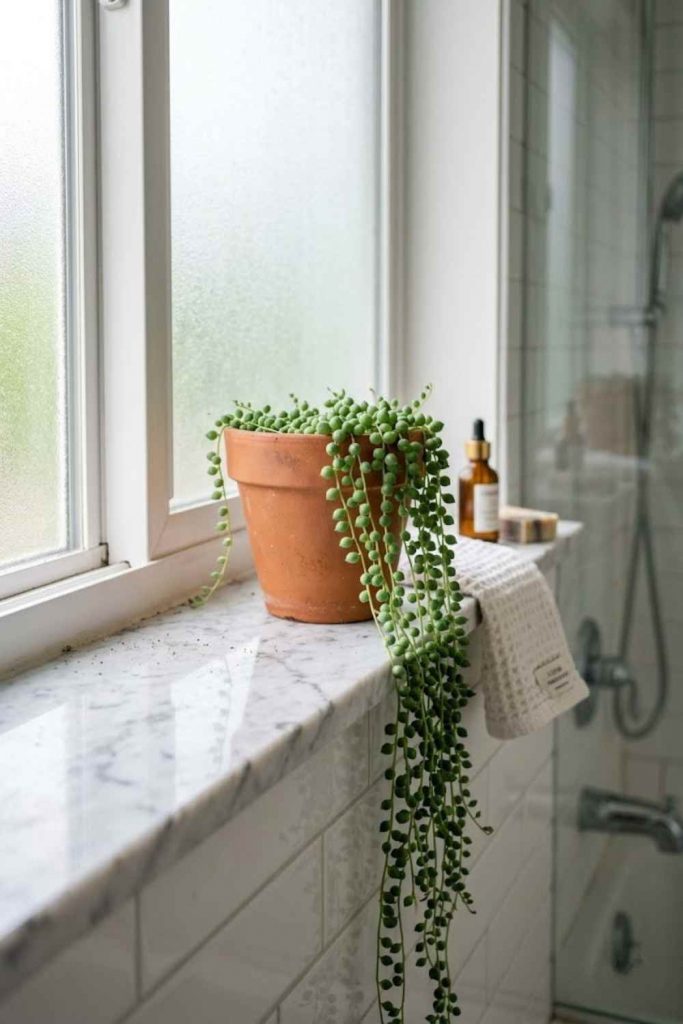
Looking more like a piece of jewelry than a plant, the String of Pearls features tiny, bead-like leaves that drape elegantly over the side of a pot. It is a specialist plant for those who have a bright, dry spot that needs a bit of “wow” factor, like a sunny bathroom ledge.
Treat this like a succulent: it needs high light to maintain its color and very little water. In the winter, you can almost ignore it entirely. Ensure your pot has excellent drainage; if the pearls sit in soggy soil, they will turn to mush quickly. It’s a delicate plant that rewards a hands-off approach.
#6 — African Violets (Saintpaulia)
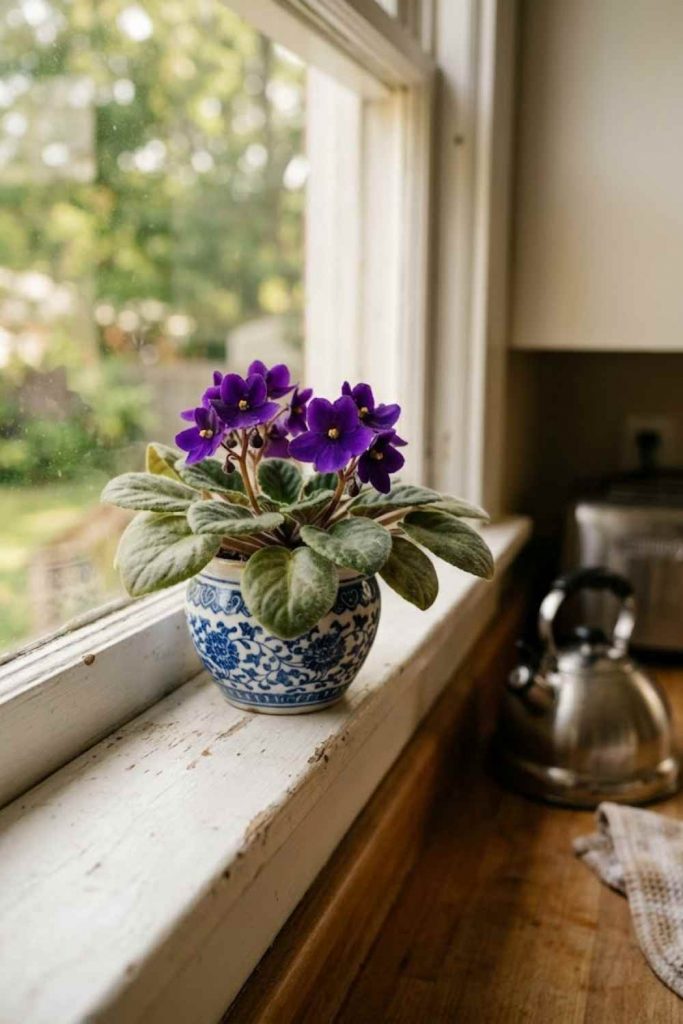
If you appreciate a vintage, Victorian-era aesthetic, African Violets bring a soft, nostalgic charm to a window. They are one of the few plants that will bloom reliably indoors without needing harsh, direct sun. Their fuzzy leaves and jewel-toned flowers are perfect for a small kitchen or vanity window where you can appreciate the details up close.
They hate getting their leaves wet, which can cause unsightly spots. The trick is to water from the bottom by letting the pot sit in a saucer of water for 20 minutes. Keep them out of hot, South-facing windows, as the direct sun will scorch their delicate foliage.
#7 — Friendship Plant (Pilea peperomioides)
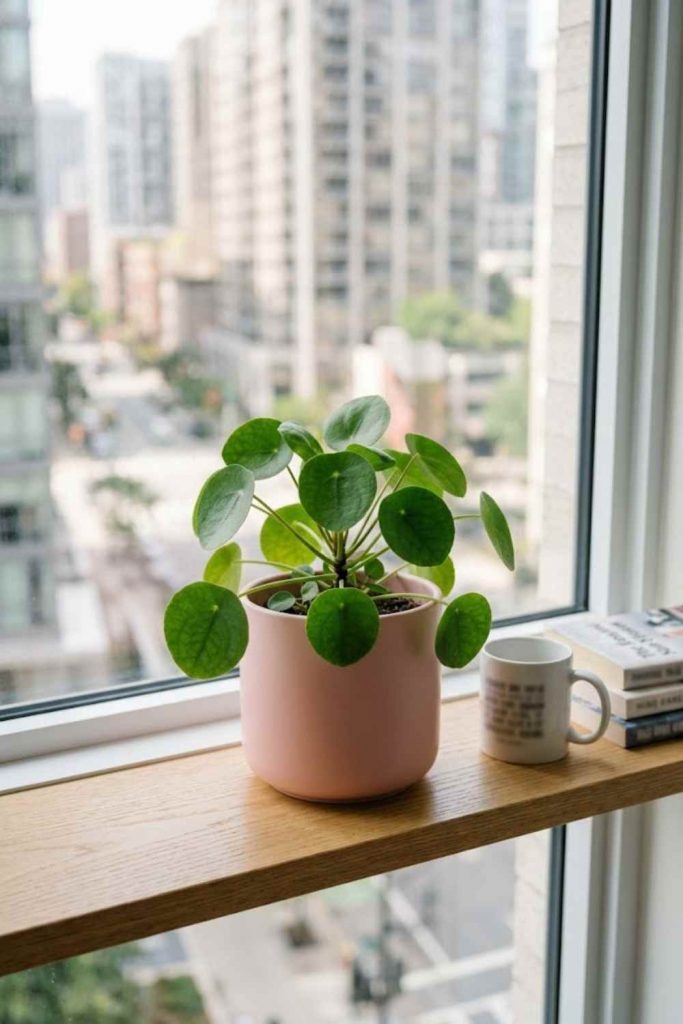
Often called the “Friendship Plant,” the Pilea is famous for its perfectly round, coin-shaped leaves. It has a quirky, mid-century modern vibe that looks great on a clean, uncluttered window sill. It stays relatively compact, making it a great choice for smaller urban apartments.
It loves bright, indirect light. To keep the plant growing symmetrically, give the pot a quarter-turn every week so all the leaves get their share of the sun. It’s an “easy-multiplier”—it frequently sprouts little babies at the base that you can pop out and share with friends.
#8 — Philodendron Birkin
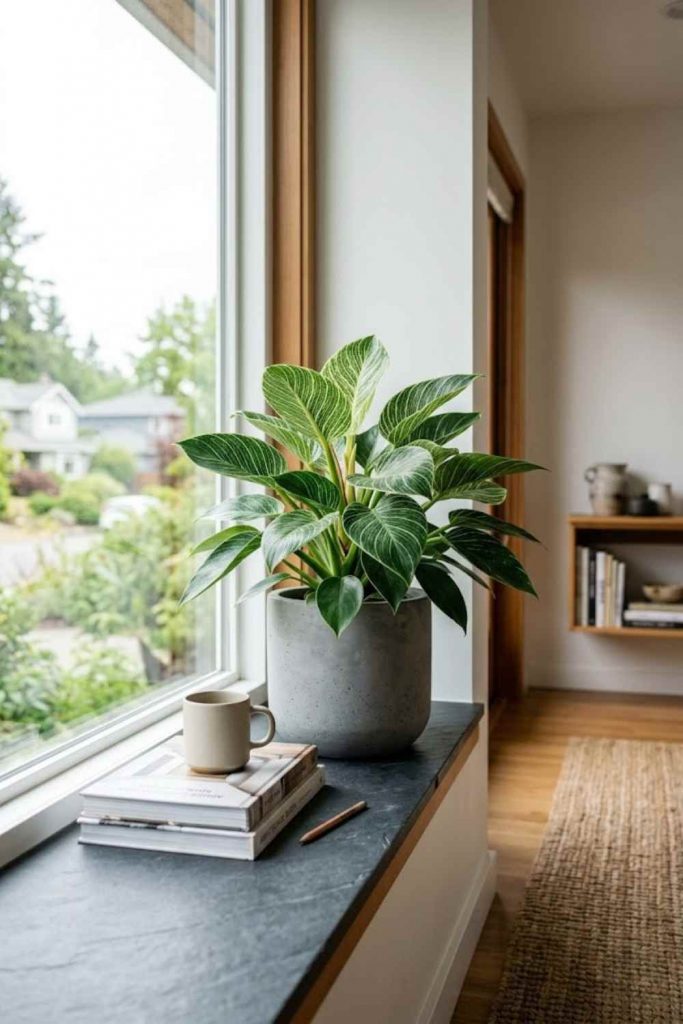
The Birkin is all about the pinstripes. Its leaves feature striking white variegation that looks like it was painted on. It is a slow grower that stays neat and upright for several years before it starts to sprawl, making it a great “permanent” resident for a medium-sized sill.
The variegation depends on light; if it’s too dark, the leaves will stay solid green. Give it plenty of bright, filtered light to keep those stripes sharp. Note that this plant is toxic to pets, so keep it on a higher sill if you have a curious cat that likes to climb.
#9 — Jade Plant (Crassula ovata)
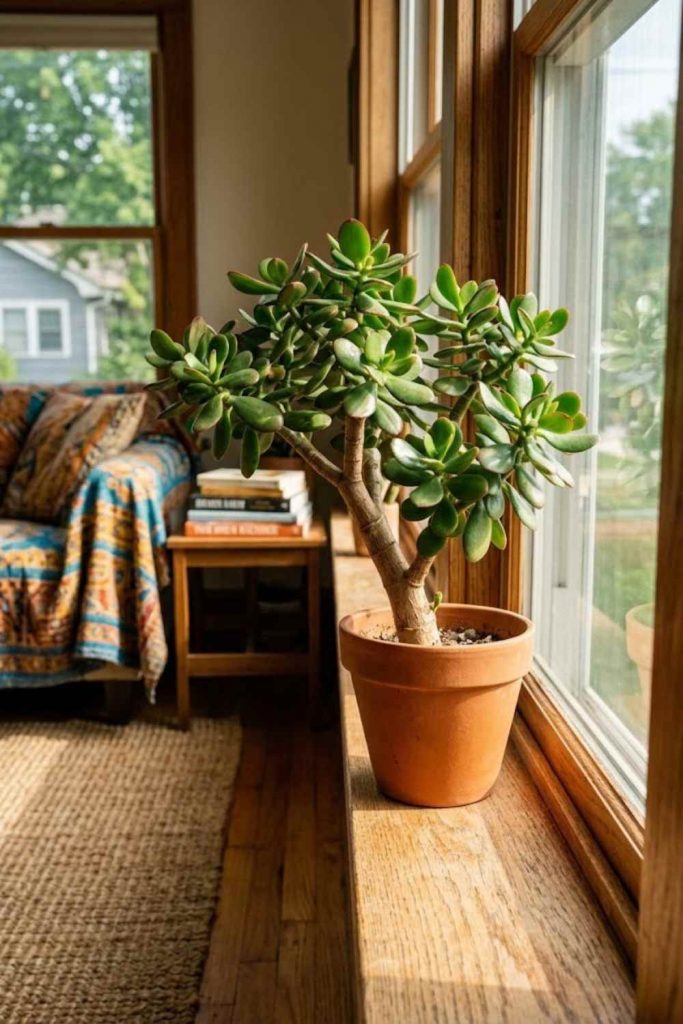
The Jade plant is the classic “sunny window” choice. It has a woody, tree-like structure and plump, fleshy leaves that store moisture. If you have a window that gets hot, direct afternoon sun that kills other plants, the Jade will thank you for it.
Under high sun, the edges of the leaves will often turn a beautiful, sunset red—a sign that the plant is thriving. It can live for decades and is incredibly easy to care for, provided you let the soil dry out completely between waterings. It’s a plant that appreciates a “less is more” philosophy.
#10 — Aloe Vera
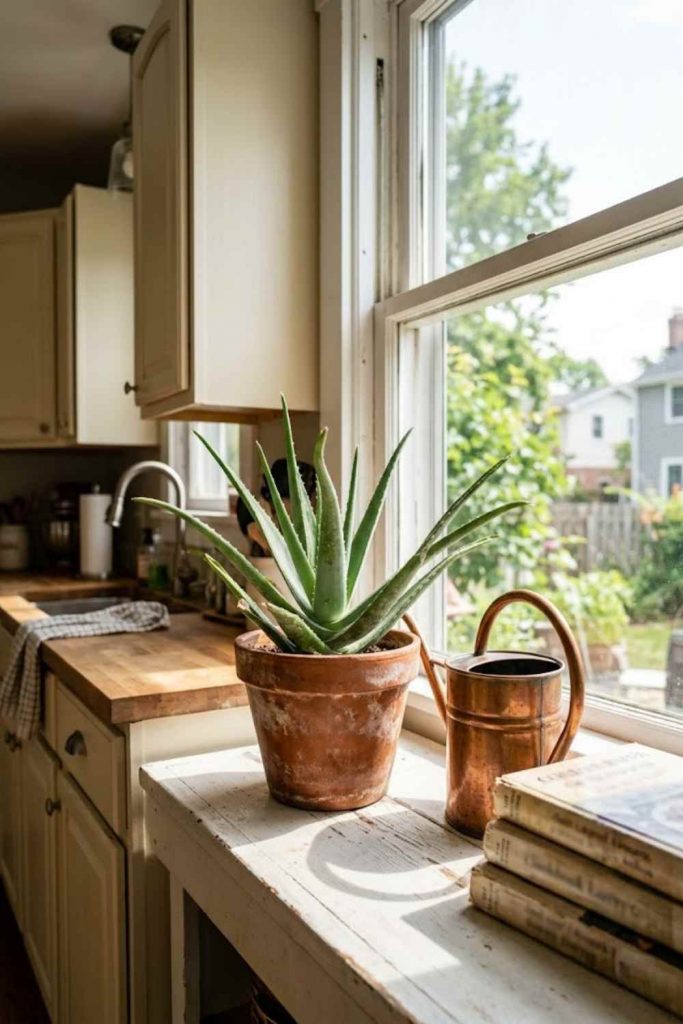
Aloe Vera is a dual-purpose powerhouse. It has a structural, spiky look that adds a desert-chic vibe to a window, and it is incredibly useful to have in the kitchen. The gel inside the leaves is a natural remedy for minor burns or summer sunburns.
It needs a lot of light—at least six hours of sun—to keep its leaves from drooping. Keep it in a terracotta pot if possible; the porous clay helps the soil dry out faster, which is exactly what Aloe roots prefer. Avoid overwatering at all costs, as it thrives in dry conditions.
#11 — Cactus (Various Species)
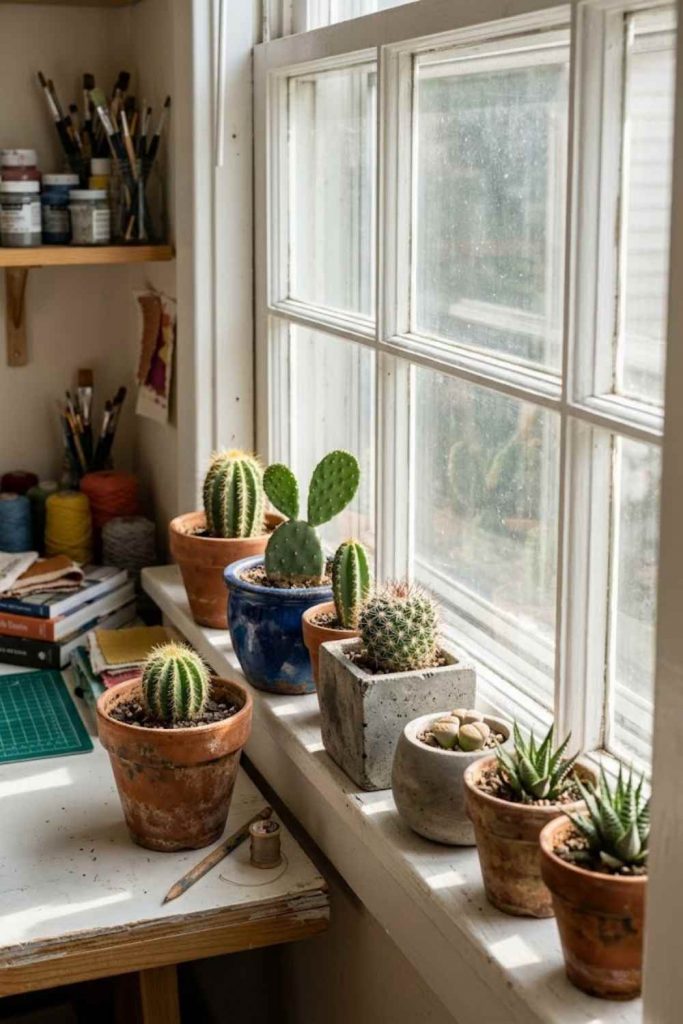
When you have a sill that is only two or three inches wide, a tiny cactus is often your only option. Their varied textures and shapes turn a window into a miniature desert landscape without blocking any of the actual view.
Cactuses are true sun-worshippers; they need the most direct light you can give them. You can almost forget about watering them—once a month is usually plenty. Be mindful of the spines if your window has heavy curtains or if you have small children or pets.
#12 — Kitchen Herbs (Basil, Rosemary, Thyme, Parsley)
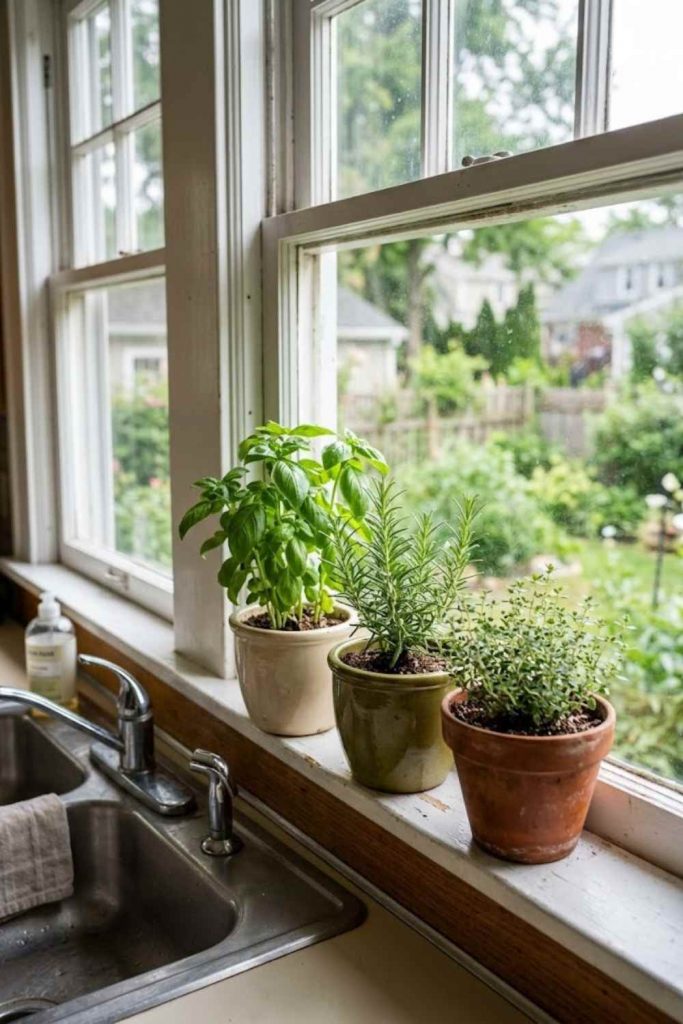
Growing herbs on a window sill is about the ritual of snipping fresh leaves while you cook. They add a soft, rustic look to the kitchen and fill the air with a faint, savory scent every time the breeze hits them.
Herbs are sun-hungry and need at least six hours of direct light to produce the oils that give them flavor. Don’t be afraid to harvest them regularly; this actually prevents them from getting leggy and encourages the plant to grow fuller. Rosemary likes its roots dry but its leaves humid, so a quick misting a few times a week goes a long way.
#13 — Venus Flytrap (Dionaea muscipula)
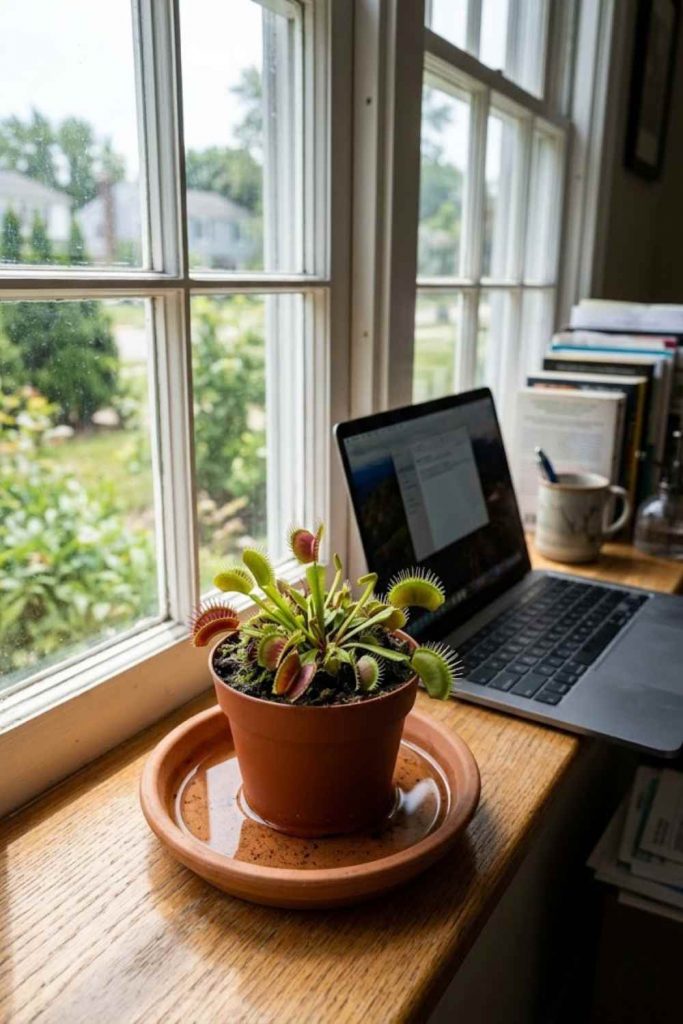
The Venus Flytrap is a conversation starter. It’s a compact, “pet-like” plant that reacts to its environment, making it a fascinating choice for a bright office window.
Unlike most plants on this list, the Flytrap wants to stay wet. Keep the pot sitting in a shallow tray of distilled water or rainwater at all times. Give it plenty of sun to keep the “traps” a vibrant red, and don’t trigger the traps manually for fun, as it wastes the plant’s limited energy.
Conclusion
Choosing the right plant for your window sill is a balance between your personal style and the reality of your light.
- For hot, South-facing spots, look toward the Jade, Aloe, or Cactus.
- For dimmer, North-facing windows, the Snake Plant, ZZ Plant, or Pothos are your best bets.
If you want a mix of beauty and utility, a few pots of Kitchen Herbs or an Aloe on a sunny ledge provide the most value for your daily routine.