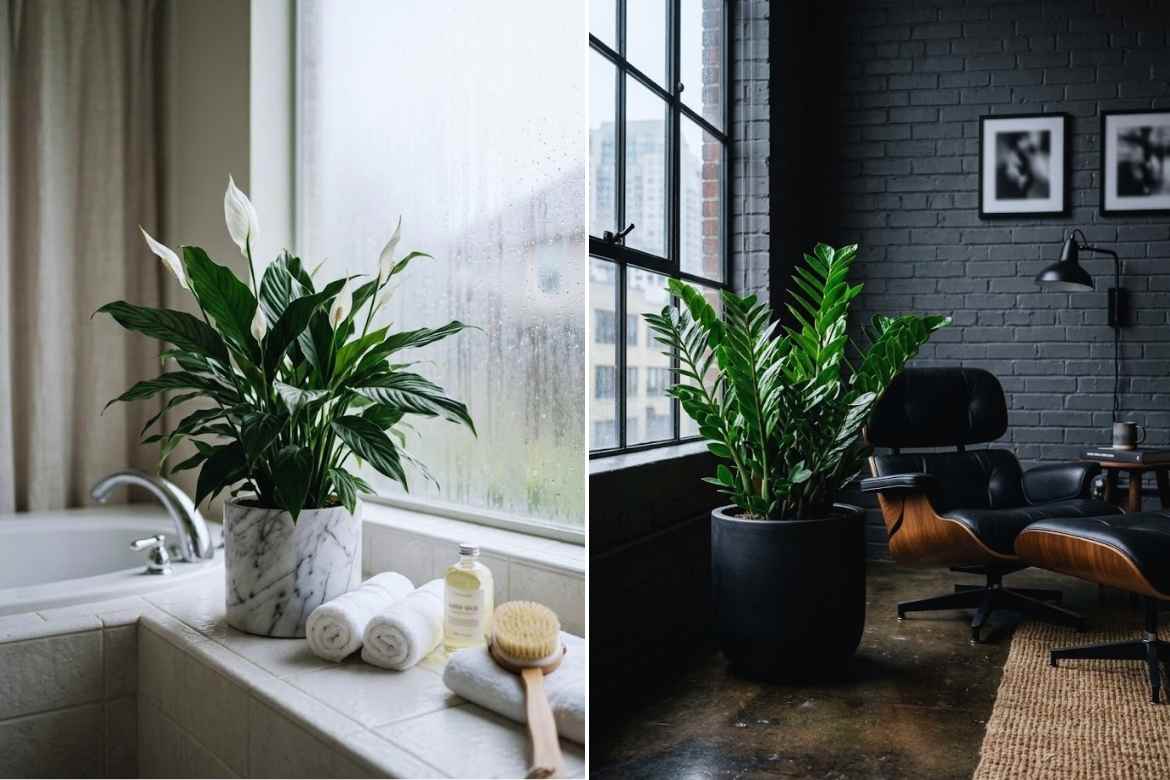
Table of Contents
A North-facing window provides a cool, consistent blue light that remains steady all day long. Unlike the dramatic, baking heat of the South or the shifting shadows of the West, the North exposure is a sanctuary for plants that evolved on the dim forest floor.
Success here isn’t about finding a plant that “survives” the darkness; it’s about choosing species that treat this soft, low-photon environment like a luxury spa.
#1 — Snake Plant (Sansevieria)
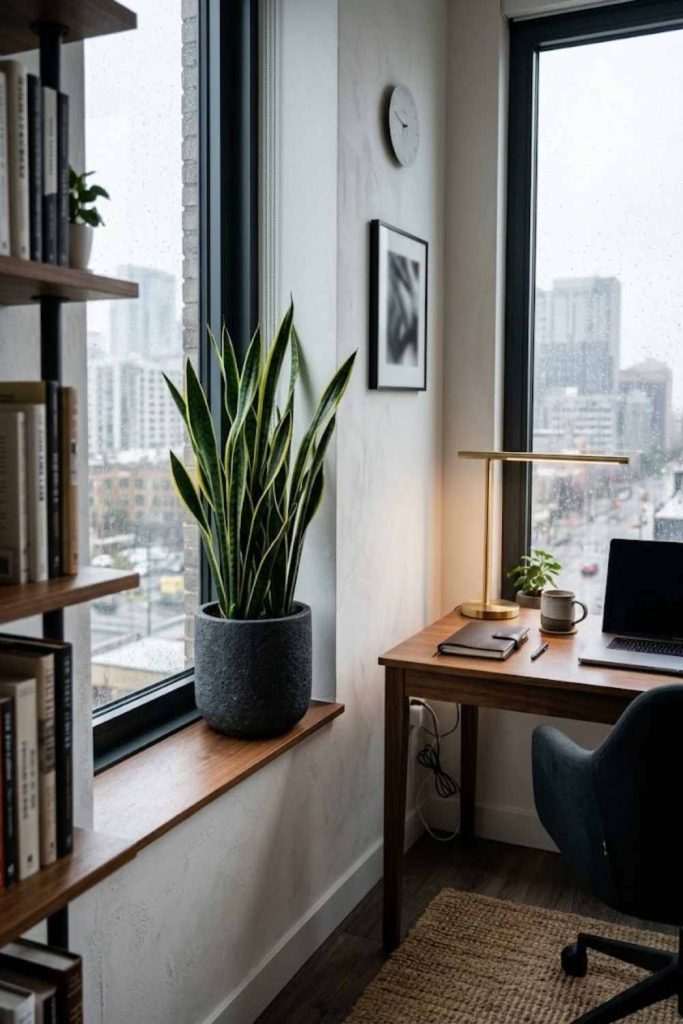
This is the specific solution for the slim 4-inch sills where nothing else fits. Because it grows in tight, vertical swords, the Snake Plant won’t get tangled in your blinds or crowded against the cold glass.
It is the only species that truly ignores the temperature swings of a drafty North-facing pane. Use a heavy ceramic pot; its verticality makes it top-heavy, and a sturdy weight prevents it from toppling over when you open the window for a breeze.
- Light: Any level; handles deep shade to soft North light
- Water: Every 3–4 weeks; only when soil is bone-dry
#2 — Pothos (Epipremnum aureum)
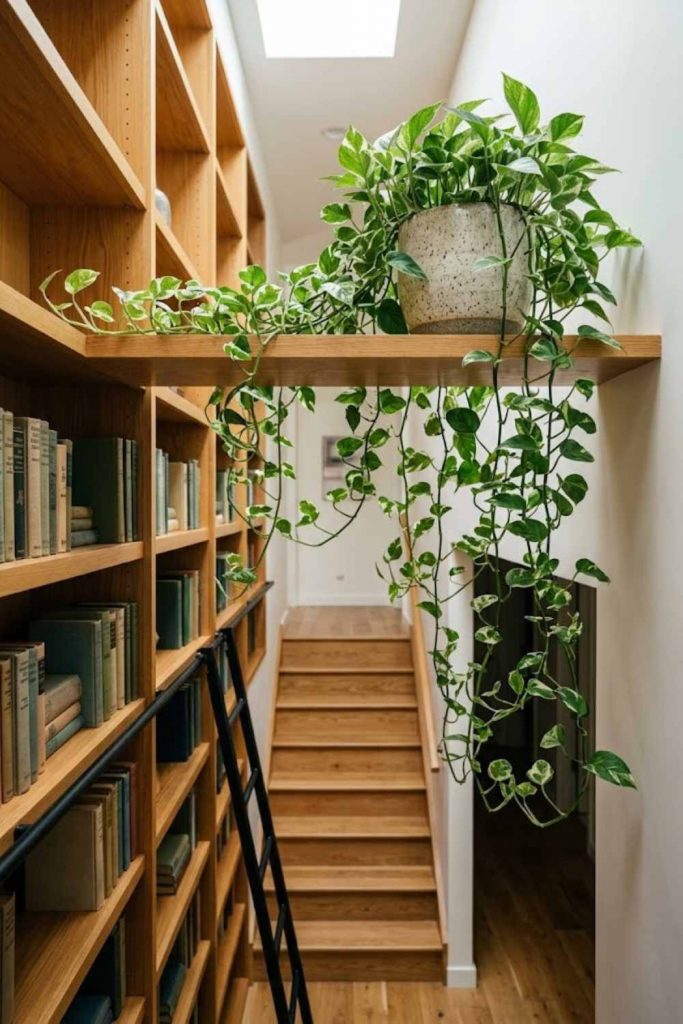
Pothos is the best tool for softening the hard, industrial lines of a window frame without the commitment of a permanent trellis.
It acts as a safety net for beginners because it communicates through the glass; when the soil is dry, the leaves wilt dramatically, then snap back to a crisp, waxy texture within hours of a soak. The vines can be guided along the ledge to create a waterfall effect, making even a dim corner feel lush.
Pro Tip: If a vine gets too long, snip it off and put the cut end in a glass of water on the same windowsill. In a few weeks, you’ll have roots and a brand-new plant for free.
- Light: Low to bright indirect light
- Water: Every 1–2 weeks; let soil dry out between waterings
#3 — ZZ Plant (Zamioculcas zamiifolia)
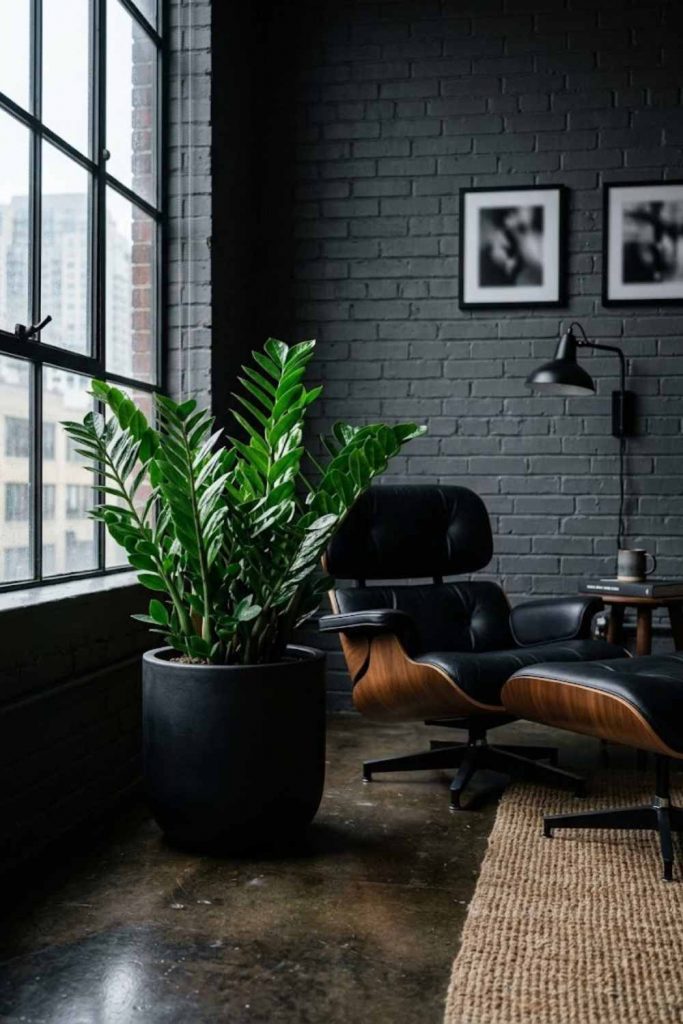
The ZZ plant is the choice for “difficult” windows—the basement sills or North-facing ledges blocked by neighboring buildings.
Its leaves are naturally glossy, acting as tiny mirrors that catch minimal light and reflect it deeper into a dim room. It is a “set-it-and-forget-it” survivor that stores water in potato-like bulbs under the soil, growing so slowly that you won’t have to worry about the mess of repotting for years.
- Light: Low to medium indirect light
- Water: Once a month; allow soil to dry completely
#4 — Cast Iron Plant (Aspidistra elatior)
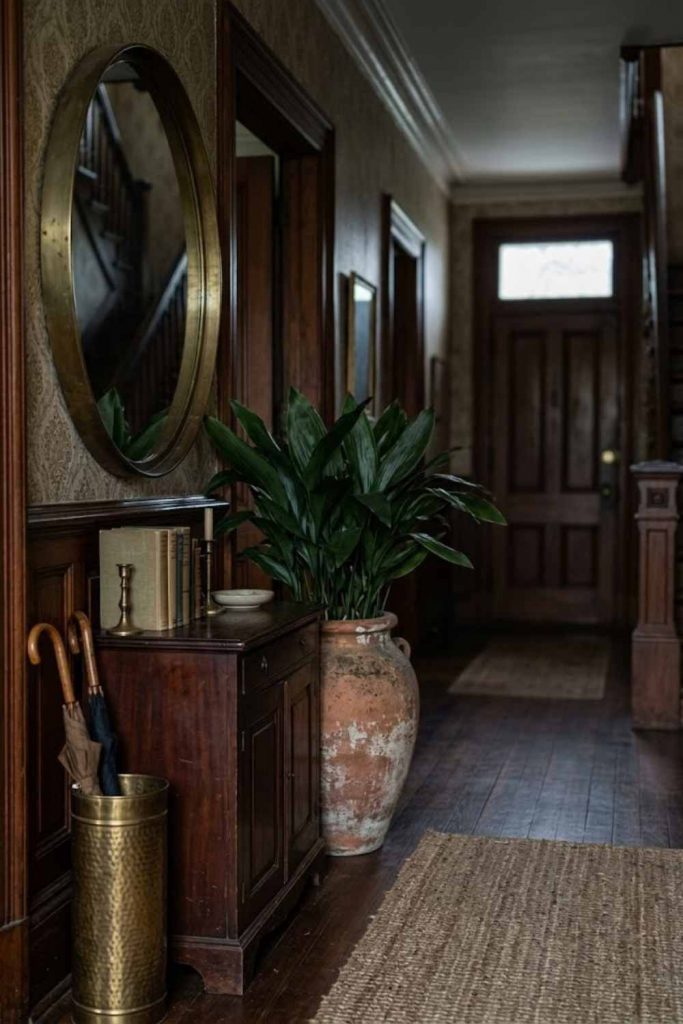
North windows are notoriously cold in the winter, and many tropical plants can’t handle the “cold bite” from a drafty pane. The Cast Iron Plant earned its name by being nearly immune to these temperature fluctuations.
Its wide, matte-green leaves provide a moody, Victorian aesthetic that suits older homes. Since light is scarce here, dust acts like a blindfold; wipe the leaves monthly so the plant can actually “see” the sun.
- Light: Can survive in near-darkness
- Water: When the top 2 inches of soil are dry
#5 — Parlor Palm (Chamaedorea elegans)
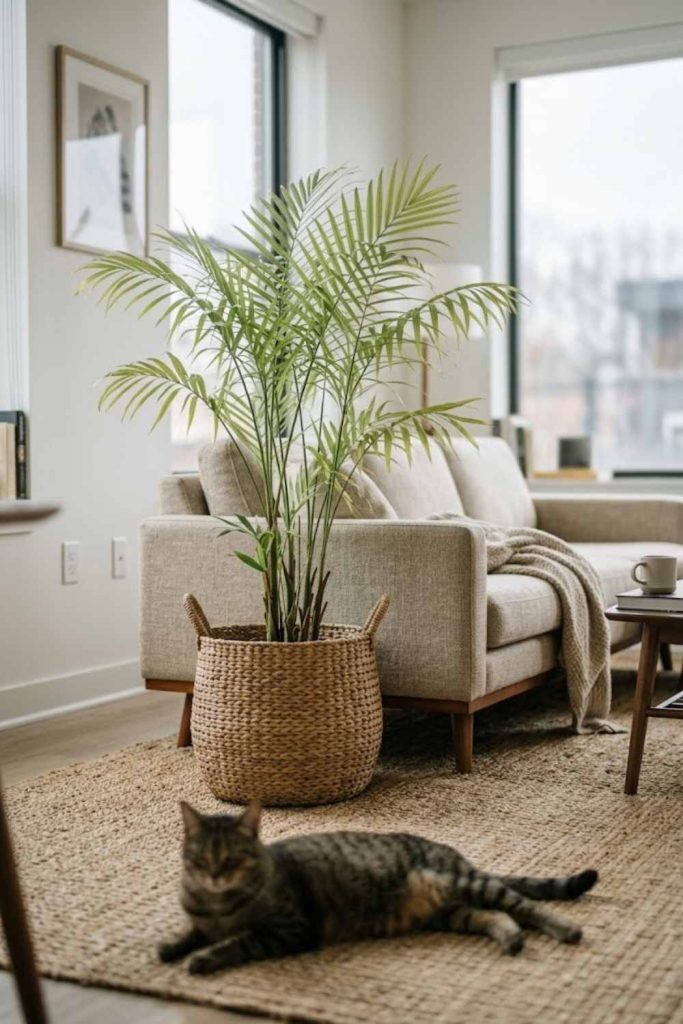
This palm provides feathery, tropical elegance without the “diva” requirements of its larger cousins. It was a staple in Victorian homes because it thrives in the cool, dim conditions typical of a North exposure.
It stays relatively low-profile, making it a safe, non-toxic bet for households with curious cats who like to nibble on greenery.
- Light: Low light; direct sun kills it
- Water: Keep consistently moist but never soggy
#6 — Spider Plant (Chlorophytum comosum)
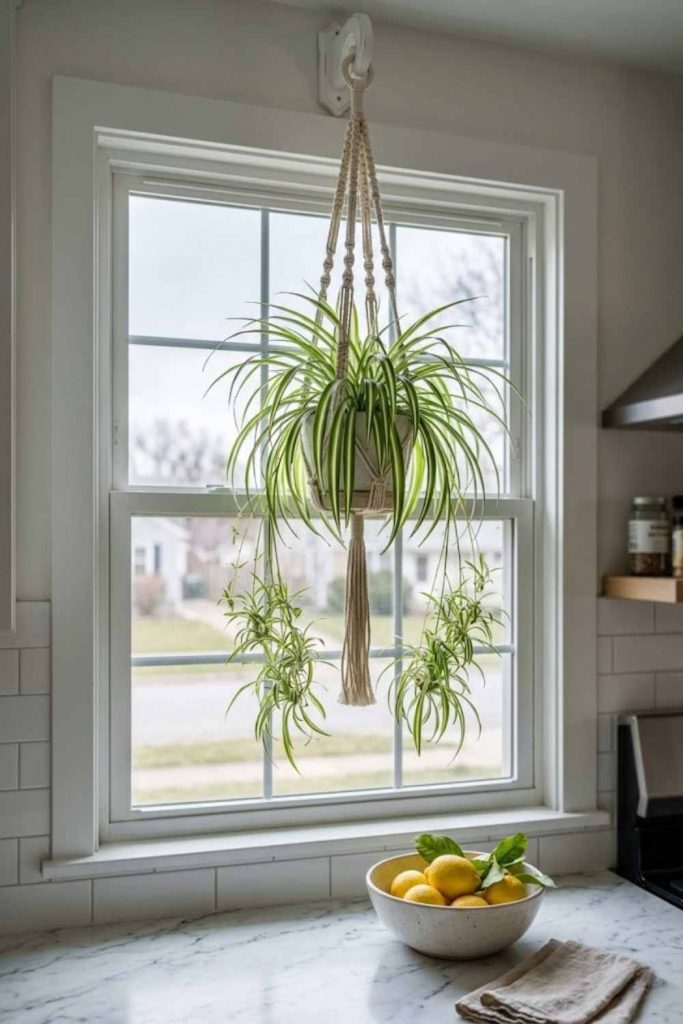
If your window looks directly onto a street, the Spider Plant creates a natural privacy curtain. As it matures, it sends out “babies” on long, arching stems that hang down to filter the view from outside without blocking the sun.
If the leaf tips turn brown, it is likely reacting to fluoride in tap water; switching to filtered water is the only trick a beginner needs to keep this one pristine.
- Light: Adaptable to all light levels
- Water: Weekly; keep soil slightly moist
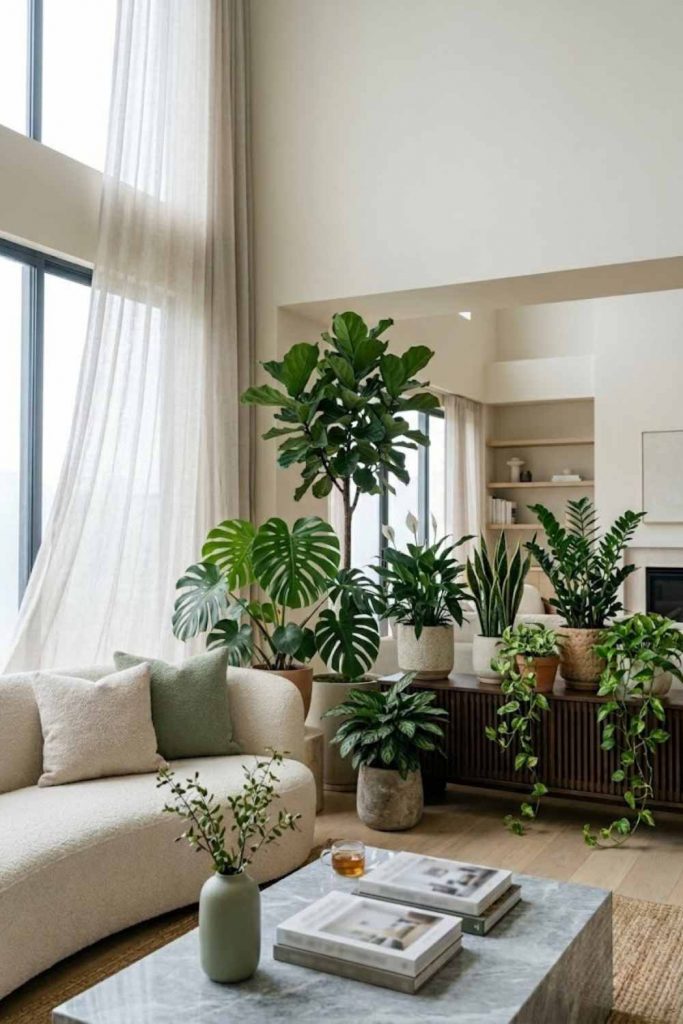
#7 — Monstera Deliciosa (Monstera deliciosa)
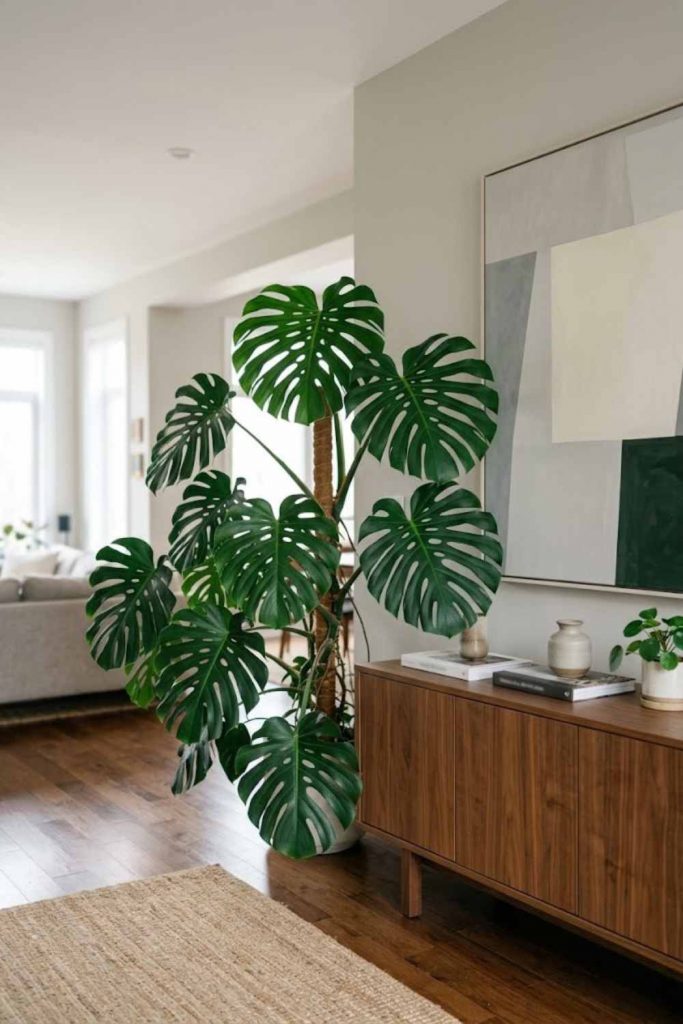
Most people assume the Monstera needs a greenhouse, but its massive leaf surface area actually works like a satellite dish to catch stray North light.
It brings a high-end jungle vibe to large living rooms. In low light, it will “wander” looking for the sun; stake it with a moss pole early on to keep it growing neatly upward rather than sprawling across your floor.
- Light: Survives well in North light; grows faster in bright indirect
- Water: Every 1–2 weeks; allow soil to dry significantly
#8 — Peace Lily (Spathiphyllum)
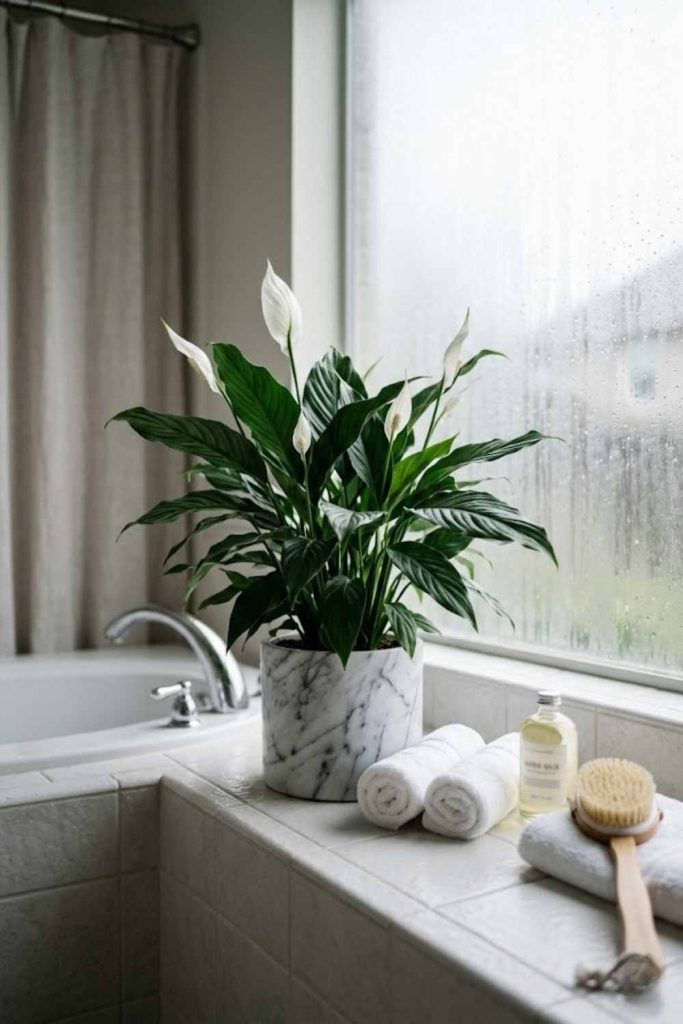
Most flowering plants look like a pile of sticks once the sun goes away, but the Peace Lily provides soft white color almost year-round in a North-facing bathroom.
It loves the high humidity of a shower-adjacent sill and behaves like a dramatic communicator—it will literally collapse when thirsty and “revive” once watered.
- Light: Avoid all direct sun
- Water: Keep soil moist; it faints when thirsty
#9 — Bird’s Nest Fern (Asplenium nidus)
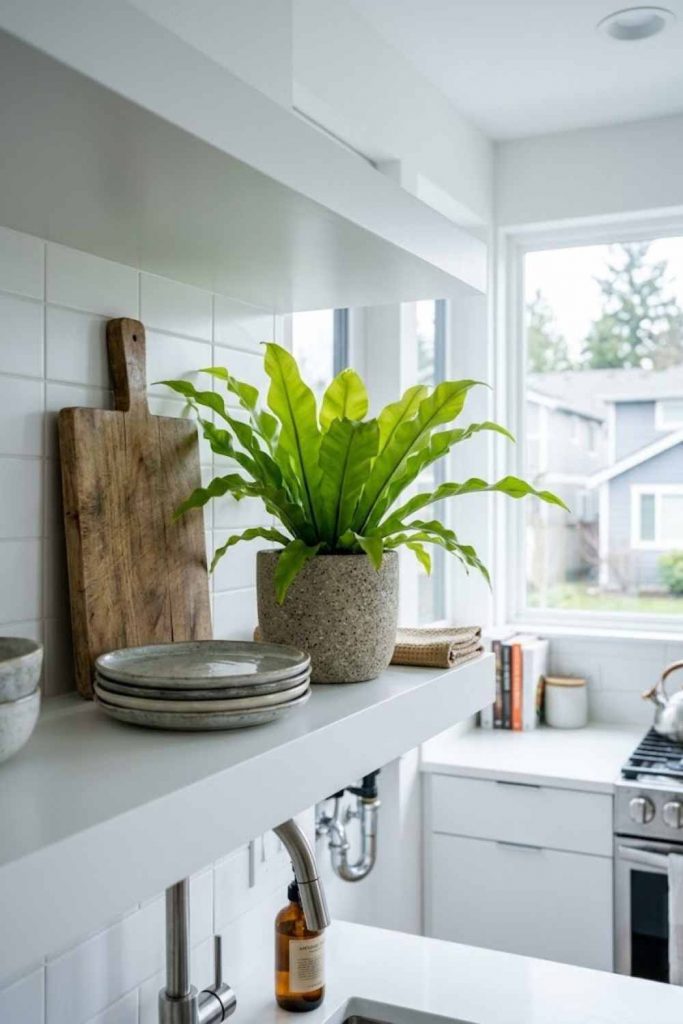
If you love the look of ferns but hate the mess of falling brown needles, this is your plant. Its solid, wavy leaves stay intact and handle the cool, damp atmosphere of a North-facing kitchen with ease.
To avoid rot, water the soil around the base, never into the center “nest” of the plant.
- Light: Medium to low indirect light
- Water: Every 1–2 weeks; avoid the plant center
#10 — Chinese Evergreen (Aglaonema)
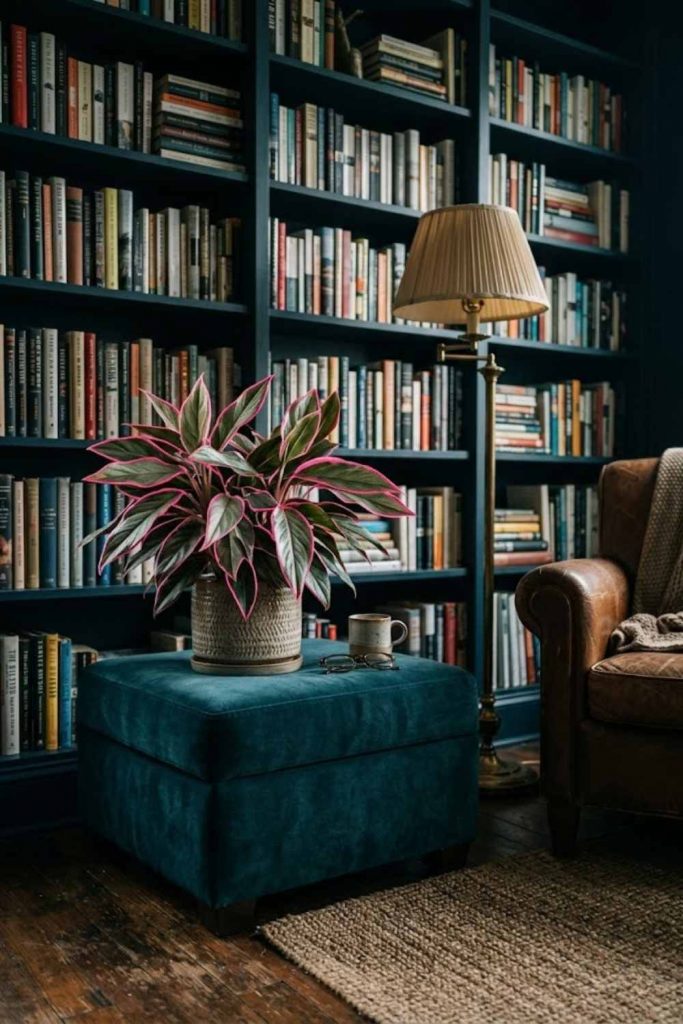
Aglaonema is the “color burst” for a gray room. While most variegated plants need sun to stay colorful, this species maintains its pink and silver patterns even in low-energy environments.
It is a sturdy miniature that handles dry AC vents and winter drafts better than almost any other colorful foliage.
- Light: The darker the leaf, the lower the light it handles
- Water: When soil is 50% dry
#11 — Heartleaf Philodendron
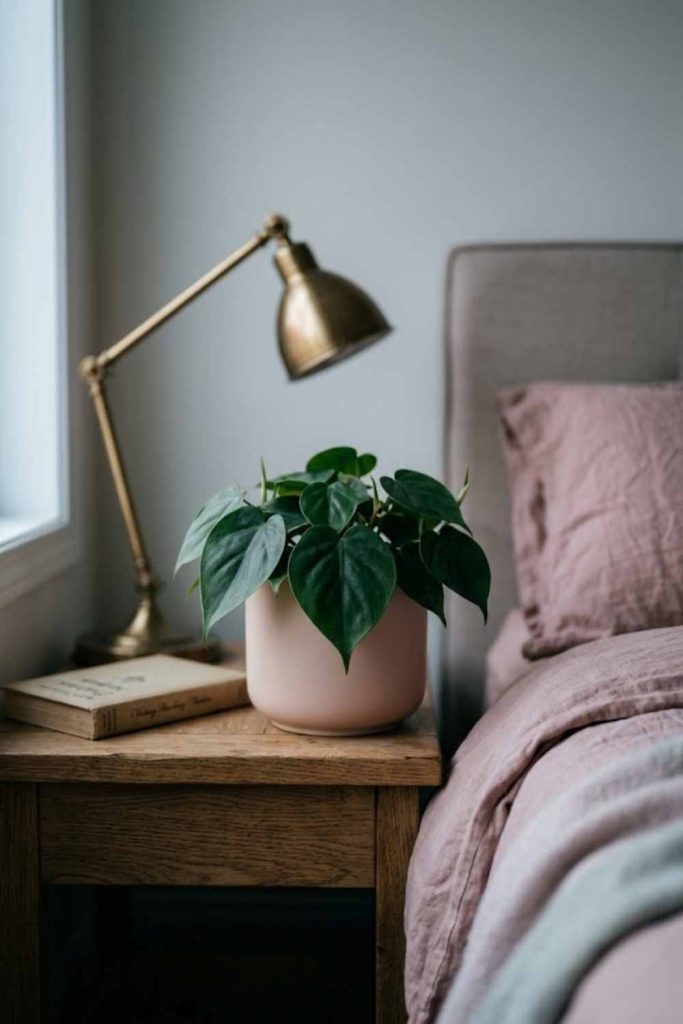
For those who want a trailing look that is more delicate and romantic than the industrial-feeling Pothos. Its paper-thin, heart-shaped leaves are optimized to capture low-intensity light.
When the vines start to look “leggy”—with long stretches of stem and few leaves—it’s the plant’s way of begging to be moved three inches closer to the glass.
- Light: Low to medium indirect
- Water: When the top inch of soil is dry
#12 — Prayer Plant (Calathea)
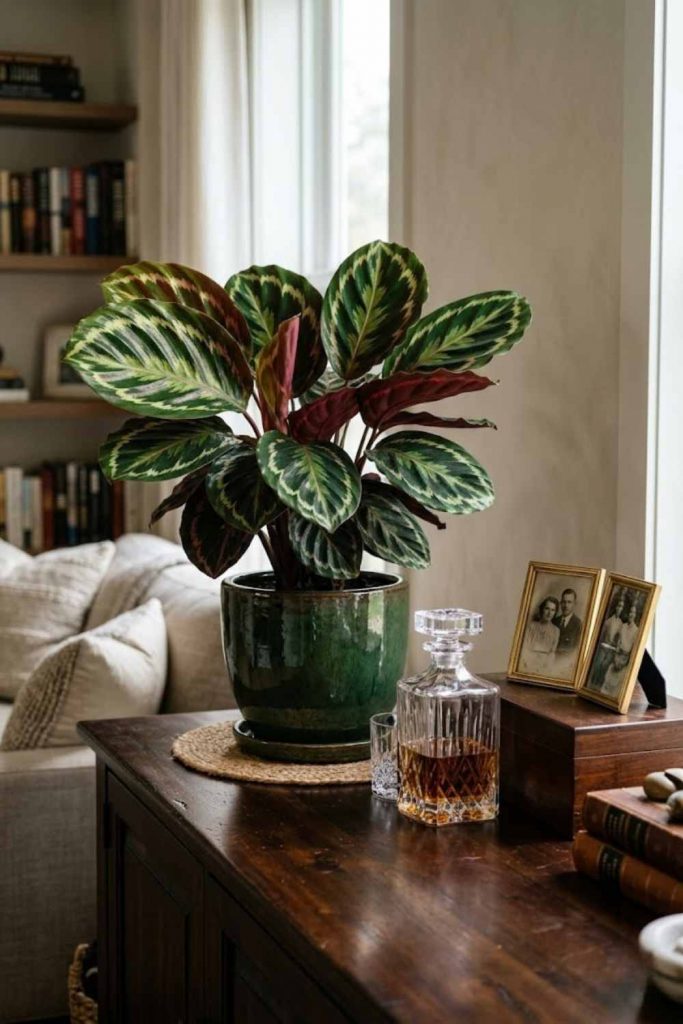
Known as the “Sophisticated Dancer,” the Calathea moves its leaves up and down in response to the light cycle. This movement is most dramatic in soft North light, where the plant isn’t “stunned” by harsh midday rays.
It is a bit of a diva regarding water quality; use filtered water to prevent the leaf edges from turning crisp and brown.
- Light: Low to medium indirect
- Water: Keep soil damp; never let it dry out
#13 — English Ivy (Hedera helix)
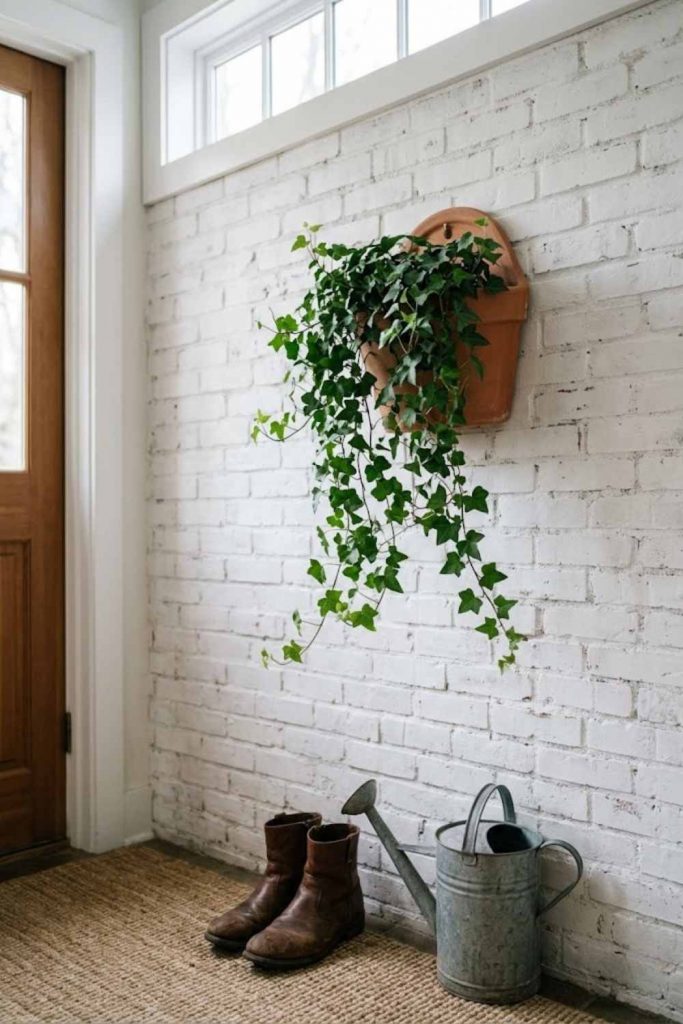
English Ivy thrives in the cooler temperatures of a North window that would make other tropicals shrivel. It is a functional choice for damp corners as it helps filter airborne mold spores.
To keep it pest-free in dry indoor heat, give the whole plant a “shower” in the sink every few weeks to wash off any dust or mites.
- Light: Loves cool, indirect North light
- Water: Prefers to stay slightly moist
#14 — Nerve Plant (Fittonia)
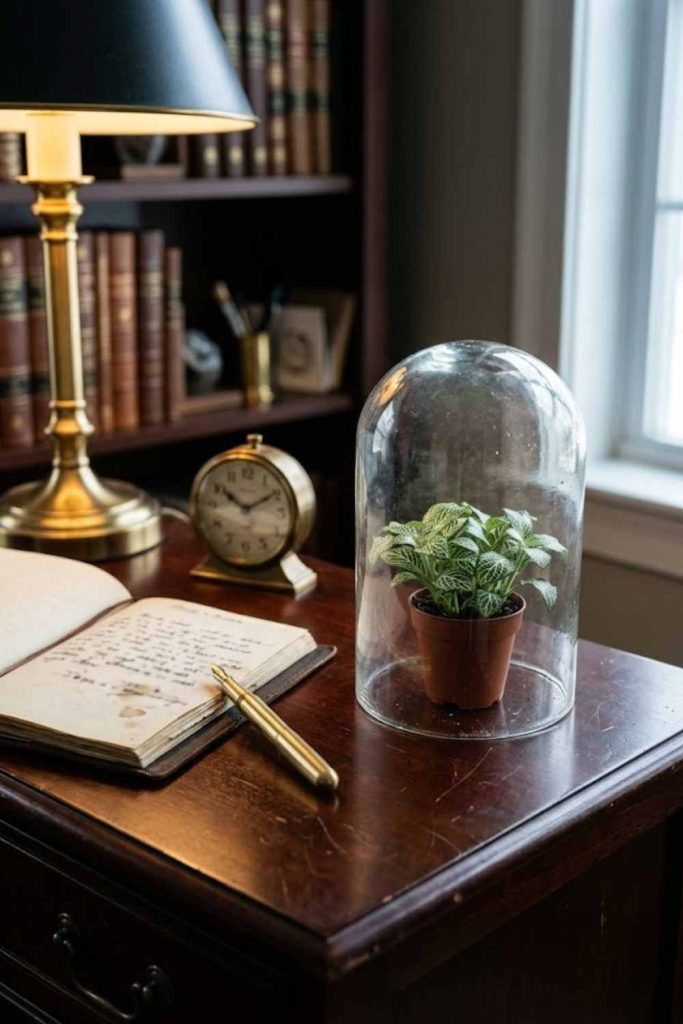
The tiny, shallow sills of a home office are the natural habitat for the Nerve Plant. Its intricate pink or white veins provide high-definition detail that pops even in flat, gray light.
It is famous for “fainting” the moment the soil dries out; to avoid the daily drama, house it under a glass cloche to trap humidity.
- Light: Low light only
- Water: Must stay consistently moist
#15 — Staghorn Fern (Platycerium)
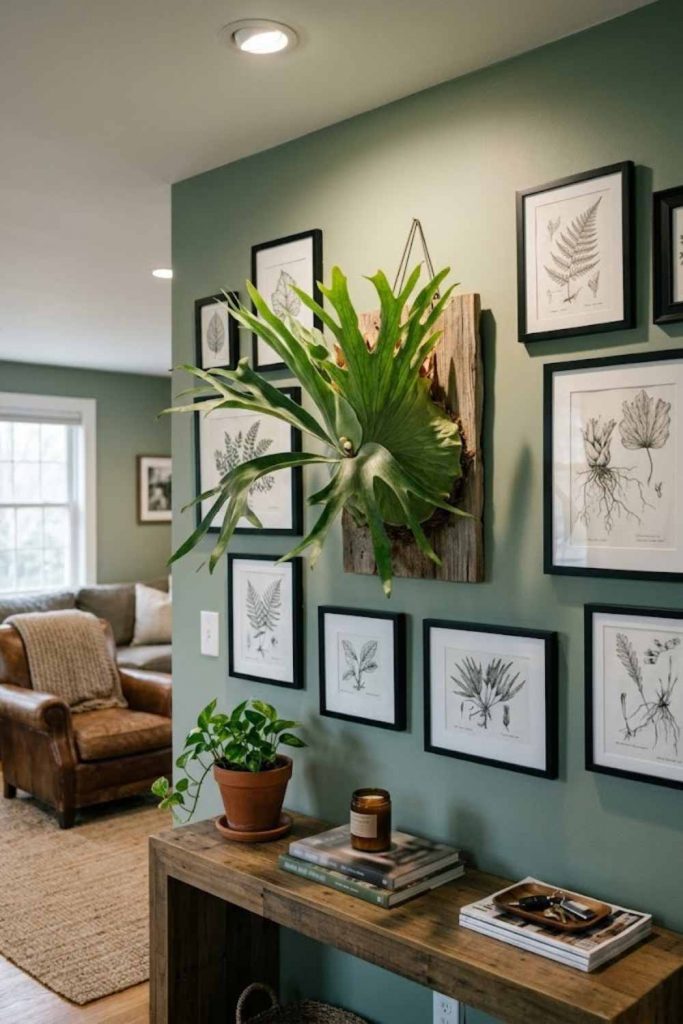
If your windowsill is already full, look to the wall. The Staghorn Fern is an epiphyte—it grows on trees rather than in soil—and is usually mounted on a wooden board.
It loves the soft, indirect light of a North-facing wall. Once a week, take the entire mount to the sink and submerge it to keep it hydrated.
- Light: Soft, indirect North light
- Water: Submerge the mount weekly; mist frequently
Conclusion
Success in a North-facing room depends on matching the plant to the specific “friction” of the space. If you have a narrow, drafty sill, the Snake Plant or Cast Iron Plant are your best survivors.
For those looking to add a lush, privacy-filtering layer, the Spider Plant and Pothos offer high visual impact with very little effort. If you lean into the cool, consistent light of the North, these species will turn a shadowy corner into the most intentional, green feature of your home.