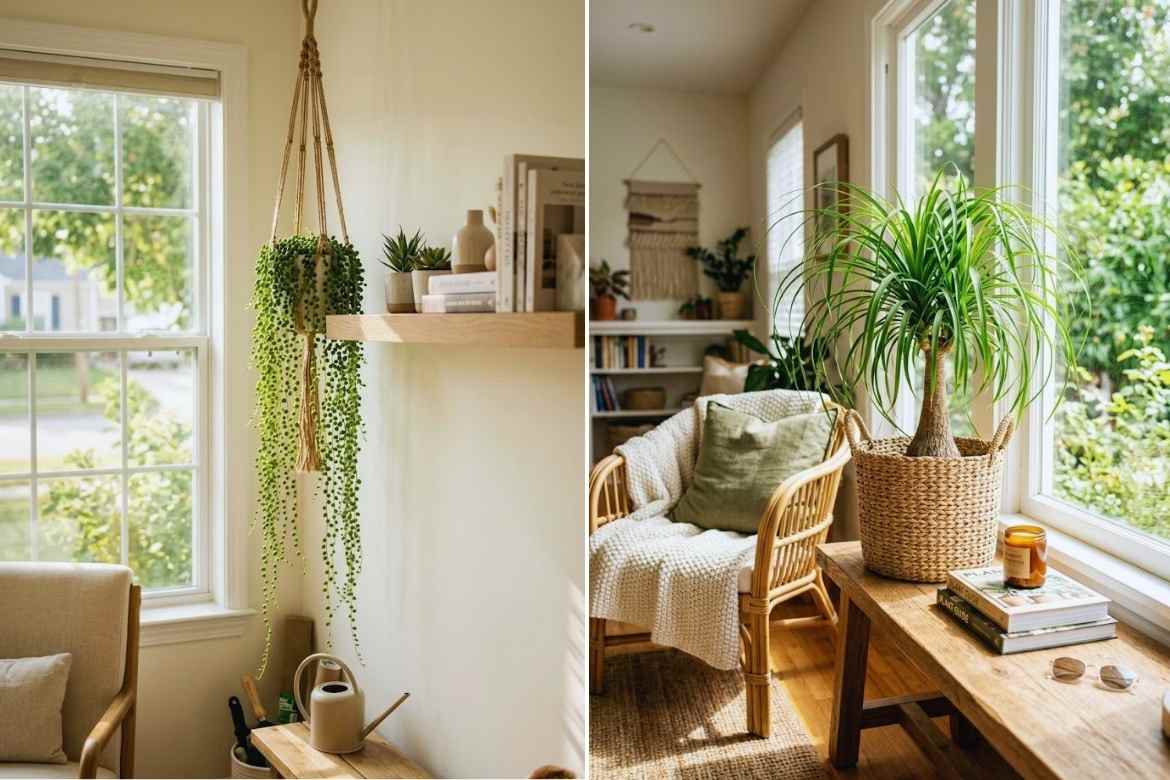
Table of Contents
That south-facing window is high-stakes real estate. While it’s the most coveted spot in the house, it is often a “hot zone” where standard houseplants like ferns or calatheas simply quit.
If you’ve ever moved a plant into a sunny corner only to find its leaves turned to parchment by noon, you know that “bright light” is a spectrum—and direct sun is the deep end of the pool.
The following selection doesn’t just tolerate the glare; these plants require it. This list is for the high-glare sills, the sun-drenched entryways, and those heat-trap corners where you need greenery that can handle the bake without constant hovering.
#1 — Aloe Vera (Aloe barbadensis)
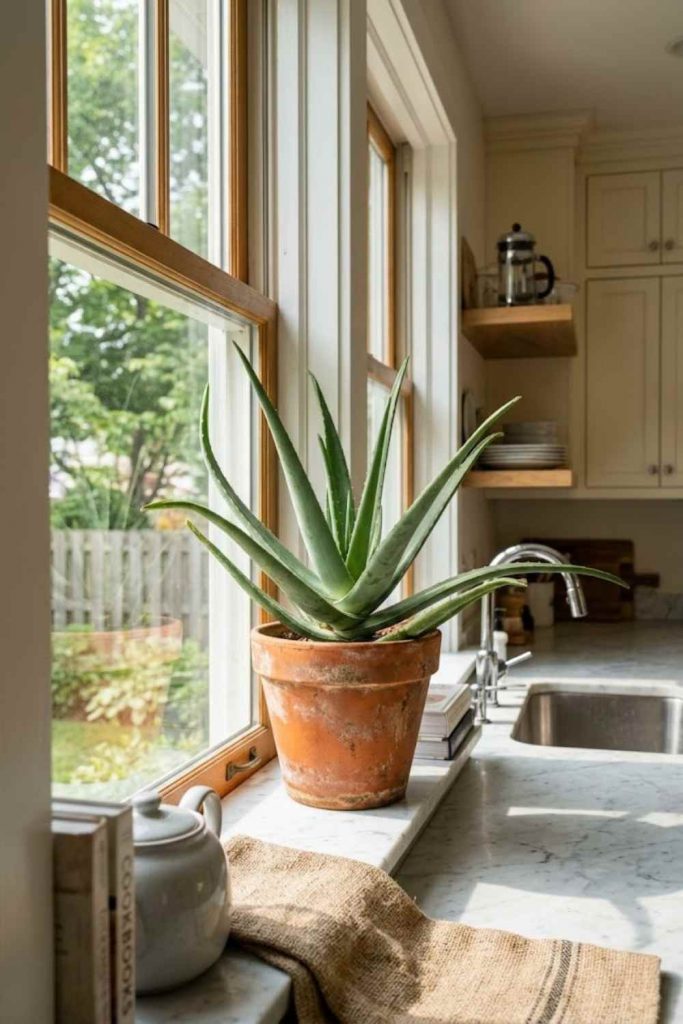
The kitchen windowsill is the natural home for an Aloe. Its thick, serrated leaves give it a desert character, but the true value is functional. The gel inside acts as a localized first-aid kit for the minor nicks and heat-splashes that happen during meal prep.
Aloe is prone to becoming top-heavy as it stores water, so skip the lightweight plastic pots. Use a heavy terra cotta vessel to provide a counterweight and allow the roots to breathe. Only water when the soil is bone-dry to the touch; over-watering is the only real way to fail here.
#2 — Snake Plant (Sansevieria trifasciata)
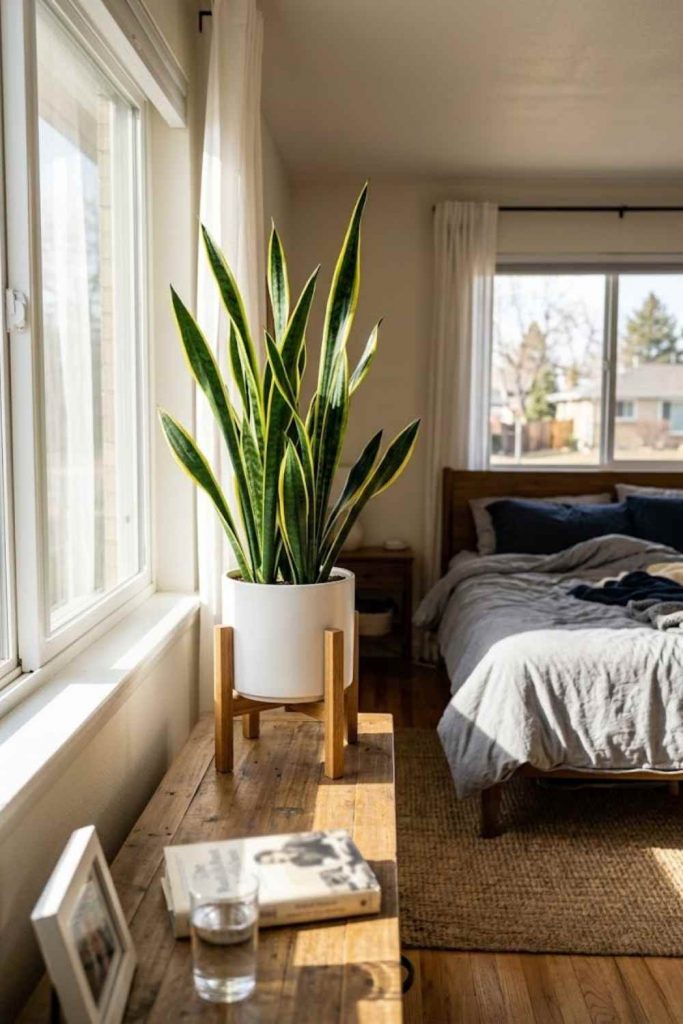
Most people tuck Snake Plants into dark corners, but they actually reach their peak structural strength in direct sun. In a bright window, the vertical “swords” grow faster and the yellow variegation stays sharp and high-contrast rather than fading to a muddy green.
This is the choice for a bedroom corner where you want height without a large footprint. It can be ignored for weeks at a time, making it ideal for anyone who travels. Just remember: in a sunny spot, it will drink slightly faster than it would in the shade, but the base will still rot if you keep the soil soggy.
#3 — Ponytail Palm (Beaucarnea recurvata)
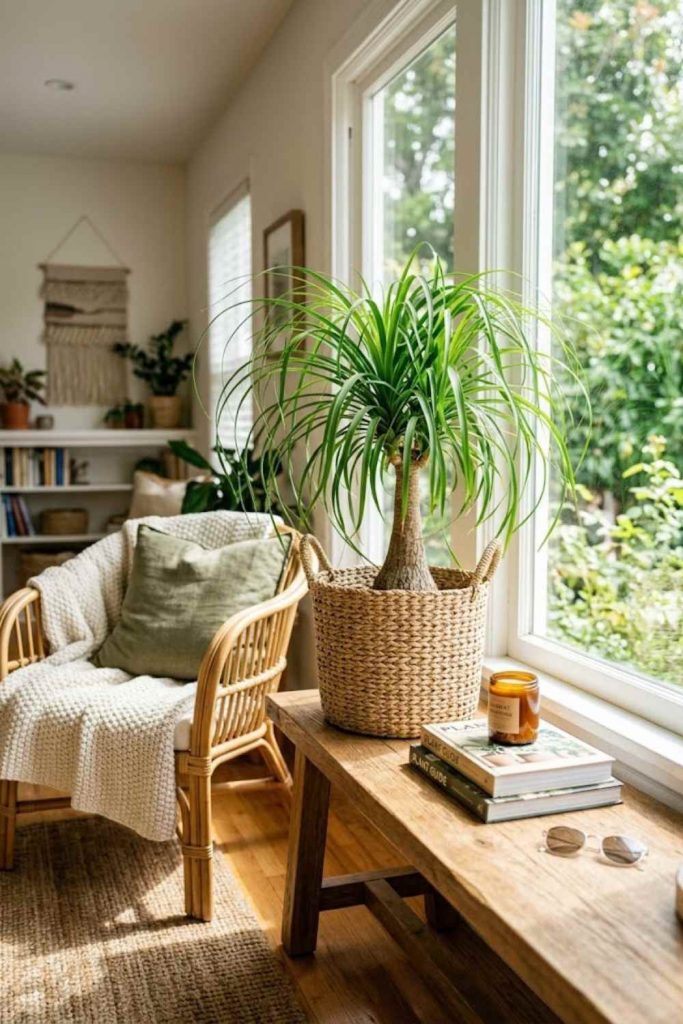
If you share your home with a curious cat and have a habit of forgetting where you put the watering can, the Ponytail Palm is your safest bet. It’s non-toxic and features wispy, curly foliage that can take a bit of batting. The bulbous “elephant’s foot” at the base is a built-in water tank, giving you a massive margin for error if you forget to water.
It brings a relaxed, messy-hair energy to a sunroom. It’s a slow grower, so buy the size you actually want now rather than waiting for it to fill a space. Position it in a sun-drenched spot and only offer water every few weeks when the soil is completely dry.
#4 — Jade Plant (Crassula ovata)
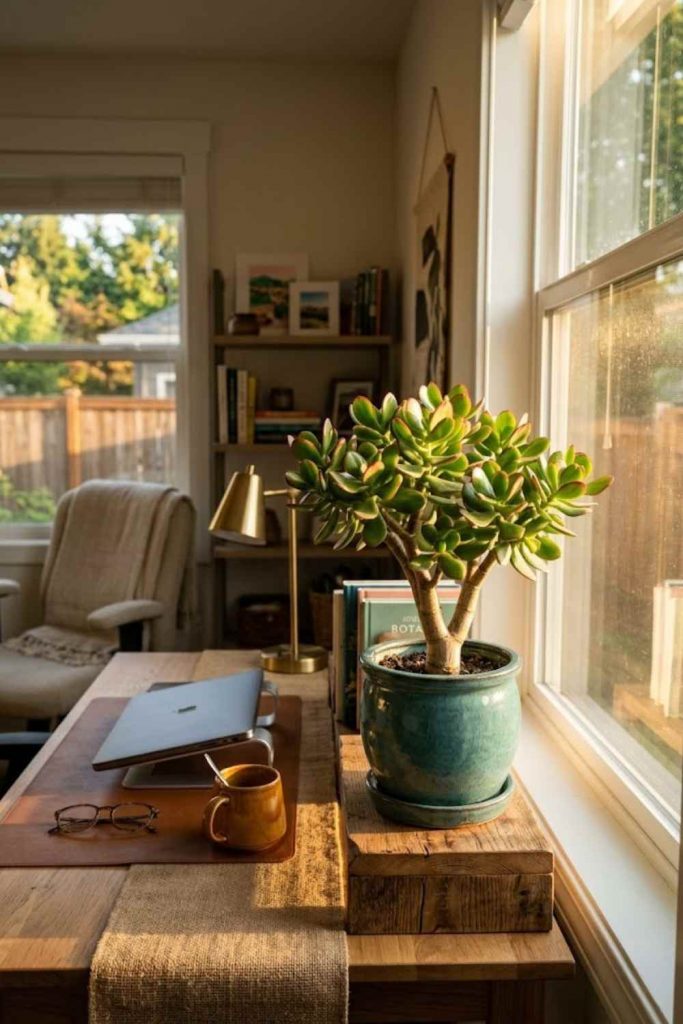
A Jade Plant is essentially a slow-motion bonsai for your desk or sill. With enough direct sun—ideally four hours or more—the edges of the glossy leaves develop a deep reddish tint. This “suntan” is a sign the plant is thriving.
Because Jade can live for decades, it eventually develops a thick, woody trunk that feels more like a piece of furniture than a temporary decoration. It needs a sturdy pot to support its dense canopy and soil that drains instantly.
#5 — Bird of Paradise (Strelitzia reginae)
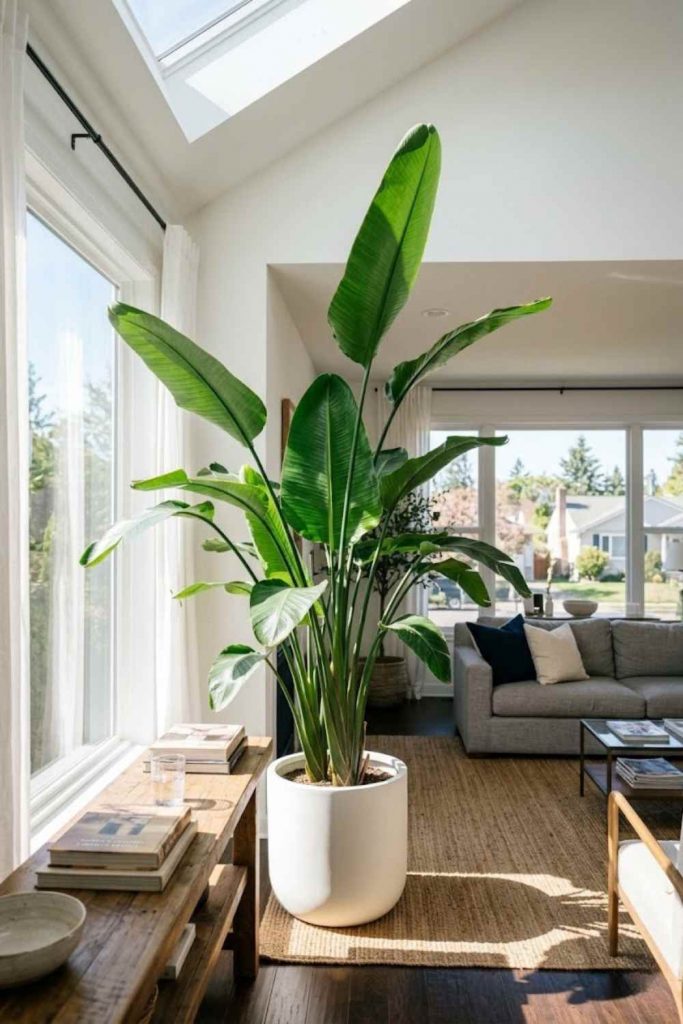
When a room has vaulted ceilings and an awkward, empty corner, the Bird of Paradise fills the void. It’s a high-impact choice with paddle-shaped leaves that can easily hit six feet or more.
Without direct, intense sun, the long stems will stretch and eventually buckle under their own weight. Water it deeply during the summer months, but let it dry out significantly in the winter. If you’re looking for those bird-like flowers, keep it slightly root-bound in its pot; a cramped root system often triggers it to bloom.
#6 — Yucca Plant (Yucca elephantipes)
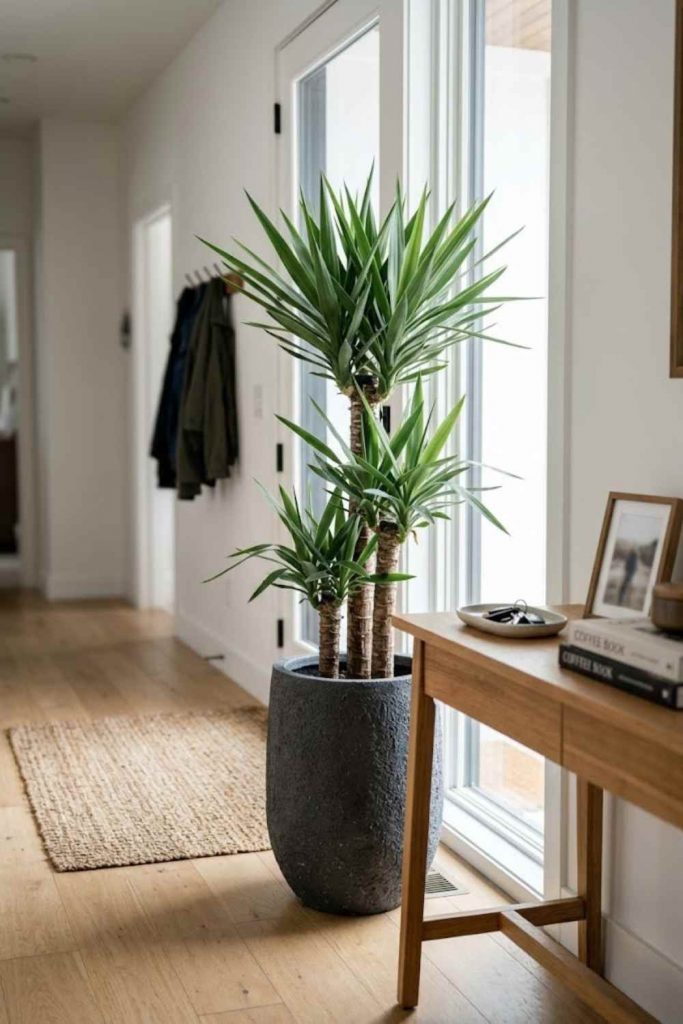
Yucca is a “warrior” plant for entryways or spots near large windows where temperatures swing wildly between the heat of the day and a nighttime chill. It handles drafts and temperature spikes without dropping leaves.
The sharp, sword-like foliage adds a rugged, Western texture that works well in modern or minimalist homes. It is highly drought-tolerant; if you’re watering it more than once a week, you’re likely overdoing it.
#7 — Fiddle-Leaf Fig (Ficus lyrata)
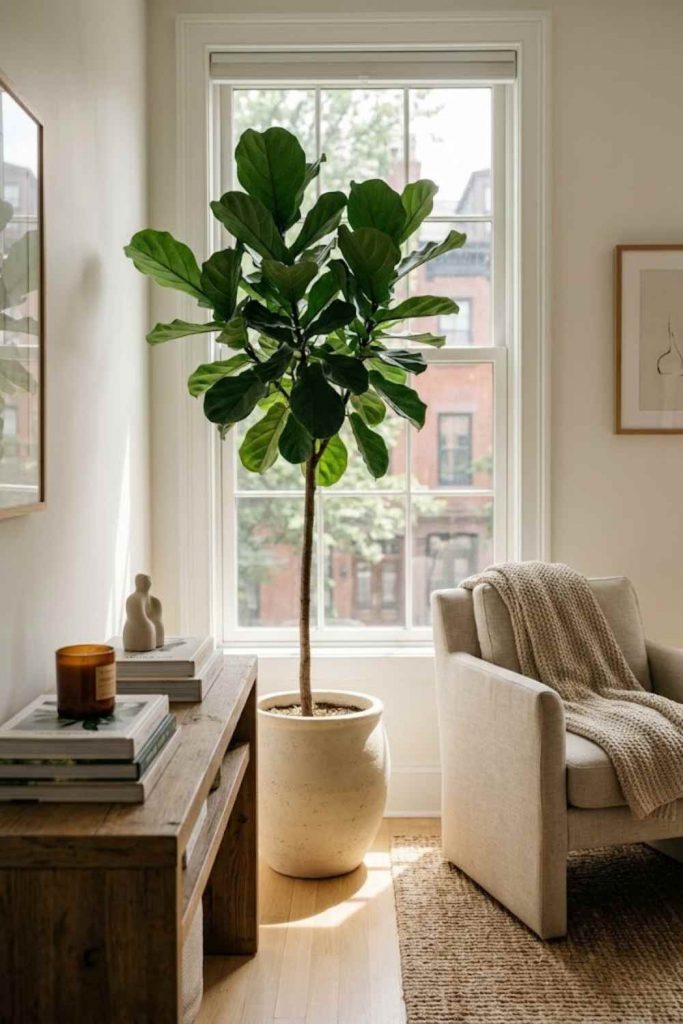
Designers love the Ficus lyrata for its ability to anchor a room, but it’s often a source of frustration because people underestimate its light needs. Those massive, violin-shaped leaves are giant solar panels—they need the energy of morning sun to stay upright.
However, avoid the punishing heat of late-afternoon sun, which can scorch the foliage. The biggest mistake here is neglecting the dust; dust is the enemy. Wipe the leaves every two weeks so they can actually absorb the light. Once it’s happy, don’t move it; this plant hates change.
#8 — Croton (Codiaeum variegatum)
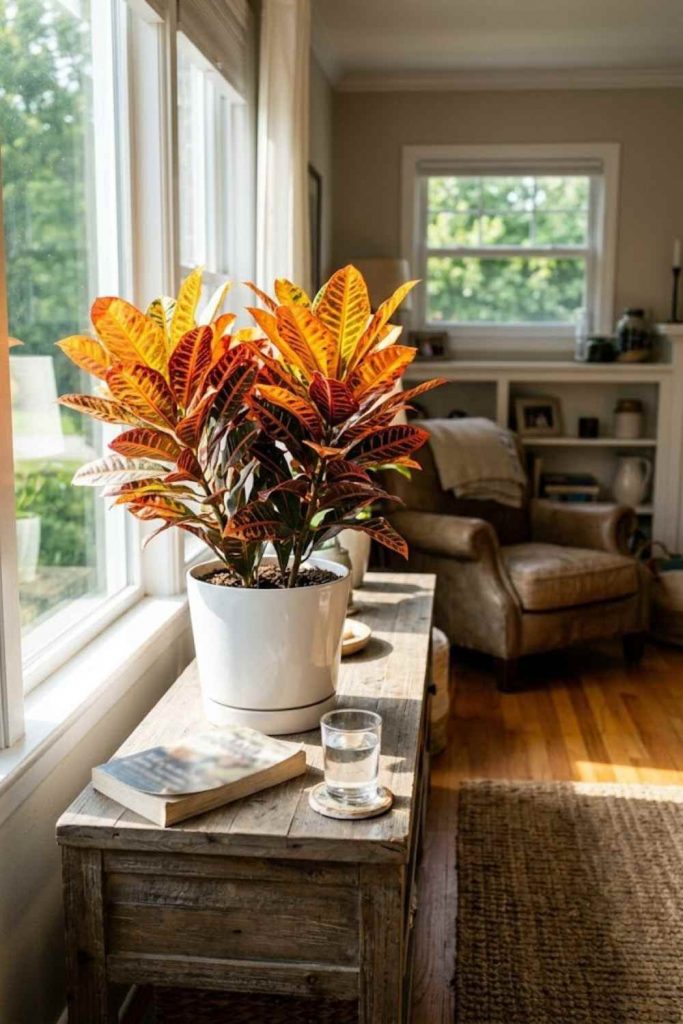
If a room feels sterile or overly “beige,” a Croton provides a necessary jolt of color. Its leaves are a chaotic mix of red, orange, yellow, and black. Light is the literal fuel for these colors; in a dim corner, it will revert to plain green and eventually drop its leaves in protest.
It prefers a humid environment, so it’s a great candidate for a sunny, well-ventilated bathroom. Keep it away from cold AC vents, as it will react poorly to a sudden drop in temperature.
#9 — String of Pearls (Senecio rowleyanus)
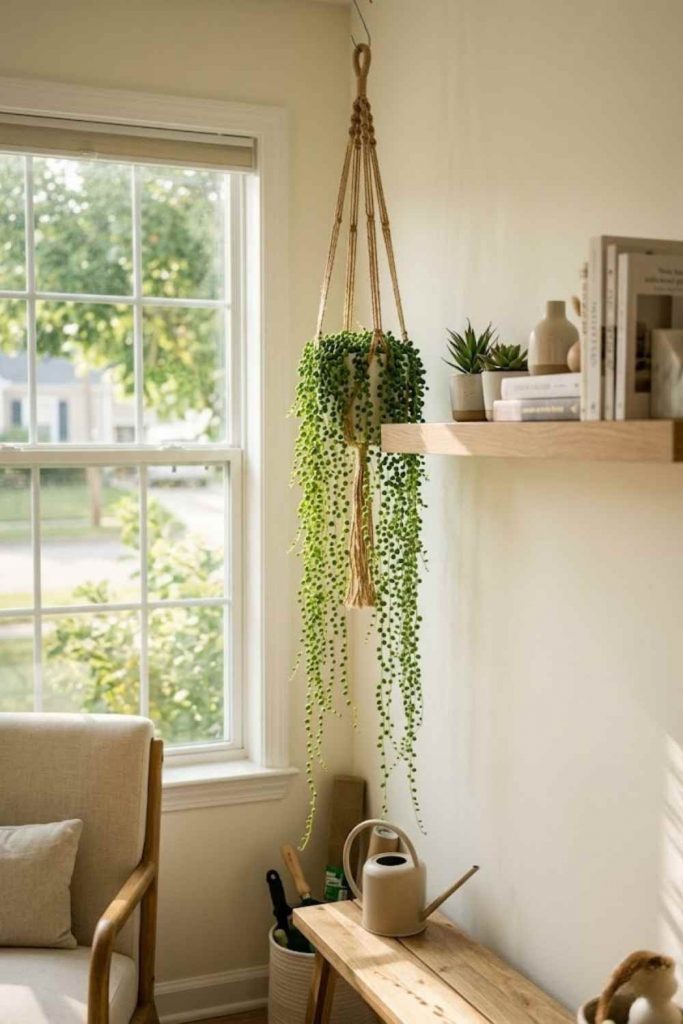
For high shelves or hanging baskets where you want a “waterfall” effect, String of Pearls is the standard. The bead-like leaves are built to store water, making it very forgiving of a missed watering.
A West-facing window provides the right balance of light. Be observant: if the “pearls” look shriveled or deflated, it’s usually a sign of heat stress rather than a need for more water. If the sun is too intense for too long, the beads can actually burn.
#10 — Echeveria (Echeveria spp.)
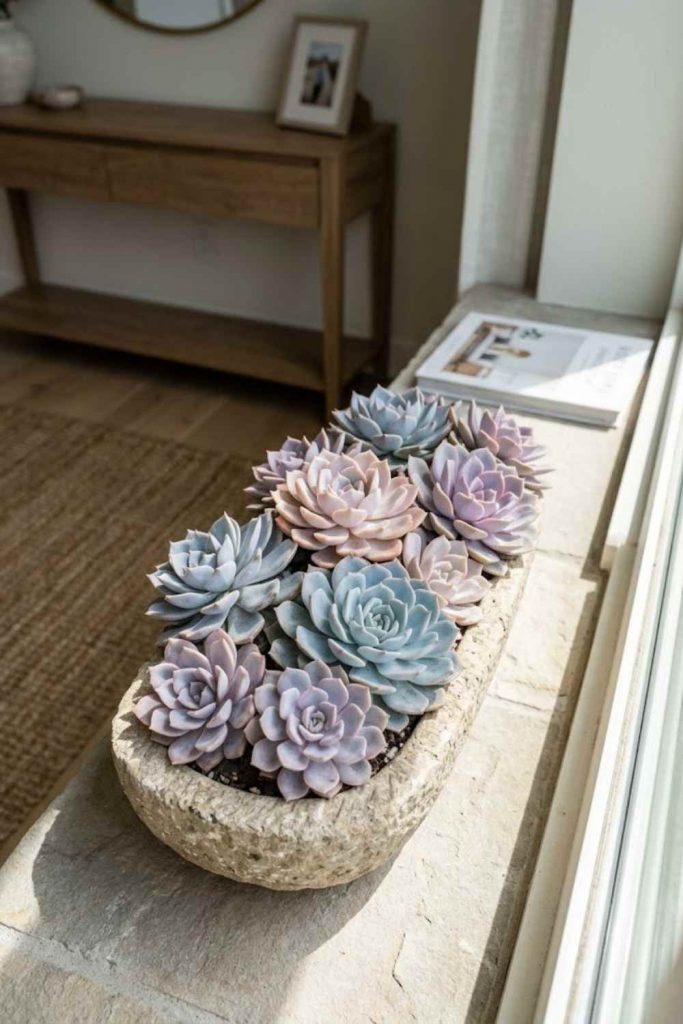
These are the small-scale artists of the succulent world. Perfect for narrow windowsills or mixed container gardens, Echeverias grow in tight, rose-shaped clusters. They are absolute sun-worshippers.
If they don’t get direct light, they will “stretch”, losing their compact shape and turning into a pale, leggy mess that’s hard to fix. They need a gritty, sandy soil and a “soak and dry” watering routine—water them thoroughly, then let them dry out completely.
#11 — Meyer Lemon (Citrus × meyeri)
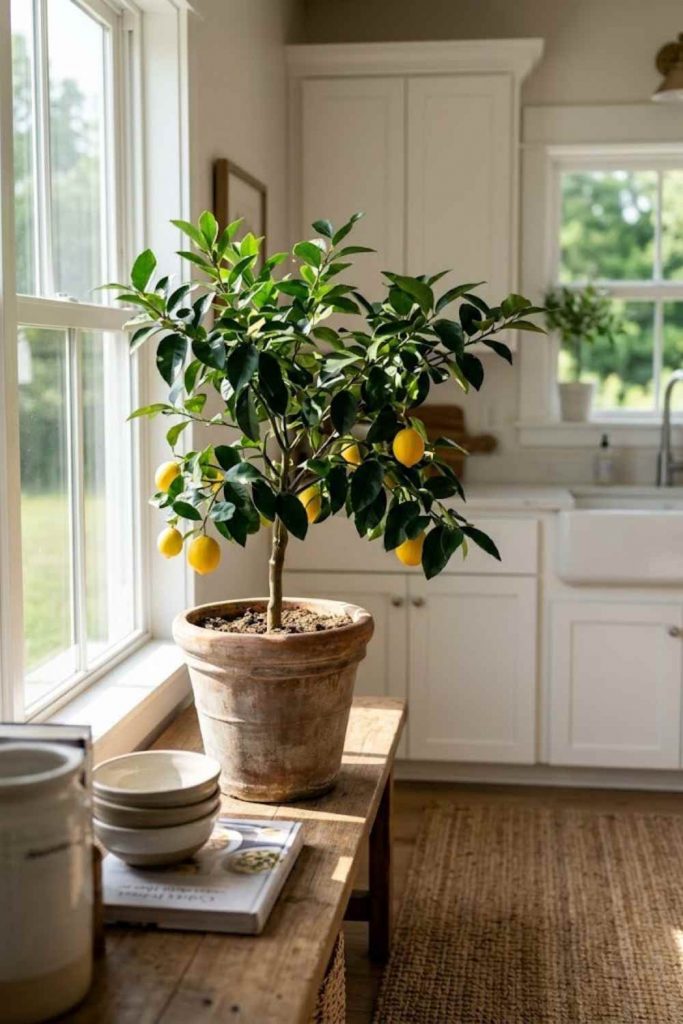
A Citrus × meyeri tree is a commitment, but the payoff is a natural citrus scent that no candle can replicate. To actually thrive indoors, it needs a minimum of 8 hours of direct sun—this isn’t a plant for a “bright-ish” room; it needs the hottest spot you have.
It also appreciates a humidifier nearby during the winter months when indoor air gets parched. Fruit usually takes a few years to appear, so appreciate it first for its glossy greenery and fragrant blossoms.
#12 — Sweet Basil (Ocimum basilicum)
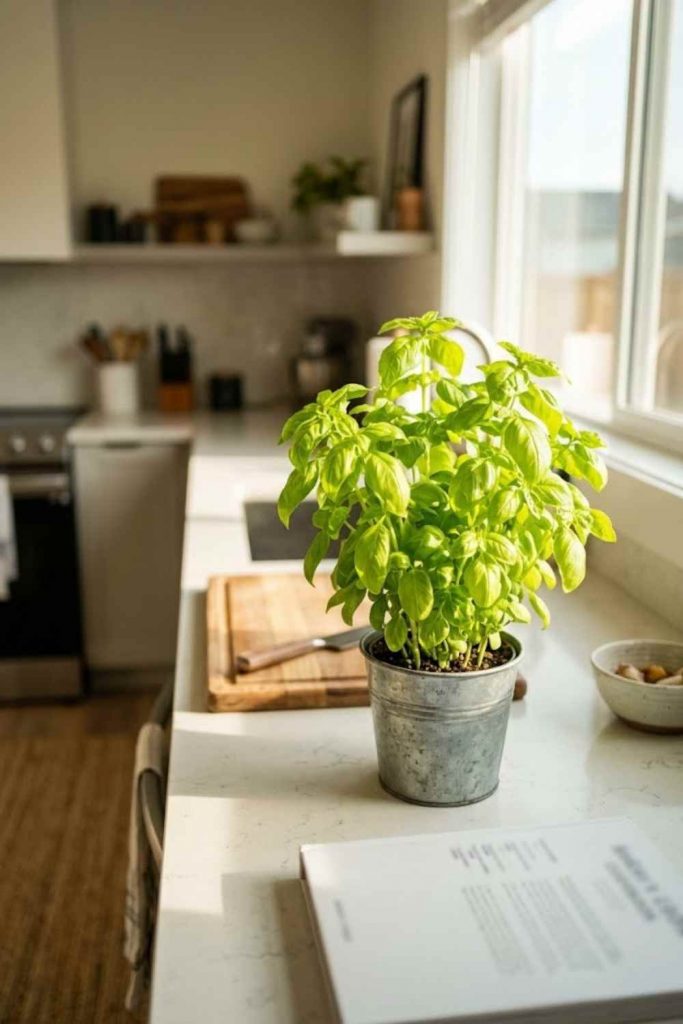
For the home cook, having a pot of Ocimum basilicum on a south-facing kitchen sill is a practical win. It’s the only plant on this list that demands to be used.
The secret to a long-lived basil plant is constant harvesting; you must pinch off the top leaves to prevent it from flowering. If it flowers, the stems turn woody and the leaves lose their flavor. Keep the soil moist and the drainage clear, and you’ll have fresh pesto ingredients all summer.
#13 — Dragon Tree (Dracaena marginata)
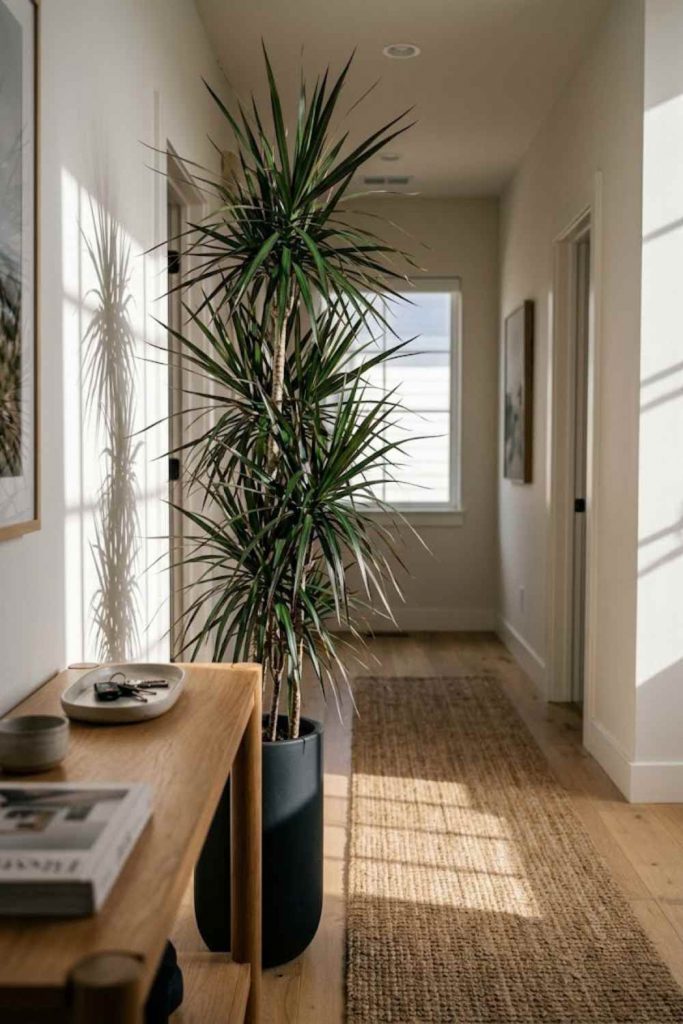
The Dragon Tree is the solution for narrow gaps that need vertical interest. It grows on a slim, upright trunk, reaching for the ceiling without sprawling into your walking path.
While it handles direct sun well, the tips of the leaves can get crispy if the air is too dry or the heat is relentless. Keep the soil evenly moist—water whenever the top inch feels dry to the touch—and it will reward you with a sharp, architectural silhouette that stays neat for years.
Conclusion
Success with direct-sun plants comes down to matching the plant’s stamina to your own habits. If you prefer a hands-off approach, the Snake Plant or Yucca will handle the heat with almost no intervention.
For those who want their greenery to be a part of their daily routine, Sweet Basil and Aloe Vera offer a functional return on your investment. For pure scale, nothing beats the Bird of Paradise.
Just remember that more sun means faster evaporation—watch your soil closely for the first few weeks as your new plants adjust to their high-energy home.