Table of Contents
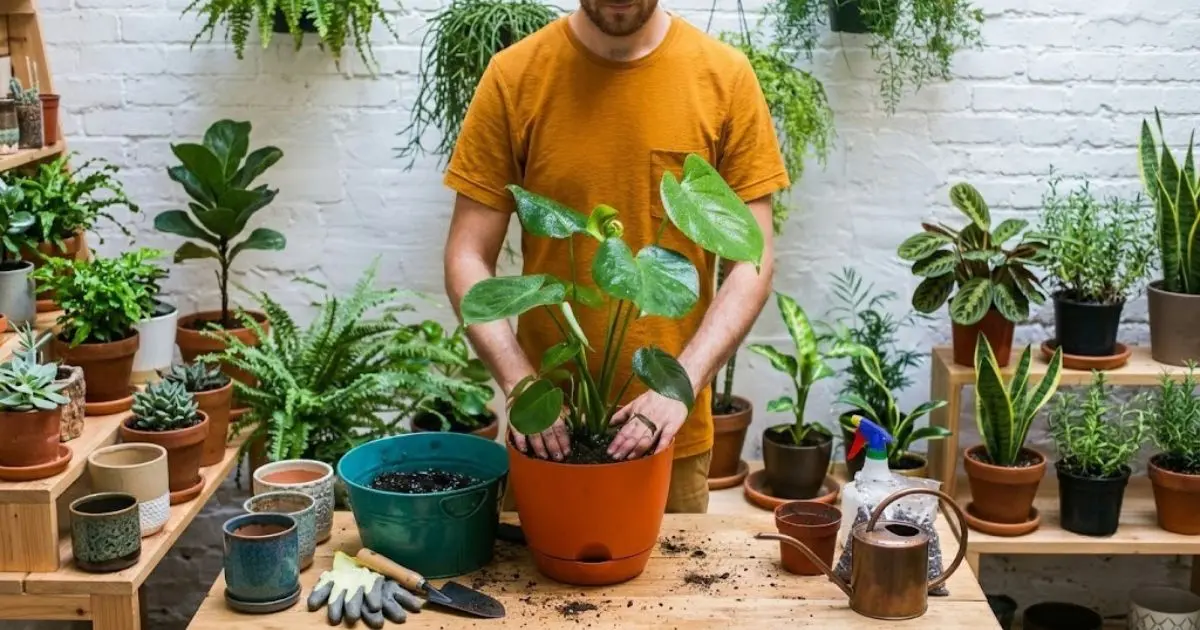
Repotting can give a houseplant more room to grow, refresh tired potting mix, and give you a chance to check its roots.
But moving a plant into a new container isn’t something you need to do on a set schedule.
1. Know the Signs It’s Time to Repot
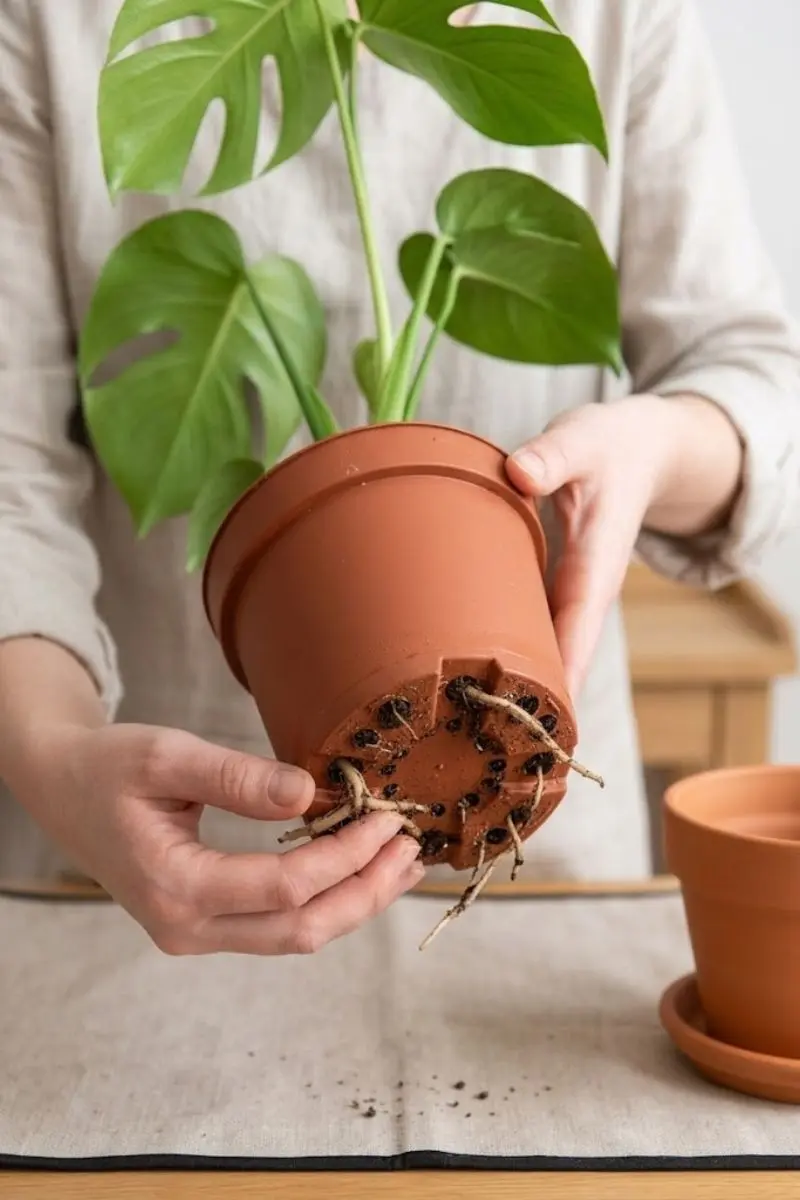
Don’t repot a houseplant just because it’s been in the same pot for a certain amount of time. Instead, look for signs that the roots are running out of room.
Roots growing through the drainage holes are an obvious clue. You may also notice that the potting mix dries out unusually quickly, roots circling tightly around the root ball, or slowed growth. A top-heavy plant that keeps tipping over can be another sign that its container is too small.
To get a closer look, gently slide the plant from its pot and inspect the roots. If they’re densely packed with little potting mix visible between them, the plant may be root-bound.
2. Choose a Pot That’s Only Slightly Larger
When a plant needs more room, choose a container that’s only slightly larger than its current one. For most houseplants, a pot 1 to 2 inches larger in diameter than the root ball is enough.
A dramatically larger container isn’t necessarily better. It can hold more potting mix than the roots need and make it harder to manage moisture.
Also, don’t assume every plant needs a bigger pot. If your plant has reached the size you want, you may be able to refresh some of the old potting mix and return it to the same container after cleaning it.
3. Water the Plant Before Repotting
Water the plant in its original container before you repot it, then let the excess water drain. A slightly moist root ball is easier to handle than one that’s completely dry.
This doesn’t mean the soil should be soggy. Avoid repotting a plant that’s already sitting in water.
4. Use Fresh Potting Mix and a Pot With Drainage
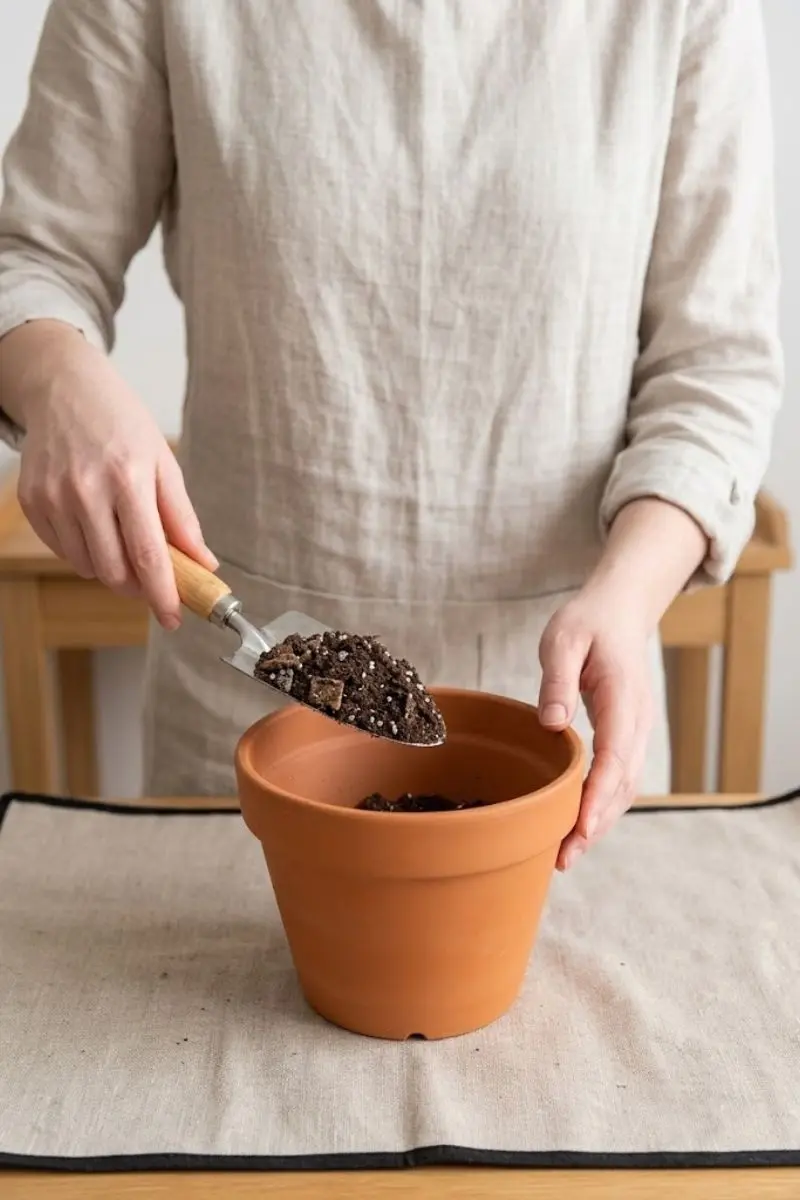
Choose a container with a drainage hole and use a potting mix suited to your houseplant. Don’t use garden soil in a houseplant container. It can be too heavy and may introduce pests or disease.
Different houseplants can also have different growing-media needs. A general houseplant mix may work well for many foliage plants, while orchids, cacti, and other plants with specialized needs may require a different mix.
Add enough fresh mix to the bottom of the container so the top of the root ball will sit about an inch below the rim.
5. Loosen Crowded Roots Gently
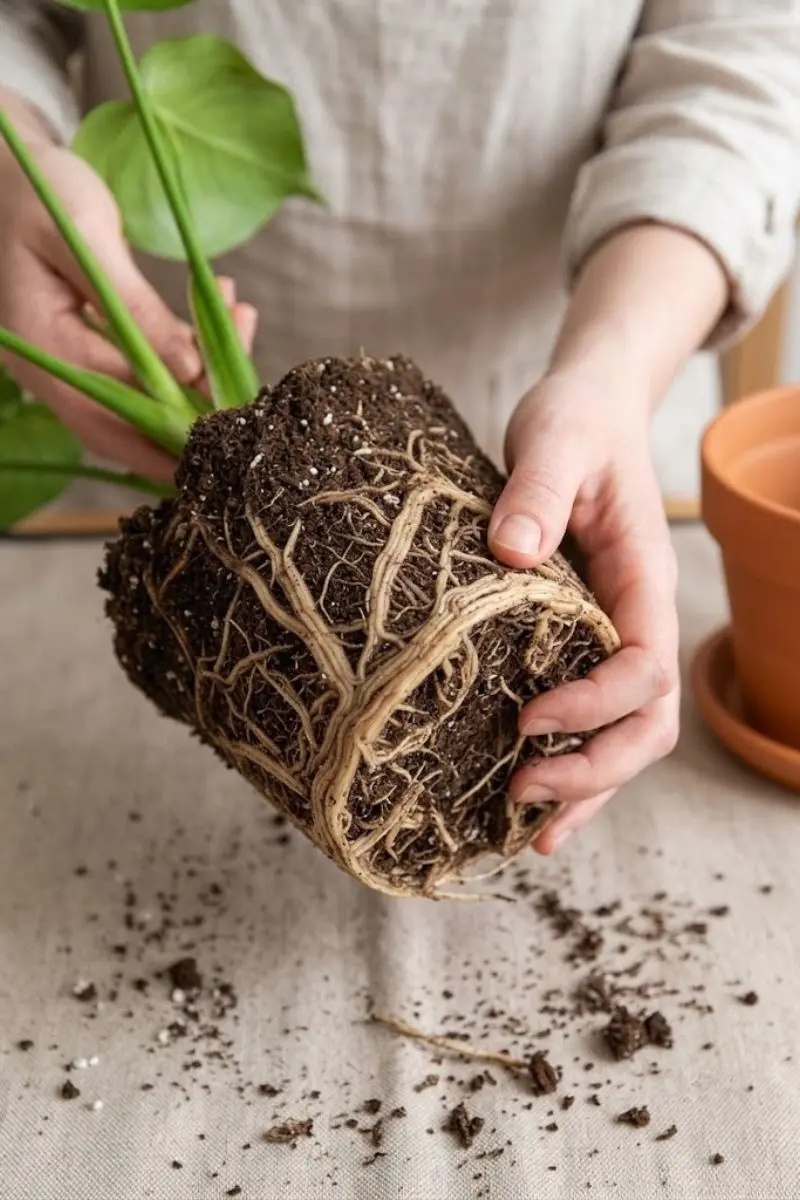
Once the plant is out of its old container, inspect the root ball. If roots are tightly circling the outside, gently tease them apart with your fingers.
You don’t need to aggressively break apart a healthy root system. Just loosen densely packed roots so they can grow into the fresh potting mix.
If some old potting mix falls away during the process, that’s fine. You don’t need to remove every bit of soil from the roots, especially if the root ball is holding together well.
6. Keep the Plant at the Same Depth
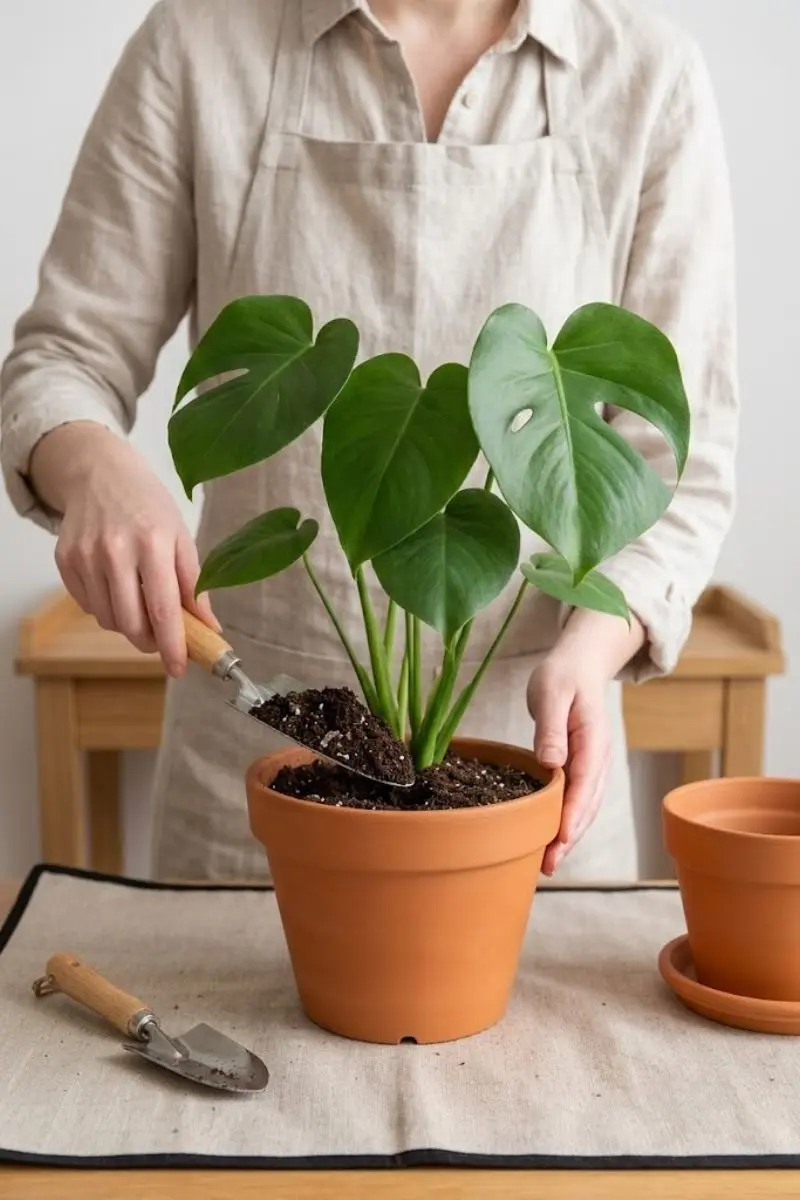
Position the plant in the new container at roughly the same depth it was growing before. The top of the root ball should sit slightly below the rim, leaving enough space for watering.
Fill around the root ball with fresh potting mix, gently pressing it into place without packing it down hard. Don’t pile extra mix around the stem or bury the crown of the plant deeper than it was before.
Leave some space below the rim so you can water without spilling potting mix over the sides.
7. Water Thoroughly and Let It Adjust
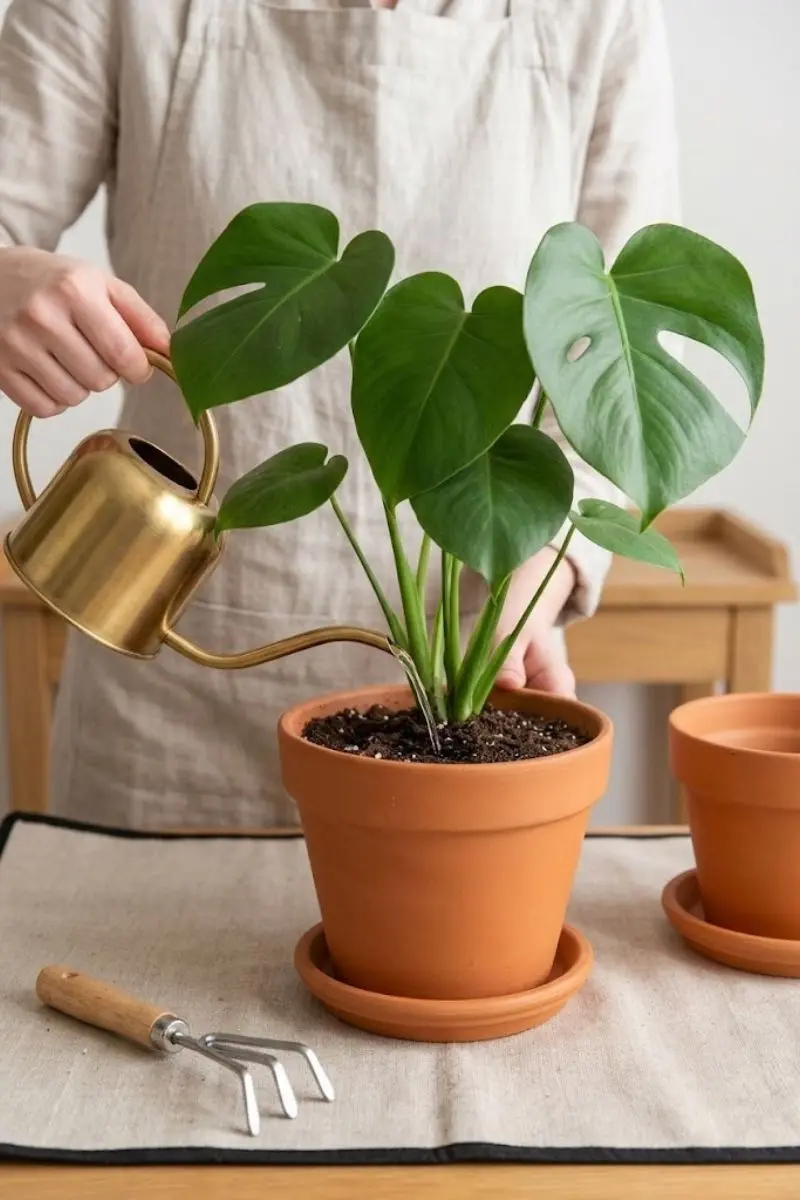
Water the plant thoroughly after repotting so the fresh potting mix settles around the roots. Let excess water drain completely, then empty any water that collects in the saucer or decorative outer pot.
Return the plant to its usual spot and keep its care routine consistent while it adjusts. If the new potting mix already contains fertilizer, you generally don’t need to add more right away.
Repotting can be stressful, so give the plant some time to settle before assuming something is wrong.
FAQs
When is the best time to repot houseplants?
Spring is generally a good time because many houseplants are beginning a period of active growth.
However, you don’t need to wait for spring if a plant has become severely root-bound or has another problem that requires attention.
How often should houseplants be repotted?
There’s no universal schedule.
How often a plant needs repotting depends on its growth rate, container size, potting mix, and root development. Check the roots and the plant’s overall growth rather than relying on the calendar.
Should you remove all the old soil when repotting?
No. If the old potting mix is holding the root ball together, removing all of it can damage the roots.
Remove some old mix as needed, then replace it with fresh mix.
How long does a houseplant take to recover after repotting?
Recovery time varies by plant and the amount of stress it experienced.
Give the plant time to settle and return to its normal growth pattern rather than expecting an immediate change.