Table of Contents
Houseplants don’t need to be repotted on a strict schedule.
Some can stay in the same pot for years, while fast-growing plants may outgrow theirs much sooner.
Instead of repotting by the calendar, watch for signs that the roots have run out of room or the potting mix needs refreshing.
1. Roots Are Growing Out of the Drainage Holes
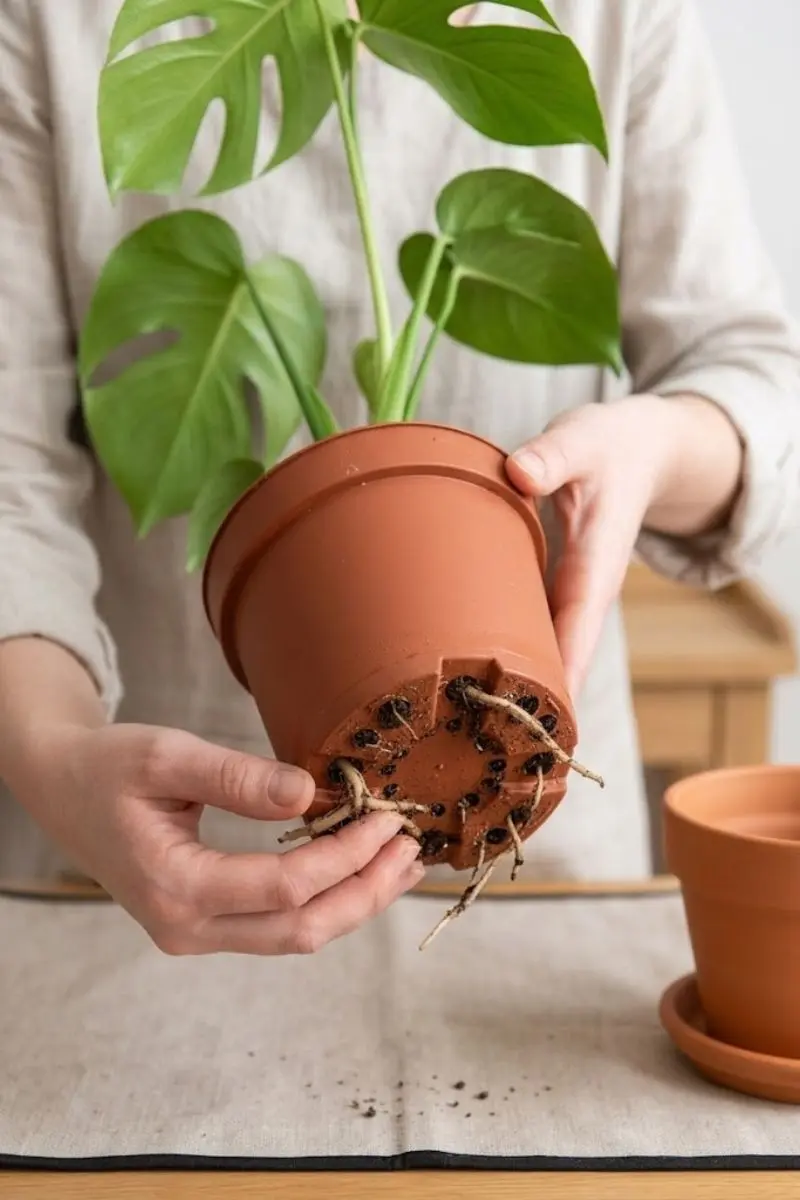
Roots poking through the drainage holes are a clear sign that your plant may have outgrown its pot. You may also see roots on the soil surface or find that the root ball is packed with them.
Gently remove the plant from its pot to check the roots. If the roots are tightly circling the root ball or have filled most of the potting mix, it’s time to repot.
2. The Soil Dries Out Much Faster Than Usual
If the potting mix dries out unusually quickly, even when your watering habits haven’t changed, check the roots. When roots fill most of the pot, there may not be enough potting mix left to hold moisture for very long.
Worn-out potting mix can also dry out quickly, so check the roots before moving the plant into a larger pot.
3. The Plant Keeps Tipping Over
A plant that has outgrown its pot may start tipping over as it becomes top-heavy. If this keeps happening, take a look at the roots to see whether they’ve outgrown the pot.
If the plant is root-bound, a slightly larger pot can give the roots more room and help keep the plant upright. Avoid jumping to a much larger pot, though, since excess potting mix can stay wet for too long.
4. The Potting Mix Has Become Compacted or Worn Out
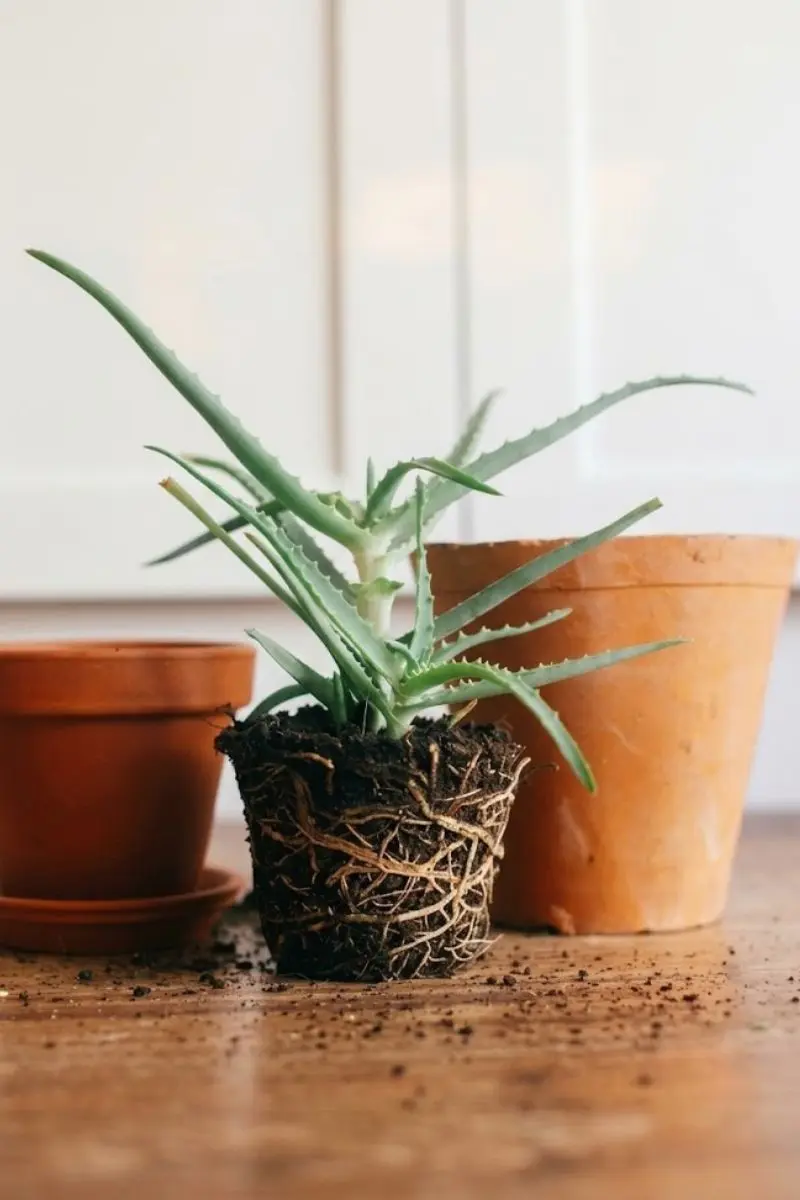
Potting mix doesn’t last forever. Over time, it can break down, become compacted, or stop holding water the way it should. If water isn’t soaking into the mix normally, the potting mix may need refreshing.
If the roots still have plenty of room, refresh the potting mix instead of moving the plant into a larger pot. If the root ball is crowded, repotting gives you a chance to replace the old mix at the same time.
5. New Growth Has Stalled or Looks Smaller Than Usual
Slowed growth or smaller-than-usual new leaves can mean your plant has become root-bound. Check the roots before repotting to make sure a crowded root system is actually the problem.
If the roots aren’t crowded, look at light and watering before reaching for a larger pot.
FAQs
How often should you repot houseplants?
There isn’t one schedule that works for every houseplant.
Fast-growing plants may need repotting more often, while slow-growing plants can remain in the same container for years. Instead, let the roots, growth, and condition of the potting mix tell you when it’s time.
What is the best time to repot houseplants?
Spring is generally the best time because most houseplants are entering active growth.
But if a plant is clearly root-bound, you don’t necessarily need to wait for spring to give it more room.
Should I always move a plant into a bigger pot?
No. If the roots still have plenty of room but the potting mix is old or depleted, refreshing the mix may be enough.
When you do need a larger container, choose one only slightly larger than the current pot. Too much extra soil can stay wet and create problems for the roots.
How can I tell if my plant is root-bound?
Gently slide the plant out of its container and examine the root ball.
Look for roots that are tightly circling the root ball, filling most of the container, or growing through the drainage holes. If the roots are densely packed and little potting mix remains, the plant has likely outgrown its pot.