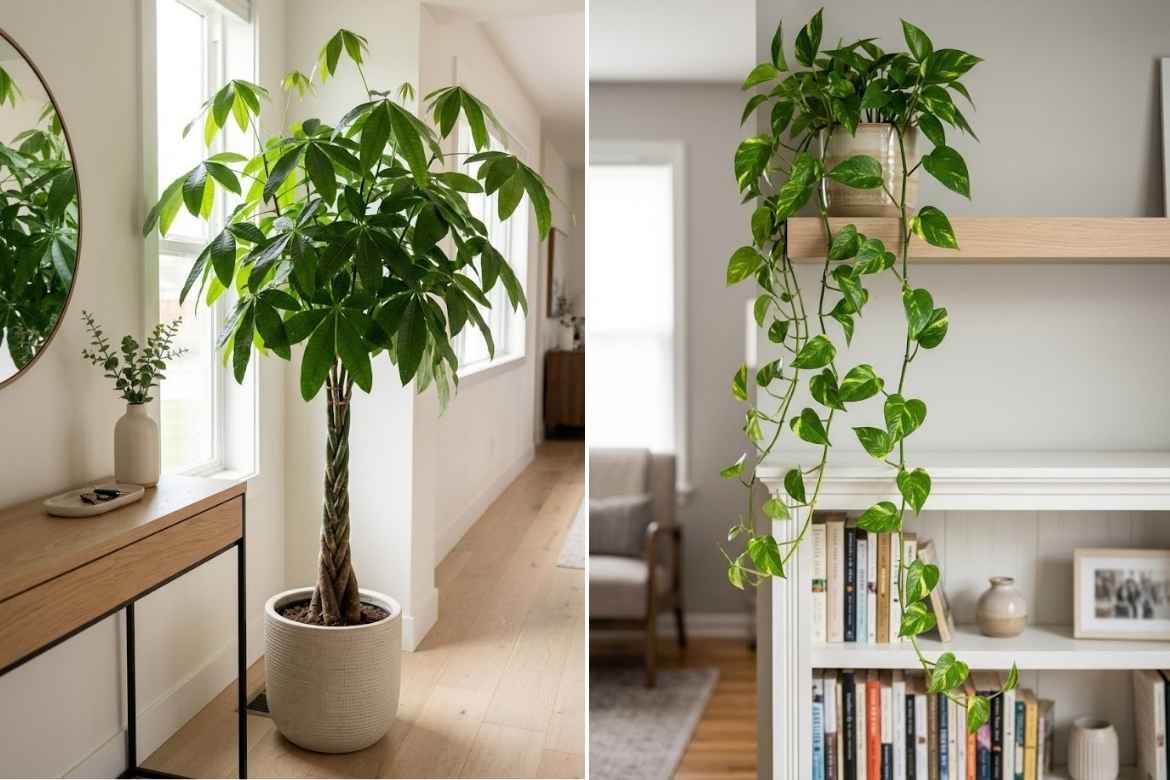
Table of Contents
You can have a clean, nicely decorated room and still feel like something is off. The entry doesn’t feel welcoming, one corner always looks a little stuck, or your bedroom never quite settles at night.
That’s part of why plants matter so much in feng shui. The right one can shift the feel of a space fast—not just by adding green, but by giving the room a clearer sense of welcome, calm, softness, or flow.
Below are 13 indoor plants commonly linked with positive energy and good vibes, plus real-home placement ideas so they feel intentional and can actually thrive where you live.
Best Houseplants that Bring Positive Energy Indoors
#1 — Money Tree (Pachira aquatica)
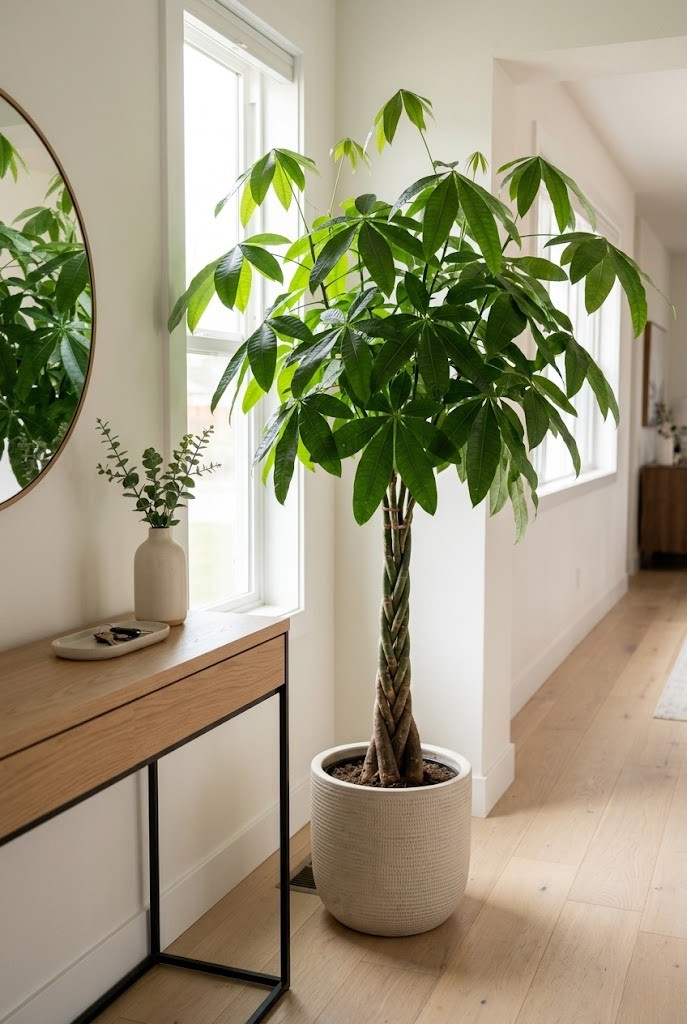
If you want one plant that reads “good things live here,” this is it—glossy leaves, a tidy canopy, and that braided trunk that feels purposeful. Money tree is widely seen as a symbol of welcome, prosperity, and steady growth.
Place it a few feet inside the front door or in the southeast area of your living room. If you don’t follow bagua, keep it simple: put it where you’ll see it daily and it won’t block the walkway. Bright, indirect light is ideal.
Water only when the top couple inches of soil feel dry. If the pot stays wet, the whole plant starts to look tired fast.
#2 — Snake Plant (Sansevieria / Dracaena trifasciata)
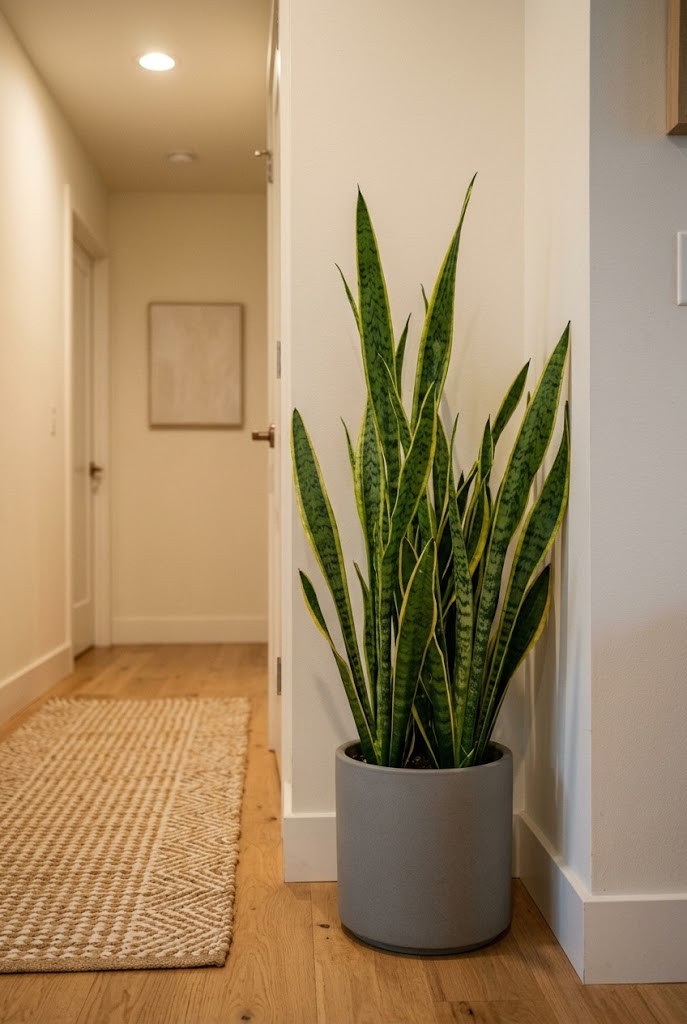
Snake plant is the “clear the corner” option—tall, upright leaves that make a space feel sharper and more contained. Many people use it as a protective plant, especially for areas that feel heavy or stagnant.
It’s perfect by the front door, at the end of a hallway, or near a media console where clutter tends to gather. Let the pot dry out completely before watering again—this one thrives on a little neglect.
Pet households: keep it on a higher stand or shelf if your cat or dog is a chewer.
#3 — Jade Plant (Crassula ovata)
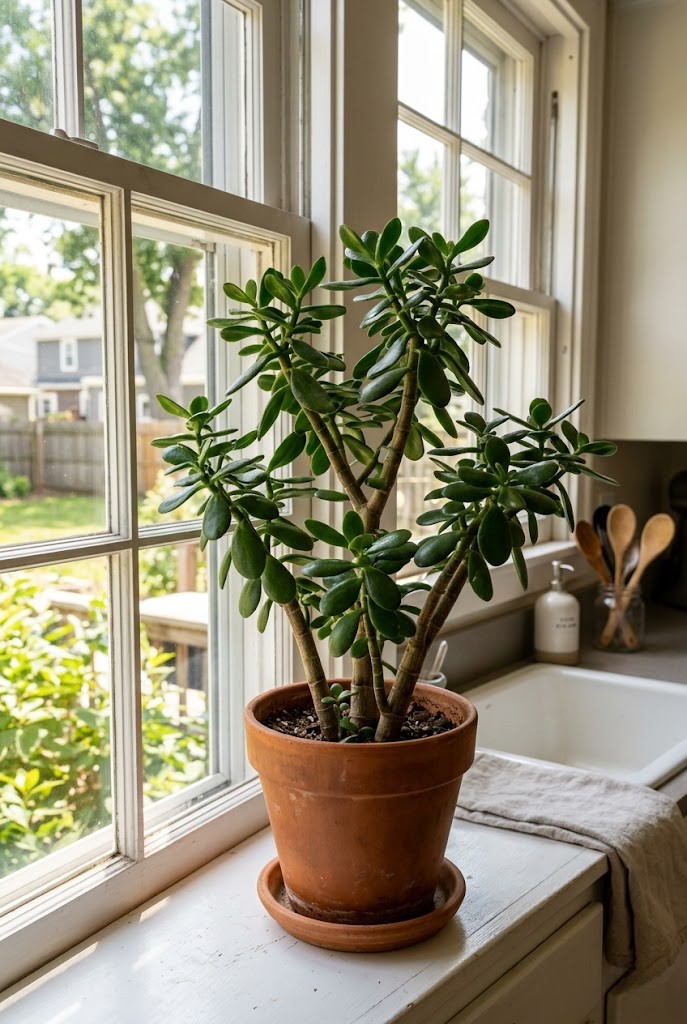
Jade has a steady, quietly lucky feel—round leaves, a compact shape, and the kind of presence that makes a room feel more settled. It’s often associated with long-term prosperity, so it suits spaces where you want calm, grounded energy rather than anything loud or showy.
It also happens to be easy to live with. Give it strong light, let the soil dry fully between waterings, and it will usually stay happier with a little neglect than too much attention.
#4 — Peace Lily (Spathiphyllum)
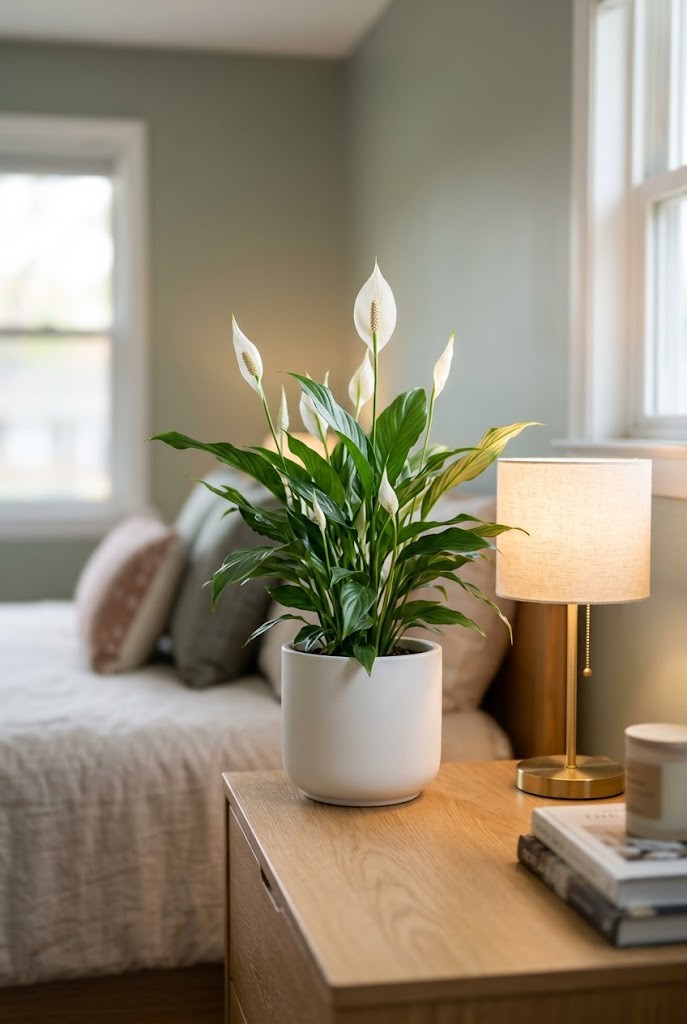
Peace lily is a mood-setter—arched leaves and occasional white blooms that feel calm, not fussy. It’s often linked with harmony and a more settled, peaceful atmosphere, which is why it works so well in shared spaces.
Try it where you want the room to downshift: a bedroom dresser, living room side table, or a home office corner that feels tense. Medium to bright indirect light works well.
Water when it starts to droop slightly. It’s dramatic, but forgiving. Skip the soggy soil—steady, lightly moist is the goal.
#5 — Lucky Bamboo (Dracaena sanderiana)
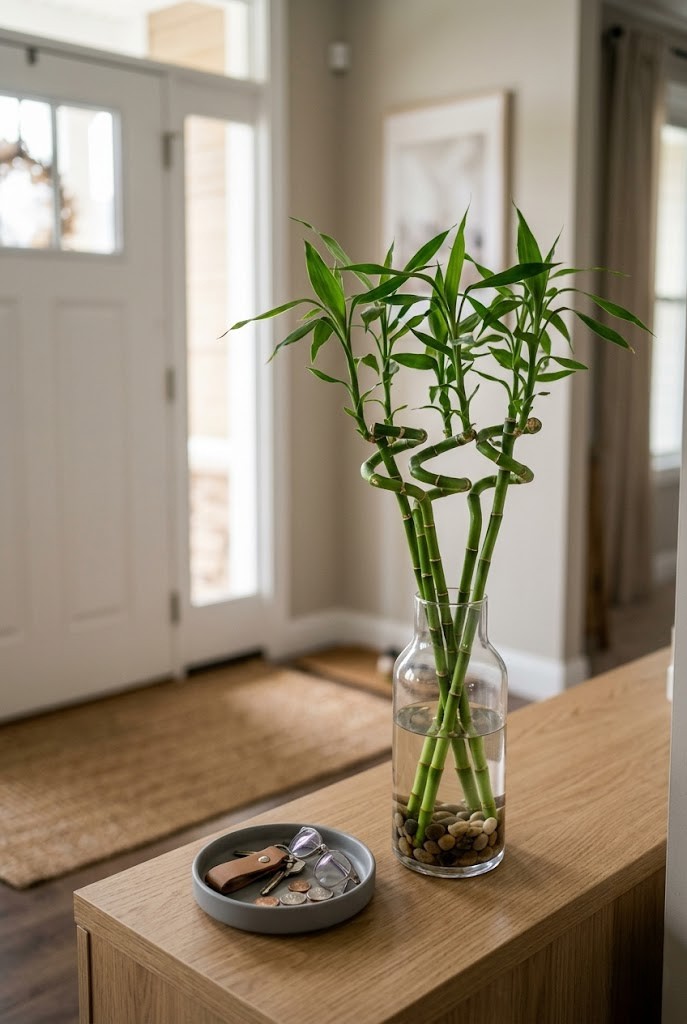
This is the easiest “zen cue” for a busy home—just a few upright canes can make a counter feel calmer immediately. It’s commonly used as a symbol of luck and smooth, steady energy.
Put it somewhere you’ll notice daily: an entry console, bathroom counter, or a kitchen corner away from heat and splashes. Bright, indirect light keeps it looking crisp.
If it’s in water, refresh it regularly so it stays clear. Cloudy water is an instant vibe killer.
#6 — Rubber Plant (Ficus elastica)
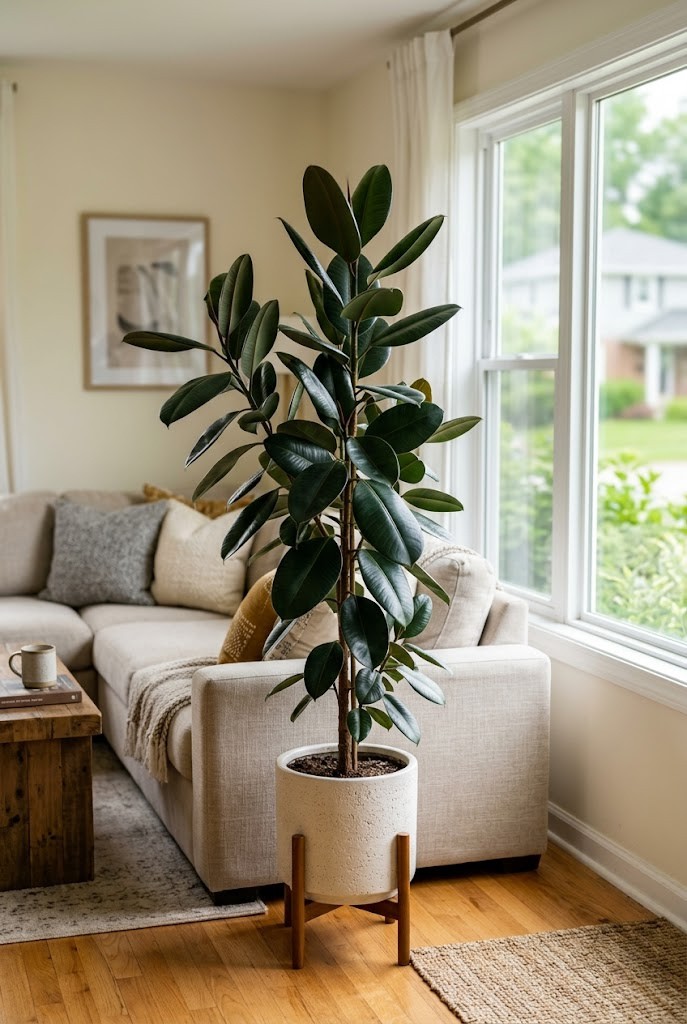
Rubber plant makes a room feel more established fast—big glossy leaves, a strong upright shape, and enough visual weight to make a space feel fuller. It’s often chosen for abundance and stability, especially when a room needs a little more grounding.
In real life, that’s its strength: presence. Bright, indirect light keeps it looking rich, and an occasional leaf wipe does more for this plant than over-managing it ever will.
#7 — Golden Pothos (Epipremnum aureum)
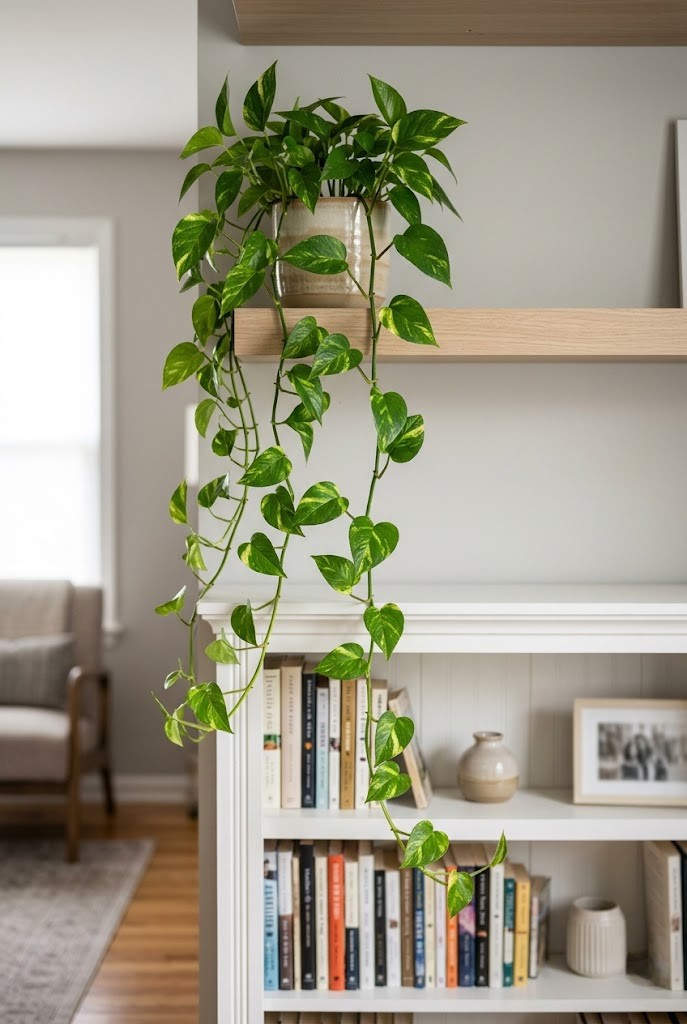
Pothos is easy flow in plant form—long trailing vines that soften hard edges and make a space feel friendlier without much effort. It’s often chosen as an abundance plant because it grows generously and gives a room that looser, more lived-in feeling.
It’s also one of the easiest plants to live with. Lower light is usually fine, brighter indirect light makes it lusher, and watering is simple: once the top inch or two dries, you’re good.
#8 — Chinese Money Plant (Pilea peperomioides)
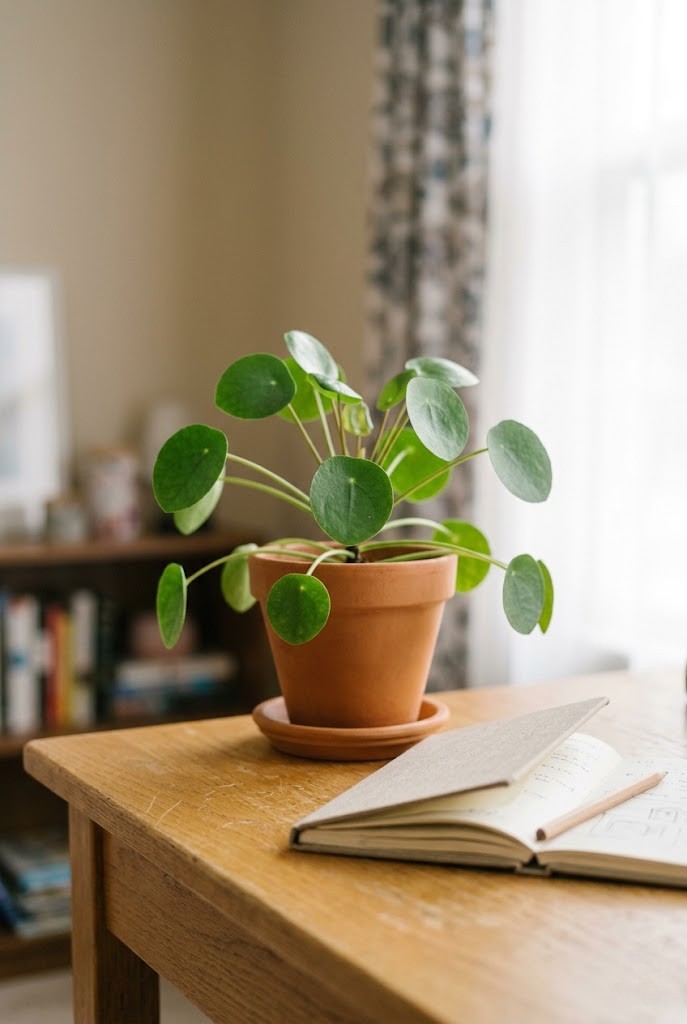
Chinese money plant has a bright, upbeat energy that’s hard to miss—round leaves, clean lines, and a shape that looks cheerful even when the room around it is feeling a little flat. It’s often tied to luck, opportunity, and fresh momentum, so it works especially well when you want a space to feel lighter and more forward-moving.
This is also one of the easiest “lift the mood” plants to live with. Give it bright, indirect light, turn it now and then so it keeps its balanced shape, and it will keep that neat, lively look that makes a shelf or desk feel more awake.
#9 — Orchid (Orchidaceae)
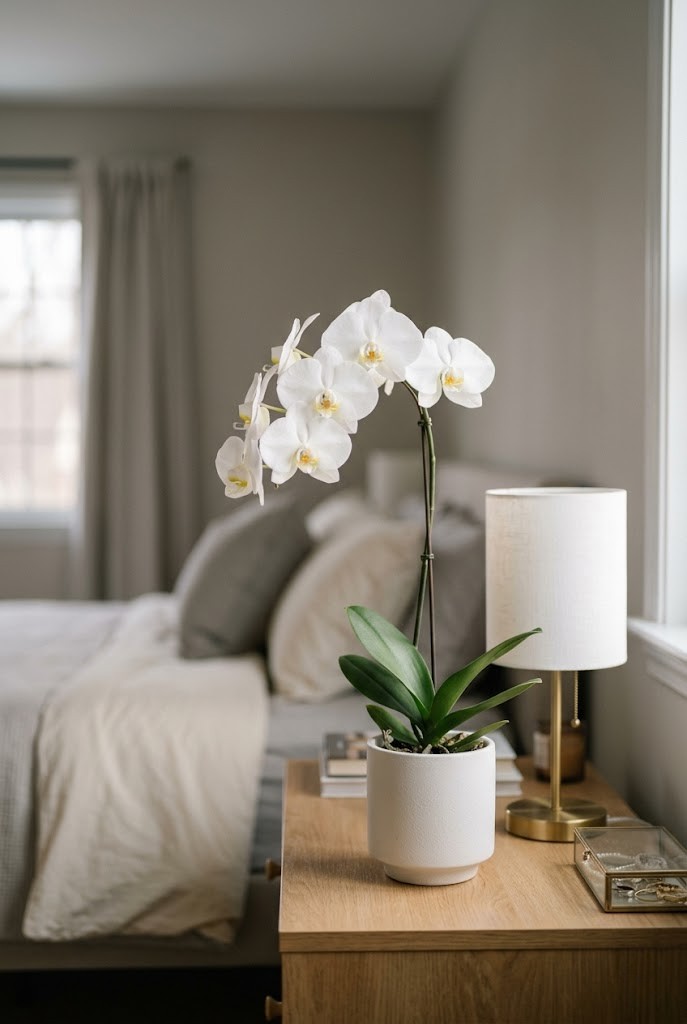
An orchid is the quickest way to make a space feel cared for—one elegant stem can change a dresser or vanity instantly. It’s commonly tied to love, beauty, and supportive relationships.
Place it within a few feet of a bright window, where the light is filtered rather than harsh. A bedroom dresser or tidy bathroom vanity works especially well.
Orchid success usually comes down to one thing: drainage. Water when the mix is nearly dry, and never let the inner pot sit in pooled water.
#10 — Aloe Vera (Aloe vera)
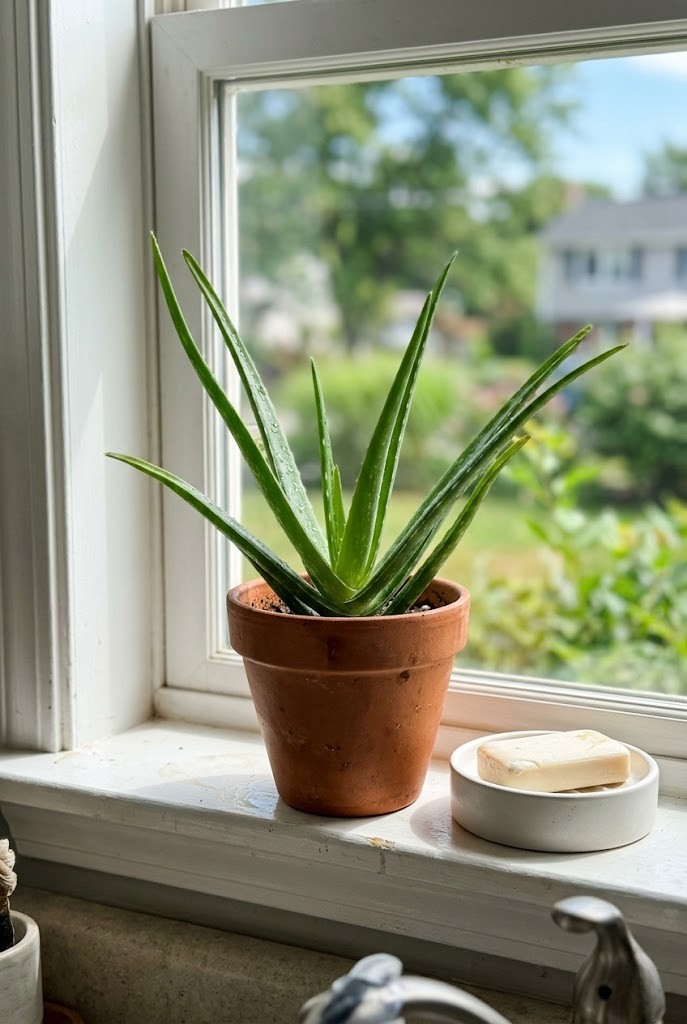
Aloe feels like a little green guardian—structured leaves, clean lines, and a protective vibe on a sunny sill. It’s often associated with clearing and protection, especially in busy parts of the home.
Give it real sun: a bright kitchen window, sunny laundry sill, or near a south- or west-facing window. Aloe prefers a full dry-out between waterings.
If you’ve got pets, place it where they can’t reach it. Aloe isn’t for snacking.
#11 — Lavender (Lavandula)
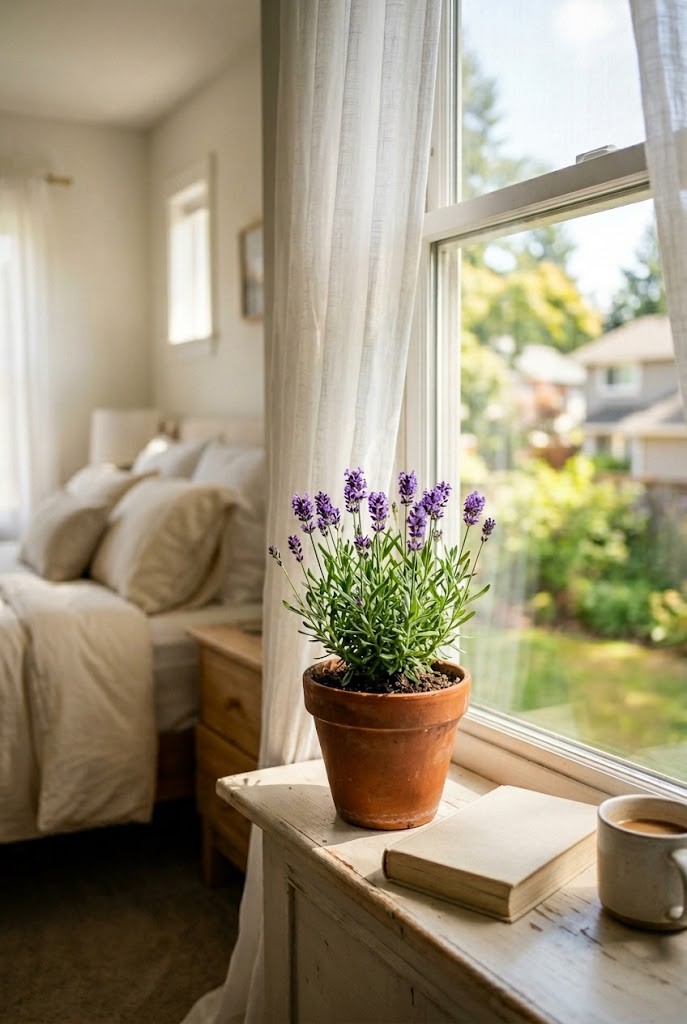
Lavender is the “exhale” plant—soft foliage, purple blooms, and a scent people associate with winding down. It’s often used to support calm, restful energy.
Here’s the honest reality: lavender is only a good indoor plant if you can give it strong sun. Think a very sunny south- or west-facing windowsill or a bright sunroom. If your home is low-light, it will struggle.
Let the pot dry between waterings and give it airflow. Lavender looks best when it’s crisp, not damp.
#12 — Areca Palm (Dypsis lutescens)
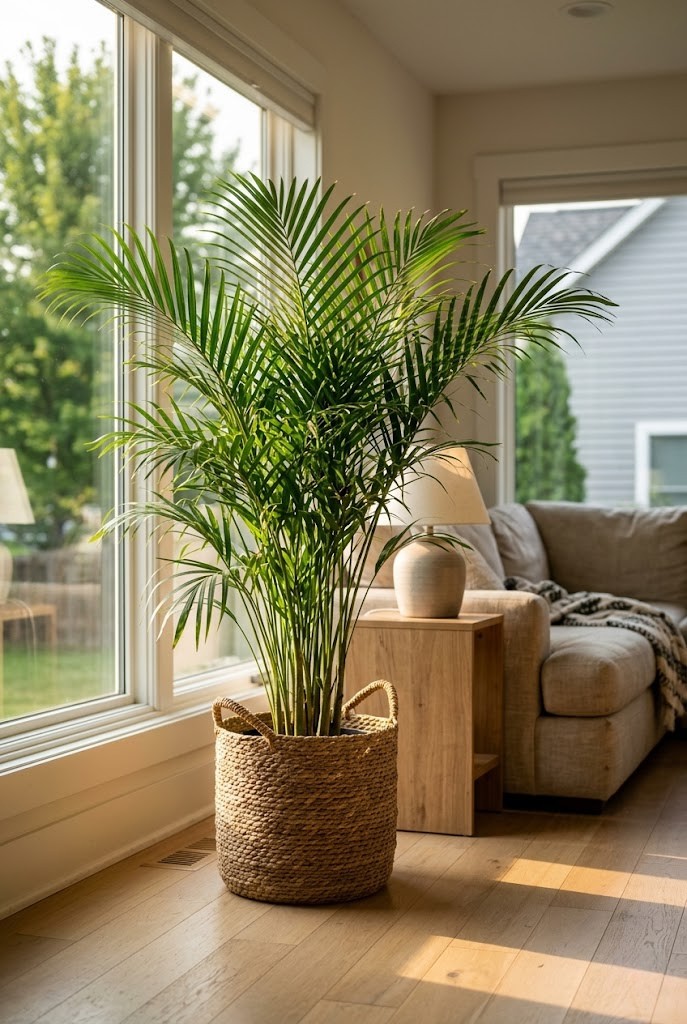
Areca palm is what you bring in when a room feels too stiff. Those soft, feathery fronds loosen everything up and make the space feel more open, welcoming, and a little more social. It’s often chosen for uplifting energy and easy flow, especially in homes that need softness without losing brightness.
A bright room suits it best, and steady moisture keeps the fronds looking fresh instead of crispy at the tips. More than anything, though, this plant earns its spot by changing the feel of a space fast: less boxed-in, less severe, more lived-in.
#13 — Philodendron (Philodendron spp.)
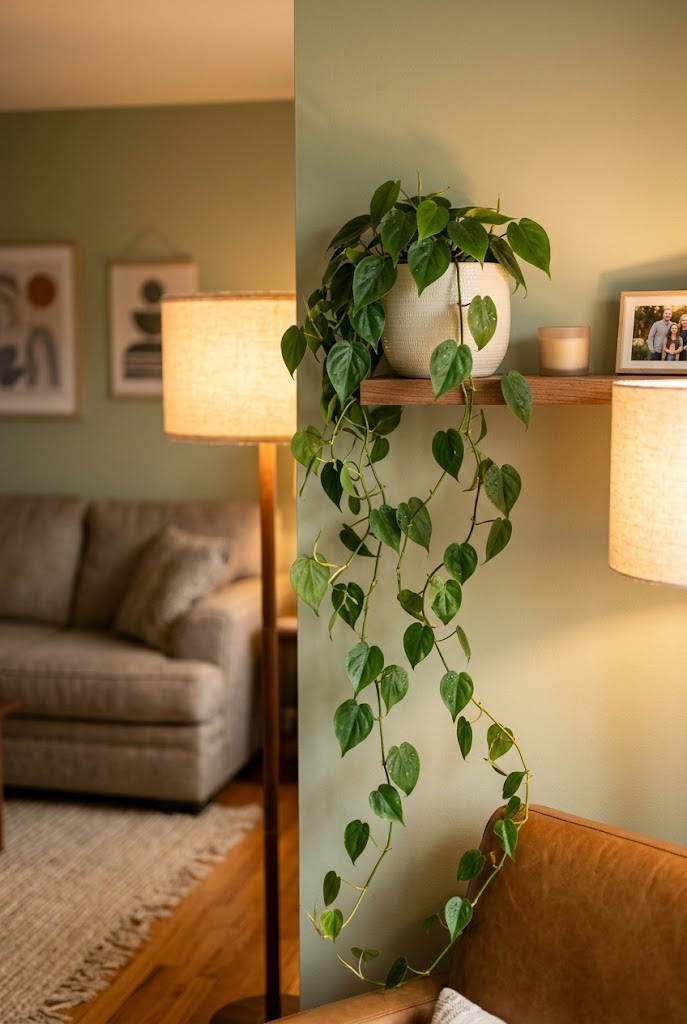
Philodendron is one of the easiest ways to make a room feel warmer. The heart-shaped leaves and relaxed vines soften hard edges, calm down boxy furniture, and add that slightly unfussy, lived-in feeling that makes a space more comfortable to be in. It’s often linked with love, harmony, and emotional ease, which makes it especially right for shared rooms.
It’s easy company, too. Medium light is usually enough, brighter indirect light makes it fuller, and a quick trim once in a while keeps it looking lush instead of scraggly. Like pothos, it’s best kept out of reach for pets and little kids.
The easiest way to choose
If you want the good vibes to feel intentional instead of random, use this simple placement map:
- Entryway (welcome + opportunity): Money Tree or Lucky Bamboo
- Corners / heavy zones (protection + clearing): Snake Plant or Aloe
- Bedroom (calm + harmony): Peace Lily or Lavender, if you have a very sunny window
- Living room (vitality + connection): Areca Palm or Rubber Plant
- Desk / creative zone (momentum): Chinese Money Plant