Table of Contents
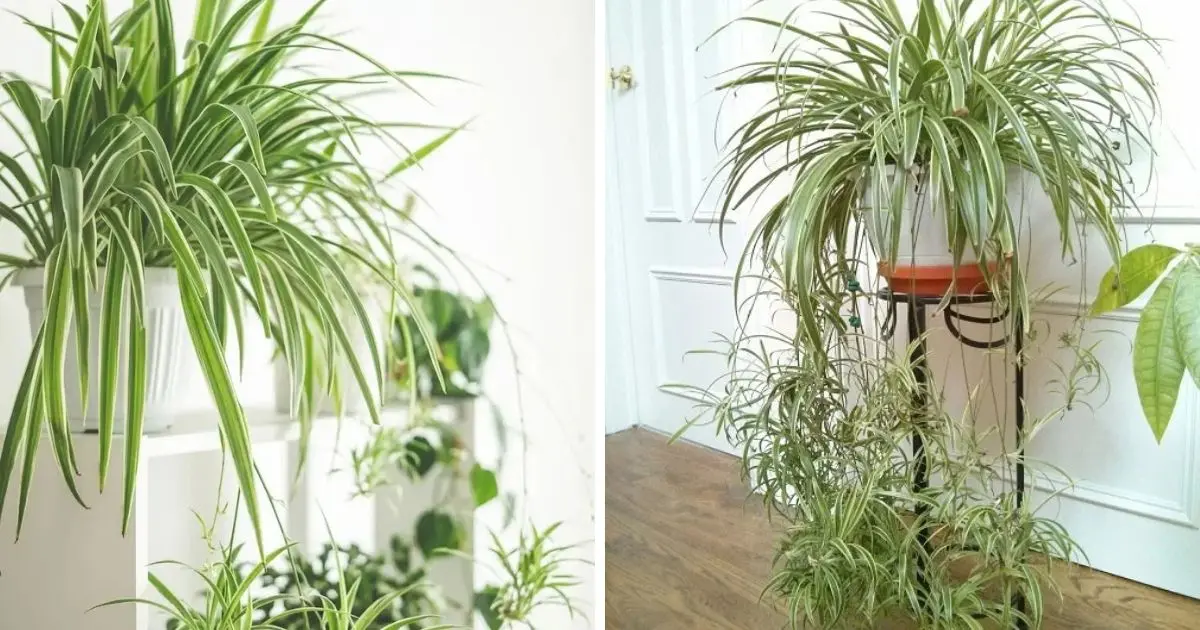
Spider plant (Chlorophytum comosum) is one of the easiest houseplants to grow.
Its long, arching leaves form a graceful fountain shape, and mature plants send out slender stems bearing small plantlets. These easy-to-root offshoots make spider plants especially rewarding to grow and share.
Plant Snapshot
| Botanical Name | Chlorophytum comosum |
| Common Names | Spider plant, airplane plant, ribbon plant |
| Plant Type | Herbaceous perennial, commonly grown as a houseplant |
| Mature Size | About 2 to 2½ feet wide; leaves can reach 2 to 3 feet long in hanging baskets |
| Light | Bright, indirect light; tolerates lower light |
| Soil | Loose, well-draining potting mix |
| Water | When the top 1–2 inches of soil are dry |
| Temperature | Above 50°F |
| Humidity | Average household humidity |
| Flowers | Small, white, star-shaped flowers |
| Hardiness Zones | 9–11 |
| Pet Friendly | Yes |
What Matters Most for Success
Spider plants are forgiving, but good light and drainage go a long way.
- Provide bright, indirect light: Lower light is tolerated, but brighter conditions encourage fuller growth and more plantlets.
- Let the soil dry slightly between waterings: Avoid keeping the potting mix constantly wet.
- Use a well-draining potting mix and a container with drainage holes.
- Keep the plant warm: Protect it from temperatures below 50°F and cold drafts.
- Fertilize lightly: Too much fertilizer can contribute to brown leaf tips.
How and When to Plant Spider Plants
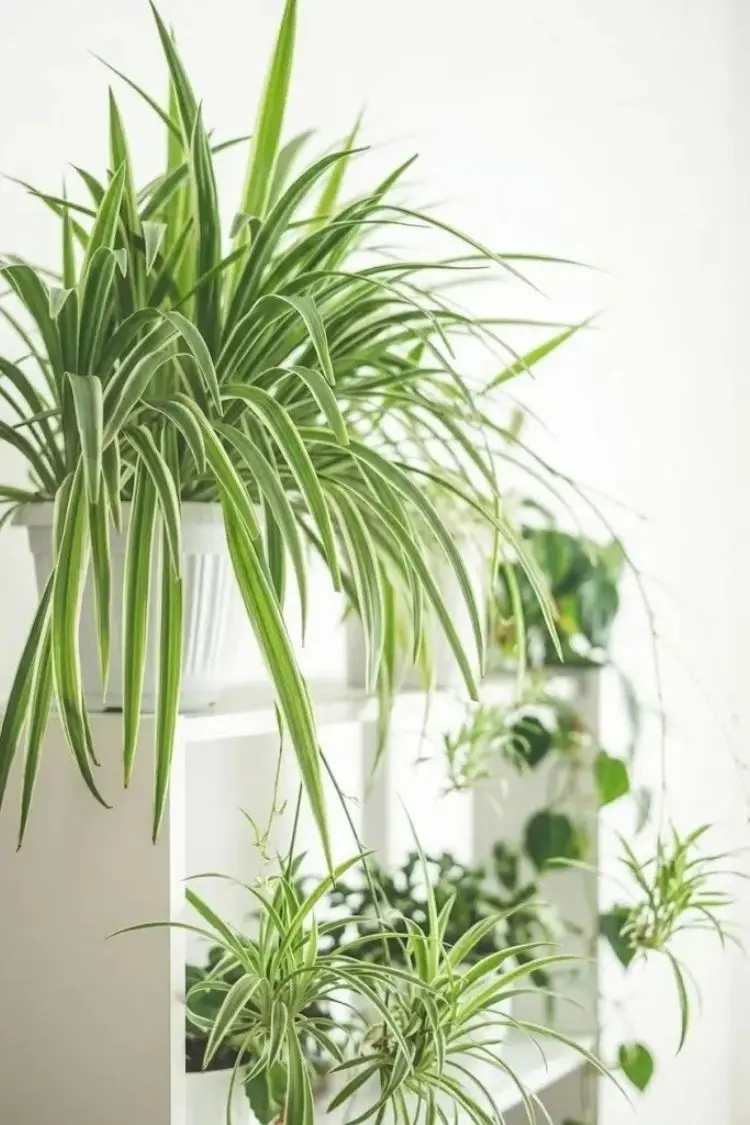
Spider plants are most often grown in containers indoors. Choose a pot with drainage holes that is only slightly larger than the plant’s root ball. A pot that is too large can hold excess moisture around the roots.
Fill the container with a loose, well-draining houseplant potting mix. Set the plant at the same depth it was growing in its original container, then water thoroughly and let the excess drain away.
Place the newly planted spider plant in bright, indirect light. If it has been growing in low light, move it into brighter light gradually to prevent leaf scorch.
Spider plants can be grown outdoors year-round in USDA Hardiness Zones 9–11. In cooler climates, grow them in containers and bring them indoors before temperatures fall below 50°F.
Spider Plant Care
Light Requirements
Spider plants grow best in bright, indirect light. An east- or west-facing window is usually a good choice. A south-facing window can also work if the plant is placed farther from the glass or protected by a sheer curtain.
They tolerate lower light, but growth may be slower and fewer plantlets may develop. Variegated varieties may also lose some of their striping in low light.
Avoid prolonged exposure to strong, direct sunlight, which can scorch the leaves and cause brown patches.
Watering
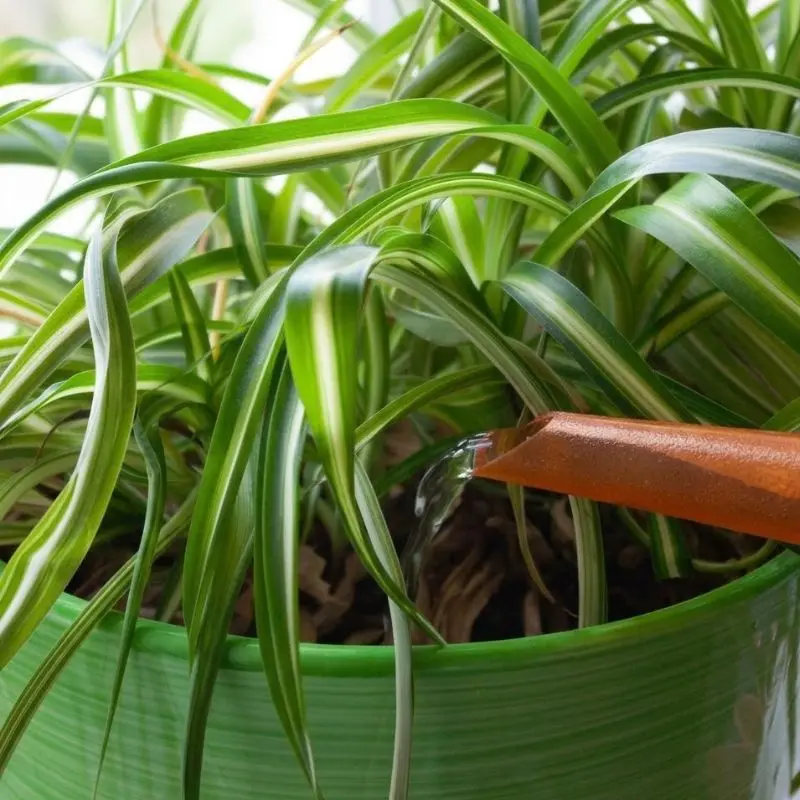
Water when the top 1–2 inches of soil feel dry to the touch. Check the soil instead of watering on a strict schedule; plants in brighter, warmer conditions may need water more often.
When you water, soak the potting mix thoroughly until excess water drains from the pot. Empty any water left in the saucer or cachepot. Spider plants tolerate some dryness, but consistently soggy soil can lead to root problems.
If brown tips persist, water quality may be part of the problem. Salts and minerals in tap water can build up in the soil, so rainwater or distilled water may help.
Soil and Potting Mix
Use a loose, well-draining houseplant potting mix that holds some moisture without staying soggy.
Always use a container with drainage holes. Avoid heavy garden soil in indoor containers because it can compact and drain poorly.
Temperature and Humidity
Spider plants prefer warm indoor conditions and should be protected from temperatures below 50°F. Keep them away from cold drafts and direct blasts from air-conditioning vents. During the day, aim for temperatures around 65–75°F; at night, temperatures can drop to about 50–55°F.
They tolerate average household humidity, although higher humidity can help prevent dry, crispy leaf tips. If your home is very dry, especially in winter, a humidifier can help.
Fertilizing
Feed spider plants during spring and summer with a balanced, water-soluble houseplant fertilizer, following the product label for dilution and frequency.
Avoid overfertilizing. Excess fertilizer can cause salt buildup in the soil and contribute to brown leaf tips. Reduce or stop fertilizing during winter when growth slows.
Pruning
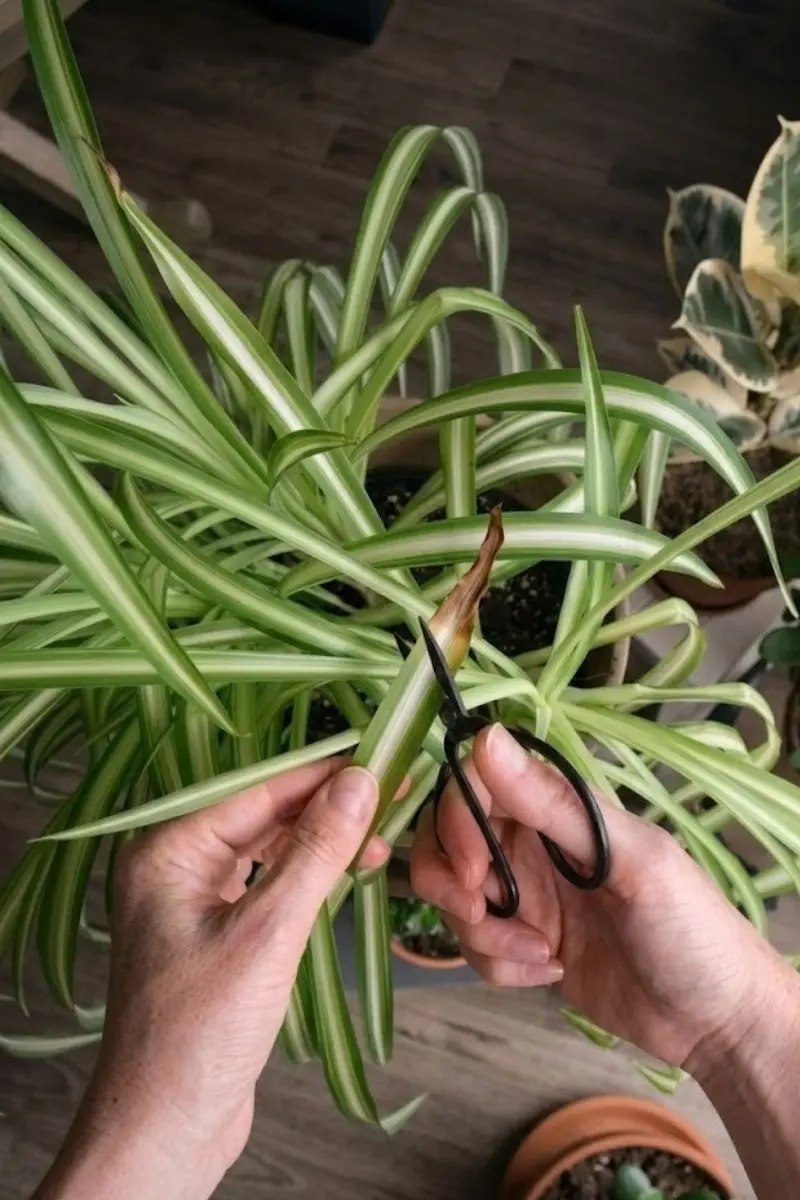
Spider plants need little routine pruning. Remove dead, damaged, or badly browned leaves with clean scissors or pruners, cutting them close to the base.
If the plant gets unruly, remove some older leaves and unwanted plantlets to tidy it up. Major pruning is best done in spring or summer, when the plant is actively growing. Healthy plantlets can be saved for propagation.
Repotting
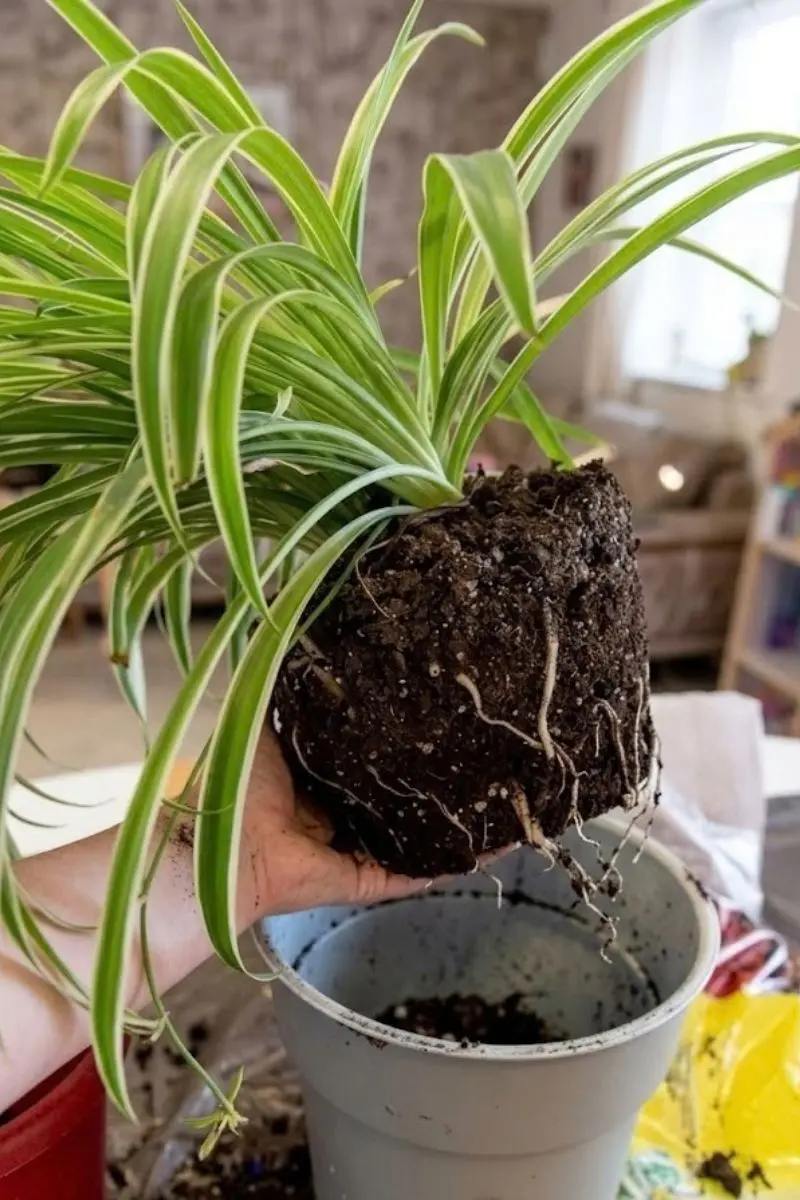
Spider plants don’t need frequent repotting and can grow well when slightly root-bound. A crowded root system may also encourage flowering and the production of plantlets.
Repot when roots begin growing through the drainage holes, the plant becomes noticeably crowded or top-heavy, or the potting mix has broken down. Choose a container only slightly larger than the current one.
If the plant has become badly overgrown, prune some foliage and roots when you repot.
Propagation
Spider plants are easy to propagate. Mature plants produce plantlets, or spiderettes, on long stems.
Wait until a plantlet has developed roots, then cut it from the connecting stem with clean, sharp scissors. Plant it in a small container filled with moist, well-draining potting mix and keep it in bright, indirect light while the roots establish.
You can also root a plantlet while it is still attached to the mother plant. Set it on top of moist potting mix, then cut the connecting stem once it has rooted. Division is another option when a mature plant has become crowded.
Pests and Problems
Brown leaf tips: This is one of the most common spider plant problems. Underwatering, low humidity, fertilizer or mineral buildup, and drafts can all cause browning. Strong direct sunlight can also damage the foliage. Check the plant’s growing conditions before changing your watering routine.
Yellowing or declining foliage: Start by checking the soil. Constantly wet soil can lead to root problems, while prolonged dryness can cause leaves to wilt and brown. Too much direct sun or too little light can also affect the foliage.
Common pests: Aphids, whiteflies, scale, and spider mites can occasionally affect spider plants. For a light infestation, rinse the foliage with water. Persistent infestations may require an appropriate insect-control treatment.
Sparse growth or few plantlets: Insufficient light can slow growth and reduce plantlet production. Move the plant to a brighter location with indirect light and keep its care consistent.
FAQs
How often should you water a spider plant?
Water when the top 1–2 inches of soil are dry.
Check the soil regularly rather than relying on a fixed schedule, since watering needs change with light, temperature, humidity, and the season.
Why are the tips of my spider plant turning brown?
Brown tips can result from underwatering, low humidity, fertilizer or mineral buildup, tap-water chemicals, drafts, or strong sunlight.
Check the plant’s growing conditions to find the most likely cause.
Can spider plants grow in low light?
Yes. They tolerate low light, but growth may be slower and fewer plantlets may develop.
Bright, indirect light encourages fuller growth.
Why isn’t my spider plant producing plantlets?
Low light is one possible reason.
Move the plant to a brighter location with indirect light and make sure it receives appropriate water and fertilizer. Mature, healthy plants are more likely to produce plantlets.
Are spider plants safe for pets?
Yes. The ASPCA lists spider plant (Chlorophytum comosum) as nontoxic to both cats and dogs.