Table of Contents
There is something deeply calming about the silvery, sage-green rustle of an olive tree. It instantly softens a room, cutting through the stark lines of modern furniture with its delicate, twisting branches.
The secret to keeping that Mediterranean vibe alive indoors comes down to light. Olive trees are sun-worshipers.
If you have a bright south- or west-facing window—and are willing to use a grow light during dark winters—these seven varieties are among the most adaptable choices for container life.
Quick Takeaway
✓ Needs 6–8 hours of direct sun daily
✓ Best near a south- or west-facing window
✓ A grow light is often necessary in winter
✓ Fast-draining soil is non-negotiable
✓ Expect beautiful foliage long before you ever see fruit
⚠️ The 12-Month Reality Check: Indoor life is a temporary sanctuary, not a permanent habitat. To prevent a slow, long-term decline, roll your potted tree outdoors to a sunny patio or balcony for two to three months during the summer growing season.
1. Arbequina Olive Tree
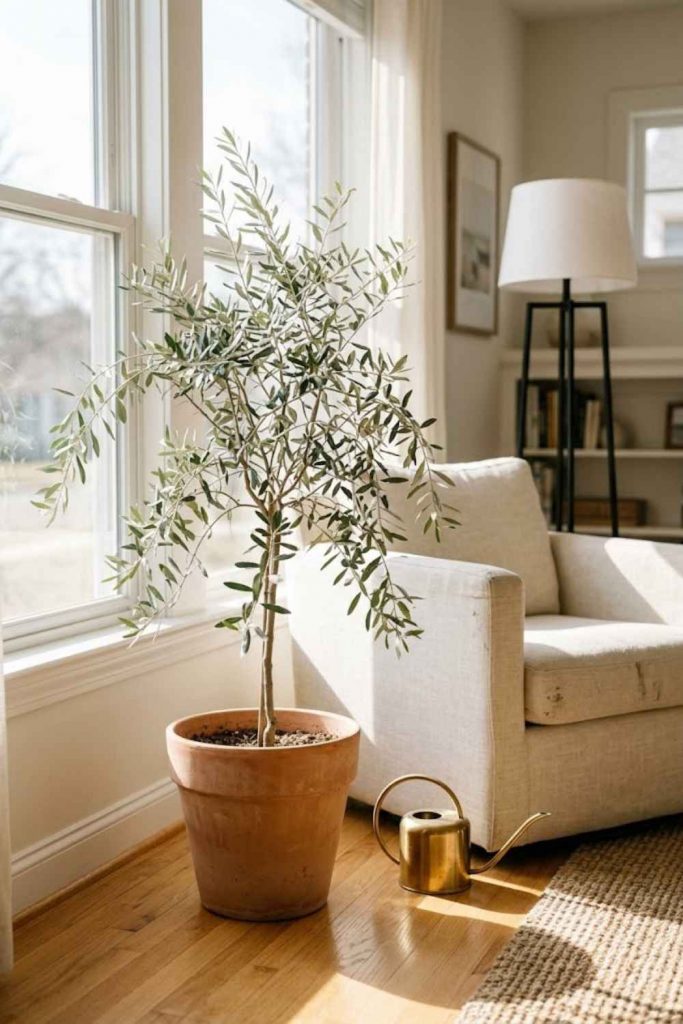
The Spanish Arbequina dominates interior design for one reason: it treats restricted container root space exceptionally well compared to most standard varieties.
It delivers an airy, weeping silhouette. The leaves shimmer with a distinct silver flash whenever the indoor breeze catches them.
Park this specimen right up against your sunniest window glass. Potted olives dry out rapidly indoors.
Test the soil weekly. Do not let the root ball bake completely bone-dry, or those iconic silver leaves will crisp and drop overnight.
Bright direct light • Moderate watering • Pet safe • Weeping canopy • Indoor Size: 4–6 ft (Medium floor accent)
2. Little Ollie Dwarf Olive
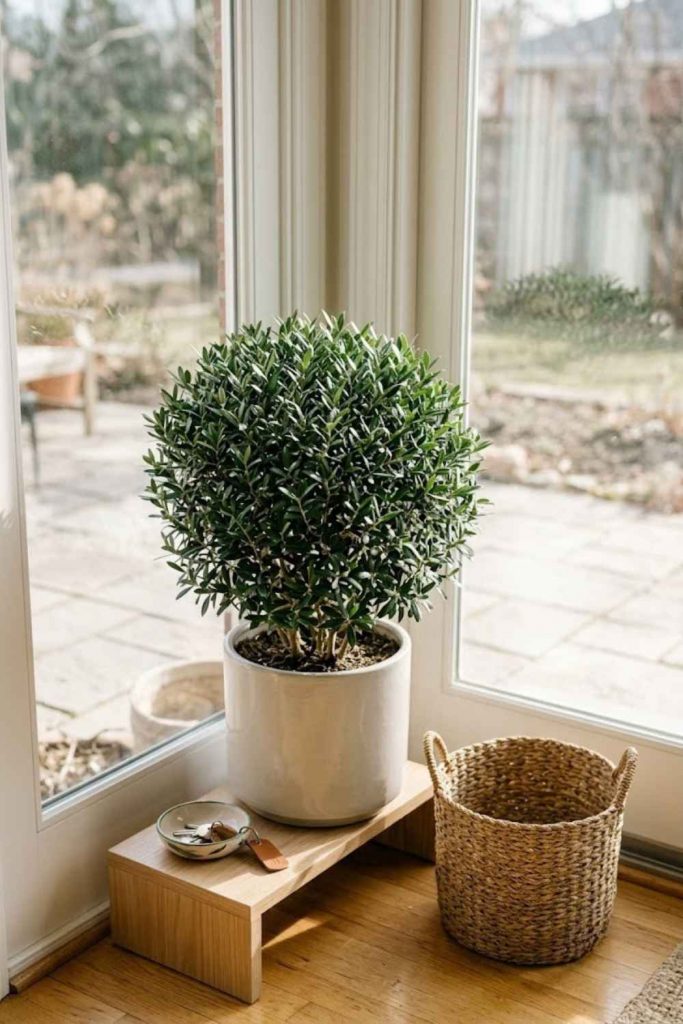
Short on floor space? Skip the tall trees.
Little Ollie (Olea europaea ‘Montra’) is a genetic dwarf that grows as a dense, tightly packed green shrub. It is tailored for low plant stands positioned directly flush against a south-facing glass door, or sitting prominently on a sun-drenched entryway ledge.
Sunlight is non-negotiable for this multi-stemmed bush. Do not step it back into the shadows of a room.
Lack of direct, unfiltered sun forces the branches to stretch, weaken, and lose their dense shape.
Bright direct light • Low to moderate watering • Pet safe • Compact shrub • Indoor Size: 3–5 ft (Low, bushy window accent)
3. Wilsonii Fruitless Olive Tree
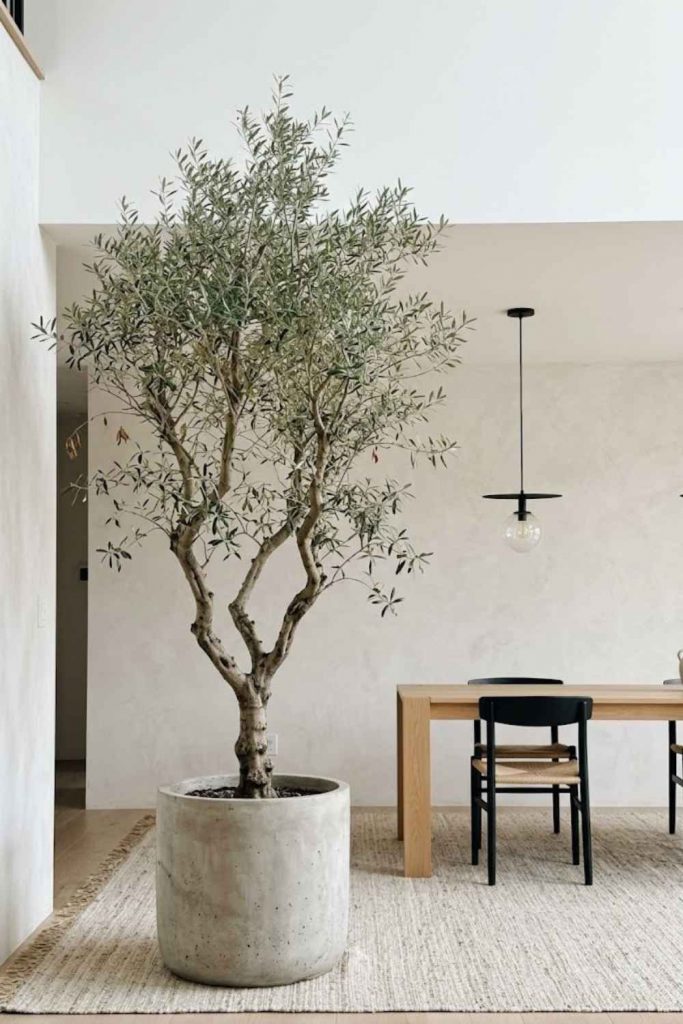
Unlike agricultural cultivars grown for harvest, the Wilsonii is valued almost entirely as an ornamental design tree.
It features the identical gnarled trunk and airy canopy of traditional Mediterranean olives, but it is genetically sterile.
This is your defense against floor damage. Place it confidently over light-colored linen rugs or delicate hardwood floors.
Zero fruit means zero oily sap stains. It treats dry radiator heat well, but active growth requires vigilance—check the soil moisture twice as often during peak winter heating.
Bright direct light • Low to moderate watering • Pet safe • Spreading habit • Indoor Size: 6–8 ft (Tall architectural statement)
4. Picholine Olive Tree
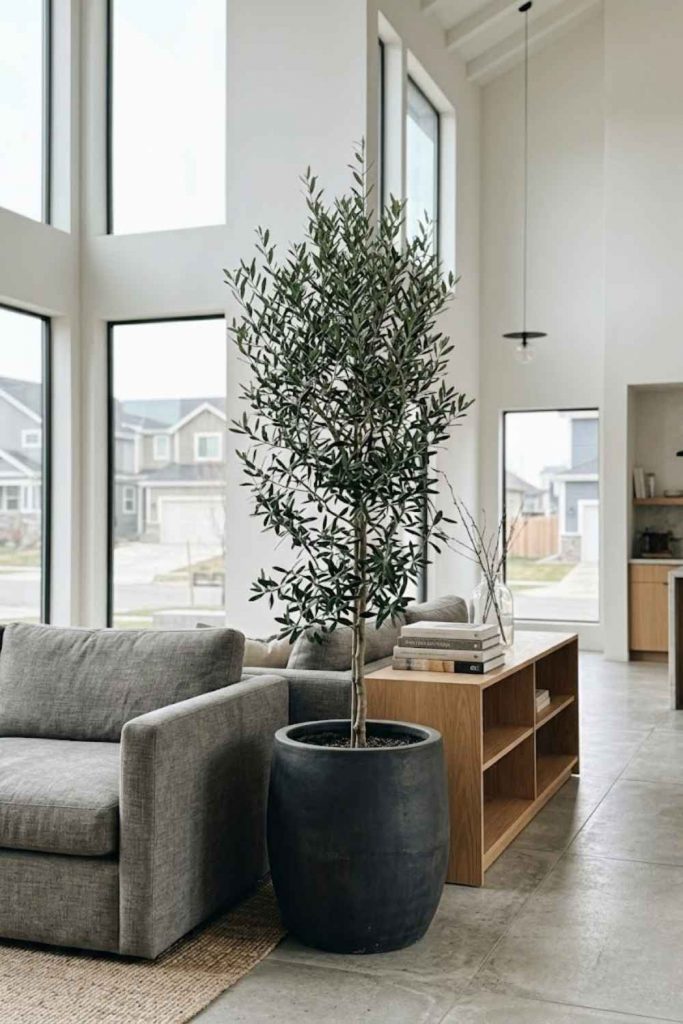
An elegant, strictly upright French variety. Its elongated, deep forest-green leaves create a sharp, columnar silhouette.
It anchors open-concept floor plans and rooms with towering ceilings beautifully.
Slow growth rate. The structural shape you buy is largely the silhouette you will keep for years.
Avoid stagnant air. Do not jam this tree into tight corners behind furniture. It requires active ambient room circulation to prevent foliage drop.
Bright direct light • Low watering • Pet safe • Upright, structural grower • Indoor Size: 5–7 ft (Tall, narrow space tree)
5. Mission Olive Tree
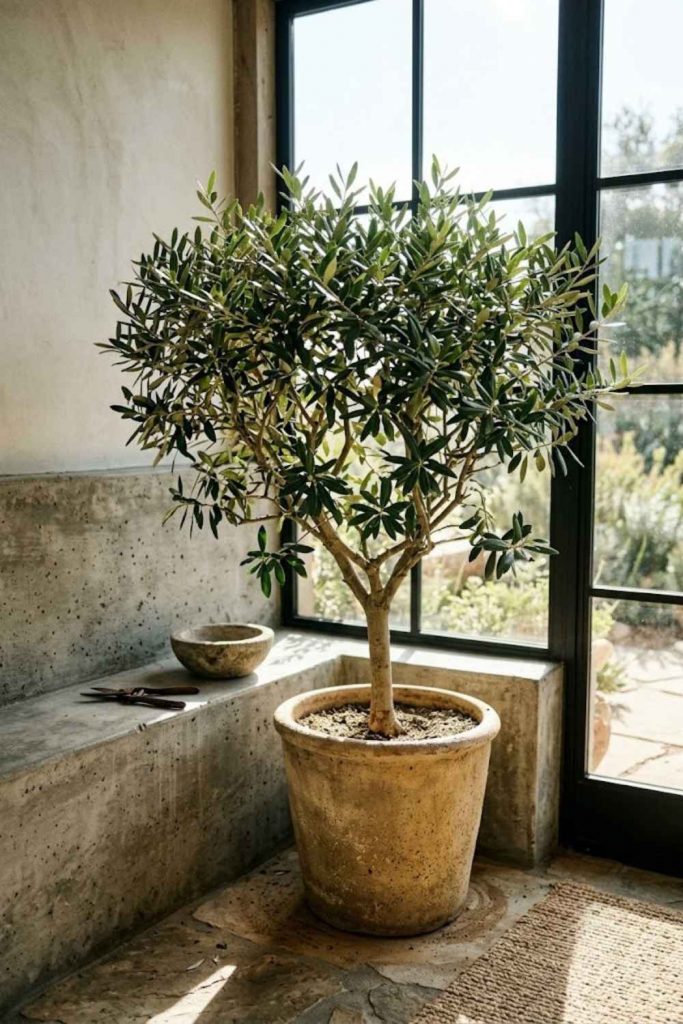
The Mission olive offers a rugged, distinctly rustic American charm. The leaves are noticeably thicker and broader than its European counterparts.
It demands a heavy, high-contrast pairing—style it inside weathered stone, raw terracotta, or concrete planters.
Give it your hottest, brightest architectural alcove. Leave it alone between waterings.
Mission olives panic in soggy soil. Use a gritty, sharp-draining cactus mix and a heavy container with large, unobstructed drainage holes.
Bright direct light • Low watering • Pet safe • Broad, vase-shaped canopy • Indoor Size: 5–6 ft (Medium, wide-canopy tree)
6. Frantoio Olive Tree
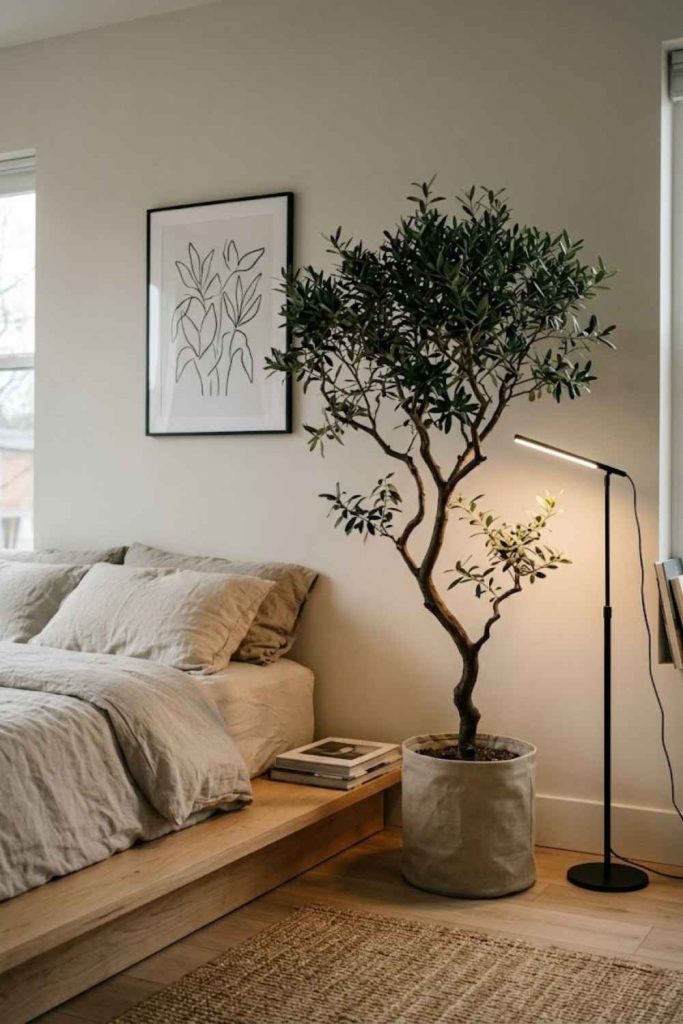
The ultimate designer pick for an authentic, asymmetrical look. Erratic growth. Open, whimsical branches.
It naturally twists in irregular directions, creating an instant artistic focal point in minimalist spaces.
Grab your shears early. Light, consistent cosmetic pruning is highly recommended to stop this Tuscan native from looking chaotic.
It reacts aggressively to seasonal light drops—pair it with a dedicated LED grow light from October through April to stop sudden leaf thinning.
Bright direct light • Moderate watering • Pet safe • Open, twisting habit • Indoor Size: 5–7 ft (Asymmetrical design tree)
7. Manzanilla Olive Tree
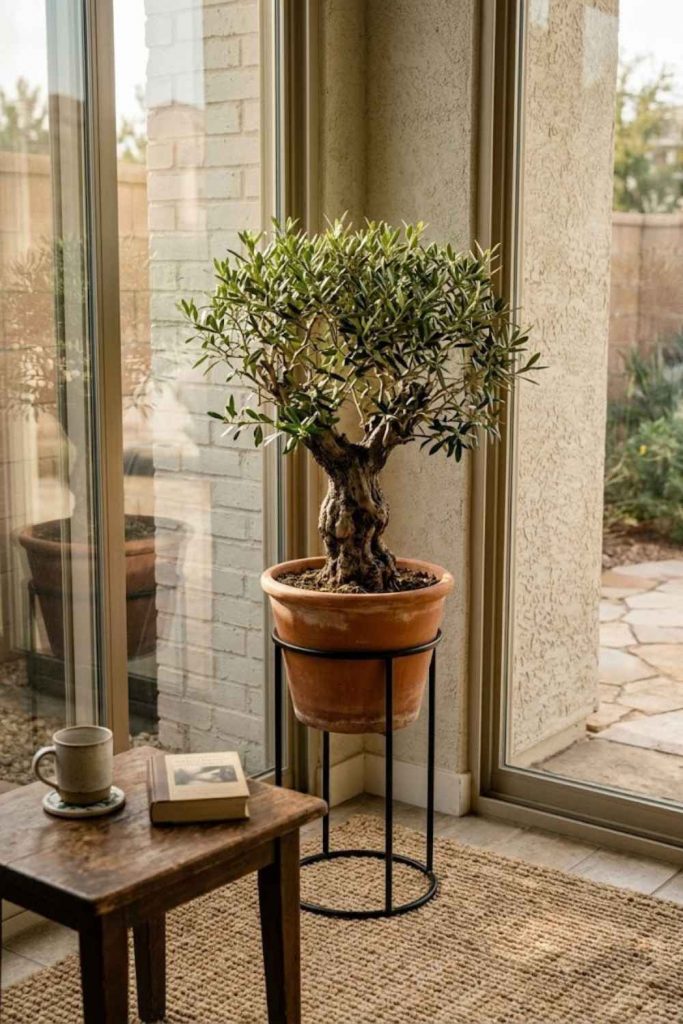
A Spanish variety prized for developing a thick, gnarled, mature-looking central trunk at a very young age.
It packs an old-world, heirloom character into a highly manageable indoor footprint.
Elevate the container on a sleek plant stand directly in front of a sunlit glass patio door.
Keep it clear of freezing winter drafts and direct HVAC vents. Sudden temperature swings can trigger wholesale leaf drop overnight.
Bright direct light • Low to moderate watering • Pet safe • Stocky, rounded habit • Indoor Size: 4–5 ft (Compact, thick-trunked standard)
Quick Plant Picker
- Best for proven pot adaptability: Arbequina Olive Tree
- Best for cleaner floors (Fruitless): Wilsonii Fruitless Olive Tree
- Best for tight window spaces (Dense Shrub): Little Ollie Dwarf Olive
- Best for structural height: Picholine Olive Tree
- Best for gnarled trunk aesthetics: Manzanilla Olive Tree
FAQs
Can I buy a cheap outdoor olive tree and bring it inside?
Not usually. Container-friendly cultivars such as Arbequina or Little Ollie tend to adapt far more reliably to indoor conditions than unlabeled nursery stock.
Outdoor trees often struggle with shock from light deprivation and can introduce hidden pests into your living room.
How close to the window does the tree actually need to be?
Ideally, less than two feet. Ambient room light is rarely enough.
If it is not directly crowding your sunniest window glass, it likely needs a dedicated grow light.
Why is my olive tree dropping green leaves?
Usually two culprits: the soil is either baked bone-dry, or the roots are sitting in stagnant water. Check the drainage immediately.
Conclusion
Before buying an indoor olive tree, look honestly at your floor plan.
If you have a clear two-foot perimeter right next to an unobstructed south- or west-facing window, a potted variety like the Arbequina or Picholine will reward you with gorgeous, shimmering texture.
If you are dealing with smaller spaces or low glass doors, opt for the shrub-like Little Ollie to get that exact same look without crowding your walkways.
Remember to check the soil moisture weekly, treat light as non-negotiable, and commit to that summer outdoor vacation—it is an essential step to help your investment survive the winter.