Table of Contents
Indoor plants are often marketed as natural bug repellents, but most greenery sitting quietly in a corner will not magically eliminate pests from your home. The plants that tend to make the biggest difference are the ones with strong natural oils or sticky insect-trapping surfaces — especially when placed near windows, doors, kitchens, or other common entry points.
Many of these plants also happen to work beautifully indoors. Some bring fragrance to sunny windowsills, others soften kitchens with fresh greenery, and a few can even help reduce the tiny gnats that hover around houseplants.
1. Catnip
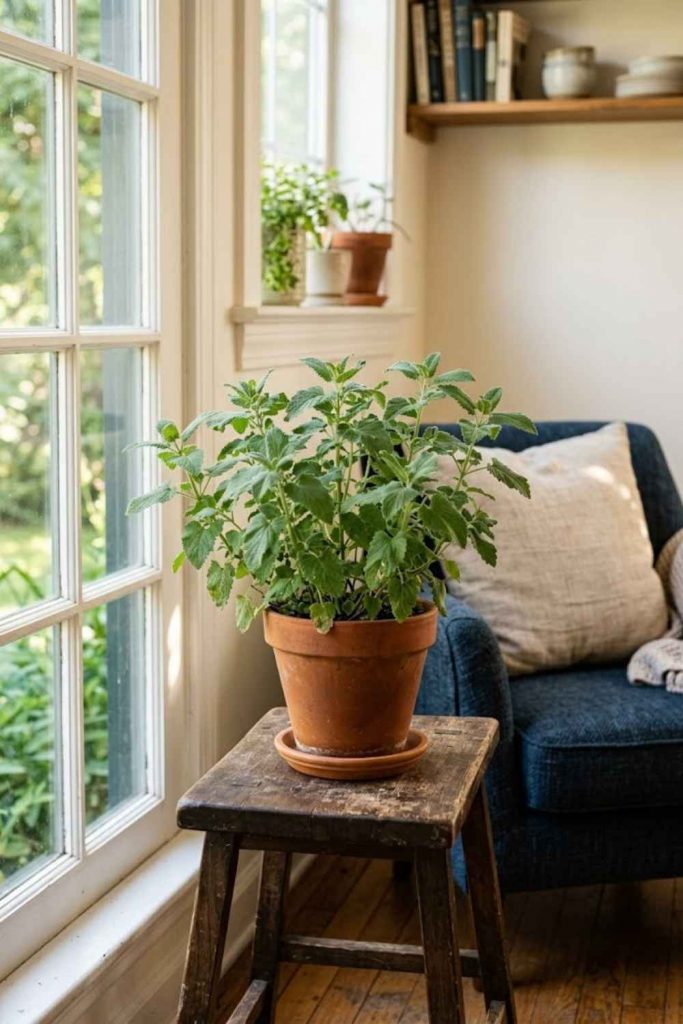
Catnip is best known for its effect on cats, but the plant also contains nepetalactone, a naturally aromatic compound often associated with mosquito-repelling properties.
It grows quickly on a bright windowsill and has a loose, relaxed look that fits nicely into casual kitchen or sunroom spaces. Even a small pot near frequently opened windows can add a fresh herbal layer indoors during warmer months.
Because it grows so vigorously, regular trimming helps keep the plant compact and fuller over time.
2. Peppermint
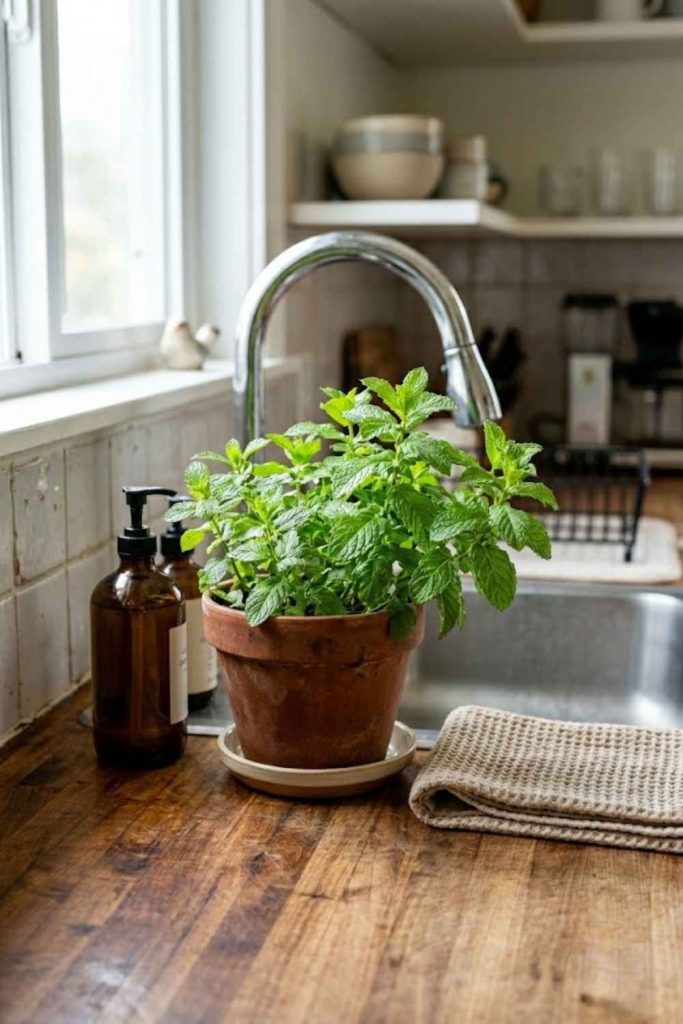
Few indoor herbs smell as crisp and refreshing as peppermint. That strong scent is also why many people place it near doorways, kitchens, or sunny windows where ants and spiders occasionally appear.
Peppermint spreads aggressively outdoors, but containers keep it manageable indoors. The bright green leaves also bring a fresher, lighter feel to shelves or counters without looking overly decorative.
Lightly brushing the leaves releases more of the cooling fragrance into the air.
3. Chrysanthemums
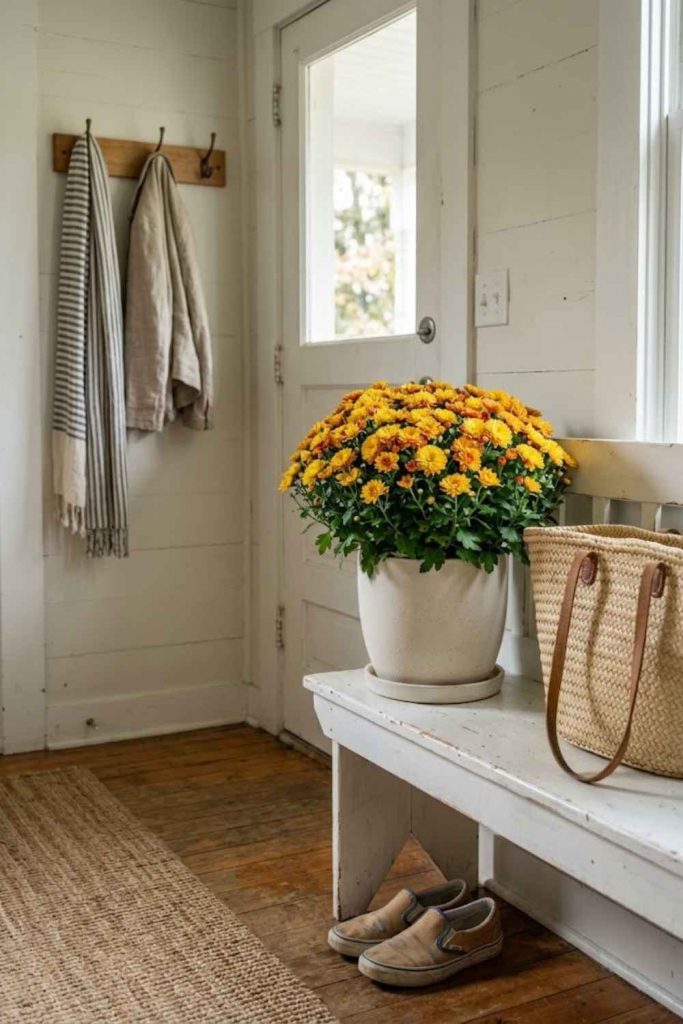
Chrysanthemums contain pyrethrins, compounds commonly used in many natural insect-control products. Indoors, they are usually treated more like temporary seasonal plants than permanent houseplants, but they can still be useful near bright entryways or sunny rooms during peak bug season.
The blooms also bring welcome color indoors at times of year when most houseplants stay purely green.
Once flowering slows down, mums generally perform better outdoors or replaced seasonally.
4. Rosemary
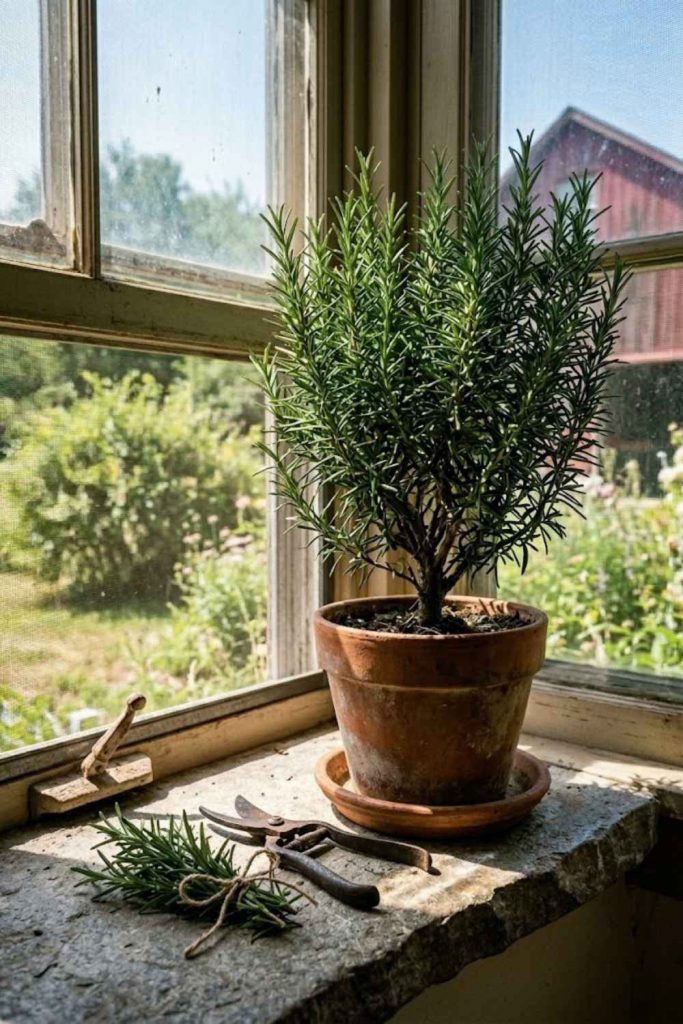
Rosemary brings structure, fragrance, and a slightly rustic texture indoors while also being commonly associated with repelling flies and mosquitoes.
The challenge is sunlight. Without several hours of direct sun, rosemary quickly becomes thin and woody indoors. A bright south-facing window usually works best.
In kitchens, it feels especially practical since the fragrant stems can also be clipped for cooking.
5. Citronella Geranium
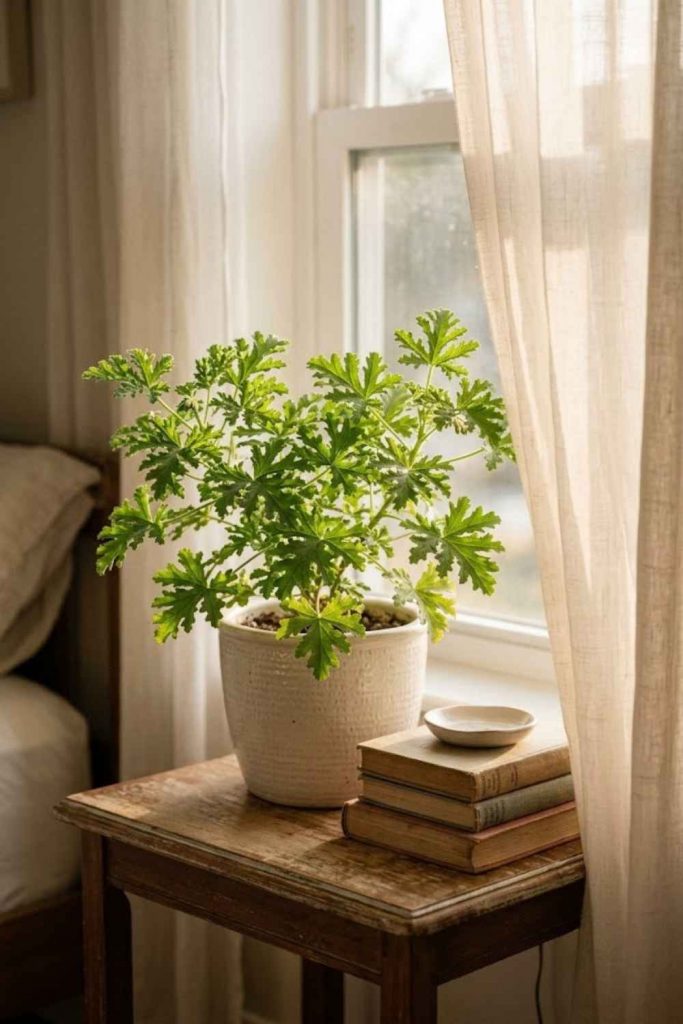
Citronella geranium offers a softer, more decorative alternative to the large citronella grasses often sold outdoors.
The deeply cut foliage gives it an airy, almost vintage look that works surprisingly well in bright interiors. When the leaves are brushed or warmed by sunlight, they release a citrusy scent many people associate with outdoor mosquito candles.
It fits especially well on warm windowsills where airflow helps move the fragrance gently through the room.
6. Lavender
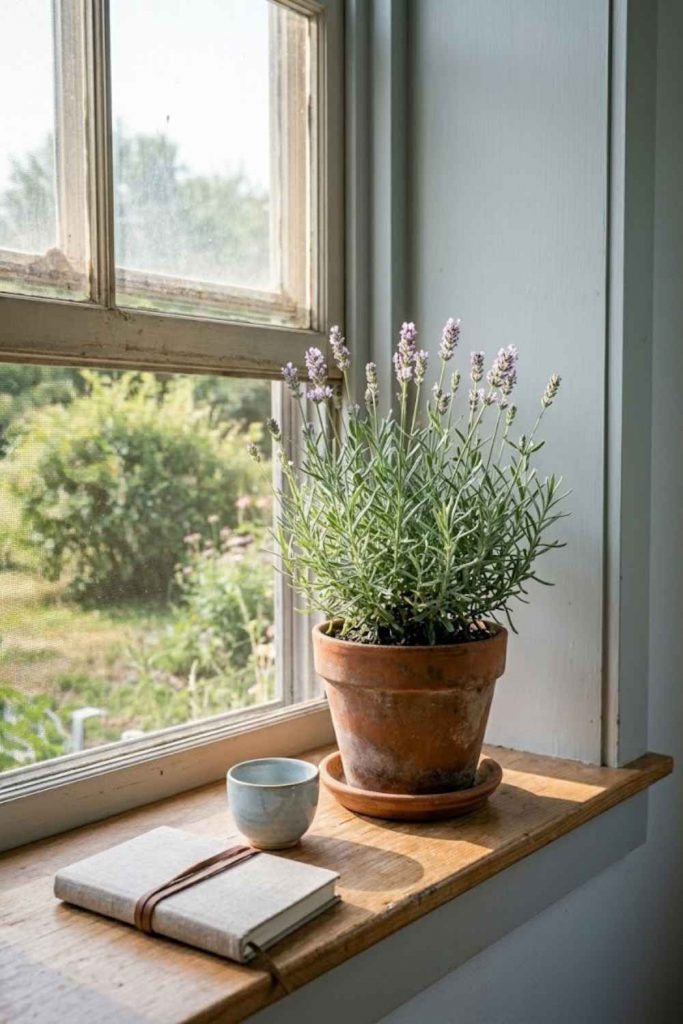
Lavender earns its place indoors as much for the atmosphere as for the fragrance.
The silvery foliage and soft purple flowers instantly make bright windows feel calmer and more relaxed, while the aromatic oils are often linked to discouraging moths and flies indoors. However, lavender is demanding about light and airflow.
Without strong direct sun, it tends to decline quickly instead of staying full and fragrant.
7. Lemon Thyme
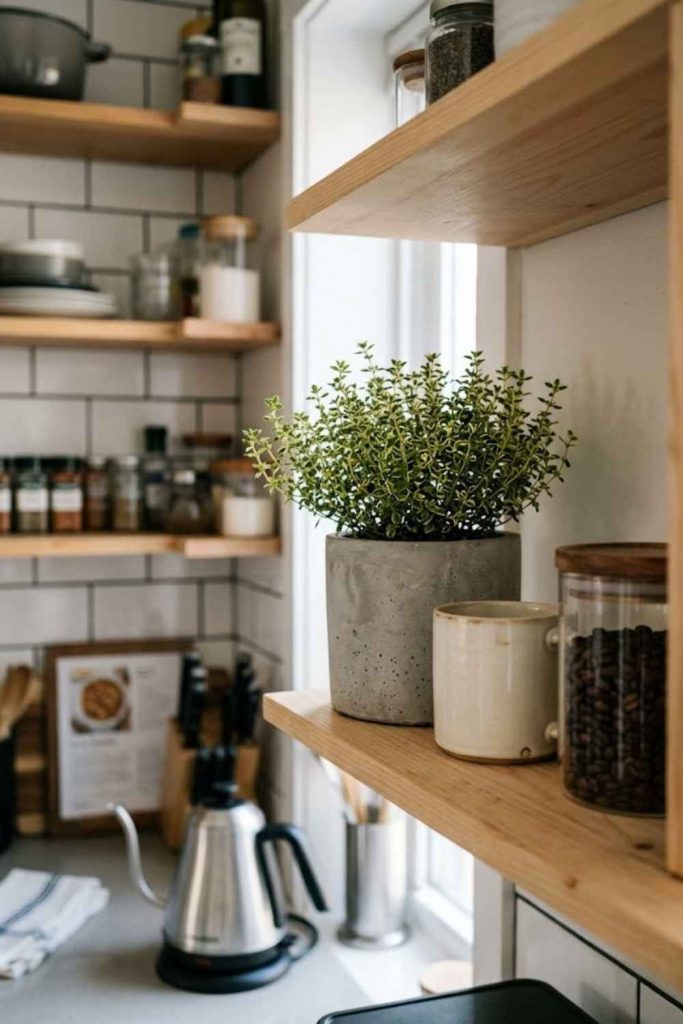
Lemon thyme stays small, tidy, and surprisingly useful in compact indoor spaces.
The tiny leaves release a bright citrus-herbal scent whenever the plant is brushed, making it ideal near walkways, sunny kitchen counters, or open windows where movement naturally disturbs the foliage.
Compared to larger herbs, it also feels easier to tuck into smaller apartments without taking over valuable surface space.
8. Butterworts (Pinguicula)
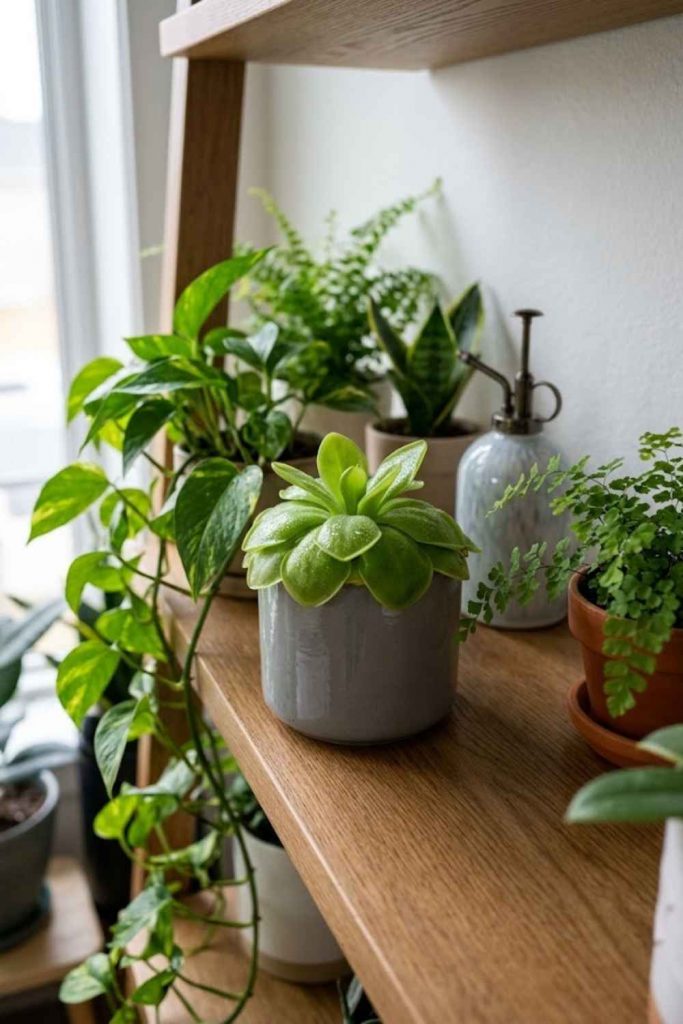
Butterworts are one of the few genuinely useful carnivorous plants for indoor pest problems — especially fungus gnats around overwatered houseplants.
The succulent-like leaves are covered in tiny sticky droplets that trap small flying insects naturally. Unlike dramatic Venus flytraps, butterworts stay compact, quiet, and surprisingly elegant on shelves or countertops.
Their smooth rosette shape also gives them a more sculptural, modern appearance than most people expect from carnivorous plants.
9. Marigolds
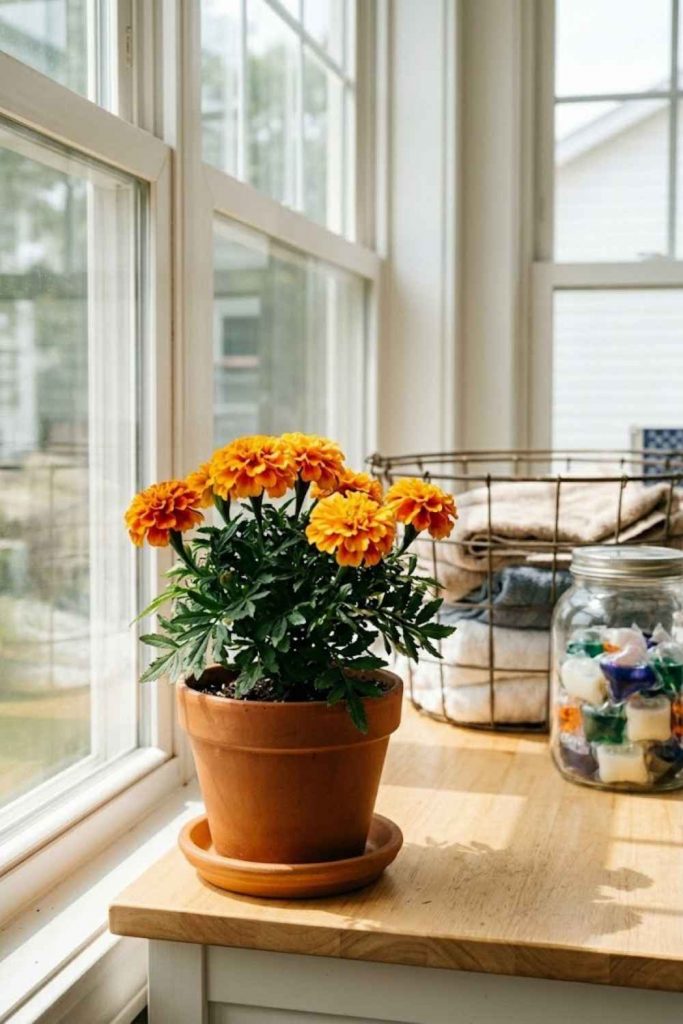
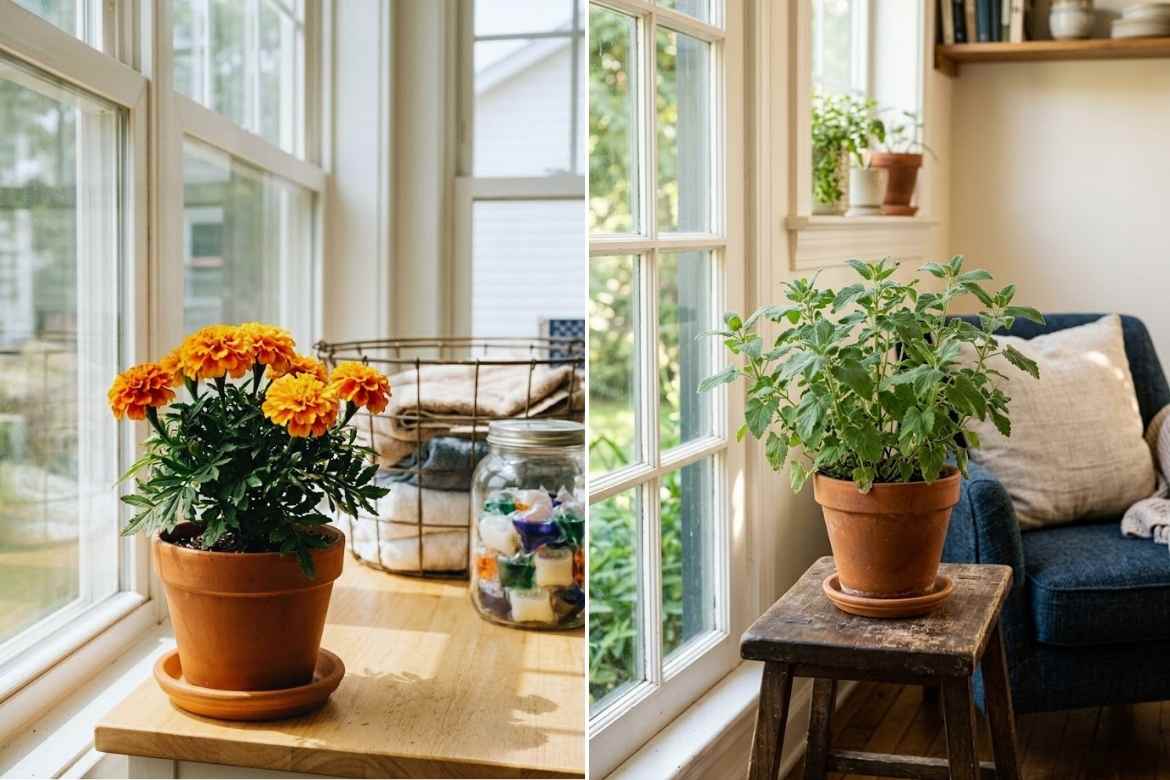
Marigolds are usually associated with outdoor vegetable gardens, but compact varieties can also work indoors near especially sunny windows.
The strong scent is often linked to discouraging mosquitoes and aphids, while the warm orange and yellow flowers instantly brighten kitchens, laundry rooms, or enclosed porches.
They are not long-term houseplants, but they work beautifully as cheerful seasonal color during summer months.
What Actually Makes Indoor Plants Helpful Against Bugs?
Most bug-repelling plants work through fragrance rather than acting as true indoor pest control. Strong-smelling herbs and flowers may help make certain spaces less appealing to insects, especially near open windows or doors, but they work best alongside good airflow, regular cleaning, and avoiding excess indoor moisture.
Placement matters too. A rosemary plant tucked into a dim corner will not stay healthy long enough to release much fragrance, while a thriving herb in a sunny kitchen window becomes far more useful.
Even then, part of the appeal is simply the atmosphere these plants create. A lavender pot beside a bright bedroom window or a fresh peppermint plant near the kitchen sink can make a home feel cleaner, calmer, and more connected to the outdoors — which is exactly why people keep returning to them anyway.