Table of Contents
A room can feel almost finished — until that one empty corner keeps pulling your eye.
A large indoor plant fixes that instantly, adding height and a strong focal point that furniture alone can’t create.
But the wrong plant can make a space feel awkward instead of elevated.
Here are 15 large indoor plants that actually make a statement — plus simple placement tips to help you get it right.
#1 — Bird of Paradise (Strelitzia)
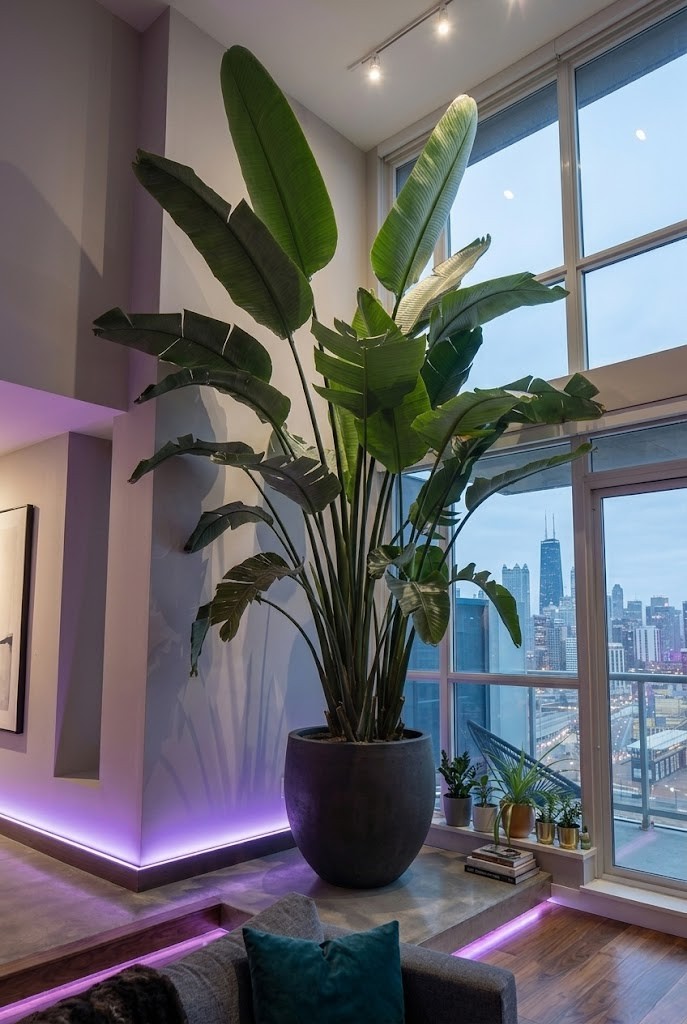
If you want that “hotel lobby” energy at home, start here. Bird of paradise has tall stems, oversized leaves, and the kind of shape that pulls a corner into focus fast.
Put it in a sunny spot by a big window or patio door, where the leaves have room to open without crowding your main walkway. It works especially well behind an accent chair, near a low media console, or in the corner that always shows up in photos.
Strong, steady light is what keeps it looking bold instead of stretched and tired.
#2 — Rubber Plant (Ficus elastica)
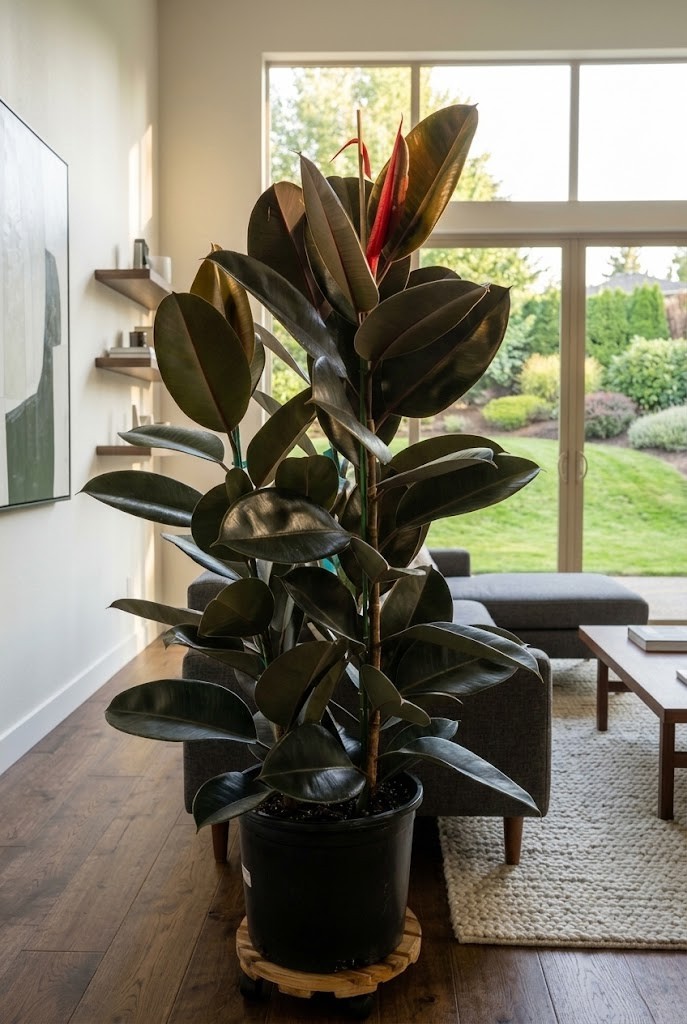
A rubber plant gives you height without the sprawl. The thick stems and glossy leaves make it feel polished right away, which is why it works so well beside a sofa arm, near a console, or in a tight corner that needs structure.
It’s especially useful in apartments and condos, where one floor plant often has to do a lot without taking over the room.
Let the potting mix dry down between waterings. Constantly wet soil is what usually starts the leaf drop.
#3 — Fiddle-Leaf Fig (Ficus lyrata)
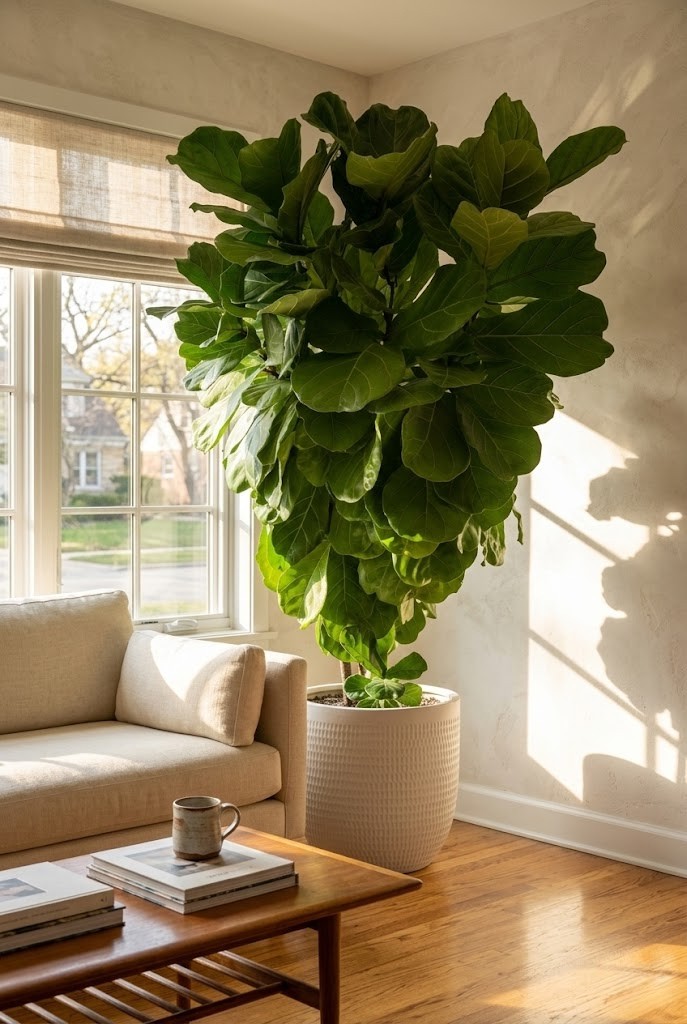
In the right spot, a fiddle-leaf fig looks like living architecture—tall trunk, big violin-shaped leaves, and that instantly recognizable “design icon” outline. It’s strongest as a statement in a bright corner where it can sit a little away from traffic, like beside a credenza or at the end of a sectional.
The key in real homes is consistency: pick one good window zone and let it settle.
Sudden moves (or big light changes) can trigger leaf drop, even when the plant is otherwise healthy.
#4 — Ficus Audrey (Ficus benghalensis)
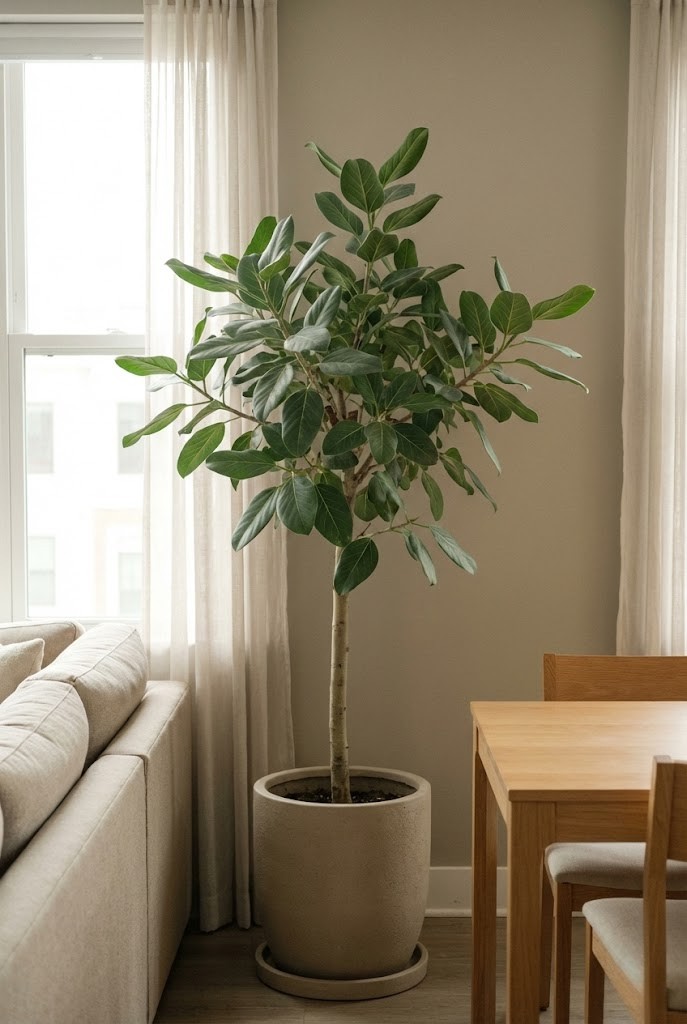
Audrey is the calmer choice in the ficus world—matte, velvety leaves and a tree-like shape that still reads “statement.” It’s especially good in minimal spaces where you want one strong vertical element without a lot of visual noise.
Place it near a bright window where you’d normally put a floor lamp, then give it a little breathing room from the glass. In open layouts, it can also act like a gentle divider between the living area and dining nook.
It grows more evenly when the light is steady, so it’s worth finding one great spot and keeping it there.
#5 — Monstera deliciosa (trained up a moss pole)
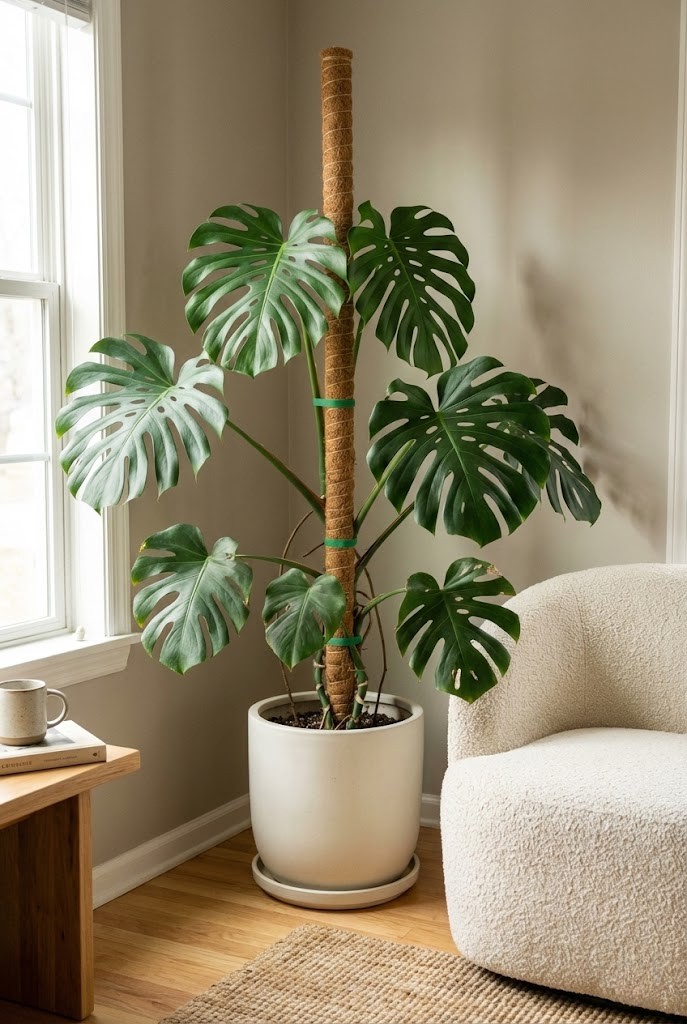
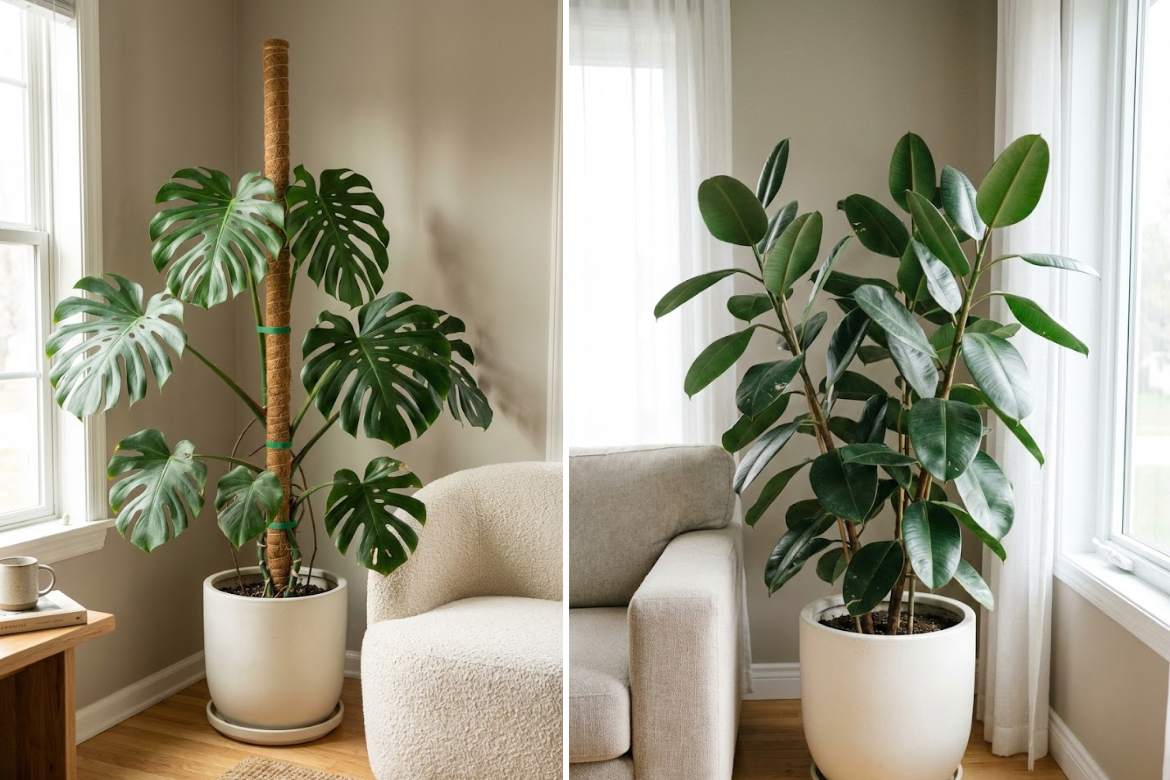
A big monstera brings instant lushness—split leaves, dramatic shadows, and a backdrop effect that makes a room feel layered. Trained up a moss pole, it reads taller and more intentional (less sprawl, more statement), which is perfect beside a bookcase or behind an accent chair.
In smaller spaces, think “vertical jungle”: you get height without losing the whole floor.
Give it something to climb and it’s more likely to size up its leaves over time.
#6 — Split-Leaf Philodendron (Thaumatophyllum bipinnatifidum)
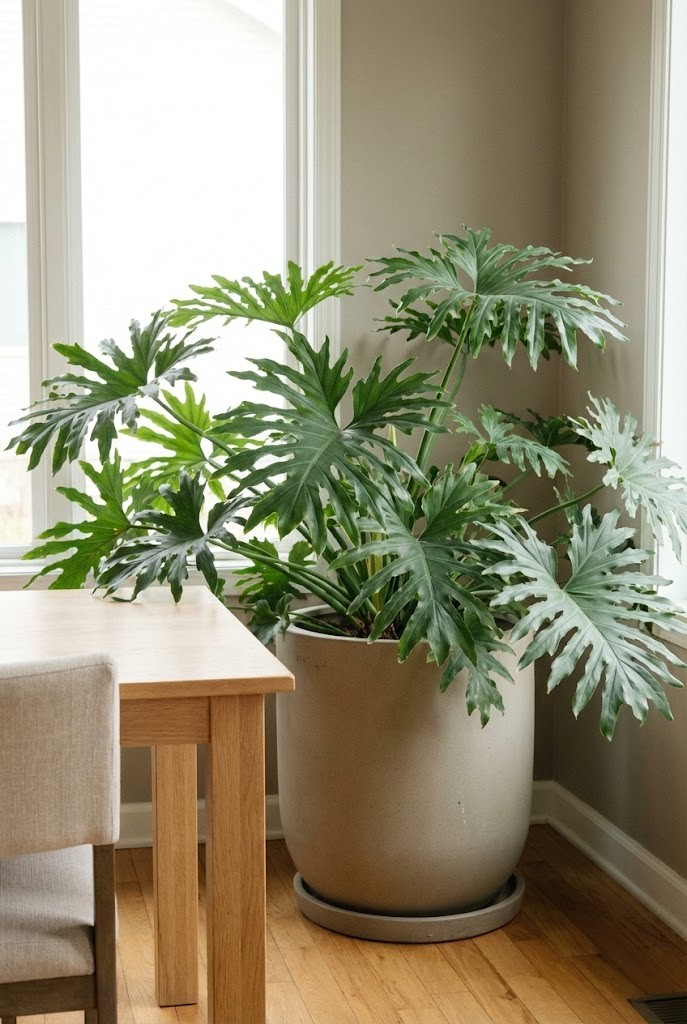
This one is all about dramatic texture—deeply cut leaves that fan out and fill a space with a tropical feel. It looks best where it has room to show off, like the open side of a living room near low furniture, or at the edge of a dining area to soften hard lines.
If your room feels a little too angular, this plant adds movement without adding more decor.
Plan for width—its leaves can spread several feet as it matures.
#7 — Money Tree (Pachira aquatica) — large braided form
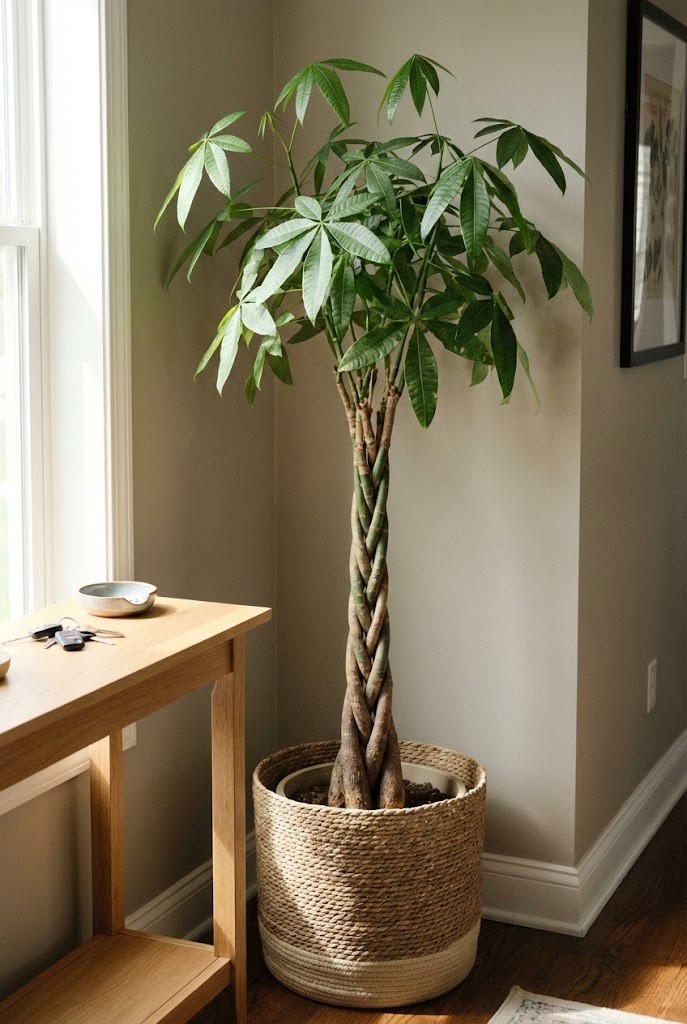
A large money tree gives you height without the heaviness of broader foliage. The braided trunk looks finished right away, and the lifted canopy keeps the overall shape airy instead of bulky.
It works especially well beside an entry console, between windows, or in a smaller living room where a denser plant would start to feel crowded.
Rotate the pot occasionally so the canopy does not lean hard toward the window.
#8 — Umbrella Tree (Schefflera actinophylla)
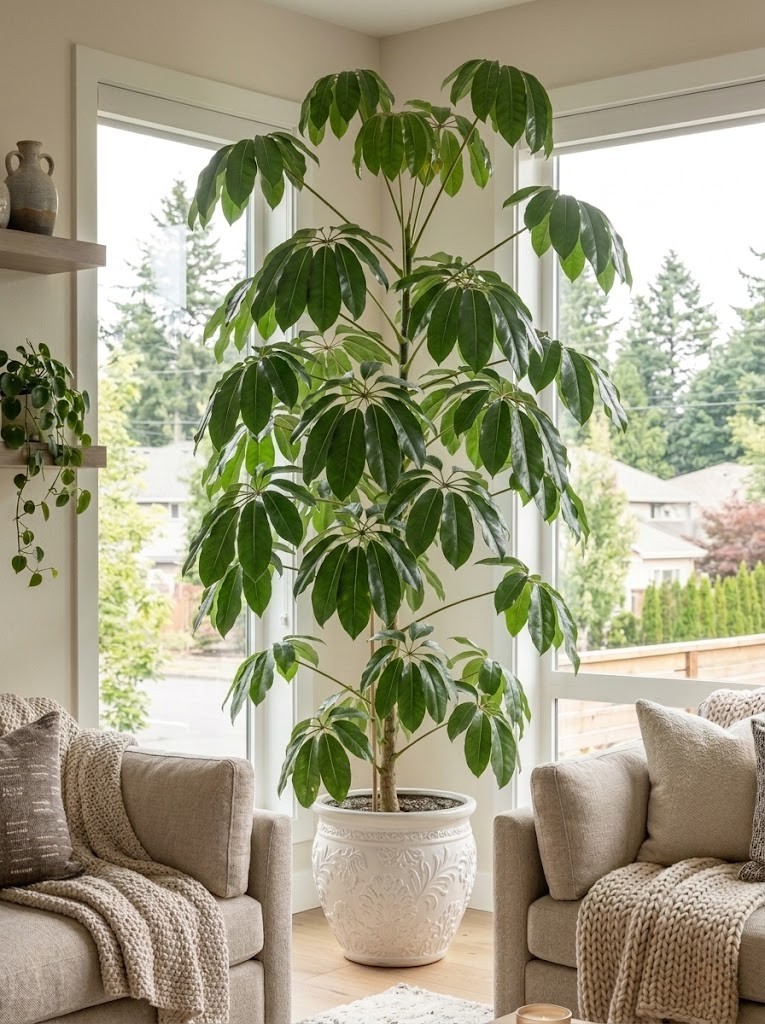
An umbrella tree reads full and generous—clusters of glossy leaflets that create a rounded canopy. It works beautifully in a bright corner where you want volume, especially beside a sideboard or at the end of a sofa where the room needs height above the furniture line.
It’s a great “fill the corner” tree because it can look lush even before it’s perfectly tall.
It does best with bright light, but hot direct sun in a harsh window can scorch leaves.
#9 — Weeping Fig (Ficus benjamina)
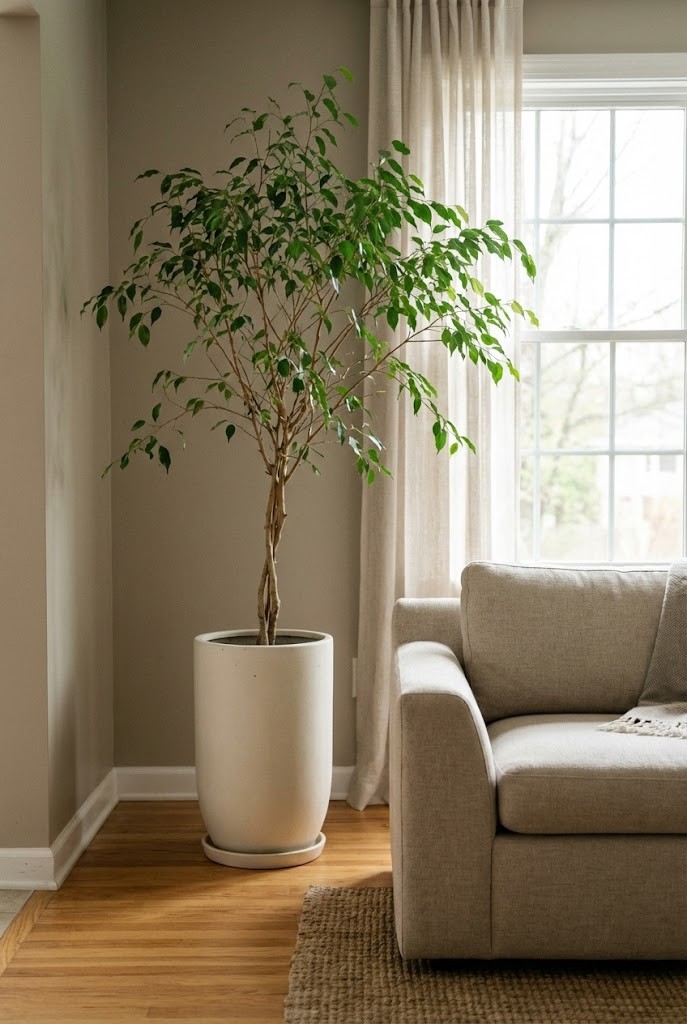
A weeping fig gives you a softer, more classic kind of height. The fine branching and small leaves fill space without one oversized leaf taking over the room.
It works especially well behind a lounge chair, near a bookcase, or in an open-plan living room where you want greenery that does not block the view.
Once it settles into a good spot, leave it there. Frequent moves are one of the fastest ways to trigger leaf drop.
#10 — Corn Plant “Mass Cane” (Dracaena fragrans)
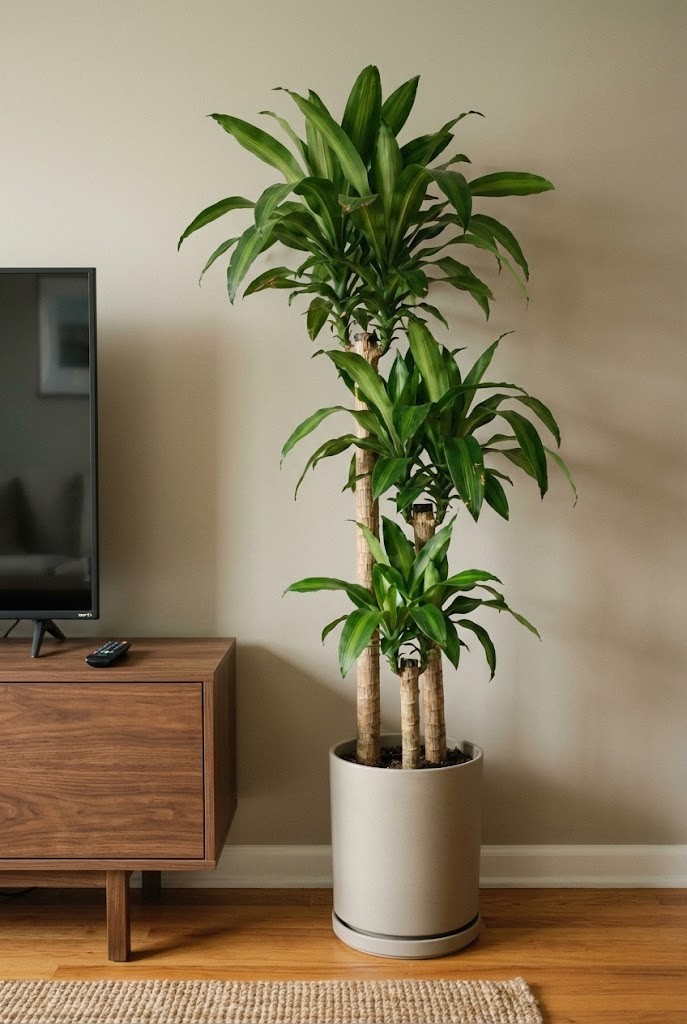
Mass cane is upright, tidy, and easy to place, which is exactly why it works so well in narrow spots. The thick canes and tufted tops give you visible height without the wide spread of a palm or philodendron.
It fits best in entry corners, hallways, or beside a media console where a floor plant needs to stay contained.
It handles medium light better than many large houseplants, but a dim corner will keep it looking smaller and slower.
#11 — Dragon Tree (Dracaena marginata)
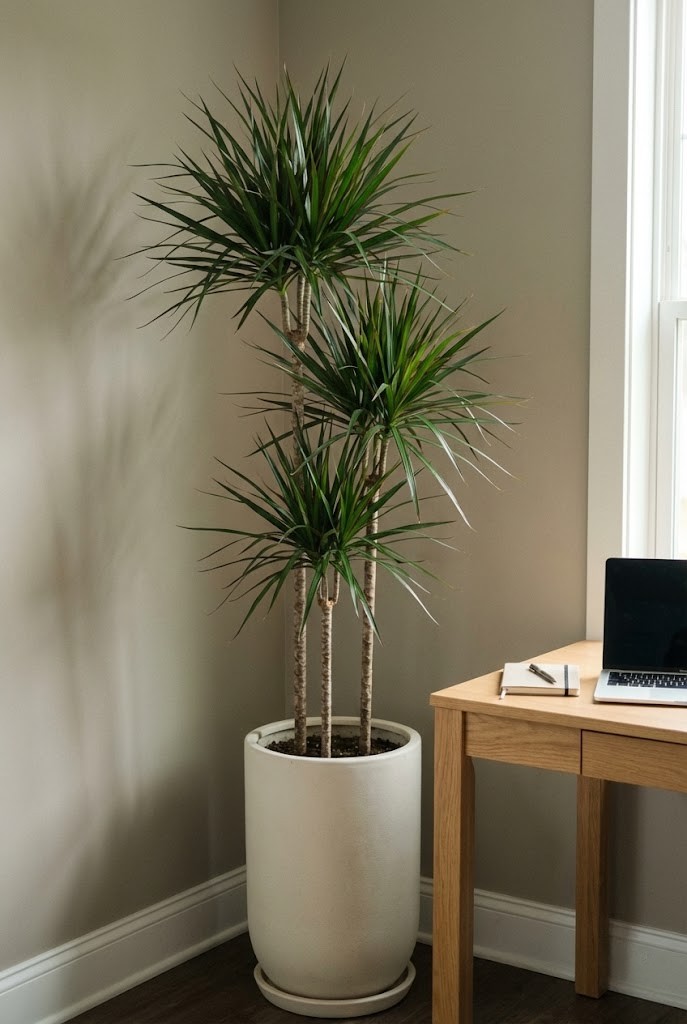
A dragon tree gives you height with a sharper, more architectural edge. The thin trunks and spiky leaves add line and structure without the heavier look of broader foliage.
It works especially well near a desk, beside a bar cart, or in a bedroom corner where you want something tall that still feels light.
Let the mix dry well between waterings. Too much water is usually what throws it off.
#12 — Yucca Cane (Yucca elephantipes)
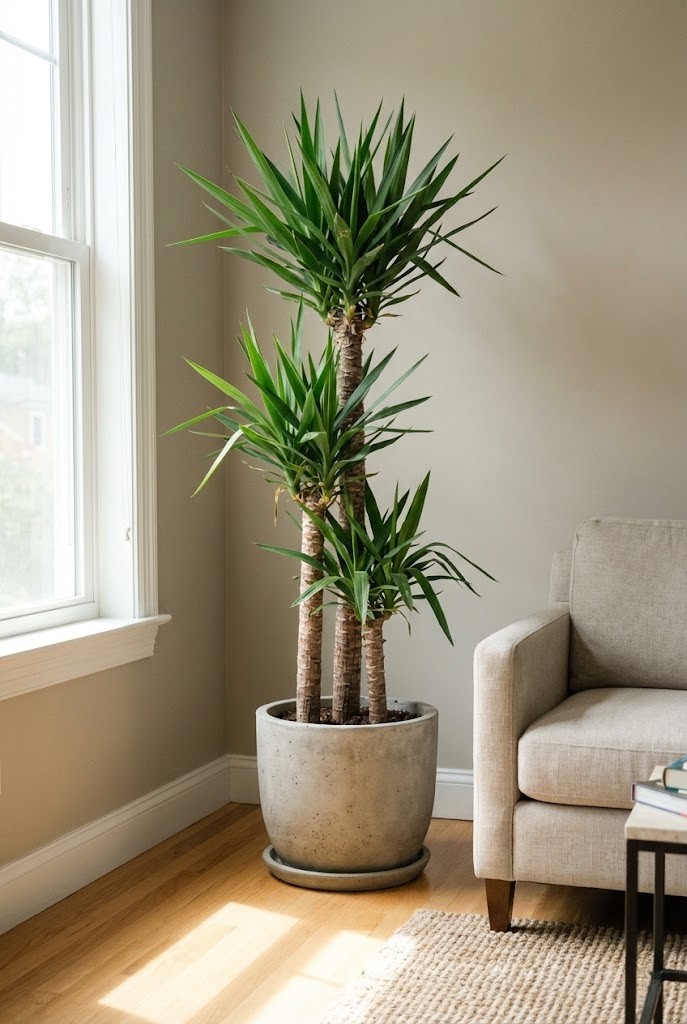
Yucca cane is all clean lines—sturdy trunk, spiky rosettes, and a silhouette that feels almost sculptural. It looks best where you’d normally put a floor lamp: beside a sofa, near a reading nook, or in a bright corner that needs structure.
It’s a strong match for modern and mid-century interiors because it stays upright and doesn’t visually spill into the room.
It prefers bright light and is happiest when it isn’t watered too often.
#13 — Areca Palm (Dypsis lutescens)
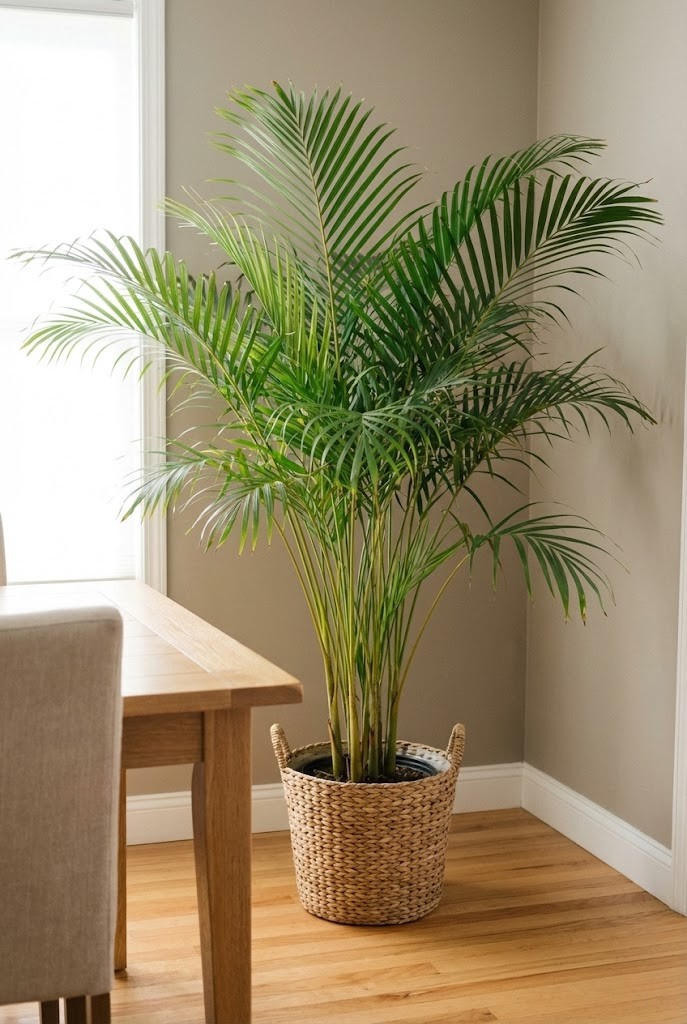
An areca palm brings a soft curtain of green—multiple canes, feathery fronds, and movement that makes a room feel lighter. It’s perfect for bright corners where you want volume without heaviness, like beside a dining table or behind a sectional where it can act like a living screen.
In smaller spaces, it’s a great background plant: it fills the frame in photos, but it doesn’t read bulky.
Dry indoor air shows up fast as crispy tips, so added humidity helps it stay lush.
#14 — Kentia Palm (Howea forsteriana)
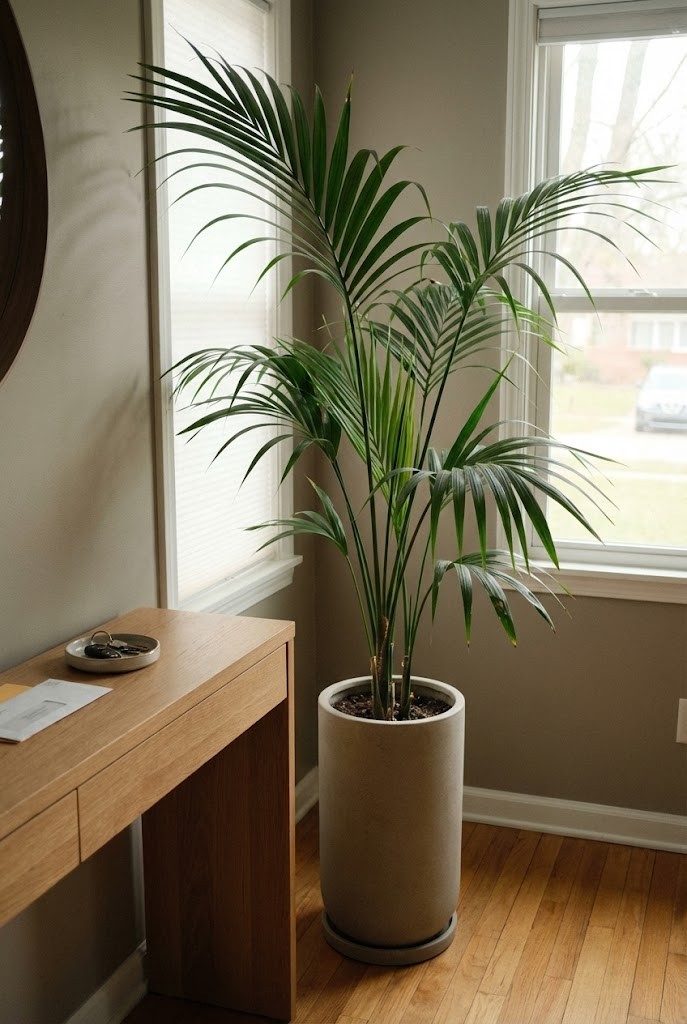
Kentia palm has a quieter, more refined presence than most palms. The arching fronds feel elegant without turning fluffy, which makes it a strong fit when you want a statement plant that still feels calm.
It works especially well near a large window with filtered light, or in a corner where a bolder plant would feel too loud.
It grows slowly, so buy the size you want instead of waiting for a small one to catch up.
#15 — Olive Tree (Olea europaea) — indoor container-grown
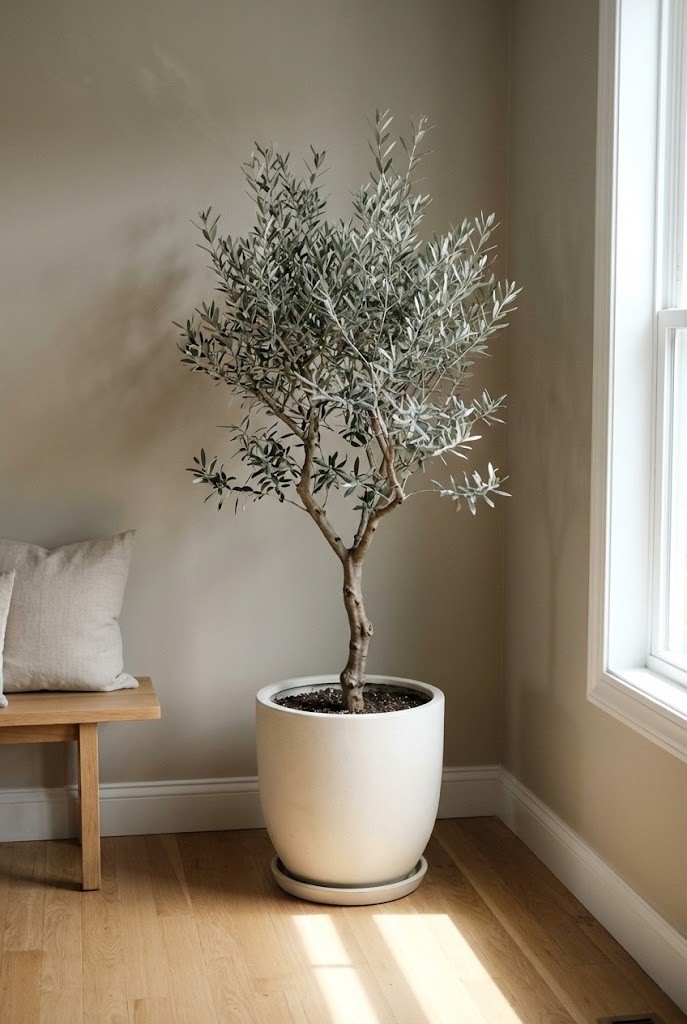
An indoor olive tree brings that Mediterranean, sun-washed look—silvery leaves, a sculptural trunk, and a calm, collected vibe that pairs beautifully with light woods and neutral textiles. It looks best near your brightest window, like beside a breakfast nook or right by a glass door where it feels like part of the architecture.
This is a placement-first plant, not a “wherever” plant.
It needs several hours of direct sun every day to hold its leaves and stay healthy.
Closing: pick your statement plant by light (and by real life)
Light check: stand where you want the plant at midday. If you can read comfortably there without turning on a lamp, you’re in the bright zone. If that spot still feels dim, go with a plant that handles medium light better.
Then check the floor plan. The best statement plant is the one that can stay put, suit the room, and keep looking good month after month.
If your space gets strong bright light, start with Bird of Paradise, Fiddle-Leaf Fig, Ficus Audrey, or Olive Tree. If your light is bright but indirect, Monstera, Split-Leaf Philodendron, Rubber Plant, and the palms usually feel easier to live with.
And if your home runs on routines like heat, AC, busy weeks, and missed waterings, match the plant to that rhythm too. A great floor plant only works if it can keep working in your real life.
Found this helpful? Save it for later!