Table of Contents
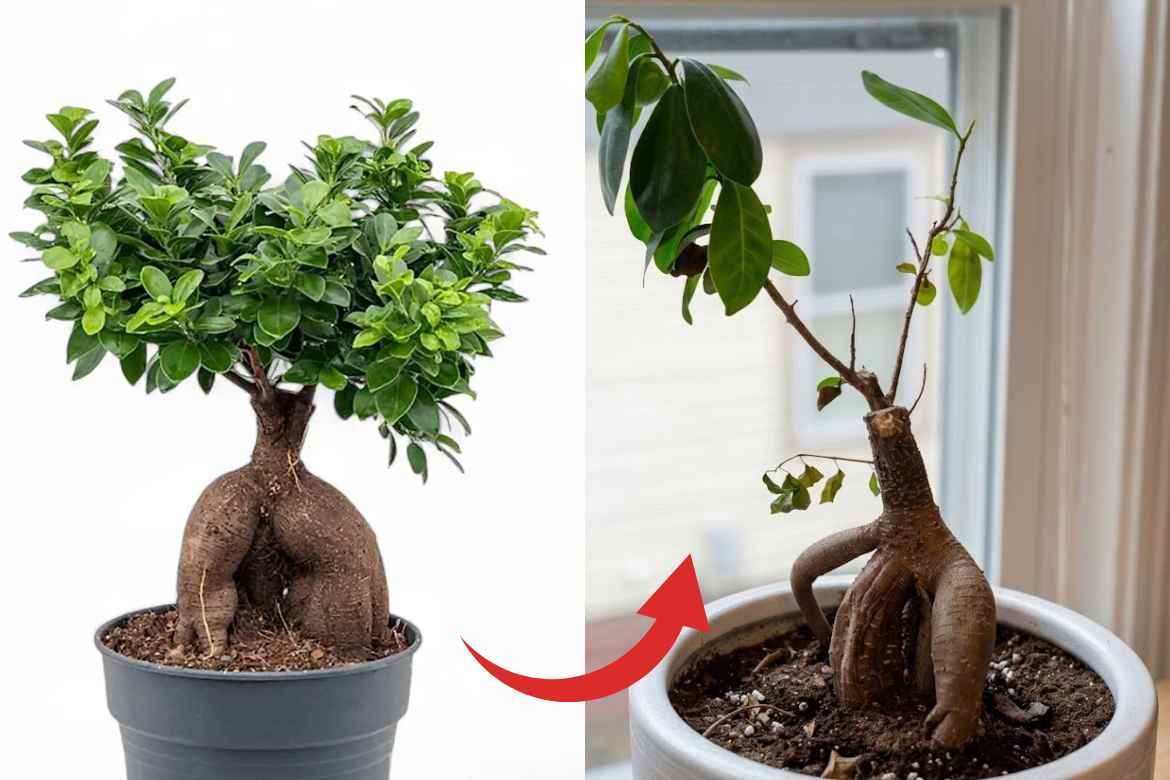
A ficus ginseng bonsai usually declines slowly before it gets bad enough for people to notice. The first signs are easy to brush off: a few yellow leaves after watering, thinner growth on one side, soil that never seems to dry properly in winter.
Most problems start indoors, where light shifts seasonally and dense bonsai soil stays wetter than owners realize. By the time the tree starts dropping leaves heavily, the roots have often been stressed for weeks.
1. Watering on a Fixed Schedule
A lot of struggling ficus bonsai are simply staying wet too long between waterings.
The pattern is usually subtle at first: a few yellow leaves every week, soft leaf drop after watering, or a pot that still feels heavy several days later. In winter, the surface may look dry while the center of the soil still feels damp underneath.
That’s where people get into trouble. Drooping leaves look like thirst, so the tree gets watered again before the roots have recovered from the last soaking.
Instead of watering by routine, check deeper in the pot before adding more water. Dense nursery soil dries unevenly, especially indoors.
2. Leaving It in Dense Nursery Soil
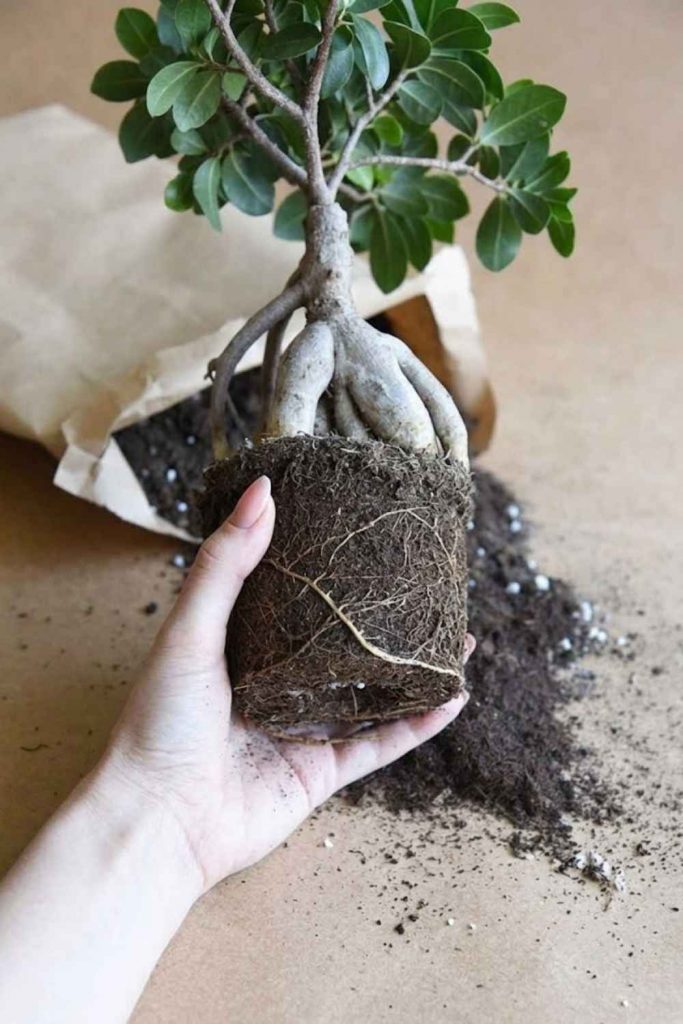
Many ficus ginseng bonsai outgrow the soil they came in.
At first, the changes are easy to miss:
- water sits briefly on the surface
- the middle of the pot stays damp for days
- lower leaves yellow more often
- growth gradually slows
Old peat-heavy soil tends to compact indoors, where airflow and evaporation are already limited. Once the center stays wet too long, small watering mistakes become much harder for the tree to tolerate.
Repotting into a coarse bonsai mix usually makes watering more predictable. The goal is a mix that dries evenly instead of staying soggy in the middle for days at a time.
3. Moving the Tree Too Often
Ficus often reacts to indoor light changes a few days after they happen.
A tree that looked stable for months may suddenly start shedding leaves after being moved closer to a brighter window, shifted between rooms, or carried outdoors for a weekend.
Because the leaf drop shows up later, the real trigger is easy to miss.
This tends to happen most during:
- seasonal decorating
- winter heating season
- temporary outdoor placement
- rearranging furniture near windows
Once a ficus settles into a bright location, it usually responds better to consistency than constant adjustment.
4. Treating “Low Light Tolerant” as Low Light Friendly
Credit: Reddit
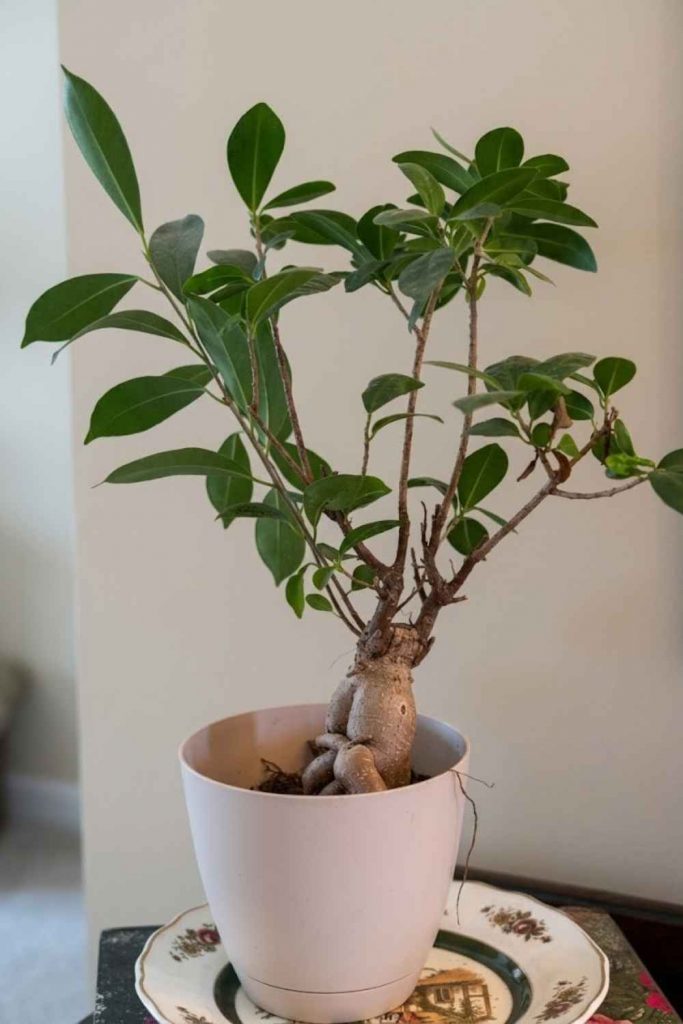
Ficus ginseng can survive in moderate indoor light, but weak light slowly changes how the tree grows.
The decline is rarely dramatic at first:
- longer gaps between leaves
- thinner branching
- oversized new leaves
- slower recovery after pruning
- soil staying wet much longer than it used to
That’s why watering problems often show up in winter even when the routine never changed.
In most homes, a bright east-facing window or a spot near filtered southern light is usually more reliable than a dark interior corner. If winter light stays weak for long stretches, a grow light can help stabilize growth.
5. Letting Cold Drafts Reach Wet Roots
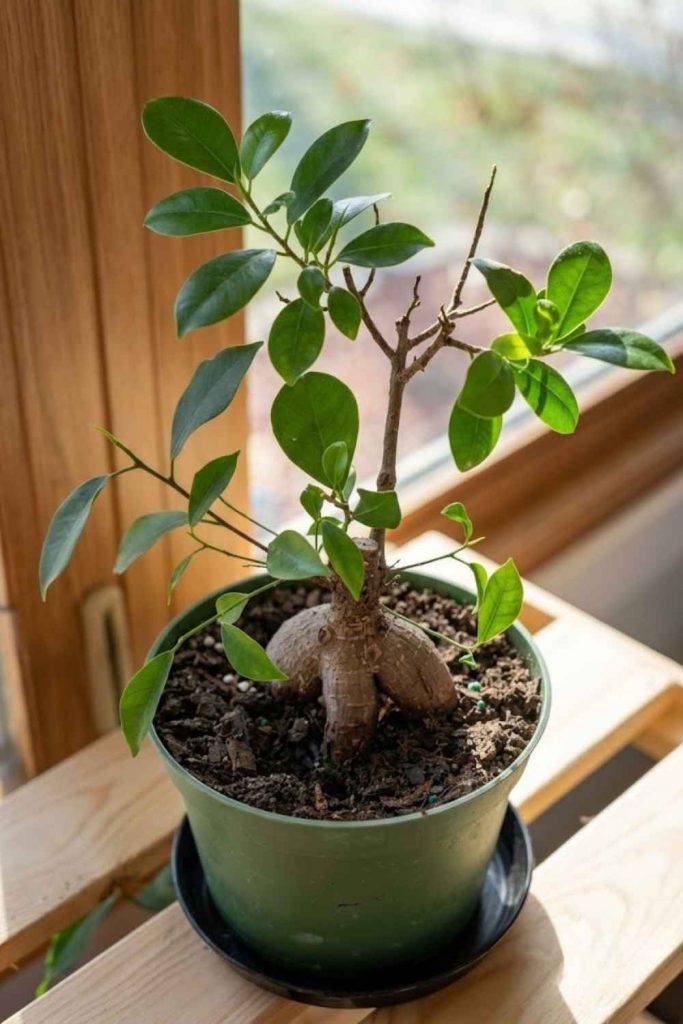
Cold damage indoors often shows up a day or two after the exposure happens.
Leaves suddenly yellow, soft leaf drop increases, and growth stalls even though the watering routine stayed the same. Many ficus struggle this way near drafty windows, exterior doors, or cold windowsills during winter.
Cold, wet soil keeps roots sluggish for too long. Trees already sitting in dense soil usually show stress fastest.
6. Repotting Too Aggressively
Healthy ficus usually handle root work well during active growth. Problems tend to start when already-stressed indoor trees go through heavy root pruning, full soil replacement, and branch pruning all at once.
Some trees bounce back quickly. Others start shedding leaves almost immediately and stall for weeks afterward.
Common signs of repotting stress include:
- rapid leaf drop
- wrinkled leaves despite moist soil
- branch tips drying back
- little or no new growth afterward
Late spring into early summer is usually the safest time to repot indoors, when light levels and growth are stronger.
7. Missing the Early Signs of Root Rot
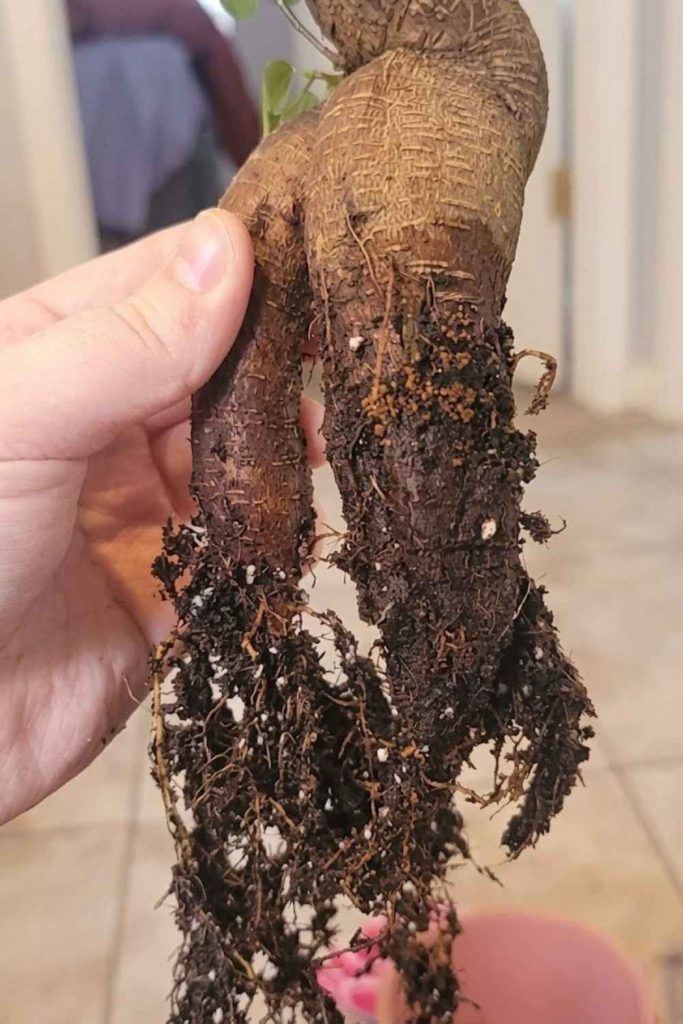
Root rot usually starts quietly.
One branch weakens first. Leaves lose some of their shine. The pot suddenly stays wet far longer than it used to. Some owners notice a stale smell near the drainage holes after watering.
By the time branches become brittle or the trunk softens, the damage is often advanced.
Healthy ficus roots should feel firm and pale. Dark roots that feel mushy or fall apart easily are already decaying.
Most recovery depends on changing the conditions that caused the problem in the first place: compacted soil, poor airflow around the roots, and moisture lingering too long between waterings.
FAQs
Why does my ficus ginseng drop leaves every winter?
Indoor light levels usually fall more than people expect during winter, while cooler temperatures slow evaporation from the soil. Together, those changes keep roots damp longer and increase stress around the root system.
Why is the soil dry on top but still wet underneath?
This is common in dense or aging bonsai soil. The upper layer dries first while the middle of the root ball stays compact and damp.
Can a ficus ginseng recover after losing most of its leaves?
Often, yes. If branches still bend slightly and show green tissue beneath the bark, the tree may still push new growth once conditions stabilize. Recovery is usually slower during winter.
Should I mist a ficus ginseng bonsai?
Light misting may briefly help in very dry indoor air, but it does little to change overall humidity around the plant. Stable light and careful watering habits usually matter much more.