Table of Contents
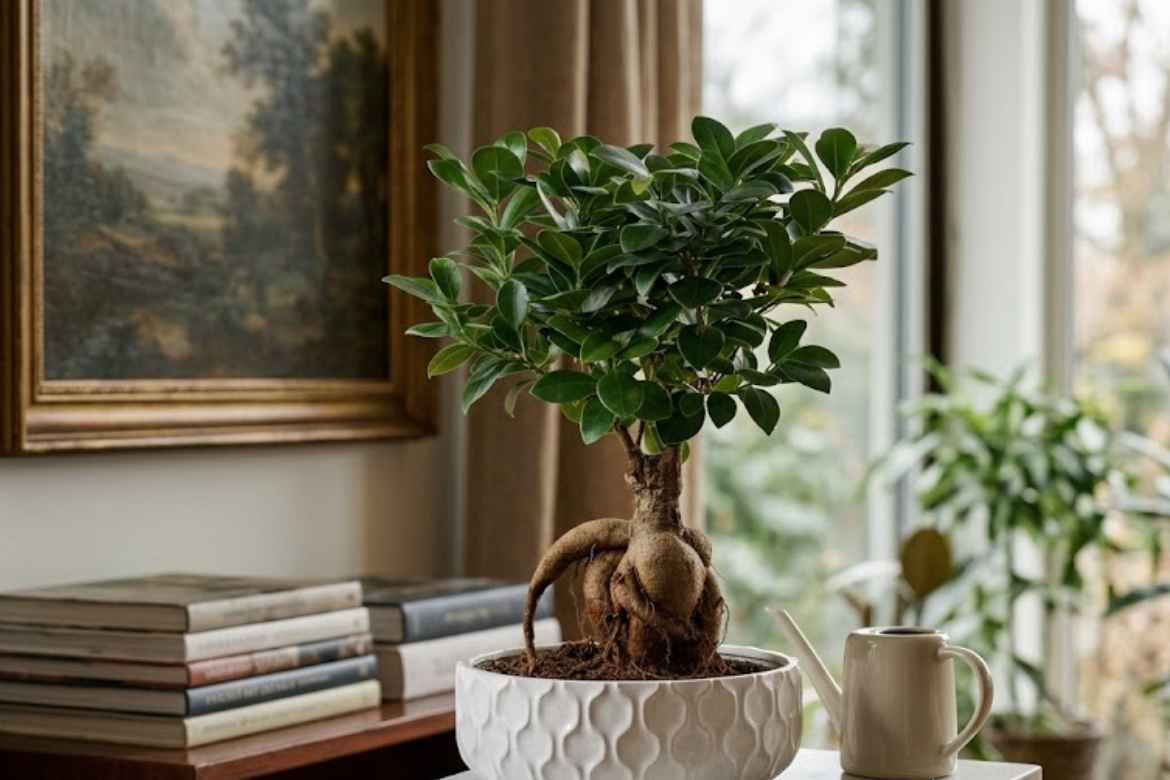
Ficus Ginseng (Ficus microcarpa ‘Ginseng’) is a striking entry point into the ancient art of bonsai, celebrated for thick, exposed roots that mimic weathered forest giants.
Despite its tiny scale, this hardy specimen is a vigorous tropical tree that adapts well to indoor growing when given consistent, basic care.
Unlike many more demanding bonsai species, a Ficus Ginseng is remarkably resilient.
Maintaining a lush, balanced canopy depends on a few environmental choices and seasonal habits that typically determine your miniature tree’s long-term success.
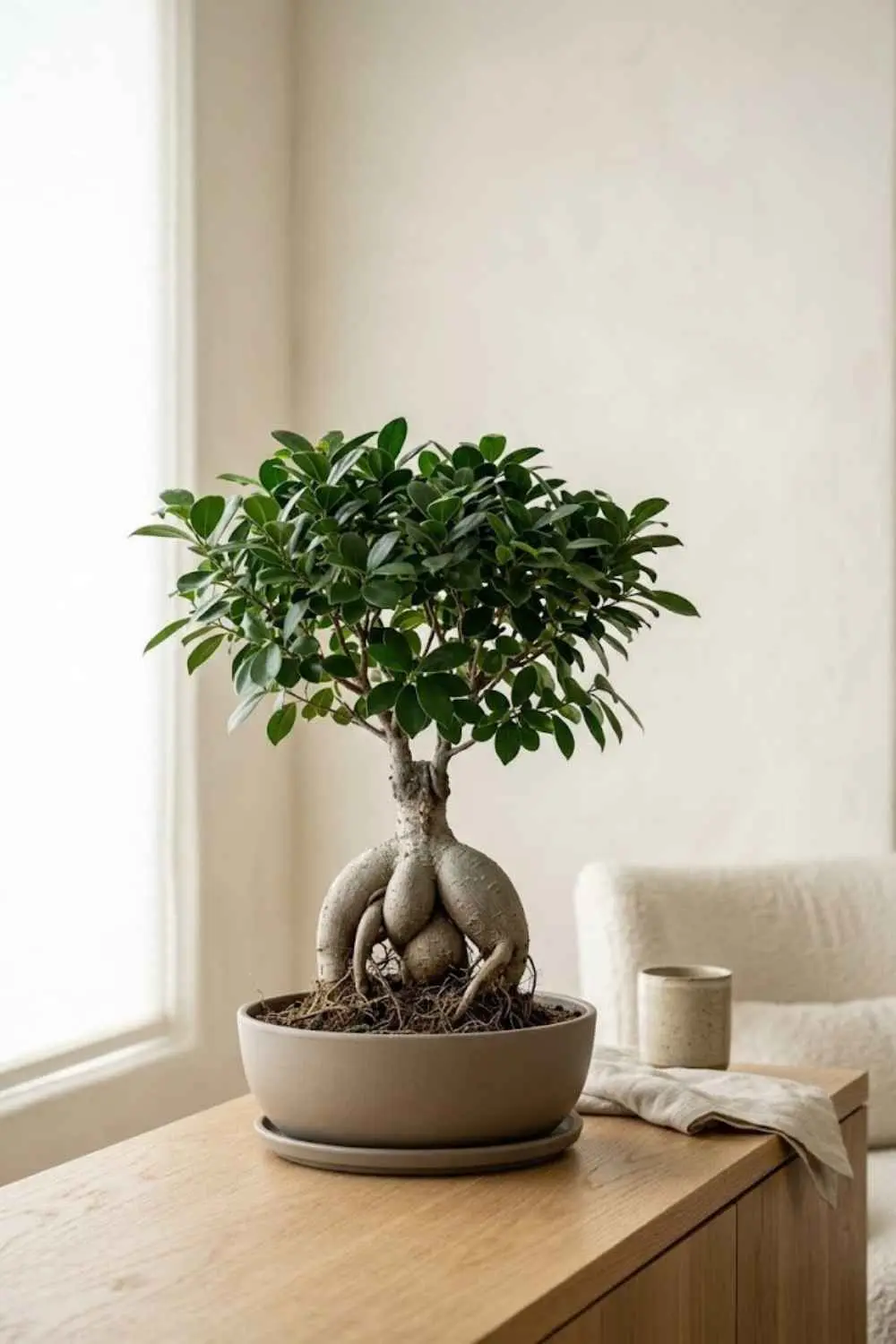
1. Plant in a coarse, gritty substrate
Your foundational setup begins with the soil, which must drain well due to the shallow nature of bonsai planters. Standard potting soil can retain too much moisture in a shallow bonsai container.
House your tree in a dedicated bonsai mix containing materials like akadama, pumice, or lava rock so excess water can run through the pot freely, keeping the roots healthy.
2. Position it for bright, consistent light
Your bonsai requires substantial light to maintain its compact appearance.
Ficus Ginseng grows best near a bright window where it can receive plenty of indirect light throughout the day, and it can typically tolerate a little direct morning sun once acclimated.
Insufficient lighting often prompts the tree to produce larger foliage, altering its classic silhouette.
3. Learn the weight of your bonsai pot
Watering a bonsai is more of an art than a rigid calendar schedule.
Because bonsai pots are so shallow, checking moisture by inserting a finger into the dirt is often impractical since coarse bonsai soil dries out differently than standard potting mixes.
The better approach: Gauge the moisture by lifting the pot. A container that is beginning to dry out feels noticeably lighter than one that has just been watered.
When the pot starts to feel light, soak the soil thoroughly until water flows from the bottom drainage holes.
4. Provide elevated ambient humidity
Ficus Ginseng tolerates typical household humidity but benefits from higher humidity, especially in dry indoor environments.
Elevated moisture levels support healthier foliage development, overall vitality, and the growth of characteristic aerial roots.
Placing the pot on a shallow tray filled with pebbles and water helps raise local humidity, provided the bottom of the container sits safely above the water line to avoid waterlogging the soil.
5. Rotate for an even canopy
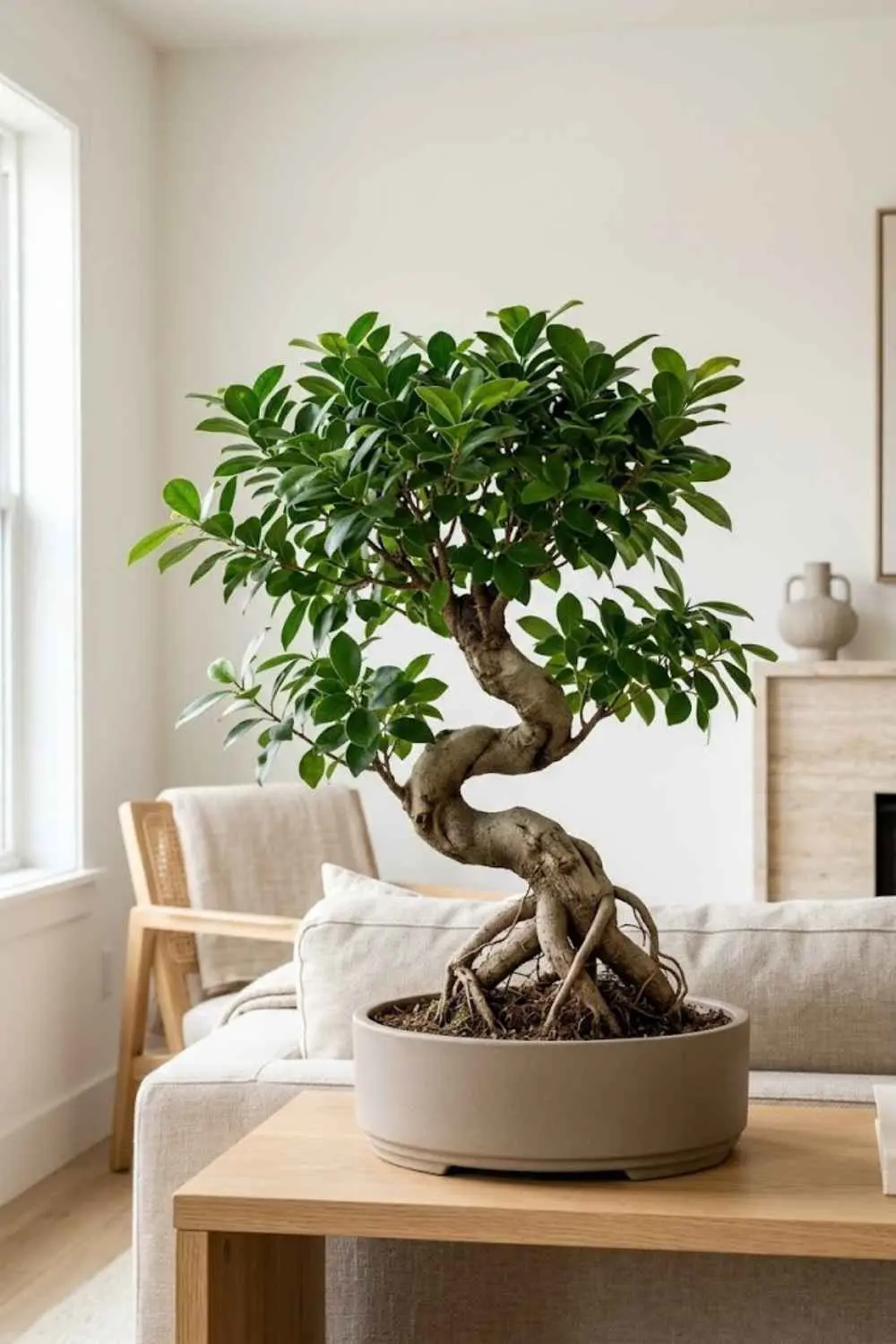
Give the pot a quarter-turn every few weeks.
This simple habit gives different sides of the canopy more even exposure to light over time, helping to maintain the tree’s symmetry and encouraging a more balanced canopy.
6. Prune regularly to maintain the shape
Left to grow freely, a Ficus Ginseng will lose its classic bonsai silhouette as branches stretch toward the light.
To encourage branching and maintain a tight, bushy canopy, prune back the shoots during the active spring and summer months.
Allow new shoots to develop several leaves, then cut them back to maintain the desired shape and keep the foliage dense.
7. Shield it from climate shocks
Keep your miniature tree away from drafty exterior doors, cold winter windowsills, and the direct airflow of heating or air conditioning vents.
Ficus Ginseng does best in a stable year-round climate, with a comfortable indoor range between 65°F and 80°F, and can react poorly to sudden temperature shifts.
8. Feed modestly during the growing season
Because the volume of soil in a bonsai pot is incredibly small, the plant relies on you to replenish its nutrients.
Use a balanced liquid fertilizer according to the label’s directions for bonsai or houseplants.
Apply it every few weeks during active spring and summer growth when the tree is actively pushing out new green shoots.
9. Adapt your care for the winter light shift
When shorter days reduce indoor light, Ficus Ginseng often grows more slowly. Your care routine helps the tree most when it adjusts to match this seasonal slowdown.
Reduce or pause feeding during winter, and adjust your watering frequency based on how quickly the soil dries, as the potting mix typically takes much longer to dry out during the cooler months.
FAQs
Why is my Ficus Ginseng suddenly dropping healthy green leaves?
Foliage drop is typically a reaction to a sudden change in environment.
If you recently moved the tree to a new room, brought it indoors for the season, or exposed it to a cold draft, it may shed leaves.
Maintaining consistent care in a stable spot gives the tree the best chance to recover and produce new growth.
Can I grow my Ficus Ginseng bonsai outdoors?
It can spend the summer months outdoors in a bright, sheltered spot once nighttime temperatures stay reliably above 60°F.
However, it helps to gradually acclimate it to outdoor light and bring it back inside well before the first autumn chill, as the tree cannot tolerate frost.
How do I know when it is time to repot my bonsai?
Ficus Ginseng is commonly repotted every two to three years in spring, but the timing can vary with the tree’s growth and root development.
Look for roots thickly filling the container or growing through the bottom drainage holes.
Another supporting clue is a potting mix that has broken down and compacted over time, which prevents water from draining as freely as usual.