Table of Contents
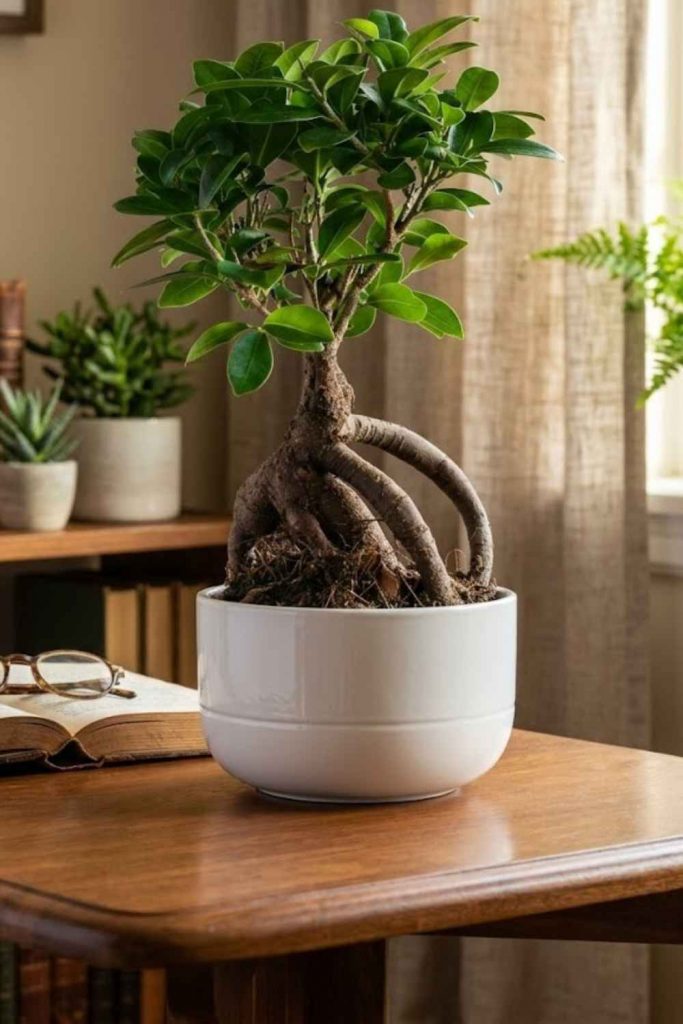
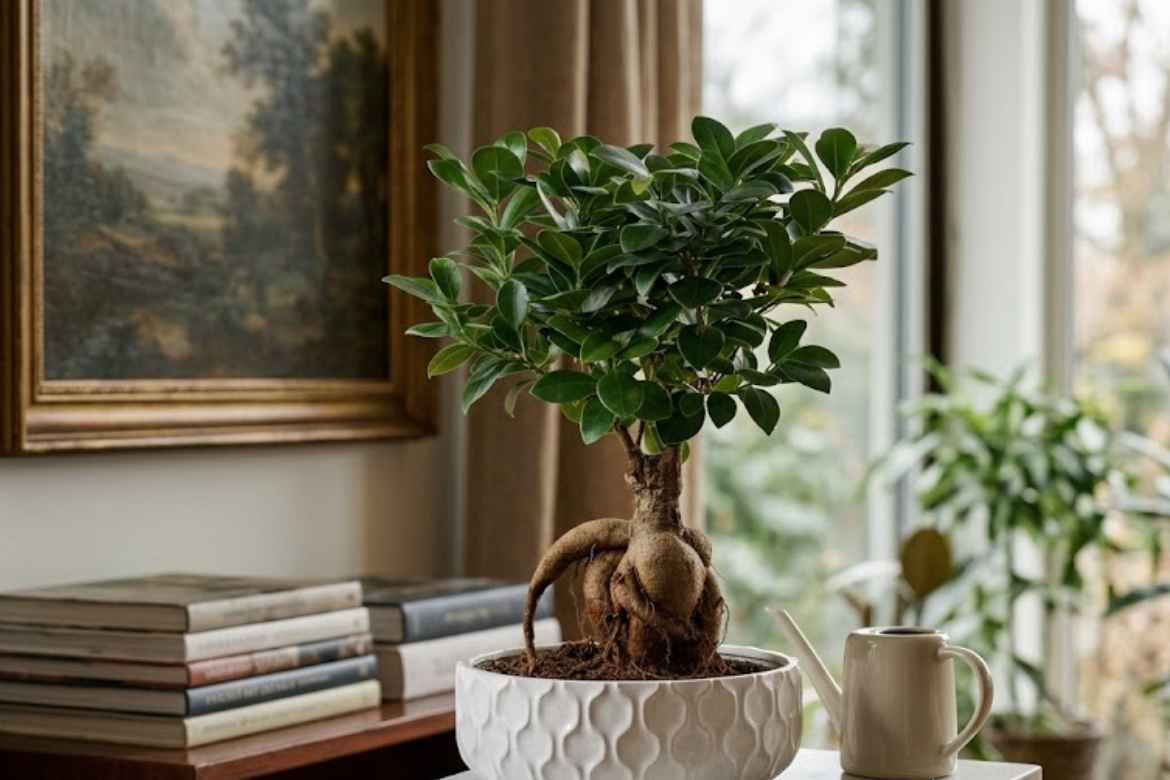
With its thick, exposed roots and a dense canopy of glossy foliage, the Ficus Ginseng Bonsai (Ficus microcarpa) is one of the most striking yet approachable choices for indoor gardening.
It offers the classic, sculptural beauty of an ancient bonsai tree without requiring decades of specialized training or the finicky care routines often associated with traditional specimens.
While it looks exotic, this sturdy plant is a resilient member of the fig family.
It is an exceptional choice for beginners who want to explore the art of bonsai, as well as experienced plant parents looking for a structural statement piece for a bright tabletop or desk.
Plant Snapshot
- Common Name: Ficus Ginseng, Ginseng Ficus, Banyan Fig
- Botanical Name: Ficus microcarpa
- Plant Type: Broadleaf evergreen tree
- Mature Size: 12 to 24 inches indoors
- Light Needs: Bright, indirect light; tolerates morning sun
- Water Needs: Moderate; allow the top layer of soil to dry out
- Soil Preference: Highly aerated, well-draining bonsai mix
- Toxicity: Toxic to pets (milky sap)
What Matters Most for Success
To keep your Ficus Ginseng vibrant, focus on three simple factors: consistent light, good drainage, and environmental stability.
First, this tropical native craves light and can decline in dark corners.
Second, while it loves moisture, its thick roots store water and can rot if left sitting in stagnant, saturated soil.
Finally, this plant dislikes sudden changes. Moving it frequently or exposing it to drafts causes stress that often results in a sudden drop of healthy leaves.
Light Requirements
The Ficus Ginseng thrives best in bright, indirect sunlight, but it happily tolerates a few hours of direct morning sun. An ideal location is within a few feet of an east-, west-, or south-facing window.
In indoor gardening, “bright, indirect light” simply means a space flooded with daylight where the sun’s rays do not directly strike the leaves—think of a windowsill shielded by a sheer curtain.
While the tree can survive in medium light, its growth will slow down significantly, producing larger, thinner leaves and longer, leggy stems as it stretches toward the window.
Avoid placing it in intense, scorching afternoon sun during the peak of summer, which can burn the foliage.
Additionally, if you place it near a south-facing window in the winter, move it back a bit if the glass becomes ice-cold or if a radiator sits directly beneath it.
Watering
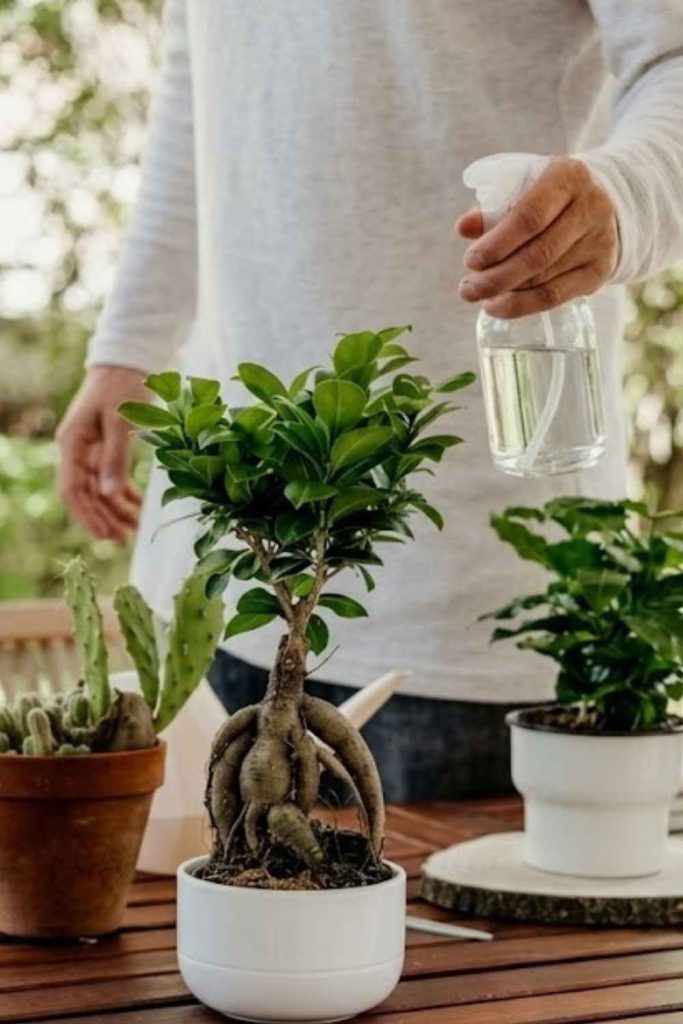
Watering a Ficus Ginseng is an intuitive process based on soil feel rather than a calendar. The thick, bulbous roots function as a minor reservoir, giving you a slightly wider margin of error than traditional bonsai, but they still require consistent hydration.
Pour water evenly over the soil until it runs out of the bottom drainage holes, then empty the tray after 10 minutes.
The depth to which the soil should dry depends entirely on your container choice:
- In standard houseplant pots, allow the top two inches of soil to dry out completely.
- If your tree is housed in a traditional, shallow bonsai container, let only the top inch dry out to prevent the compact root system from desiccating.
Always press your finger deep into the dirt to check the moisture level rather than judging only by the surface appearance.
When a Ficus is overwatered, the leaves turn a pale, limp yellow before dropping, and the lower trunk may feel soft. Underwatering shows up as brittle, brown leaf tips followed by a general shedding of dry foliage.
Soil and Potting Mix
Because root rot is one of the most common ways to injure a Ficus Ginseng, the potting medium must prioritize drainage and aeration. Standard potting soil retains far too much moisture.
Instead, use a commercially prepared bonsai mix containing akadama, pumice, or lava rock.
If you prefer to mix your own, a combination of two parts potting soil, one part pumice or lava rock, and one part coarse builder’s sand works beautifully. While perlite is a common amendment, heavier volcanic stones provide better stability for top-heavy specimens.
Traditional shallow ceramic pots keep the root system compact, but standard terracotta or plastic containers work equally well—provided they have functional drainage holes.
Temperature and Humidity
The Ficus Ginseng prefers warm, stable temperatures between 60°F and 80°F, and cannot tolerate exposure below 55°F. Keep the tree away from air conditioning vents, cold winter windows, and radiators.
While the tree tolerates standard home humidity, it flourishes with a bit of extra moisture.
If your indoor air is dry, you can place the pot on a tray filled with pebbles and water, ensuring the bottom of the pot rests on the stones above the water line to prevent waterlogging.
Fertilizing
The restricted soil volume of a bonsai pot means your tree relies entirely on you for nutrients.
Feed your Ficus Ginseng once a month from spring through early autumn using a balanced, water-soluble houseplant fertilizer diluted to half-strength. Feeding at full strength in a small pot can scorch the roots.
Stop fertilizing completely during the late autumn and winter months when growth naturally slows down.
Pruning and Maintenance
Pruning is essential to maintain the compact bonsai silhouette. Left untrimmed, the branches will grow long and unruly, losing their manicured shape.
Plan major structural pruning for the spring.
Use clean shears to trim back branches, allowing a shoot to grow out to six or eight leaves before cutting it back to two or three. Always cut just above a leaf node to dictate the direction of new growth.
The tree will exude a white, milky sap when cut. Wipe it away with a damp cloth and wash your hands afterward, as the sap can irritate skin.
Wipe the leaves down every few weeks to keep them free of dust.
Repotting
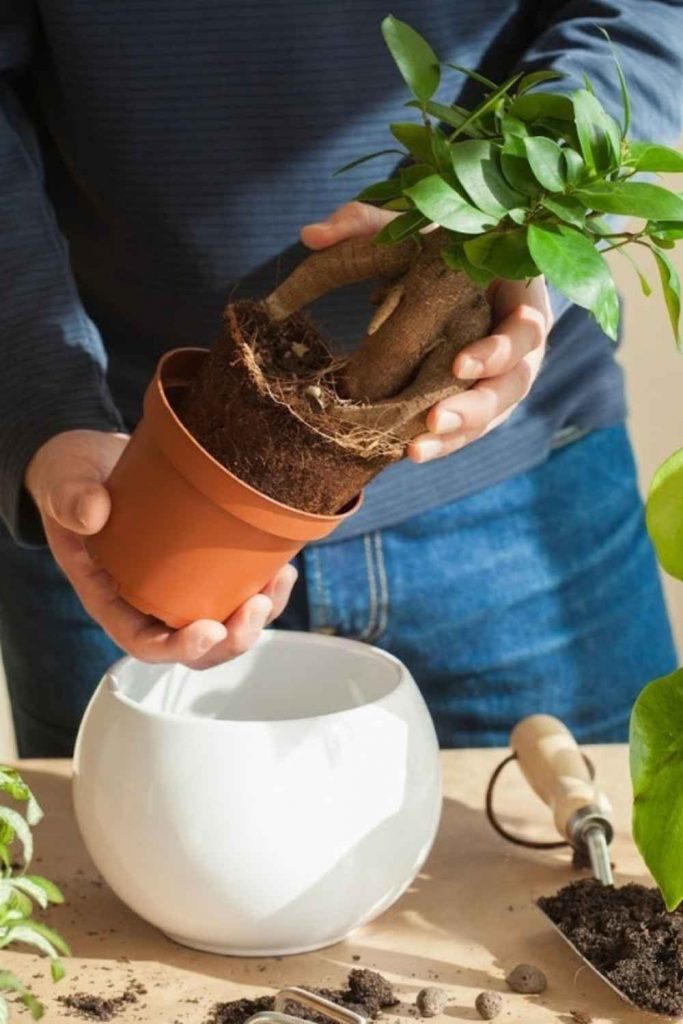
A Ficus Ginseng generally needs to be repotted every two to three years in late spring to refresh the exhausted soil and prevent the plant from becoming completely root-bound.
Gently slide the tree out of its container, holding it securely by the base of the thick trunk. If you find a dense, tightly coiled mat of roots circling the perimeter, the plant is ready for a refresh.
Instead of aggressive root-pruning—which is best left to experienced bonsai artists—simply use your fingers to gently untangle and loosen the outer edges of the root ball. This opens up the root structure, allowing it to easily tap into fresh nutrients.
Settle the tree back into its original container, or choose a new one that is no more than one inch larger in diameter. Bonsai flourish when their roots are relatively cozy, so avoiding oversized pots is crucial.
Fill the gaps with fresh mix, tapping the sides of the pot to settle the soil rather than packing it down tightly with your fingers, which destroys vital air pockets.
Water the tree thoroughly until it drains, then place it in a warm, sheltered spot away from direct sun for two weeks to recover before resuming normal placement.
Common Problems
Sudden Leaf Drop
- The Cause: Environmental shock from moving the plant, sudden temperature changes, or cold drafts.
- The Symptoms: Green, healthy-looking leaves suddenly shedding onto the table.
- The Fix: Pick a permanent, bright spot and leave it there. With patience and stable watering, fresh buds will eventually emerge.
Yellowing Leaves and Moldy Soil
- The Cause: Overwatering and poor drainage suffocating the root system.
- The Symptoms: Lower leaves turn pale yellow and drop; the soil surface stays damp or grows white mold.
- The Fix: Stop watering immediately and allow the soil to dry out completely. Ensure the drainage holes are clear.
Sticky Residue on Leaves
- The Cause: Sap-sucking pests like scale or mealybugs.
- The Symptoms: A sticky film on the foliage, accompanied by tiny brown bumps on the stems or cottony clusters under the leaves.
- The Fix: Wipe the pests away with a cotton ball dipped in rubbing alcohol, then treat the canopy with insecticidal soap or neem oil once a week until clear.
Seasonal Care Notes
During the long, sunny days of summer, the tree will dry out faster and grow rapidly; check the soil moisture frequently and stay on top of pruning.
If your summers are mild, you can place your Ficus outdoors in a sheltered, dappled-shade location for a summer vacation to boost its vitality.
In winter, reduced natural light signals the tree to rest. Growth will stall, and the tree will require significantly less water.
Allow the soil to dry out a bit deeper than usual, and halt all fertilizer until spring.
FAQs
Why is my Ficus Ginseng dropping green leaves?
This is usually due to environmental shock. If you recently moved the tree or placed it near a drafty doorway, it will react by shedding leaves.
Keep its environment stable, and it will acclimatize.
How fast do Ficus Ginseng bonsai trees grow?
They grow at a moderate pace during spring and summer, pushing out new leaf shoots relatively quickly.
However, the main woody trunk and thick roots expand very slowly over many years.
Can I grow a Ficus Ginseng in a low-light room?
It will survive for a while, but the canopy will grow thin, sparse, and leggy as the branches stretch toward the nearest light source.
Bright indirect light is necessary for a bushy canopy.
How do I know when it is time to water?
Check the moisture by pressing your finger into the soil mix.
For standard houseplant pots, water when the top two inches feel dry and crumbly; for shallow bonsai containers, water as soon as the top inch feels dry.
Why are my Ficus Ginseng leaves turning yellow?
Yellowing leaves are typically caused by overwatering, which restricts oxygen to the roots.
However, if the soil is dry and older, lower leaves occasionally turn yellow and fall off one by one, it is often just natural shedding to make room for new growth.