Table of Contents
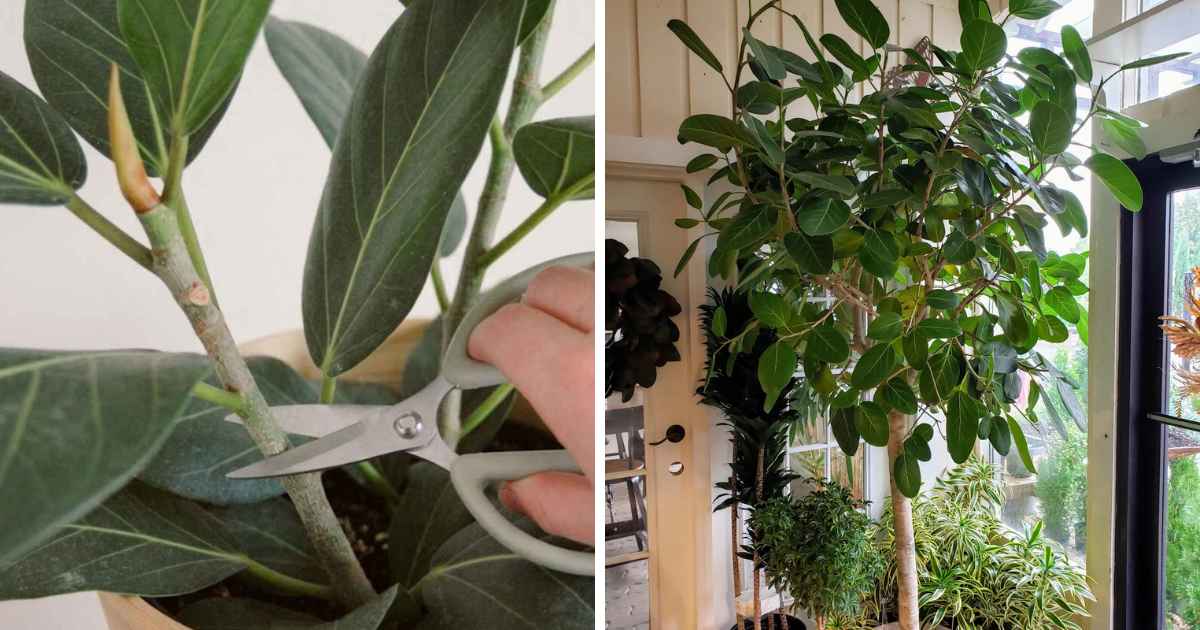
Most indoor gardeners buy a Ficus Audrey expecting a lush, branching canopy, only to watch it grow into a single, tall pole.
Because this species naturally directs its energy upward rather than outward, a bushier profile won’t happen by accident. You have to redirect where the plant puts its energy.
By making a few clever, insider adjustments to your routine, you can easily coax it into producing a fuller canopy.

1. Stop Letting It Grow Like a Pole
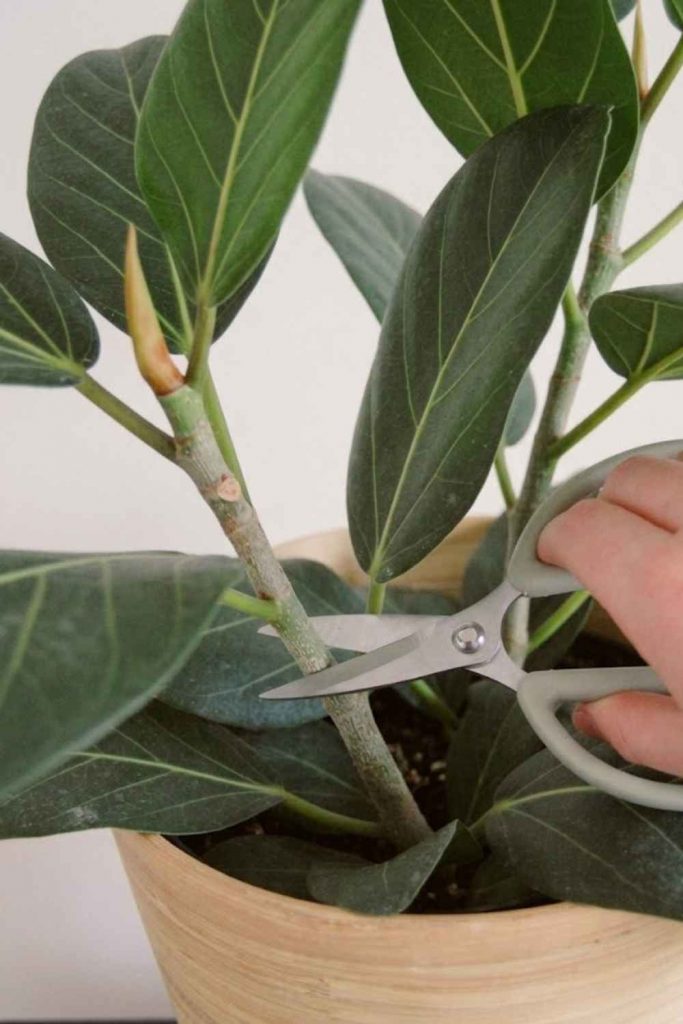
If your Ficus audrey refused to branch all winter, the most effective solution is to cut the top off.
Snipping the growing tip of the main trunk stops its upward momentum and encourages the tree to redirect its resources to the lower nodes.
The best time for this structural cut is late spring or early summer, when the tree is healthy and actively growing.
Using sharp, sterilized shears, make a clean slice directly above a healthy leaf. Within a few weeks, you will often notice two or three new stems pushing out from the nodes right below your cut.
2. Try Notching to Awaken Bare Sections
If you want a branch lower down on a leggy trunk but don’t want to lose the tree’s current height, try a technique called notching.
This involves making a shallow, horizontal cut into the bark directly above a dormant bud on a bare section of the stem to prompt the tree into growing a new horizontal limb.
While results are unpredictable and it doesn’t work every time on Ficus species, it remains a favorite insider trick.
Locate a visible ridge on the trunk where you want a branch.
Make a small horizontal cut through the outer bark about an eighth of an inch deep, right above that node, and quickly blot the milky white sap with a paper towel.
If successful, that quiet little bump will swell and push out a new branch over the next several weeks.
3. Your Window Light Isn’t Enough

Credit: Reddit / @k8cordless
Many indoor trees become leggy and bare at the bottom because window light hits them from the side, leaving the base in partial shadow.
In lower light, a Ficus audrey often sheds its oldest leaves, leading to a sparse, top-heavy silhouette.
An overhead LED grow light running for 12 to 14 hours a day during the growing season helps correct this balance.
Providing strong, direct light from above ensures that energy reaches the entire length of the tree, which can improve foliage retention on the lower trunk.
4. Don’t Give It a Bigger Pot Yet
It sounds counterintuitive, but upgrading your container too soon can ruin the shape of your tree.
Avoid oversized pots because they encourage the plant to focus on root growth first before producing a fuller canopy.
Keeping the root space slightly snug helps prevent long, overly vigorous shoots, allowing the tree to maintain a denser, more compact shape until it’s ready for a larger container.
Only upgrade the container size by one to two inches when you see roots tightly circling the soil surface.
5. Rotate the Pot Weekly for Even Growth
Because Ficus audrey is highly phototropic, it will stretch its branches toward the nearest light source.
If left in one position, the side facing the room will stall, while the side facing the window grows long and leggy, causing the canopy to grow unevenly.
Give the pot a quarter-turn every week.
This simple movement ensures that light hits all sides of the foliage evenly, reducing one-sided stretching so the canopy fills in more naturally.
Over time, this routine helps build a straight trunk and a balanced, multi-branched framework.
Don’t Undo Your Hard Work
Once your tree begins to branch, maintain these core habits to protect the new foliage:
- Check the soil moisture deep inside the pot with your finger or a chopstick before adding water to maintain a consistent routine.
- Keep the ambient indoor humidity levels stable and ideally above 40%, especially when winter heating is active.
- Keep the tree in a bright location safely away from heating vents, air conditioners, and sudden cold drafts.
- Inspect the leaf undersides and stem joints every few weeks to catch early signs of spider mite webbing before an infestation spreads.
FAQs
Can I prune my Ficus Audrey in the winter to make it bushier?
Avoid pruning during late autumn and winter.
When the days shorten, the tree enters a semi-dormant state and isn’t actively growing enough to heal cuts and push out healthy new lateral branches.
Pruning in winter often leads to dieback at the cut tip or weak, spindly stems that ruin the tree’s silhouette. Wait until spring when active growth resumes.
My tree is dripping white sap after notching. Is this normal?
Yes, all members of the Ficus family secrete a thick, milky latex sap when their bark is cut or breached. This is the plant’s natural clotting mechanism to seal wounds.
Simply blot the sap with a damp cloth until it stops flowing.
Be careful to wash your hands promptly, as the raw sap can irritate bare skin and ruin wood flooring if left to dry.
Why did my Ficus Audrey grow only one new branch after I cut the top off?
This usually happens when the plant is not receiving enough ambient light or nutrients to support multiple growth points.
If the tree is in a lower-light corner, it will simply assign its limited energy to a single dominant bud directly below the cut, continuing its single-pole habit.
To fix this, move the tree closer to a bright window or add a grow light before your next prune.