Table of Contents
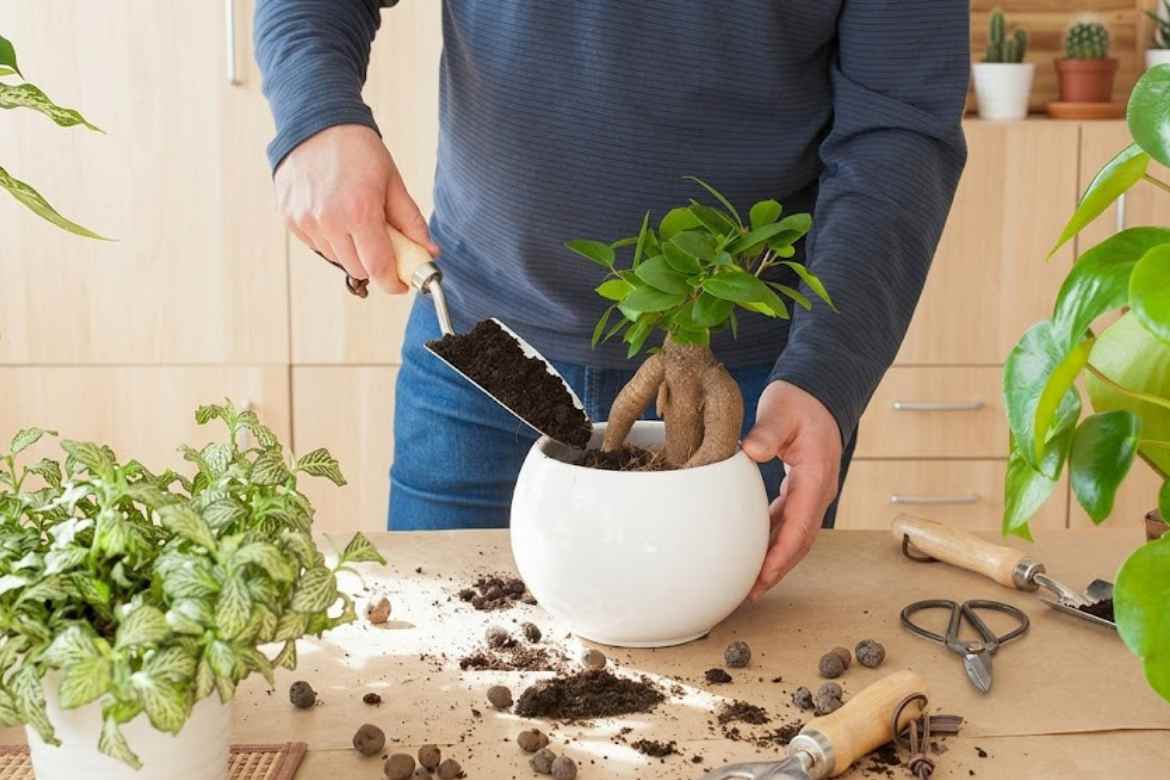
Repotting a Ficus ginseng bonsai refreshes compacted soil, improves drainage, and prevents feeding roots from becoming overcrowded.
Most trees need a soil refresh every two to four years, depending on their age and individual growth rate. Follow these steps to safely repot your tree, manage root pruning, and minimize transition stress.
Repotting Ficus Ginseng at a Glance
- Best Time: Early spring, as active growth resumes
- Frequency: Every 2 to 4 years
- Root Pruning: Trim up to one-third of the root mass
- Soil Type: Well-draining, gritty bonsai substrate
- Post-Potting Fertilizer: Wait 6 to 8 weeks
Signs Your Ficus Ginseng Needs Repotting
- Roots are growing out of the bottom drainage holes.
- Water pools on top of the soil instead of draining quickly.
- The soil stays completely compacted or stays soggy for too long.
- Foliage growth stalls significantly despite proper light and watering.
- The root ball circles tightly around the inside perimeter of the pot.
What You’ll Need
- Tools: Sharp root shears or pruning shears, small root rake or chopstick, wire cutters
- Supplies: A new or cleaned bonsai pot, aluminum or copper wire, plastic drainage mesh squares, paper towels, and a protective plastic mat or tray
- Medium: A gritty bonsai mix made of akadama, pumice, and lava rock (or a customized mix of two parts coarse sand or fine pumice and one part potting soil)
- Safety: Rubbing alcohol (for disinfecting tools)
1. Time the Project Accurately
Repotting is safest in early spring, just as active growth resumes and the winter buds begin to swell. This timing ensures the tree can immediately channel its rising energy into pushing out fresh roots.
Avoid repotting in late spring when new leaves are actively expanding, or during the blistering heat of mid-summer when the plant is already stressed by high temperatures.
As a general rule, fast-growing young Ficus trees require a soil refresh every two years, while mature specimens can comfortably remain in the same container for three to four years.
2. Set Up and Wire Your Container
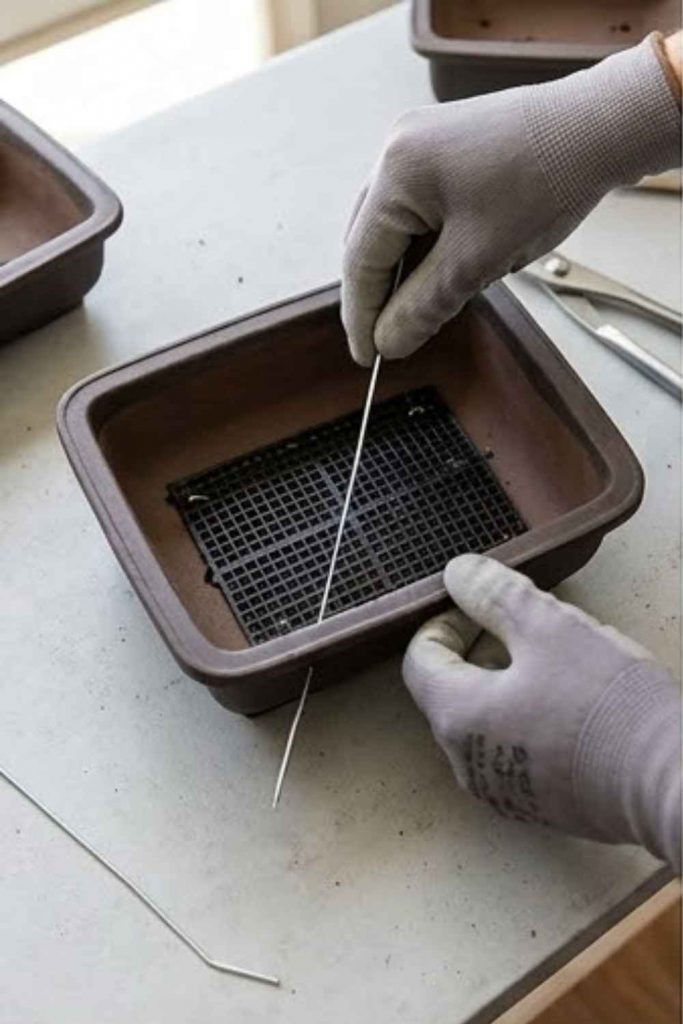
Bonsai pots require unique preparation before any soil touches them. Traditional bonsai containers feature large drainage holes that require plastic mesh liners to keep your gritty soil mix from falling through.
Lay your pot on a protective workspace mat and cut small squares of plastic mesh to cover each drainage opening.
To anchor the mesh and stabilize the tree, you need to thread anchor wires through the bottom of the pot. Cut a piece of copper or aluminum wire about 12 to 15 inches long.
Pass it up through one drainage hole, across the inside bottom of the pot, and down through an adjacent hole.
These wires secure the tree in its new home. Because new roots take weeks to grip fresh soil, any wobbling from a light breeze or a gentle touch can easily tear new, fragile root growth.
Having these wires pre-threaded ensures the tree remains perfectly stationary during its recovery.
3. Unpot and Unwind the Root Ball
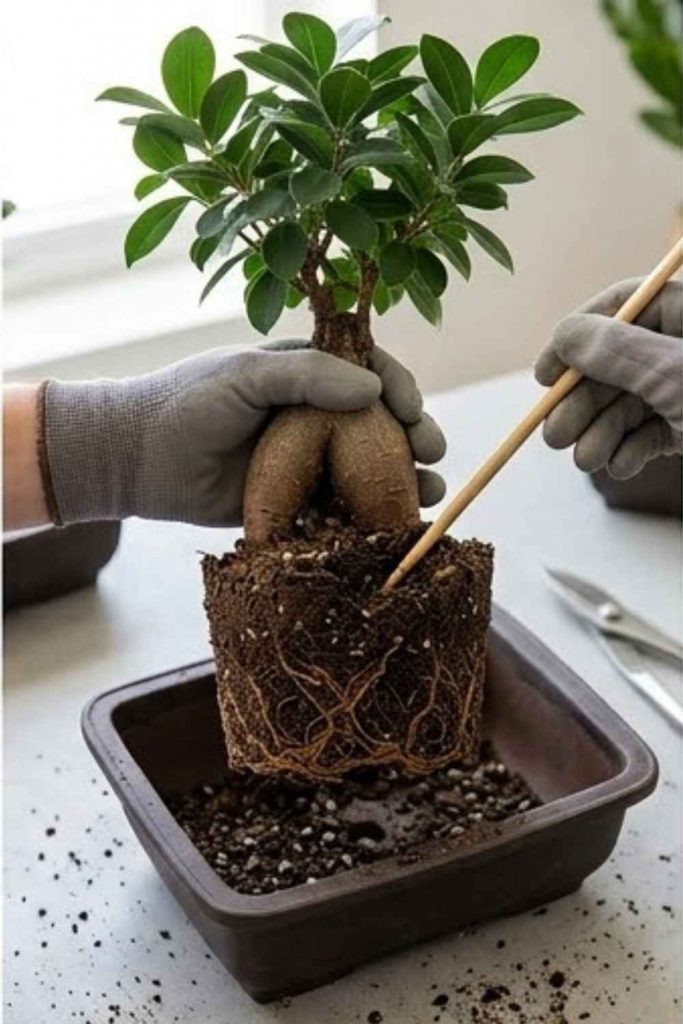
Before extracting the tree, let the soil dry out slightly so it is damp rather than muddy; dry, gritty soil separates from roots much more easily. If your tree is already wired into its current pot, snip the old wires from the underside of the container first.
Grasp the Ficus firmly by the base of the trunk and lift upward. If the tree resists, slide a flat butter knife around the inside perimeter of the pot to break the suction.
Once the tree is free, lay it on your workspace tray. Use a chopstick or a small root rake to gently comb out the soil, starting from the center of the root ball and working outward toward the edges.
Tease away the old, compacted dirt to expose the individual roots. Focus heavily on cleaning out the bottom of the root ball so you can clearly see the structure before making any cuts.
4. Prune the Roots Wisely
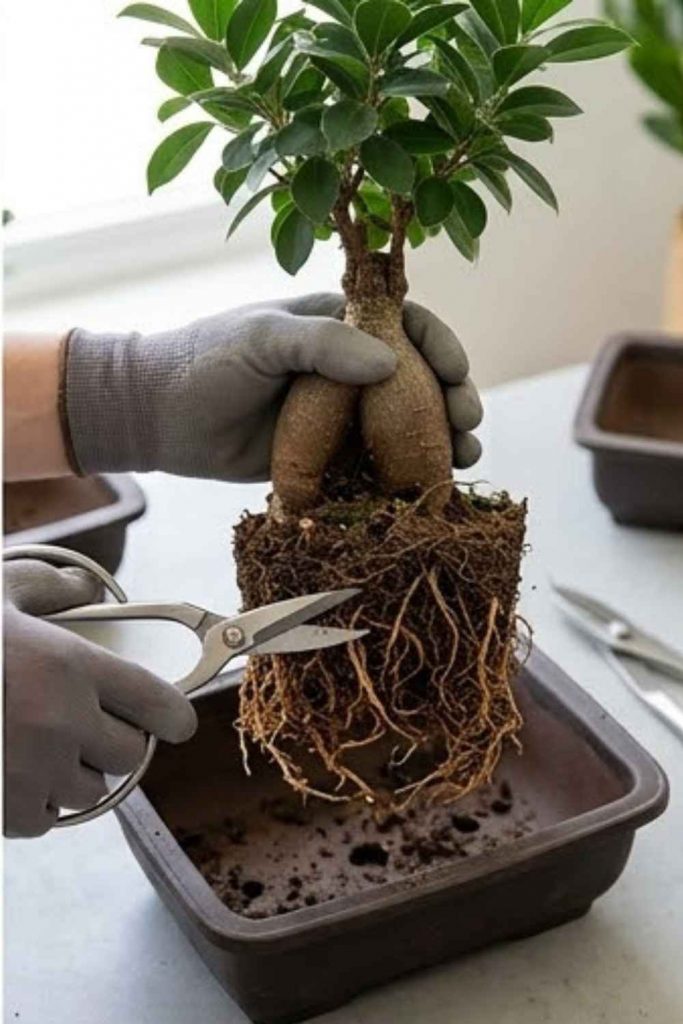
Ficus species produce a mix of thick structural roots and fine, hair-like feeding roots.
Your primary objective is to manage the length of the thick roots so the tree fits comfortably back into its shallow container, while preserving as many fine feeding roots as possible.
Wipe your cutting tools with rubbing alcohol and trim back the longest downward-growing structural roots. Root shears are preferred for this step because they handle abrasive soil particles better than standard pruning tools.
Never remove more than one-third of the total root mass during a single repotting session. Focus your cuts on old, thick, circling roots that offer little nutritional value to the canopy.
⚠️ Important Safety Warning: Ficus sap is toxic to pets and skin-irritating to humans. Keep curious animals away from your workspace, lay down a protective mat, and clear away all discarded root clippings immediately so pets cannot chew on them.
Trimming back these heavy structural roots encourages the tree to produce a dense network of new feeding roots closer to the trunk base.
5. Position and Secure the Tree
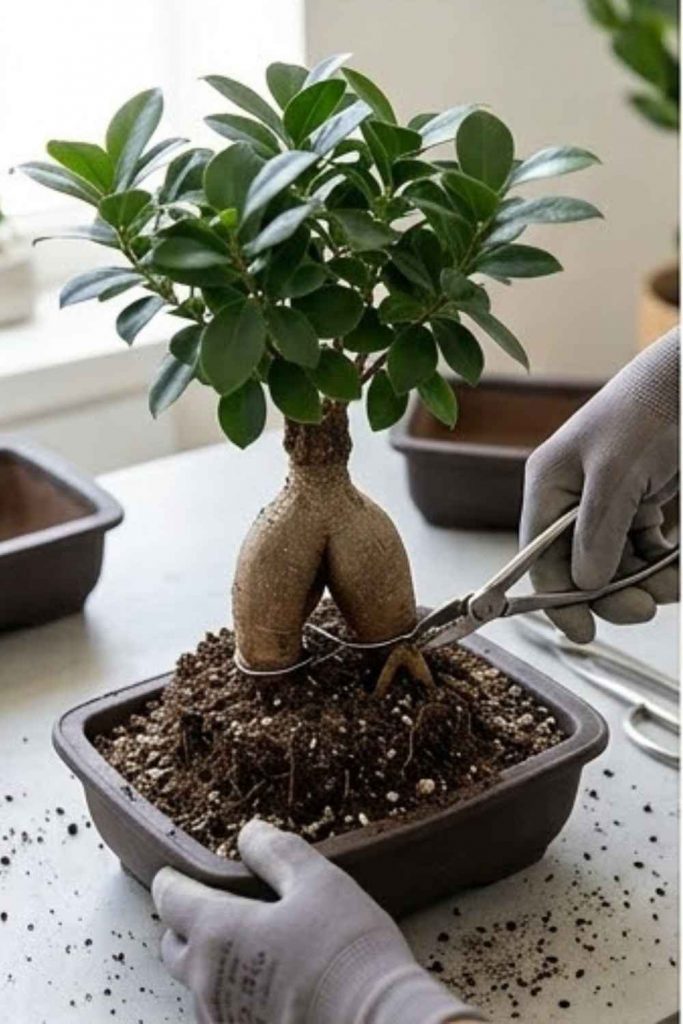
Pour a thin layer of your gritty soil mix into the bottom of the prepared pot, creating a slight mound in the center where the base of the tree will rest.
Place the tree on top of the mound, twisting it slightly into the soil to help settle the base and eliminate large air pockets underneath the root base. For a traditional bonsai appearance, position the tree slightly off-center.
Bring the two ends of your pre-threaded anchor wires up over the root block, wrapping them snugly around a thick, stable structural root close to the trunk.
Twist the wires tightly together with pliers, snip off the excess, and bend the sharp ends down into the soil so they are hidden. Give the trunk a gentle push; the tree should feel firmly locked into the container without rocking.
6. Backfill and Water Deeply
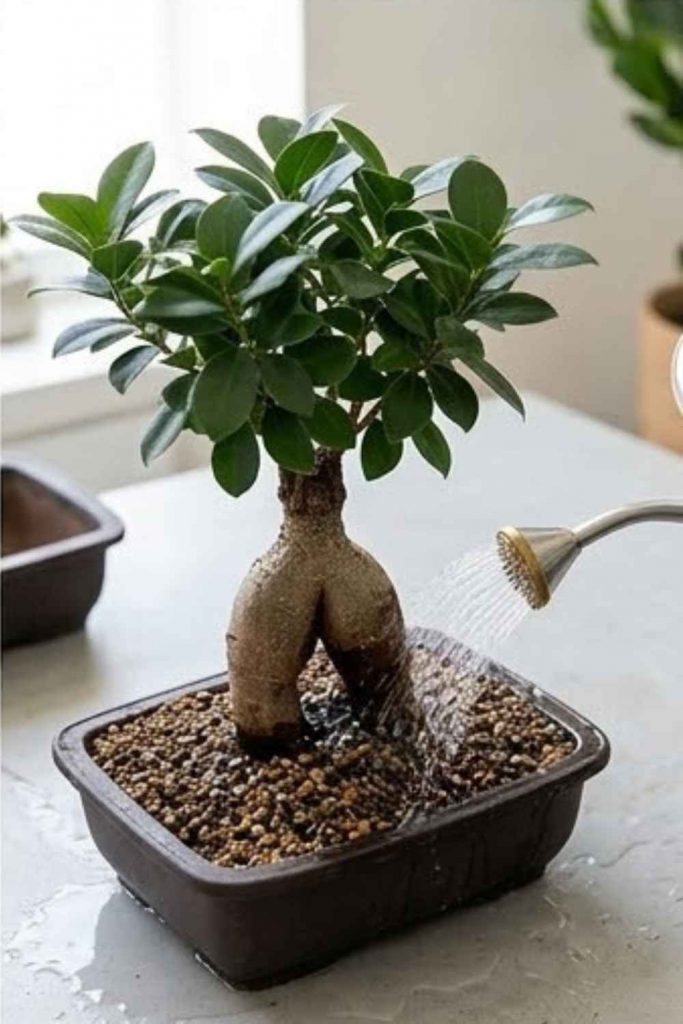
With the tree secured, pour fresh soil mix around the root ball until it reaches about a half-inch below the rim of the pot. This lip prevents water and loose soil from washing over the edges during future waterings.
This gritty substrate helps newly pruned roots stay oxygenated while excess moisture drains away.
Take a chopstick and gently work it up and down in a vertical motion through the loose soil. This action coaxes the particles into any hidden gaps and air pockets underneath the main root mass.
Repeat this across the entire pot until the soil settles evenly.
Immediately carry the potted tree to a sink or tray and water it thoroughly using a gentle shower attachment. Keep pouring water until the liquid running out of the bottom drainage holes transitions from muddy brown to completely clear.
This initial deep soaking hydrates the freshly cut roots and flushes out fine dust that could clog the drainage mesh.
7. Manage Post-Potting Recovery
A newly repotted tree is vulnerable and requires a sheltered environment to heal.
Place your Ficus ginseng in a warm room that receives bright, indirect sunlight, keeping it entirely out of direct sun and windy drafts for the first three to four weeks. Direct afternoon sun can increase water stress and lead to temporary leaf drop while the roots recover.
Keep the soil consistently damp but never waterlogged. Because the roots are healing, they absorb water much slower than usual; overwatering at this stage easily leads to root rot before the fresh cuts can callouse over.
Hold off on all fertilizers for at least six to eight weeks. Applying nutrients to damaged, healing root tips can easily burn them and ruin your hard work.
Once you see a flush of vibrant new green leaves bud from the branches, you will know the root system has successfully recovered.
FAQs
How often should you repot a Ficus ginseng bonsai?
Fast-growing young trees generally need to be repotted every two years to prevent them from becoming rootbound. Mature, established specimens grow much slower and can safely remain in the same soil for three to four years before requiring a refresh.
Can I pot my Ficus ginseng into a standard plastic houseplant container instead of a bonsai pot?
Yes, but standard plastic pots are usually much deeper and retain moisture for a longer period.
If you use a traditional deep pot, you must increase drainage with additional coarse sand, pumice, or other gritty bonsai components to prevent stagnant water from pooling at the bottom and rotting the roots.
Why is my Ficus ginseng dropping leaves after being repotted?
Minor leaf drop is a common symptom of transplant shock, as the tree adjusts to its trimmed root system.
However, if the leaf drop is severe, check the environment. Ensure the tree is completely out of direct afternoon sunlight, away from air conditioning vents, and that the soil is not sitting in stagnant water.
Can I reuse the old bonsai soil if I wash it?
No. Over years of use, individual soil particles break down into fine, muddy dust that compacts easily and suffocates roots.
Always use fresh, gritty components for a repotting project to guarantee proper aeration and drainage for the next growth cycle.
Should I prune the top canopy at the same time I repot the roots?
It is best to avoid heavy canopy styling during a repotting session.
While removing a few unruly shoots is perfectly fine, major structural pruning forces the tree to expend energy on healing branch wounds at the exact time it needs all its resources to rebuild a damaged root system. Focus on one major architectural change per season.
How do I know if I need a larger pot or can reuse the same one?
If you want your Ficus ginseng to grow larger, move it up to a container that is roughly one to two inches wider than the current one.
If you want to maintain the tree’s current size—which is common for established bonsai—you can prune the roots and pot it back into the exact same container with fresh soil.