Table of Contents
Bedrooms are often some of the lowest-light rooms in the house, which makes them harder to get right with plants than people expect. A room can be calm and still feel like it’s missing something.
The best choices for this kind of room handle softer light without turning messy, needy, or visually loud.
These are the ones that keep a bedroom feeling greener, calmer, and easier to live with.
11 Best Indoor Plants for Low Light Bedrooms
#1 — ZZ Plant (Zamioculcas zamiifolia)
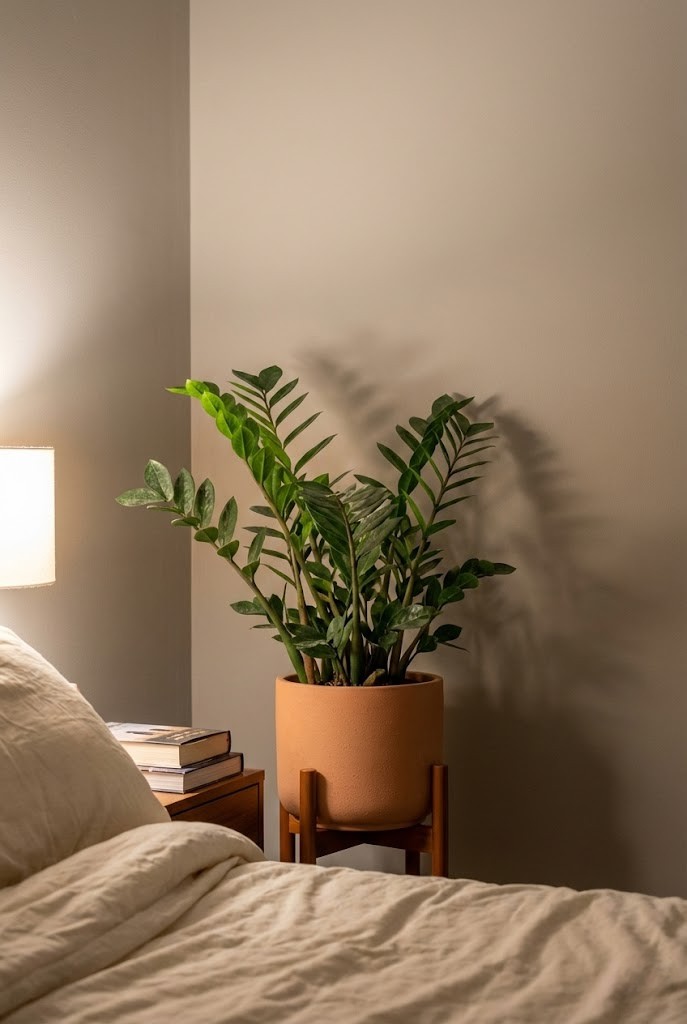
ZZ plants are popular for a reason: they ask for very little and are especially forgiving if watering slips your mind. Their thick, upright leaves store moisture and keep a clean shape even when the room never gets especially bright.
In a bedroom, they read clean and grounded rather than decorative or busy — a solid choice when you want greenery that doesn’t beg for attention.
⚠️ Note: Toxic to pets if ingested. Keep out of reach if pets sleep in the bedroom.
#2 — Cast Iron Plant (Aspidistra elatior)
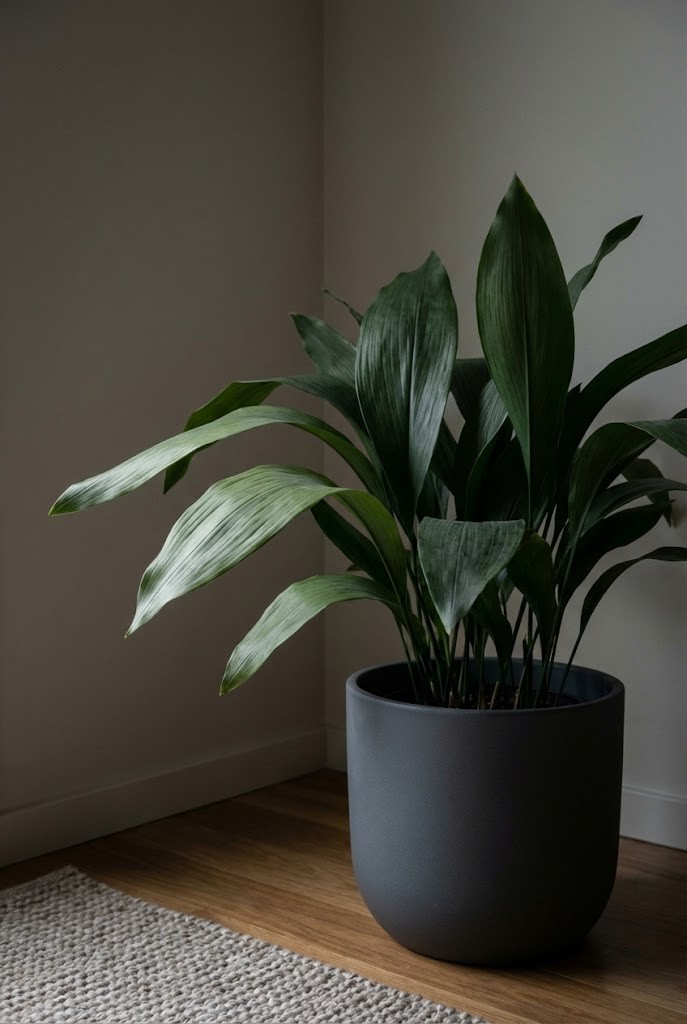
Cast iron plants take shade in stride and are one of the safest choices for a dark bedroom corner. Their deep green leaves stay dense and composed in spots that never feel especially bright.
Nothing about the plant looks pushy or overstyled. It sits quietly in the room and keeps that settled look over time, especially in a modest pot.
#3 — Snake Plant (Dracaena trifasciata)
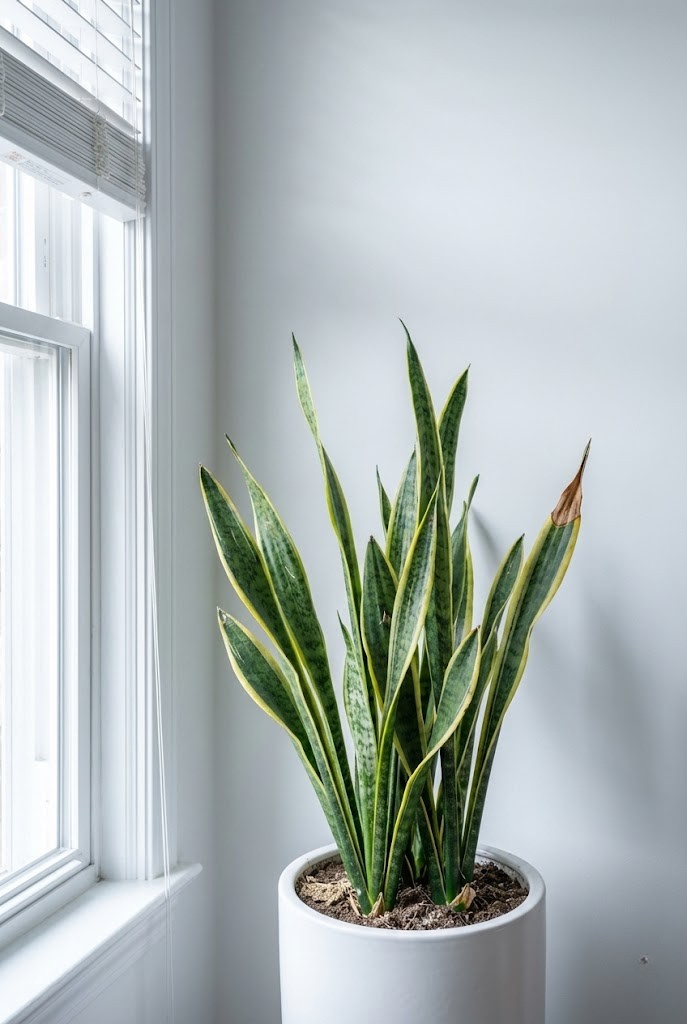
Snake plants are one of the easiest bedroom plants to start with. They tolerate low light, keep a clean upright form, and don’t ask for much to stay looking sharp.
They’re especially useful in bedrooms that already have a lot of softness from bedding, curtains, and rugs. Just keep expectations realistic: low light is fine, but complete darkness is not.
⚠️ Note: Toxic to pets if ingested. Place out of reach if pets have access to the bedroom.
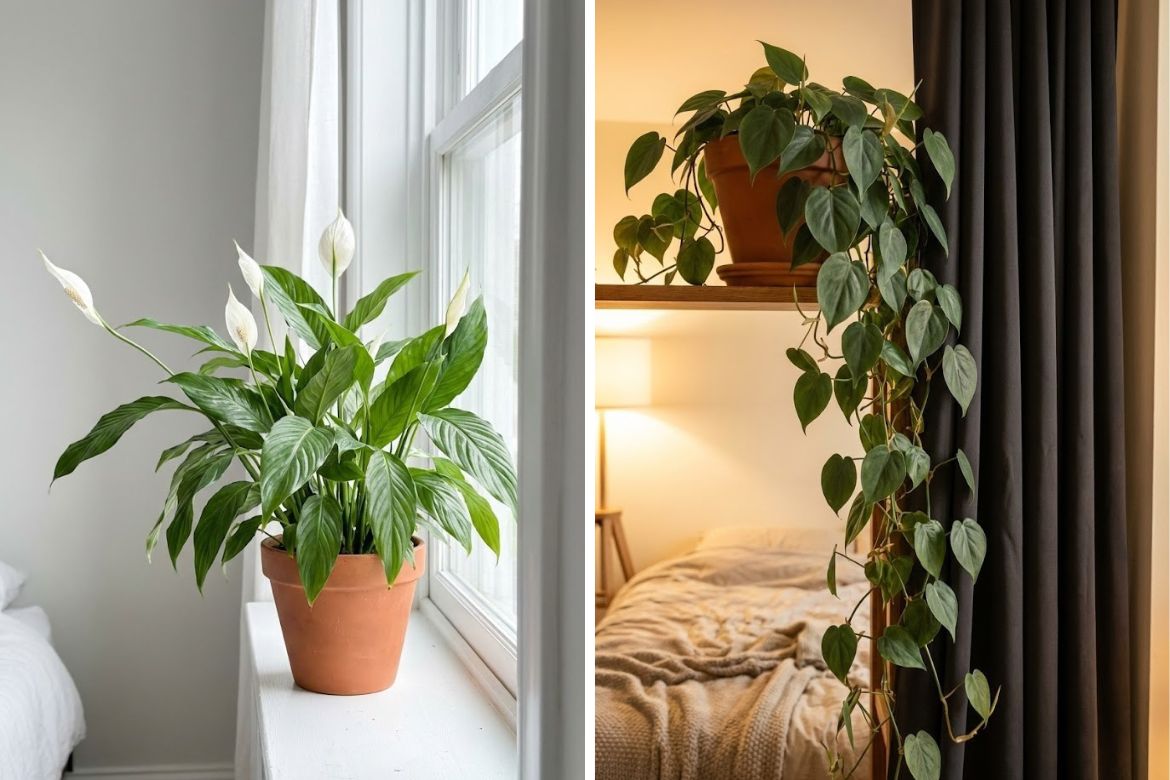
#4 — Peace Lily (Spathiphyllum)
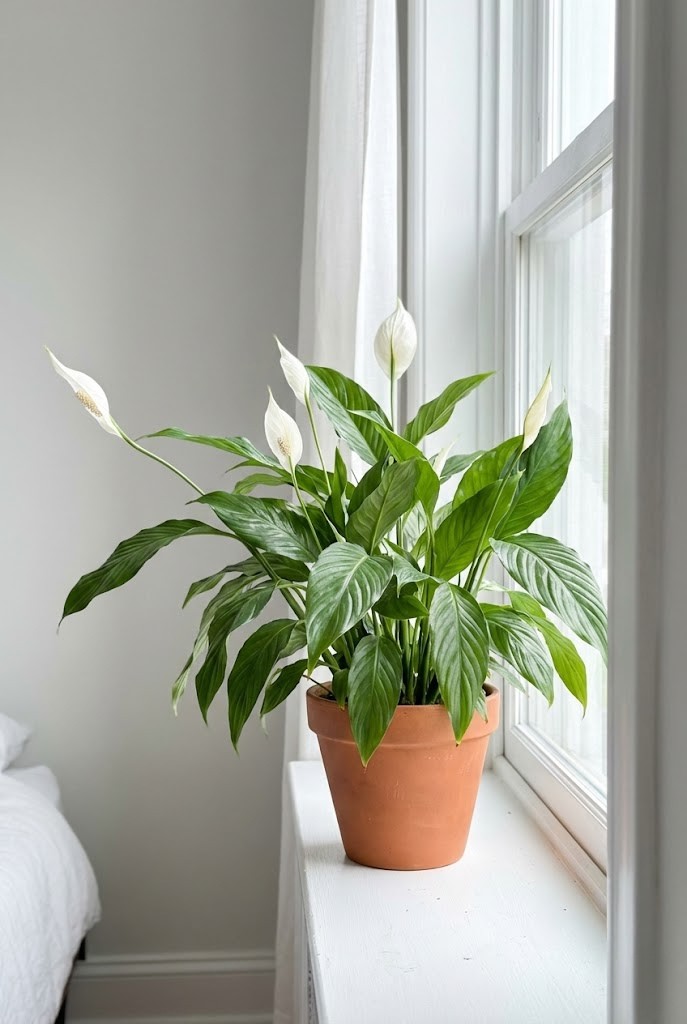
Peace lilies soften dim bedroom light with broad, deep green leaves. In lower light, they may bloom less often, but the foliage still looks lush and full.
If you want a bedroom plant that feels a little softer than something upright and architectural, this is an easy one to keep around. If you’re sensitive to pollen, snip blooms early and keep the leaves.
⚠️ Note: Toxic to pets if ingested. Keep out of reach if pets have access to the bedroom.
#5 — Peperomia obtusifolia
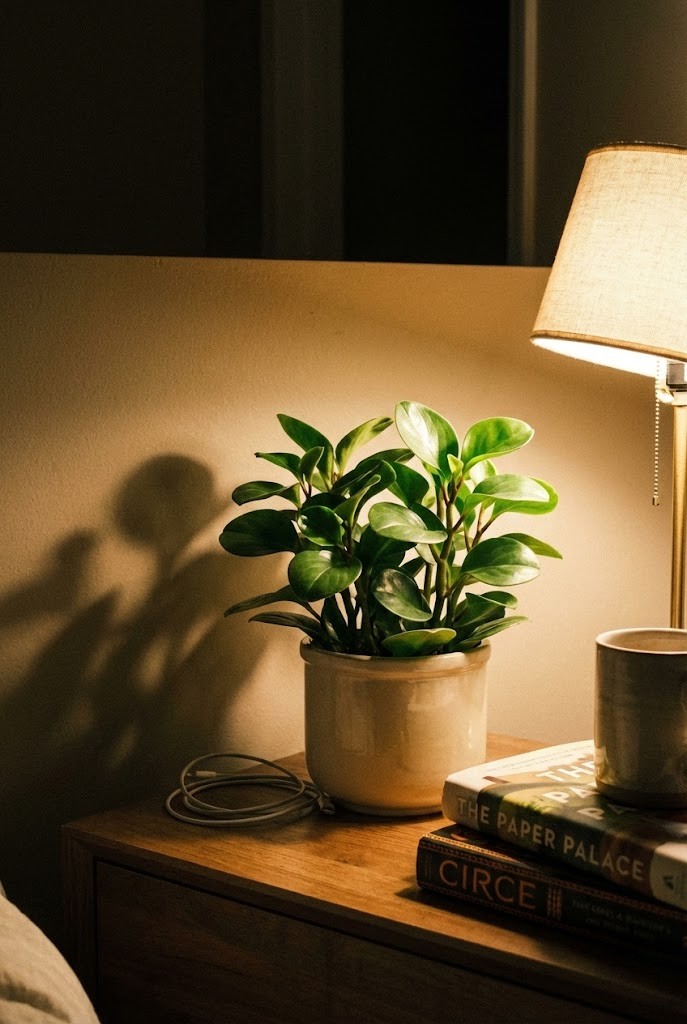
Peperomia obtusifolia is the tidy one for small bedroom surfaces. Its thick, rounded leaves hold close to the stem and rarely drop, so a nightstand or dresser doesn’t start looking cluttered around it.
Even in softer light, it tends to keep that compact shape. If you want something green that stays neat without much correction, this is one of the easiest plants to live with.
#6 — Snake Plant ‘Hahnii’ (Bird’s Nest Snake Plant)
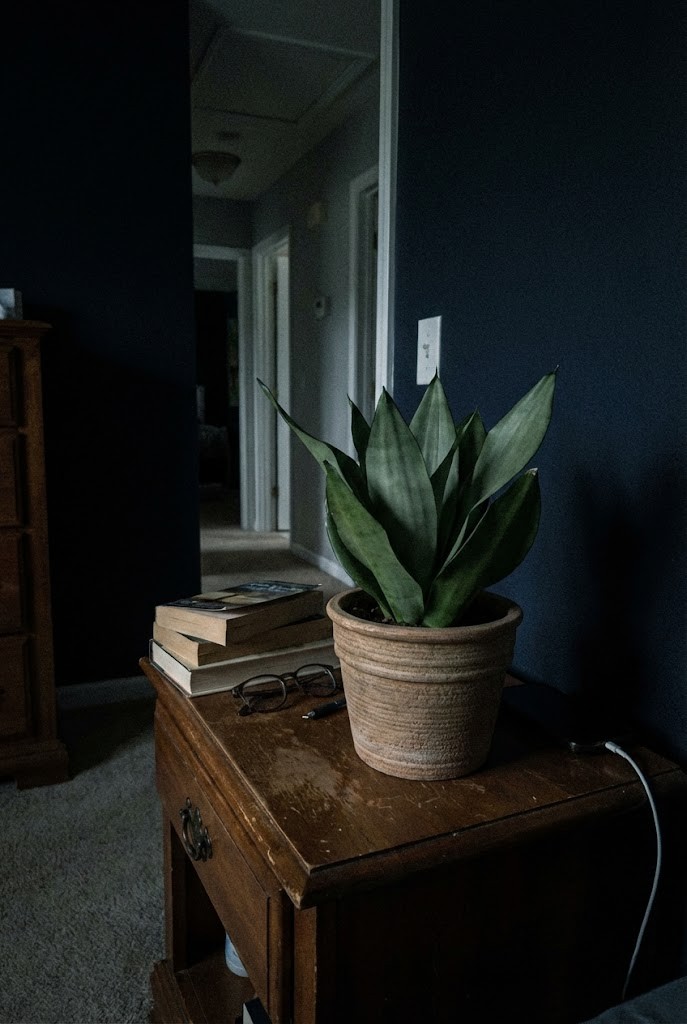
This snake plant keeps the clean structure of the standard form, but loses the height. The low rosette shape feels quieter on a bedroom surface and doesn’t compete with lamps, headboards, or curtains.
It tolerates low light well and gives you definition without adding another tall line to the room. If a regular snake plant feels a little too upright or severe, this one lands more gently.
⚠️ Note: Toxic to pets if ingested. Keep out of reach if pets sleep nearby.
#7 — ZZ ‘Zenzi’ (Dwarf ZZ Plant)
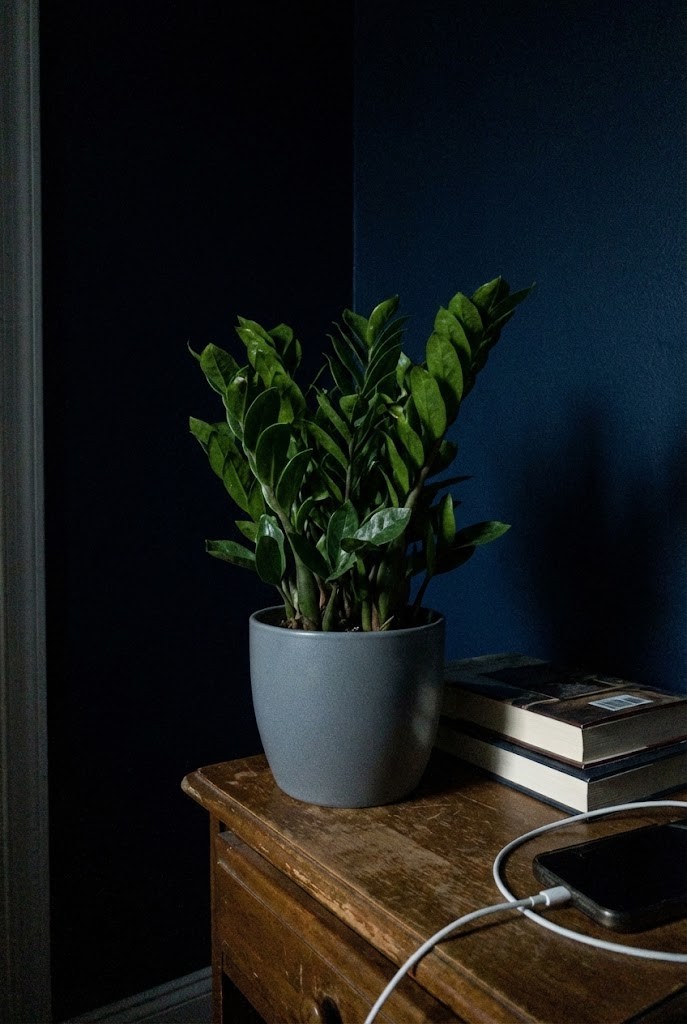
ZZ ‘Zenzi’ brings more visual weight than most small bedroom plants. The curled leaves stay close and layered, giving it a dense, sculptural shape that still reads clearly in gentler light.
It works well when you want something compact but not airy or delicate. On a smaller surface, it has a steadier, more grounded presence than lighter tabletop plants.
⚠️ Note: Toxic to pets if ingested. Place where curious pets can’t reach.
#8 — Chinese Evergreen (Aglaonema)
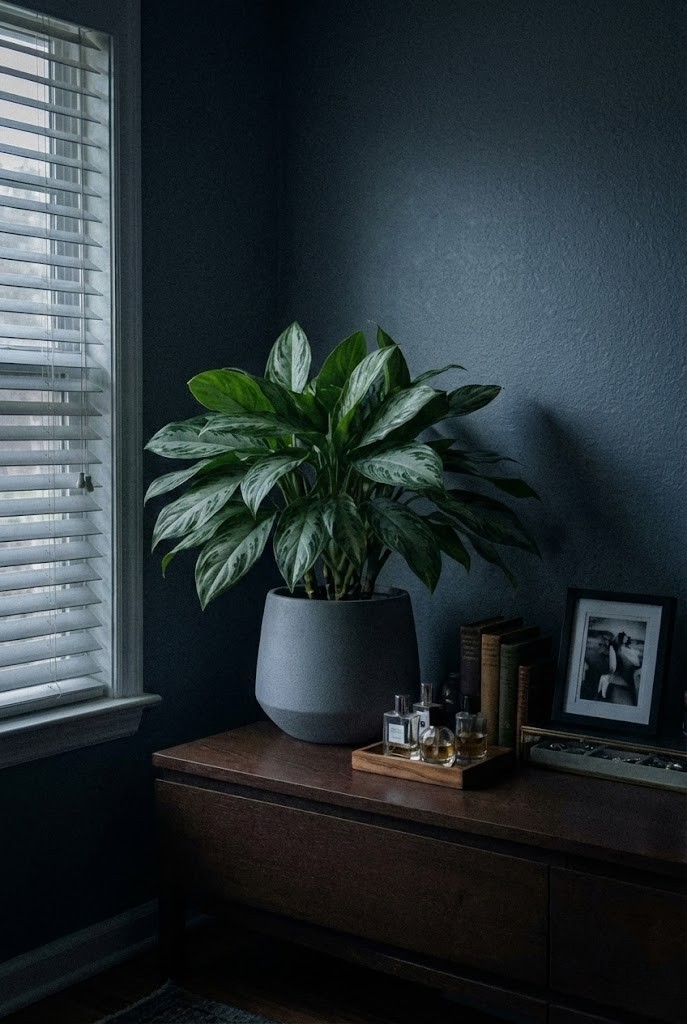
Chinese evergreen is one of the best plants here for keeping its presence in muted light. The patterned leaves still show up clearly when the room stays soft and dim, which makes it especially useful on a dresser or chest that needs more than a blur of green.
It also softens the room without disappearing into it. If you want foliage that still reads from across the bedroom, this is where Chinese evergreen earns its place.
⚠️ Note: Toxic to pets if ingested. Place where curious pets can’t reach.
#9 — Parlor Palm (Chamaedorea elegans)
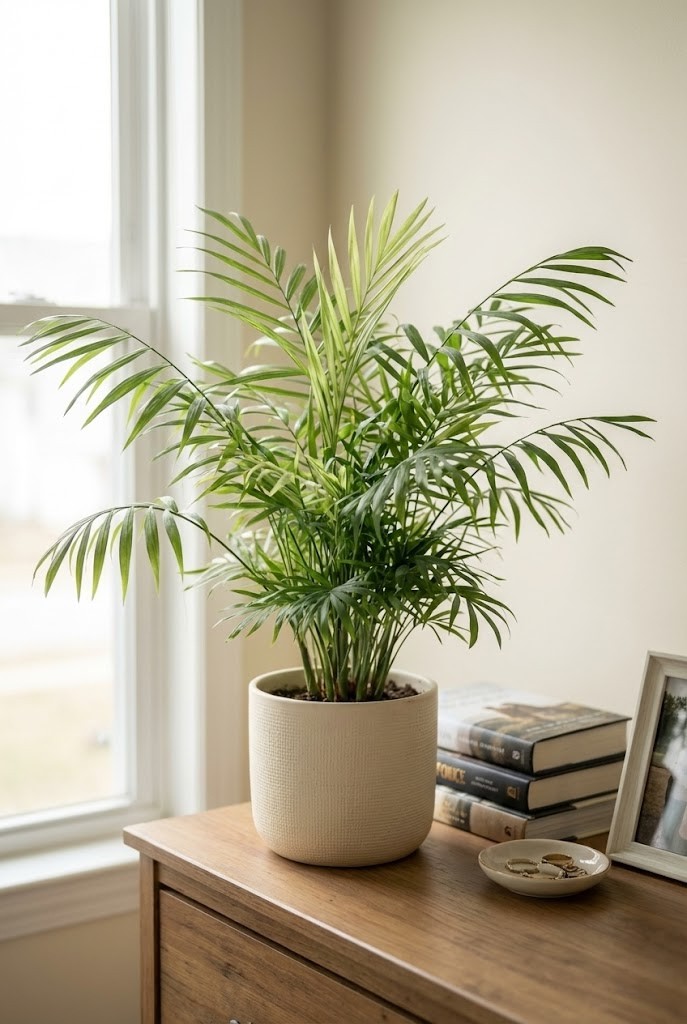
Parlor palm changes the room more through texture than shape. The fine fronds loosen up hard furniture lines and heavy fabric without adding much visual weight.
In softer light, it grows slowly and keeps that feathery look. Dry air can crisp the tips a little, but when it’s comfortable, the whole room looks lighter around it.
#10 — Pothos (Epipremnum aureum)
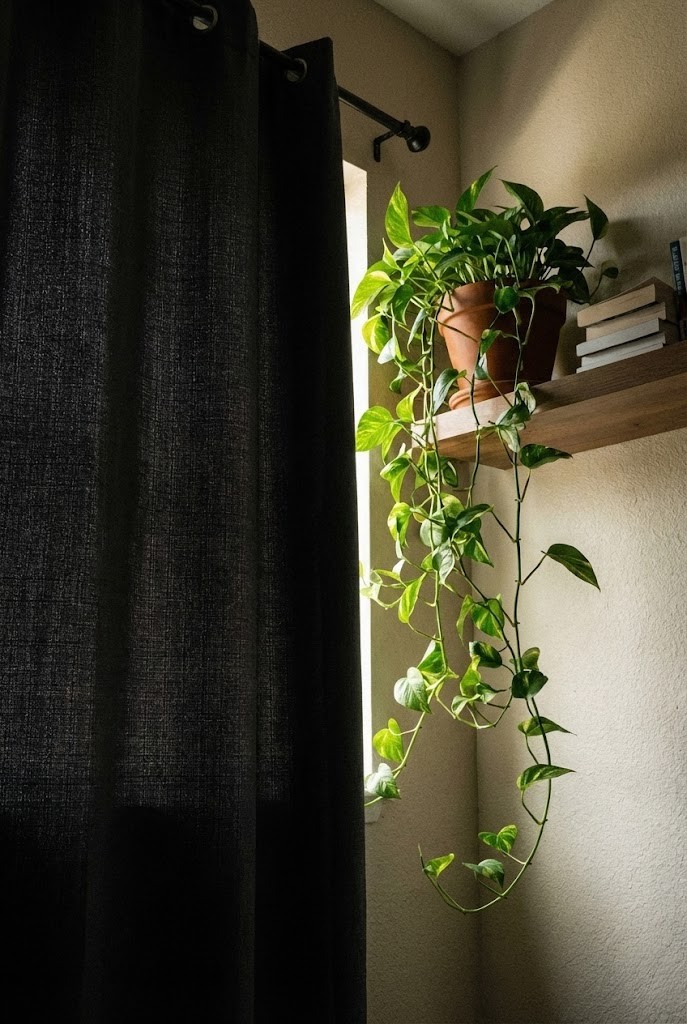
Pothos is one of those plants people keep coming back to. Its vines drape easily over shelves and furniture edges, softening straight lines from walls, dressers, and blackout curtains.
In low light, growth slows, but the plant stays relaxed-looking. It’s happiest when the vines can fall cleanly instead of tangling across everything.
⚠️ Note: Toxic to pets if ingested. Keep out of reach if pets have access to the bedroom.
#11 — Heartleaf Philodendron (Philodendron hederaceum)
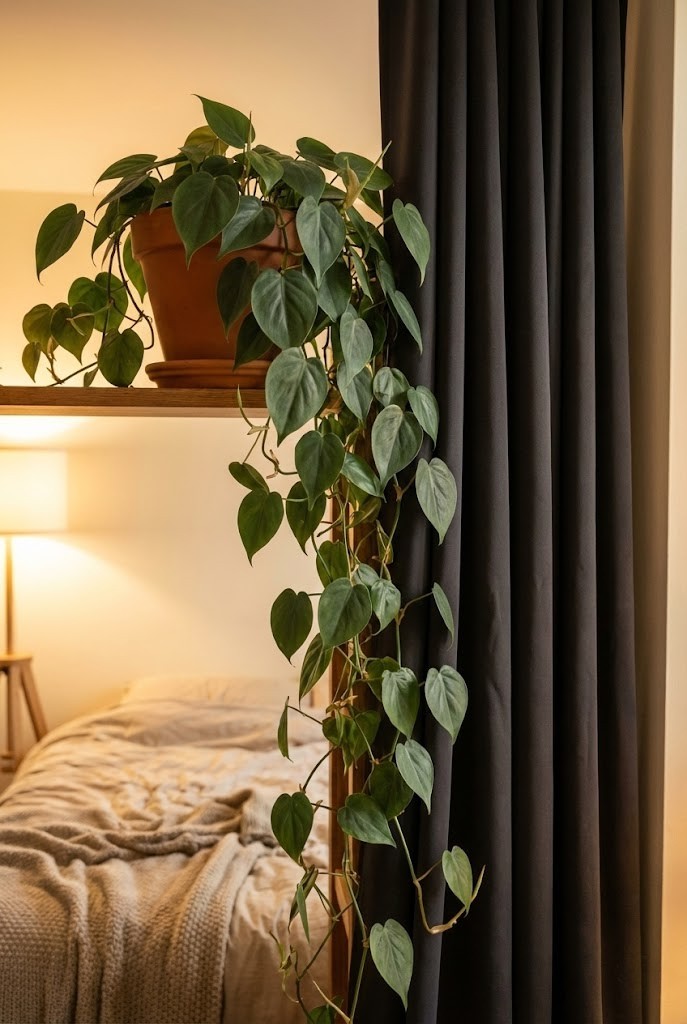
Heartleaf philodendron has a softer, quieter look than many trailing plants. Its matte, heart-shaped leaves absorb light rather than reflect it, which helps it blend easily into dim bedrooms.
Allowed to drape, it gently relaxes the room’s edges and keeps the space from feeling too flat or structured. The effect is easy, soft, and a little more intimate than pothos — the kind of green that makes a room feel more quietly lived in.
⚠️ Note: Toxic to pets if ingested. Place where pets can’t reach.
A quick care note for low-light bedrooms
Low light usually means soil stays wet longer, so the easiest mistake here is overwatering.
Let the potting mix dry enough between waterings, and remember that “low light” still doesn’t mean no light at all — if the room stays dark most of the day, even the most tolerant plants may need a brighter spot nearby or occasional support from a grow light.
Turning the pot every couple of weeks can also help the plant grow more evenly instead of leaning toward one side.
Conclusion
Low-light bedrooms don’t need to feel bare — they just need the right kind of plants. Spaces meant for rest benefit from choices that stay calm, contained, and easy to live with.
Whether it’s a compact plant on a nightstand, a steady presence on a dresser, or trailing greenery that softens harder lines, the key is matching the plant to the quieter rhythm of the room. With realistic expectations and thoughtful placement, a bedroom can feel more grounded and restful even in softer light.