Table of Contents
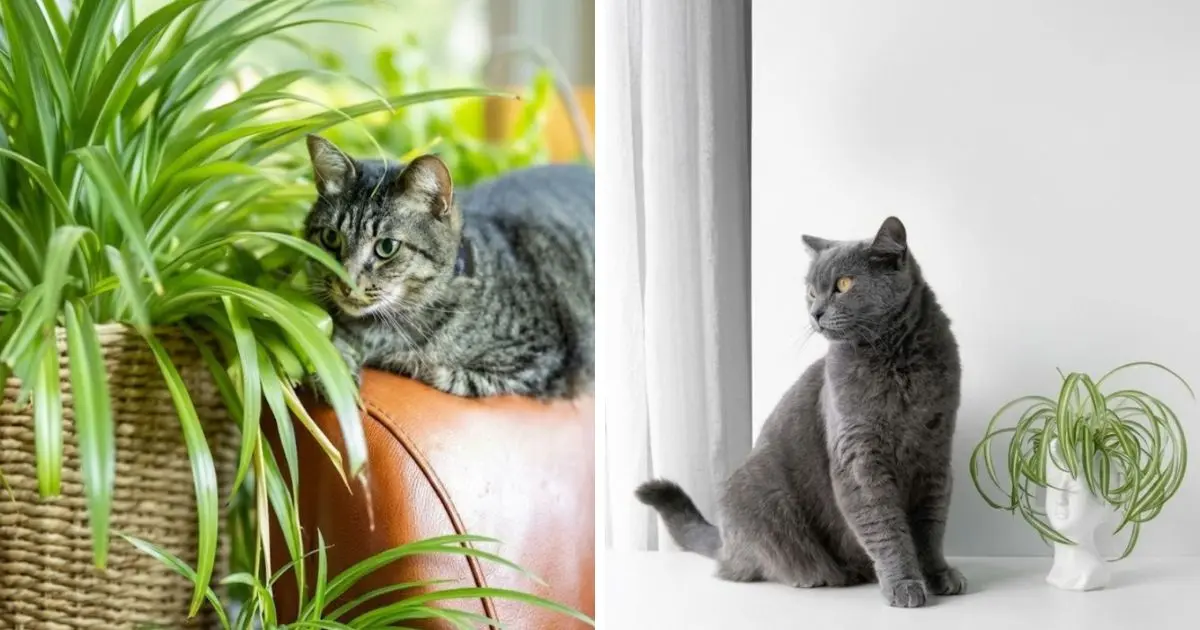
No. Spider plants are not toxic to cats.
They’re considered a cat-safe houseplant, although eating a large amount of plant material can still cause an upset stomach or vomiting.
Spider plants (Chlorophytum comosum) are popular houseplants because they’re easy to grow and produce long, arching leaves with dangling plantlets. Those features can also make them especially tempting to curious cats.
Cats and Spider Plants
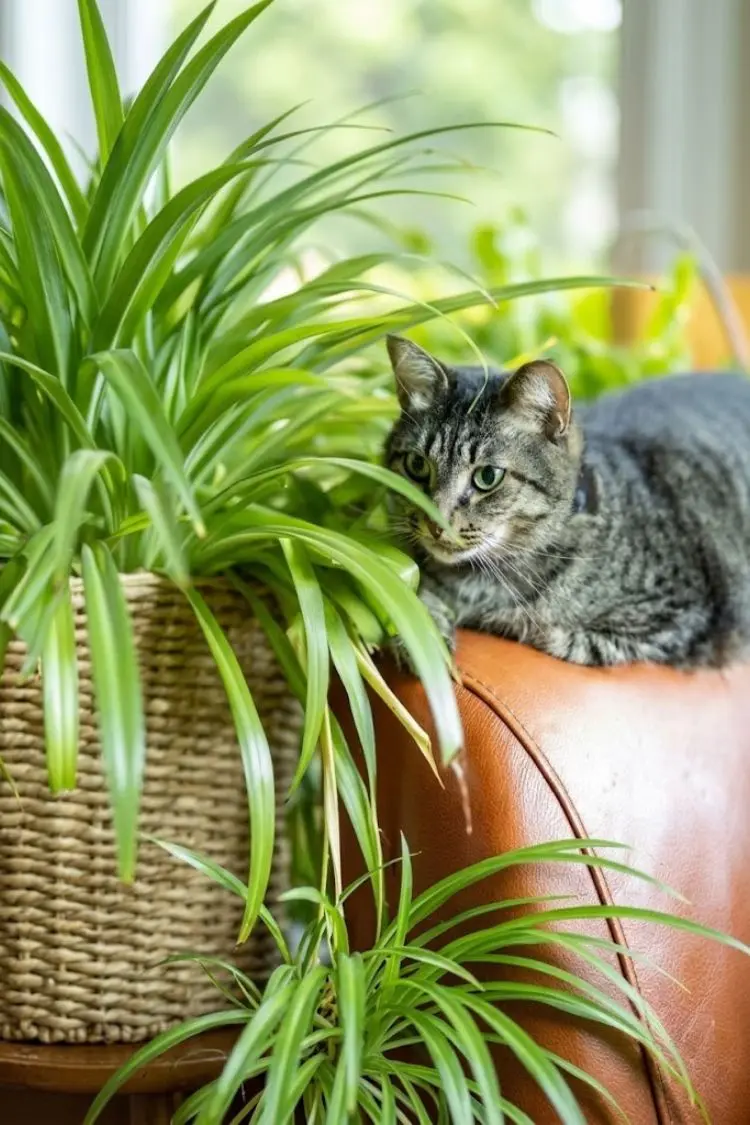
Spider plants are considered non-toxic to cats, so a cat that takes a bite isn’t facing the same risk as one that chews on a poisonous houseplant.
Still, non-toxic doesn’t mean a cat should eat the plant freely. Eating too much plant material can cause stomach upset or vomiting.
If your cat takes an occasional bite, there’s generally no reason to panic. If it eats a large amount or develops repeated vomiting or other concerning symptoms, contact your veterinarian.
Why Do Cats Like Spider Plants?
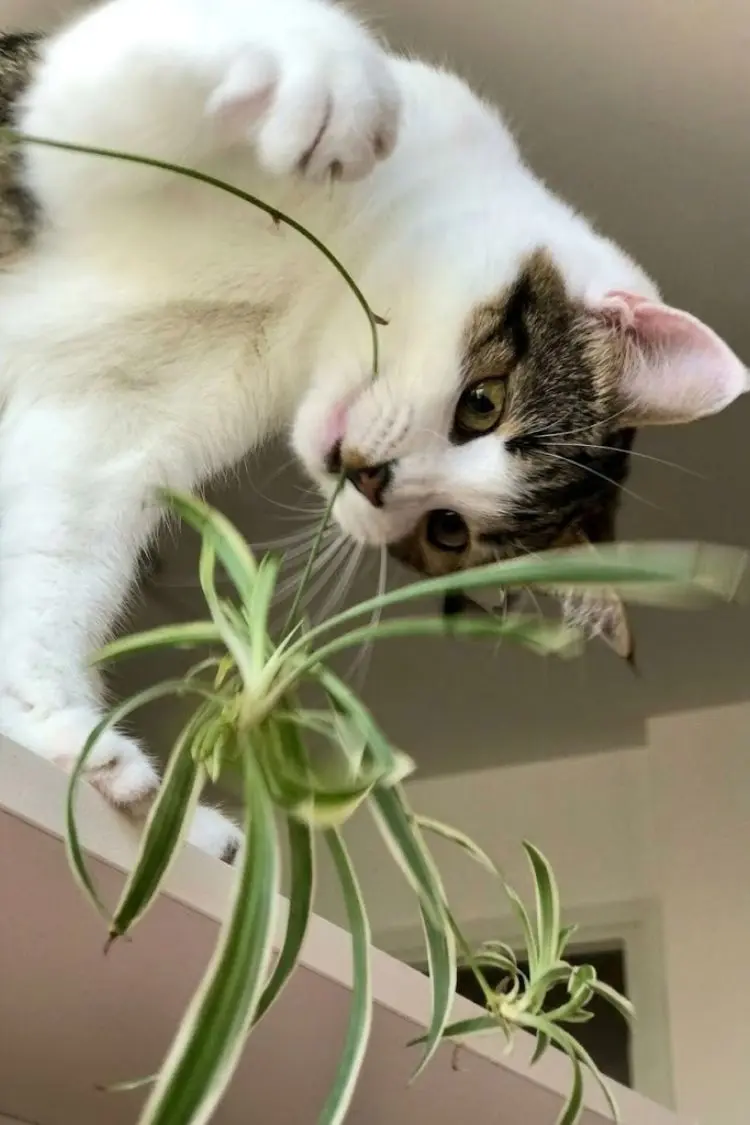
Some cats seem particularly interested in spider plants.
The long leaves move easily, while the dangling plantlets can give a cat something to bat at, chase, or chew.
The plant may also appeal to cats that enjoy nibbling on greenery. Indoor cats don’t have access to outdoor grass, so a houseplant may become an easy target for a curious cat.
There’s no need to assume that a cat’s interest means the plant has some unusual effect, though. Cats can simply be attracted to the movement and shape of the foliage.
How to Keep Your Cat From Eating Your Spider Plant
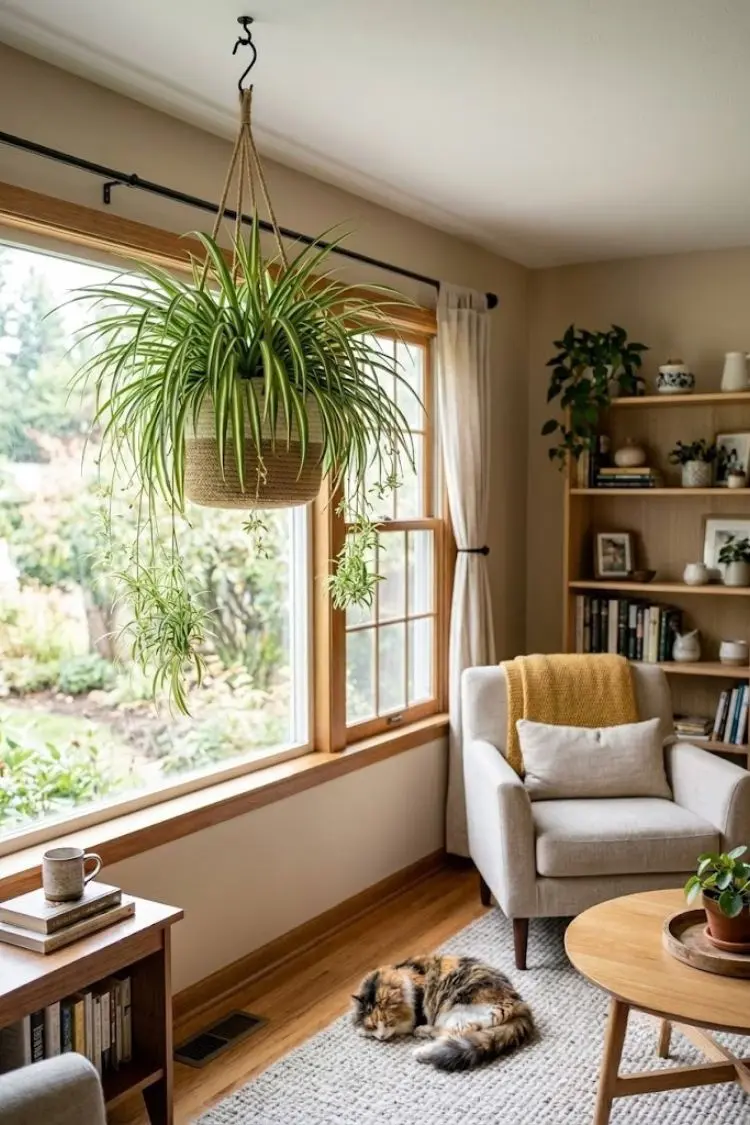
Because spider plants aren’t poisonous to cats, you don’t have to remove one from your home.
But if your cat repeatedly chews the leaves or plantlets, moving the plant out of reach can protect both the plant and your cat from an unnecessary stomachache.
A hanging basket can work well if your cat can’t reach it from nearby furniture. You can also move the plant to a room or shelf your cat doesn’t have access to.
If your cat seems determined to chew greenery, offer an appropriate alternative such as cat grass. This gives your cat something intended for nibbling without turning your houseplants into a snack.
FAQs
What should I do if my cat eats a spider plant?
If your cat eats a small amount, monitor it for signs of stomach upset.
If it eats a large amount, vomits repeatedly, or develops other concerning symptoms, contact your veterinarian.
Can I keep a spider plant where my cat can reach it?
You can, since spider plants are non-toxic to cats.
However, if your cat regularly chews the leaves or plantlets, keeping the plant out of reach is a better choice.
What other houseplants are safe for cats?
Several common houseplants are considered non-toxic to cats, including African violets, Boston ferns, orchids, and prayer plants.
Check the specific plant before bringing it home, since plants with similar common names can have very different safety profiles.