Table of Contents
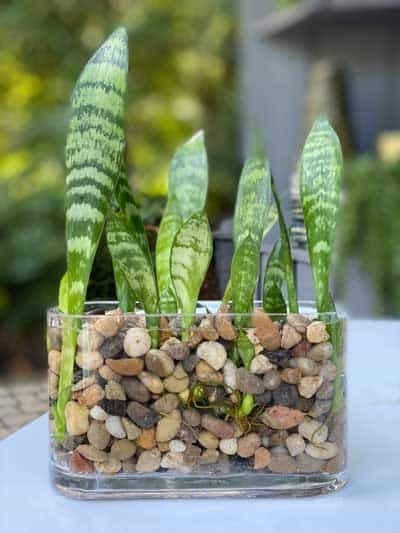
If you struggle to remember watering schedules, the snake plant might just become your new favorite houseplant. Surprisingly, some of my healthiest, most vibrant snake plants aren’t growing in soil—they’re living happily in a simple jar of clean water with a few smooth river stones.
I first tested this method after a friend gifted me a minimalist “clean plant setup.” No gnats, no soil spills, no mess—just elegant green leaves rising from a glass vase.
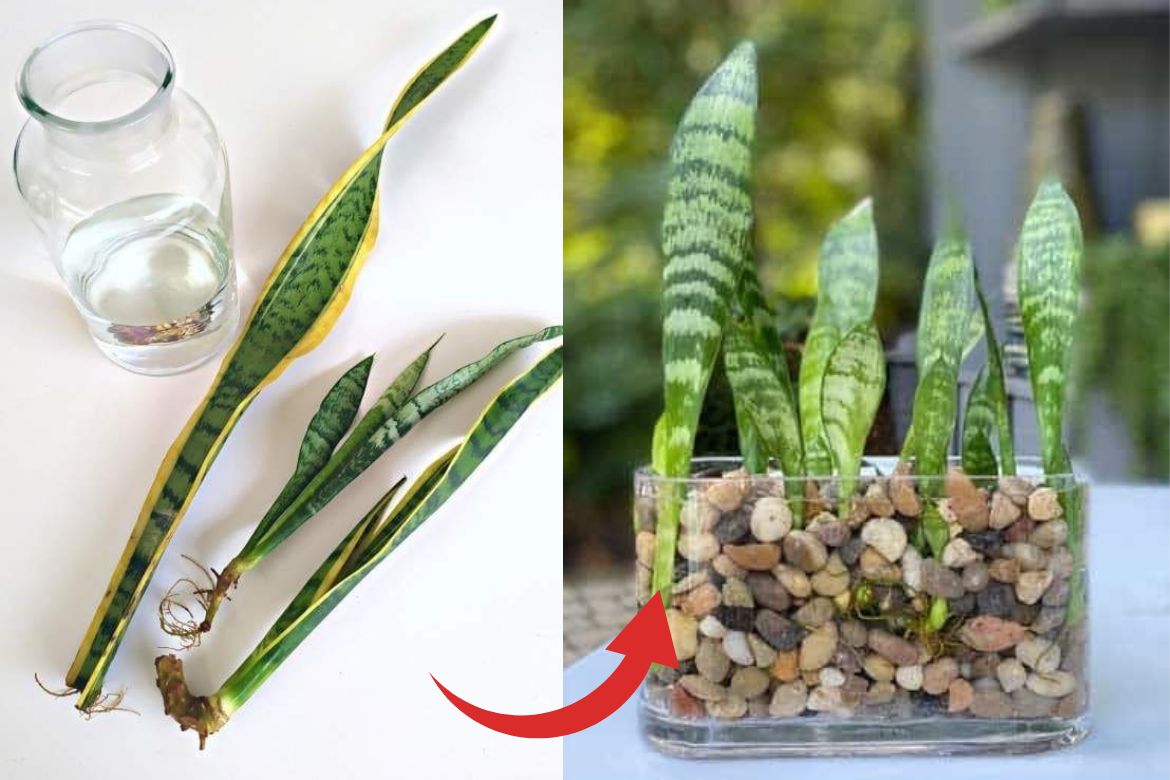
Snake plants can be grown in water, where they develop white, water-adapted roots while creating a clean, minimalist setup that feels like a mini indoor spa at home.
Why Grow Snake Plants in Water?
Putting a desert-loving plant in water may feel unusual, but once you try it, it makes perfect sense.
Snake plants are incredibly resilient and adaptable. When only the base of the leaf touches clean water, they respond by sending out new, healthy roots—without the risk of overwatering, because the moisture level is fully controlled.
This method also keeps everything clean: no messy soil, no gnats, and no compacted potting mix choking the roots. Instead, you get a soothing, minimalist setup ideal for small apartments, desks, or bathrooms.
And for forgetful plant parents, it’s one of the easiest indoor gardening methods to succeed with.
What You’ll Need
• A healthy leaf cutting or a pup
• Sharp, clean scissors
• A clear jar or vase
• Smooth decorative stones
• Filtered, distilled, or rain water
Be sure your stones are scrubbed clean. Avoid chlorinated or mineral-heavy tap water—especially during early rooting.
Step-by-Step: How to Grow Snake Plants in Water
Step 1: Choose Your Cutting
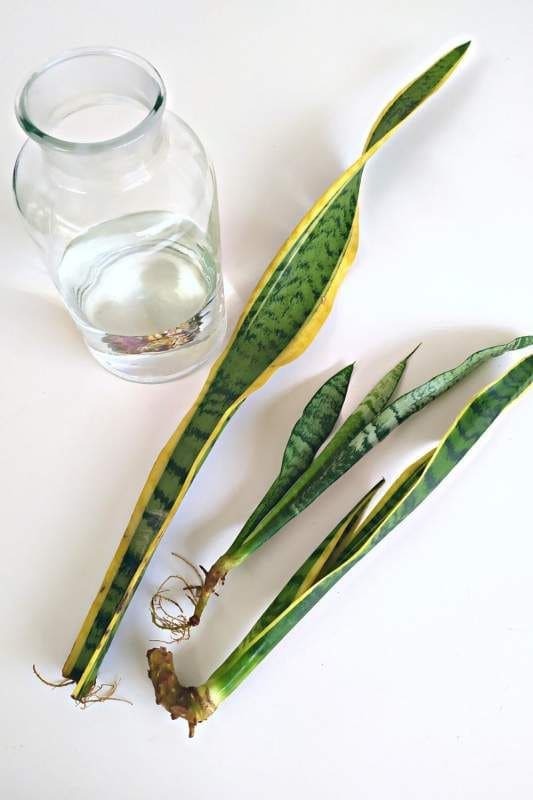
Select a healthy, firm leaf or a small pup with a visible root nub. Avoid mushy or damaged leaves.
If using a leaf cutting, slice it at an angle and let it air-dry for 24–48 hours to form a protective callus. This prevents rotting once it touches water.
Step 2: Prepare Your Jar
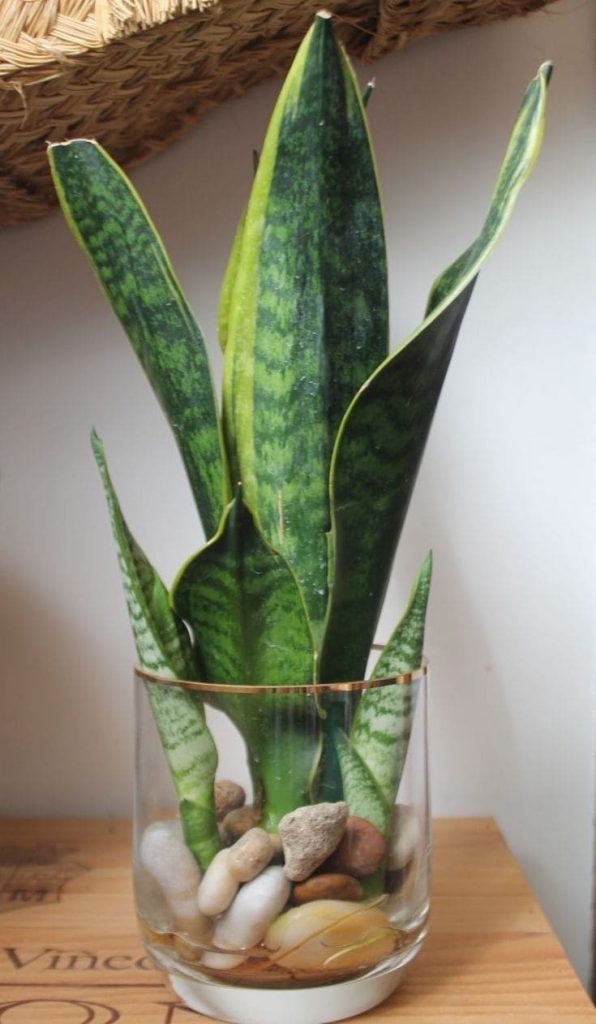
Add a layer of clean stones to the bottom of the jar. The stones will anchor the leaf and help keep it upright.
Step 3: Add Water
Pour just enough water so the base of the leaf touches it. The leaf itself should never be submerged.
Too much water causes rot, but gentle contact stimulates healthy root growth.
Step 4: Insert the Cutting
Nestle the leaf base firmly into the stones. If it leans, add more stones or switch to a narrower jar.
Ensuring the leaf stands straight helps prevent soft rot at the waterline.
Step 5: Place It in Bright Light
Put the jar where it will receive bright, indirect sunlight. Direct sun encourages algae, while low light slows root growth.
Step 6: Maintain & Refresh
Change the water every 7–10 days and top off when it evaporates. Rinse the jar if the water turns cloudy or develops an odor.
Roots usually appear in 3–6 weeks. You can keep the plant in water permanently or transition it to soil later.
Helpful Tips & Real-Life Lessons
When I first tried growing snake plants in water, I expected them to survive a few months at most. Instead, one leaf cutting lived for nearly two years in a bright bathroom—and even produced a tiny offshoot without soil.
Clean water is the secret. Refresh weekly and rinse at the first sign of murkiness.
Avoid heavy fertilizing. After a few months, a tiny drop of diluted houseplant fertilizer every 2–3 weeks is enough. Too much can burn new roots.
Also, be patient. Water propagation is slow. You may stare at an unchanged jar for weeks before seeing roots—but when they arrive, it’s exciting every time.
If algae becomes an issue, switch to a darker container or move the jar farther from direct sun. Snake plants love light, but algae loves it even more.
Frequently Asked Questions
1. How long can a snake plant live in water?
A snake plant can live in water for several years if the water is kept clean and refreshed regularly. Many people grow them hydroponically long-term without any problems. Just make sure only the base of the leaf touches the water and not the entire leaf.
2. How often should I change the water?
You should change the water every 7–10 days to prevent bacteria and algae. If it turns cloudy or smells unusual, replace it immediately. Clean, fresh water is the most important factor for healthy root growth.
3. Does a snake plant grow faster in water or soil?
Snake plants grow faster in soil because it provides more nutrients and a more natural environment for them. Water-grown plants tend to grow more slowly but stay cleaner and are usually pest-free. This method is ideal if you want a low-maintenance and tidy setup.
4. Can I use tap water for snake plant propagation?
Tap water can be used, but filtered or distilled water is better, especially during the early rooting stage. Chlorine and minerals in tap water may slow down root development over time. If you must use tap water, let it sit out overnight before adding it to the jar so some of the chlorine can dissipate.
5. Why is my snake plant cutting rotting in water?
Rot usually happens when too much of the leaf is submerged under the water line. Another common cause is not allowing the cut end of the leaf to callous over before placing it in water. Keep only the base of the leaf in contact with clean water and change it regularly to help prevent rot.