Table of Contents
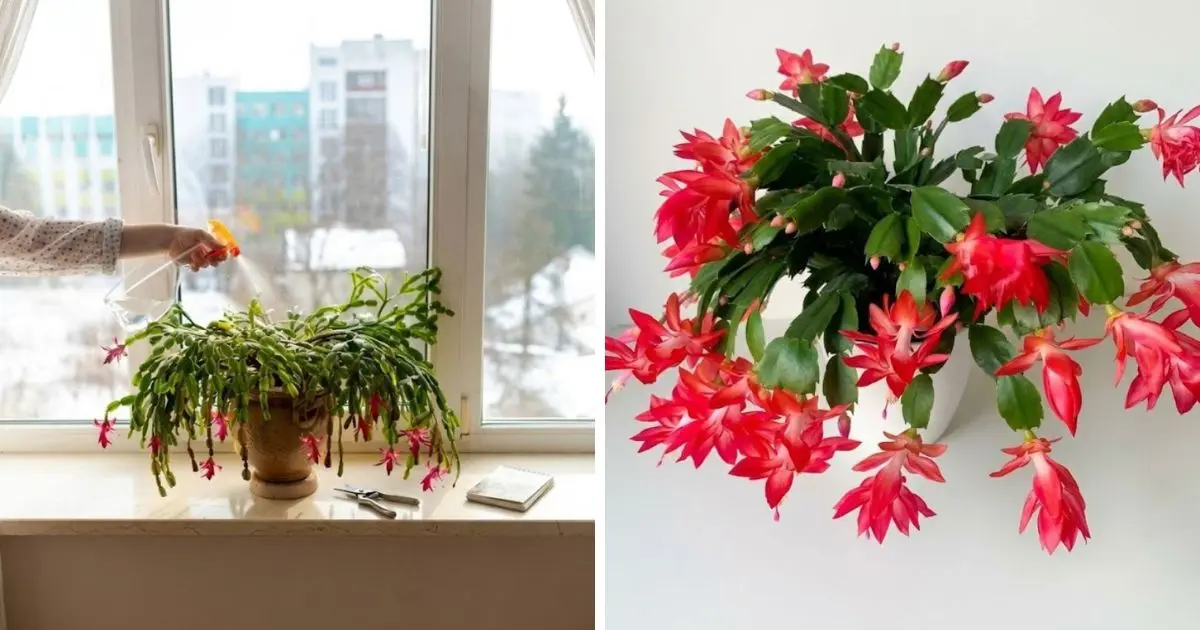
Christmas cactus is a long-lived houseplant known for its colorful flowers in late fall and winter.
Unlike desert cacti, it is native to the tropical and subtropical forests of southeastern Brazil, where it grows as an epiphyte on trees and rocks.
That means it prefers more moisture and humidity than most people expect from a cactus.
Plant Snapshot
| Plant name | Christmas cactus |
| Botanical name | Schlumbergera × buckleyi |
| Plant type | Perennial epiphytic cactus |
| Mature size | 6–12 inches tall, 12–24 inches wide |
| Light | Part Sun |
| Soil | Moist, well-draining potting mix |
| Water | Water when the soil begins to dry |
| Temperature | 60–70°F; cooler nights encourage flowering |
| Humidity | Moderate to high |
| Bloom time | Late fall through winter |
| USDA Hardiness Zones | 10–12 |
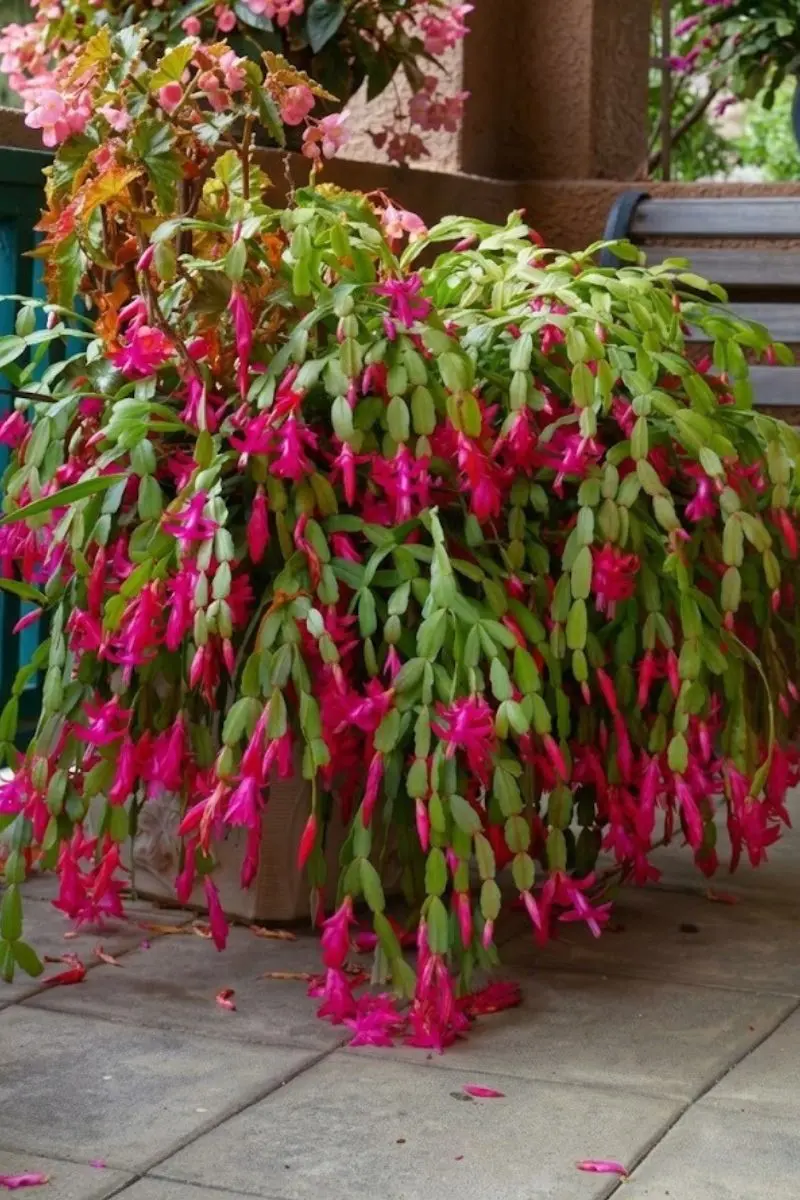
Christmas cactus has flat, jointed stems with rounded, scalloped edges and a naturally arching or trailing habit. Its flowers hang from the ends of the stems and may be pink, red, white, or purple.
Many plants sold as Christmas cactus are actually Thanksgiving cactus or hybrids. Christmas cactus typically has rounded, scalloped stem margins, while Thanksgiving cactus has more pronounced pointed teeth along the edges.
What Matters Most for Success
- Give it bright, indirect light. Strong afternoon sun can bleach or scorch the stems.
- Keep the soil well drained. Christmas cactus likes moisture but doesn’t tolerate constantly wet soil.
- Adjust watering with the season. Keep the soil more evenly moist while the plant is growing and flowering, then water less often after flowering.
- Keep conditions steady when buds form. Sudden changes in temperature, light, or watering can cause buds to drop.
- Give it moderate to high humidity. Dry indoor air can cause problems, especially during the heating season.
Christmas Cactus Plant Care
Light Requirements
Christmas cactus grows best in bright, indirect light. An east- or west-facing window usually provides good conditions.
If the plant is near a bright south-facing window, filter the light with a sheer curtain.
Some gentle direct sun is fine, but strong afternoon sunlight can bleach or scorch the stems. If you move the plant outdoors for summer, place it in partial shade or filtered light.
Watering
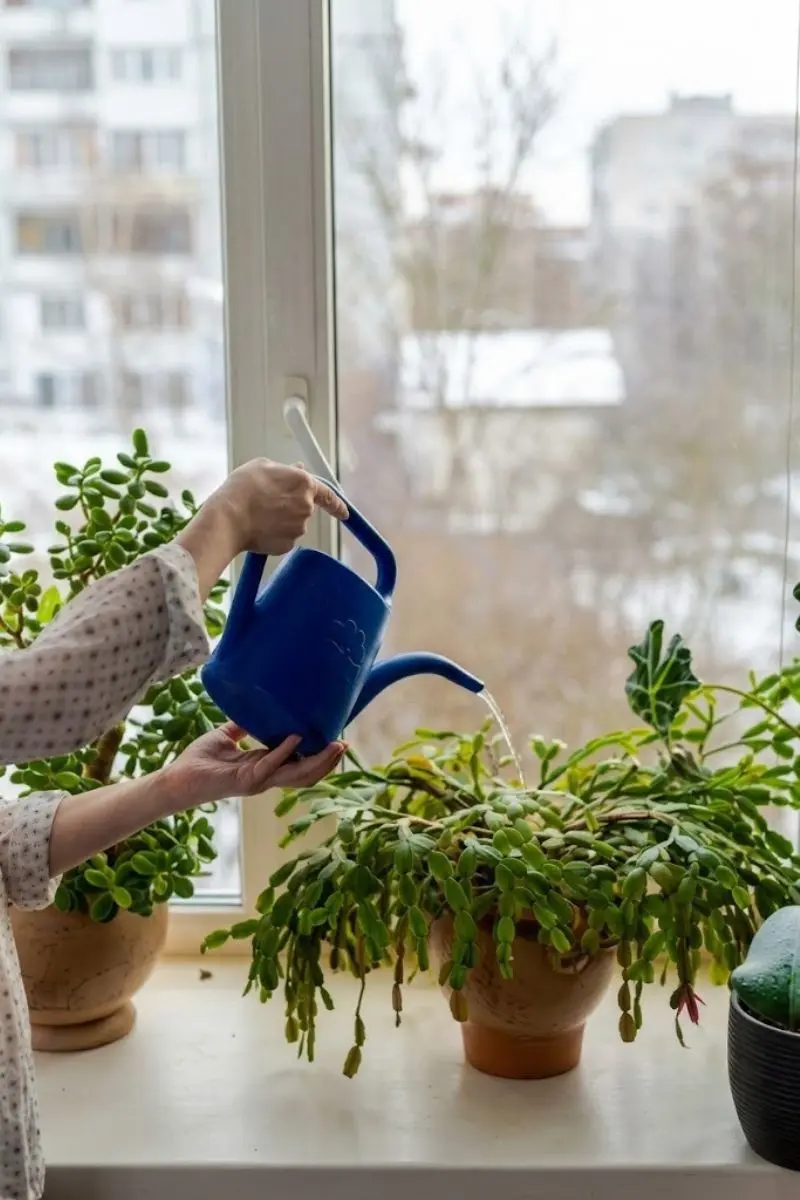
Water Christmas cactus when the top inch of soil feels dry, then water thoroughly and let the excess drain away. Never leave the pot sitting in water.
Keep the soil more evenly moist while the plant is growing and flowering, then water less often after flowering.
Avoid letting the plant become severely dry while it is forming or opening flowers.
Soil and Potting Mix
Choose a well-draining, airy potting mix that holds some moisture without staying wet. A standard houseplant mix amended with perlite works well, and a commercial cactus or succulent mix is another option.
Christmas cactus doesn’t need a heavy or fast-drying desert-cactus mix. The goal is a medium that drains freely while retaining enough moisture for the roots.
Always use a container with a drainage hole.
Temperature and Humidity
During normal indoor growth, keep Christmas cactus around 60–70°F. It also appreciates moderate to high humidity, especially when indoor heating makes the air dry.
Keep the plant away from heating vents, fireplaces, cold drafts, and doors that open frequently. Sudden temperature changes can stress the plant and cause flower buds to drop.
Cooler temperatures are especially useful in fall when you’re trying to initiate flowering, so treat the cooler nighttime range as part of the bloom routine rather than a year-round requirement.
Fertilizing
Feed Christmas cactus monthly during the growing season, generally from late spring through summer. Use a balanced houseplant fertilizer according to the product label.
Reduce or pause fertilizing as the plant prepares to bloom. Resume feeding after flowering when new growth begins.
How to Encourage a Christmas Cactus to Bloom
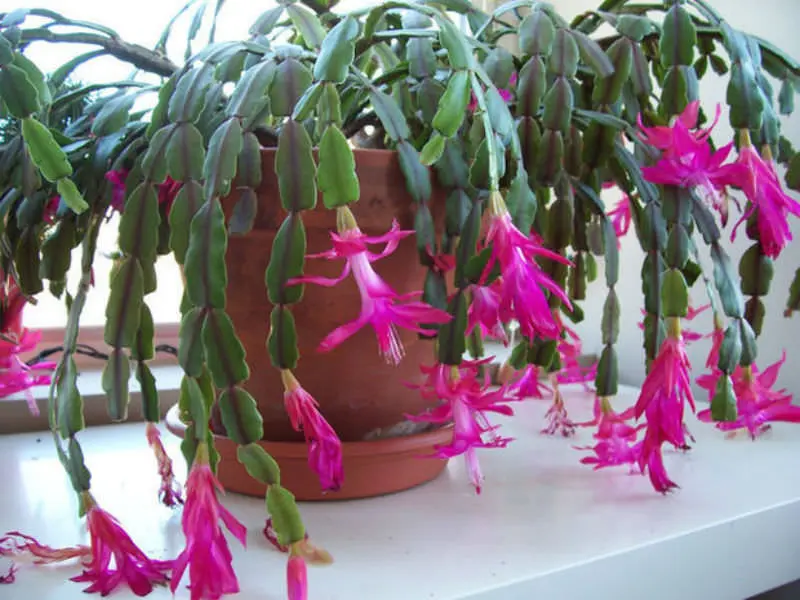
Christmas cactus forms flower buds as fall days shorten and temperatures cool.
To encourage blooms, give it bright light during the day, cool nights, and a long, uninterrupted period of darkness each night.
About six to eight weeks before you want it to bloom, move the plant to a cool location where it receives bright daytime light but no artificial light after dark.
Aim for:
- Long nights: Give the plant at least 12 hours of uninterrupted darkness each night. Some holiday cacti benefit from longer periods of darkness, depending on temperature and cultivar.
- Bright days: Give the plant plenty of filtered light during daylight hours.
- Cool temperatures: Nights around 55–65°F encourage bud formation. At about 55°F, some holiday cacti can bloom after several weeks even without a strict short-day treatment.
- Consistent watering: Let the soil dry somewhat between waterings, but don’t allow the plant to become severely dry.
- No artificial light at night: A nearby lamp or kitchen light can interrupt the dark period and delay flowering.
- Pause fertilizer: Stop feeding as flower buds begin to form.
Once buds appear, leave the plant where it is. Moving it, exposing it to drafts, or making a sudden change in watering can cause developing buds to drop.
Once the first flowers begin to open, you can move the plant to a more prominent spot for display.
Pruning
Christmas cactus doesn’t need regular pruning, but trimming it can encourage branching and make the plant fuller.
The best time to prune is right after flowering, usually in winter or early spring. Twist off individual stem segments at the joints, or use clean scissors to make the cuts.
Avoid heavy pruning in late summer and fall, when the plant is preparing to set flower buds. The pieces you remove can also be used to start new plants.
Repotting
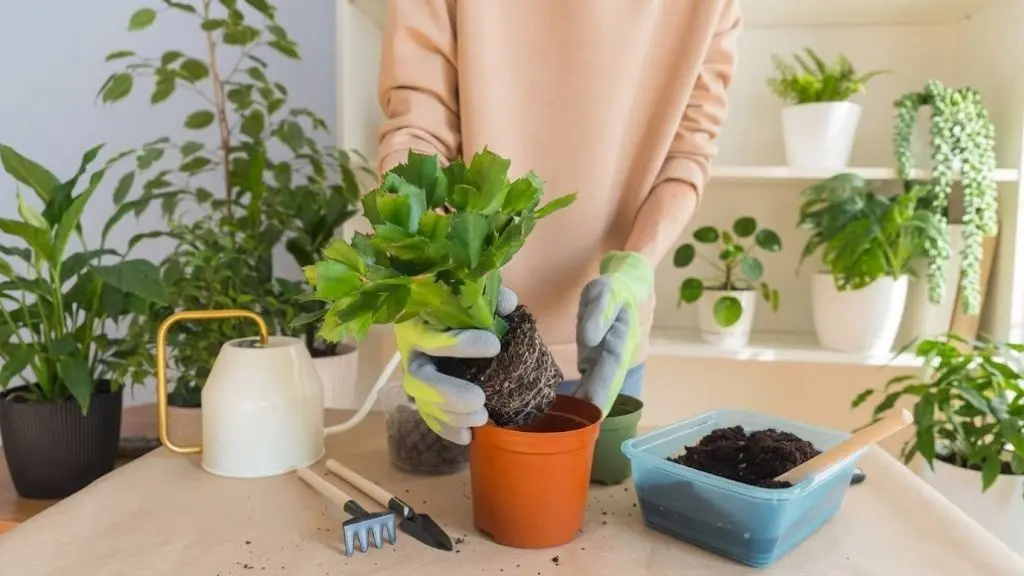
Christmas cactus grows well when slightly root-bound, so it doesn’t need frequent repotting. Repot when the plant has clearly outgrown its container or the potting mix has broken down.
The best time to repot is after flowering, when the plant resumes active growth. Choose a container only slightly larger than the current one and fill it with fresh, well-draining potting mix.
Don’t move the plant into a much larger pot. Extra soil holds more moisture around the roots and can increase the risk of root problems.
Overwintering
Christmas cactus is not frost hardy. If you keep it outdoors during warm weather, bring it indoors before temperatures fall to about 50°F.
Check the stems and potting mix for pests before bringing the plant inside. Place it in bright, indirect light and keep it away from heating vents and cold drafts.
During winter, check the soil before watering rather than following a strict schedule.
If the plant is blooming, avoid major changes in temperature, light, or watering. Stable conditions help flowers last and reduce bud drop.
Propagation
Christmas cactus is easy to propagate from stem cuttings, and spring is a good time to do it.
- Take a healthy cutting with two to five stem segments.
- Let the cutting sit overnight so the cut end can callus.
- Insert the bottom segment about 1 inch deep into moist perlite or coarse sand.
- Place the cutting in bright, indirect light.
- Water when the growing medium begins to dry.
Roots typically form within 6 to 8 weeks. When the roots are about 1 inch long, plant the cutting in a well-draining potting mix.
Pests and Problems
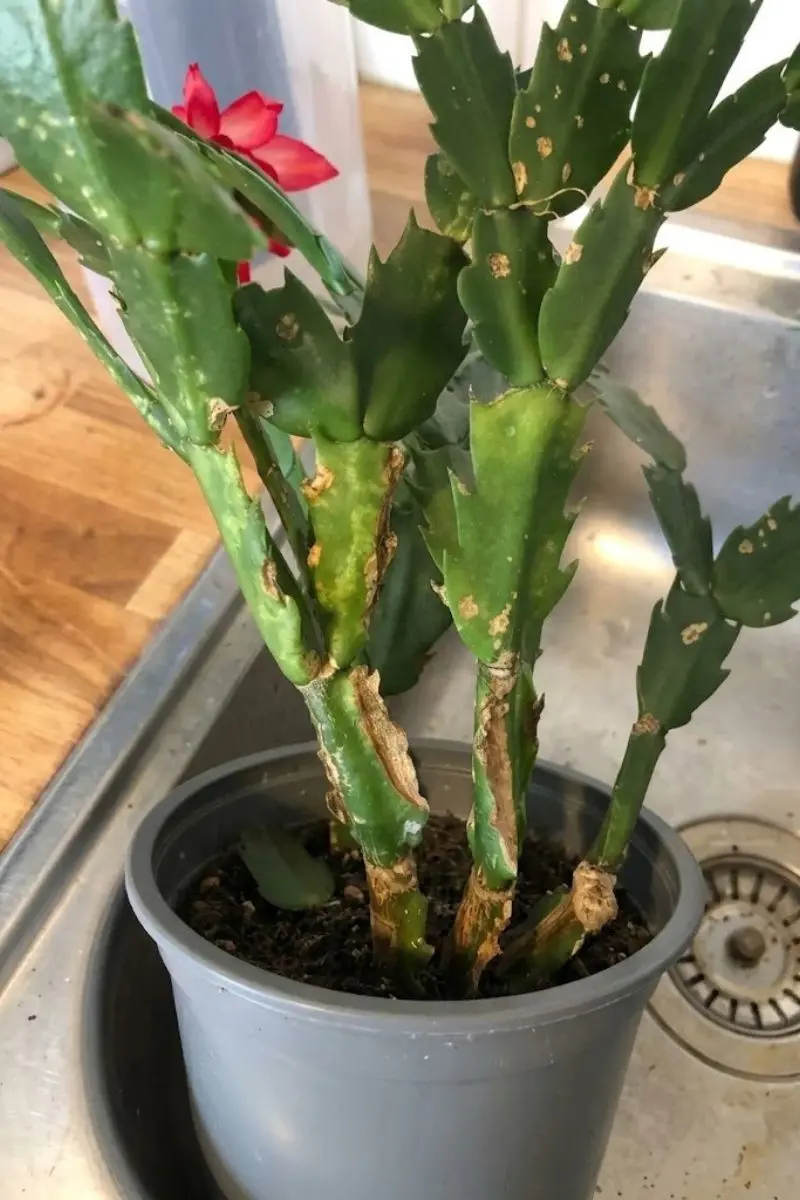
- Bud drop: Sudden changes in temperature, light, or watering can cause flower buds to fall. Artificial light at night can also interfere with flowering. Once buds appear, keep the plant in a stable location and avoid moving it until the flowers begin to open.
- Root rot: Consistently wet soil can damage the roots and lead to limp or declining growth. Make sure the container drains freely and don’t leave the plant sitting in water.
- Wrinkled or limp stems: This can happen when the plant is too dry, but it can also be a sign of root damage from overwatering. Check the soil before adding more water.
- Pale or yellow stems: Too much strong sunlight can bleach or scorch the stems. Move the plant to bright, filtered light.
- Mealybugs, scale, spider mites, and aphids: Check the stems and joints regularly for pests, especially after bringing an outdoor plant inside for winter. Treat infestations with a product labeled for use on houseplants and follow the label directions.
FAQs
How often should you water a Christmas cactus?
Check the soil rather than watering on a fixed schedule.
When the top inch feels dry, water thoroughly and let the excess drain. Keep the soil more evenly moist while the plant is growing and flowering, then water less often after flowering.
Why isn’t my Christmas cactus blooming?
The plant may not be getting the combination of cool nights and long, uninterrupted darkness it needs to form buds.
About six to eight weeks before the desired bloom period, give it bright daytime light, cool nights, and darkness at night without interruption from indoor lighting.
Does a Christmas cactus need direct sunlight?
No. Christmas cactus prefers bright, indirect light.
Some gentle direct sun is fine, but strong afternoon sun can scorch or bleach the stems.
Why are the buds falling off my Christmas cactus?
Bud drop can happen when the plant experiences sudden changes in temperature, light, or watering. Drafts and artificial light at night can also interfere with flowering.
Once buds form, leave the plant in a stable location and avoid major changes to its care.
Does a Christmas cactus like to be root-bound?
Yes. Christmas cactus generally grows well when slightly root-bound, so it doesn’t need frequent repotting.
Repot when the plant has outgrown its container or the potting mix needs replacing.