Table of Contents
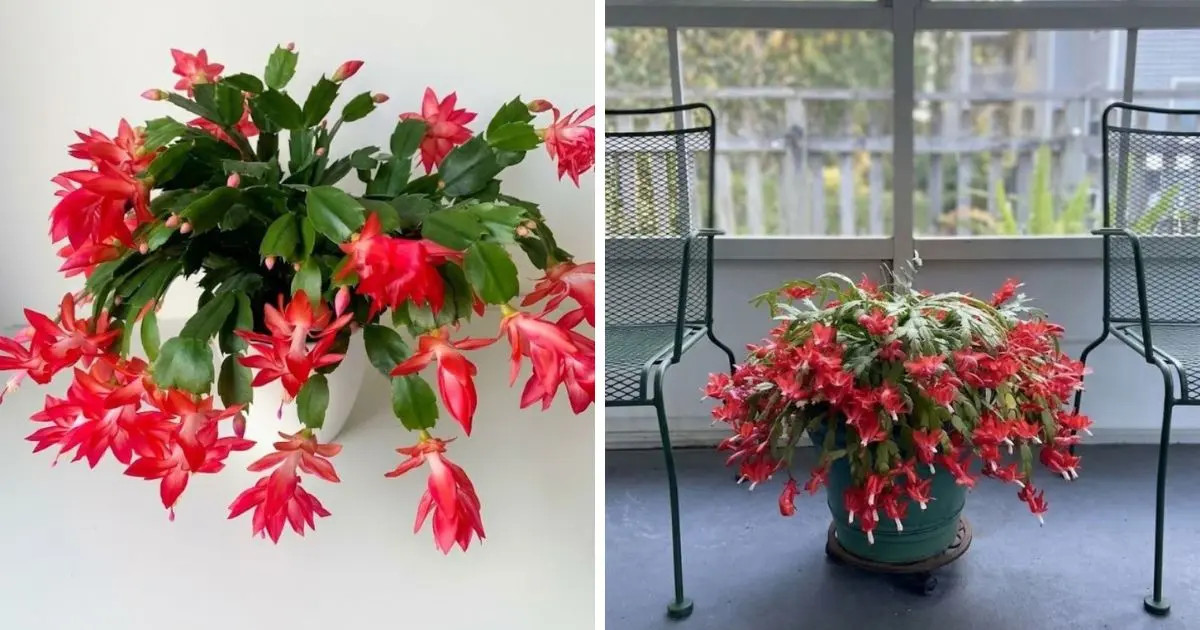
Christmas cactus can live for years and bloom again each winter, but getting it to flower well takes more than routine watering.
Light, moisture, temperature, and the weeks leading up to bloom all matter.
Whether you’re bringing one home for the first time or trying to coax an established plant into flowering again, these are the decisions that matter most.
1. Choose a Healthy Plant and Check Its Bloom Time
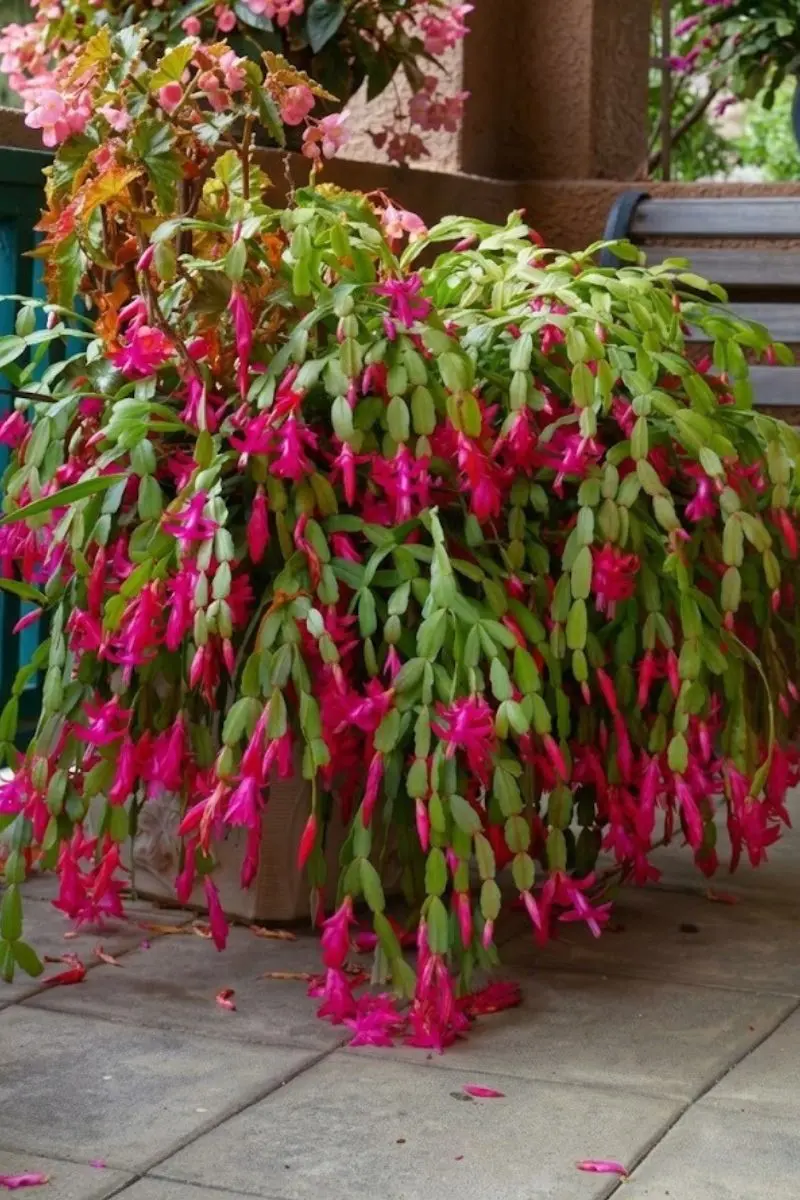
If you’re buying a Christmas cactus in bloom, look for a full, healthy plant with plenty of unopened buds rather than one that’s already at peak bloom. This gives you more flowers to enjoy at home and lets you check the stems and soil for signs of stress before bringing it home.
Check the label, too. Many plants sold as Christmas cactus are actually Thanksgiving cactus or hybrids.
Their care is similar, but they can flower at different times, so knowing which type you’re buying can help set expectations if you’re shopping for blooms around a particular holiday.
2. Give It Bright, Indirect Light
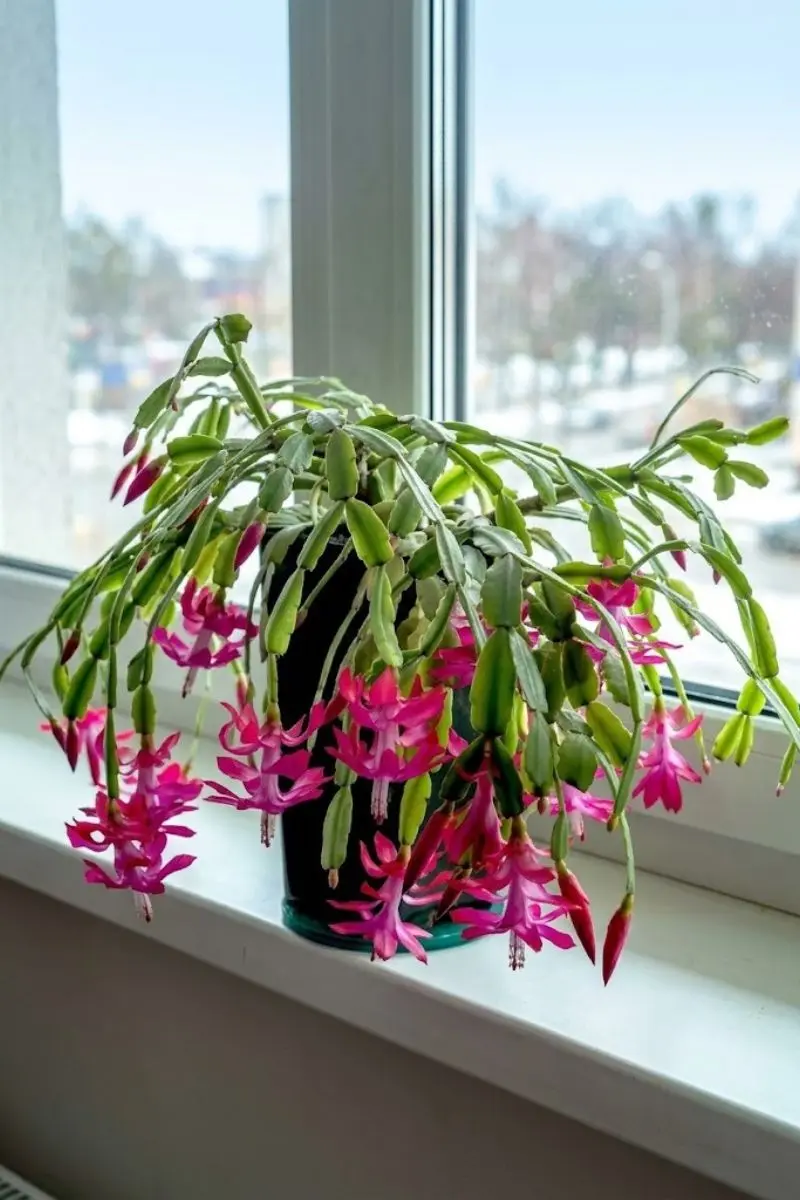
Place your Christmas cactus where it receives bright, indirect light. A bright window with filtered light works well, while intense direct sun can cause discoloration or scorch the stems.
Good daytime light supports healthy growth and future flowering.
3. Choose a Well-Draining Pot and Soil
Use a container with a drainage hole and potting soil that drains freely. A cactus or succulent mix works well, although a regular all-purpose potting mix is also suitable if it drains well.
Don’t automatically move a Christmas cactus into a larger pot as it grows. These plants generally perform well when slightly pot-bound and can go years without repotting.
When it does need repotting, do it in spring or early summer when the plant isn’t blooming, and move it into a container only slightly larger than the previous one.
4. Water According to the Season
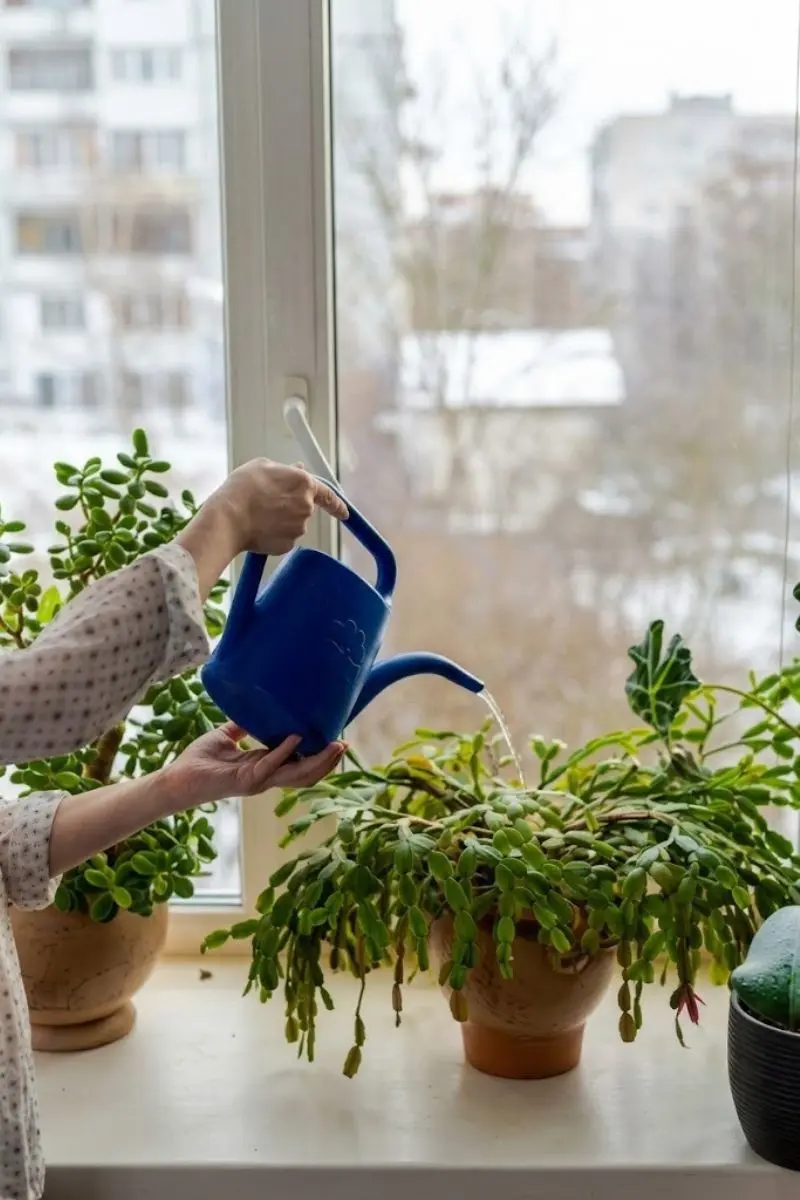
Christmas cactus needs more moisture than a desert cactus, but its watering needs change through the year. When the plant isn’t flowering, let the soil dry out between waterings, then water thoroughly. After flowering, water less frequently.
While buds and flowers are developing, don’t let the soil become excessively dry.
Keep moisture consistent, but avoid overwatering or leaving the roots in soggy soil; both can contribute to bud drop and root problems.
5. Feed It During Active Growth
Fertilize during the active growing season, generally spring through late summer, using a balanced houseplant fertilizer according to the product directions. Feeding supports the new growth that will produce flowering stems later on.
As fall approaches and the plant shifts toward flowering, stop feeding rather than trying to push additional growth.
6. Give It Long, Uninterrupted Nights in Fall
About six to eight weeks before your desired bloom period, give your Christmas cactus bright daytime light followed by a long, uninterrupted dark period each night. At least 12 hours of darkness is a useful starting point.
Artificial light from lamps or other household fixtures can interfere with bud formation, so a naturally dark room can make the process easier.
Keep the routine consistent through the bud-setting period. Some cultivars may need a longer dark period to flower reliably.
7. Keep Fall Nights Cool
Darkness isn’t the only cue for bud formation. Temperature matters, too.
During the bud-setting period, aim for nighttime temperatures around 60 to 65°F, with slightly warmer days. Temperatures above about 70°F can interfere with flowering.
If your home stays warm in fall, move the plant to a cooler room where it can still receive bright daytime light. Keep it there through the bud-setting period, then return it to its usual spot once the buds are established.
8. Don’t Move It Once Buds Form
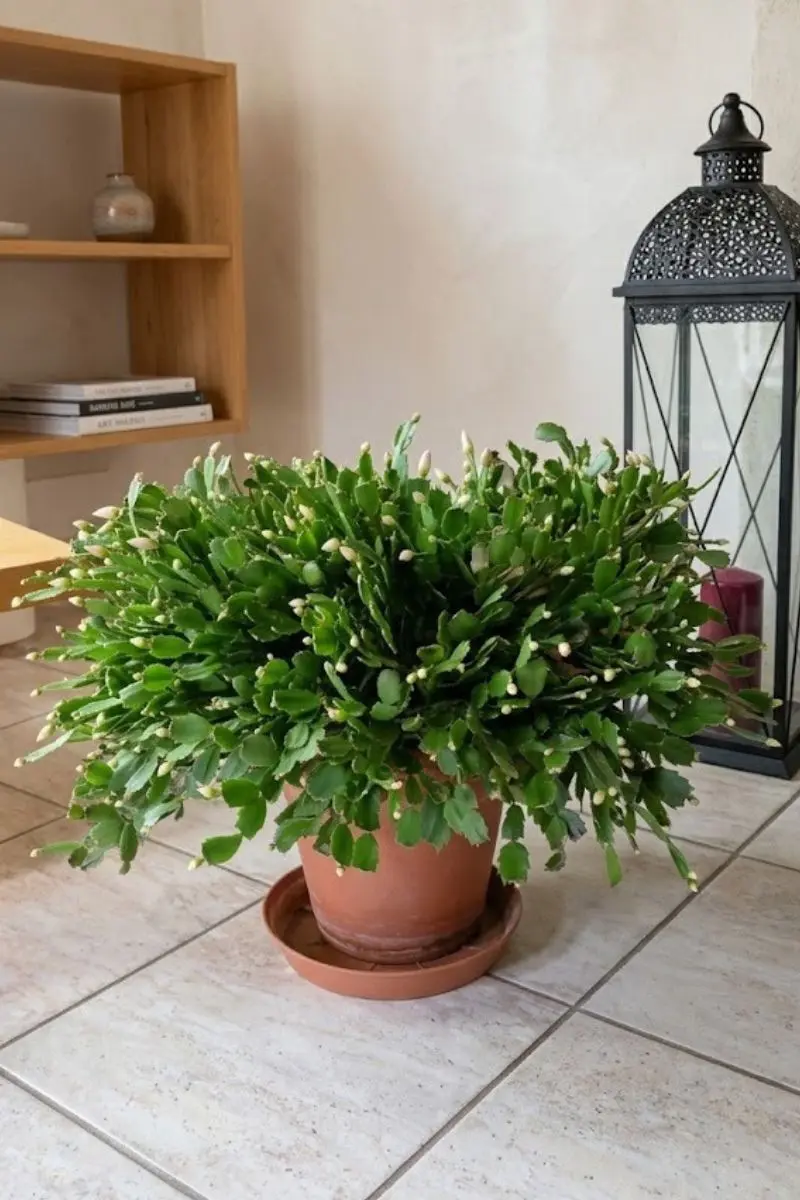
Once flower buds appear, resist the urge to move the plant around the house. Sudden changes in light, temperature, moisture, or location can cause developing buds to drop.
If possible, choose its display spot before the buds are well developed.
Once the first flowers begin opening, you can move it to a more prominent spot and enjoy the show without disrupting the most sensitive stage of bud development.
9. Prune After Flowering to Encourage Branching
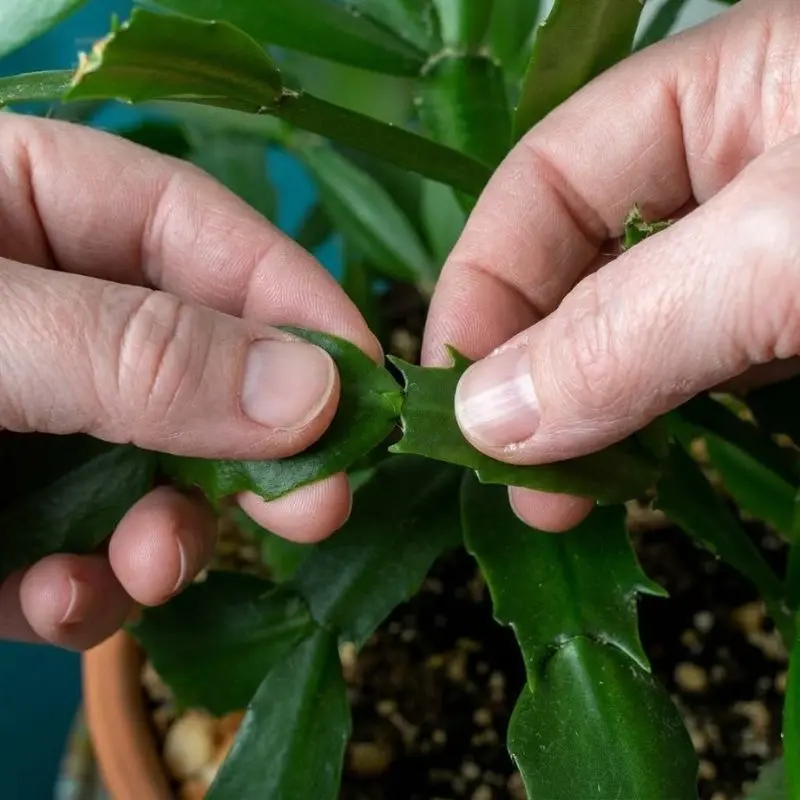
Christmas cactus doesn’t need regular pruning, but trimming after flowering can help keep an overgrown plant compact and encourage branching.
Remove individual stem segments at their joints soon after flowering, when the plant is beginning a new period of growth.
More branching means more stems, and flowers form at the ends of those stems. Pruning can therefore help create a fuller plant with more potential flowering sites for the next season.
10. Protect It From Cold and Dry Heat
Christmas cactus can spend warm weather outdoors in a sheltered, shaded location, but cold exposure can damage the plant and cause buds to drop. If you move it outdoors, bring it back inside before temperatures fall to around 50°F.
Once indoors, keep it away from cold drafts, heating vents, and other sources of dry or sudden heat.
Christmas cactus prefers some humidity, but you don’t need to maintain a precise humidity percentage; simply avoiding very dry conditions can help keep the plant from becoming stressed.
FAQs
Why isn’t my Christmas cactus blooming?
Start with the two biggest factors: day length and temperature.
Give the plant bright light during the day, long, uninterrupted darkness at night, and cool fall temperatures. Artificial light at night or temperatures above about 70°F can interfere with bud formation.
How often should I water a Christmas cactus?
There isn’t one schedule that works for every home. Water based on the soil and season rather than a fixed calendar.
When the plant isn’t flowering, let the soil dry out between waterings; while it is budding or flowering, don’t let it become excessively dry, but always allow excess water to drain.
Should I repot my Christmas cactus every year?
No. Christmas cactus generally grows well when slightly pot-bound and can go several years without repotting.
Repot when the plant has genuinely outgrown its container, preferably in spring or early summer when it isn’t blooming, and choose a pot only slightly larger than the previous one.