Table of Contents
Getting the light right is essential to growing healthy houseplants indoors. Too little light can leave a plant stretched out or struggling to produce new growth, while too much intense light can bleach or scorch its leaves.
Light levels can also change throughout the year, so a spot that worked well in one season may not provide the same conditions later.
Changes in growth, foliage, and flowering can all point to a lighting problem. Look for these six signs when you’re trying to figure out whether your houseplant is getting the light it needs.
1. The Stems Are Getting Long and Spindly
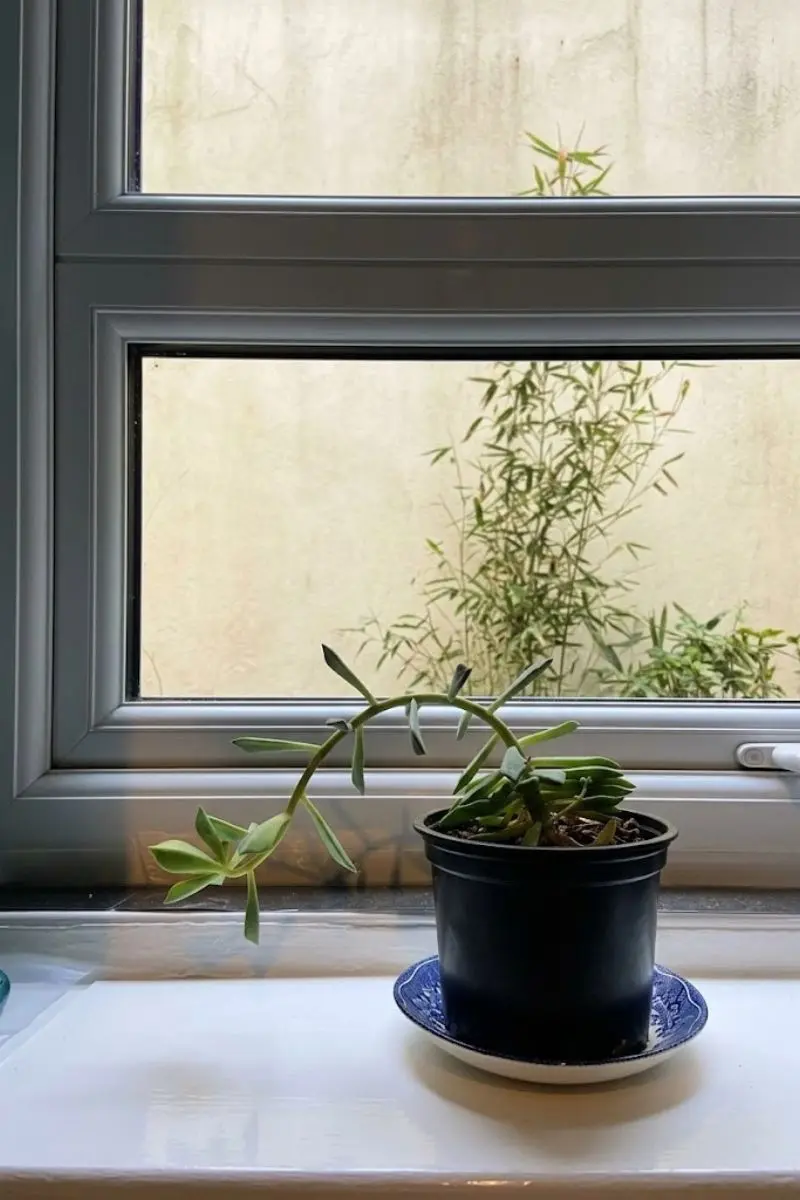
When a houseplant doesn’t get enough light, it may stretch toward the nearest light source. The stems become longer, the spaces between leaves increase, and the plant can take on a thin, sparse appearance.
If a plant that used to grow compactly suddenly starts looking stretched out, take a closer look at its location. Seasonal changes, a nearby plant, or something else blocking a window can all affect how much light reaches it.
If it needs more light, move it closer to a brighter window or to another spot that suits its light requirements. A grow light can provide supplemental light when natural light isn’t enough.
Match the new location to the plant’s light requirements rather than automatically choosing the brightest spot.
2. New Growth Has Slowed or Stopped
Some houseplants respond to low light by putting new growth on hold. Instead of producing fresh leaves or shoots, they may seem to stop growing.
Light isn’t the only possible explanation. Watering problems, temperature, nutrition, and a plant’s natural growth cycle can also affect how quickly it grows.
But if a plant otherwise seems healthy and is sitting in a dim location, its light is worth checking. Start by finding out how much light the plant needs.
If its current spot falls short, move it somewhere brighter or supplement the available natural light with a grow light.
3. A Flowering Plant Isn’t Producing Blooms
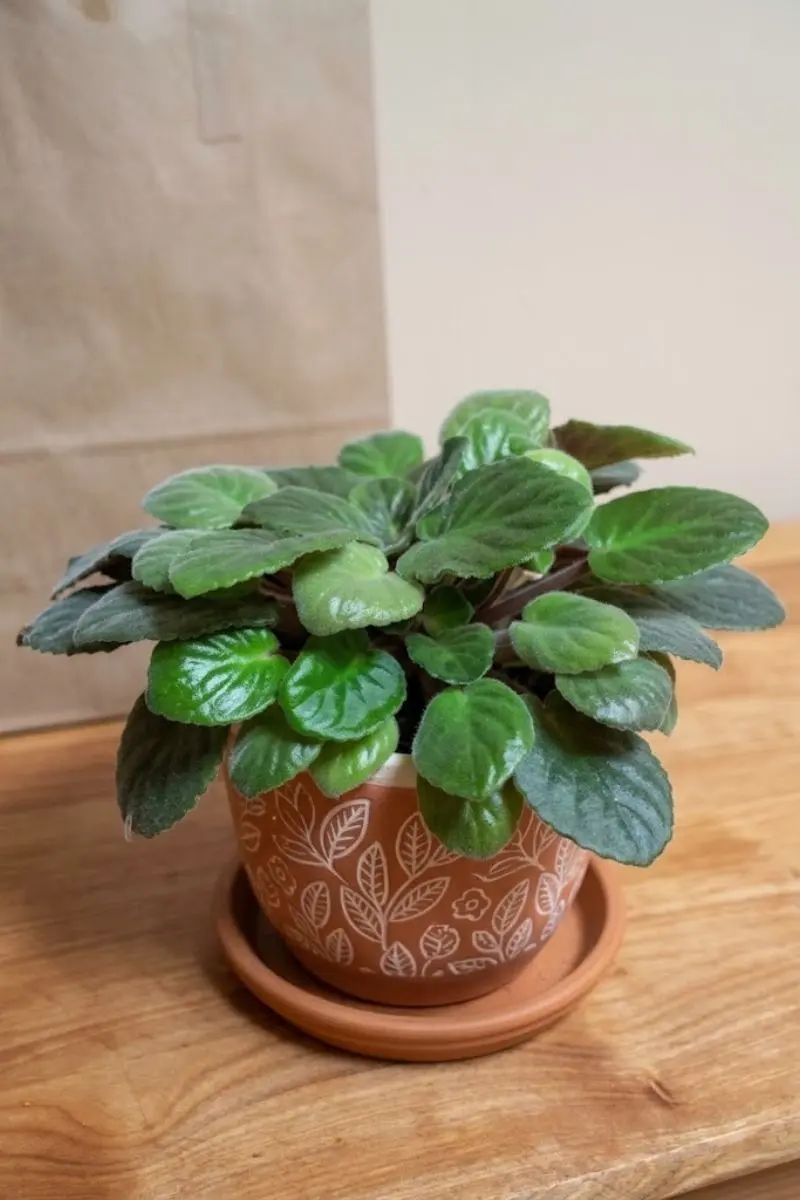
Flowering takes a lot of energy, so inadequate light can mean fewer flowers—or no flowers at all.
This matters most for plants that normally flower indoors. A foliage plant that rarely blooms isn’t necessarily showing a light problem.
Before changing its location, rule out other common reasons for poor flowering, such as watering, temperature, or nutrition. If those conditions are in order, giving the plant more suitable light may help it bloom.
4. The Plant Keeps Leaning Toward the Window
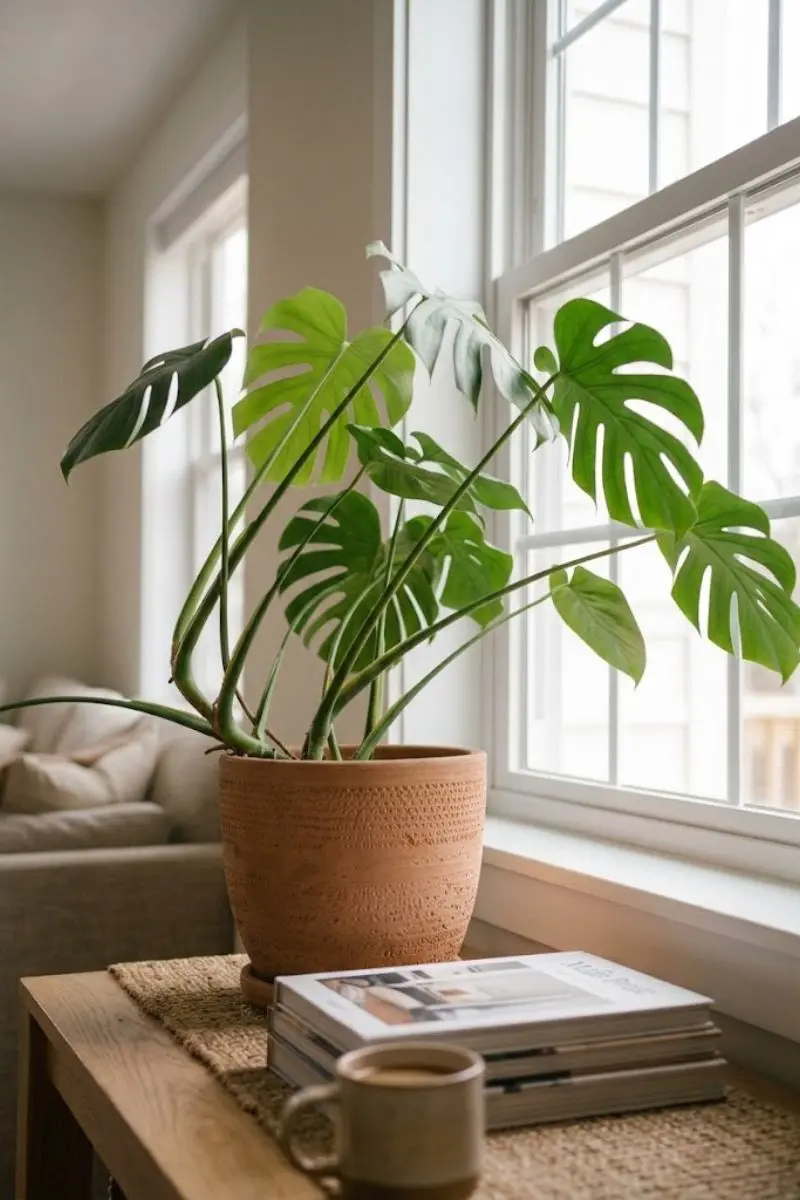
A houseplant that gradually leans toward a window is often responding to the available light. You may also notice its leaves turning toward the light source even when the stem remains mostly upright.
Rotating the pot periodically can help keep growth more even, but it doesn’t address the underlying problem if the plant isn’t getting enough light.
Move it closer to an appropriate window or provide supplemental light if necessary.
5. Variegation or Fenestration Starts to Disappear
If a variegated plant begins producing leaves with less of its usual pattern, its light level may be worth checking. The non-green portions of variegated leaves contain less chlorophyll, so some variegated plants need brighter conditions to maintain their distinctive coloring.
Low light can also affect fenestration in plants such as Monstera. A plant that normally develops holes or splits may produce simpler leaves when conditions aren’t providing enough light.
Moving it to a brighter spot that suits its needs may help it maintain these features. Don’t assume, however, that maximum light is best. A plant adapted to filtered light can suffer if you move it directly into harsh sun.
6. The Leaves Look Bleached, Scorched, or Washed Out
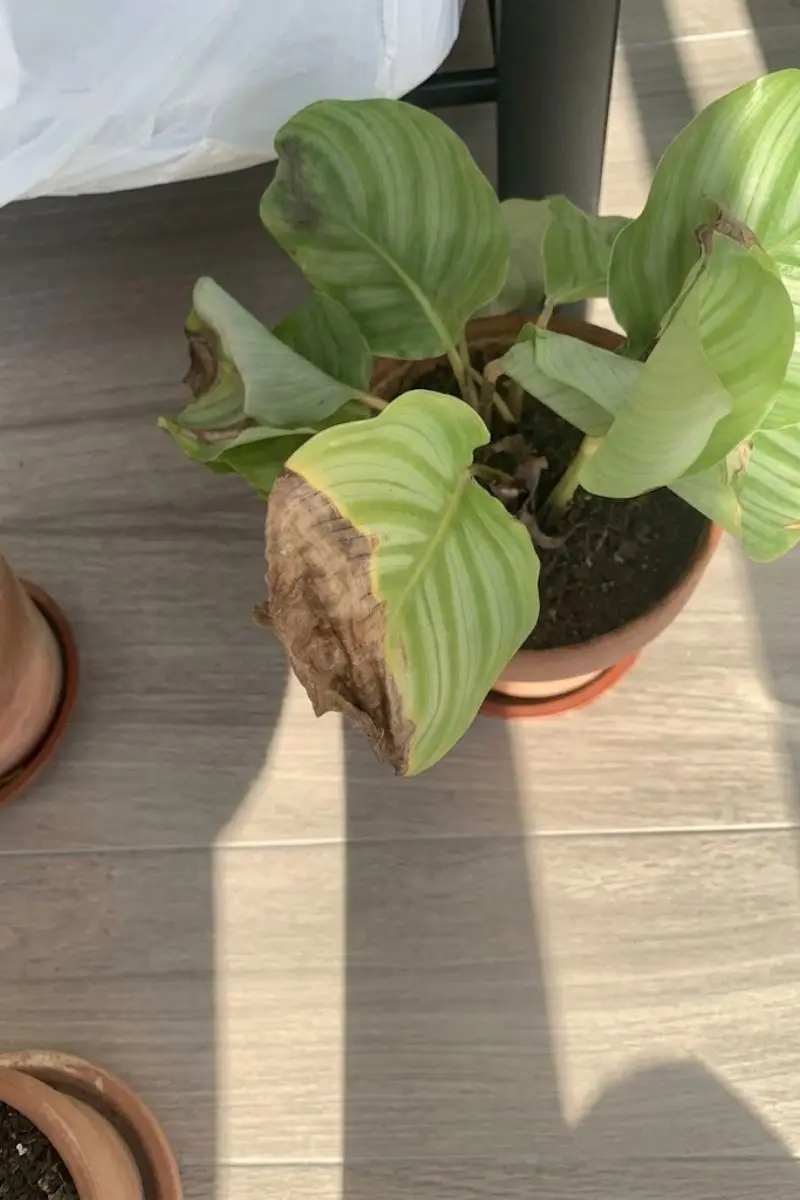
Not every lighting problem means a plant needs more light. Too much intense light can damage foliage, especially on houseplants adapted to filtered light.
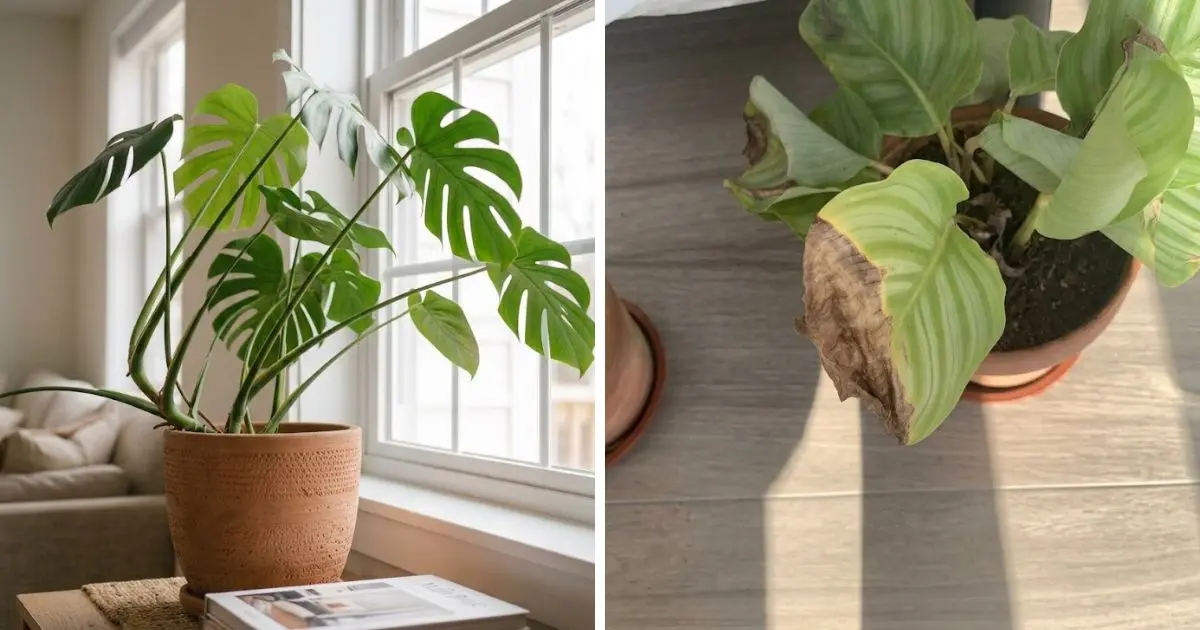
Leaves exposed to excessive light may look pale, faded, or washed out. With continued exposure, damaged areas can become brown and brittle.
Instead, move the plant away from the strongest light. Move it farther from the window, filter strong sunlight with a sheer curtain, or choose a less intense location.
When increasing a plant’s light substantially, make the change gradually so its foliage has time to adjust.
FAQs
How can I tell whether my houseplant needs more or less light?
Look at the symptoms together with the plant’s normal light requirements. Leggy growth, slow growth, poor flowering, leaning, and loss of variegation can point to insufficient light, while bleached or scorched foliage can indicate excessive light.
Because these symptoms can have other causes, also check watering, temperature, and nutrition.
Is a bright window always the best place for a houseplant?
No. Different plants have different light requirements.
A sunny window may suit a high-light plant but be too intense for a shade-tolerant houseplant. Light also changes with the seasons, so you may need to adjust a plant’s position during the year.
Can a grow light help if my houseplant doesn’t get enough natural light?
Yes. Supplemental lighting can help when your home doesn’t provide enough suitable natural light.
Position the fixture according to the manufacturer’s directions and the plant’s needs, since light intensity changes with distance from the light source.