
Table of Contents
Ficus audrey is valued for its clean, modern look. Its velvety green leaves and pale veining suit minimalist interiors while being significantly easier to care for than a Fiddle Leaf Fig.
When you establish a proper watering routine and provide stable lighting, this resilient indoor tree gradually grows from a compact tabletop plant into an impressive floor plant.
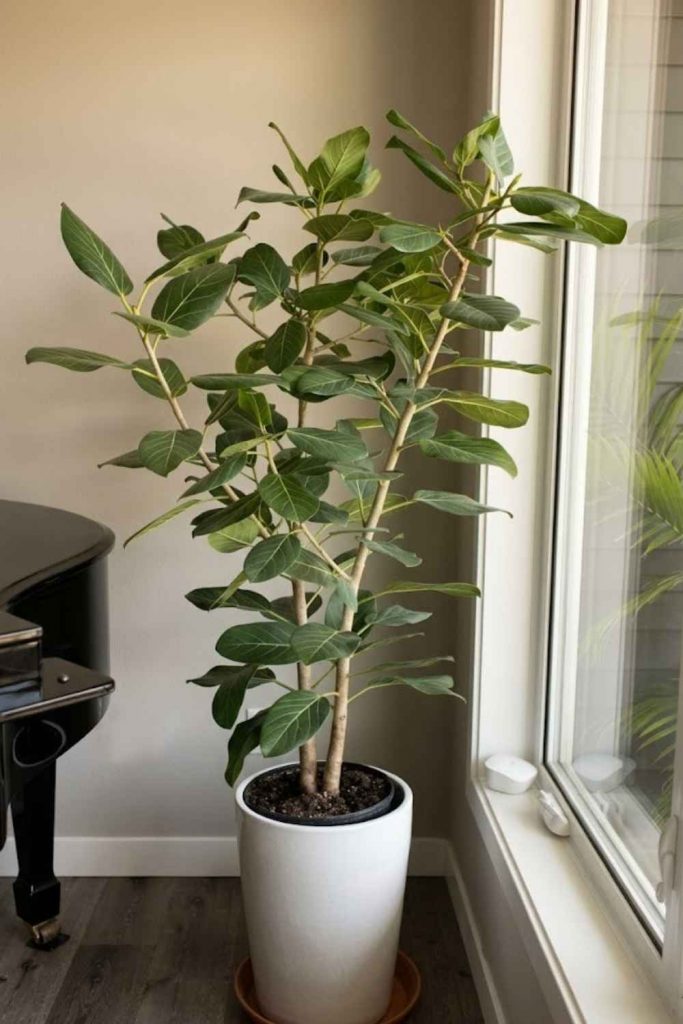
Plant Snapshot
- Common Name: Ficus Audrey, Banyan Tree
- Botanical Name: Ficus benghalensis
- Plant Type: Broadleaf evergreen tree
- Mature Size: 5–10 feet indoors
- Light Needs: Bright, indirect light; tolerates brief morning sun
- Water Needs: Moderate; allow the top few inches of soil to dry
- Soil Preference: Coarse, well-aerated potting mix
- USDA Zones: 9–11 (outdoors); commonly grown indoors elsewhere
- Toxicity: Toxic to cats and dogs if ingested; sap may irritate skin.
Signs Your Plant is Healthy
- Upright Leaves: Foliage points slightly upward or holds horizontally, showing excellent hydration.
- Firm Stem: The main trunk and branches feel rigid and woody, supporting the upper canopy without bending.
- Continuous Growth: New leaf spikes emerge from the tips every few weeks during spring and summer.
- Healthy Leaf Texture: Mature leaves maintain their naturally soft, velvety surface without excessive dullness, yellowing, or spotting.
Ficus Audrey Care
Light Requirements
Ficus audrey thrives in bright, indirect sunlight. The best indoor placement is near an east-facing window, or a few feet from a large south- or west-facing window where a sheer curtain filters the light. Avoid dim corners or locations far from natural light.
The plant accommodates brief periods of direct morning sun, which helps maintain the rich green color of the foliage. However, avoid harsh, unfiltered afternoon sun, which permanently burns the velvety leaves.
Watch the growth pattern for cues. Insufficient light produces leggy stems with wide gaps between the leaves, and the foliage turns a dull, pale green. If the sun exposure is too intense, you will notice crisp, straw-colored patches on the upper surfaces of the leaves facing the glass.
Watering
Let soil dryness dictate your watering cycle rather than a fixed calendar schedule. The tree responds best to a thorough soaking followed by a distinct drying period. Water evenly until moisture runs freely from the drainage holes, ensuring the entire root ball gets wet.
Before watering again, allow the top two to three inches of soil to dry out. Check this by inserting your finger deep into the soil or using a clean wooden chopstick to test for hidden moisture. In bright summer conditions, this may mean checking every 7–10 days, while winter growth often extends the interval to two or three weeks.
The leaves signal moisture issues clearly. An underwatered tree displays uniform drooping, and the leaves feel crisp to the touch. Overwatering is a more serious issue: lower leaves turn pale yellow and drop off while the remaining foliage develops soft, dark brown spots starting from the center of the leaf.
Quick Watering Rule: Water deeply until it runs out the bottom, then wait until the top 2–3 inches of soil feel dry before watering again. Never let the pot sit in standing saucer water.
Soil and Potting Mix
The tree needs a potting mix that stays damp but never soggy. Standard, out-of-the-bag potting soils pack down too densely over time and suffocate the roots.
Instead, use a soil mix heavily amended with coarse perlite and orchid bark. The texture should feel loose and chunky so water flows straight through, leaving the roots damp but able to breathe.
Drainage holes are mandatory. Terracotta pots are highly effective for Ficus audrey because the porous clay allows excess moisture to evaporate through the sides. If you use a decorative ceramic planter without holes, keep the tree in a plastic grower’s pot inside it so you can easily empty standing water after watering.
Temperature and Humidity
Ficus audrey prefers a consistent temperature range between 65°F and 85°F. It handles typical indoor household temperatures well but may respond by dropping leaves if exposed to temperatures below 55°F.
Watch out for drafts during seasonal transitions. Keep the plant away from air conditioning vents in summer and frosty window glass or entryways during winter.
This species accommodates typical indoor humidity levels well, preferring a stable range between 40% and 60%. If winter heating drops your humidity below 30%, the plant will develop dry, papery leaf edges. Counter this by grouping plants together to create a microclimate, running a small humidifier, or placing the pot on a wet pebble tray.
Fertilizing
This tree is a steady grower that only requires supplemental nutrients during active spring and summer growth.
Use a balanced, water-soluble liquid fertilizer diluted to half-strength once a month during your regular watering routine. This conservative approach prevents fertilizer salt buildup while supporting steady leaf development.
Never apply fertilizer to bone-dry soil, as this burns the root hairs; ensure the soil is damp before feeding. Reduce or stop feeding during fall and winter unless the plant is actively growing under supplemental lighting. Forcing growth during low-light months results in weak, spindly stems.
Pruning and Maintenance
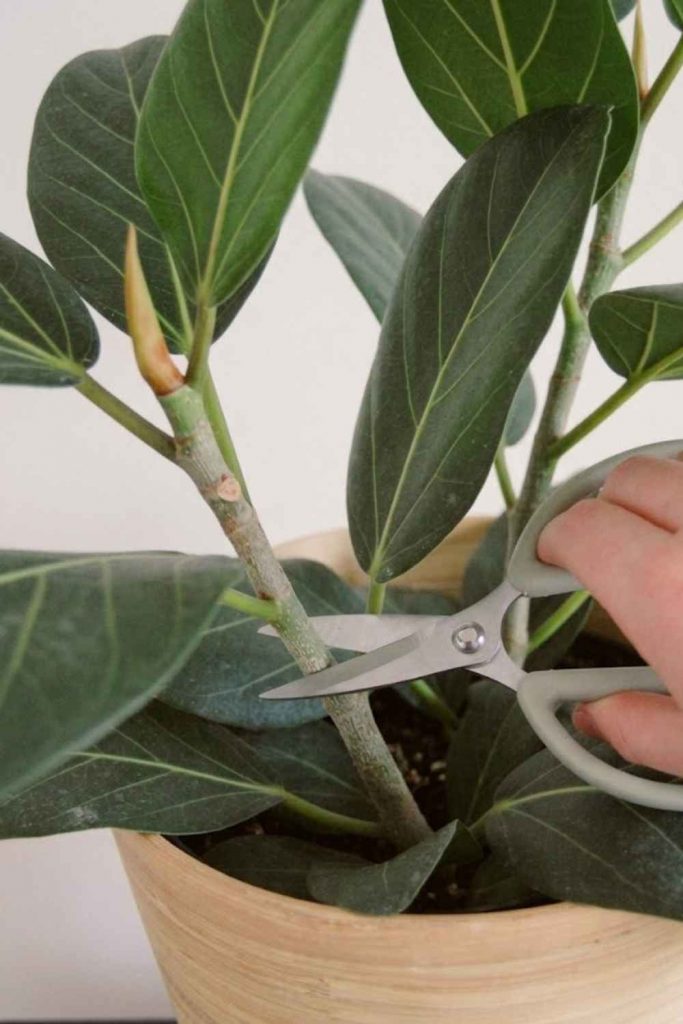
Left alone, Ficus audrey will grow as a single, tall pole. Pruning the main vertical stem is essential to encourage branching and create a fuller tree silhouette.
Prune in late spring when the plant has the energy to push new growth. Use sharp, sterilized shears to make a clean cut just above a leaf node. New branches will emerge from the nodes directly below that cut.
Routine maintenance involves keeping the foliage clean. The velvet texture of the leaves attracts household dust, which blocks light. Every few weeks, wipe the leaves gently with a damp microfiber cloth, supporting the underside of each leaf with your hand to prevent snapping.
Keep a paper towel handy to blot the sap immediately, and wash your hands promptly if you touch it. The milky white latex sap can irritate bare skin.
Repotting
Ficus audrey prefers a snug fit in its pot, which restrains its vertical growth and makes it easier to manage indoors. Plan to repot only once every two to three years in early spring.
Signs that it has outgrown its home include roots circling the soil surface, roots creeping out of the drainage holes, or water running straight through the pot without being absorbed.
Choose a new container no more than two inches larger in diameter than the old one. A massive pot holds excess soil, which retains water too long and invites rot. Slide the tree out, loosen the outer roots lightly, and set it at the same soil depth as before. Fill the gaps with fresh mix, press down to remove air pockets, and water thoroughly.
Propagation
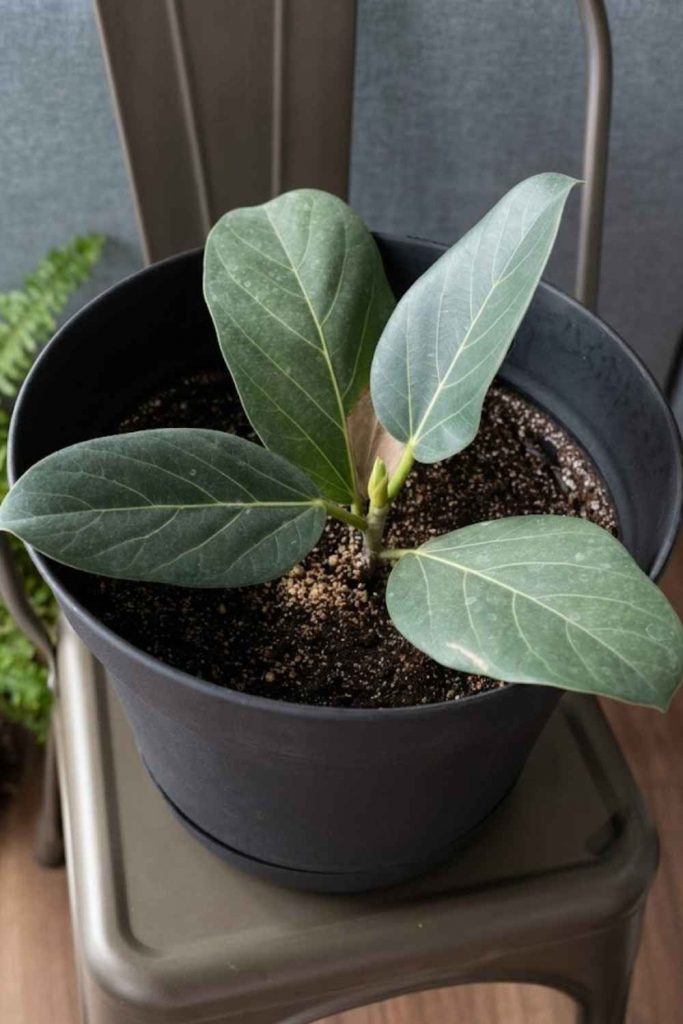
Propagating Ficus audrey is most successful using stem cuttings in late spring or early summer when the plant is actively growing.
- Take the Cutting: Select a healthy tip with at least two to three leaves. Use a sterilized blade to cut a six-inch stem section just below a leaf node.
- Manage the Sap: Blot the dripping sap immediately with a damp paper towel.
- Planting: Dip the cut end in rooting hormone powder if desired, and insert the stem into a small pot filled with a mix of half perlite and half peat moss. Alternatively, place the stem directly into a jar of clean water.
- Environment: Place the cutting in a warm spot with bright, indirect light. If rooting in soil, cover the pot with a clear plastic bag to retain moisture while leaving a small opening for airflow.
- Aftercare: Keep the soil mix evenly damp or change the rooting water weekly. Roots typically develop within 4 to 6 weeks. Once the roots are two inches long, transplant the cutting into a standard potting mix.
Common Pests
Scale
- Symptoms: Tiny, immobile brown bumps attached to the stems and the undersides of leaves. They secrete a sticky substance called honeydew.
- Treatment: Wipe them off manually using a soft cloth dipped in rubbing alcohol, or treat large infestations with systemic insecticidal soap.
Mealybugs
- Symptoms: Small, slow-moving insects that look like white, cottony tufts hidden in the leaf joints or beneath the foliage.
- Treatment: Dab them directly with a cotton swab soaked in isopropyl alcohol to kill them on contact.
Spider Mites
- Symptoms: Microscopic pests that cause fine webbing on the undersides of leaves and pale yellow speckling on the foliage.
- Treatment: Rinse the leaves thoroughly with warm water, then apply neem oil or an organic miticide to the entire plant weekly until the infestation is under control.
Common Diseases
Root Rot
- Symptoms: The roots turn black and mushy, preventing the tree from taking up water. Visible signs include yellowing lower leaves and a softening trunk base.
- Treatment: Slide the tree out, trim away all rotted roots, and repot into fresh, chunky soil mix. Scale back watering frequency.
Leaf Spot
- Symptoms: A fungal or bacterial infection that creates dark brown or black spots surrounded by a yellow halo on the leaves.
- Treatment: Remove infected foliage immediately to stop the spread. Avoid leaving water sitting on the velvety leaves.
Seasonal Care Notes
Spring and summer require active management. This is the growth phase where the tree needs regular watering, monthly fertilizing, and shaping. Rotate the pot a quarter-turn every week to ensure the trunk grows straight instead of leaning toward the window light.
Winter requires a shift into basic maintenance. Growth stops, and water usage plummets. Cut back your watering frequency to match this slow pace, and stop all fertilizing unless you use grow lights. Monitor indoor heating vents closely, as dry winter heat combined with low light is the hardest period for the tree.
FAQs
Why is my Ficus Audrey dropping green leaves?
This is a standard reaction to a sudden change in its environment. If you recently moved the tree or if a seasonal shift caused a draft, it sheds leaves as a protective measure. Leave it in a stable, bright spot and keep watering consistent while it adapts.
How fast does it grow indoors?
In bright indirect light with regular spring feeding, an indoor Ficus audrey can grow 1 to 2 feet per year. In lower light, growth slows significantly, and it may only produce a few leaves a season.
Does it need a moss pole or support?
Young plants have flexible stems and may need a bamboo stake to stay upright. As the tree matures, the bark thickens and hardens into a self-supporting wood trunk, allowing you to remove the stake.
Can I mist the leaves to increase humidity?
Misting only increases humidity for a few minutes. Because of the velvet texture of the leaves, sitting water droplets can encourage fungal leaf spots. A humidifier or pebble tray is a much safer alternative.
How do I get my tree to branch out?
Clip the growing tip of the main trunk. Removing this top growth forces the tree to redirect its energy outward rather than upward. Within a few weeks, two or three new branches will emerge below the cut.