
Table of Contents
Ficus Audrey (Ficus benghalensis ‘Audrey’) has quickly become an interior design favorite, celebrated for its structural elegance and minimalist appeal.
As the national tree of India, this majestic banyan is known for its massive canopy in the wild, but it adapts beautifully to living room life when given the right start.
While generally more forgiving than the temperamental Fiddle Leaf Fig, a thriving Ficus Audrey still depends on a few foundational choices and consistent habits.
These nine practices focus on the setup, care, and ongoing maintenance that typically determine your tree’s long-term health.

1. Choose a pot with optimal drainage
When choosing a planter, prioritize drainage over appearance. Your chosen pot needs to feature substantial drainage holes at the bottom.
Terracotta is an excellent choice because its porous walls help excess moisture evaporate more quickly, though ceramic or plastic containers work well if you manage your watering habits carefully.
2. Build a highly aerated soil blend
Standard all-purpose potting soils can hold onto water a bit too tightly for a Ficus Audrey.
To keep the root environment damp but never soggy, amend the mix with perlite and orchid bark. This creates a highly aerated, well-draining medium that allows excess water to run through easily while protecting the roots.
3. Position it for bright, indirect light

Your tree requires consistent light to produce large, healthy leaves. Position Ficus Audrey in a bright location near a south-, west-, or east-facing window.
While you should shield the foliage from intense afternoon sun initially to prevent scorching, you can gradually acclimate the plant to handle direct sunlight over time.
4. Let the Top 2 to 3 Inches of Soil Dry Between Waterings
Let the top two to three inches of soil dry out between waterings, but avoid letting the entire root ball dry out completely.
Because a mature Audrey is usually grown in a large, heavy planter, checking moisture with a wooden dowel deep into the pot or using a moisture meter can be more practical than using your finger.
When the top two to three inches are dry, water thoroughly until it runs out the bottom.
5. Shield it from drafts
Sudden chills or blasts of hot air from household fixtures can easily stress this tropical native, sometimes triggering leaf drop.
Keep your planter well away from drafty windows, exterior doors, running air conditioning vents, and heating radiators to maintain a stable environment.
6. Rotate the tree regularly
Give the pot a quarter-turn every few weeks.
This simple habit gives all sides of the canopy more even exposure to light, preventing a lopsided silhouette and encouraging more even growth as the tree reaches toward the light source.
7. Keep the velvety leaves dust-free
The unique matte, velvety texture of Audrey leaves makes them prone to collecting household dust.
Wipe the foliage gently with a damp, soft cloth every few weeks to keep them clean. Be sure to avoid commercial leaf-shining products, which can leave buildup on the foliage.
8. Prune strategically to encourage branching
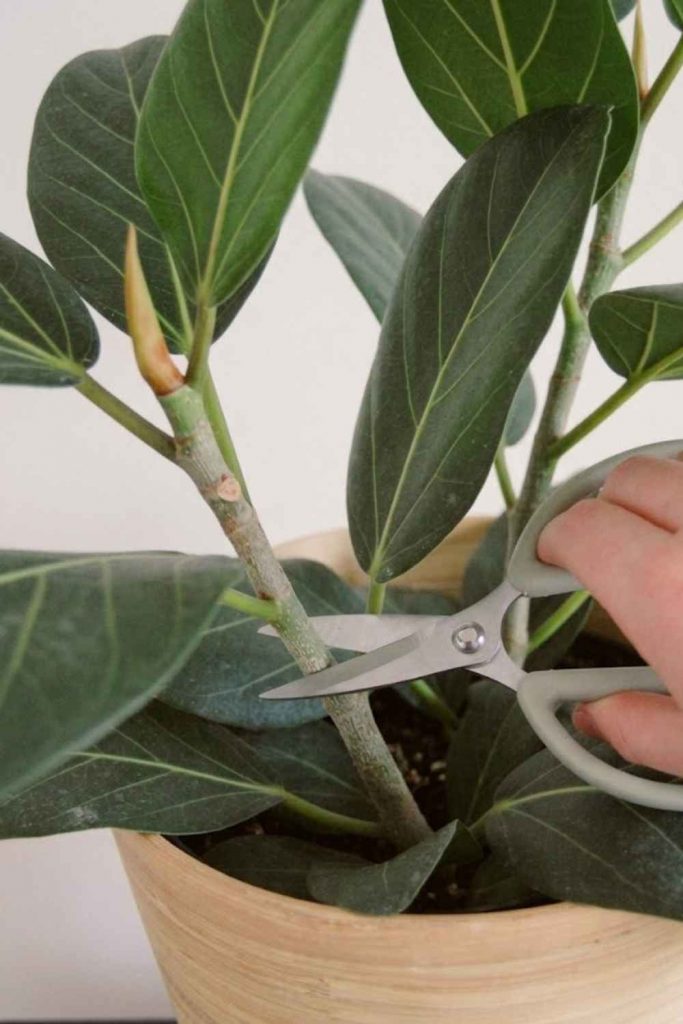
Left to its own devices, an indoor Ficus Audrey often grows into a single, tall, leggy stalk.
Prune your tree just above a leaf node during the active spring or summer months. Removing the growing tip encourages branching and helps maintain a fuller, more symmetrical canopy over time.
9. Feed during active growth
To support new foliage, use a balanced, water-soluble houseplant fertilizer according to the label’s directions for houseplants.
Apply the solution once a month during the spring and summer when the plant is actively pushing out new leaves, and pause feeding entirely when growth naturally slows during the winter.
FAQs
Why are the lower leaves of my Ficus Audrey turning yellow and falling off?
Losing an occasional older leaf at the very base of the tree is a natural part of its life cycle.
However, if multiple leaves drop at once, take a closer look at the environment: first check whether the soil is staying wet too long, then make sure the plant is getting enough light, and consider whether a recent move or environmental change may have stressed it.
What is the white, milky sap oozing from my plant after pruning?
Ficus trees contain a latex-rich sap that leaks whenever the bark or leaves are cut, which is a known irritant to human skin and toxic to pets.
It is best to wear gloves while pruning, keep cats and dogs away from fresh cuts, and immediately wipe away any drips with a damp paper towel.
How do I know if my Ficus Audrey needs to be repotted?
Rather than following a strict calendar, look for physical signs that the roots have outgrown the container.
The clearest signs to repot are when you notice roots circling the top of the soil surface or growing out of the bottom drainage holes.
Other supporting clues include water running straight through the pot without soaking into the soil, which often happens when a dense root ball displaces the potting mix.