Table of Contents
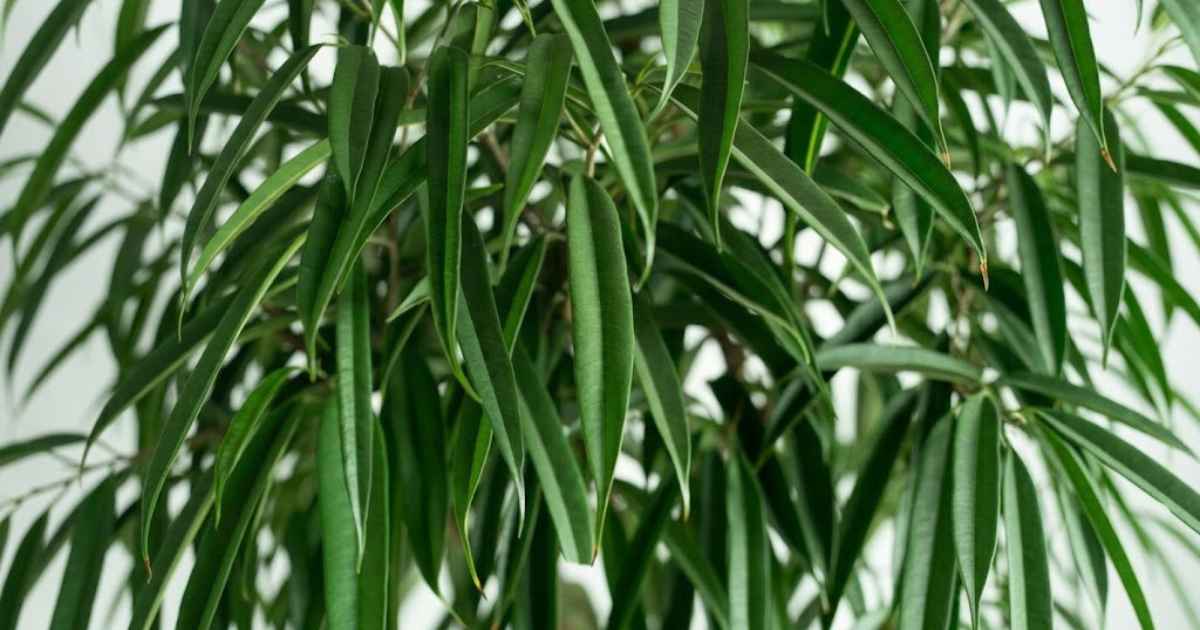
Ficus Alii (Ficus maclellandii ‘Alii’), often called the Banana-Leaf Fig, is a favorite for contemporary spaces due to its slender, willow-like leaves and elegant weeping silhouette.
While it shares the architectural charm of its relatives, the Fiddle-Leaf Fig and the Weeping Fig, the Alii is generally more forgiving of indoor conditions and adapts well when given consistent light and care.
Despite its resilience, this plant remains a large canopy tree by nature. Long-term health depends on setting up the right foundation and settling into a few simple habits.

1. Choose a pot with proper drainage
When selecting a planter for a large tree, prioritize drainage over appearance.
Your chosen pot needs to feature at least one substantial drainage hole at the bottom so excess water can escape freely.
Lightweight resin or fiberglass containers are often more practical for a large indoor tree, making it much easier to handle over time as the tree grows to its mature size.
2. Build a porous soil mixture
A standard all-purpose potting mix may retain more moisture than a Ficus Alii prefers.
To reduce the risk of root rot, amend a high-quality potting mix with perlite and orchid bark to keep the soil loose, highly aerated, and free-draining.
3. Position it for consistent light
Your tree requires substantial light to maintain its dense silhouette and avoid sparse growth.
Ficus Alii grows best near a bright window where it receives plenty of indirect light, protected from harsh afternoon sun, which can scorch the narrow leaves.
Poor lighting often results in slow growth and a thinning canopy over time.
4. Turn the pot in place regularly
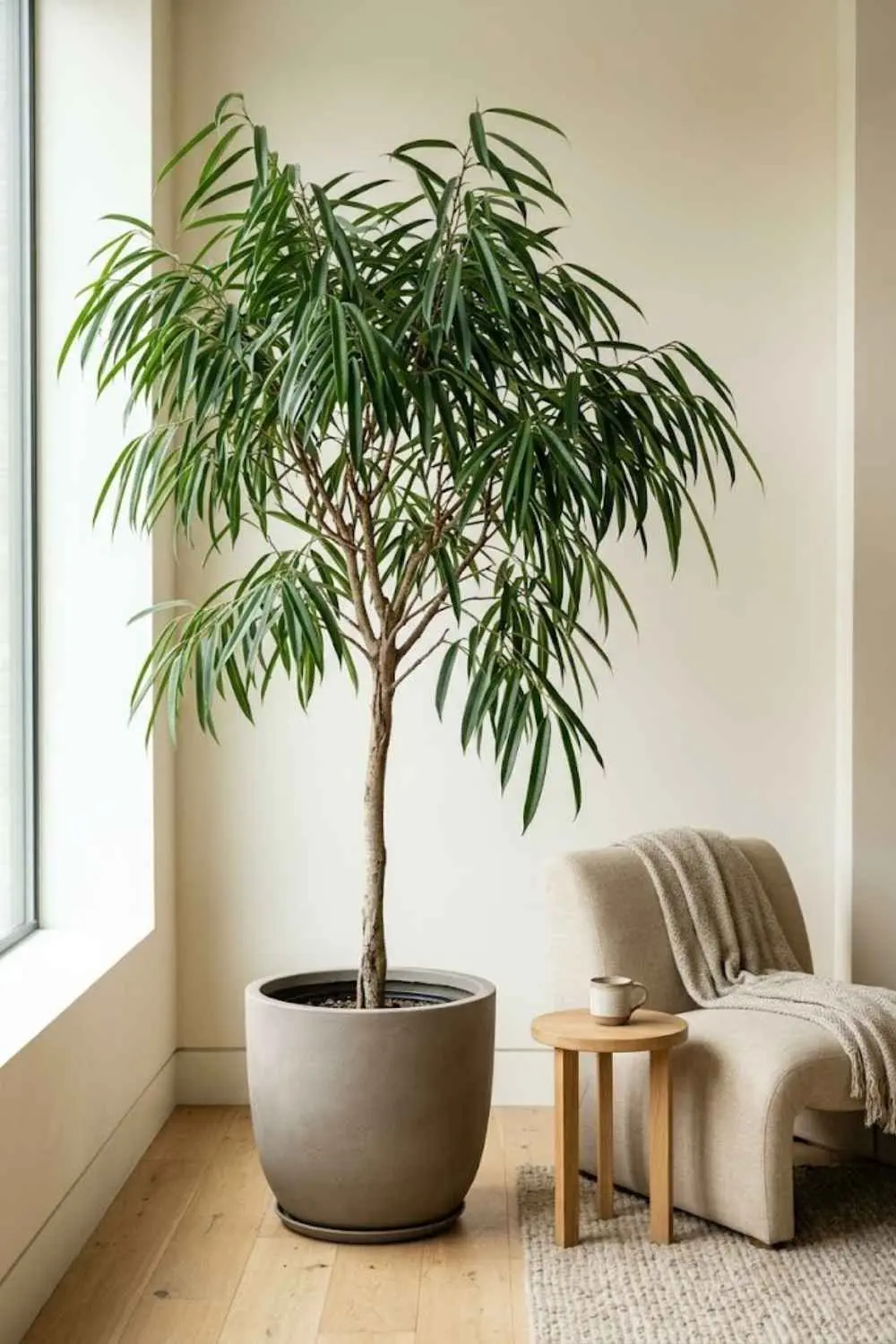
Give the pot a quarter-turn every few weeks. This simple habit gives all sides of the canopy more even exposure to light, preventing a lopsided silhouette and encouraging more even, balanced growth.
5. Shield it from drafts
Sudden chills, hot drafts, or dry air can easily stress this tropical native, frequently triggering leaf drop or a noticeable stress response.
Keep your planter away from drafty windows, exterior doors, running air conditioning vents, and heating radiators to maintain a stable environment.
6. Let the Top 1 to 2 Inches of Soil Dry Between Waterings
Alii trees prefer a distinct drying cycle rather than constantly damp soil, but you should avoid letting the entire root ball dry out completely.
Because a mature tree is usually housed in a large, heavy planter, checking moisture with a wooden dowel deep into the pot or using a moisture meter can be more practical than using your finger.
Only water thoroughly when the top one to two inches of soil are dry.
7. Wipe down the narrow leaves
The long, slender foliage readily collects layers of household dust over time.
Wipe the leaves gently with a damp, soft cloth every few weeks to keep the foliage clean.
Avoid commercial leaf-shining products, which can leave a dull residue on the foliage and damage the delicate surface texture.
8. Prune to maintain shape and density
Left to its own devices, an indoor Ficus Alii can eventually outgrow its space or become sparse in the center.
To control size and encourage a fuller canopy, prune the tips of the branches during the active spring or summer growth months.
Trimming just above a leaf node safely redirects the plant’s energy, which can encourage new branching.
9. Feed during the growing season
Indoor trees rely on you to replenish nutrients when they are actively pushing out new leaves.
Feed twice a year during active growth with a balanced houseplant fertilizer, following the label directions.
Reduce or pause feeding entirely when growth naturally slows in winter.
10. Keep the tree in a stable spot
While Ficus Alii is highly adaptable, it still thrives on environmental consistency.
Once you find a spot where the tree is healthy and receiving proper light, try to leave it there.
Frequent moves can temporarily stress the plant as it adjusts to new light and environmental conditions.

FAQs
Why are the inner leaves of my Ficus Alii turning yellow and dropping?
Losing an occasional older leaf can be a normal part of the plant’s growth cycle.
However, if multiple leaves drop at once, take a closer look at your care routine: check for overwatering, a sudden drop in ambient light, or recent environmental changes like a nearby draft.
What is the white sap that leaks when I trim the branches?
Ficus trees contain a milky latex sap that can cause contact dermatitis on human skin when the plant is cut.
It is best to wear gloves while pruning and keep pets away from fresh cuts to avoid skin and mucous membrane irritation.
How do I know when it is time to repot my Ficus Alii?
Rather than following a strict calendar, look for signs that the roots have outgrown the container.
The clearest signals are roots noticeably circling the soil surface or growing thickly through the bottom drainage holes.
A potting mix that has broken down and no longer drains well over time is another reason to consider repotting.