Table of Contents
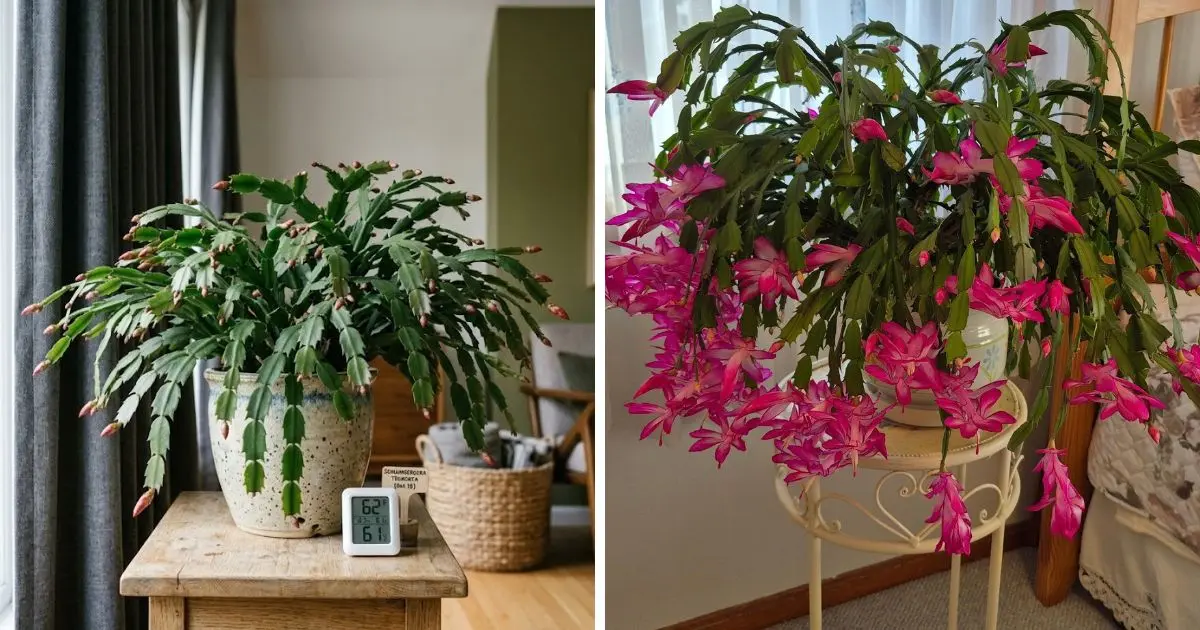
Thanksgiving cactus is easy to mistake for its Christmas- and Easter-blooming relatives, but knowing which plant you have helps set the right expectations for flowering.
Unlike desert cacti, this rainforest native prefers bright, filtered light, good drainage, and more consistent moisture.
Reliable flowering also depends on timing. Keep the plant growing well through the warmer months, then give it the shorter days and cooler nights it needs to set buds in fall.
1. Start With the Right Thanksgiving Cactus
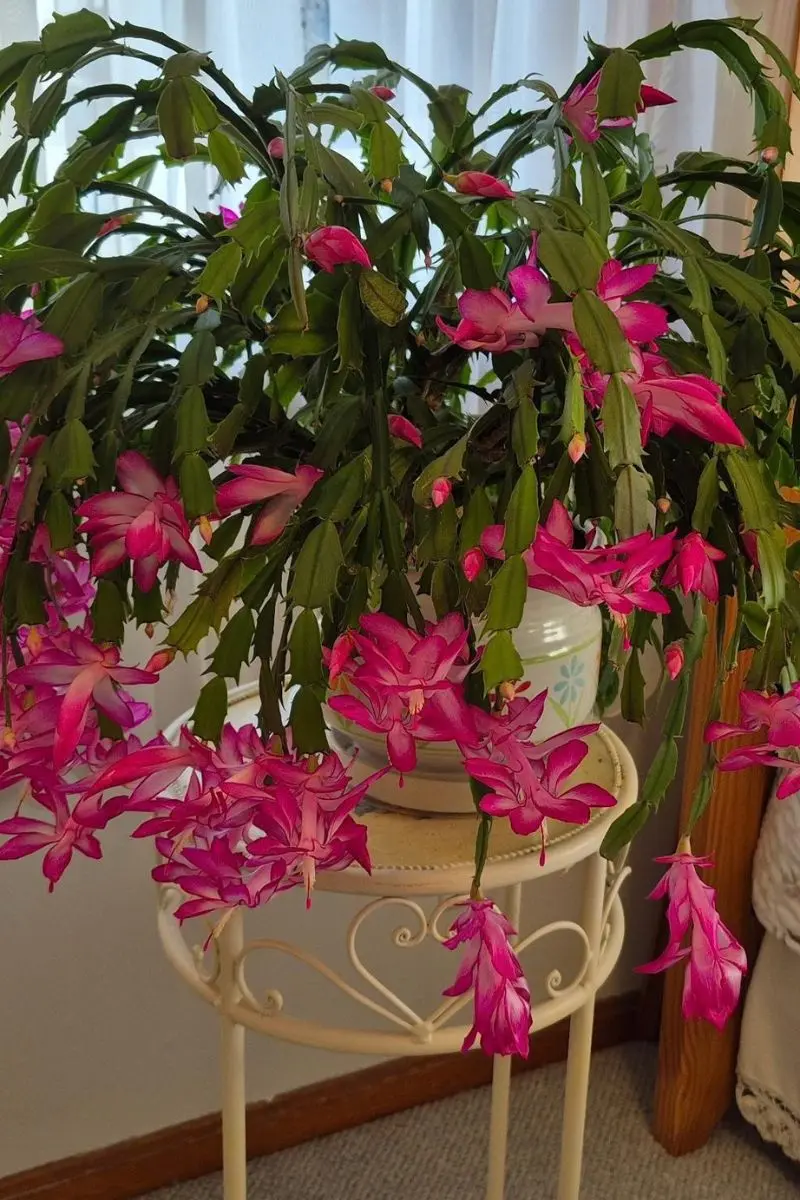
Before adjusting your care, make sure you have the plant you’re expecting. Thanksgiving cactus (Schlumbergera truncata) has pointed, claw-like teeth along its stem segments, while Christmas cactus has shorter, smoother, scalloped edges. Easter cactus has more rounded segments and a later flowering cycle.
That distinction matters when you’re planning for Thanksgiving blooms. Thanksgiving and Christmas cacti generally need about six weeks of shorter days to set flower buds, while Easter cactus follows a different seasonal cycle. So a mislabeled plant may bloom on a different schedule even when you’re caring for it correctly.
2. Choose Bright, Indirect Light
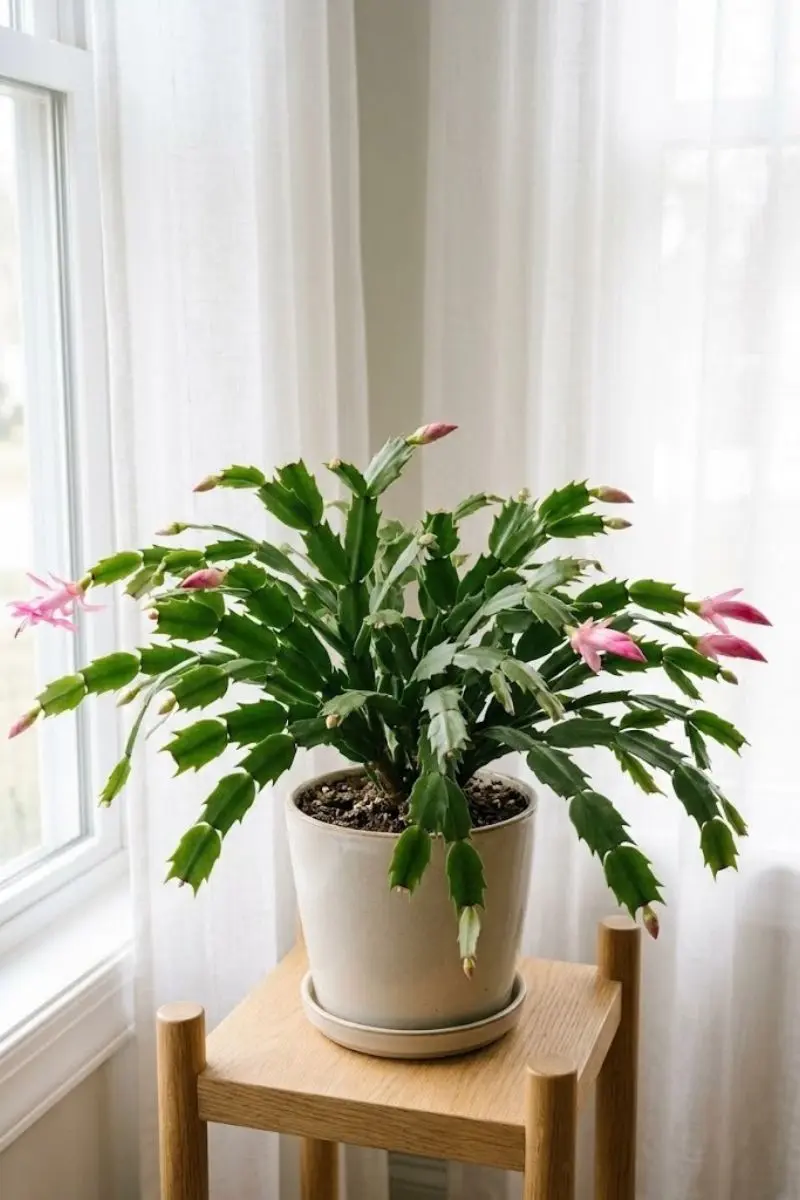
Give your cactus plenty of light without exposing it to harsh afternoon sun. Filtered light works well during active growth, while brighter light in fall and winter supports healthy growth and flowering. An east- or west-facing window is a practical choice; a south-facing window may need some filtering.
Rotate the pot occasionally so all sides receive similar light. This small habit helps the plant grow and flower more evenly.
3. Use Airy, Well-Draining Soil
Choose a potting mix that drains freely while retaining enough moisture to keep the roots from drying out. Thanksgiving cactus is an epiphytic rainforest plant, so its roots need both moisture and air; heavy, wet soil is a poor match. Use a container with drainage holes so excess water can escape.
There’s no need to make the mix complicated. The important thing is that water moves through it readily rather than lingering around the roots. Holiday cacti also tend to bloom well when somewhat pot-bound, so repotting does not need to be an annual chore.
4. Water When the Top Layer Dries
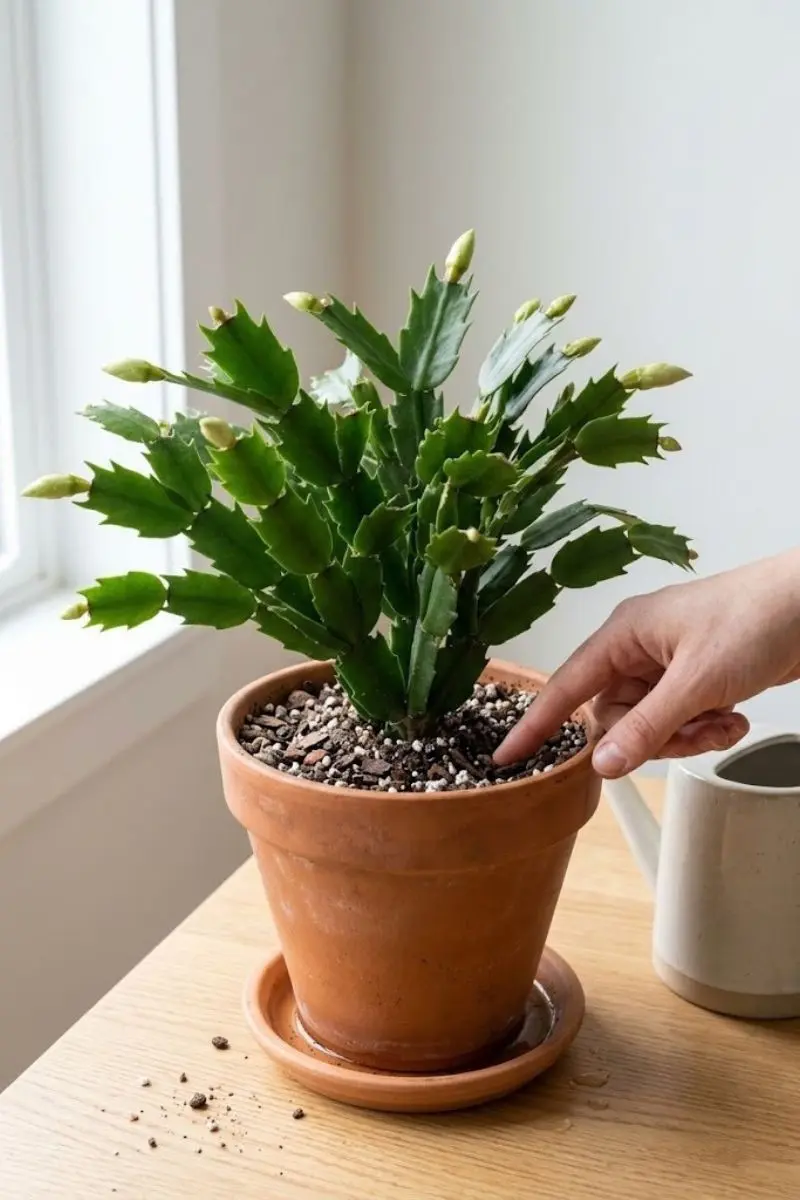
Thanksgiving cactus needs more moisture than a desert cactus, but it should never sit in soggy soil. Check the top 1 to 2 inches of the mix and water when that layer has dried. Water thoroughly, then empty any excess from the saucer or decorative container.
Let the plant’s conditions guide the schedule rather than watering by the calendar. It generally needs less water after flowering and more again as active growth resumes. During fall bud-setting, avoid keeping the mix saturated.
5. Feed Lightly During Active Growth
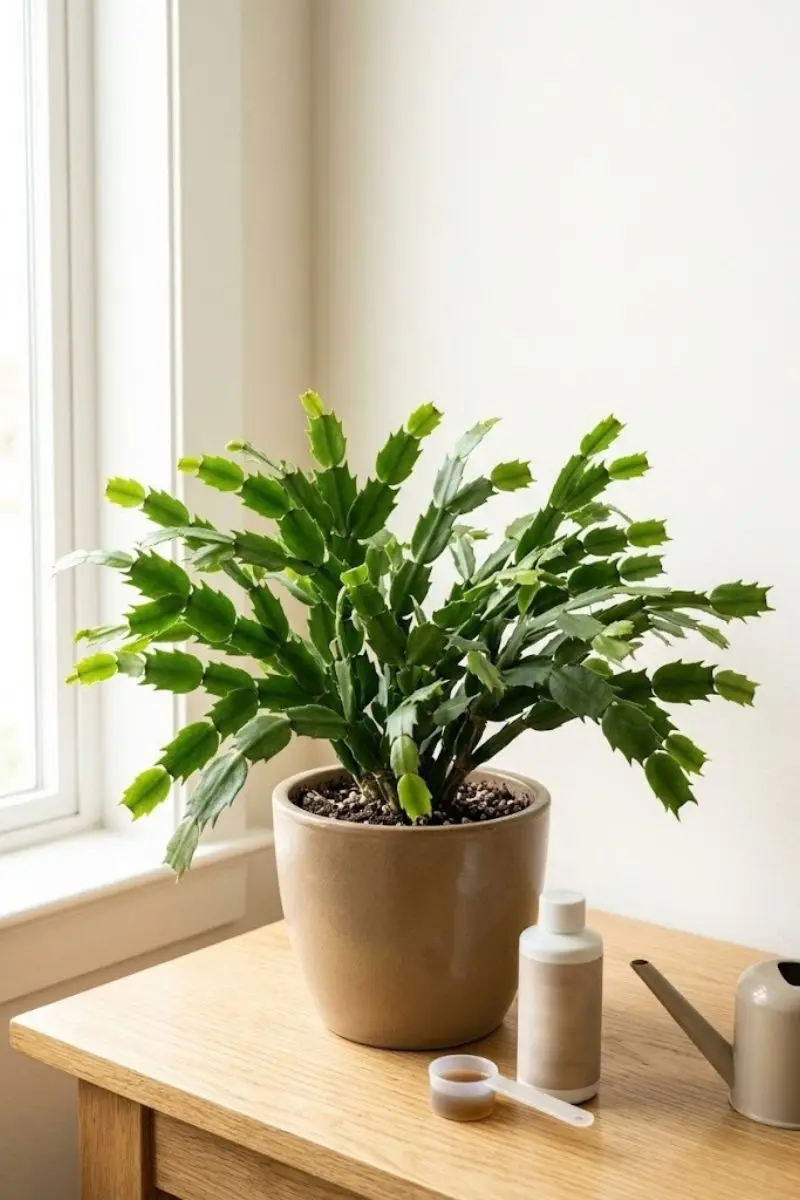
Fertilizer supports healthy new growth, but more is not better. During the active growing season, use a balanced houseplant fertilizer at half strength according to the product directions.
As fall approaches and flower buds begin to form, switch from your regular summer fertilizer to a low-nitrogen formula higher in phosphorus and potassium. The goal is to support the plant through its seasonal transition without making fertilizer the focus of its flowering routine.
6. Give It Cool Nights and Uninterrupted Darkness in Fall
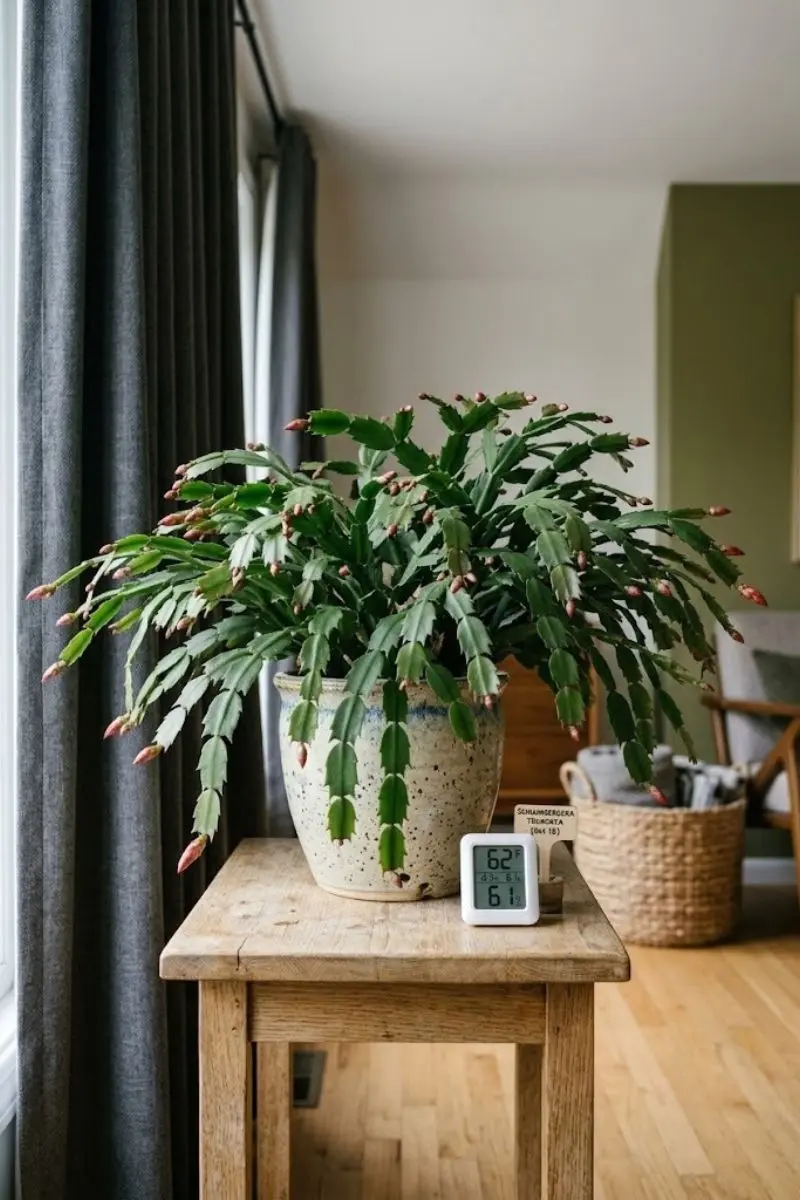
This is the key seasonal step for setting flower buds. Shorter days and cool nights signal the plant to set flower buds. The conditioning period generally lasts about six weeks.
For an indoor plant, provide roughly 12 to 14 hours of complete darkness each night for about six weeks before the desired bloom period. Keep nighttime temperatures around 60 to 65°F during this period. Keep the dark period genuinely dark—regular evening light can interfere with bud formation.
7. Keep the Plant Steady Once Buds Form
Once you see flower buds, stop moving the plant around. Sudden changes in temperature or humidity, drafts, and changes in light can cause developing buds to drop. Choose a stable spot and keep conditions as consistent as possible until the flowers open.
Keep the plant away from heating vents and drafts while it is in bud. During flowering, keep the soil moderately moist without leaving it waterlogged. Spent flowers can be pinched off as they fade to keep the plant looking tidy.
8. Prune After Flowering for Fuller Growth
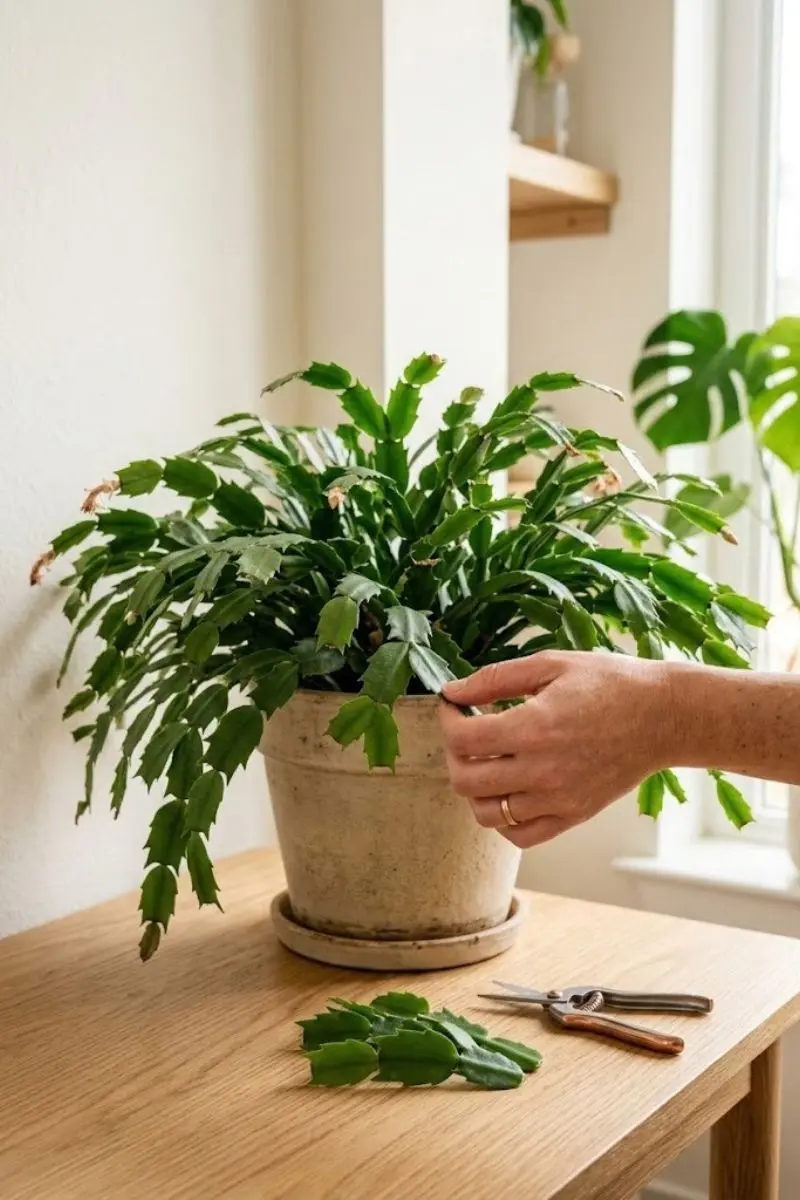
Once flowering is finished, give the plant a light trim rather than waiting until it becomes overly leggy. Removing the ends of a few stem segments encourages branching, giving you a fuller plant with more places to produce flowers next season.
There’s no need for a hard cutback. Prune at the joints between segments, then return the plant to its normal growing conditions. Healthy pieces left over from pruning can also be propagated if you’d like to grow another plant.
FAQs
Why isn’t my Thanksgiving cactus blooming?
Start with its fall conditions. Thanksgiving cactus needs shorter days and cool nights to set flower buds.
Too much evening light or warm nights can keep it growing instead of setting buds. Give it about six weeks of short days and cool nights before expecting flowers.
How often should I water a Thanksgiving cactus?
Don’t rely on a fixed schedule. Check the soil and water when the top 1 to 2 inches have dried.
Water thoroughly and let excess drain away, then adjust as light, temperature, and season change.
Why are my Thanksgiving cactus buds falling off?
Sudden changes in its environment can cause buds to drop. Once buds form, keep the plant away from drafts and sudden changes in temperature, light, or humidity.
Also make sure excess water can drain freely, since overly wet conditions can contribute to bud drop and root problems.