Table of Contents
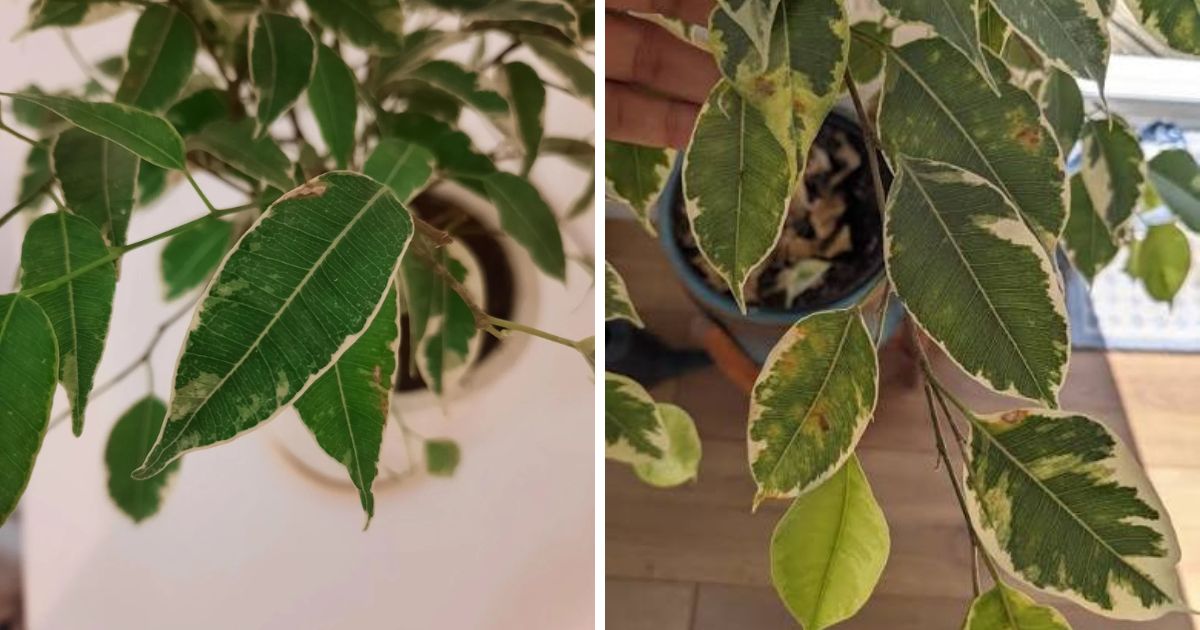
Discovering crisp brown tips or dark, mushy patches on your Ficus benjamina is an unsettling sight. For a tree celebrated for its dense, glossy canopy, brown foliage is an immediate indicator that the plant’s moisture uptake has been disrupted.
Because a weeping fig responds quickly to changes in its growing conditions, stress often shows up in the leaves before the problem becomes obvious elsewhere.
Reversing this decline requires reading the specific texture, color, and location of the brown patches to identify the root cause before the damage spreads through the canopy.
1. Soil Desiccation from Underwatering
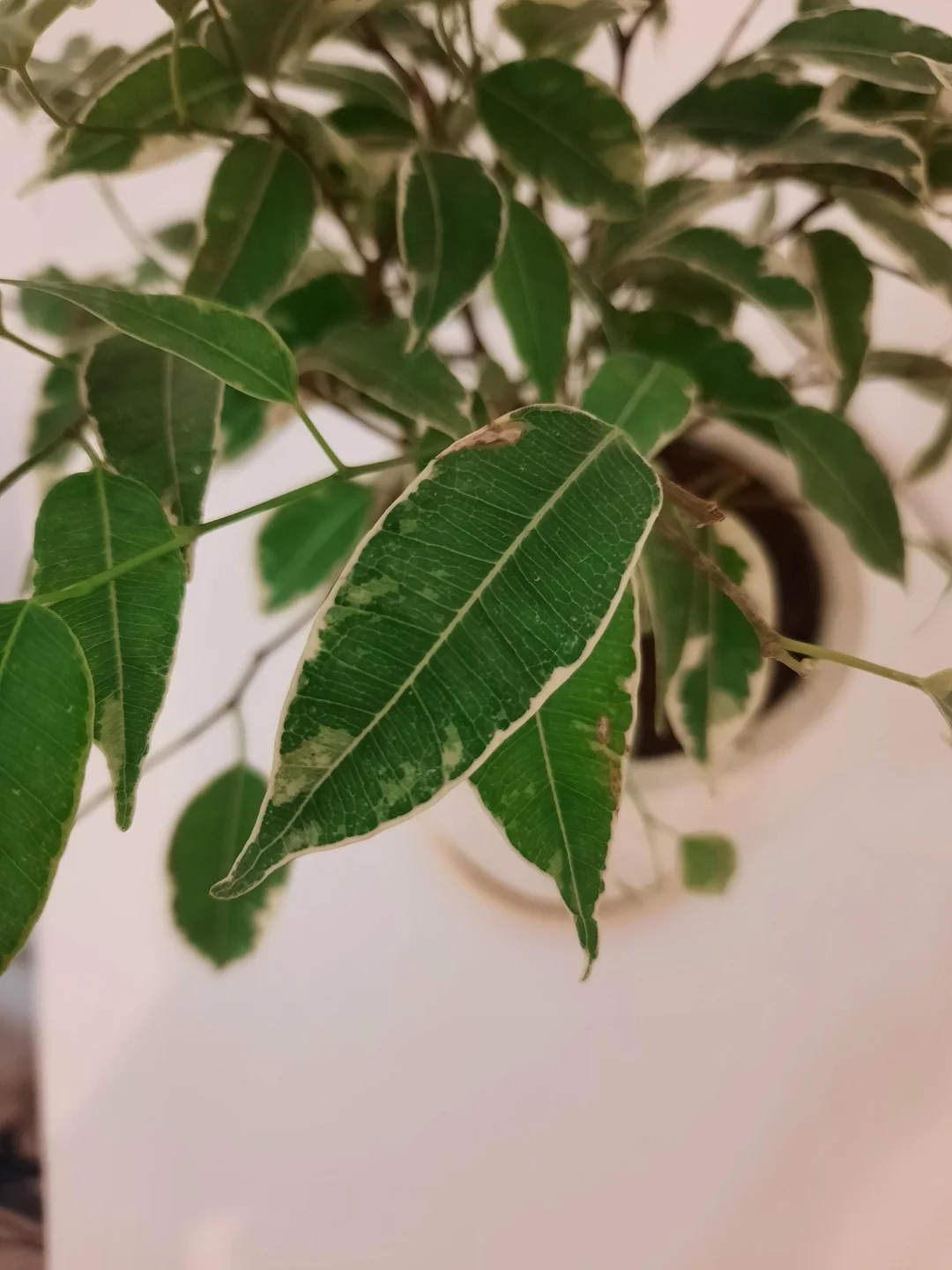
When a weeping fig goes too long without water, the tips of the leaves turn brown first. As the soil dries out completely, the plant can no longer deliver moisture to its furthest extremities. The edges of the leaves turn a uniform, brittle tan, curling inward and feeling like paper before the entire leaf drops.
Very low indoor humidity can produce similar crispy brown edges, especially during the winter heating season, so always check whether the soil is actually dry before watering again.
Avoid giving the plant shallow, frequent sips of water, which only wet the top inch of soil and leave the lower root ball bone-dry.
Instead, give the pot a thorough soak in the sink or shower until water runs freely from the drainage holes. If the soil has become hydrophobic, place the pot in lukewarm water for about 30 minutes, or until the root ball is evenly moist. Let excess water drain completely before returning the plant to its saucer.
2. Overwatering and Root Rot
An overwatered weeping fig will also develop brown leaves, but the symptoms look vastly different from a thirsty plant. When soil remains continuously wet, the roots suffocate and decay, leaving the canopy to develop dark brown, almost black, soft spots that typically start at the center or base of the leaf.
If the potting medium has degraded into a thick, muddy paste, simply waiting for it to dry may not be enough to address the damaged roots.
Check that the drainage holes are completely clear, gently slip the tree from its container, trim away any mushy, black root tips, and immediately repot it into a fresh, well-aerated potting mix packed with perlite to get oxygen back to the surviving roots.
3. Sunlight Scorch
Weeping figs thrive in bright, indirect light, but a sudden shift into direct, intense afternoon sun will physically burn the foliage. Sunburn appears as bleached, papery tan patches right in the middle of the leaves that face the window, eventually turning into crisp, brittle dead spots.
The fix is simple: move your Ficus a few feet back from south- or west-facing windows, or hang a sheer curtain to filter the intense midday rays.
New growth will encourage normally once the plant is back in bright, indirect light.
4. Salt Buildup from Tap Water
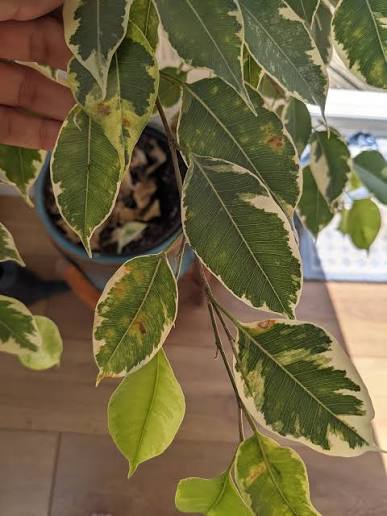
If your Ficus has healthy light levels and steady watering, but the very tips of the leaves are consistently turning a sharp, dark brown, look at your water source. Tap water can gradually contribute dissolved salts and, depending on the water supply, compounds such as fluoride and chloramine to the potting mix. Over time, these minerals can accumulate in the container soil and contribute to tip burn, especially when the plant is sensitive to salt buildup.
Note that letting tap water sit out overnight does not eliminate modern water treatment chemicals like chloramine.
Instead, actively switch your care routine to rainwater, distilled water, or water passed through a carbon-filter pitcher.
Flush the soil thoroughly every few months by pouring filtered water through the pot until it drains out the bottom, washing away the crusty white salt rings on the soil surface.
5. Pest Damage
If the brown patches begin as tiny yellow speckles, pests are the likely culprit. Weeping figs are particularly susceptible to spider mites, which leave fine webbing and yellow speckles on the undersides of leaves. Scale insects are another common culprit, appearing as small brown bumps on stems that often leave behind a sticky residue.
If you spot these physical signs, wash the canopy thoroughly with a gentle stream of lukewarm water to physically knock down the pest population.
Follow this up by treating the entire plant with insecticidal soap or organic neem oil, making sure to coat the undersides of the leaves where these colonies hide.
FAQs
Should I trim the brown tips off my Ficus leaves?
You can trim them for cosmetic reasons, but do it carefully.
Use sharp, sterilized scissors and cut away only the dead brown tissue, leaving a tiny margin of brown rather than cutting into the healthy green leaf. Cutting into the green living tissue creates a fresh wound and may leave more of the healthy leaf exposed to further browning.
Why are the brown leaves on my Ficus falling off so fast?
Weeping figs drop leaves as a defensive reflex to stress. As a leaf becomes severely damaged, the plant may seal off its connection to that leaf and shed it to conserve resources.
How long until my Ficus stops getting new brown leaves?
Once you correct the specific trigger—whether it is switching your water source or adjusting your watering schedule—the spread of new brown spots should slow down and stop within a few weeks as the plant stabilizes.
The existing brown patches will remain permanently, but fresh green growth tips will re-emerge from the branches by the next active growing season.