Table of Contents
Spider plants (Chlorophytum comosum) are forgiving, but they grow best when you get a few basics right.
The right light, soil, and watering routine help them grow well, while a little maintenance keeps the foliage looking full and healthy.
A few simple choices—from where you place the plant to when you repot it—can make a big difference in how well it grows indoors.
Credit: reddit – @wingsofcauliflower
1. Choose Bright, Indirect Light
Place your spider plant near a window where it gets bright, indirect light. Spider plants tolerate lower light, but growth can be slower, and variegated varieties may lose some of their striping. Too much direct sun can scorch the leaves.
Rotate the pot from time to time to keep the plant growing evenly instead of leaning toward the window.
2. Use Loose, Well-Draining Soil
Use a loose potting mix that drains readily rather than holding excess moisture around the roots. Spider plants tolerate a range of soil pH but do best in soil close to neutral.
Good drainage matters more than a complicated soil recipe. It helps prevent the soil from staying wet around the roots for too long.
3. Check the Soil Before You Water
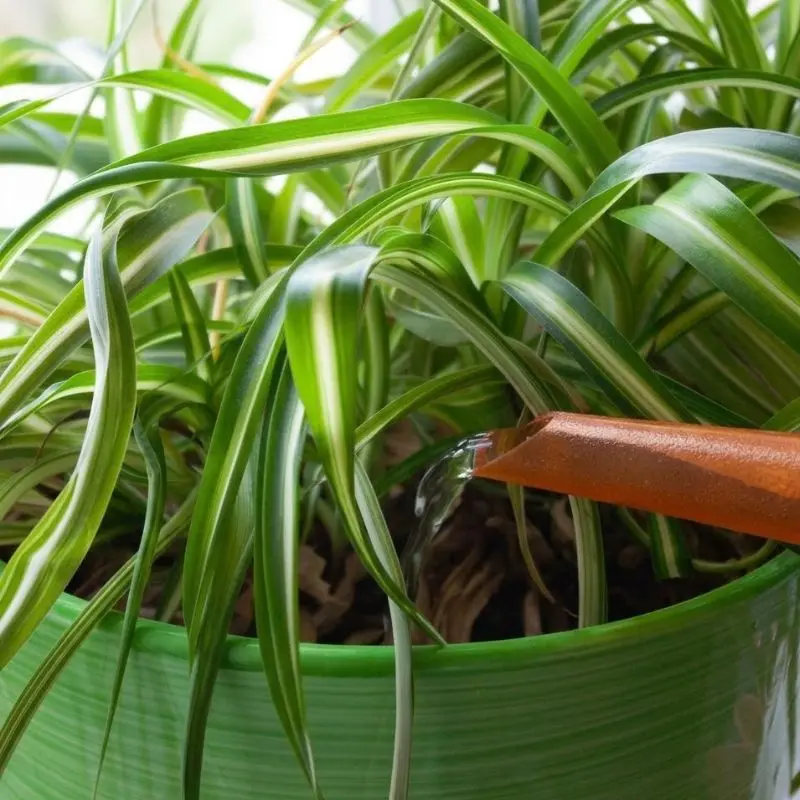
Spider plants prefer consistently moist soil, but they shouldn’t sit in soggy conditions. Check the soil with your finger and water when the top inch or two feels dry. When you water, soak the soil thoroughly and let excess water drain from the container.
The soil may dry faster or slower depending on the light and season, so check it before watering instead of relying on a set schedule.
4. Keep It Warm and Away From Drafts
Spider plants prefer warm, humid conditions. Keep yours away from cold drafts and air-conditioning vents, and protect it from temperatures below about 50°F. Aim for about 50 to 60 percent humidity when indoor air is particularly dry.
A stable spot away from drafts and dry air is usually enough.
5. Fertilize Lightly During Active Growth
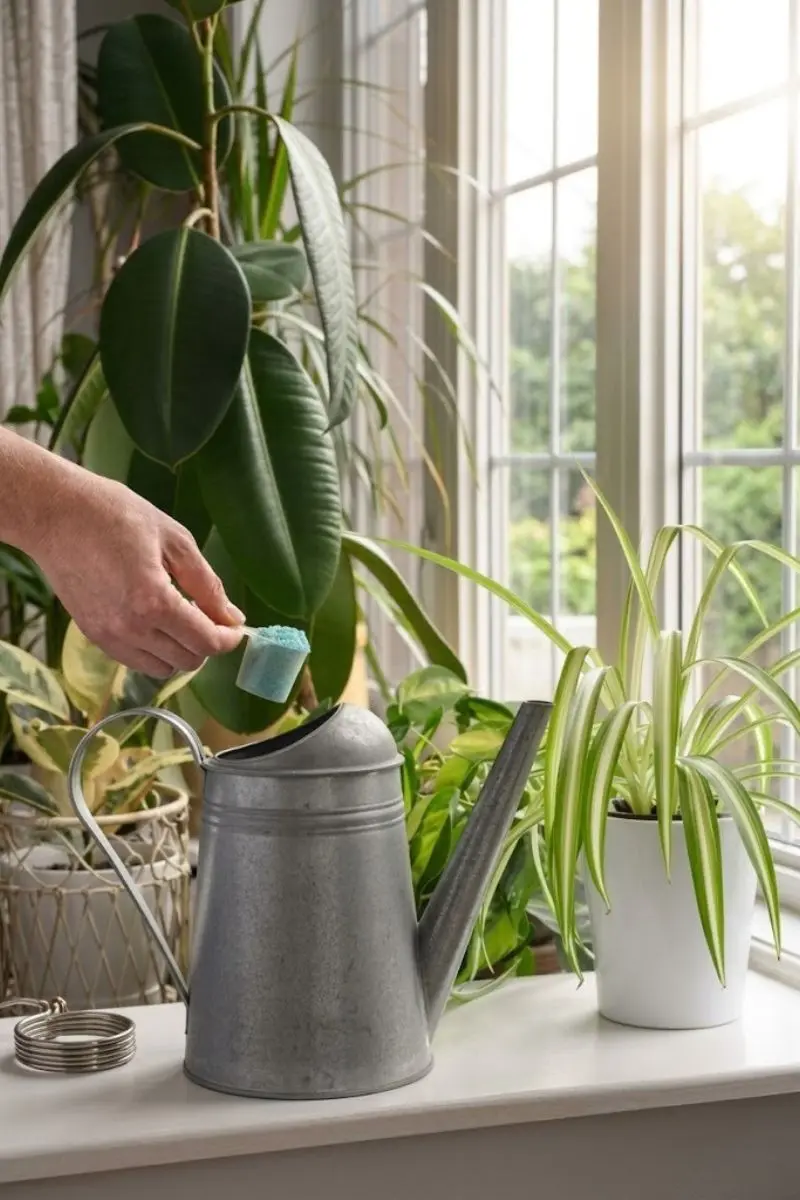
Fertilize during active growth with an all-purpose fertilizer, following the product label. How often you feed can vary with the plant’s growth and the fertilizer you use, so there’s no need to follow a rigid schedule.
Avoid overfertilizing, which can cause salt buildup and contribute to brown leaf tips.
6. Decide When to Separate Spiderettes
Spider plants naturally send out long stems tipped with small plantlets, called spiderettes. You can leave them attached for a fuller, cascading look, or separate them once they have their own roots.
For propagation, wait until the roots are about ¾ to 1 inch long. Then cut the plantlet from the stem and pot it in a small container of well-draining mix. Keep the mix slightly moist and place the new plant in bright, indirect light while it gets established.
7. Repot When Roots Outgrow the Pot
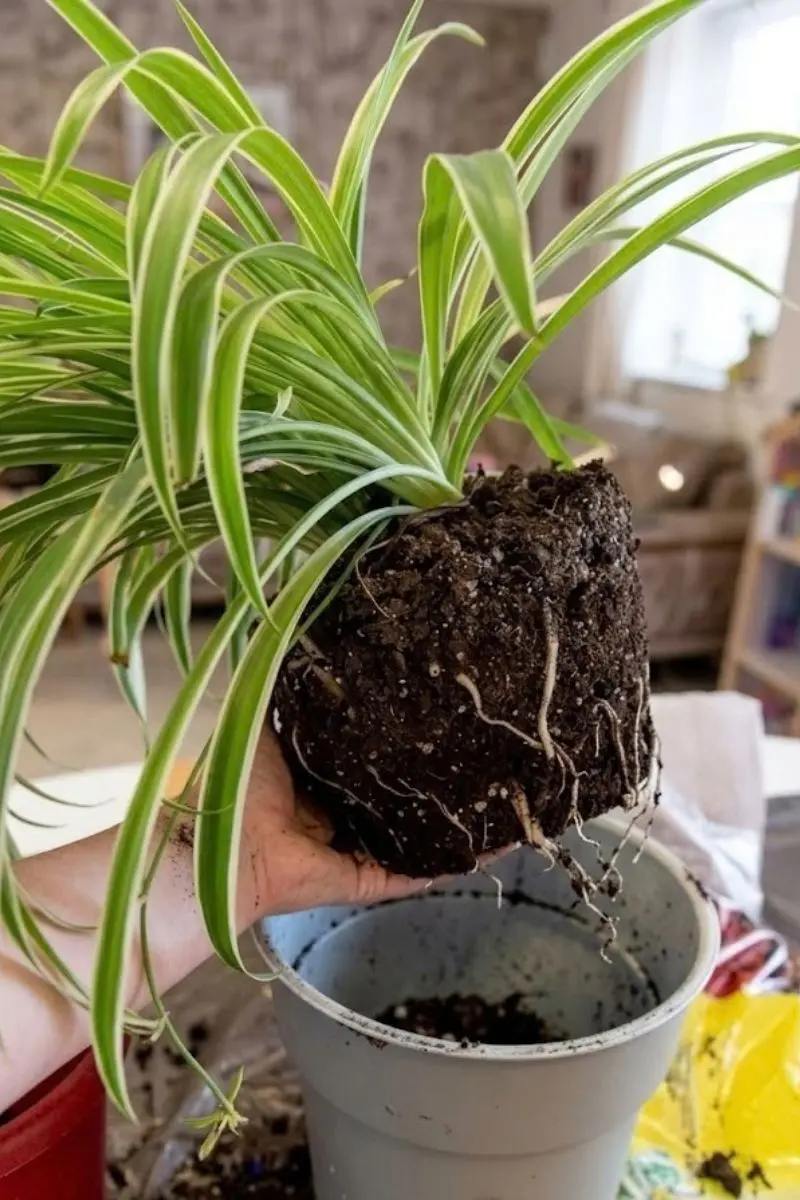
When roots start emerging from the drainage holes or rising above the soil, move the plant into a slightly larger pot with drainage holes. Spring is a good time to repot, using fresh, well-draining potting mix.
Repot based on the plant’s roots, not the calendar.
8. Prune Damaged Foliage as Needed
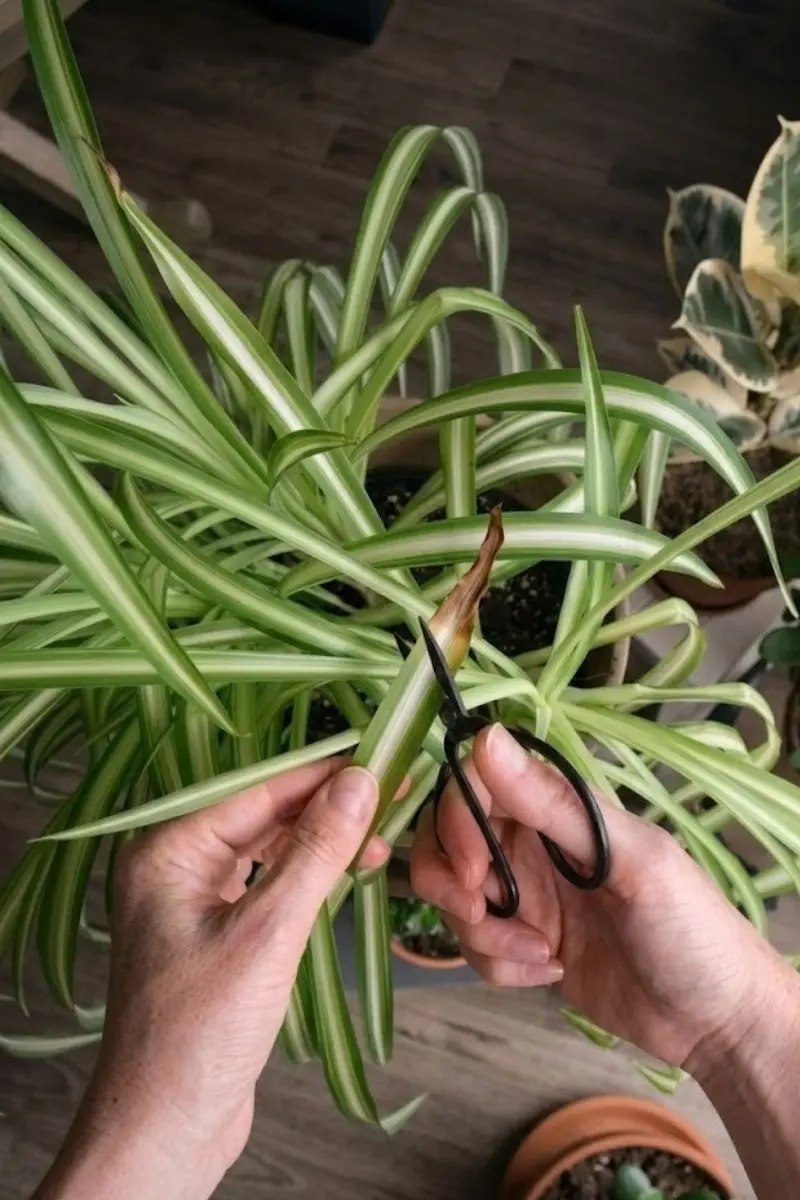
Remove dead or browning leaves with clean, sharp pruners to keep the plant looking tidy. If only the tip of a leaf is brown, you can trim away the damaged portion instead of removing the whole leaf.
9. Watch for Brown Tips and Pests
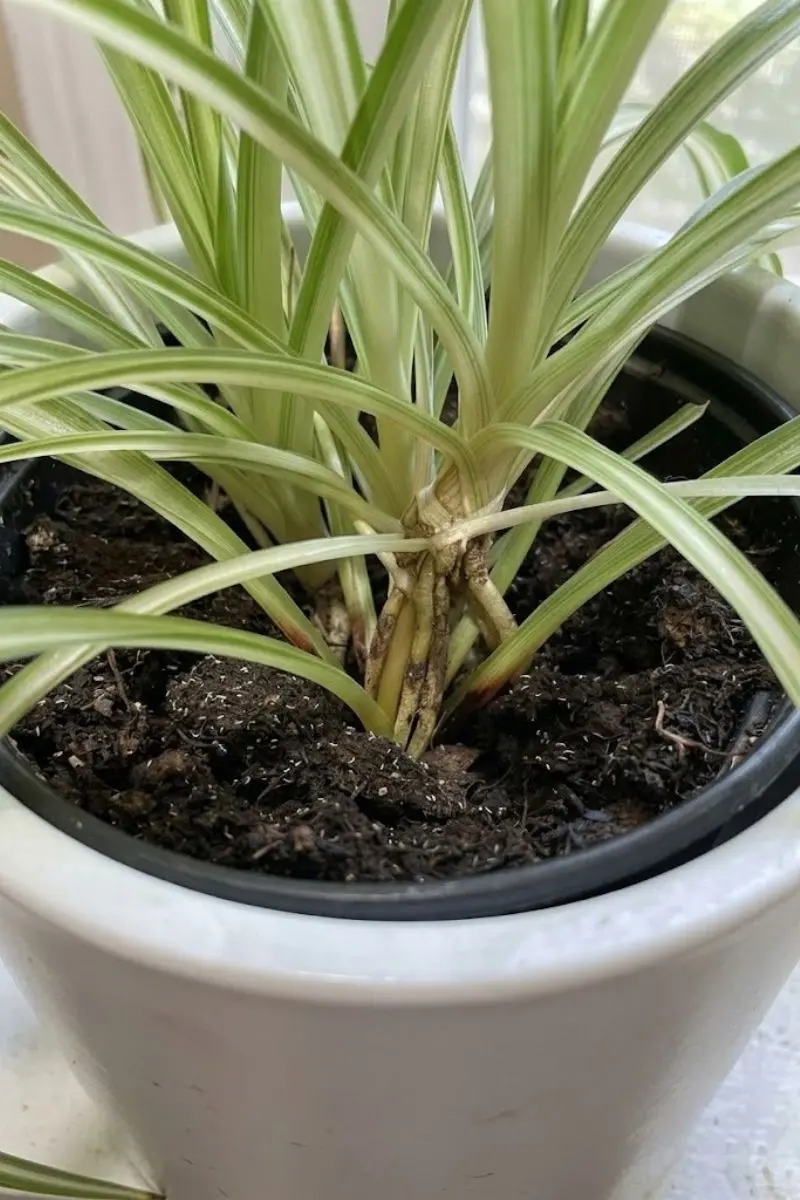
Brown leaf tips are common on spider plants. They can have several causes, including tap water containing fluoride or chlorine, dry soil, low humidity, excess fertilizer, or too much direct sun. Check the plant’s growing conditions before changing just one part of its care.
Spider plants generally have few pest problems, but aphids, whiteflies, spider mites, and scale can occur. Check the foliage if you notice a sudden change, and rinse the plant to help manage a light infestation. For a persistent infestation, use a treatment labeled for the pest.
10. Give Its Cascading Growth Room to Show
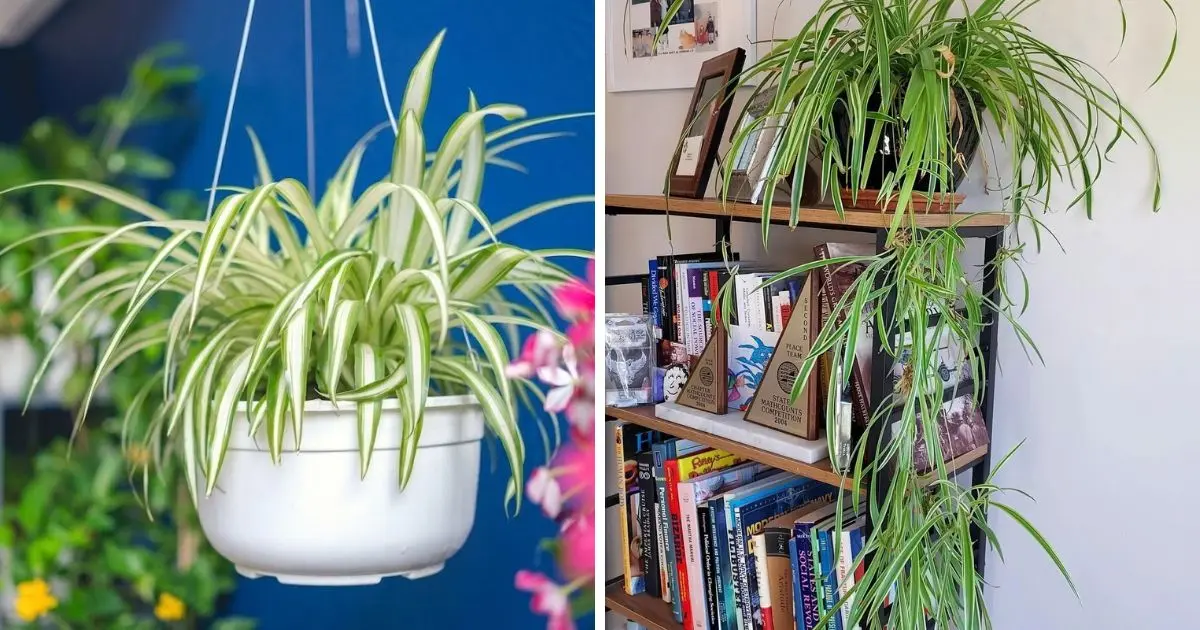
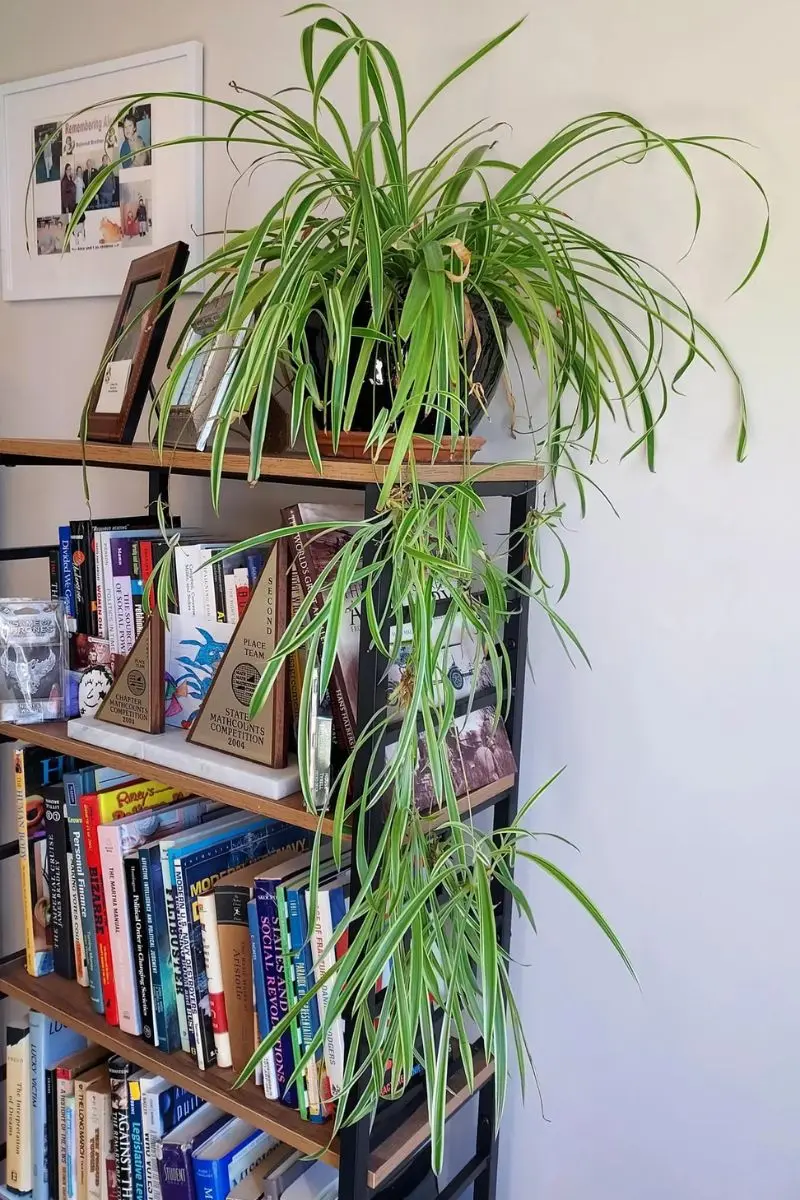
Spider plants work especially well in hanging baskets, where their arching foliage and trailing plantlets can spill over the sides. They also work well on shelves or tabletops where the foliage can spill over the edge.
FAQs
How often should you water a spider plant?
Water when the top inch or two of soil feels dry rather than sticking to a set schedule.
How quickly the soil dries depends on the plant’s light and growing conditions.
Why are the tips of my spider plant turning brown?
Brown tips can result from fluoride or chlorine in tap water, dry soil, low humidity, excess fertilizer, or too much direct sun.
Check the plant’s growing conditions before assuming it simply needs more water.
When can I separate spider plant babies?
Wait until the spiderette has its own roots.
Once those roots are about ¾ to 1 inch long, separate the plantlet and pot it in well-draining soil.