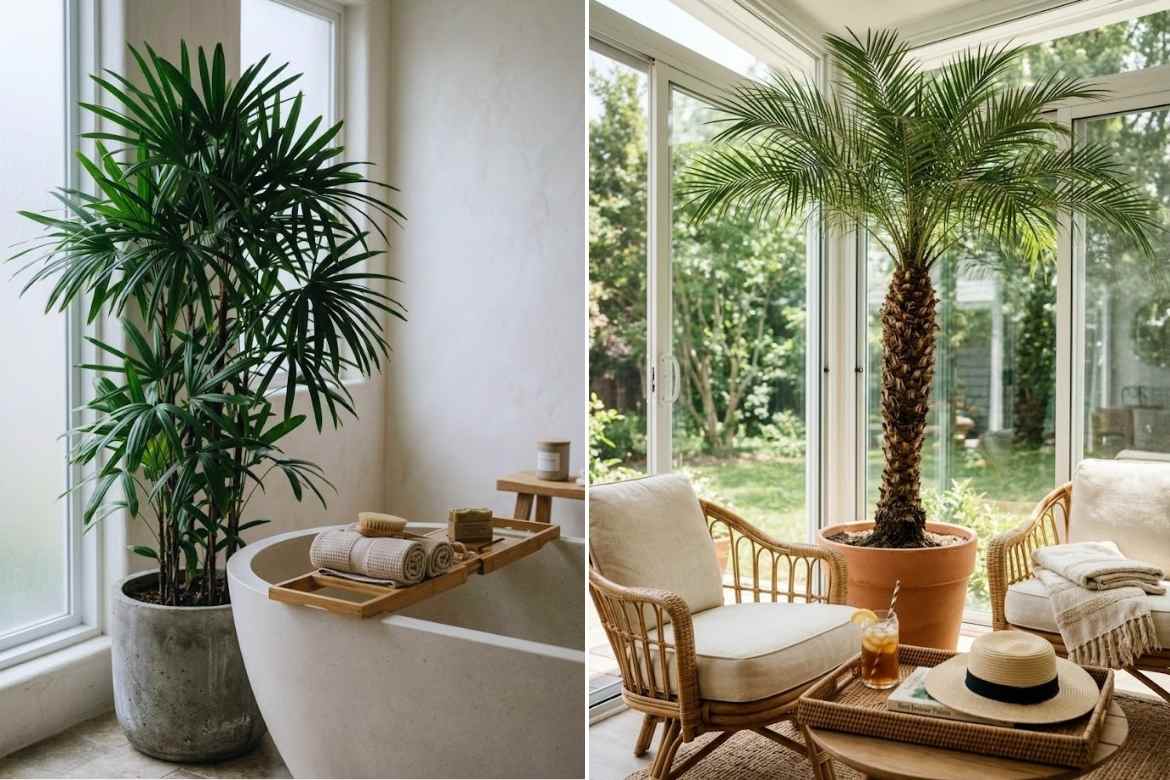
Table of Contents
Bringing a palm tree indoors is the fastest way to shift a room’s energy from “decorated” to “designed.”
They offer a structural scale that smaller foliage can’t match, filling vertical voids and softening the hard angles of bookshelves and doorframes.
Success isn’t about turning your living room into a swamp; it’s about choosing a palm that handles the shifting drama of indoor life—dry air, low light, and the occasional week of neglect.
#1 — Parlor Palm (Chamaedorea elegans)
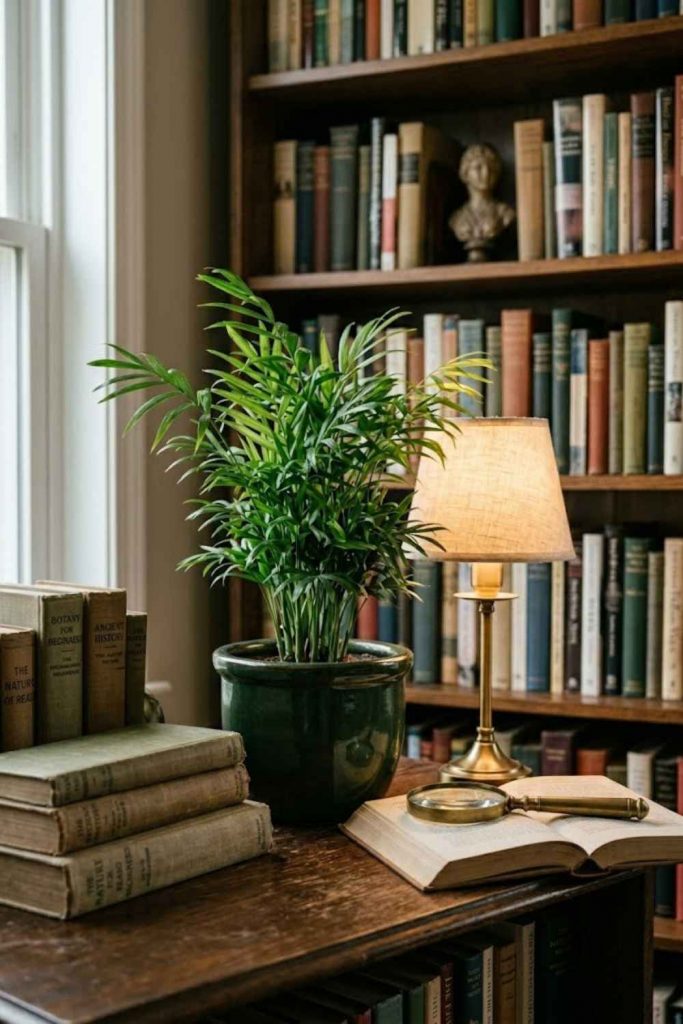
The Parlor Palm is the specific solution for the “Dark Academia” aesthetic—those moody, low-light corners where most tropicals surrender.
It earned its name in the Victorian era because it was one of the few species that could survive the dim, coal-heated parlors of the 19th century.
Because it stays relatively compact and tolerates lower light better than most palms, it works well on bookshelves or in dim hallways.
It builds immediate confidence for beginners because it doesn’t demand a greenhouse environment; it simply asks for a quiet corner and a consistent watering rhythm.
Pro Tip: This palm is a magnet for spider mites during dry winters when the heater is running.
Don’t just mist the fronds—take the whole pot into the shower once a month and give the leaves a lukewarm rinse.
It washes away dust and pests in one go, keeping the canopy deep green.
- Light: Low to medium indirect light
- Water: When the top 1–2 inches of soil are dry
#2 — Areca Palm (Dypsis lutescens)
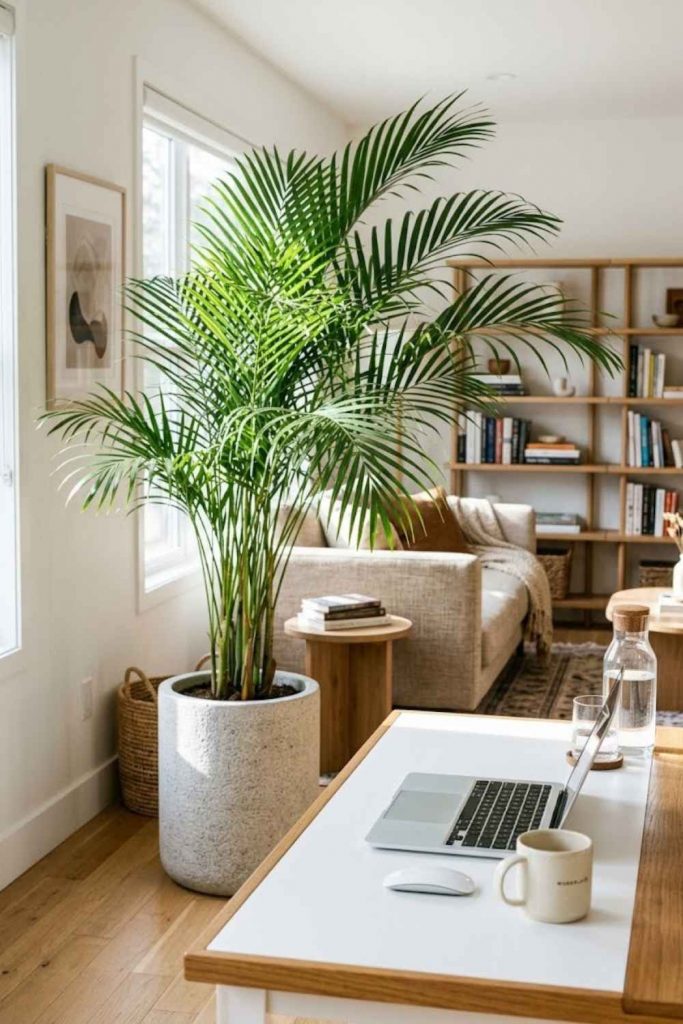
If winter heating turns your indoor air into a desert, the Areca Palm acts as a living humidifier.
Its dense canopy naturally increases local humidity around the plant, helping indoor spaces feel less dry during heating season.
It functions best as a “living divider,” using its feathery, arching fronds to create a privacy screen between a home office and a living room.
It provides that full-scale tropical canopy that fills a room from floor to ceiling.
- Light: Bright, indirect light
- Water: Keep soil consistently moist; use filtered water to avoid brown tips
#3 — Kentia Palm (Howea forsteriana)
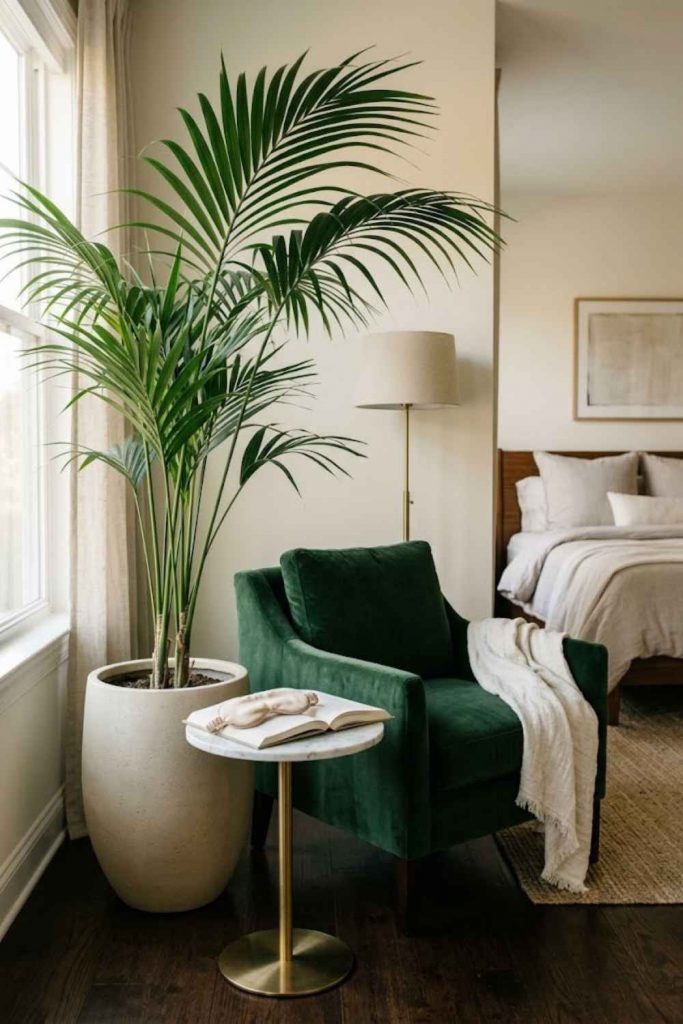
The Kentia is the “Quiet Luxury” of the palm world.
Often found in high-end hotel lobbies, it maintains a perfect, architectural form with almost zero drama.
It grows incredibly slowly, meaning it won’t outgrow its designated corner or demand a bigger pot for years.
Pair it with a velvet armchair to instantly elevate the room’s perceived “price tag.”
- Light: Indirect light; very shade tolerant
- Water: Only when the top half of the soil is dry
#4 — Ponytail Palm (Beaucarnea recurvata)
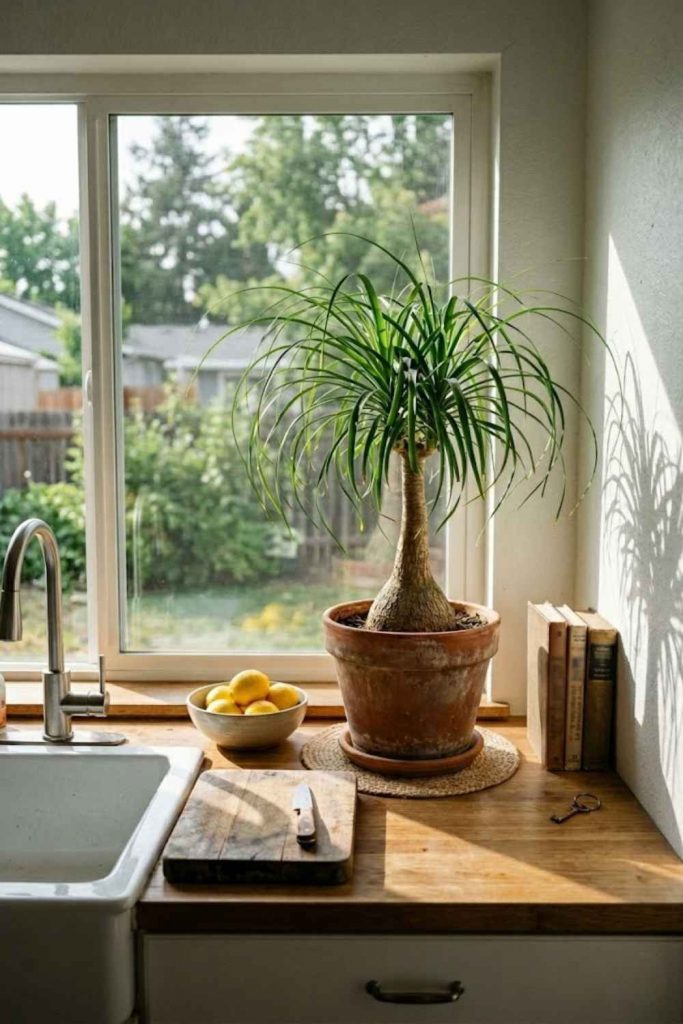
This is for the slim windowsills where a traditional fan-leaf palm would be too bulky.
Technically a succulent, its bulbous “elephant foot” trunk stores water like a reservoir.
It is the only species on this list that truly ignores the dry air of an AC vent or a drafty window.
- Light: Bright indirect to direct light
- Water: Once every 3–4 weeks; only when soil is bone-dry
#5 — Lady Palm (Rhapis excelsa)
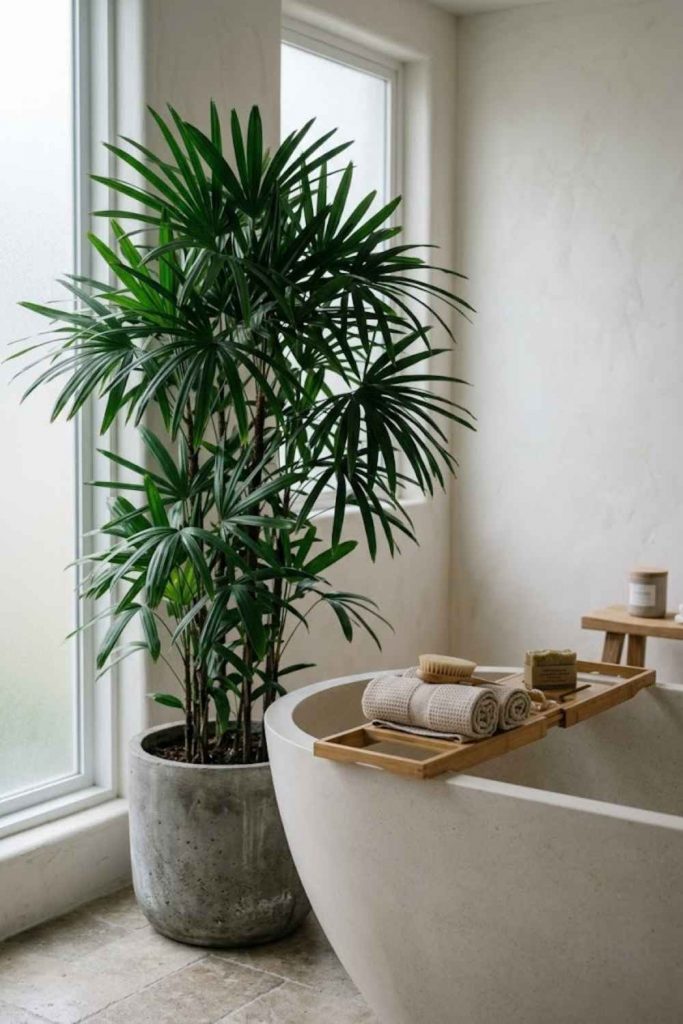
The Lady Palm is the functional choice for high-traffic utility spaces like laundry rooms or bathrooms.
Its tolerance for fluctuating humidity and lower light makes it particularly well-suited to bathrooms, laundry rooms, and other utility spaces.
Its fan-shaped leaves provide a clean, Japandi-style silhouette that feels more like furniture than a plant.
Pro Tip: Lady Palms are the most resilient against pests and low-light “stretch.”
If you want a “set-it-and-forget-it” tree that maintains its dense, dark green look in a long hallway, this is your investment piece.
- Light: Indirect light to full shade
- Water: When the soil surface feels dry
#6 — Bamboo Palm (Chamaedorea seifrizii)
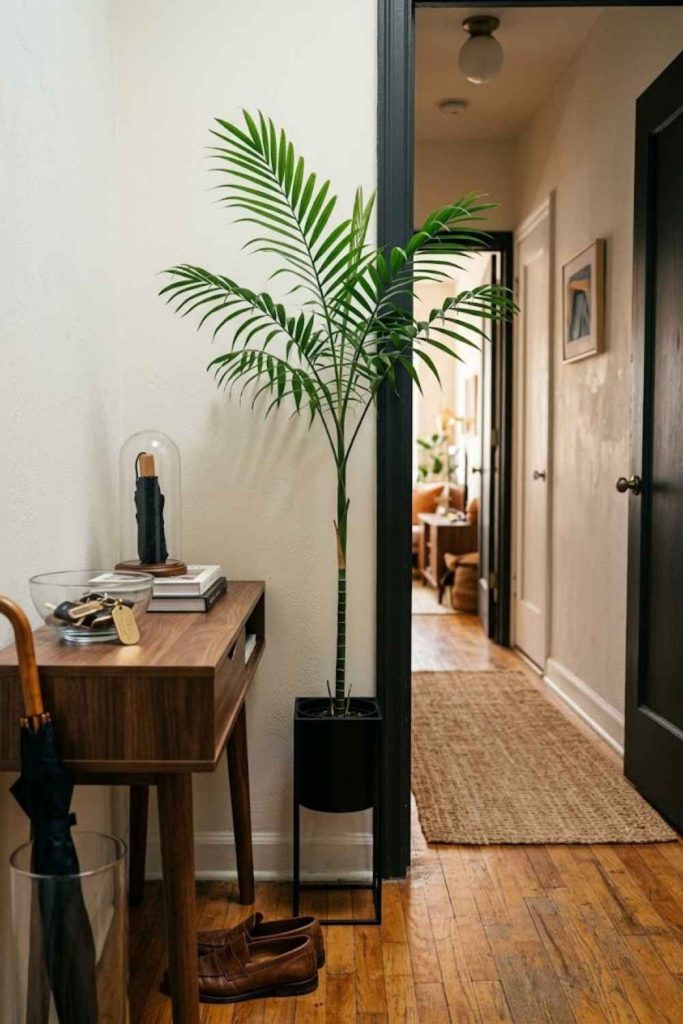
The “skinny space-filler.” It solves the common problem of the awkward, narrow gap between a sofa and a wall.
Its vertical, reed-like stems add depth to urban rentals without hogging precious floor space.
- Light: Low to medium light
- Water: Keep soil moist but never standing in water
#7 — Pygmy Date Palm (Phoenix roebelenii)
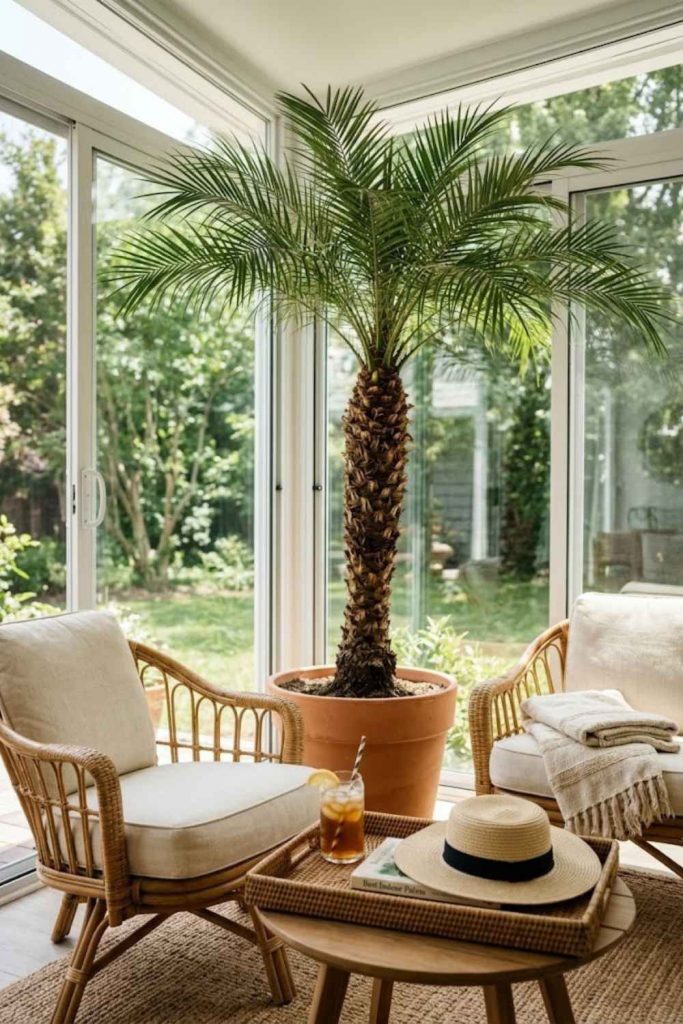
This miniature exotic brings a resort vibe to a sunroom.
It features a rugged, textured trunk that mimics a full-sized beach palm at a scale that fits under a standard ceiling.
- Light: Bright, indirect light
- Water: Keep soil consistently moist
- Caution: Features sharp spines near the base; keep away from narrow walkways.
#8 — Chinese Fan Palm (Livistona chinensis)
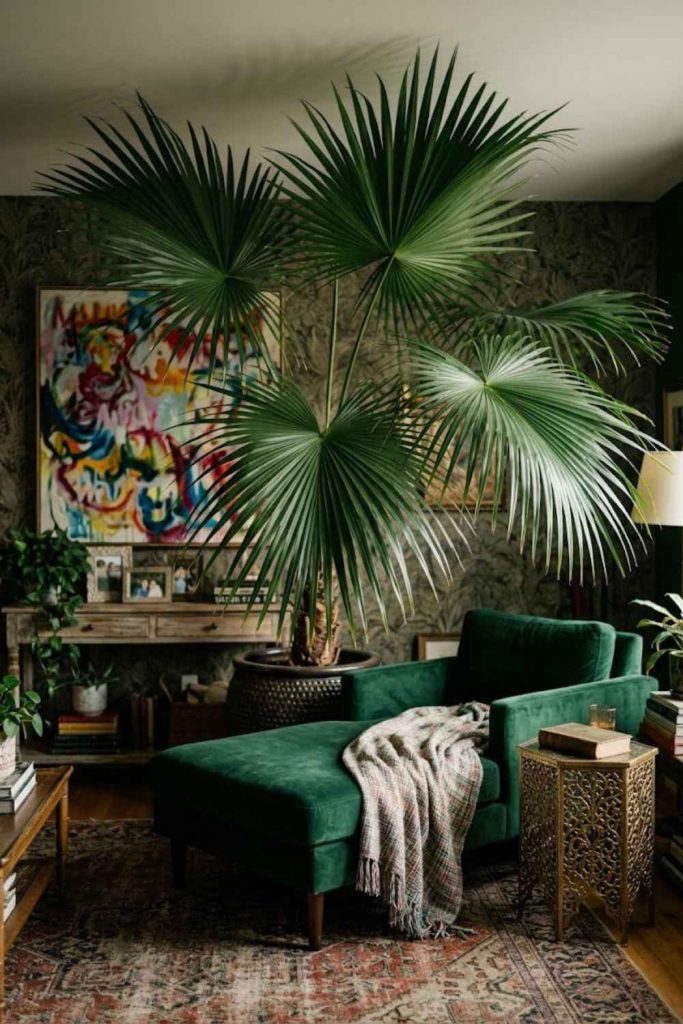
The Chinese Fan Palm acts as a piece of living sculpture.
Its draw is the “weeping” tips of its star-shaped leaves, which cascade down naturally without any pruning.
Because of its wide spread, it needs its own square footage rather than being squeezed into a corner.
- Light: Bright indirect light
- Water: When the top inch of soil is dry
#9 — Cascade Palm (Chamaedorea cataractarum)
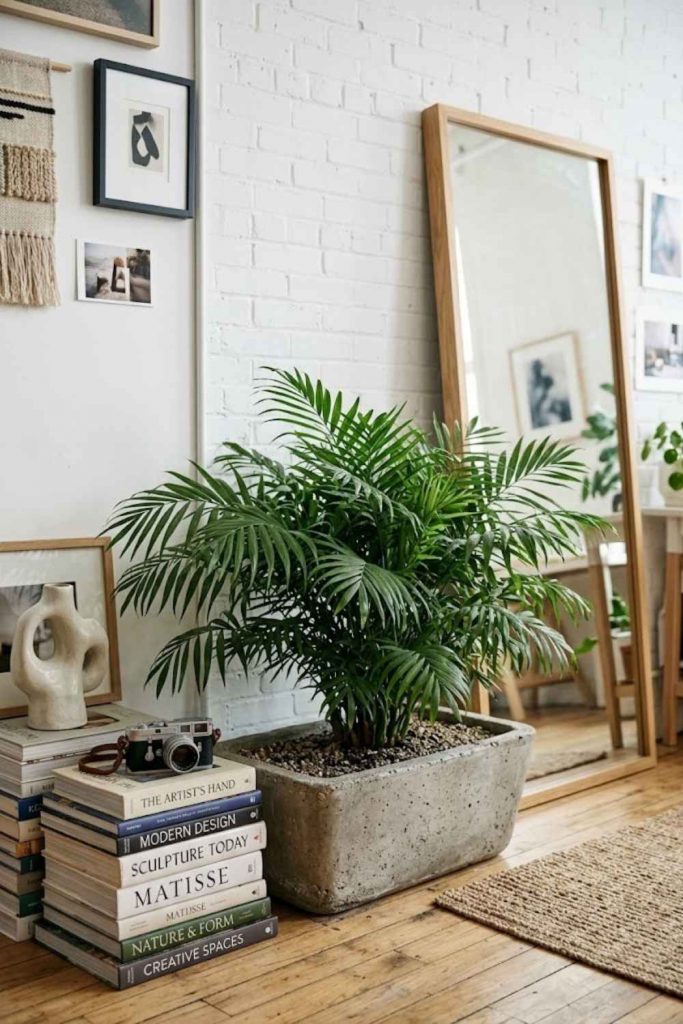
The “trunkless carpet.”
Instead of growing tall, it grows out in a bushy, emerald-green layer that covers empty floor-level gaps better than its tall cousins.
- Light: Medium light
- Water: Never let the soil dry out completely
#10 — Majesty Palm (Ravenea rivularis)
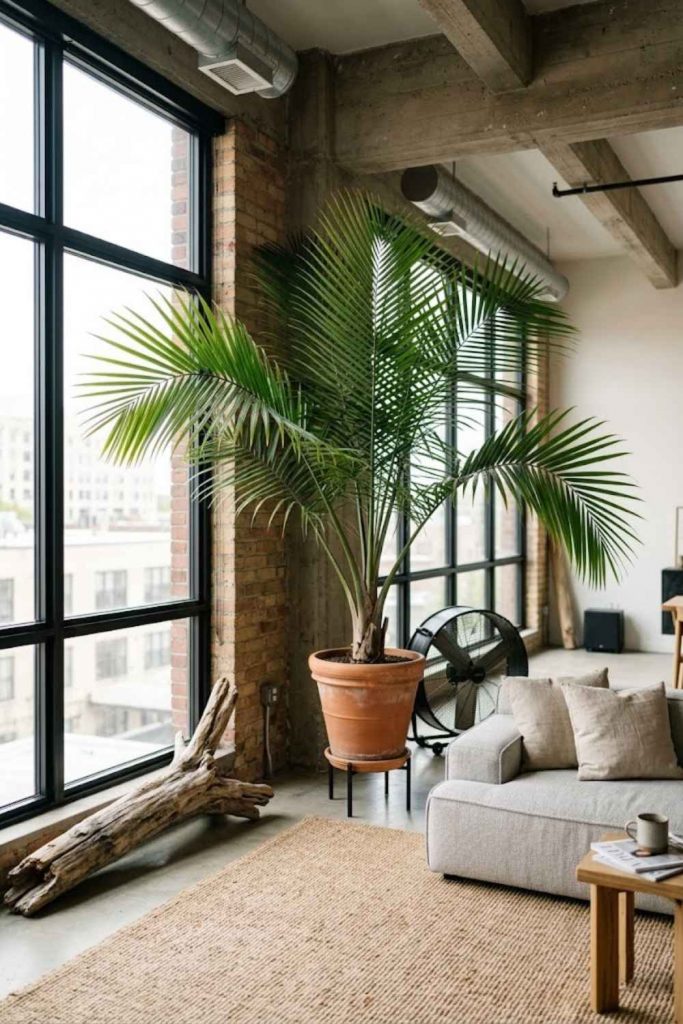
The king of “Scale-per-Dollar.” It is the most affordable way to get a massive, 6-foot tree into a high-ceiling studio instantly.
However, it is a high-maintenance guest.
This species often struggles indoors without very bright light and consistently elevated humidity. Expect browning or frond loss if those conditions aren’t met.
- Light: Very bright light
- Water: High water needs; do not let dry out
Safety Sidebar
- Pet-Friendly: Parlor, Areca, Kentia, Ponytail, Lady, Bamboo, Cascade, and Majesty are non-toxic.
- Physical Cautions: Pygmy Date palms have sharp spines near the base of the fronds. Check individual Chinese Fan palm specimens before placing them in narrow walkways.
- The Lethal Imposter: Sago Palms are NOT true palms and are deadly to pets.
Conclusion
Success with indoor palms depends on matching the tree’s architecture to your room’s layout.
A shadowy corner is the natural habitat for a Parlor Palm or Lady Palm.
If you have an empty, sunny floor gap that needs a tropical “curtain,” the Areca or Majesty will provide the most scale for your effort.
For the traveler, the Ponytail Palm remains the undisputed drought champion.