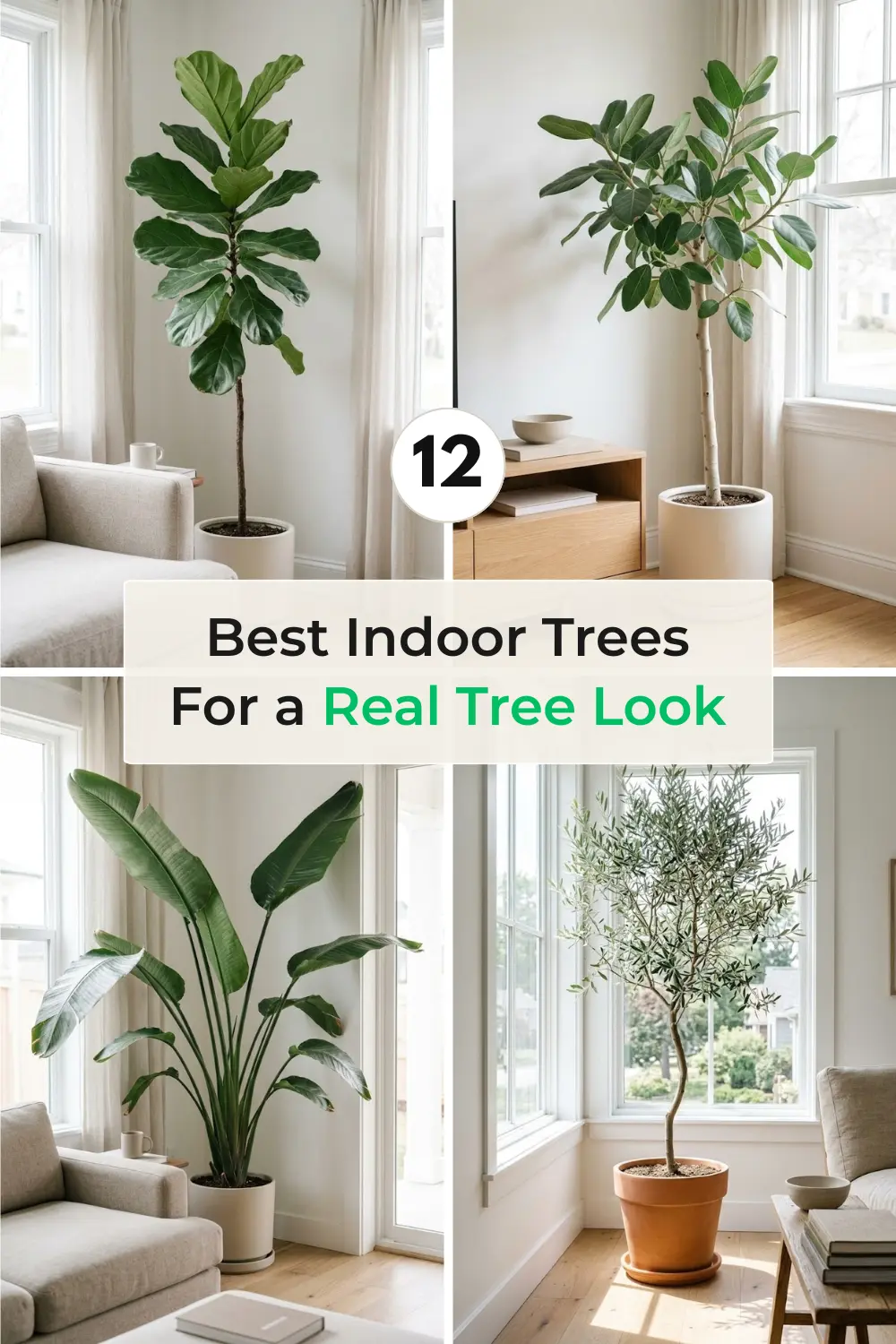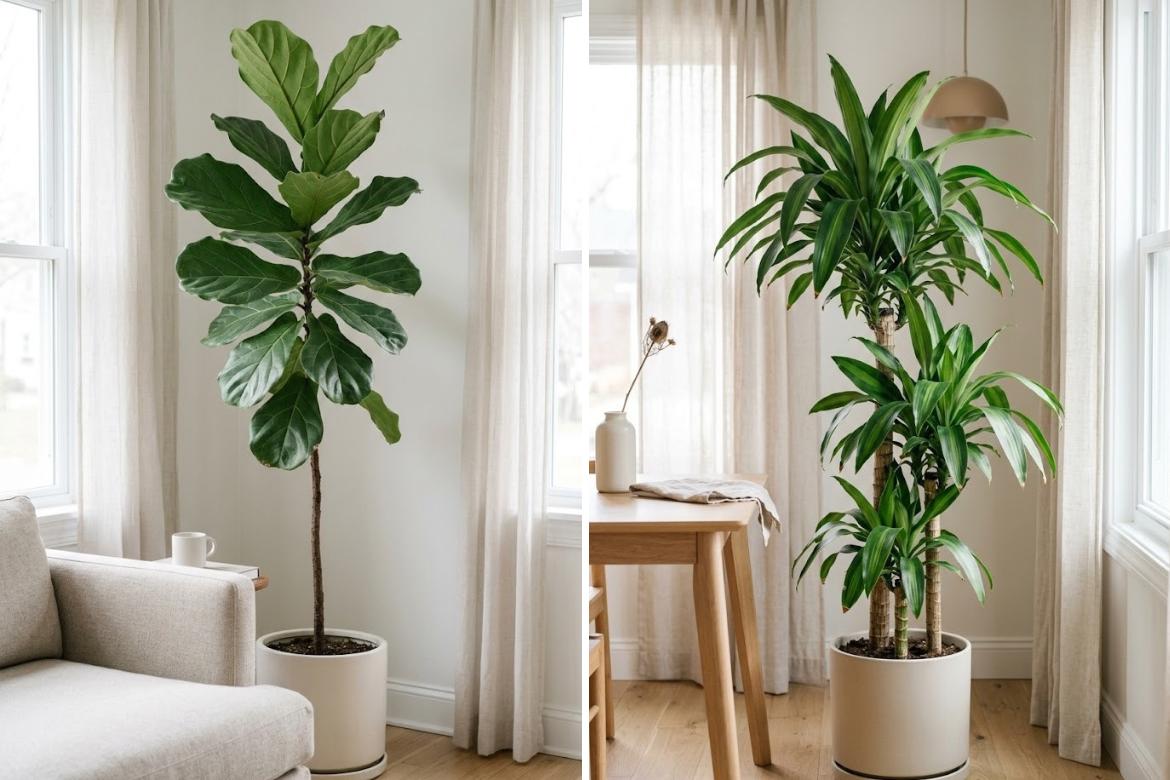
Table of Contents
Late afternoon light hits the floor, and you notice it again: the corner by the sofa still looks a little unfinished.
You don’t need more decor. You need height—something with a real trunk and leaves up at eye level that makes the room feel styled, not cluttered.
This is a curated list of the best indoor trees that actually read like trees indoors. You’ll be able to pick what fits your light, your floor space, and your care comfort level.
#1 — Fiddle Leaf Fig (Ficus lyrata)
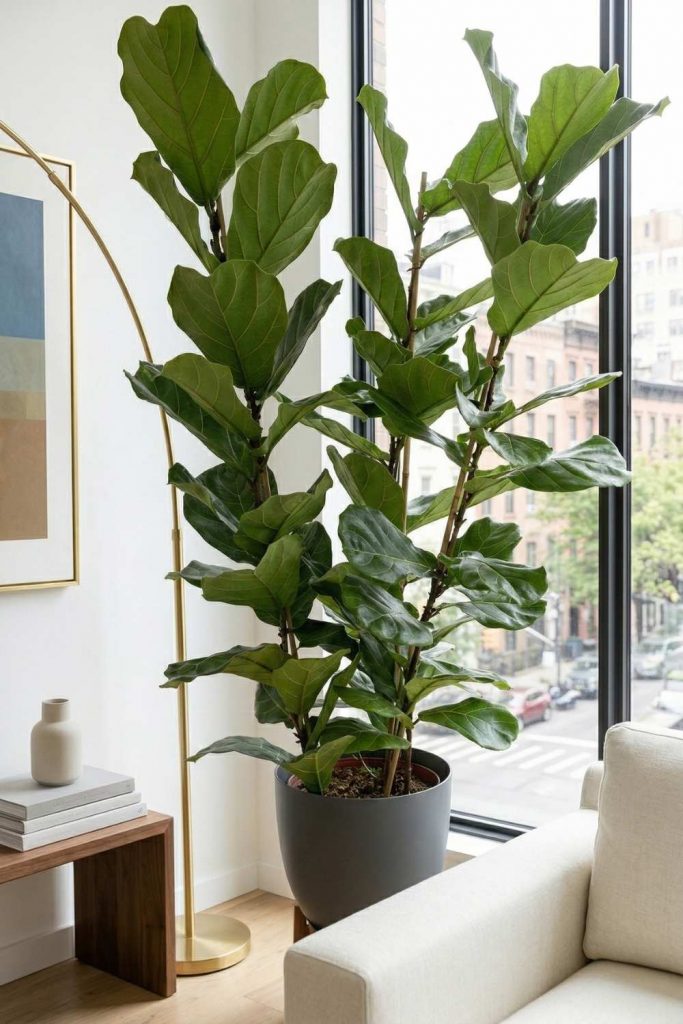
In real life, it’s a bold silhouette: one slim trunk with big violin-shaped leaves stacked like a modern sculpture.
Give it the spot you’d normally reserve for a statement lamp—next to a console, behind a low sofa, or beside a reading chair. Aim for bright, steady light that doesn’t swing wildly day to day.
This is the “I love the look, I’ll commit” option. Keep it away from HVAC blasts and cold drafts, and don’t move it around once it’s happy.
#2 — Ficus Audrey (Ficus benghalensis)
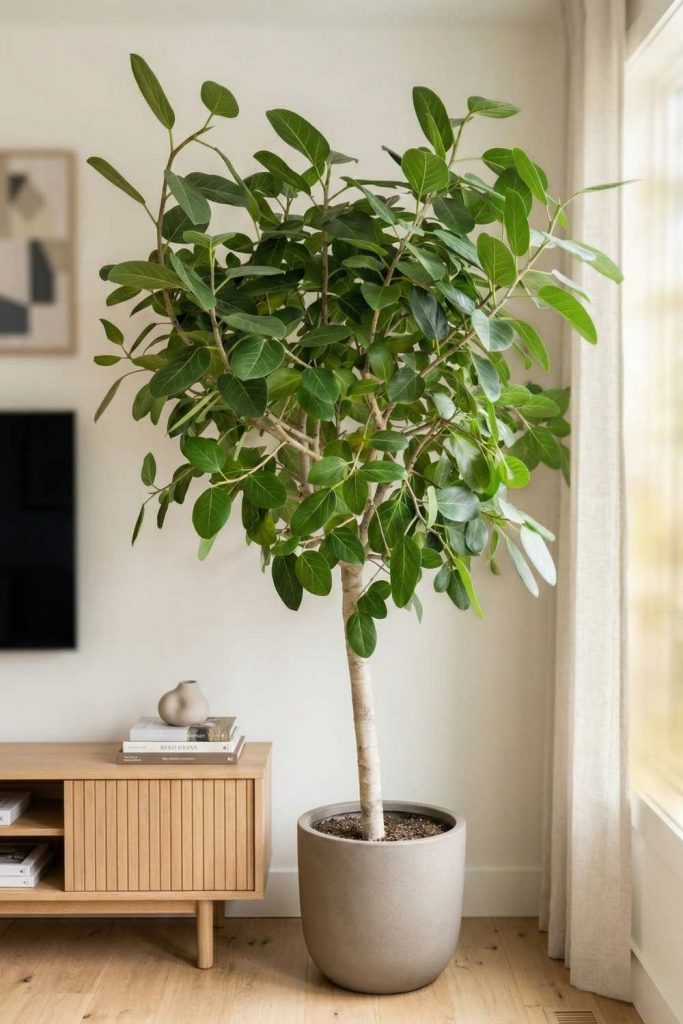
Audrey feels soft and tailored: a pale trunk and matte green leaves that look calm and expensive without being loud.
It’s perfect beside a media console or in a dining nook where you want height that still reads minimal. It adds presence without taking over the room.
If you want a ficus that photographs beautifully but feels a touch more forgiving than a fiddle leaf, Audrey is often the sweet spot.
Related: 9 Essential Tips to Grow a Thriving Ficus Audrey
#3 — Rubber Tree (Ficus elastica)
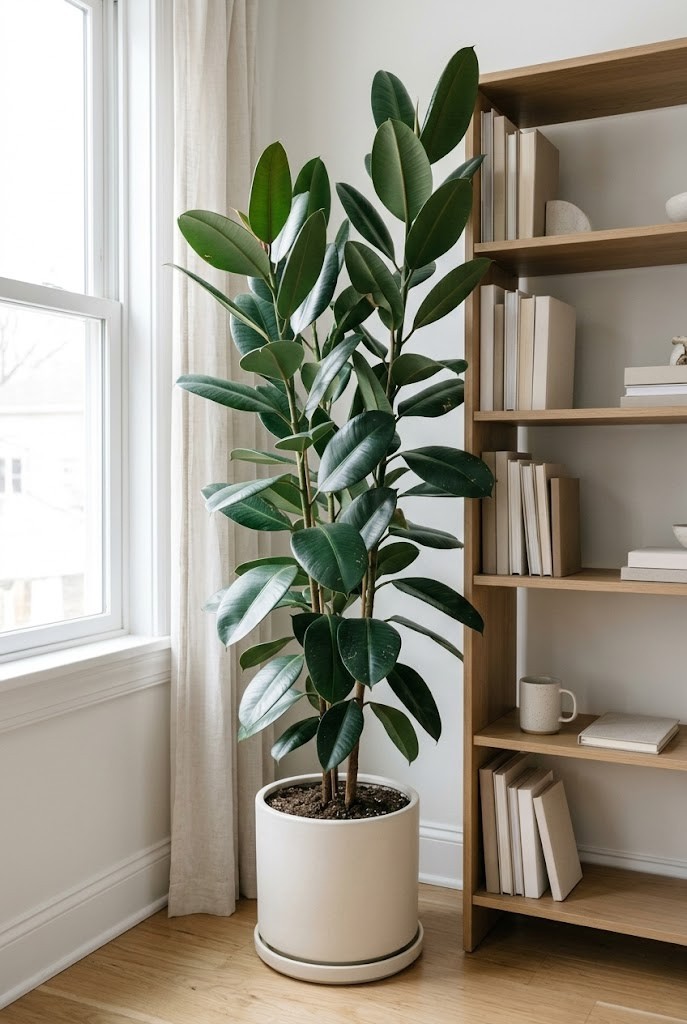
Rubber tree reads glossy and architectural—thick leaves, upright growth, and that satisfying “tall plant” presence even when it’s still young.
It shines in narrow footprints. Slide it beside a credenza, tuck it near a bookshelf, or place it in a home office corner for clean vertical lift.
If your care style is “weekly-ish water and good intentions,” this is one of the easiest ways to get a tree look that still feels designed.
#4 — Weeping Fig (Ficus benjamina)
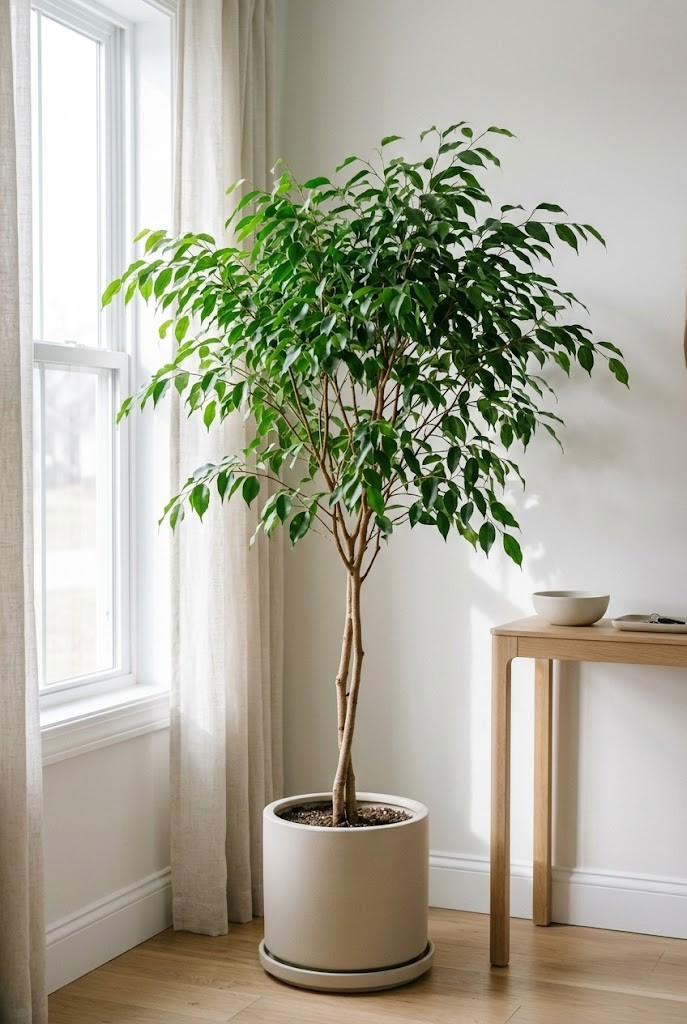
This is the classic indoor mini-tree shape: woody stems with a fuller, airy canopy that can feel like a little living room tree.
It looks especially good near a bright window in an entryway or beside a fireplace where the room needs softness and movement.
One rule matters most: pick its spot and let it settle. If you keep repositioning it like decor, it may drop leaves while it readjusts.
Related: How to Grow and Care for Weeping Fig
#5 — Bird of Paradise (Strelitzia)
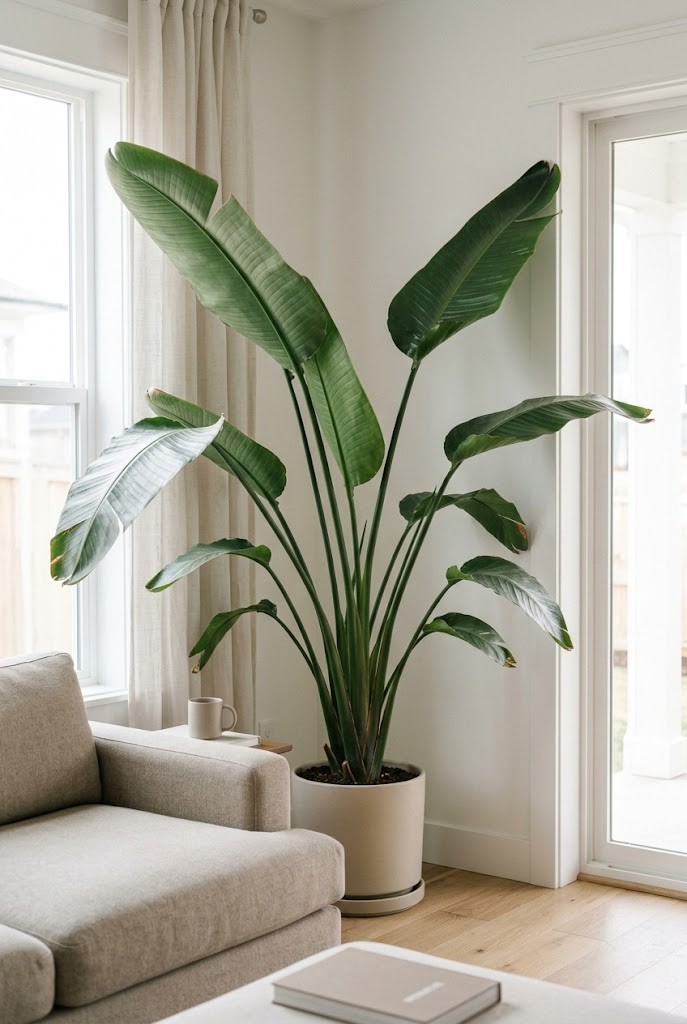
You’ll recognize it instantly: tall stems, huge paddle leaves, and instant vacation-at-home energy.
Give it space to fan out—near a sliding glass door, in a sunlit dining area, or beside a low sectional where leaves won’t get bumped all day.
If your brightest spot is also a busy walkway, scoot it a foot off the traffic line. It’ll look better, and the leaves won’t get shredded.
#6 — Umbrella Tree (Schefflera actinophylla)
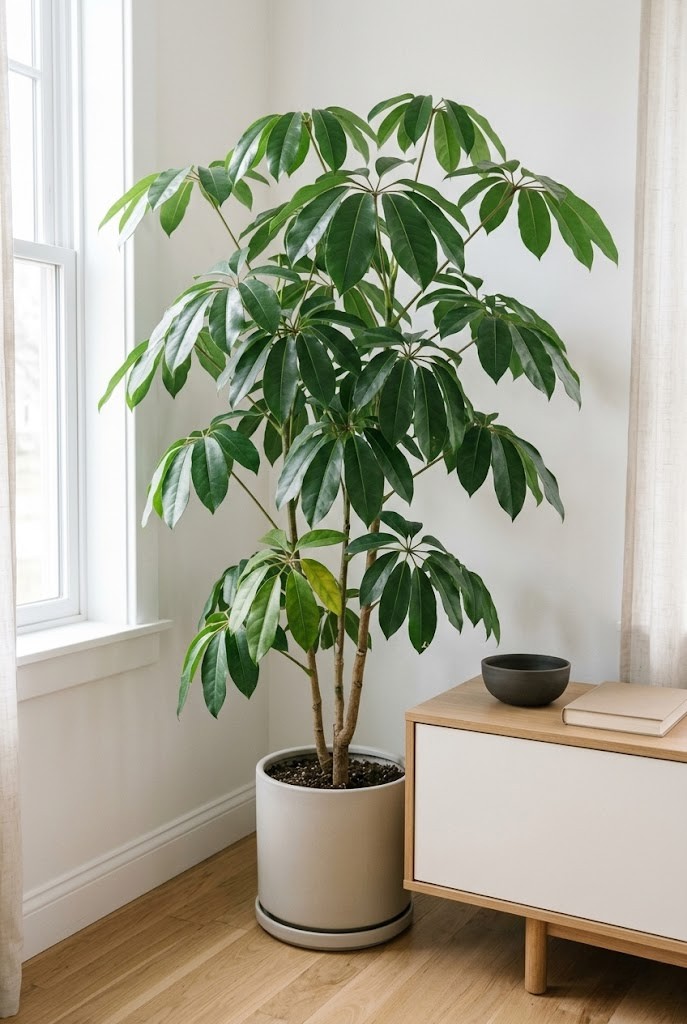
In a real room, it looks like a small canopy—woody stems with leaf clusters that spread like green umbrellas and fill visual space fast.
It’s a smart fix for awkward corners: next to a TV console, beside a tall cabinet, or along a blank wall where you want height and fullness.
If your goal is “make this corner look finished,” this plant does it quickly. Keep it in a simple planter, and it reads clean, not chaotic.
#7 — Dracaena Marginata (Dragon Tree)
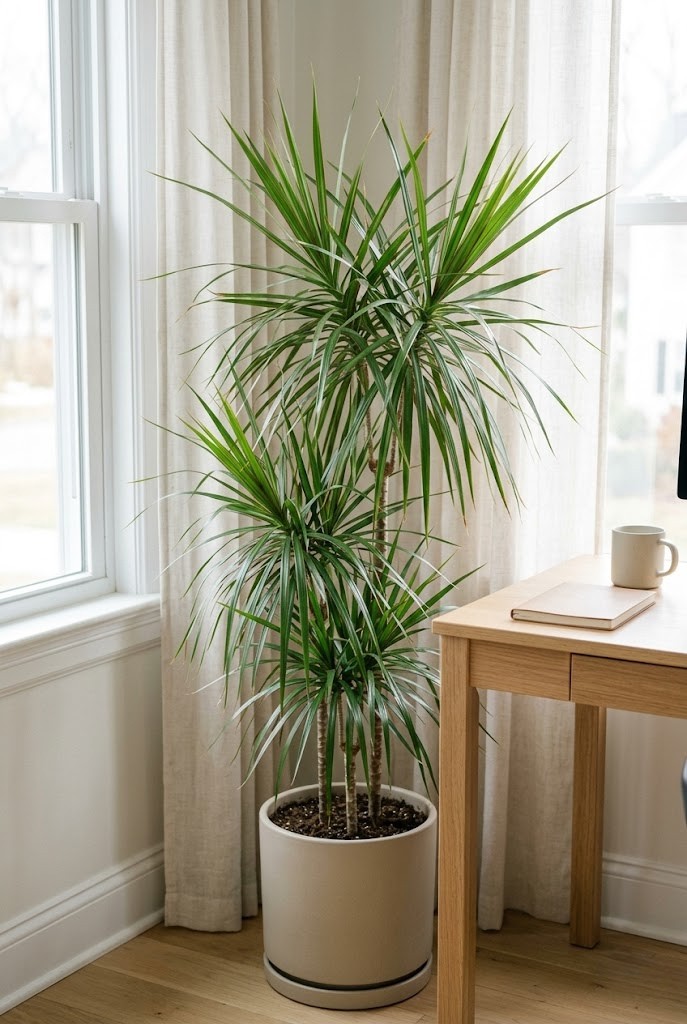
Dragon tree is all clean lines: slender canes with spiky, fountain-like leaves that feel modern and slightly graphic.
It’s ideal for tight floor plans—beside a desk, in a bedroom corner, or along a hallway wall where you want height without bulk.
If you travel sometimes or forget a watering here and there, this one tends to stay chill. It’s a great “set it and live your life” tree look.
#8 — Corn Plant (Dracaena fragrans)
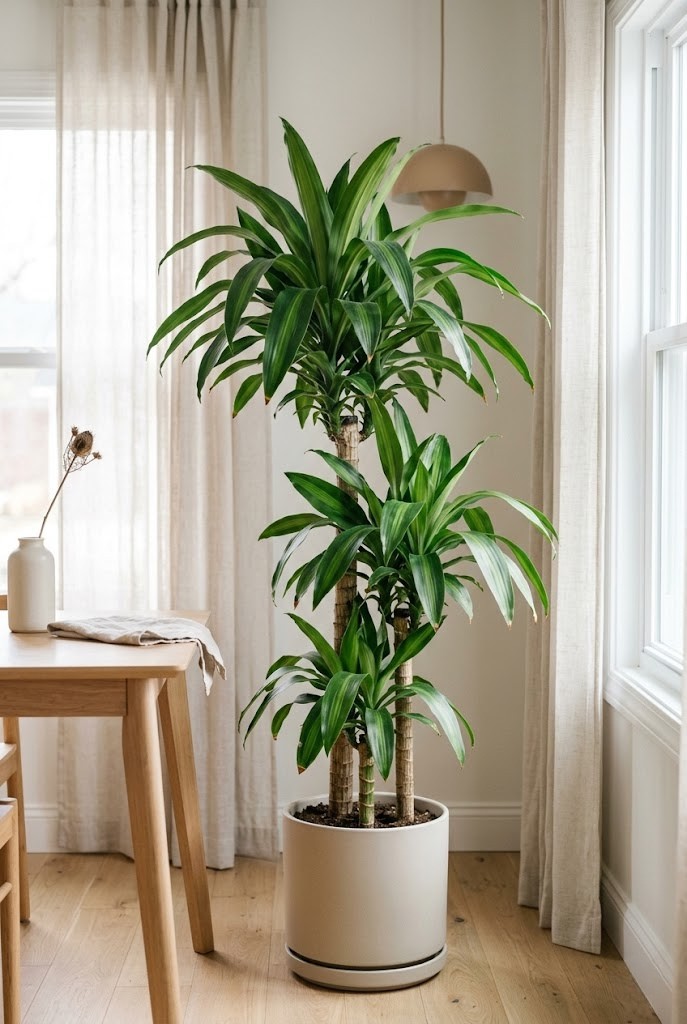
Corn plant has the classic indoor-tree outline: thick canes with a leafy tuft on top, like a palm-meets-tree silhouette.
It works beautifully in medium-light rooms—near a dining table, beside a dresser, or in a living room corner that gets light but not harsh sun.
If your windows aren’t perfect, start here. It’s forgiving, and it still gives you real height.
#9 — Yucca Cane (Yucca elephantipes)
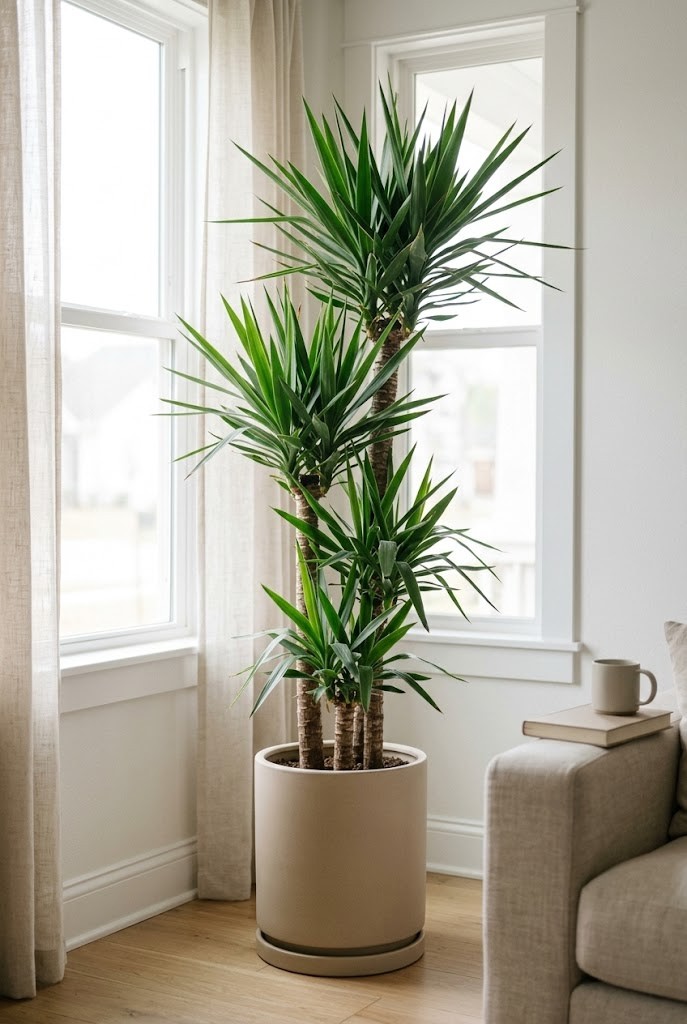
Yucca looks sturdy and sculptural—woody canes with spiky rosettes that feel like a desert tree brought indoors.
It’s great for bright spots where softer plants get floppy. Try it near a sunny window, by a glass door, or in a high-traffic area where you need something upright.
This is a strong match for busy owners. It likes a little neglect more than constant attention.
#10 — Kentia Palm (Howea forsteriana)
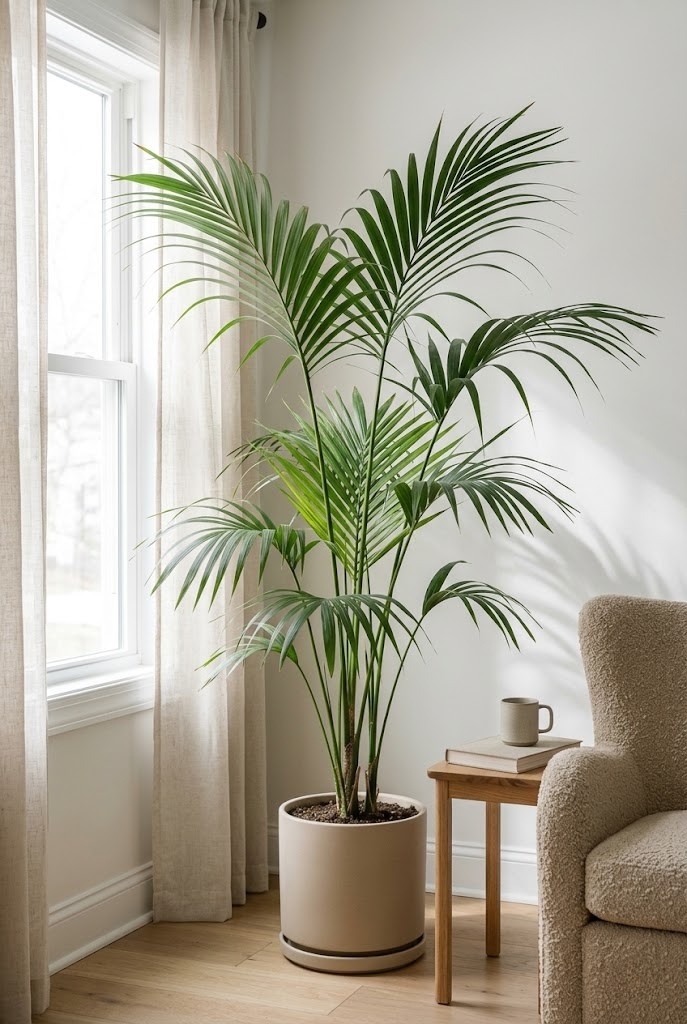
Kentia palm is the quiet-luxury option: tall, arching fronds that soften a room without looking messy.
Place it beside a sofa, near a reading chair, or in an entry where you want height that feels relaxed and expensive. The airy shape adds presence without crowding your floor plan.
If you’re a “water when the top inch feels dry” person, kentia fits right in. It’s elegant, but not fussy.
#11 — Ponytail Palm (Beaucarnea recurvata)
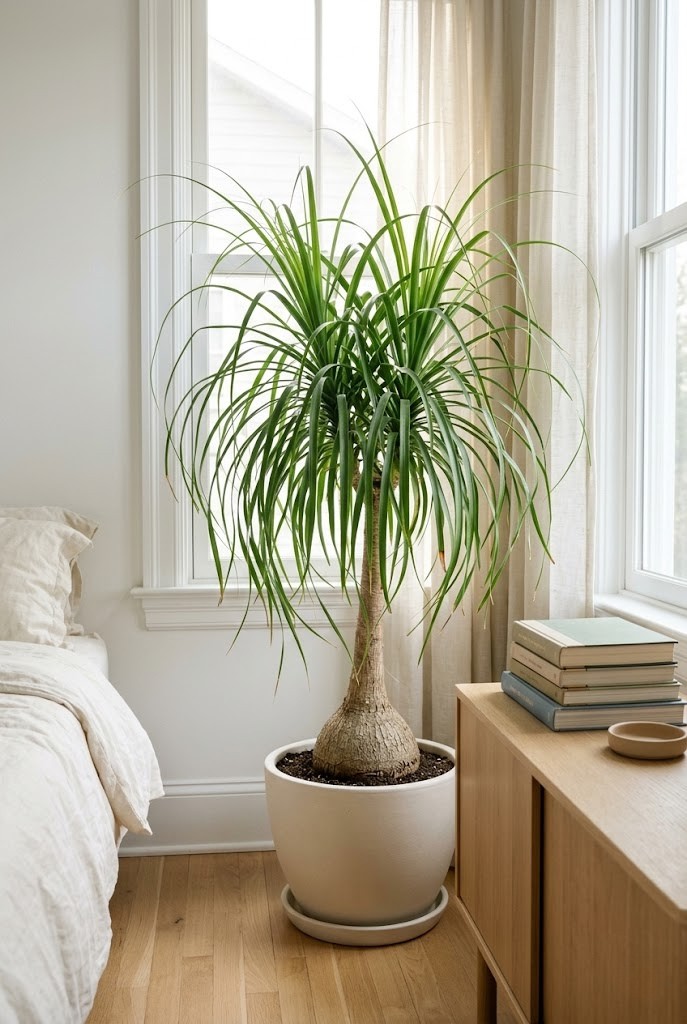
It looks like a tiny indoor tree with personality: a bulbous base (like a little trunk) and long ribbon-like leaves that spill out in a soft fountain.
Ponytail palm is great on the floor next to a low credenza, in a sunny bedroom corner, or anywhere you want something sculptural without a wide canopy.
That swollen base stores water. So if you’re busy or you’re a little inconsistent, this is one of the most forgiving tree-look plants you can own.
#12 — Olive Tree (Olea europaea) — indoor-trained
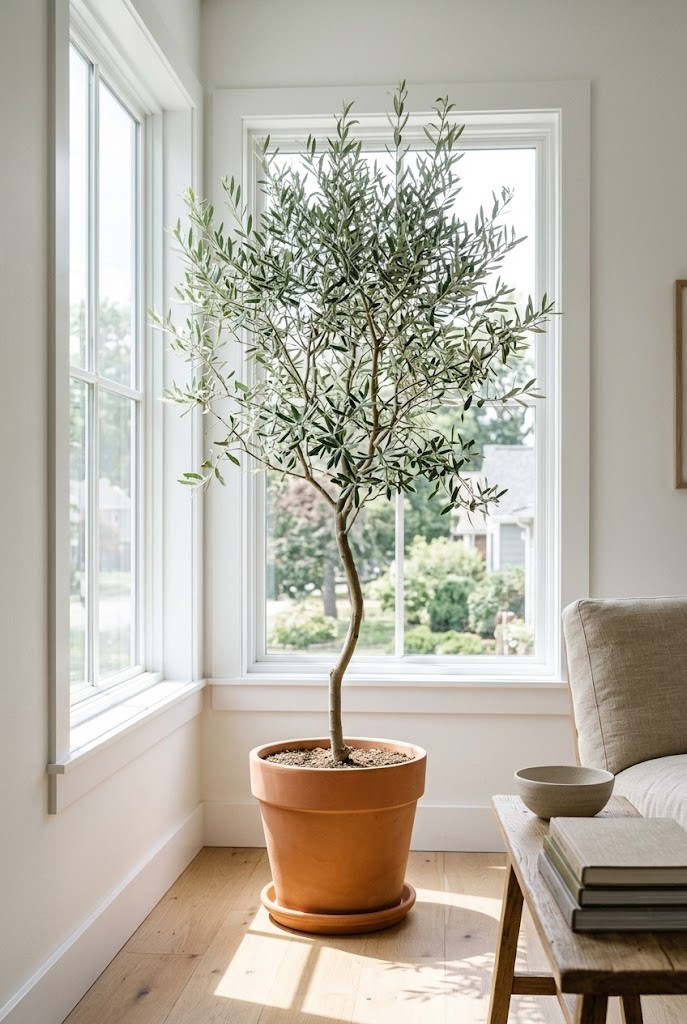
In the right light, it’s pure Mediterranean dream: a slim trunk with airy, silvery-green leaves that make a room feel collected and calm.
Here’s the honest part: olive trees need very bright light indoors. Think a strong south-facing window, or a grow light that can actually do the job.
Place it right by the glass where it won’t be shaded by curtains or furniture. If you can’t give it that brightest real estate, it’s better as a patio plant you bring in seasonally.
A Quick Note If You Have Pets
Many popular indoor “tree look” plants—especially ficus, dracaena, and bird of paradise—can be irritating or toxic to cats and dogs if chewed.
If you have a curious pet, place trees out of reach, sweep up fallen leaves, and check a trusted safety list (like ASPCA) before you buy.
When in doubt, choose a plant you can confidently keep inaccessible.
If you’re choosing fast, start with your reality—not your fantasy:
- Tight space? Dragon tree, rubber tree, and yucca keep a clean footprint.
- Want soft, luxe height? Kentia palm and weeping fig bring a fuller canopy feel.
- Chasing a statement corner? Fiddle leaf and bird of paradise are the big silhouettes.
Pick the tree look you love, then match it to the best light you actually have. That’s what makes it feel easy—and what keeps it alive.
Found this helpful? Save it for later!