Table of Contents
It’s bright enough to read by the window, but the room still feels a little beige. You add a candle, a throw… and it’s still missing that pop.
That’s where Pink Indoor Plants shine — an easy hit of color on a side table, dresser, or kitchen nook.
Here are 15 to try. One quick note before you choose: most pink foliage stays pink in bright, indirect light. In lower light, it often fades greener over time — and that’s completely normal.
Beginner-friendly pink that holds color indoors
These are the plants that look pink in real homes—not just in perfect greenhouse lighting. Low drama, easy styling, steady color in bright-to-medium indoor light.
#1 — Aglaonema ‘Siam Aurora’ / pink varieties (Chinese Evergreen)

On a dresser near an east-facing window, this reads like a “designed” accent—pink veins against glossy green that still looks good in everyday light.
Keep it in bright to medium indirect light and water when the top inch or two dries. If the pink dulls, it usually just wants a step closer to the window.
⚠️ Note: Toxic to pets if ingested.
#2 — Syngonium ‘Neon Robusta’ (Pink Arrowhead Vine)

This is soft-blush pink without the collector stress. On a tabletop, it feels tidy and cheerful—especially in morning light.
Let the soil dry halfway between waterings. Pinching the tips keeps it bushy instead of leggy.
⚠️ Note: Toxic to pets if ingested.
#3 — Tradescantia ‘Nanouk’
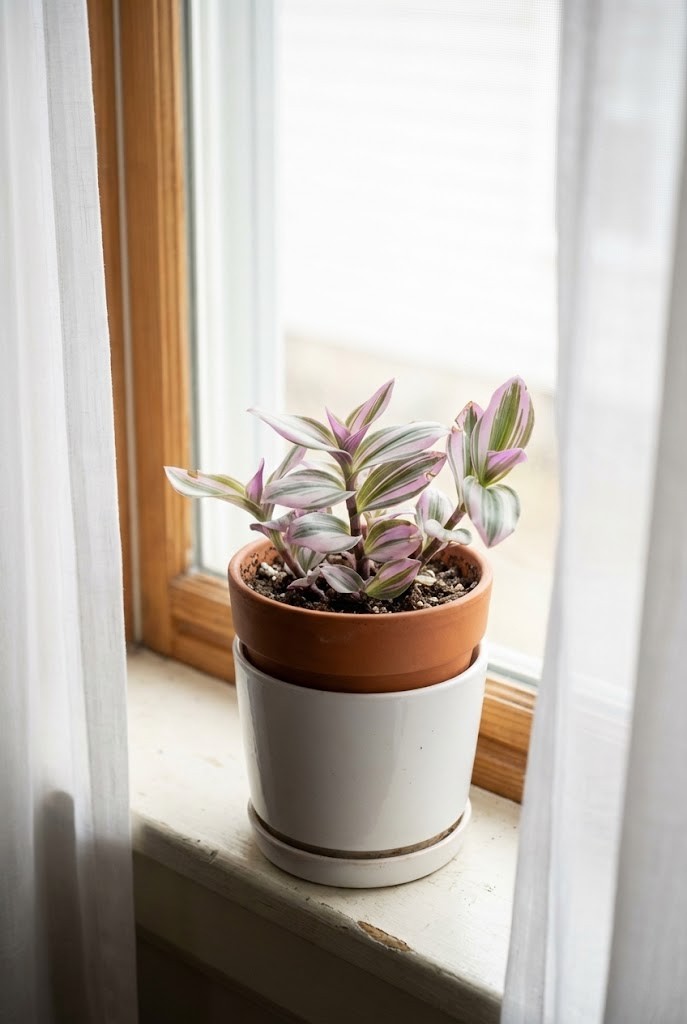
Nanouk’s pastel pink-and-lilac stripes look like décor even when it’s small. It’s especially good for shelves where you want color without height.
Give it bright light to keep the pink strong, and let the top half of soil dry before watering. Snip stems to keep it full (and to propagate extras).
⚠️ Note: Can irritate pets/skin; wash hands after pruning.
#4 — Polka Dot Plant (Hypoestes phyllostachya, pink varieties)

This one is pure “happy.” The pink speckles pop on desks, nightstands, and narrow shelves where you want something playful and compact.
Bright indirect light keeps the spotting crisp. If it starts stretching, pinch the tips—this plant loves a haircut.
#5 — Callisia repens ‘Pink Panther’ (or ‘Bianca’)
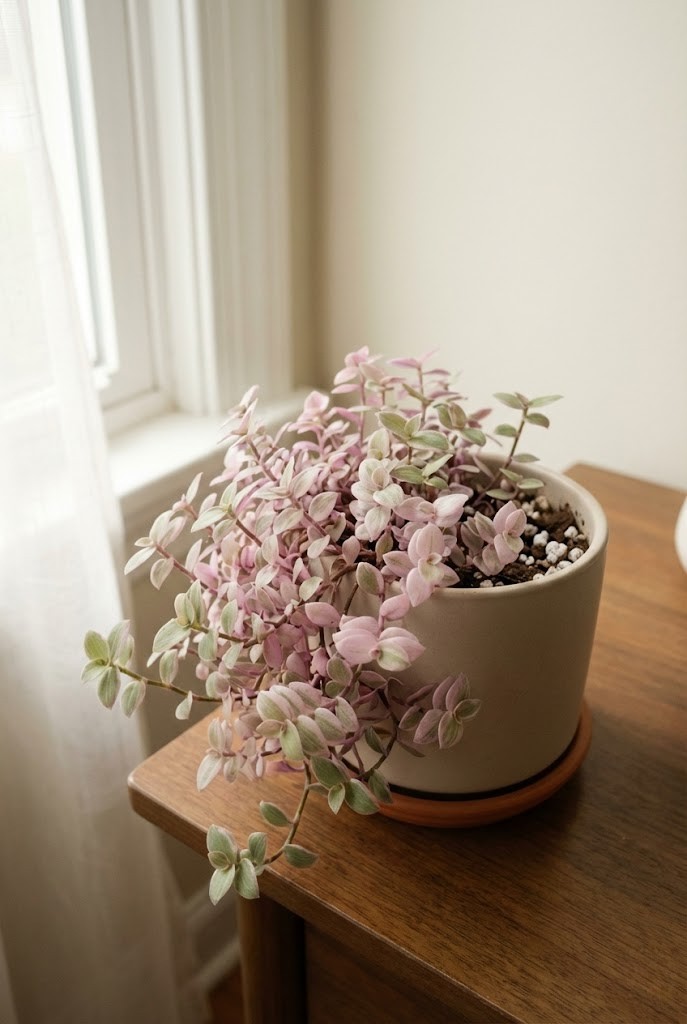
If you want true baby-pink foliage, this is the cutest option. It makes a soft, pinky mound that looks great in tiny pots and styled vignettes.
Give it brighter indoor light for best color, and water lightly once the top dries. Trim often to keep it dense and plush.
Bright-window showpieces that stay pink with strong indoor light
This group is for the “I want it to look pink from across the room” crowd. The tradeoff: these need brighter indoor light to keep their color and pattern.
#6 — Philodendron ‘Pink Princess’
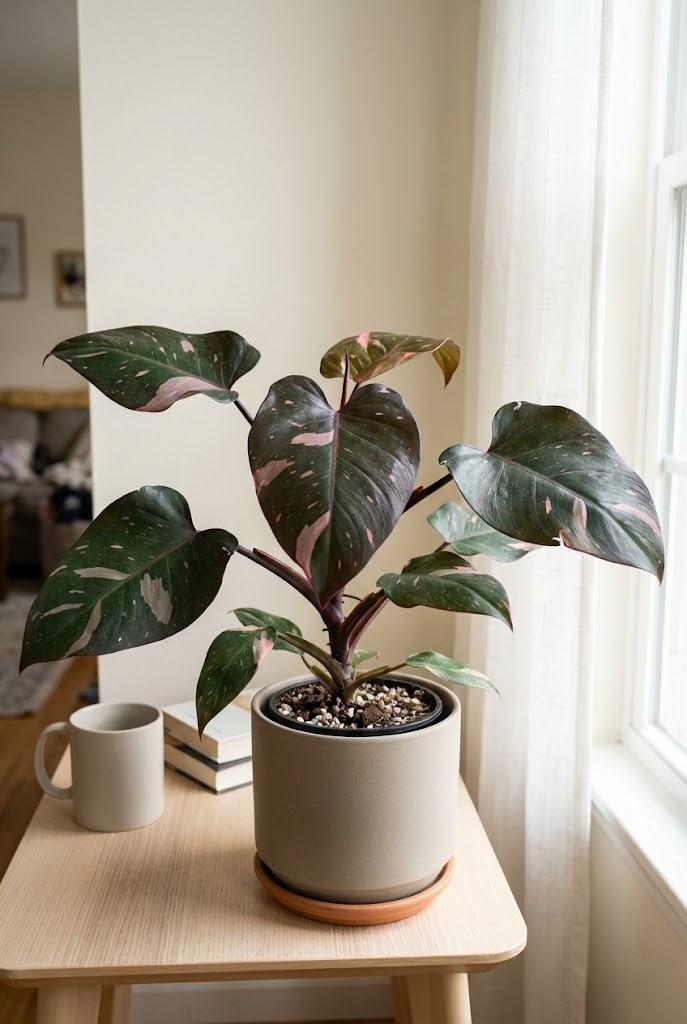
Pink Princess is dramatic in the best way—deep leaves with bubblegum variegation that looks almost painted on.
To keep those pink patches, give bright indirect light and rotate the pot so it colors evenly. Water when the top inch dries.
⚠️ Note: Toxic to pets if ingested.
#7 — Pink Rubber Plant (Ficus elastica ‘Ruby’)
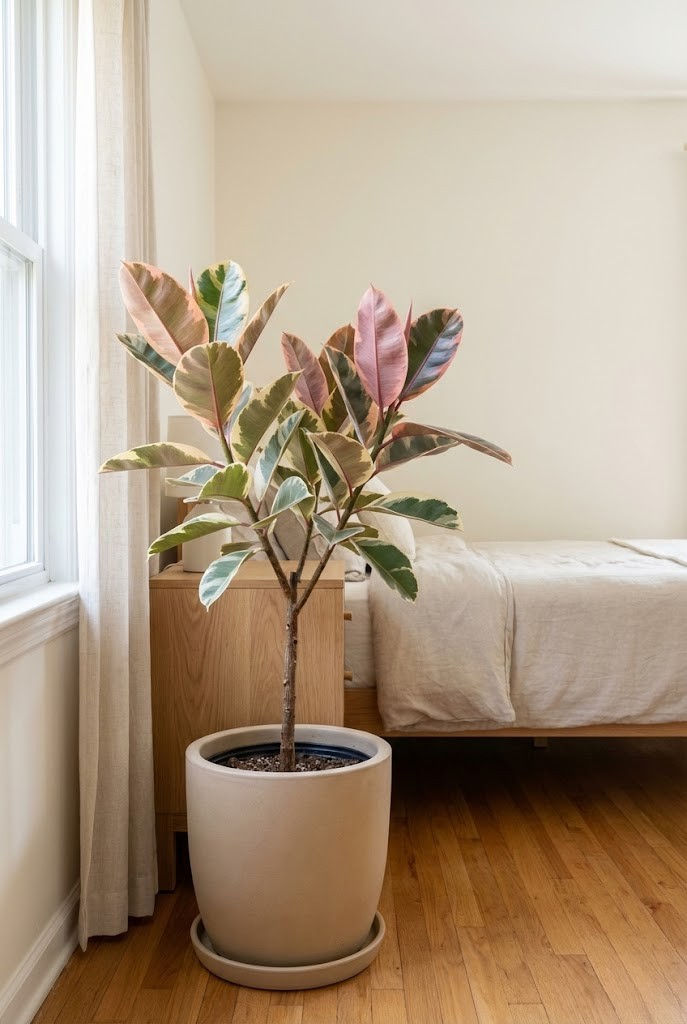
This one adds height and pink—thick leaves marbled with rose, cream, and green. It reads like a sculptural decor piece.
It wants bright light to stay rosy. Let the top few inches dry before watering, and wipe leaves occasionally so it can actually use the light.
⚠️ Note: Sap can irritate; keep away from pets that chew.
#8 — String of Hearts ‘Variegated’ (Ceropegia woodii)
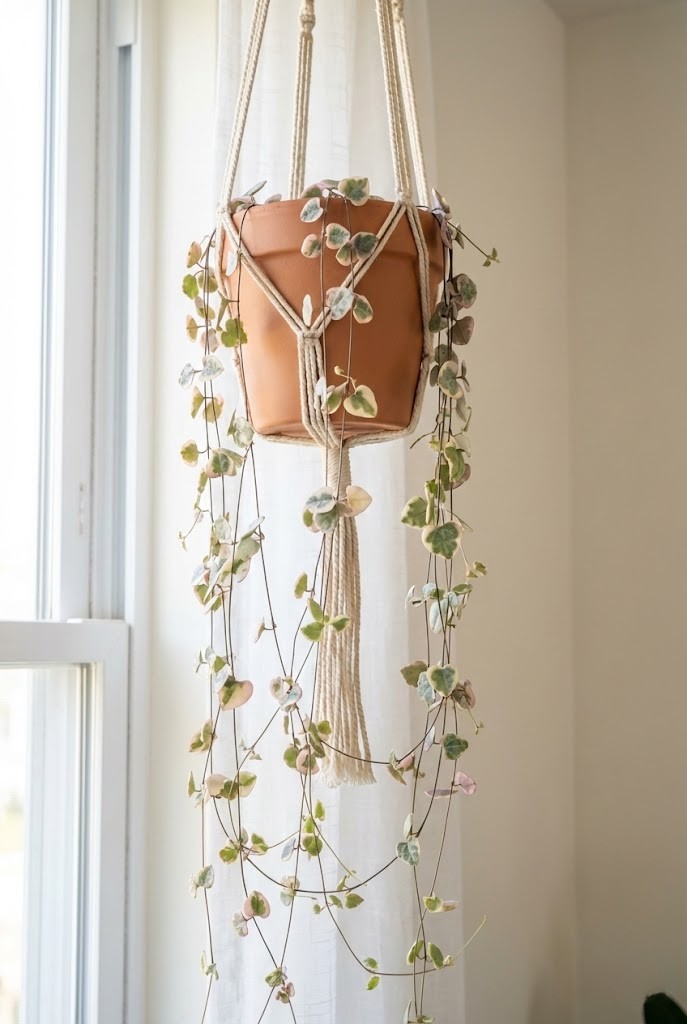
This is the romantic trailer: tiny hearts with pink-and-silver tones that look best hanging high.
Treat it like a semi-succulent—let the pot dry almost fully before watering. Brighter indoor light makes the pink more visible.
⚠️ Note: Mildly toxic to pets if ingested.
#9 — Hoya carnosa ‘Krimson Queen’
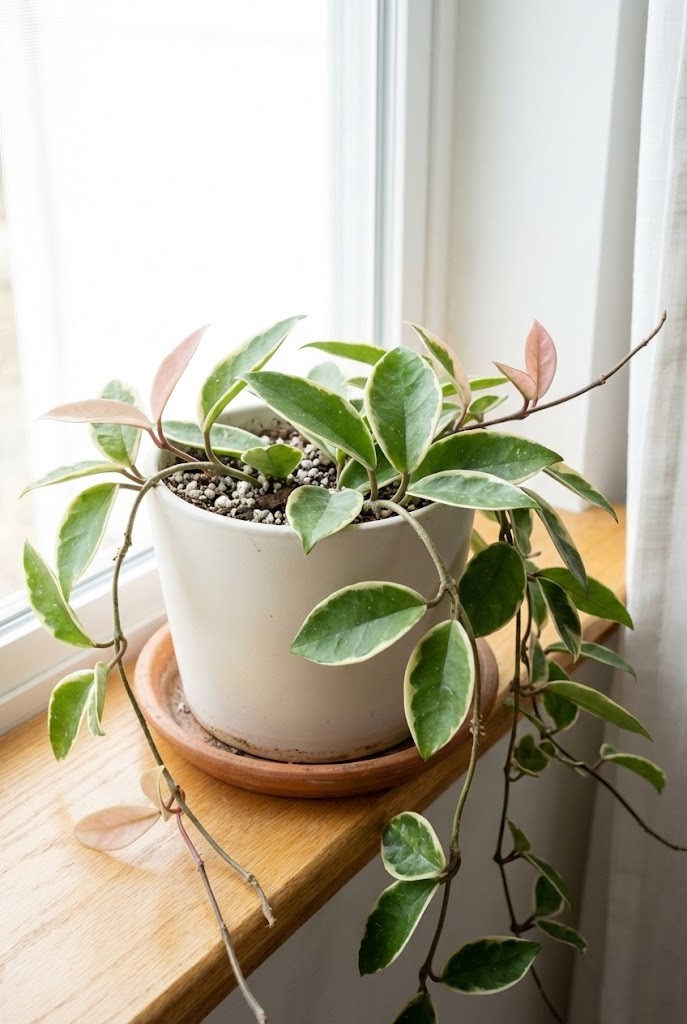
Hoyas are slow, steady, and surprisingly tough. New growth often comes in blush tones before maturing—so it’s a plant that “surprises” you.
Bright light keeps the variegation strong. Water deeply, then let it dry well before watering again.
⚠️ Note: Mildly toxic to pets if ingested.
#10 — Ti Plant (Cordyline fruticosa)
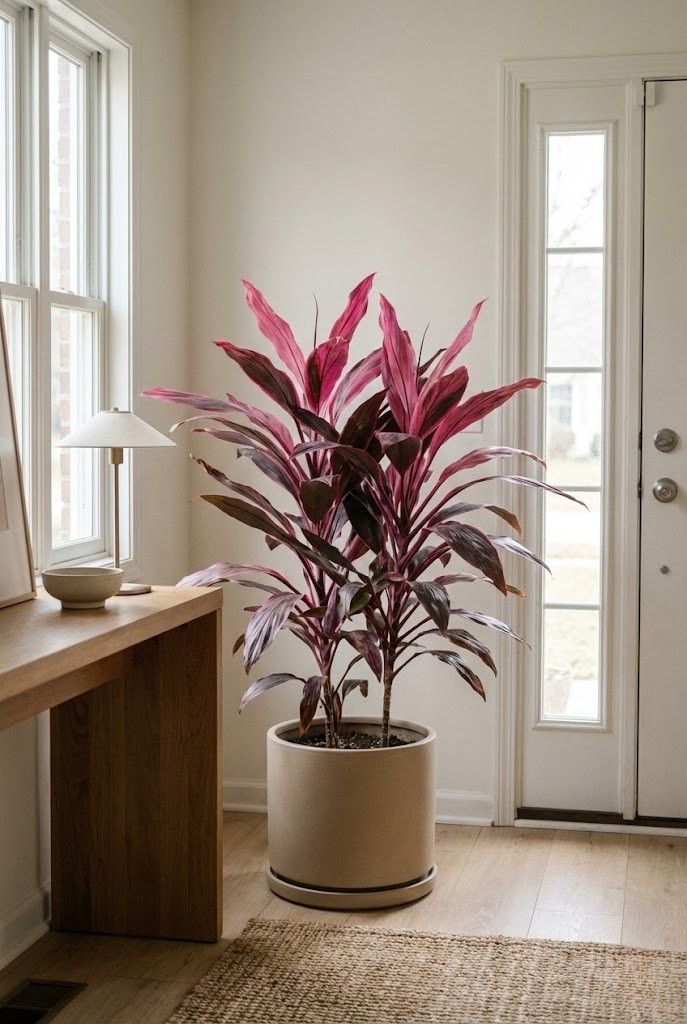
If you want bold pink streaks and a more upright, tropical silhouette, cordyline delivers. It’s a strong color accent in entryways and bright corners.
It needs brighter indoor light than most on this list. If you see crispy tips, move it away from vents and consider filtered water.
⚠️ Note: Toxic to pets if ingested.
Humidity-friendly pink accents for bathrooms and “spa” corners
These are great when your home runs dry—or you want a plant that looks good near a bathroom window, vanity lighting, or a humidifier.
#11 — Stromanthe ‘Triostar’
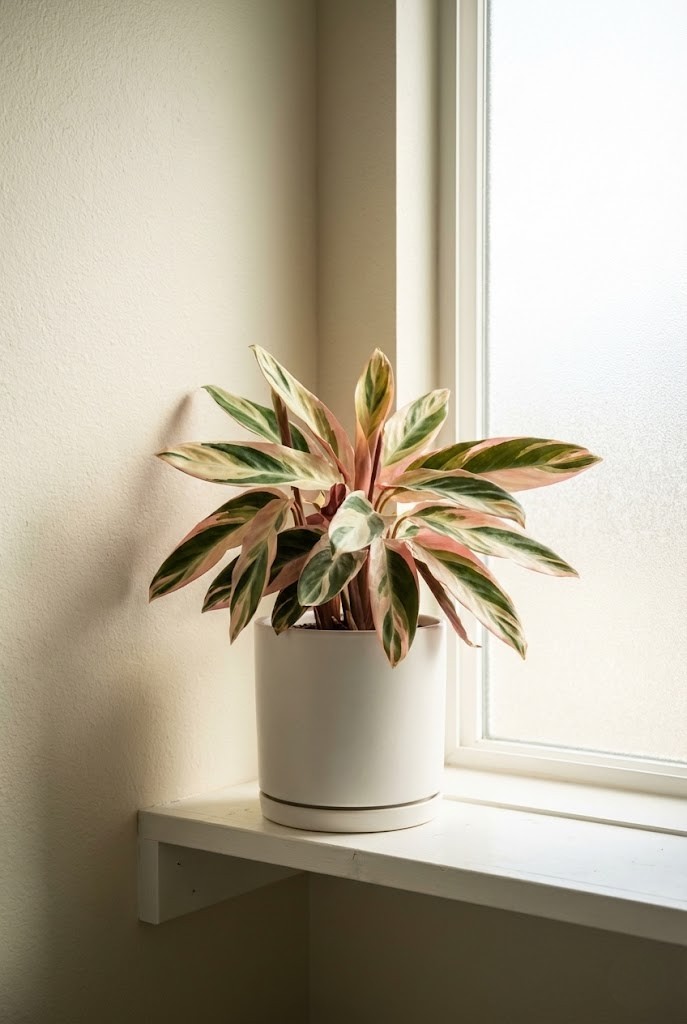
Triostar is a pink-and-cream stunner that feels high-end. The undersides can flash hot pink, especially in good light.
Give it bright filtered light and consistent moisture (never soggy). If leaves crisp, it usually wants more humidity or gentler water.
#12 — Calathea roseopicta ‘Rosy’
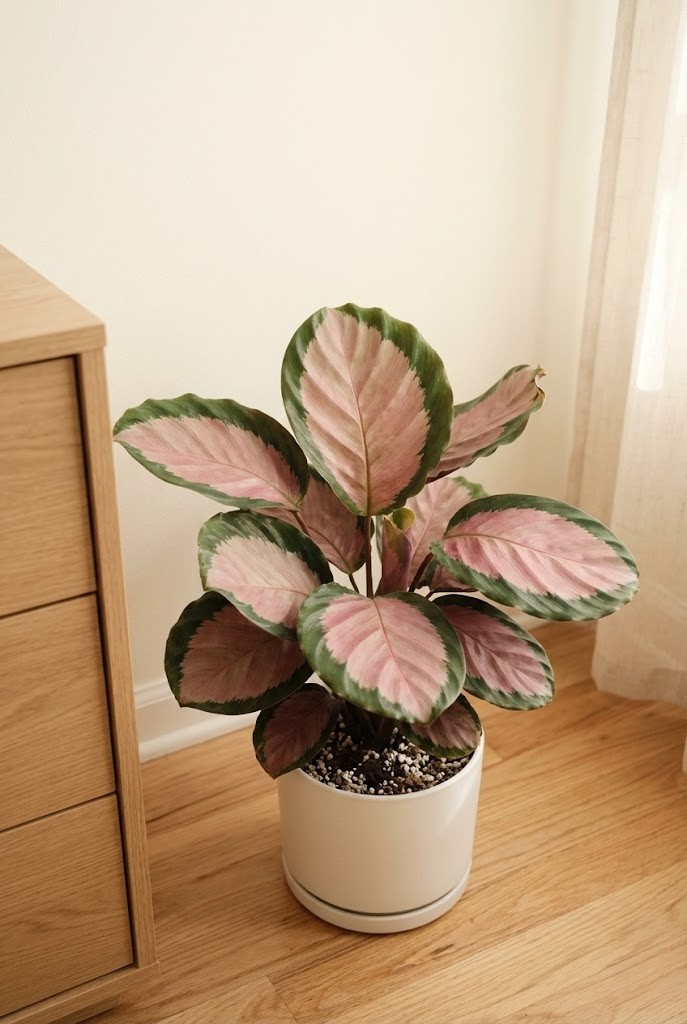
If you want true rosy centers, this is the vibe—graphic leaves that look “designed.” It’s best where humidity is stable and drafts are minimal.
Keep soil lightly moist and avoid very dry air. Medium to bright indirect light helps it stay vibrant without scorching.
#13 — Fittonia ‘Pink’ (Nerve Plant)
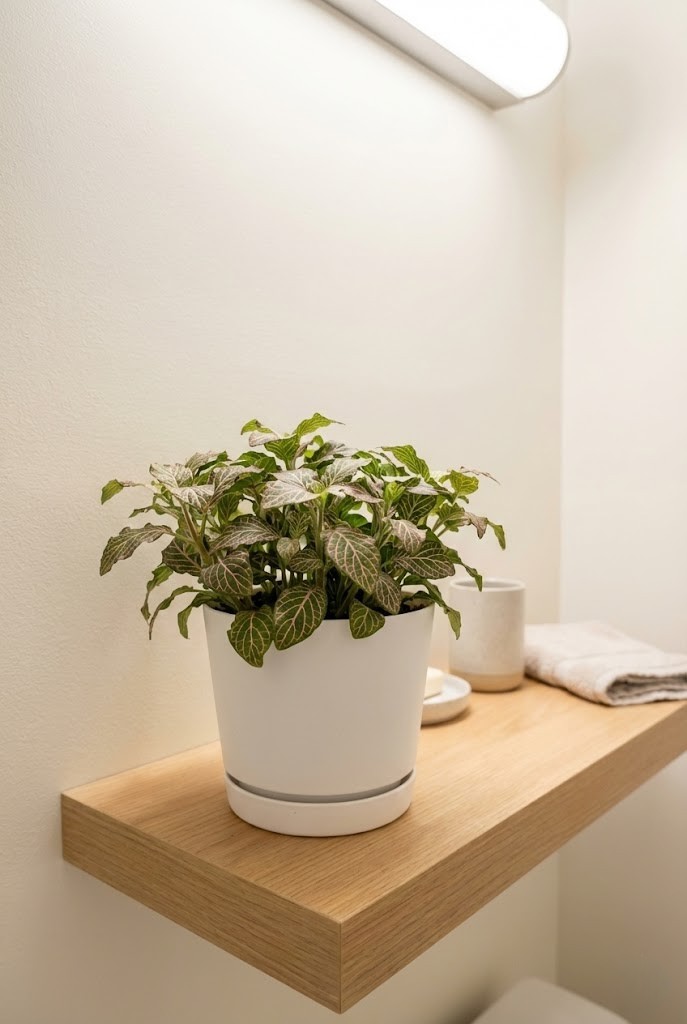
Fittonia is tiny but intense: pink veins that look almost neon up close. It’s perfect for small planters and narrow shelves.
It likes consistently lightly moist soil. If it dramatically droops, it’s usually just thirsty—and often perks back up fast.
#14 — Begonia rex (pink-toned varieties)
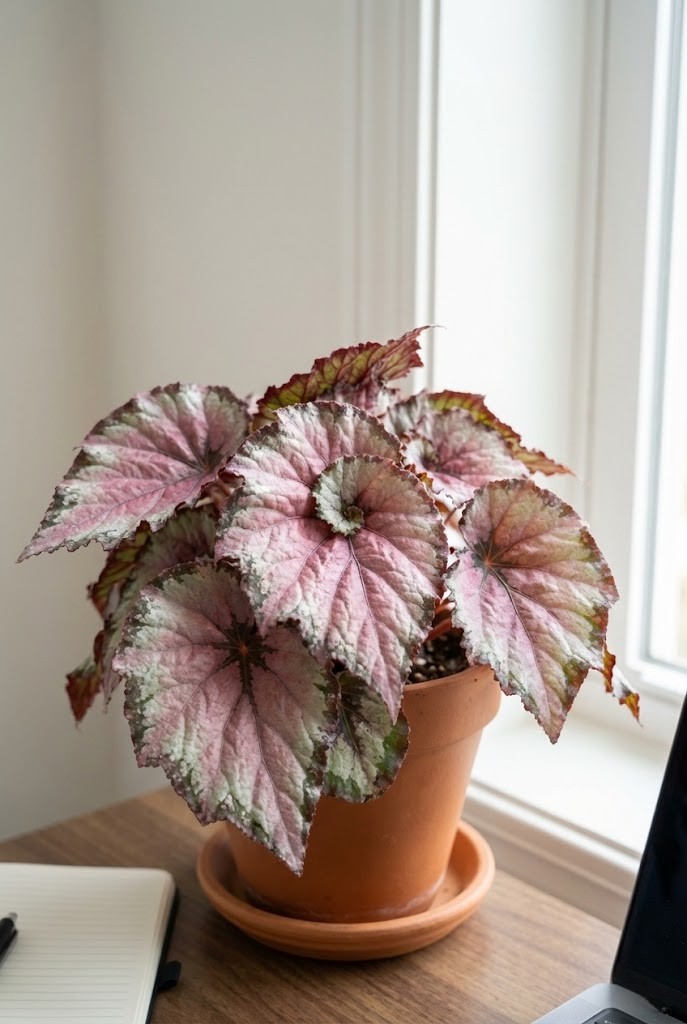
Rex begonias look like living artwork—velvet-metallic leaves with pink tones that shift depending on light.
Bright indirect light is ideal. Water when the top inch dries and keep good airflow to avoid mildew on those lush leaves.
⚠️ Note: Toxic to pets if ingested.
#15 — Pink Caladium (pink varieties)
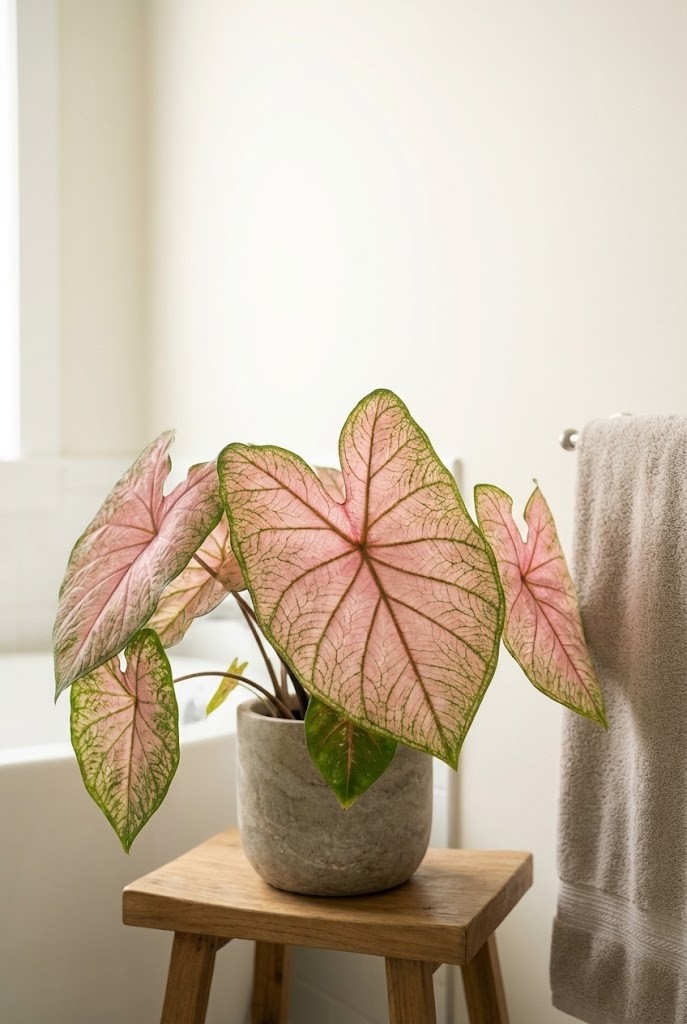
Caladium is the “instant bouquet” plant—huge pink leaves that make a room feel styled in one move.
Keep it warm and evenly moist during growth. One important note: many caladiums go dormant seasonally (leaves disappear), so it’s best if you’re okay with a plant that takes breaks.
⚠️ Note: Toxic to pets. Often dormant in cooler seasons.
Conclusion
Pink plants aren’t automatically high maintenance—you just need the right kind of pink for your light. If you have a bright window, go for the showpieces. If your light is more everyday, stick with the beginner-friendly group that still holds color.
Start with one that fits where you’ll actually place it—dresser, desk, kitchen nook, or bathroom shelf—and let the pink do the decorating.