Table of Contents
It’s early afternoon, the blinds are open — and the room still feels softly dim. The kind of light that never quite reaches the corners.
In spaces like this, plants don’t always die fast. They just stall, fade, and start to look out of place.
Here are 19 low-light indoor plants that not only tolerate dim homes, but still look right in them — so you can choose greenery that feels settled, not temporary.
#1 — Snake Plant (Dracaena trifasciata)
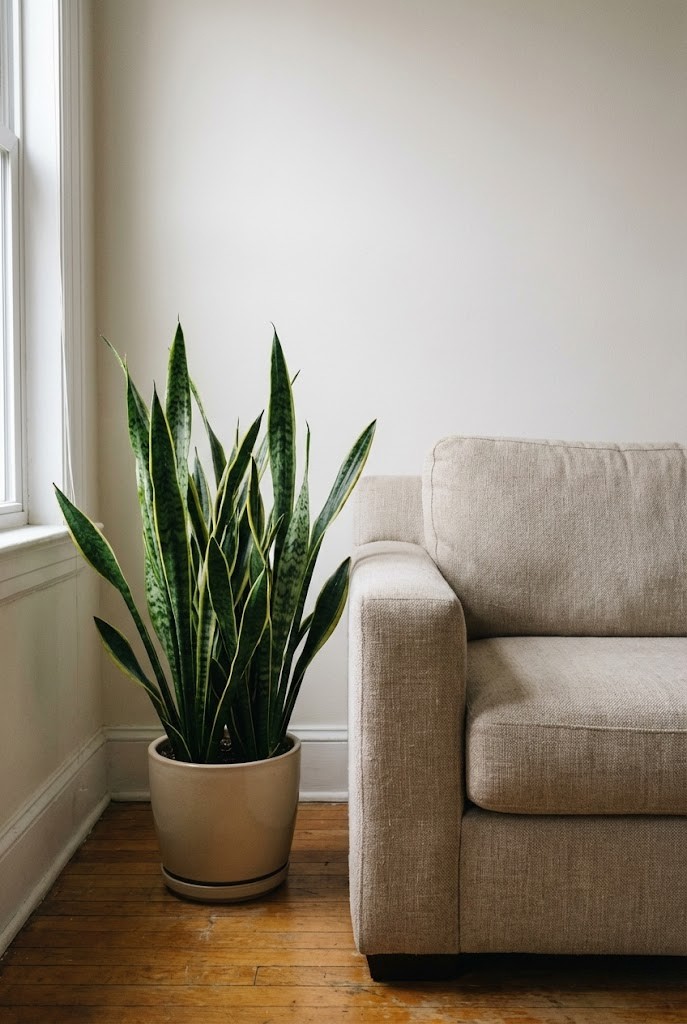
A snake plant brings vertical structure without feeling delicate. Its upright leaves stay firm even when the plant sits several feet back from the window, which is exactly why it works in homes where the light never feels especially generous.
It’s also one of the more forgiving picks if you occasionally forget to water. Because it stores moisture in its leaves and grows slowly, it usually stays present-looking without asking for much. In dim rooms that feel a little flat or unfinished, it acts like a clean visual anchor rather than a plant you’re constantly trying to rescue.
⚠️ Note: Toxic to pets if ingested. Keep out of reach if pets chew leaves.
#2 — ZZ Plant (Zamioculcas zamiifolia)
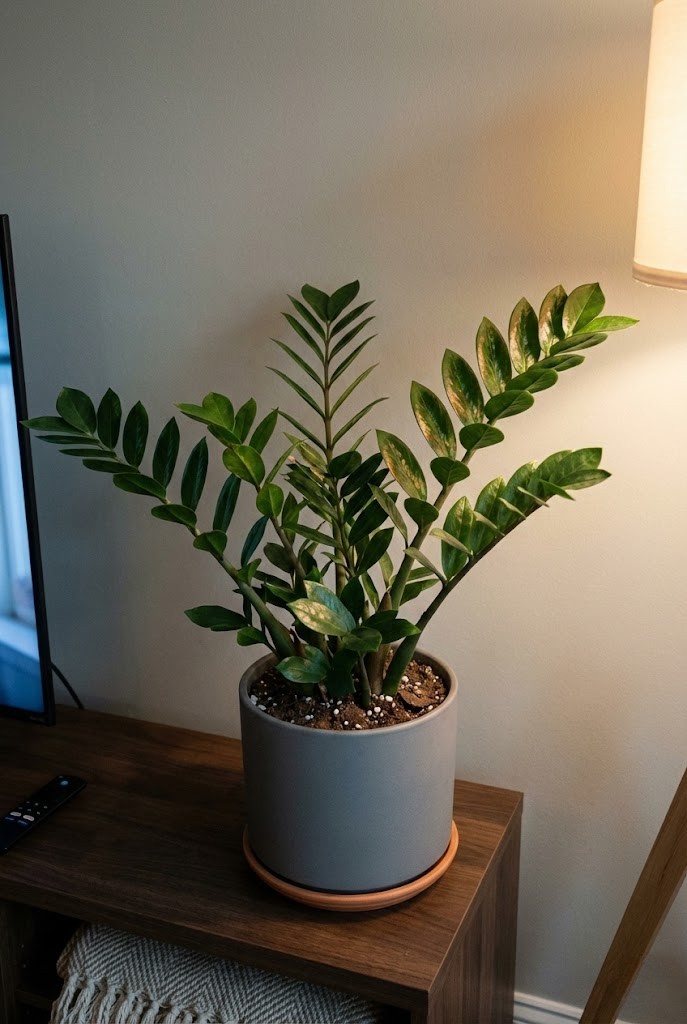
A ZZ plant looks naturally at home in dim spaces. Its glossy leaves catch light from lamps, screens, and whatever daylight does make it in, so it still feels polished even when the room itself reads a little shadowy.
This is one of those rare plants that manages to be both low-effort and finished-looking. It tends to stay visually balanced instead of reaching dramatically for the nearest window, which makes it especially useful in layouts where the plant has to work with the room you have, not the room you wish had better windows.
⚠️ Note: Toxic to pets if ingested. Place where pets can’t nibble the leaves.
#3 — Cast Iron Plant (Aspidistra elatior)
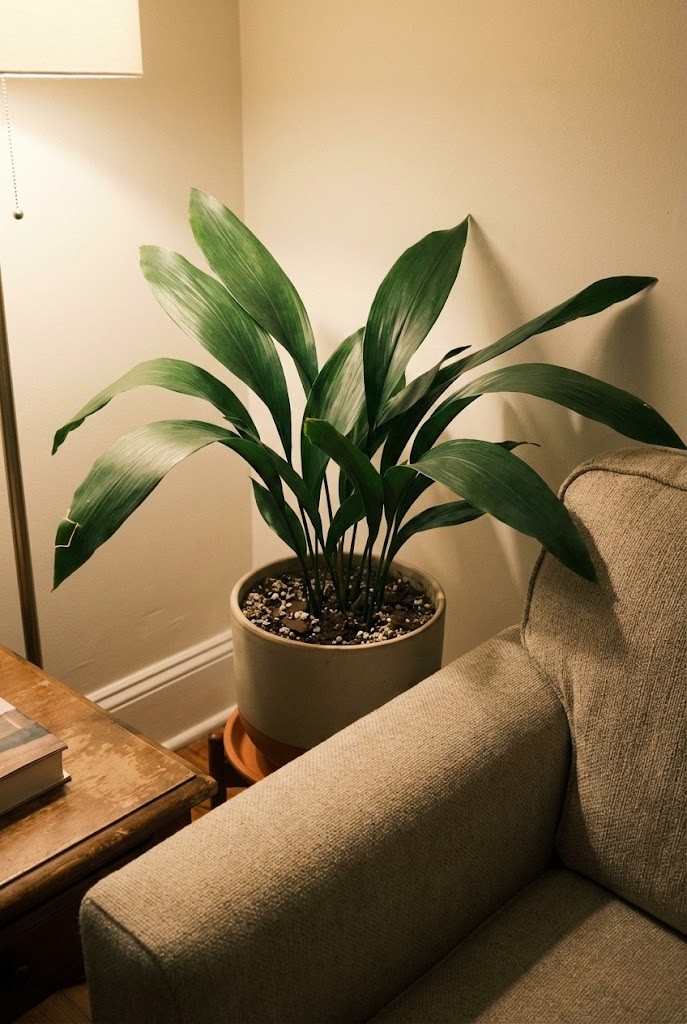
Some plants need a brighter stage to look their best. Cast iron plant doesn’t.
Its long, deep-green leaves hold together well in shade, so it still reads as intentional in rooms where brighter plants often start looking thin. In real homes, it works especially well in quieter spots where you want greenery but not fuss.
It’s less about fast growth and more about holding its shape without complaint.
#4 — Chinese Evergreen (Aglaonema)
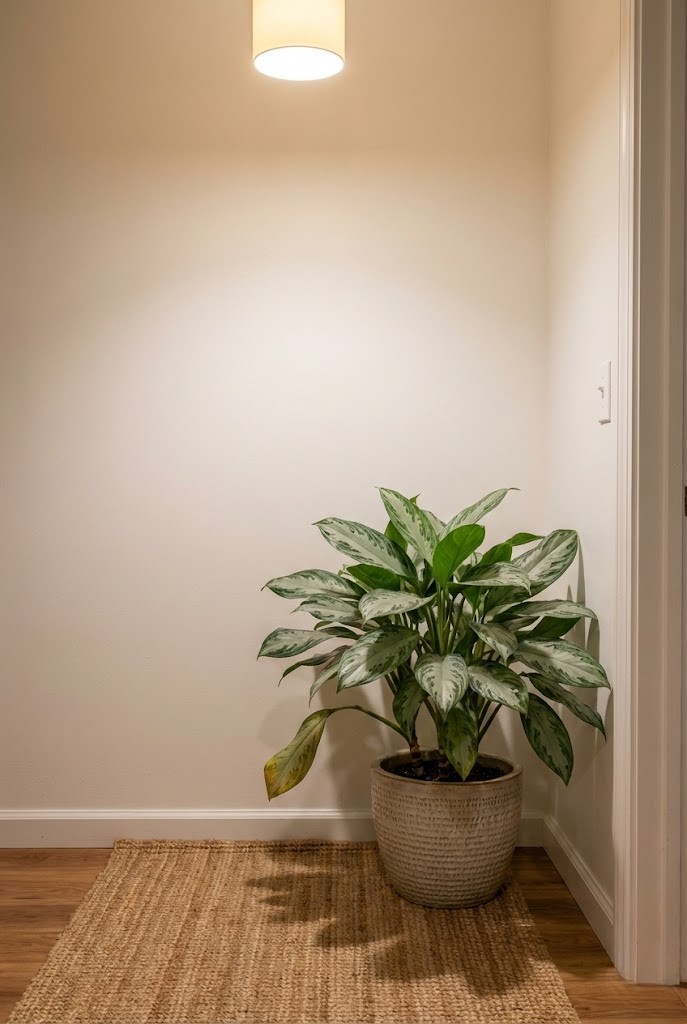
Not every low-light room needs another plain green plant. Chinese evergreen earns its place when you want foliage that still has some pattern and movement, even under mostly overhead light.
Darker varieties usually make more sense here than paler, more contrasty types. In hallways, offices, or subdued corners, it gives you visual interest without turning the plant into a maintenance project.
⚠️ Note: Toxic to pets if ingested. Keep out of reach if pets like to chew.
#5 — Janet Craig Dracaena
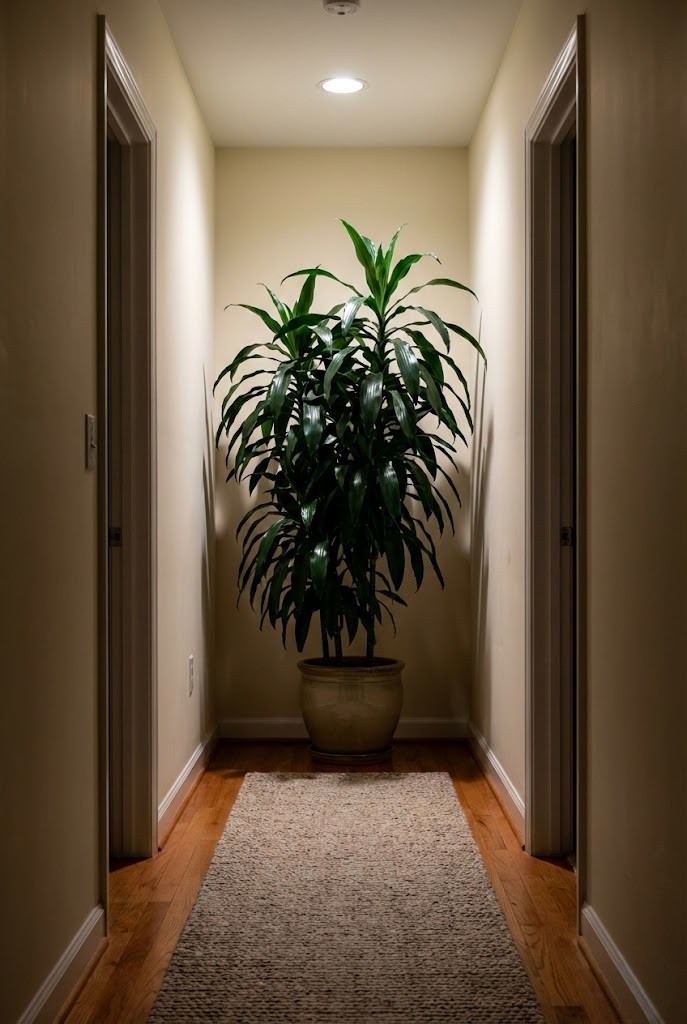
Janet Craig dracaena is one of the cleanest fixes for a dim, narrow spot. It gives you height, depth, and a finished look without spilling outward or making the room feel busier.
That matters in real homes, where a plant often needs to add presence without taking over the footprint. In low ambient light, it tends to keep its rich, composed look better than fussier plants that start reading tired.
#6 — Parlor Palm (Chamaedorea elegans)
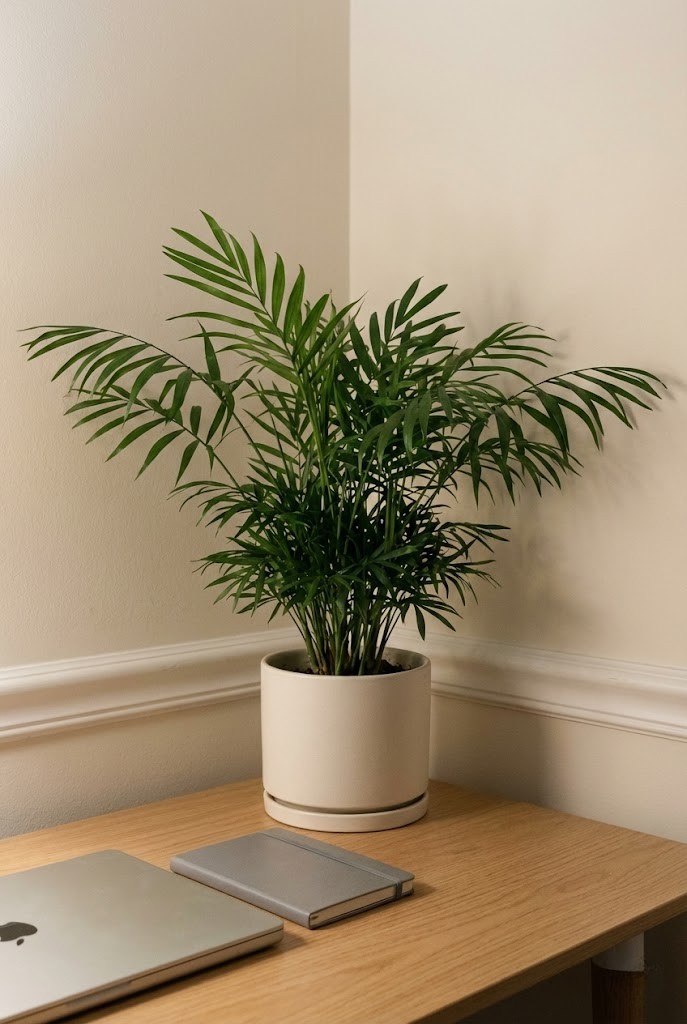
The win with parlor palm isn’t drama. It’s softness.
Its fine fronds take the edge off shelves, screens, and straight furniture lines, which is exactly why it works in dim rooms that feel a little too stiff. In lower light, expect a calm, settled presence more than fast new growth. It’s less about making a statement and more about making the room feel easier to live in.
#7 — Kentia Palm (Howea forsteriana)
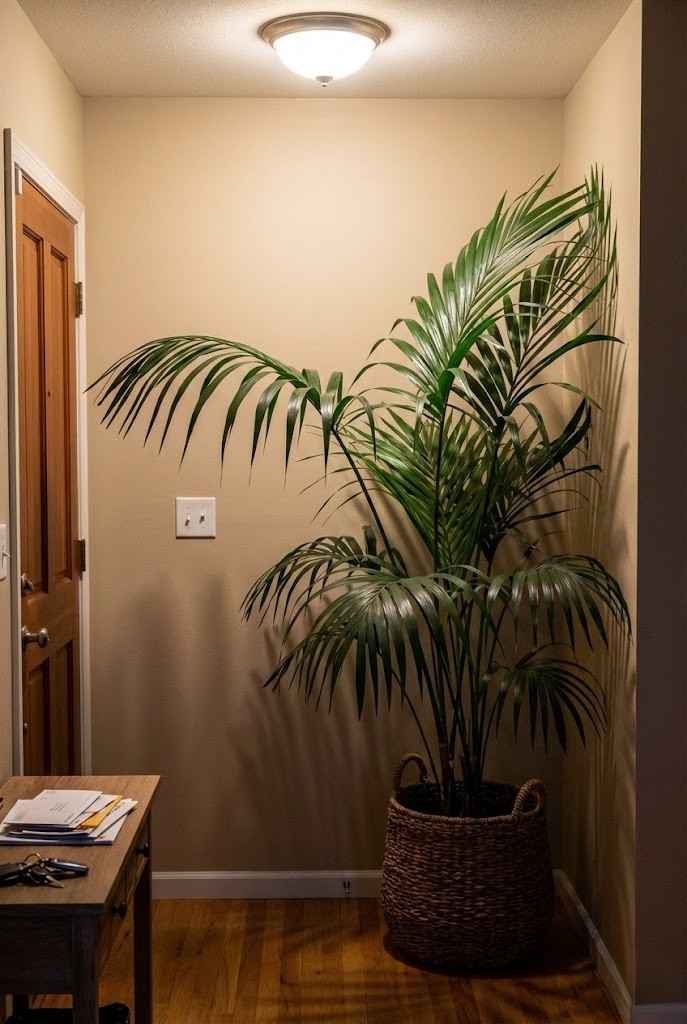
If parlor palm feels a little too slight, kentia palm is the upgrade. It has more presence, more reach, and a calmer shape than many indoor palms, without tipping into fussiness.
This is the kind of plant that can make a dim living room or entryway feel intentionally finished. The appeal is less about speed and more about grace — it earns its footprint by staying handsome slowly.
#8 — Lady Palm (Rhapis excelsa)
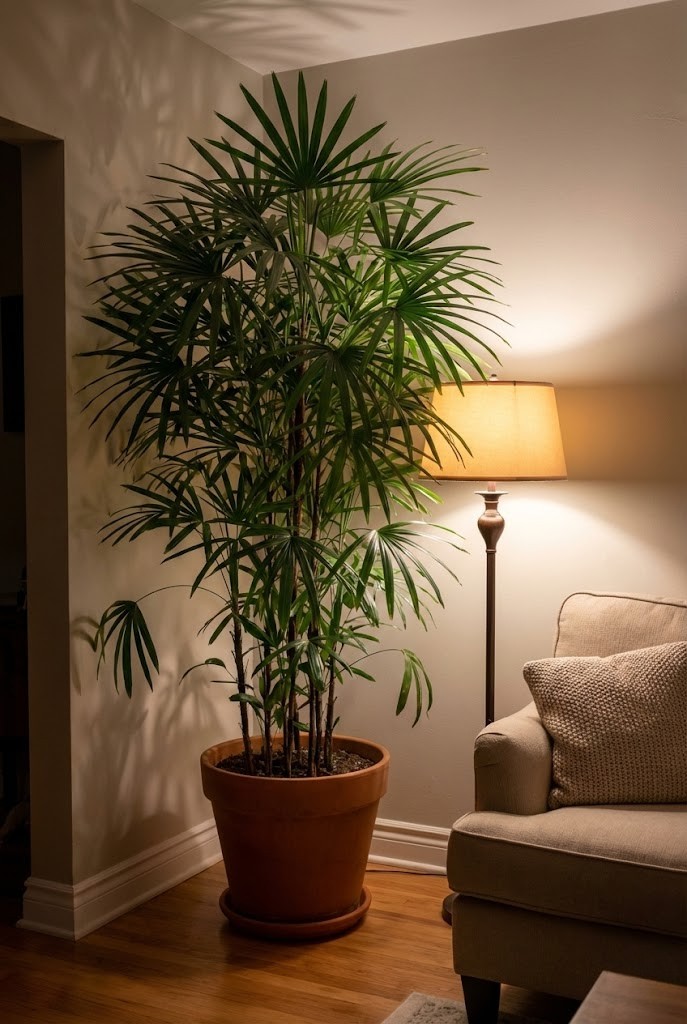
Lady palm works when you want elegance without fragility. The fan-shaped foliage gives you texture and height, but the plant still keeps a tailored, composed look.
It’s better with steady dimness than with true gloom, which is an important distinction here. Think softly underlit corner, not abandoned corner.
#9 — Dracaena (marginata or fragrans)
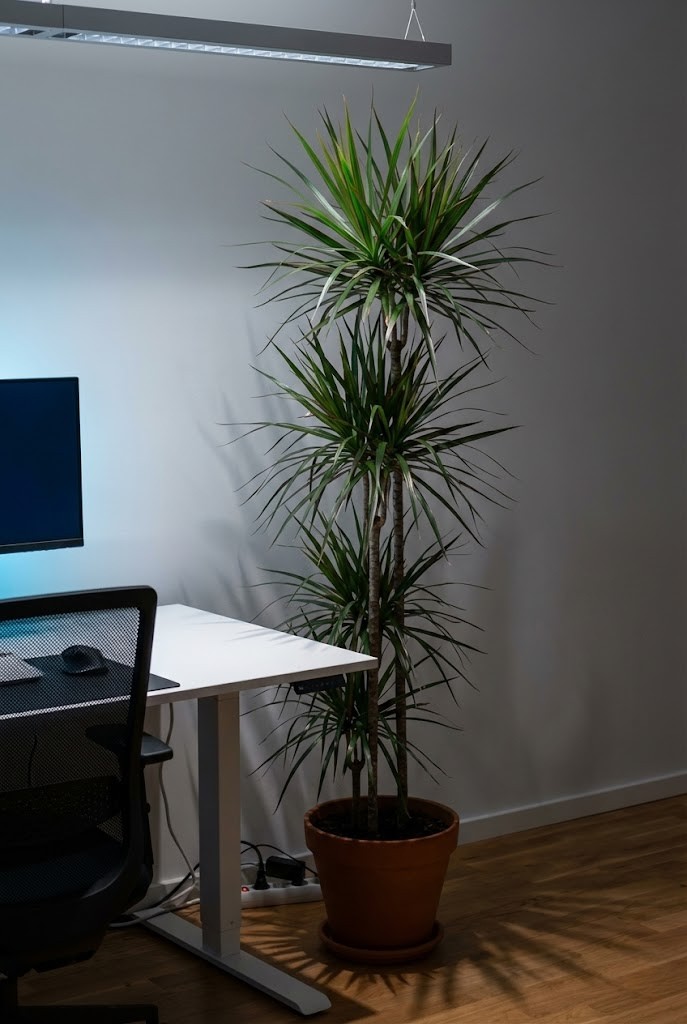
Some plants need room to read well. Dracaena doesn’t.
That’s part of its value in dim homes: it brings height and shape into tighter layouts without creating clutter. Marginata feels slimmer and lighter, while fragrans gives you a fuller, softer look, so the better choice depends on whether the room needs lift or weight.
#10 — Dieffenbachia
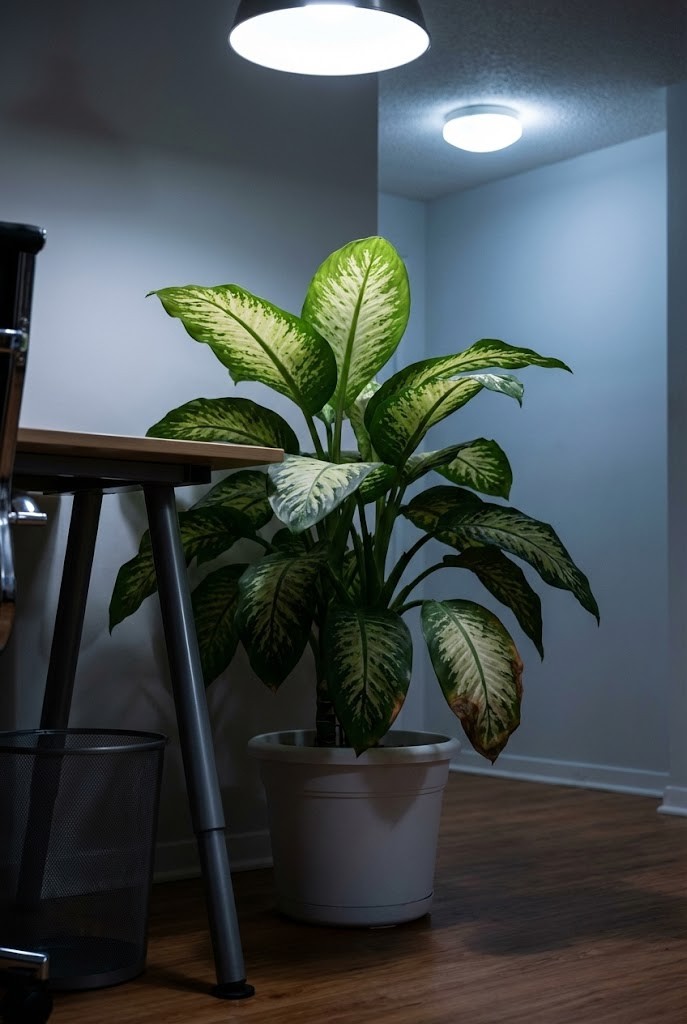
Dieffenbachia is a good way to break up a room full of narrow leaves and straight lines. Its broader foliage adds a fuller, softer presence, which can make an office corner or shelf wall feel less rigid.
It does best in steady low-to-medium indoor light rather than the darkest reaches of the room. So if you have a dim space with consistent ambient light, not a near-window spotlight and not a cave, it can look especially at home there.
⚠️ Note: Toxic to pets if ingested. Keep out of reach if pets have access.
#11 — Philodendron ‘Congo’ or ‘Imperial Green’

Self-heading philodendrons feel solid in a room that needs visual weight. Their broad leaves catch enough light to create depth, so even when the space is dim, the plant doesn’t disappear into it.
They help anchor a room without trailing or flopping outward. They’re better for steady indoor light than truly dark neglect, but in the right dim spot, they look quietly confident.
⚠️ Note: Toxic to pets if ingested. Keep out of reach if pets chew foliage.
#12 — Fatsia Japonica
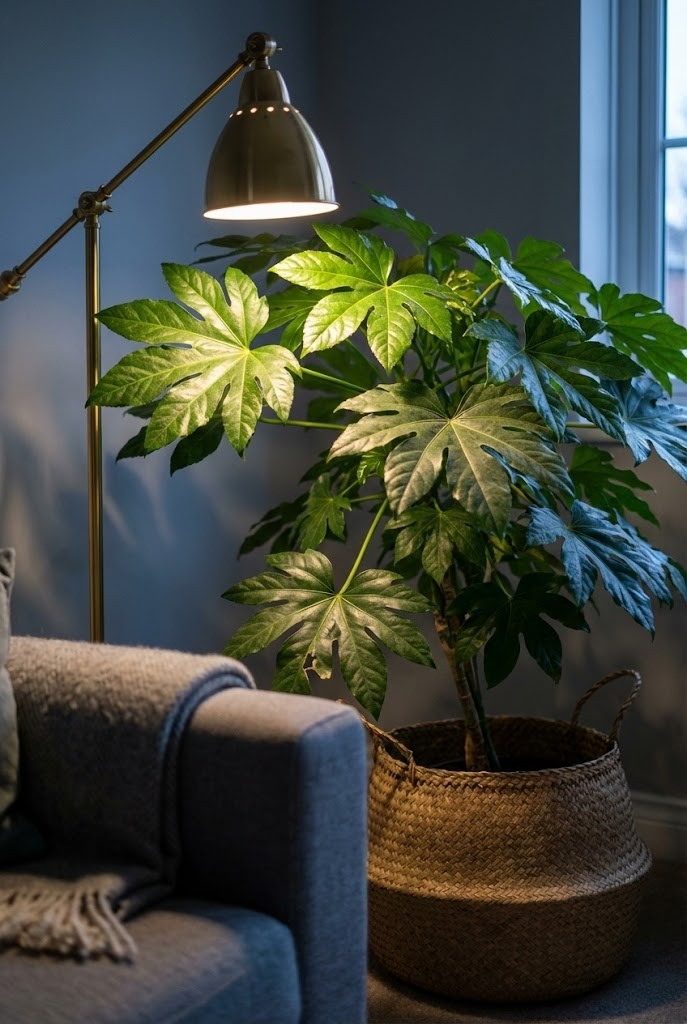
Fatsia japonica has one of the boldest silhouettes in this whole list. Those large, hand-shaped leaves still read clearly in subdued light, which makes the plant especially useful when a dim corner needs structure, not just greenery.
It’s best treated as a plant for consistent low light rather than total darkness. Give it a spot with some ambient brightness through the day, and it can bring real presence without looking like it’s been exiled there.
#13 — Peperomia obtusifolia
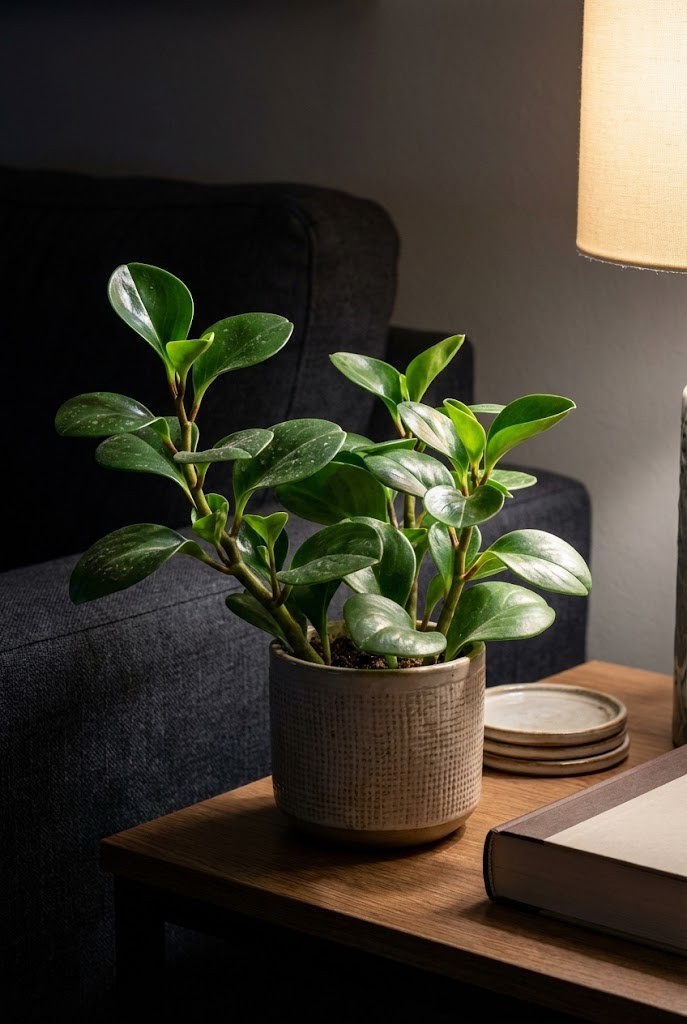
Peperomia obtusifolia is not a statement plant, and that’s exactly the point. It works when a dim room needs a small finish, not another big leafy gesture.
Its thick, rounded leaves help it stay tidy and substantial-looking even at a smaller scale. In low, steady light, it’s more about holding form than doing anything dramatic.
#14 — Pothos (Epipremnum aureum)
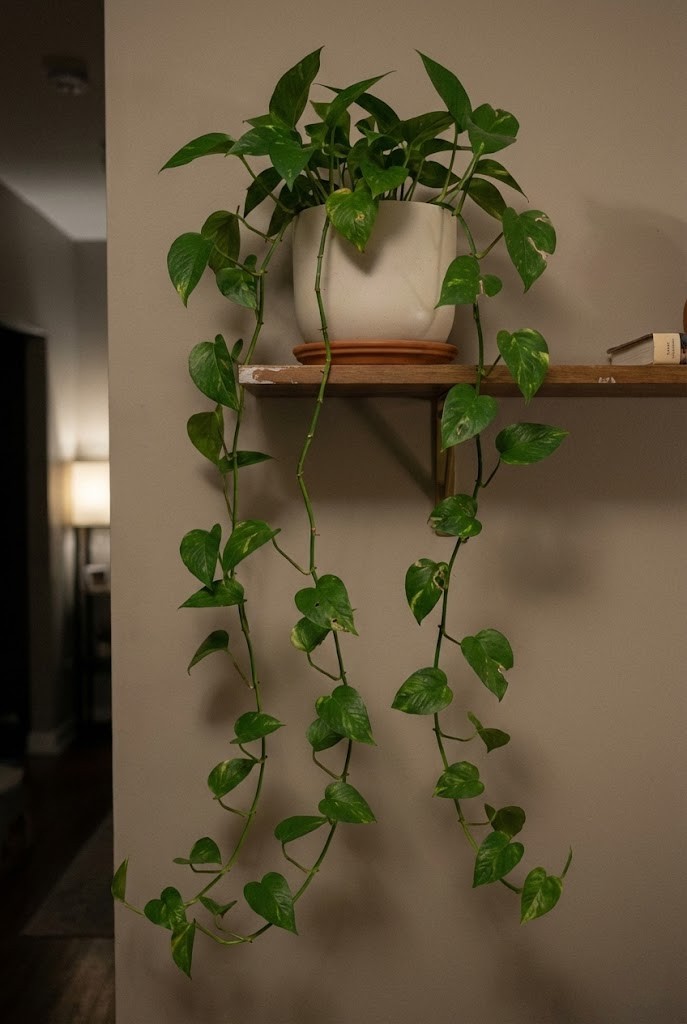
Pothos is one of the easiest trailing plants to live with when your home runs dim. It won’t grow at full speed in low light, but it usually stays presentable and flexible, which is often exactly what you need.
In darker homes, it tends to look best up high, where the vines can drape down from a shelf or cabinet and soften the harder lines of the room. Variegated types may lose some contrast in lower light, so greener forms often make more sense here.
⚠️ Note: Toxic to pets if ingested. Keep out of reach if pets chew leaves.
#15 — Heartleaf Philodendron (Philodendron hederaceum)
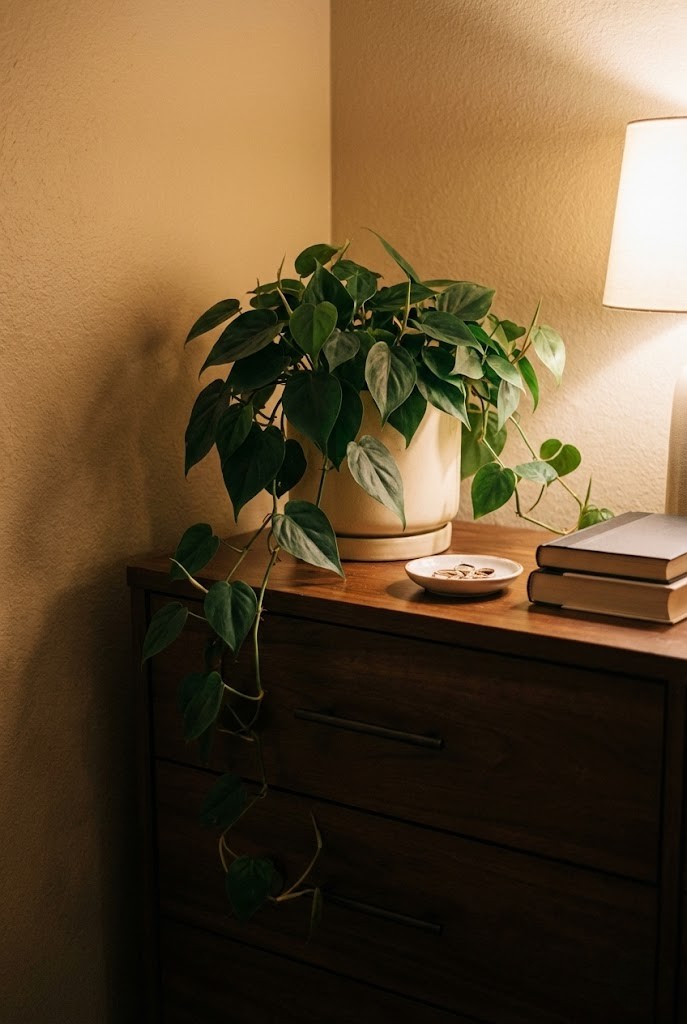
Heartleaf philodendron has a softer, quieter drape than pothos. The leaves are more matte, the overall look is gentler, and it blends into dim interiors in a way that feels easy rather than attention-seeking.
It works well when you want a trailing shape without a lot of visual noise. In lower light, think of it as a plant that holds mood and softness more than fast, dramatic growth.
⚠️ Note: Toxic to pets if ingested. Keep out of reach if pets chew leaves.
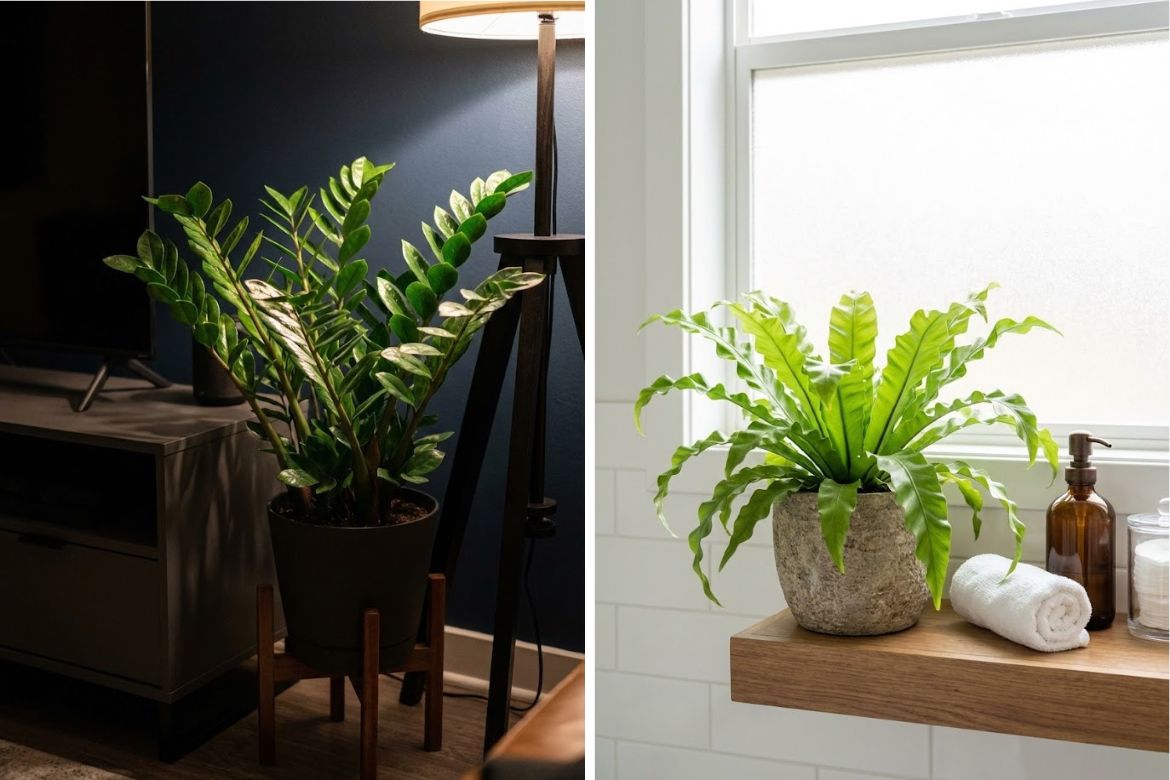
#16 — Bird’s Nest Fern (Asplenium nidus)
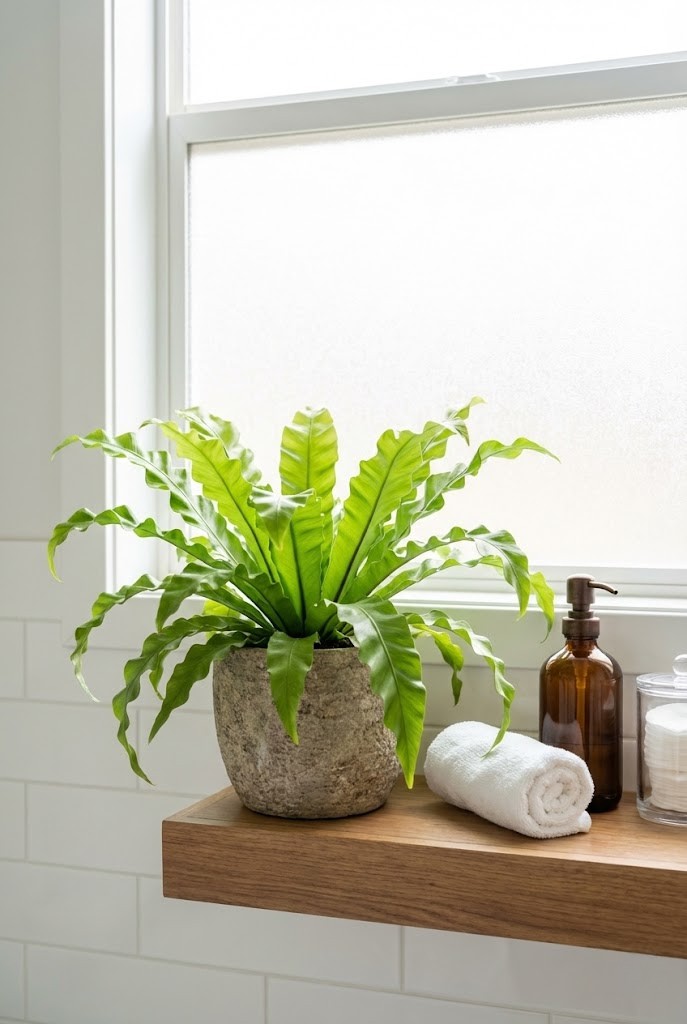
A bird’s nest fern feels especially at home in low-light bathrooms. Its broad, rippled leaves bring lushness to a room full of tile, mirror, and glass, which is often exactly what makes a bathroom feel less cold.
It does best where the light is softened and the air stays a little humid after showers. In that kind of setting, it can look full and fresh without asking for the kind of brightness many other ferns seem to expect.
#17 —Lucky Bamboo (Dracaena sanderiana)
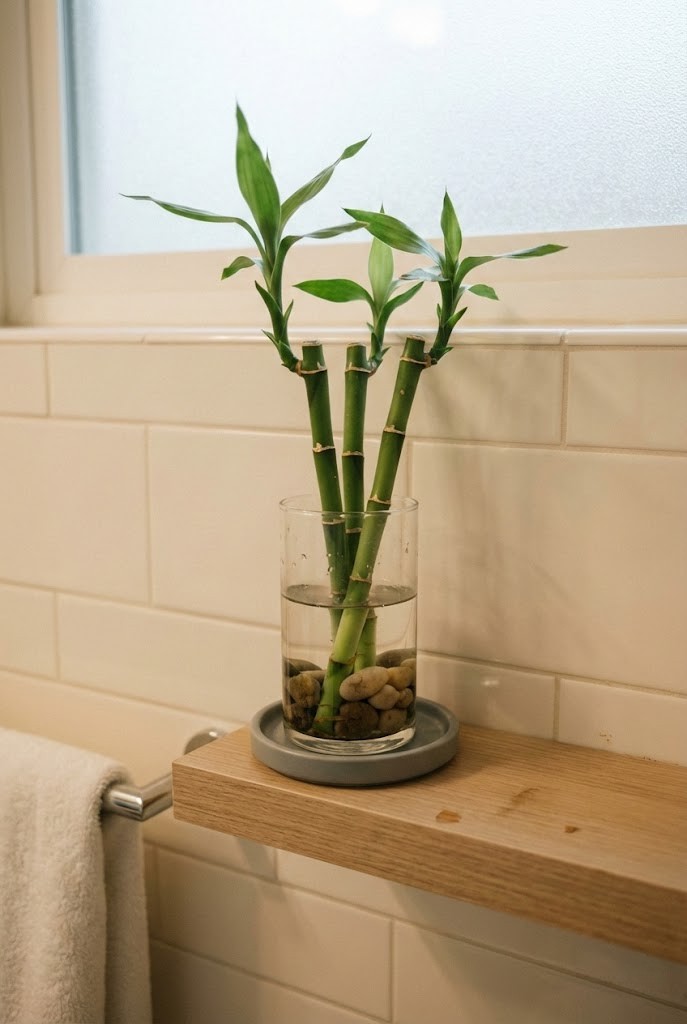
Lucky bamboo makes the most sense in places where a fuller plant would just feel awkward. It stays upright, tidy, and genuinely easy to slot into tight, humid spaces.
That’s why it works especially well in small bathrooms. It doesn’t add volume, but it does add order — and sometimes that’s the smarter choice.
#18 — Aluminum Plant (Pilea cadierei)
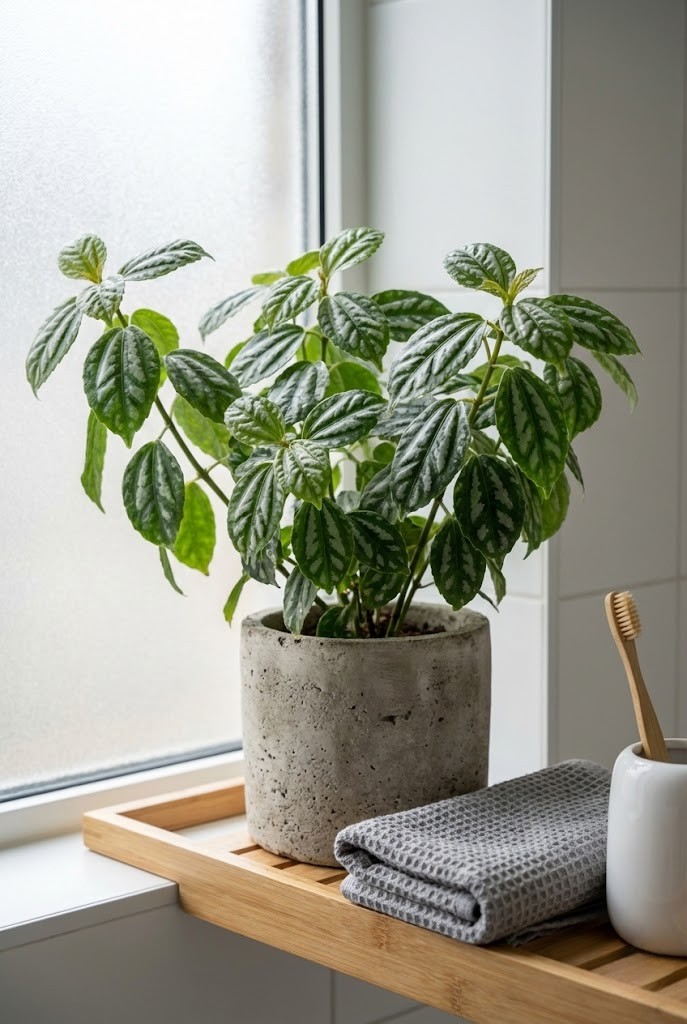
This isn’t the plant for the darkest corner in the house. The draw here is the patterned foliage, and that reads better when the light is softened, not swallowed.
Near a frosted bathroom window or in a gently dim spot, aluminum plant adds contrast without taking up much space. The silver markings may soften in lower light, but the plant can still earn a shelf if the setting suits it.
#19 — Peace Lily (Spathiphyllum)
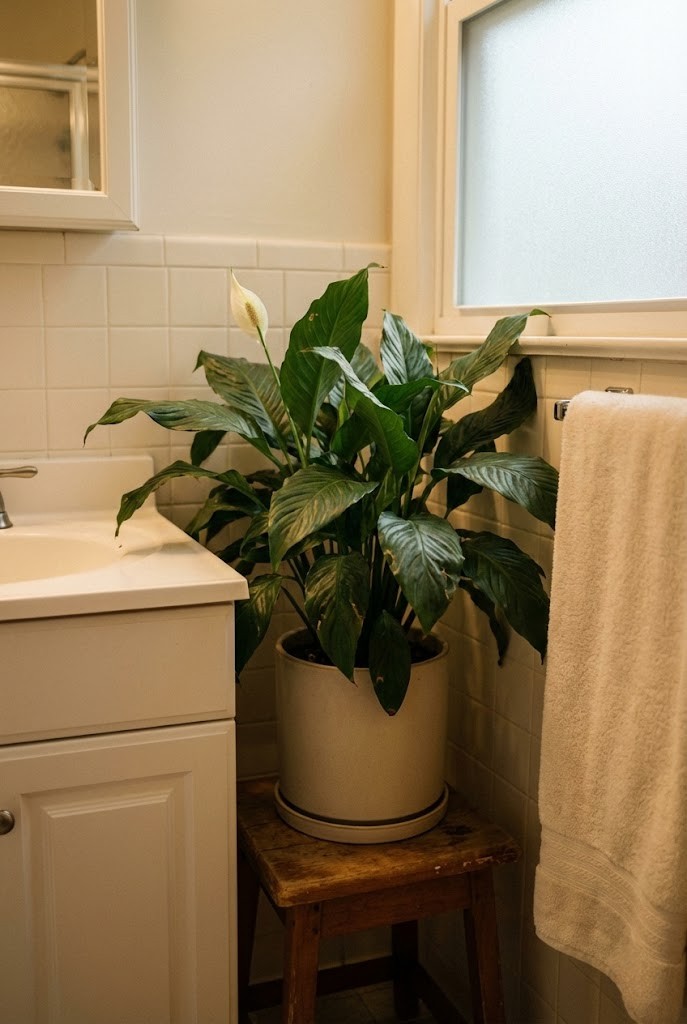
A peace lily is a classic for a reason. The leaves stay lush-looking in soft light, and in bathrooms or dim corners with some steady ambient brightness, it brings that clean, settled look people are usually hoping for.
It also has that fresh, just-put-together quality that makes a room feel a little more finished even when the light is muted. Even when it isn’t flowering much, it still earns its keep visually. Just place it a little back from splash zones or constantly soggy spots, especially in bathrooms, so the roots aren’t sitting wet all the time.
⚠️ Note: Toxic to pets if ingested. Keep out of reach if pets have access.
Quick Care Note for Low-Light Plants
Low light usually means slower growth, not no growth at all. Most of these plants will hold their shape better when they get steady ambient light, even if the room never feels especially bright.
The bigger mistake is usually overwatering, not underwatering. In dim homes, soil tends to stay damp longer, so it helps to let the pot dry enough between waterings instead of treating low-light plants like thirsty sun lovers.
Conclusion
Low light doesn’t mean giving up on plants. It usually means being more honest about the light your home actually has.
Choose for the dim corners, softened windows, and lamp-lit rooms you’re really working with — not the bright, airy version of the space that exists mostly in your head. Then your plants are far more likely to feel like they belong there — and so does the room.