Table of Contents
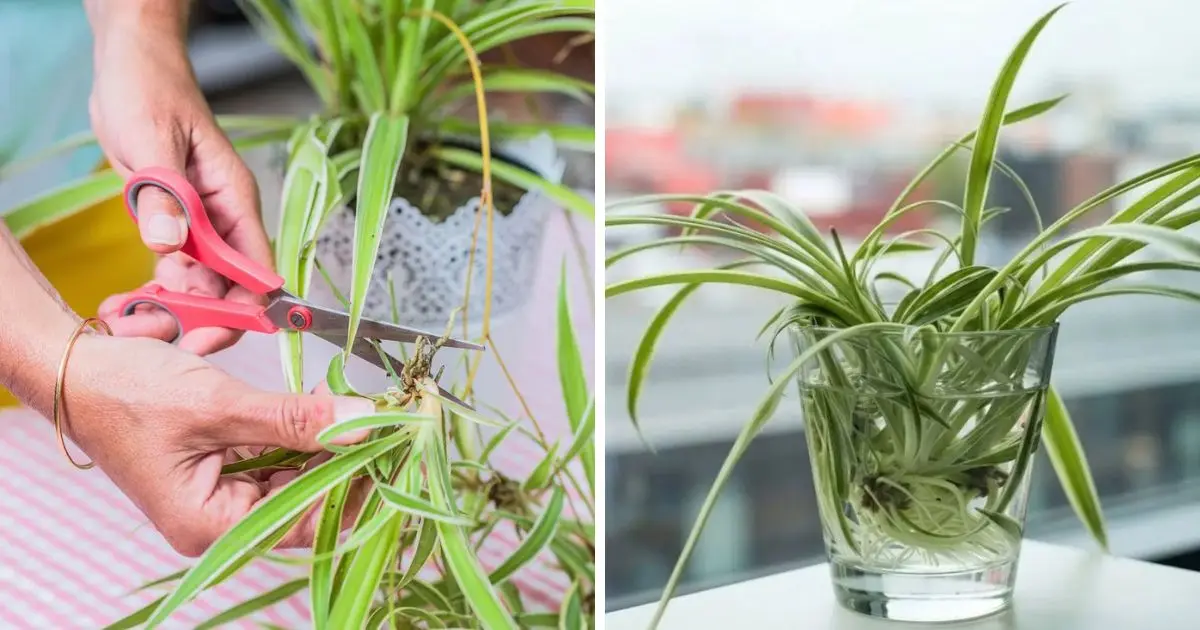
Spider plants (Chlorophytum comosum) are easy to propagate once they start producing spiderettes, or baby plants, on their long runners.
For most gardeners, the easiest option is to root a spiderette directly in potting mix. You can also root one in water, let it root while it’s still attached to the mother plant, or divide a mature spider plant.
Choose the method based on the plant you have: Use soil for the simplest approach, water if you want to watch the roots develop, the attached method if the spiderette is still on its runner, and division if you have a mature plant with a large root system.
At a Glance
- Easiest method: Root a spiderette directly in soil
- Best for watching roots develop: Water propagation
- Best for a young spiderette: Root it while attached
- Best for a mature or overgrown plant: Division
What You’ll Need
- Clean, sharp pruning shears or scissors
- Small pots with drainage holes
- Well-draining potting mix or soilless mix
- A small container of water (if using the water method)
Before You Start
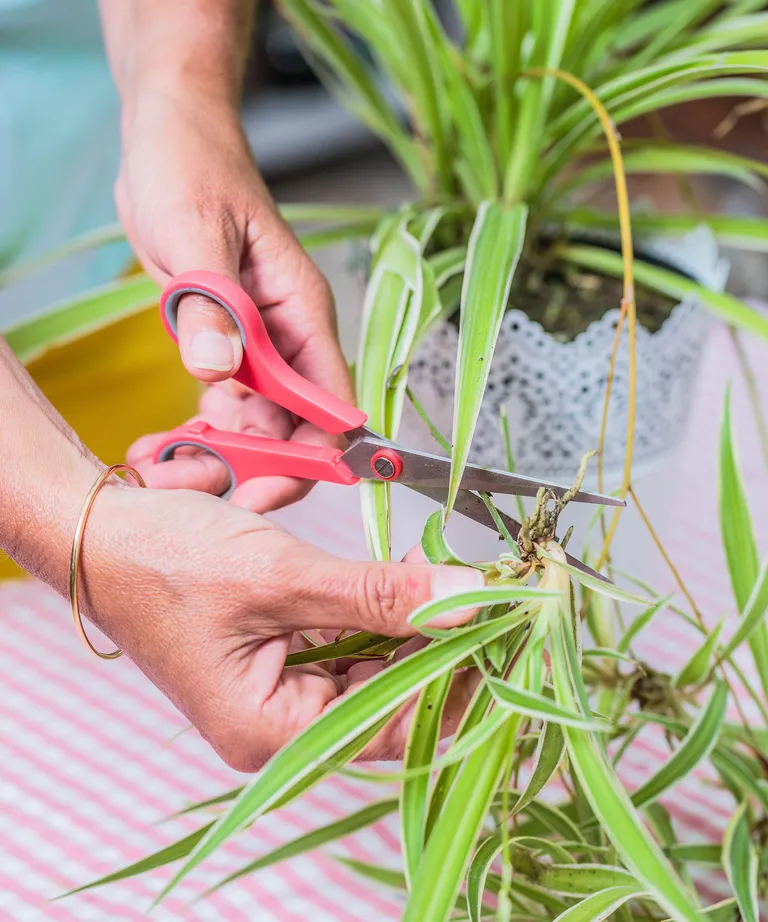
Look for a healthy spiderette at the end of a runner. Some spiderettes already have roots forming at their base, while younger ones may not. A rooted spiderette can be planted directly in soil or started in water. A young, rootless spiderette can be rooted while it remains attached to the mother plant.
If you’re separating a spiderette first, use clean pruning shears to cut the runner just below the base of the plantlet.
1. Propagate Spider Plants in Soil
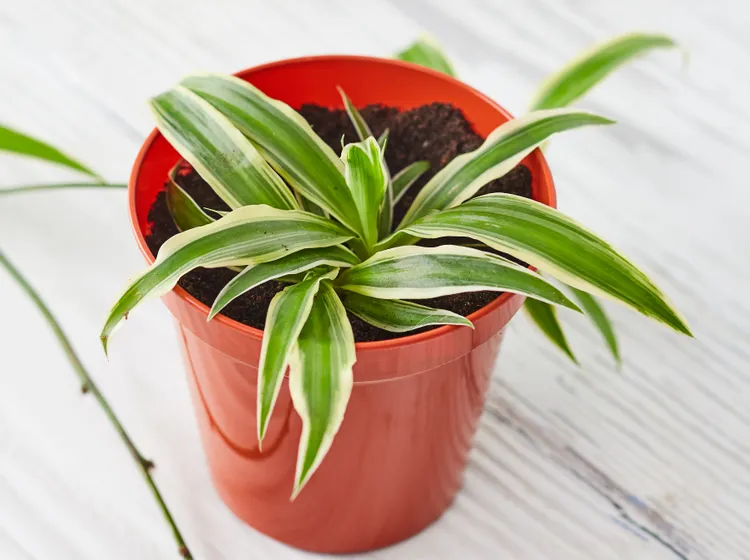
For most spiderettes, soil propagation is the easiest method. The plantlet goes straight into its growing medium, so there’s no need to move water-grown roots into soil later.
How to Do It
- Fill a small pot with well-draining potting mix or soilless mix. Make sure the pot has a drainage hole.
- Make a small hole in the center of the mix.
- Place the base of the spiderette in the hole, covering its roots or root-forming portion with the mix.
- Water thoroughly, allowing excess water to drain.
- Place the pot in bright, indirect light.
- Keep the mix lightly moist while the spiderette develops roots, but don’t let it stay soggy.
If the spiderette already has visible roots, you can plant it directly in soil.
2. Propagate Spider Plants in Water
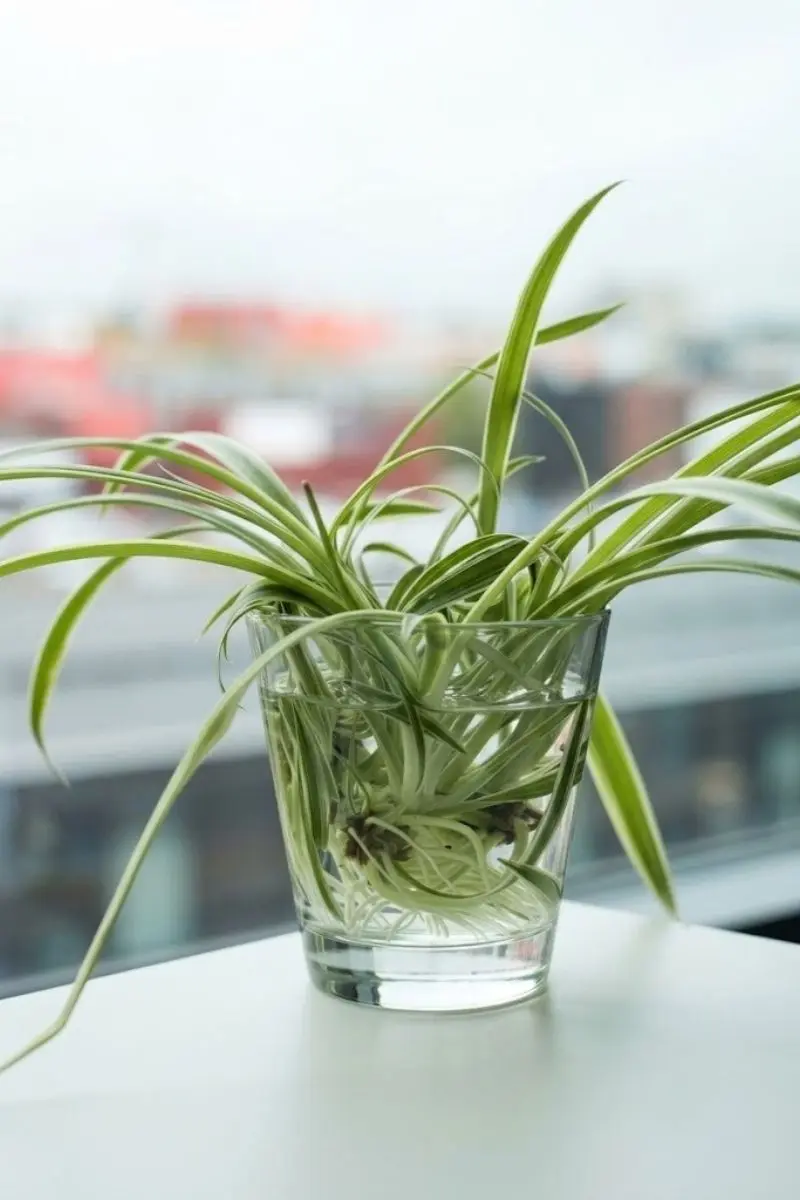
Water propagation is a good choice if you want to watch the roots develop before planting the spiderette. Once the roots have developed, the plantlet can be moved into potting mix.
How to Do It
- Cut the spiderette from the runner with clean pruning shears.
- Remove any leaves at the base that would sit below the water line.
- Fill a small container with water.
- Place the spiderette in the container so the base is in the water and the foliage stays above it.
- Set the container in bright, indirect light.
- Keep the water clean and replace it if it becomes cloudy.
- Once the spiderette has developed a good set of roots, transplant it into potting mix.
Don’t leave the foliage submerged. Only the base and developing roots should be in the water.
3. Root a Spiderette While It’s Still Attached
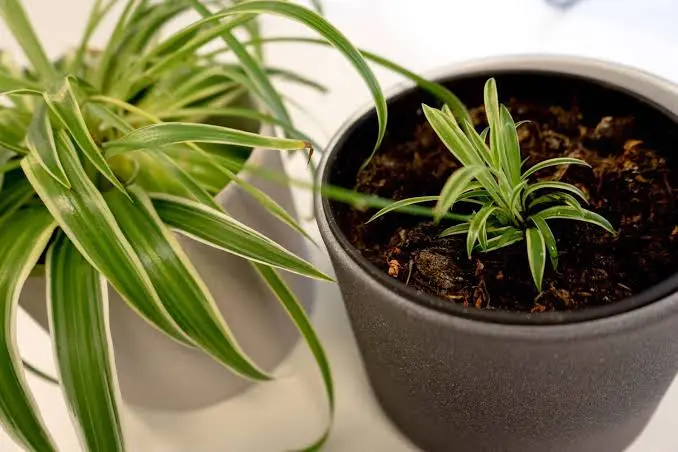
If a spiderette is still connected to the mother plant by its runner, you can root it before cutting it loose. Place its base on potting mix and let it develop roots while the runner remains attached.
This method is especially useful for young, rootless spiderettes because they can establish their own roots before you separate them from the mother plant.
How to Do It
- Place a small pot filled with well-draining potting mix beside the mother plant.
- Make a shallow hole large enough to hold the base of the spiderette.
- Set the spiderette in the hole while leaving the runner attached to the mother plant.
- Cover the base and any developing roots with potting mix.
- Water the soil and place the pot in bright, indirect light.
- Keep the mix lightly moist while the spiderette develops roots.
- Once the spiderette has developed its own roots and shows new growth, cut the runner between the new plant and the mother plant.
4. Propagate a Spider Plant by Division
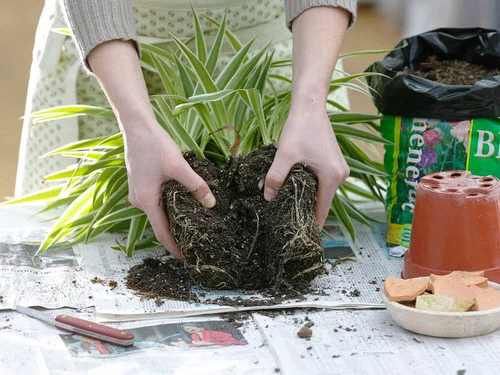
Division is best for a mature spider plant with a substantial root system, especially if the plant has outgrown its pot.
Instead of starting with a spiderette, you separate the mature plant into smaller sections. Each division should have roots and at least one growing point, where new leaves can emerge.
How to Do It
- Carefully remove the mature spider plant from its pot.
- Gently loosen the potting mix around the roots so you can see how the plant is naturally divided.
- Separate the plant into smaller sections by hand. If the root mass is difficult to separate, use a clean, sharp knife or shears.
- Make sure each division has roots and at least one growing point.
- Pot each division in fresh, well-draining potting mix.
- Water thoroughly, allowing excess water to drain.
- Place the divisions in bright, indirect light while they recover.
Division works especially well for mature plants that have become crowded or for cultivars that don’t produce offsets.
How to Care for Newly Propagated Spider Plants
Newly propagated spider plants need bright, indirect light and consistent moisture while their roots develop. Keep the potting mix lightly moist, but avoid keeping it wet.
Check young plants regularly while they’re getting established. Once a new plant is established, return to a normal spider plant care routine.
FAQs
What is the easiest way to propagate a spider plant?
Rooting a spiderette directly in soil is one of the easiest methods, especially when the plantlet already has roots. It also eliminates the need to move water-grown roots into potting mix.
Should I propagate a spider plant in water or soil?
Choose soil if you want the simplest method. Choose water if you want to see the roots develop before planting the spiderette.
Direct soil propagation also avoids the transition from water to potting mix.
Why isn’t my spiderette rooting?
Check that the plantlet is getting bright, indirect light and that the potting mix stays lightly moist without becoming soggy. If you’re using water, make sure the base is submerged but the foliage stays above the water.
If the spiderette is very young and doesn’t have roots yet, try rooting it while it’s still attached to the mother plant.
When can I cut a spiderette from the mother plant?
If you’re using the attached method, wait until the spiderette has developed its own roots and shows new growth. Then cut the runner between the baby plant and the mother plant.
What if my spider plant doesn’t have any babies?
Don’t worry if a young spider plant isn’t producing spiderettes yet. It can take time for a plant to mature enough to produce them.
Give it bright, indirect light, avoid keeping it in an oversized pot, and make sure growing conditions are suitable. Some spider plants may not produce offsets until they’re about a year old.
Light also plays a role in spiderette production, so a plant that isn’t getting the right amount of light may be less likely to produce babies.
Can I propagate a spider plant without spiderettes?
Yes. A mature spider plant can be propagated by division.
Separate the plant into sections, making sure each section has roots and at least one growing point, then pot each section individually.