Table of Contents
Propagating a Ficus ginseng is a surprisingly straightforward project.
While this tree looks like a miniature ancient masterpiece, expanding your collection doesn’t require master-level bonsai skills—just a standard stem cutting and a bit of patience.
Before you snip, it helps to set your expectations. A cutting from a Ficus ginseng will grow into a lovely, slender-trunked tree, but it will not automatically develop the fat, potato-like roots of the parent plant.
Those unique bulbous shapes require specialized commercial field-growing techniques from seed. Instead, you are creating the perfect starting material to shape your own classic bonsai.
Follow these steps to root a healthy cutting and start a new tree of your own.
Key Takeaways
- Ficus ginseng is best propagated from semi-hardwood stem cuttings.
- New cuttings will not develop the swollen ginseng roots of the parent plant.
- Keep humidity high and soil lightly moist while rooting.
- Most cuttings root in 4–8 weeks, though warm, humid conditions can speed things up.
What You’ll Need
- Tools: Sharp bypass pruners, rubbing alcohol
- Supplies: Small pot with drainage holes, clear plastic bag, chopsticks or wire stakes, paper towels, and a protective plastic mat or tray
- Medium: One part peat moss and two parts coarse sand, perlite, or fine pumice
- Add-ons: Rooting hormone powder
1. Choose the Right Stem
Propagation works best in late spring or early summer when the plant is actively growing. Look for a healthy, vibrant branch on your Ficus.
You want a semi-hardwood stem—one that feels firm but flexible, where the bark is just starting to turn from bright green to light brown. Avoid floppy new tips or thick, grey wood, as neither roots well.
Before making any cuts, wipe your pruner blades with rubbing alcohol to ensure a clean, sterile slice.
2. Take a Clean, Angled Cut
Find a section of the branch that is about 4 to 6 inches long and has at least three leaf nodes (the small bumps where leaves grow).
Make a clean cut at a 45-degree angle just below the lowest node. The angle keeps the stem from resting flat against the bottom of the pot, leaving plenty of room for new roots to sprout.
Ficus plants leak a milky white sap when cut. This is completely normal.
⚠️ Important Safety Warning: Ficus sap is toxic to pets and skin-irritating to humans. Keep curious animals away from your workspace, lay down a protective mat, and immediately blot away the milky sap with a paper towel before it drips onto your flooring or furniture. Allow the sap to stop flowing entirely before proceeding.
3. Trim the Foliage
A rootless stem cannot support a heavy bunch of leaves. If you leave the cutting full of foliage, it will lose water too fast and wither.
Snip off all the leaves from the bottom half of the stem, leaving just two or three at the top. If those remaining top leaves are very large, cut them horizontally in half with your pruners.
It looks a bit odd at first, but it saves the plant’s energy for root growth. Gather all discarded leaves immediately and throw them in the trash away from household pets.
Rooting hormone is optional but can improve rooting speed and success rates. If you choose to use it, dip the bottom half-inch of the stem into the powder now, then gently tap off the excess.
4. Plant in a Lightweight Mix
Standard potting soil holds too much water and can drown a new cutting. Fill your small container with your pre-moistened potting mix of one part peat and two parts sand or perlite.
The medium should feel like a wrung-out sponge—damp but not muddy. The extra perlite or sand keeps air moving around developing roots and reduces the risk of rot.
Poke a 2-inch-deep hole into the mix with a pencil or chopstick. Don’t just push the stem straight in, or you will scrape off the rooting hormone and bruise the tissue.
Insert the cutting into the hole, gently press the mix around the base so it stands upright, and add a tiny splash of water to settle the soil.
5. Tent for Humidity
To recreate a warm tropical greenhouse, slip a clear plastic bag over the pot. Use your chopsticks or bent wire stakes as tent poles to keep the plastic from physically touching the leaves.
Place the pot in a warm room with plenty of bright, indirect light. Keep it completely out of direct sunlight, which can quickly overheat the cutting and cause it to fail.
Every few days, open the bag for an hour to let fresh air circulate. If the inside of the bag looks dry, mist the air inside with a spray bottle before sealing it again.
6. Acclimate and Pot On
You will know the process is working when you notice fresh green growth budding from the top of the stem. To double-check, give the cutting a very gentle upward tug.
If you feel resistance, the roots have successfully taken hold.
Now you can slowly introduce the plant to regular room air. Poke a few holes in the plastic bag, then remove it completely after a couple of days.
Keep watering normally, letting the top half-inch of soil dry out between waterings. In a few months, your new tree will be sturdy enough to move into a decorative bonsai container.
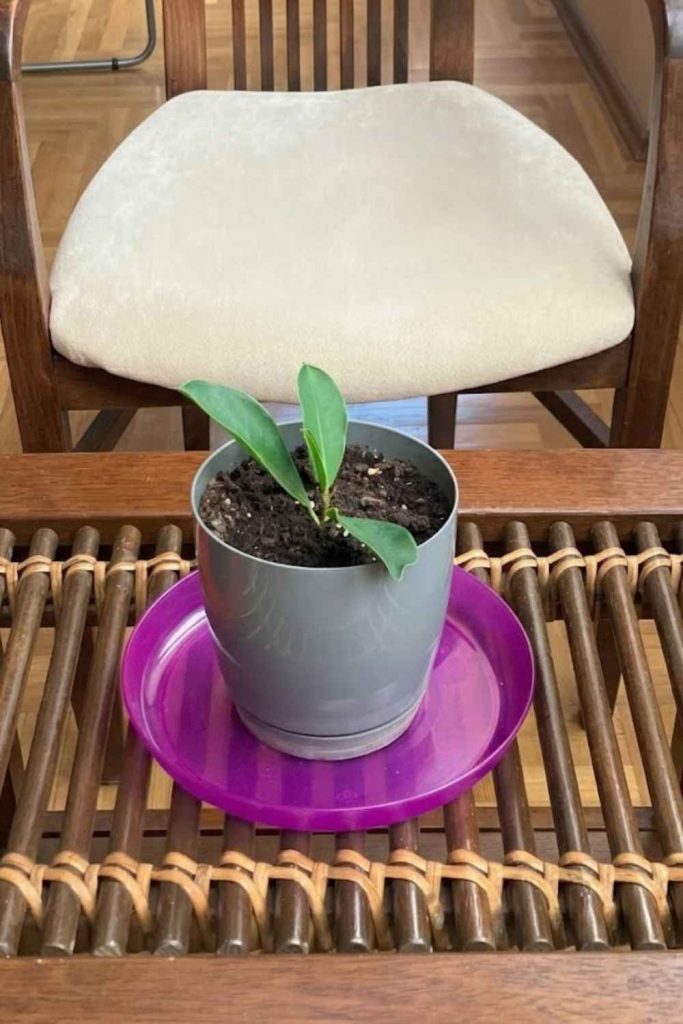
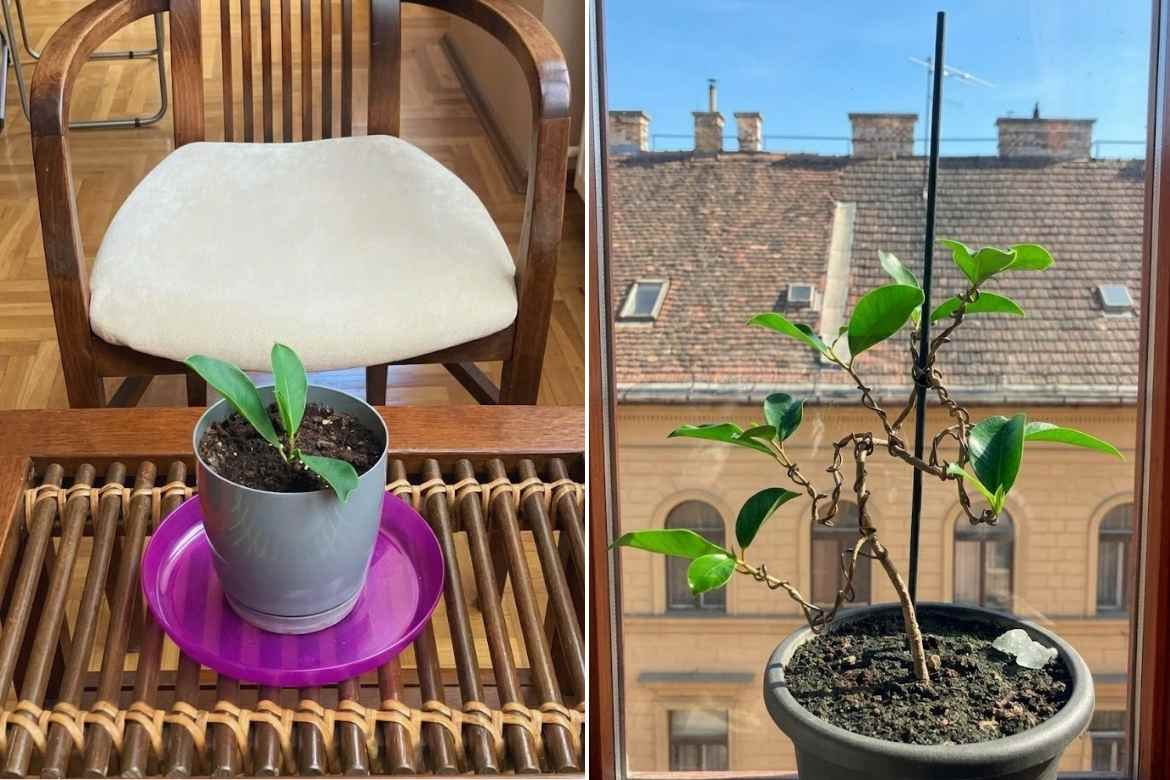
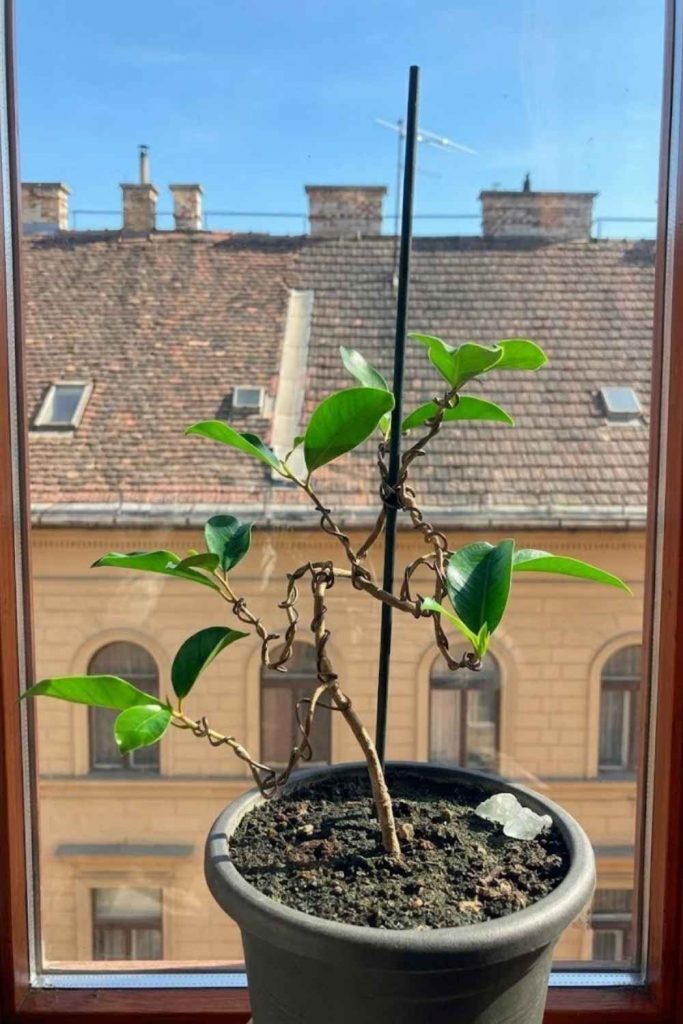
Credit: Reddit @walterricsi
FAQs
Can I propagate Ficus ginseng from a single leaf?
No. While a Ficus leaf might occasionally grow roots if left in water or soil, it lacks the necessary nodal stem tissue required to sprout a new branch or trunk.
You must use a stem cutting containing at least a few nodes to successfully grow a new tree.
How long does Ficus ginseng take to root?
Most cuttings root in 4–8 weeks, with faster results possible under ideal tropical conditions.
This timeline depends heavily on the consistent warmth of the room and the amount of bright, indirect light the cutting receives.
Why are the leaves dropping off my new cutting?
A little leaf loss is a normal response to stress. As long as the stem stays firm and green, the cutting is alive.
Keep the air humid and give it time. If the stem turns black or mushy, it has rotted, and you’ll need to start over with a fresh cutting.
Can I just root the cutting in a glass of water?
You can, but water roots are fragile and struggle to adapt when you move them into soil.
Propagating directly in a porous sand or perlite mix grows stronger, heartier roots that make the transition to a permanent pot much smoother.