Table of Contents
A rubber plant (Ficus elastica) brings glossy foliage and a naturally upright shape to an indoor space.
Its care is straightforward, but a few choices make a bigger difference than others: the amount of light it receives, how well its soil drains, when you water, and whether its growing conditions stay consistent.
Start with the right setup, then adjust your routine as the plant grows and the seasons change. These 11 tips focus on the decisions and habits that have the greatest impact on a healthy, attractive rubber plant.
1. Choose a variety that fits your space
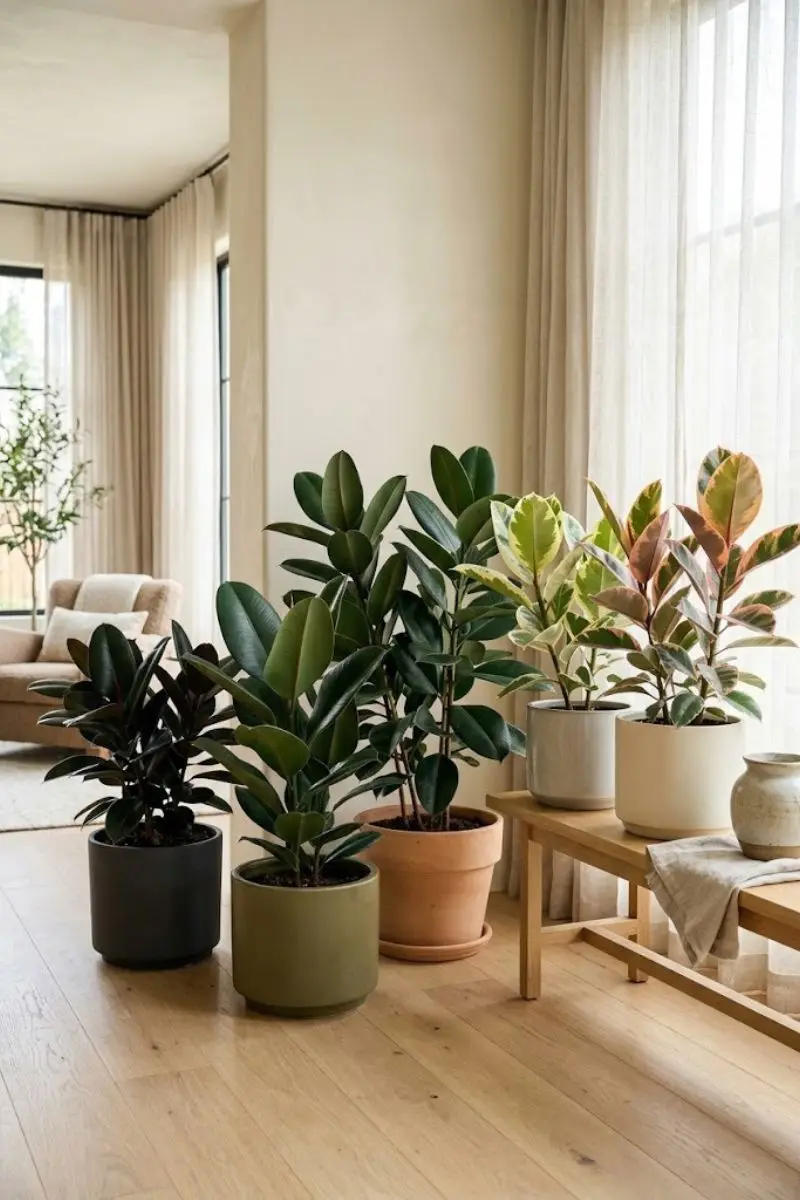
Start with the foliage you like and the amount of room you have. ‘Burgundy’ and ‘Robusta’ have deep green foliage, while ‘Tineke’ and ‘Red Ruby’ offer variegated leaves. ‘Decora’ is another classic choice, with large, thick, dark green leaves.
The variety can also influence where the plant will do best. Variegated types generally benefit from brighter conditions, so consider your available light before choosing a plant.
2. Give it bright, indirect light
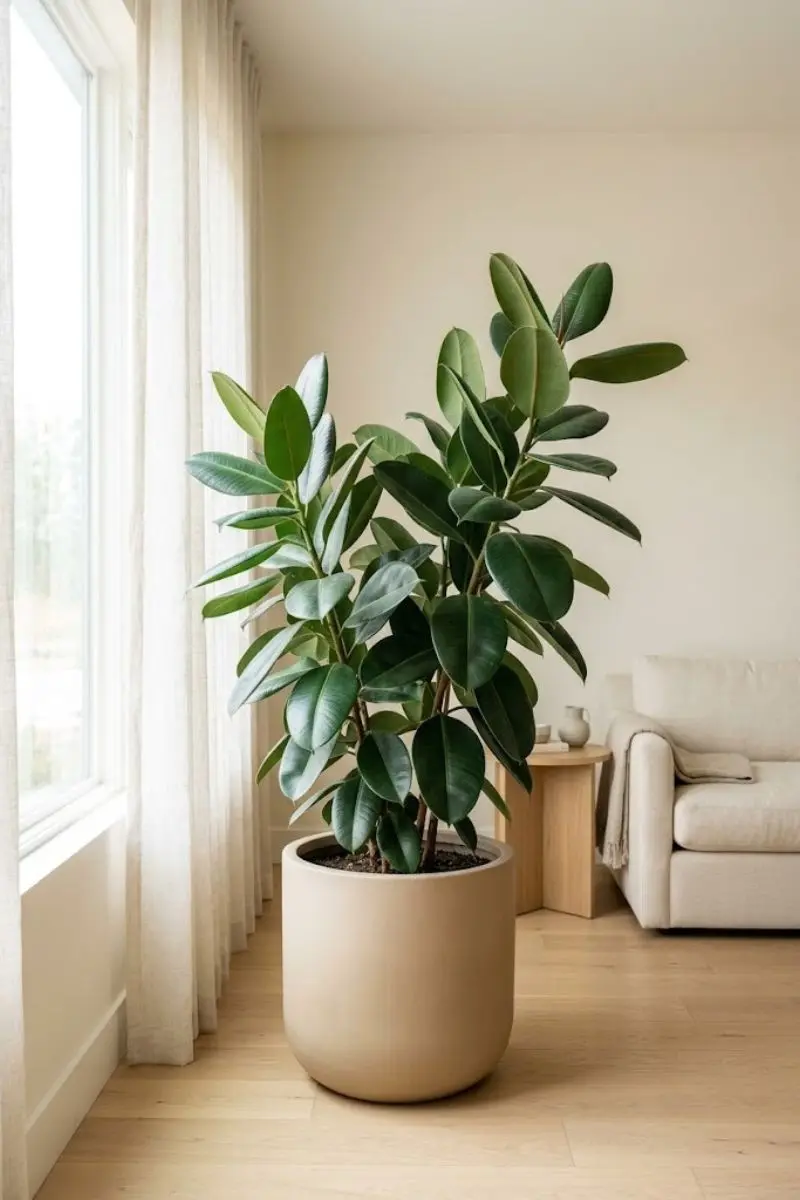
Place your rubber plant where it receives about six to eight hours of bright, indirect light each day. An east-facing window works well, or position the plant several feet from a south- or west-facing window. Protect the leaves from strong afternoon sun, which can scorch them.
Too little light can result in leggy growth, dull foliage, and leaf drop. Once you find a suitable spot, rotate the pot about a quarter-turn each month to encourage more even growth.
3. Match the pot to the root ball
Choose a container with drainage holes and avoid moving the plant into a dramatically larger pot. A container only modestly larger than the root ball gives the roots room to grow without leaving excess soil wet around them.
A deeper-than-wide pot suits the plant’s upright growth. Terra-cotta can be useful in a damp environment because it dries faster than plastic or glazed ceramic, but you’ll need to check the soil more often.
4. Use a fast-draining potting mix
Rubber plants prefer moist soil, but their roots need air as well. Use a quality houseplant mix that drains readily, amended with perlite or pumice if needed.
Orchid or pine bark can add air space, while peat moss or coconut coir helps retain some moisture.
Aim for a mix that drains excess water without drying out immediately. A slightly acidic, loamy mix is well suited to rubber plants.
5. Check the soil before you water
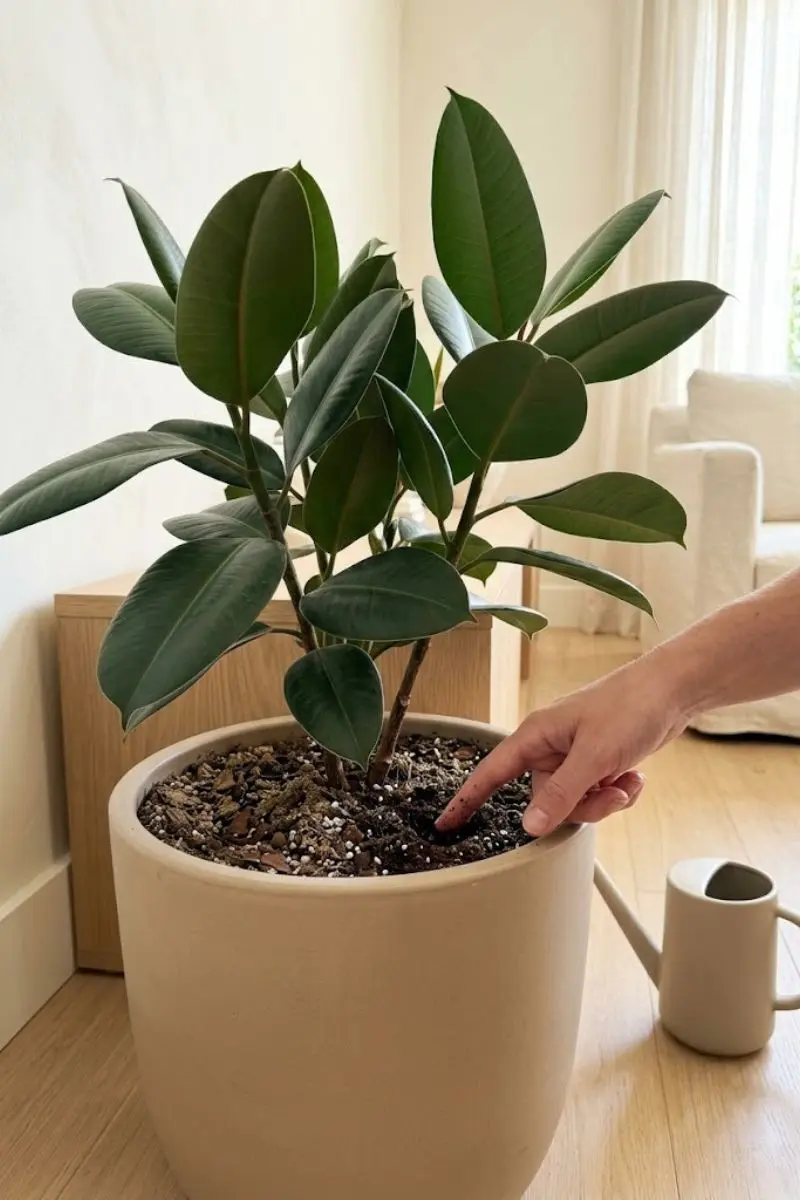
Skip a fixed watering schedule. Press your finger into the top few inches of soil and water when it feels dry.
When you do water, moisten the mix thoroughly rather than giving the plant a small splash.
Rubber plants prefer consistent moisture but can develop problems when the soil stays soggy. They generally need less water in winter as growth slows, so let soil moisture and seasonal growth determine the timing.
6. Keep its surroundings warm and stable
Keep the plant in a room around 65 to 85°F with moderate humidity. If your home is particularly dry, grouping houseplants together or using a small humidifier can help.
Avoid cold windows, exterior doors, and drafts. Prolonged exposure to temperatures below about 50 to 55°F can cause yellowing, browning, and leaf drop.
Rubber plants also tend to prefer staying in one location rather than being moved repeatedly.
7. Feed it when growth begins
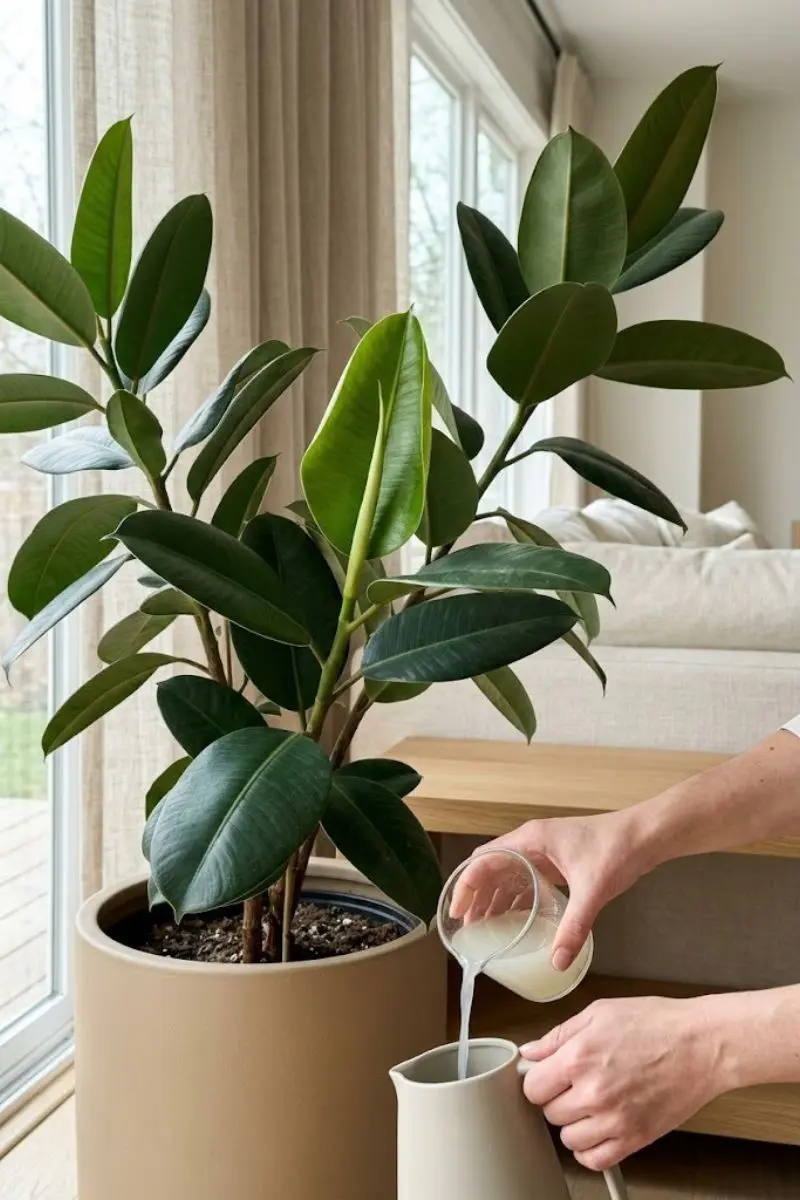
Feed a rubber plant during its active growing season rather than year-round. Use a balanced liquid houseplant fertilizer diluted to half strength about every two weeks while new growth is developing.
Begin in spring when you see active growth and stop as growth slows in fall. Plants growing in lower light need less fertilizer, and a dormant plant in winter does not need feeding.
8. Prune to control height and encourage branching
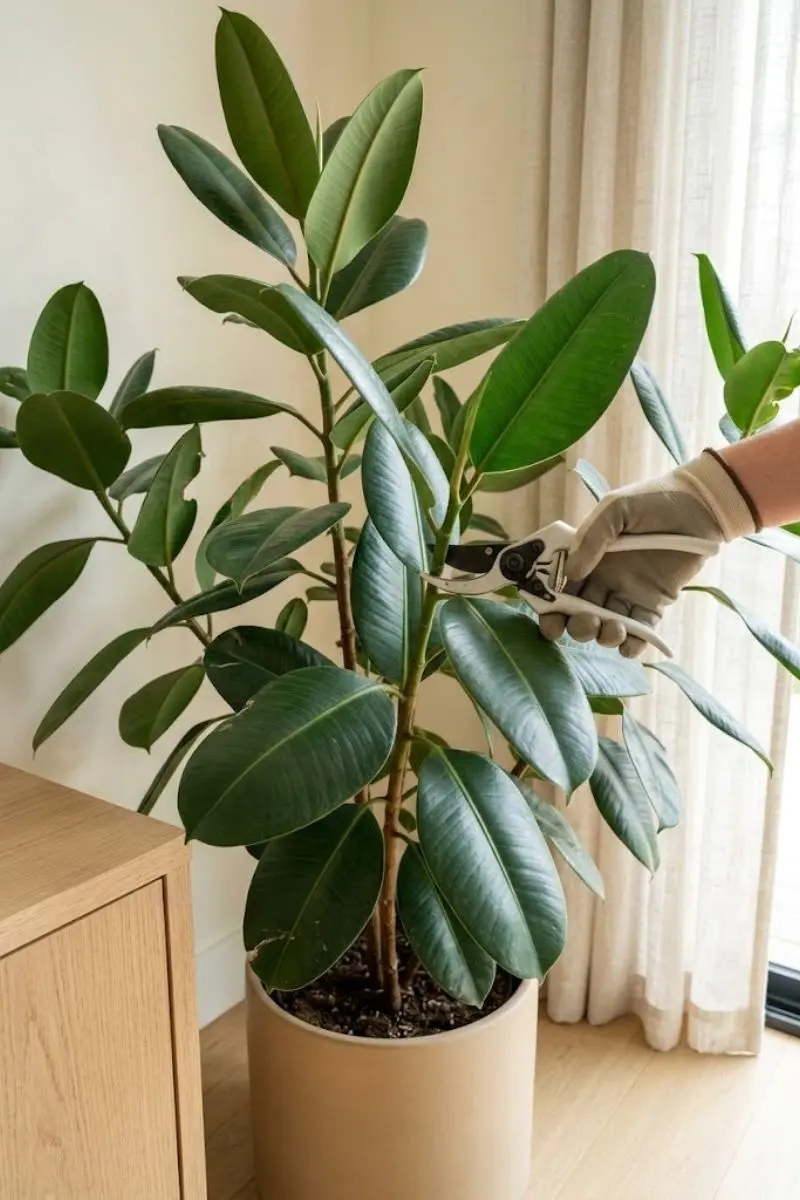
Prune when you need to control height, remove damaged or crossing growth, or encourage a fuller shape. Late spring to early summer is a good time for more substantial pruning, when the plant is actively growing.
For a bushier shape, cut lateral shoots just beyond a growth node. If a bare stem needs to produce branches, targeted notching just above a dormant node can also encourage new side growth.
If you prefer a tall, tree-like form, leave the main stem largely unpruned and provide support when needed.
Wear gloves when pruning because the plant releases a milky sap that can irritate skin.
9. Repot when the roots show it’s time
Let the roots tell you when the plant needs a larger container. Roots emerging from the drainage holes or filling the pot are useful signs.
There’s no advantage to giving a rubber plant a much larger pot before it needs one.
Repot in early spring and move up only a few inches in diameter. Depending on growth rate and conditions, that may be necessary every year or every two to three years. Refresh the potting mix as you repot, keeping the new container only modestly larger than the old one.
10. Let the leaves flag problems early
Yellowing, curling, or dropping leaves is a reason to check the plant’s growing conditions. Look at the soil first, then consider light and temperature. Overwatering, underwatering, insufficient light, harsh direct sun, and cold drafts can all cause leaf problems.
Inspect the foliage regularly for mealybugs, scale, and spider mites. Wipe dusty leaves with a damp cloth while you’re checking them.
If the plant is wilting and losing leaves while the roots are soft or mushy, excessive moisture and root rot may be involved.
11. Give it room to become the plant you want
Plan around the plant’s eventual size rather than treating its current dimensions as permanent. Rubber plants can become substantial indoor specimens, so leave enough space for the canopy to expand without crowding furniture, walls, or walkways.
This also makes the plant easier to maintain: a rubber plant with enough room is less likely to need repeated hard pruning simply to keep it out of the way.
Keep it where its foliage won’t constantly brush against people or pets, and choose a location that’s easy to access for watering and occasional maintenance.
FAQs
How often should I water a rubber plant?
Check the top few inches of soil and water when it feels dry. The plant generally needs less water during winter as growth slows.
Why are my rubber plant’s leaves turning yellow?
Check for overly wet soil first, then consider underwatering, insufficient light, excessive direct sun, or temperature stress. Look at the plant’s overall conditions before changing your routine.
Where should I put a rubber plant indoors?
Choose a warm, stable location with bright, indirect light, such as near an east-facing window or several feet from a south- or west-facing window. Keep it away from harsh afternoon sun and cold drafts.