Table of Contents
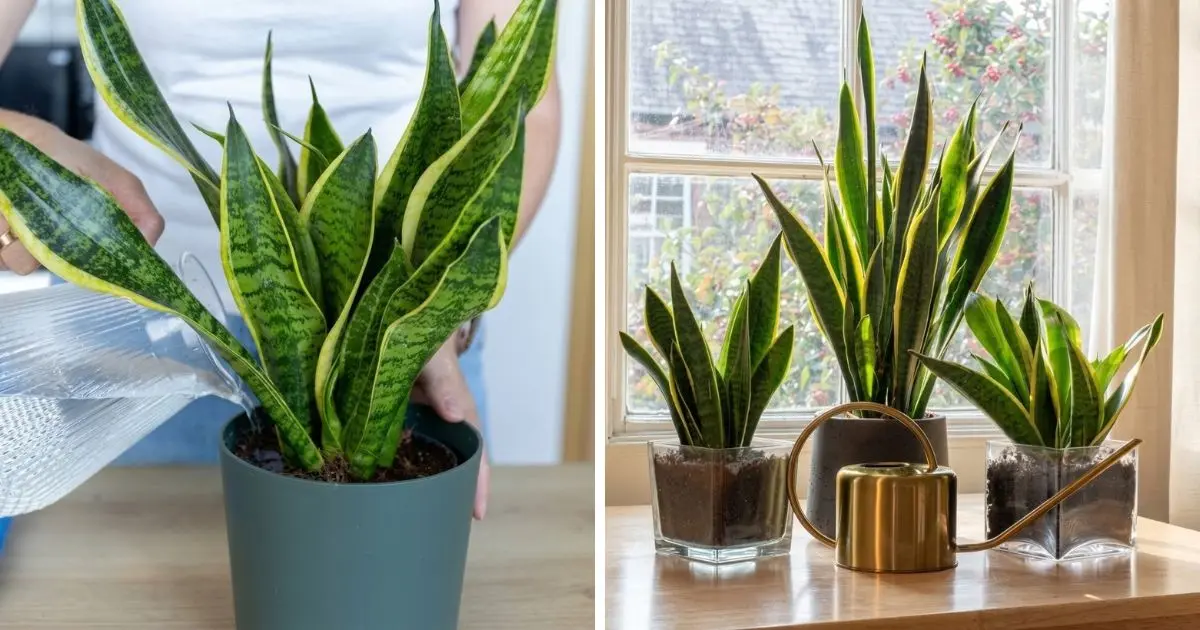
With its upright, sword-like foliage and banded patterns, the snake plant brings clean architectural lines to any room.
It remains one of the most durable, beginner-friendly houseplants available, easily handling weeks between waterings and adapting to a wide variety of indoor spaces.
While it survives easily on neglect, keeping a specimen healthy for decades requires only simple, consistent care. Given gritty soil, adequate indirect light, and a measured watering rhythm, it produces sturdy, upright growth and rich coloration year after year.
This guide covers practical care essentials, from light placement and seasonal watering to repotting methods, propagation, and straightforward troubleshooting.
Plant Snapshot
| Common Name | Snake plant, mother-in-law’s tongue, viper’s bowstring hemp |
| Botanical Name | Dracaena trifasciata (formerly Sansevieria trifasciata) |
| Plant Type | Evergreen succulent perennial |
| Mature Size | 1 to 5 feet tall, 6 inches to 3 feet wide indoors (depending on cultivar) |
| Light Needs | Bright indirect light; tolerates low light to gentle morning sun |
| Water Needs | Low; let soil dry out completely between waterings |
| Soil Preference | Sandy, well-draining cactus or succulent mix |
| USDA Hardiness Zones | 9–11 (grown strictly indoors in cooler climates) |
| Toxicity | Toxic to cats, dogs, and young children if ingested |
Popular Snake Plant Varieties
While dozens of cultivars exist, several standout varieties offer distinct leaf shapes, sizes, and color patterns suited to home interiors:
- ‘Laurentii’ (Dracaena trifasciata ‘Laurentii’): The classic upright cultivar featuring deep green, mottled centers bordered by bright creamy-yellow margins.
- Bird’s Nest (Dracaena trifasciata ‘Hahnii’): A dwarf variety forming a low, cup-like rosette of leaves that reaches only 6 inches tall, making it ideal for compact shelves and desks.
- Cylindrical Snake Plant (Dracaena angolensis): Notable for its smooth, rigid, tube-like leaves that grow several feet long and arch outward from a central base.
- ‘Bantel’s Sensation’: A slim, upright variety reaching roughly 3 feet in height, prized for its narrow leaves marked with vertical white and silver striping.
- ‘Twisted Sister’: A compact selection growing 14 to 15 inches tall with broad, twisting foliage displaying horizontal green bands and golden edges.
- ‘Black Gold’: A dramatic, upright variety that reaches 3 to 4 feet tall, featuring dark green foliage framed by sharp yellow borders.
Snake Plant Care
Light Requirements
Snake plants grow best in bright, indirect light—near an east-facing window or set a few feet back from a south- or west-facing exposure. In these conditions, they maintain crisp leaf patterns and steady vertical growth.
The plant readily tolerates low-light rooms where other species struggle. However, there is a clear difference between tolerating low light and thriving. In dim conditions, growth slows noticeably, tall leaves may stretch toward the nearest light source, and variegated cultivars (like ‘Laurentii’) often lose their yellow borders and turn solid green.
Direct, intense afternoon sun can scorch the foliage, leaving bleached or dry brown patches. If moving your plant outside for the summer or into a brighter window, introduce it to stronger light gradually.
Watering
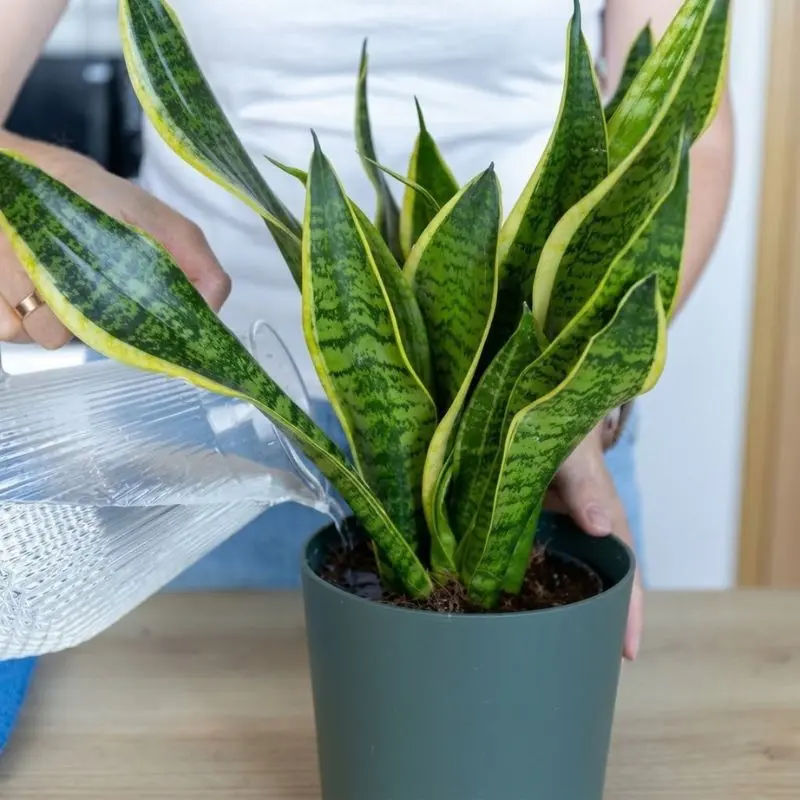
Because snake plants store water efficiently, they require a deep soak followed by a complete dry-out period. Check the soil with your finger or a moisture probe before watering; if there is any dampness below the surface, wait.
During the active spring and summer growing season, water thoroughly until moisture drains freely from the bottom, then discard any runoff sitting in the saucer. In winter, when the plant rests and water uptake drops, cut back to watering once a month or every six to eight weeks.
Healthy foliage feels firm and rigid to the touch. Soft, yellowing leaves near the base are an immediate indicator of overwatering. If the soil stays dry for too long, the leaves develop vertical wrinkles and slight inward curling, but they gradually plump up and smooth out after a thorough watering.
Soil and Potting Mix
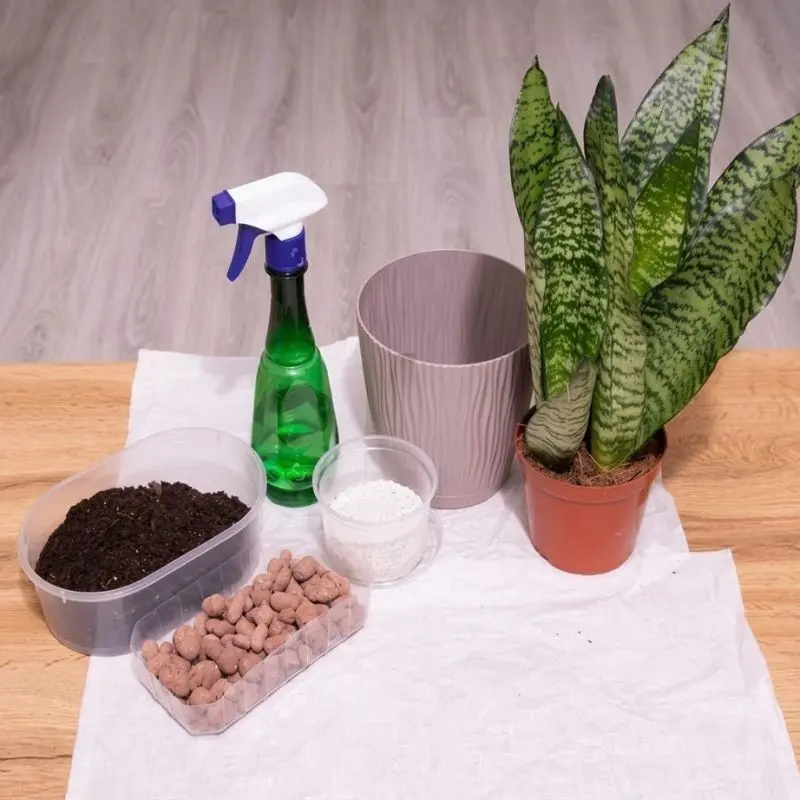
A loose, fast-draining mix is essential. Standard potting soil retains excess water and packs tightly over time, suffocating the roots. Use a formulated cactus and succulent blend, or amend standard potting mix with perlite, pumice, or coarse horticultural sand to improve drainage and airflow.
Heavy containers made from terracotta or unglazed ceramic work best. The porous clay allows moisture to evaporate evenly from the soil walls, and the weight prevents tall, top-heavy plants from tipping over. Always verify that the container has unobstructed drainage holes.
Temperature and Humidity
Snake plants thrive in room temperatures between 60°F and 90°F. They do not tolerate frost; prolonged exposure to temperatures below 50°F causes the foliage to turn soft and leads to root damage. Keep plants shielded from cold window drafts in winter, exterior doors, and direct air-conditioning vents.
Because they are adapted to arid climates, snake plants handle standard indoor humidity (30% to 50%) without issue. You do not need to mist the leaves or use humidifiers.
Fertilizing
Snake plants are adapted to lean soils and require very little fertilizer. Over-fertilizing leads to weak, floppy leaf growth or root burn.
Feed once a month during spring and summer using a balanced liquid houseplant fertilizer diluted to half-strength. Alternatively, apply a light top-dressing of worm castings or slow-release granular food in early spring. Do not fertilize during fall and winter when the plant is resting.
Pruning and Maintenance
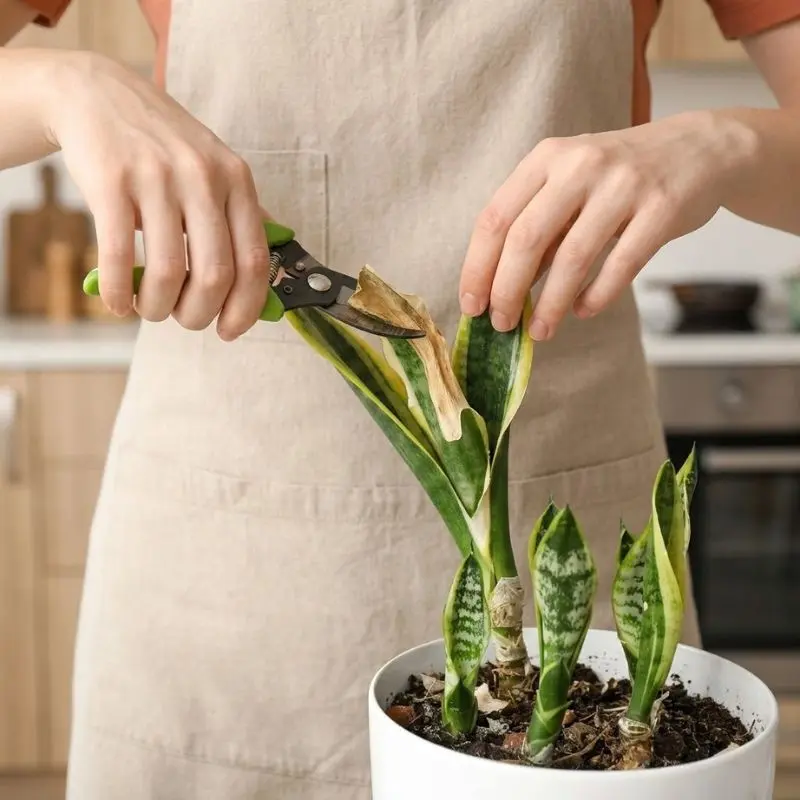
Pruning is simple and cosmetic. Older outer leaves naturally age and turn yellow or brown over time. Use a clean, sharp knife or shears to cut damaged leaves flat at the soil line.
Avoid cutting leaves halfway down, as the cut edge will form a permanent brown scar and will not regrow its natural pointed shape.
Dust builds up on the wide leaves and blocks sunlight. Wipe both sides of the foliage with a damp microfiber cloth every few weeks to keep the pores clear and the surface clean.
Repotting
Snake plants grow slowly and tolerate being root-bound, requiring repotting only every 3 to 5 years.
The best time to repot is in spring as active growth resumes. Repot when roots push out of the drainage holes, water runs straight through without absorbing, or expanding rhizomes crowd the container tightly.
Choose a sturdy new container only 1 to 2 inches wider than the current pot. Set the root ball in the center, fill the perimeter with fresh cactus mix, and keep the plant at its original planting depth. Settle the soil with a light watering and return the plant to bright, indirect light.
Propagation
Propagating a snake plant is straightforward and can be done during spring or summer using root division or leaf cuttings.
Division (Best for Preserving Variegation)
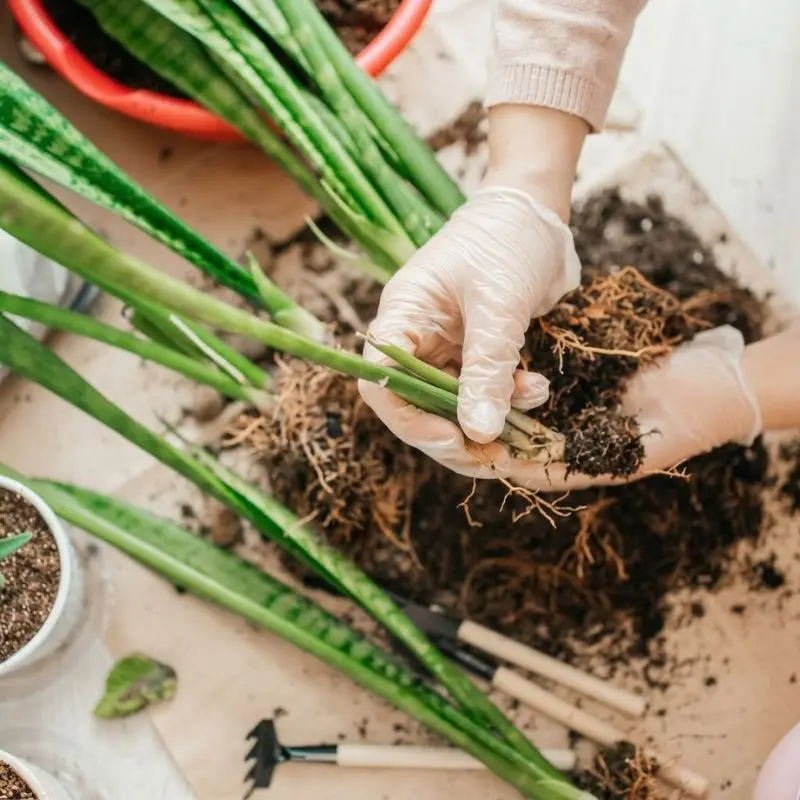
Division is the quickest method and the only reliable way to keep the yellow edges on variegated cultivars like ‘Laurentii’.
- Unpot a mature plant and brush away excess soil to expose the orange rhizomes.
- Use a clean, sharp knife to cut through the rhizome, ensuring each separated clump has healthy roots and at least two to three leaves.
- Pot each section into fresh, dry cactus mix and water sparingly until established.
Leaf Cuttings (Soil or Water)
Leaf cuttings produce multiple new plantlets, though variegated varieties typically revert to solid green foliage.
- Cut a clean, healthy leaf near the soil line and slice it into 3- to 4-inch sections.
- In Soil: Let the cut edges dry and callus for 24 hours, then insert the bottom ends upright into damp cactus mix. Keep the soil lightly moist in bright, indirect light until new offshoots emerge in several weeks to a few months.
- In Water: Place the bottom cut end in a jar of clean water, changing the water regularly to keep it fresh. Once root clusters reach about an inch long, pot the cutting into well-draining soil.
Common Problems
Root Rot (Soft Leaves and Foul-Smelling Soil)
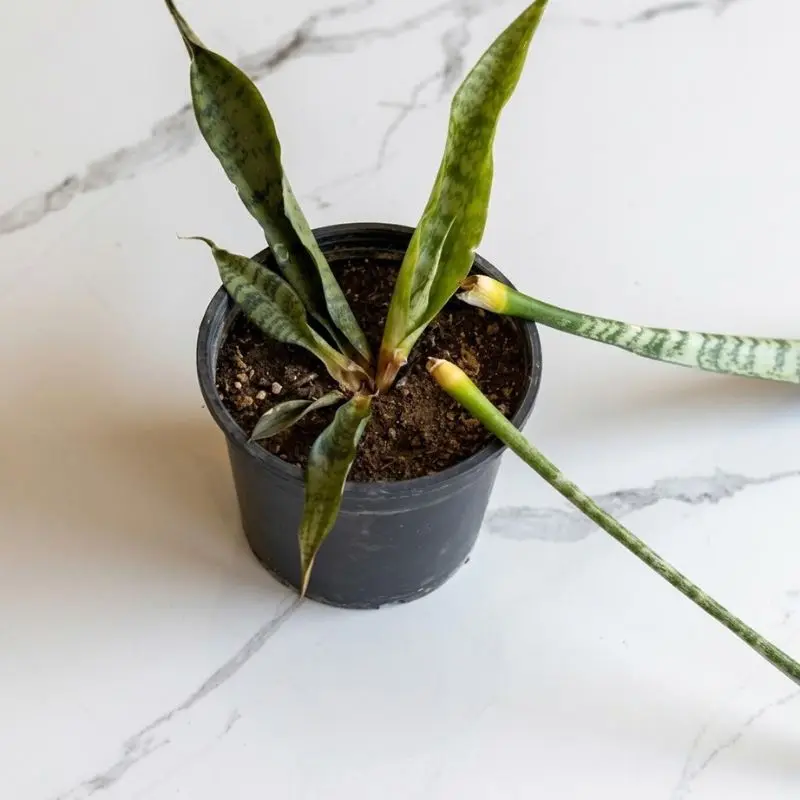
Cause: Overwatering, poorly draining soil, or pots without drainage holes.
Symptoms: Leaves turn soft, pale yellow, or mushy at the base, often accompanied by a sour smell from the soil.
Solution: Remove the plant from the pot immediately. Cut away all black, mushy root sections with clean shears until only firm, healthy roots remain. Repot into fresh, dry cactus mix and allow the roots to dry before watering sparingly.
Drooping or Flopping Foliage
Cause: Low light, waterlogged soil, or loose potting mix.
Symptoms: Tall leaf spears lose their upright rigidity and lean over the rim of the pot.
Solution: Move the container to a brighter spot with indirect sun. Ensure the soil dries out fully between waterings, and prune bent outer leaves down to the soil line.
Wrinkled or Shriveled Leaves
Cause: Extended lack of moisture.
Symptoms: Leaves lose their plumpness, showing vertical wrinkles and slight curling.
Solution: Give the soil a thorough, deep soaking until water drains from the bottom. The foliage will take up water and gradually smooth out.
Mealybugs and Spider Mites
Cause: Pests introduced from outdoor summer placement or neighboring plants.
Symptoms: Cotton-like white patches in leaf crevices (mealybugs) or fine webbing with stippled leaves (spider mites).
Solution: Isolate the plant and wipe away visible pests with a cloth dipped in rubbing alcohol, or spray the foliage thoroughly with insecticidal soap or neem oil.
Seasonal Care Notes
- Spring and Summer: The plant enters active growth and pushes up new leaf spears and offshoots (pups). Water thoroughly when the soil is completely dry, feed monthly with half-strength fertilizer, and move the container to a shaded porch if desired once outdoor temperatures remain warm and well above 50°F.
- Fall and Winter: Growth slows during the natural winter rest period. Reduce watering to once every 4 to 8 weeks, stop fertilizing, and keep the plant away from drafty doorways and heating vents.
FAQs
How often should I water my snake plant?
Water only when the potting mix has dried out thoroughly from top to bottom.
In typical indoor conditions, this means watering every 2 to 3 weeks in summer and roughly once a month in winter.
Can a snake plant live in a windowless room?
Snake plants survive in low light for long stretches, but they cannot live without any light indefinitely.
In windowless offices or interior rooms, provide overhead fluorescent or LED grow lights for several hours daily.
Do snake plants bloom indoors?
Indoor blooming is uncommon, but mature plants that receive plentiful bright indirect light and are slightly root-bound may produce a flower spike in spring.
The clusters of small, greenish-white flowers open at night and carry a sweet, lily-like fragrance.
Why are the yellow borders on my snake plant turning green?
Variegated cultivars require bright indirect light to maintain their yellow and cream margins.
In deep shade, the plant produces extra green chlorophyll to absorb what little light is available, causing the borders to fade.
How long do snake plants live?
Snake plants are exceptionally long-lived.
While potted indoor specimens typically thrive for years with minimal care, well-maintained plants can easily live for 20 to 25 years or more.