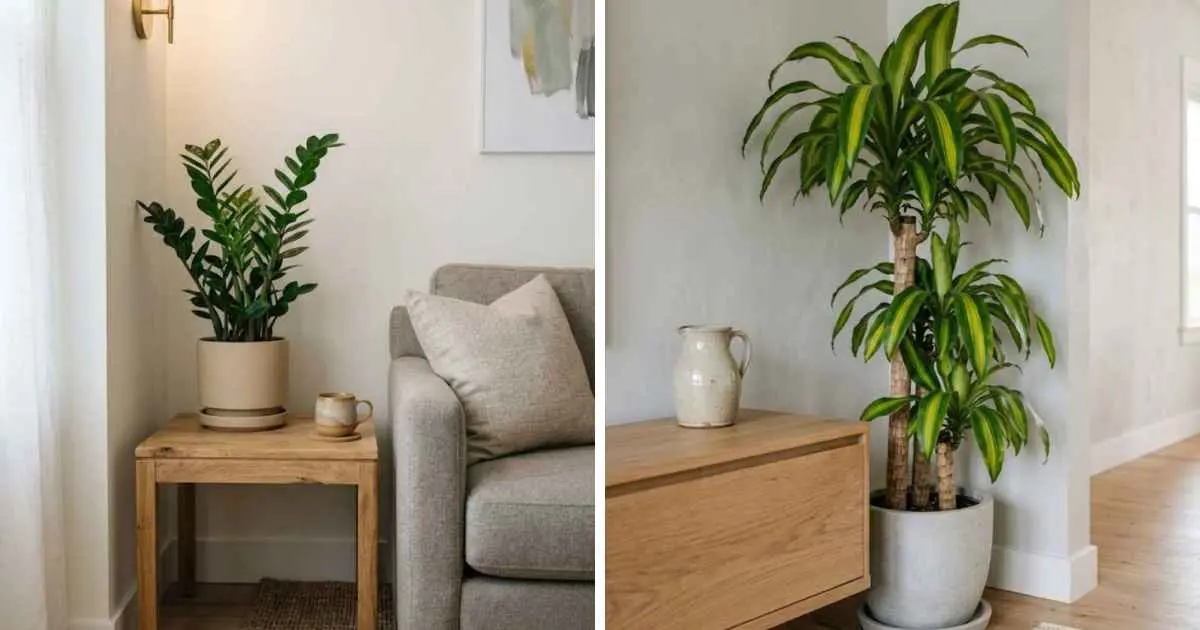
Table of Contents
Every home has a dead corner—that empty 90-degree intersection behind a sofa, next to a television console, or at the end of a bedroom hallway.
Filling these gaps is a common interior challenge, and a large plant is the easiest way to take the edge off those sharp wall intersections.
However, corners are notoriously difficult environments for living things. Walls physically block daylight, creating deep shadows, and air circulation in a tight pocket is typically minimal, which encourages dust buildup and pests.
To stay healthy and look right, a corner plant should visually fill the space without overwhelming it, while tolerating the quiet airflow of a dark wall perimeter. Here are the plants that actually work in the corners of your home.
1. Fiddle Leaf Fig (Ficus lyrata)
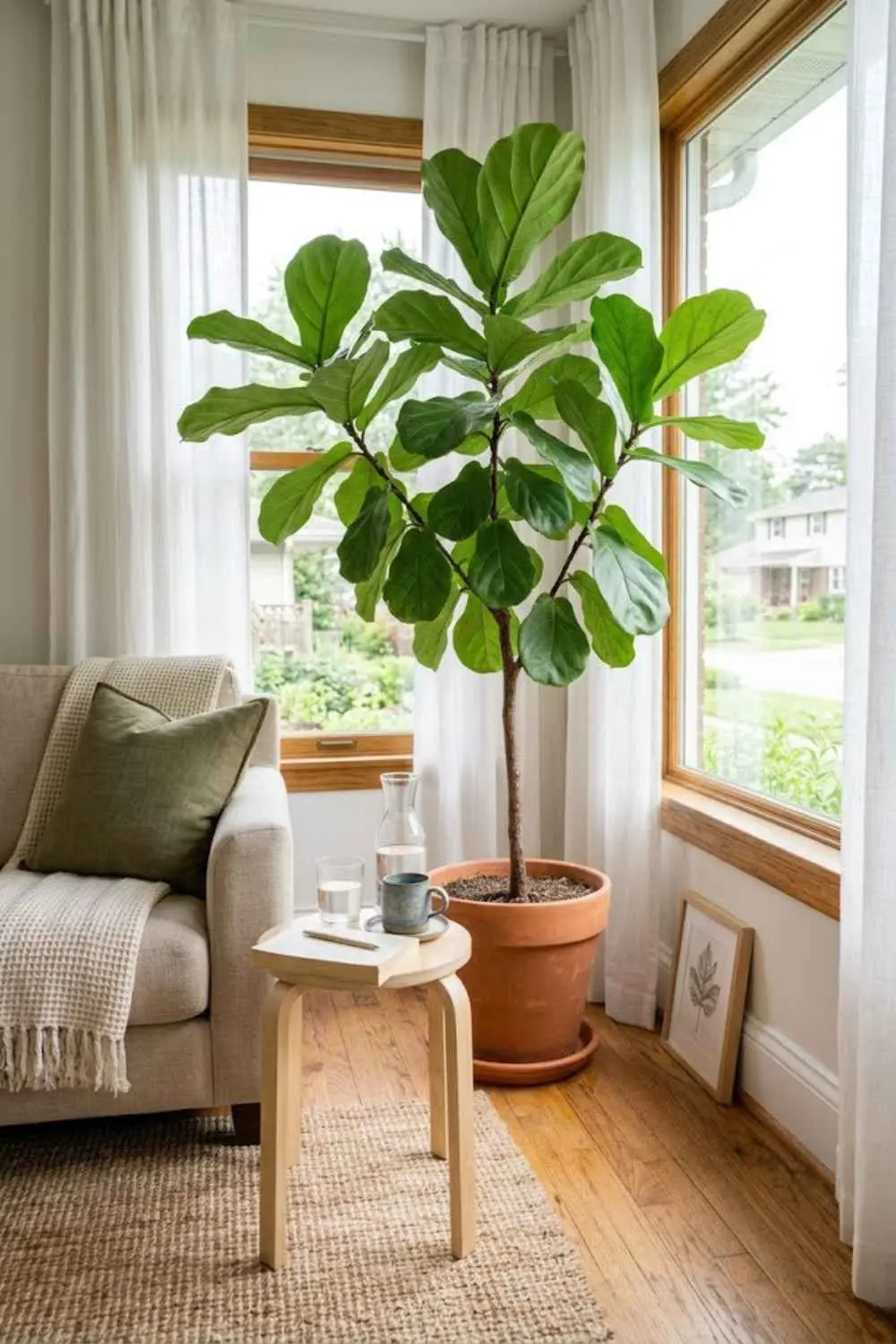
The Fiddle Leaf Fig remains one of the best statement plants for filling a bright empty corner with bold foliage.
It does, however, require a spot close to a large window, as it will readily drop its lower leaves if kept in a dark corner. If your designated corner sits far from a light source, select a tougher species instead.
To keep your Fiddle Leaf looking balanced, notice if the branches are leaning toward the light and give the container a quarter-turn once a month.
Light: Bright indirect light required • Water: Moderate watering • Pets: Pet toxic • Habit: Tall, branching tree
2. Dracaena ‘Lisa’ (Dracaena deremensis ‘Lisa’)
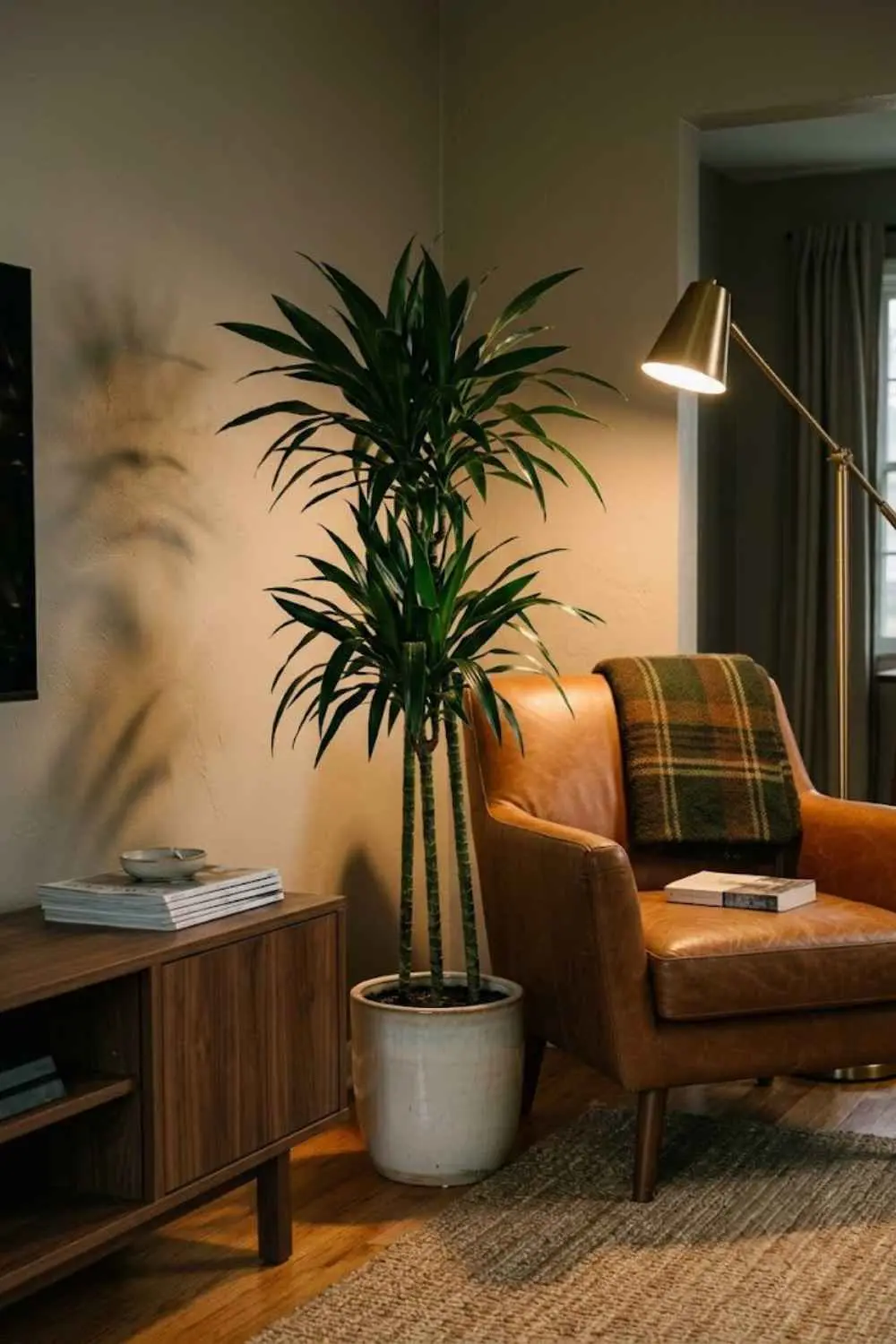
Dark corners located far from a natural light source require deep green shade lovers.
Unlike most indoor trees that thin out in the shadows, the Dracaena ‘Lisa’ keeps a fuller appearance in lower light than many indoor trees. Its narrow leaves grow tightly against a cluster of vertical woody canes, giving you excellent height without taking up the whole room.
It slips flat behind an armchair or into a tight gap next to a media console, requiring very little maintenance beyond a monthly watering.
Light: Low light tolerant • Water: Low watering • Pets: Pet toxic • Habit: Tall, narrow canes
3. Corn Plant (Dracaena fragrans)
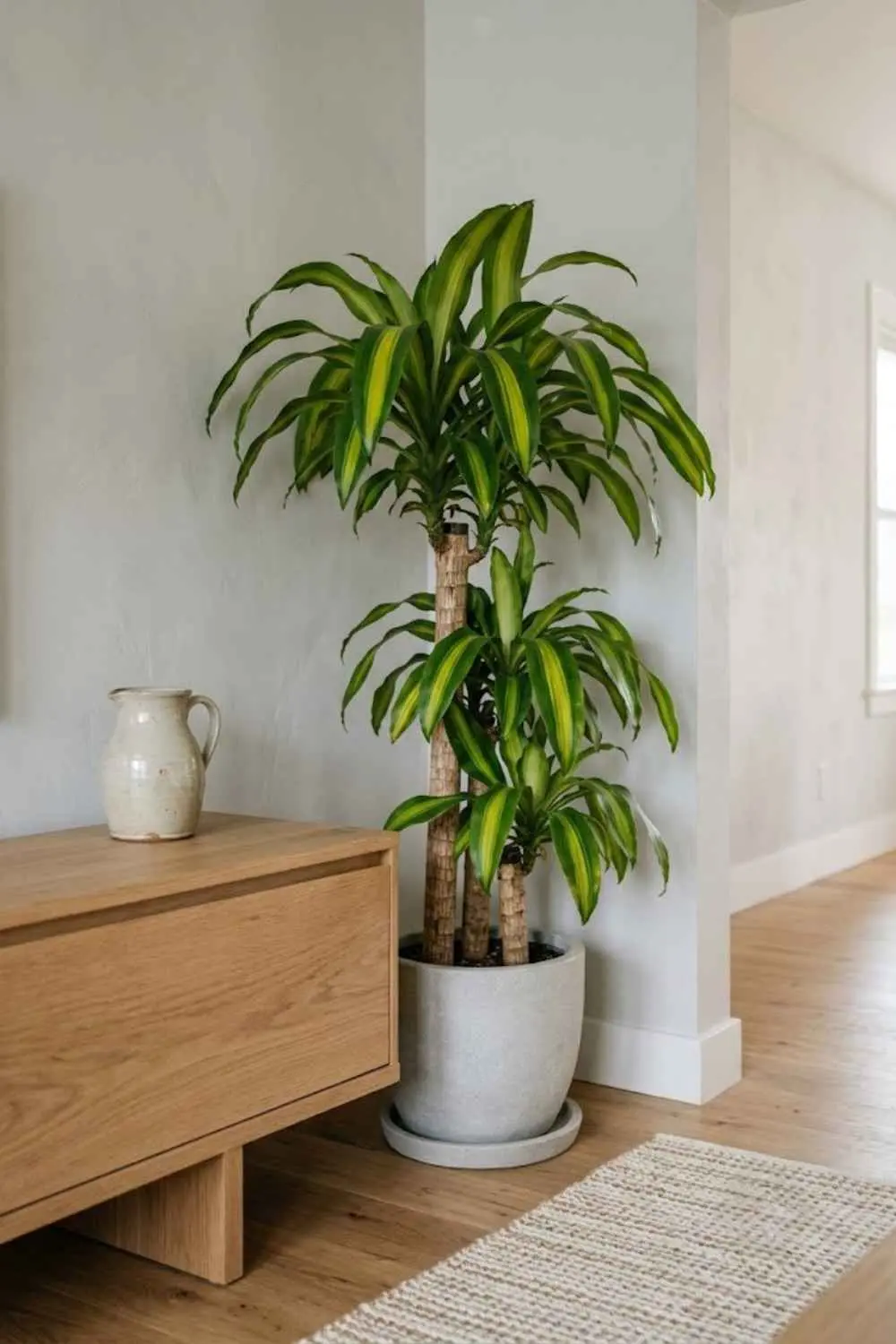
The Corn Plant offers a softer, more casual look for a bare living room.
It features thick woody stalks topped with rosettes of long, arching leaves that resemble corn foliage, often with a variegated yellow stripe down the center. Because the leaves arch outward rather than growing strictly upward, it needs a bit of breathing room so its foliage doesn’t constantly brush against the drywall.
It adapts well to medium, indirect light and stores water in its heavy stalks, making it highly forgiving if you forget to water it occasionally.
Light: Medium indirect light • Water: Low watering • Pets: Pet toxic • Habit: Upright stalks, arching leaves
4. Cast Iron Plant (Aspidistra elatior)
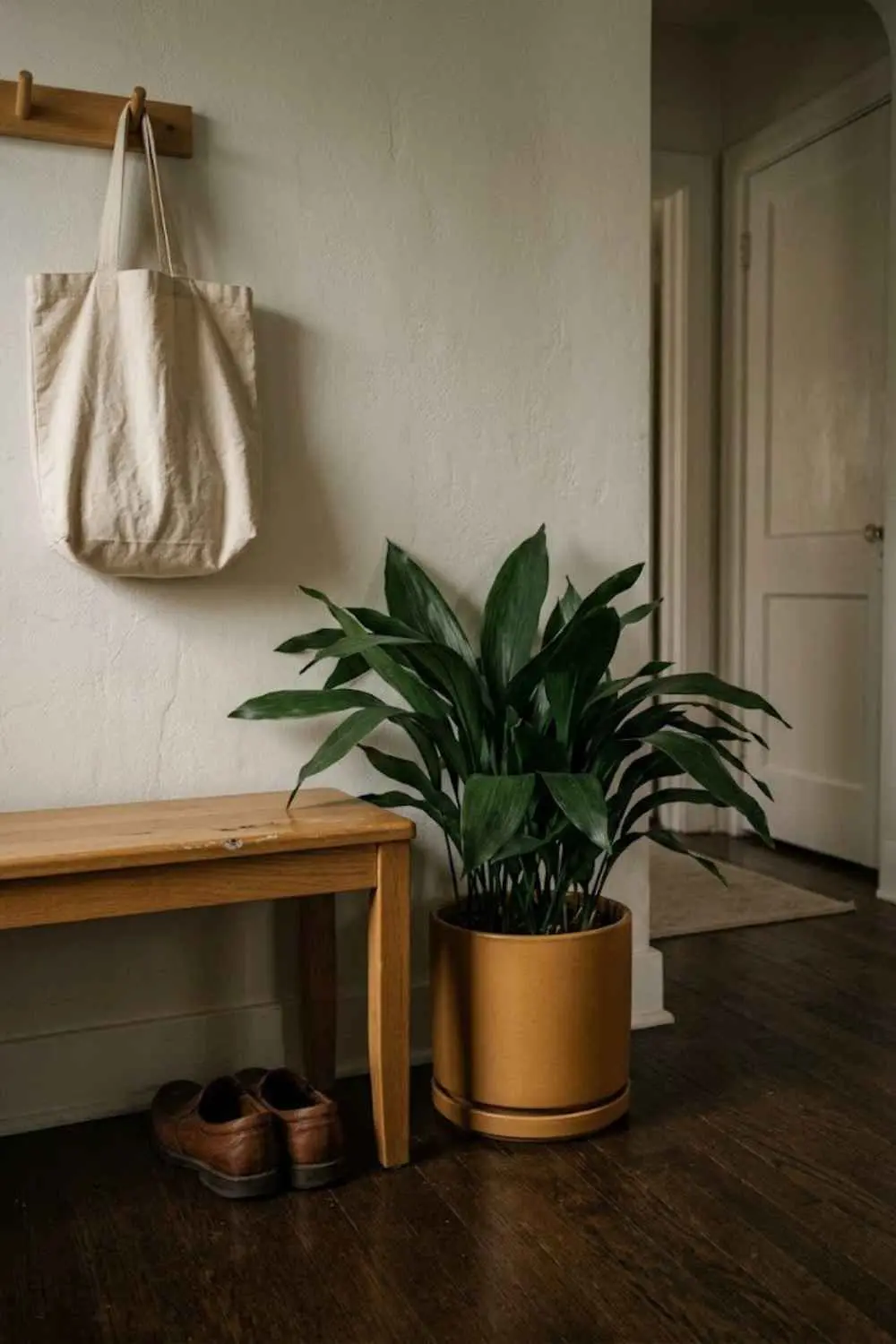
Not every empty corner has the vertical clearance or the budget for a massive indoor tree.
The Cast Iron Plant is an excellent mid-sized solution for darker corners where larger trees would feel overwhelming. Its broad, leathery leaves rise directly from the soil, creating a full, bushy mound that easily tolerates deep shadows and cold winter drafts.
If you want a lush, leafy look in a dark corner without dealing with the leaf-drop of a tropical palm, this species is incredibly reliable.
Light: Low light tolerant • Water: Low watering • Pets: Pet friendly • Habit: Upright, bushy mound
5. ZZ Plant (Zamioculcas zamiifolia)
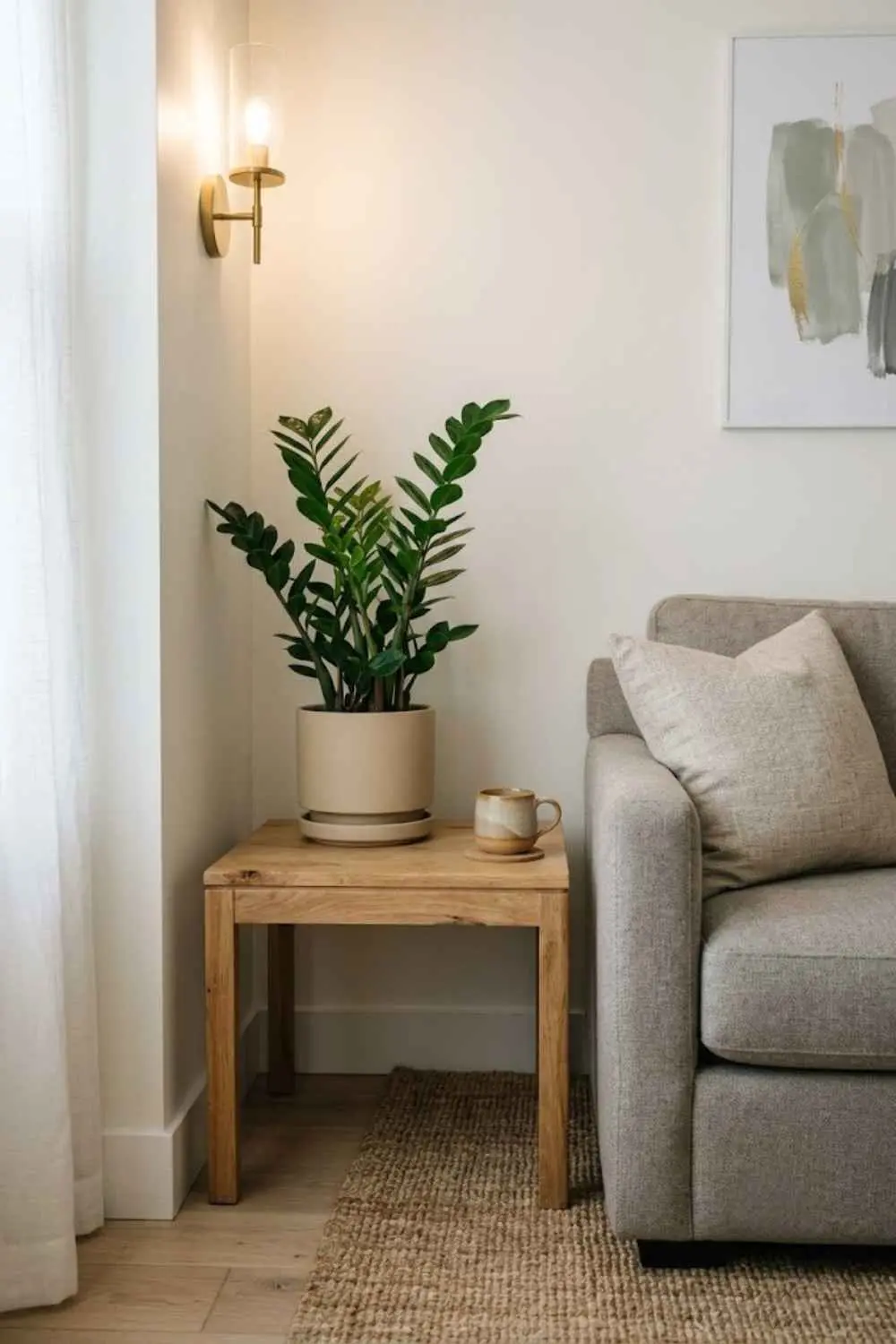
If floor space is limited beside a sofa, place the ZZ Plant on a sturdy pedestal to add height without increasing its footprint.
Its thick stems grow in an organized, vase-shaped cluster that stays close to the center of the pot rather than sprawling into nearby furniture. The naturally glossy leaflets reflect ambient room light, helping dark corners feel a little brighter.
It thrives on neglect, making it perfect for secondary corners you rarely look at.
Light: Low light tolerant • Water: Very low watering • Pets: Pet toxic • Habit: Upright, vase-shaped grower
6. Spider Plant (Chlorophytum comosum)
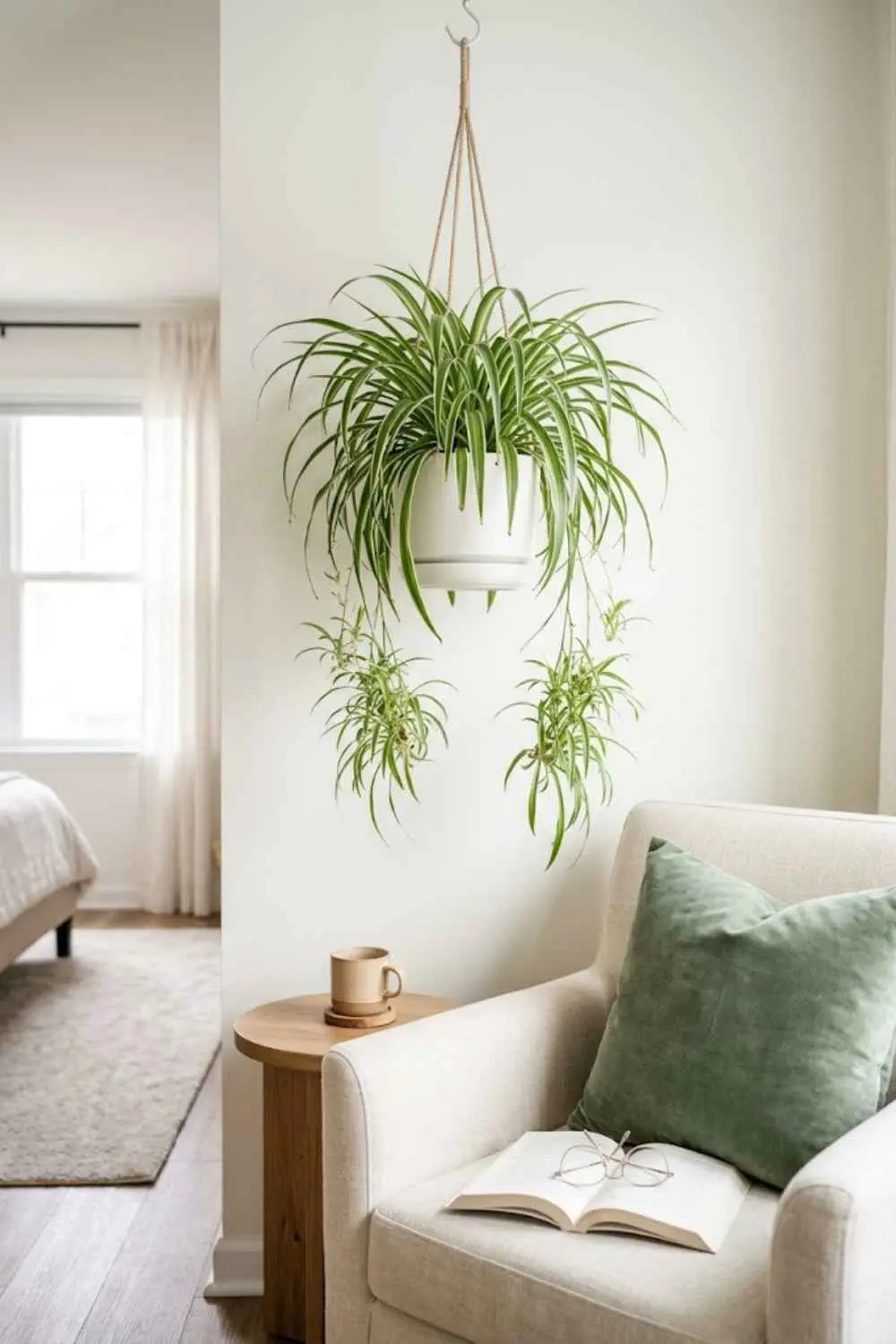
The Spider Plant is a casual option with long, arching leaves that create a soft, cascading fountain effect, lightening up a dark wall junction.
As it matures, it sends out runners with miniature plantlets that hang down naturally. It works especially well when elevated, allowing the arching foliage to soften an otherwise sharp wall intersection.
Completely safe for dogs, but keep it elevated if you have a curious cat.
Light: Medium indirect light • Water: Moderate watering • Pets: Pet friendly • Habit: Arching, cascading grower
7. Parlor Palm (Chamaedorea elegans)
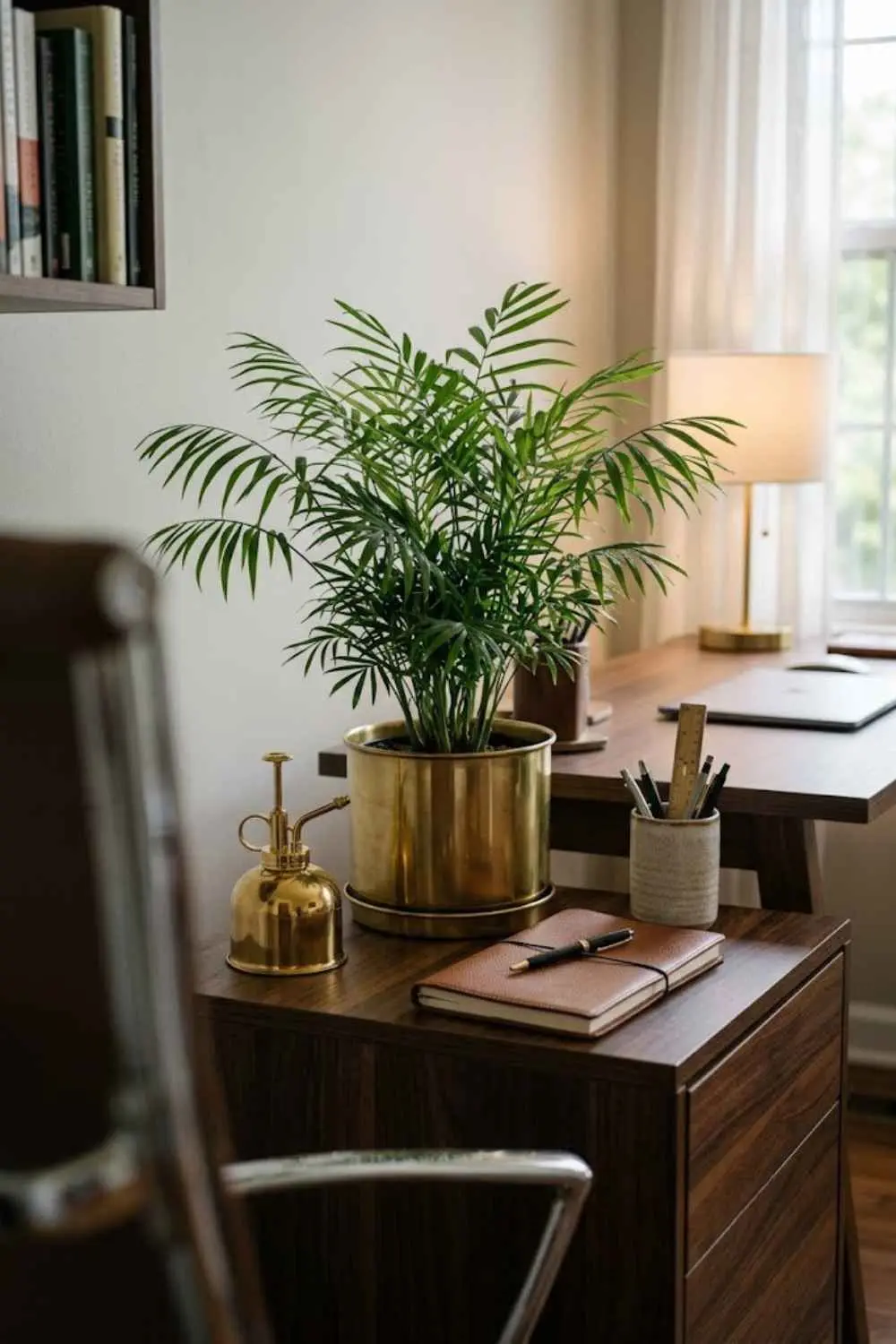
The Parlor Palm offers the classic, feathered look of a tropical palm in a highly compact, tabletop size.
It clumps together tightly into a neat bush, allowing it to sit safely on a small corner pedestal or accent cabinet behind a low lounge chair without extending branches into walking zones. It is much more tolerant of low interior light than larger palm varieties.
Because it grows slowly, select the exact size your space requires at the nursery, and keep it clear of direct heating vents to avoid dry leaf tips.
Light: Low to medium indirect light • Water: Moderate watering • Pets: Pet friendly • Habit: Compact, bushy grower
8. Bird of Paradise (Strelitzia nicolai)
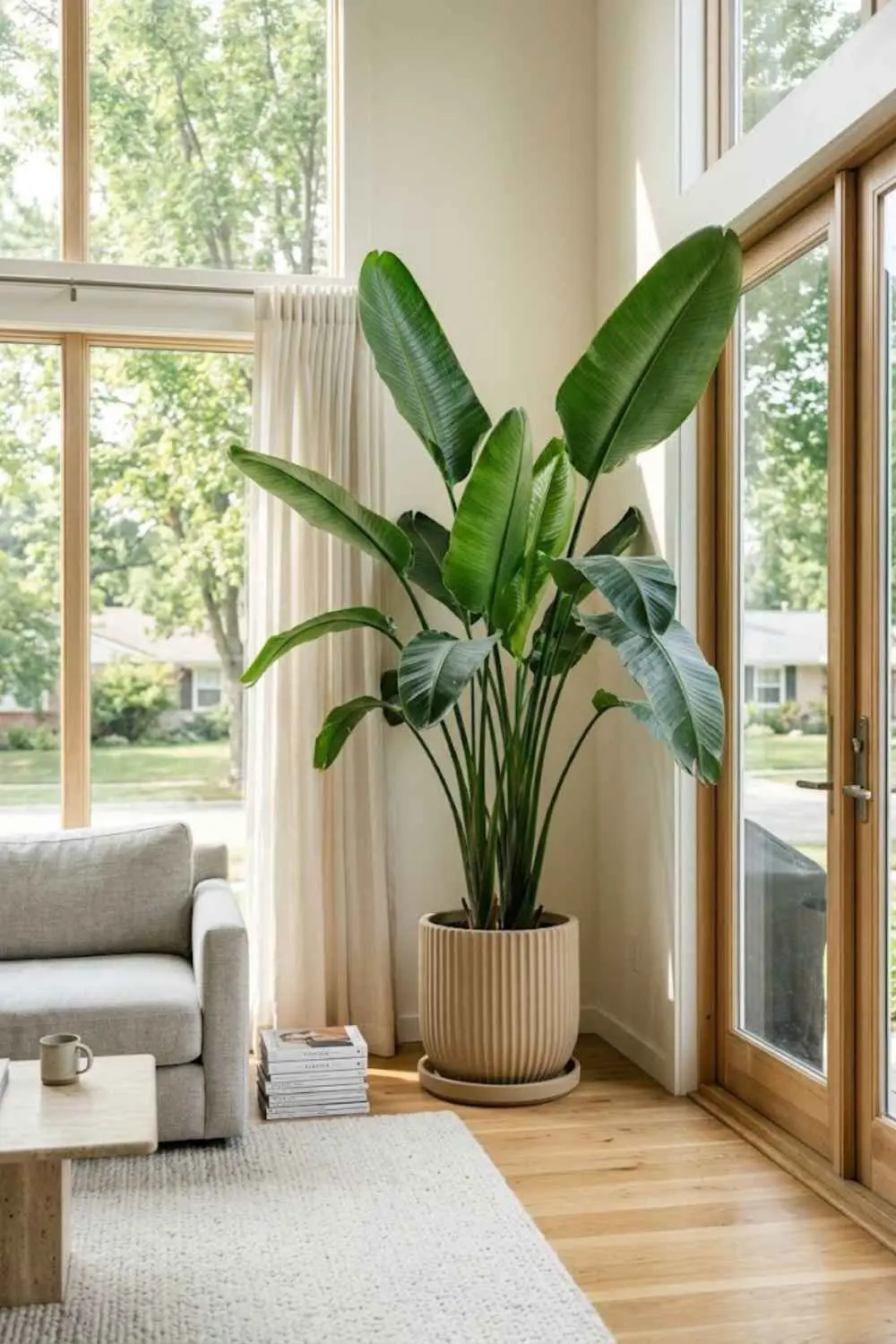
Oversized, paddle-shaped leaves make the Bird of Paradise a natural fit for double-height ceilings and massive windows.
It adds an airy, soaring presence that fills empty vertical gaps well without crowding floor traffic. Without consistent bright light, however, the heavy stems may weaken and lean toward the nearest window.
The large leaves also split naturally along their seams as they age—a normal reaction to household air currents that gives the plant a rustic appearance over time.
Light: Bright light required • Water: Moderate watering • Pets: Pet toxic • Habit: Tall, upright fan shape
9. Burgundy Rubber Tree (Ficus elastica)
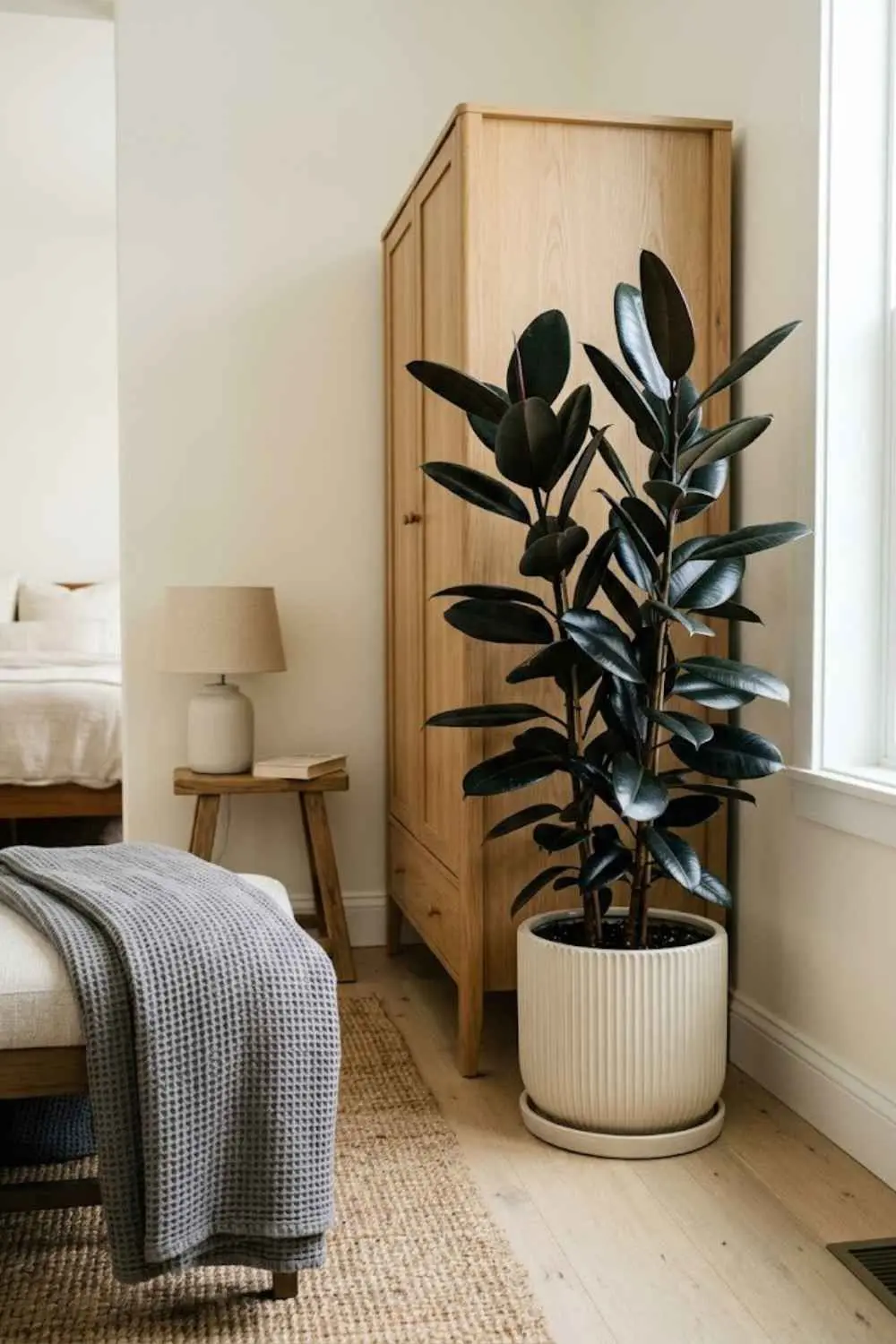
White or neutral walls benefit from a splash of deep color, which is where the near-black leathery foliage of the Burgundy Rubber Tree excels.
It offers a stately presence next to a reading chair or a bedroom wardrobe but holds its branches tightly upward, keeping its width compact enough to stay out of the traffic lane.
Like most ficus varieties, it is sensitive to sudden environmental changes; if it sits directly in a freezing winter draft every time a nearby window is opened, it may drop its lowest leaves, creating a bare lower trunk.
Light: Bright indirect light preferred • Water: Moderate watering • Pets: Pet toxic • Habit: Upright, tree-like grower
10. Monstera Deliciosa
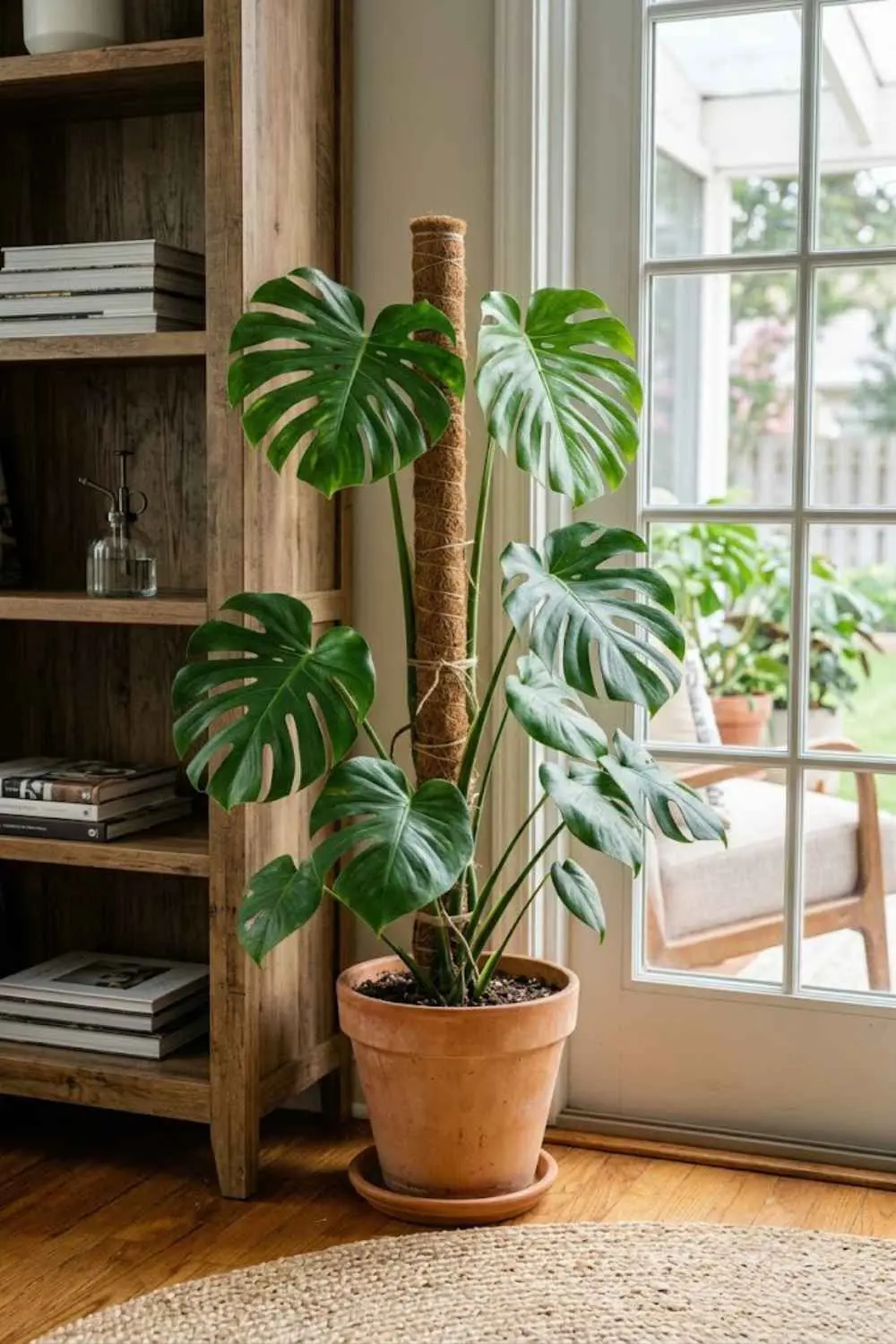
Anchor the main stems of a Monstera to a sturdy moss pole if you want to turn a sun-drenched corner into a lush green column.
Its massive split leaves naturally grow outward as well as upward, meaning it can quickly crowd a narrow walkway if left to sprawl along the floor. Training the growth vertically against the wall intersection solves the space problem.
In a dark corner, the iconic leaf splits generally won’t develop, leaving you with a sparse, leggy plant.
Light: Bright indirect light required • Water: Moderate watering • Pets: Pet toxic • Habit: Climbing, sprawling vine
11. Peace Lily ‘Sensation’ (Spathiphyllum ‘Sensation’)
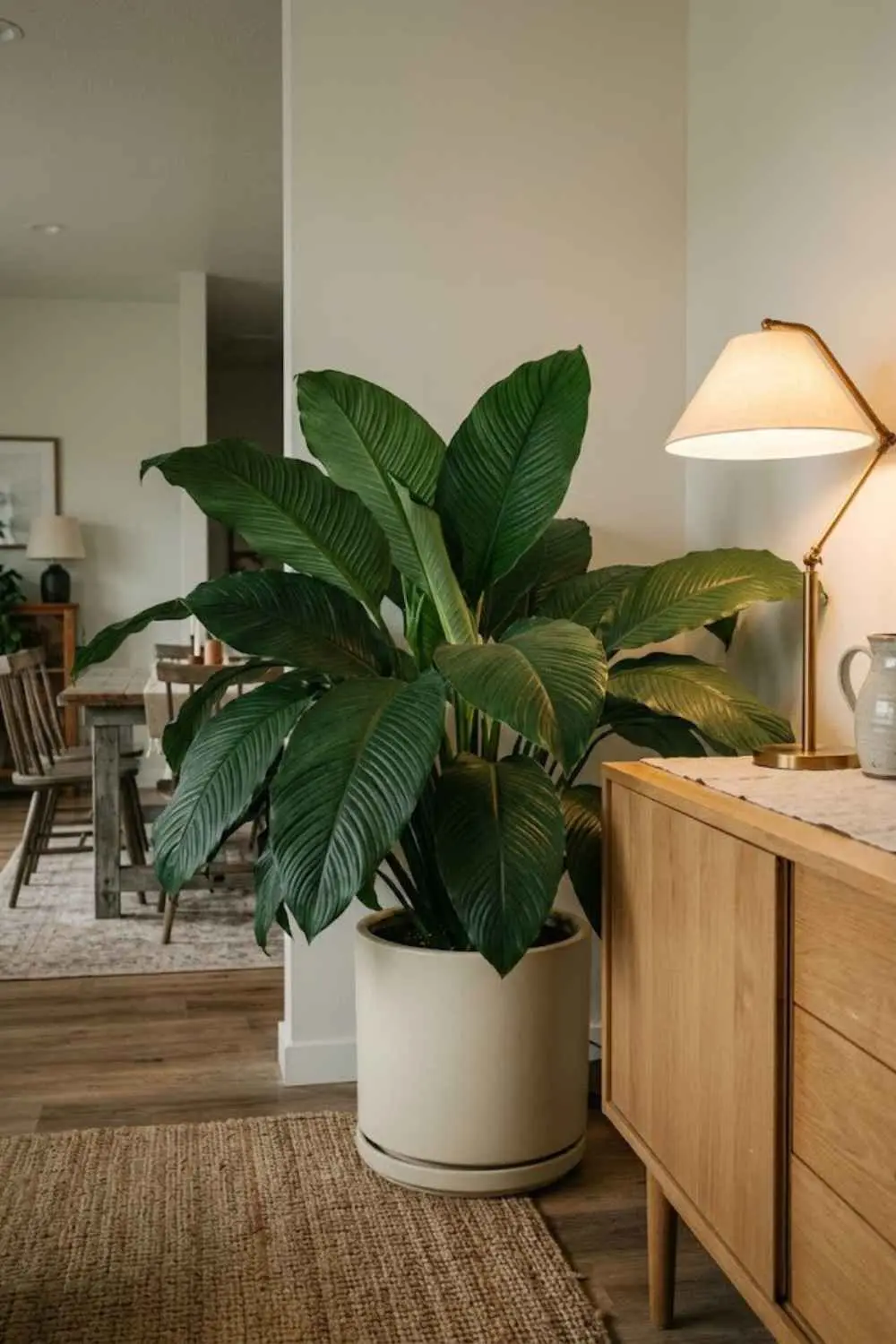
This giant variety is bred to fill big spaces in lower light.
It features massive, ribbed, deep green leaves that arch gracefully outward, creating a full silhouette that makes it a reliable choice for filling wider low-light corners.
It alerts you to dryness by letting its entire canopy wilt slightly, then snaps back to attention a few hours after a thorough watering.
Light: Low to medium indirect light • Water: High watering • Pets: Pet toxic • Habit: Broad, arching mound
12. Kentia Palm (Howea forsteriana)
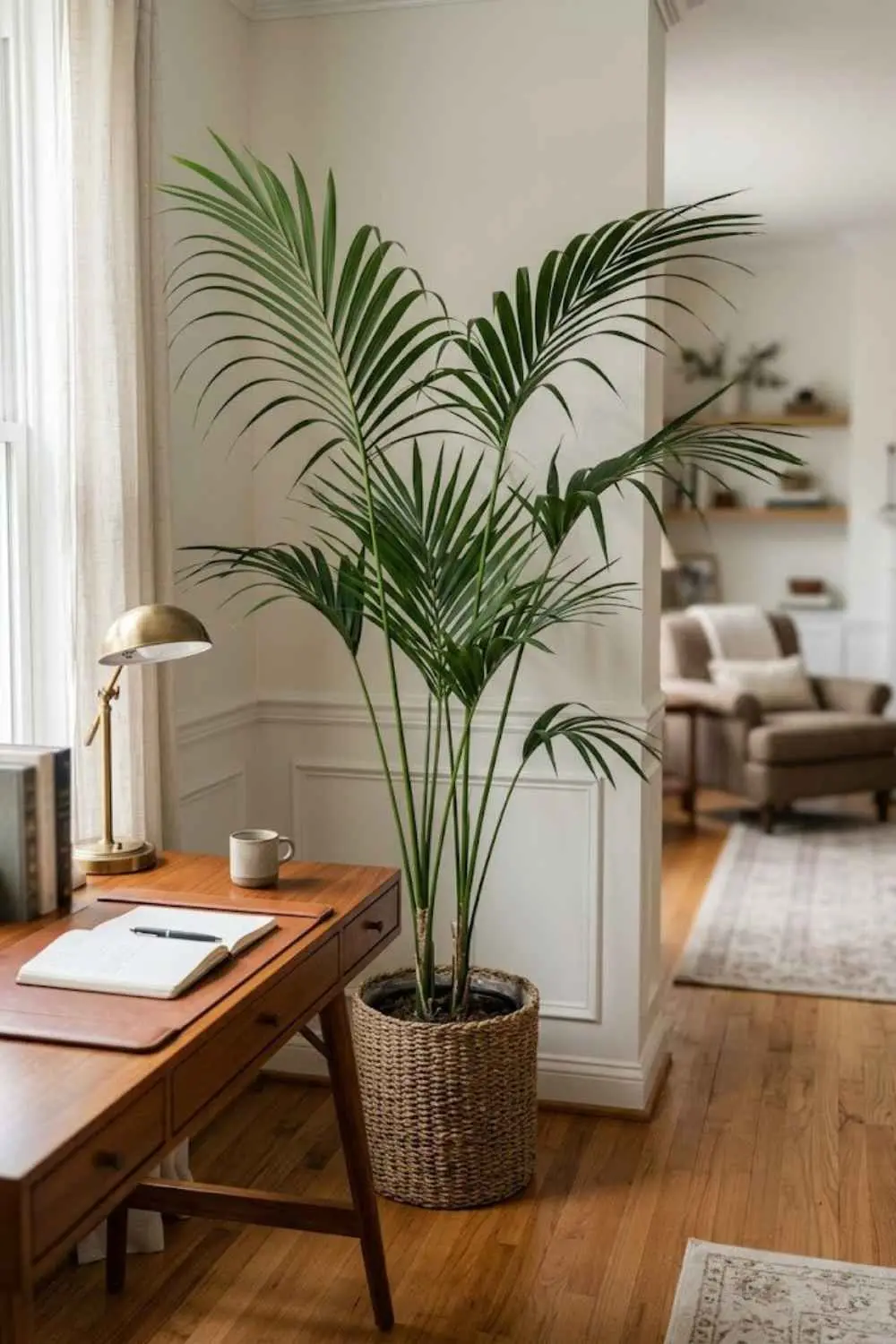
If you love the airy, feathered look of a palm for an empty floor corner but don’t have the bright light required for a Bird of Paradise, the Kentia Palm is a classic choice.
It handles lower interior light levels and cold drafts well, sending up long, slender stems that arch elegantly at the top to soften sharp wall intersections.
This is an investment piece that grows slowly and is priced accordingly, so buy the size your space requires from the start. Once placed, it is best to leave it there—it can dislike being moved around constantly.
Light: Medium indirect light • Water: Moderate watering • Pets: Pet friendly • Habit: Tall, arching grower
Quick Corner Picker
Best for low-light corners
Dracaena ‘Lisa’ (2) • Cast Iron Plant (4) • ZZ Plant (5) • Peace Lily ‘Sensation’ (11)
Best for bright, sun-drenched corners
Fiddle Leaf Fig (1) • Bird of Paradise (8) • Monstera Deliciosa (10)
Best for narrow corners behind furniture
Dracaena ‘Lisa’ (2) • ZZ Plant (5) • Burgundy Rubber Tree (9)
Best for elevated pedestals or tables
ZZ Plant (5) • Spider Plant (6) • Parlor Palm (7)
Best for pet-friendly corners
Cast Iron Plant (4) • Spider Plant (6) • Parlor Palm (7) • Kentia Palm (12)
FAQs
Why do the leaves of my corner plant keep turning yellow or falling off?
This is almost always caused by a combination of low light and overwatering. Because corners block ambient daylight and have minimal air movement, the soil in the pot stays damp much longer than it would near a window. Always feel deep into the soil before watering, and cut back the frequency during the winter months.
How do I prevent spider mites and dust buildup in a stagnant corner?
Tight corners can encourage spider mites because the air is often still. Keep a small gap between the plant’s foliage and the walls to encourage airflow. Once a month, wipe the leaves down with a damp microfiber cloth to remove dust, which allows the plant to absorb available light more efficiently.
Conclusion
A thriving corner plant depends far more on your room’s lighting than on following a decorating trend.
Before buying a massive tree simply because it looks beautiful in an interior photo, take a few days to notice where the daylight falls throughout the day and check for nearby heating vents.
Matching the true light levels and physical boundaries of your corner with a plant built to handle them ensures your green addition remains a welcoming feature rather than a temporary frustration.