Table of Contents
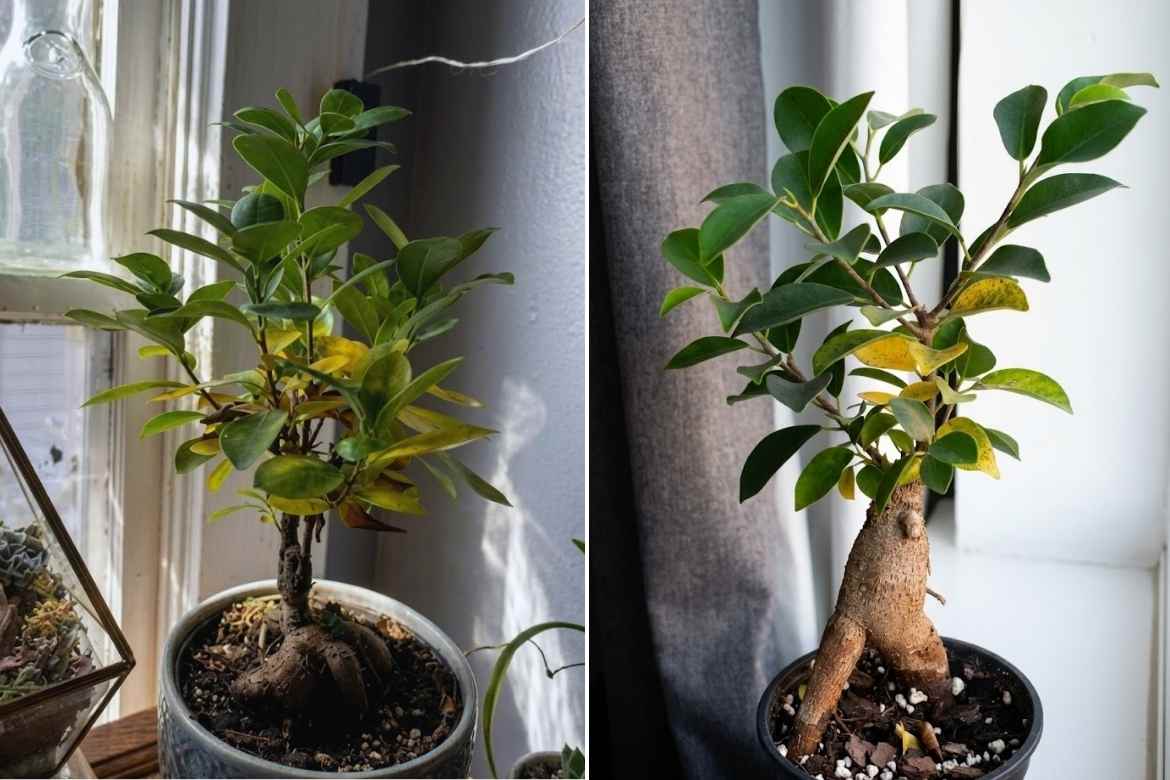
Few houseplant frustrations match the sudden leaf drop of a Ficus ginseng bonsai. One day your tree looks healthy; the next, a handful of leaves turn lemon-yellow and fall at the slightest touch.
While losing an occasional lower leaf is normal aging, widespread yellowing is a clear sign of environmental or care stress. Most gardeners assume a yellowing ficus needs more water, but overwatering is actually one of the most common causes.
The pattern of the yellowing usually reveals what is wrong. Saving the tree comes down to reading these visual cues and correcting the environment around it.
1. The Soil Is Staying Wet Too Long
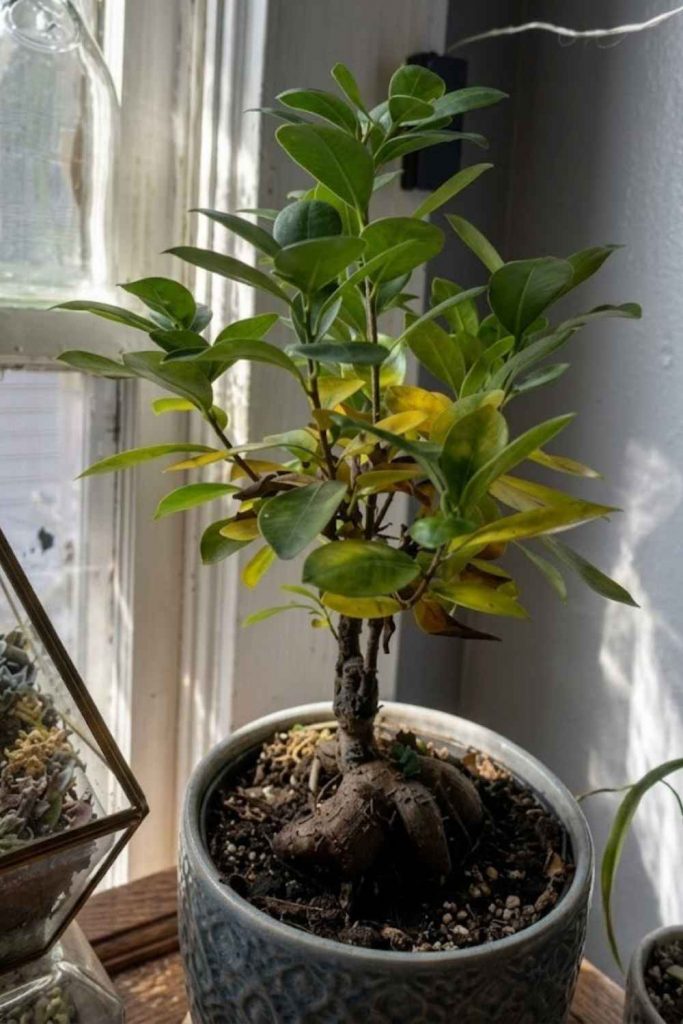
Because Ficus ginseng stores water in its thick, bulbous trunk, it handles drought much better than it handles soggy soil. When the potting mix stays saturated, the roots rot and stop sending nutrients to the canopy.
Prolonged root rot is one of the most common reasons indoor ficus trees decline.
If the leaves are turning a pale, watery yellow throughout the entire tree—often starting in the middle of the canopy rather than just at the bottom—the roots are likely drowning. The affected leaves will feel soft and limp, and the soil might have a faint, sour smell.
To fix this, stop watering immediately. Abandon strict calendar routines like watering every Tuesday, and let the top two inches of soil dry out completely before you soak the pot again.
A simple trick is to lift the pot when it is dry to get a feel for its baseline weight; only water when the container feels that light again.
If the soil stays muddy for more than a week, slide the tree out of the pot, trim away any black, mushy roots, and repot it into a loose, gritty mix amended with pumice, lava rock, or coarse sand to improve drainage and prevent the soil from remaining waterlogged.
2. Recent Relocation Shock
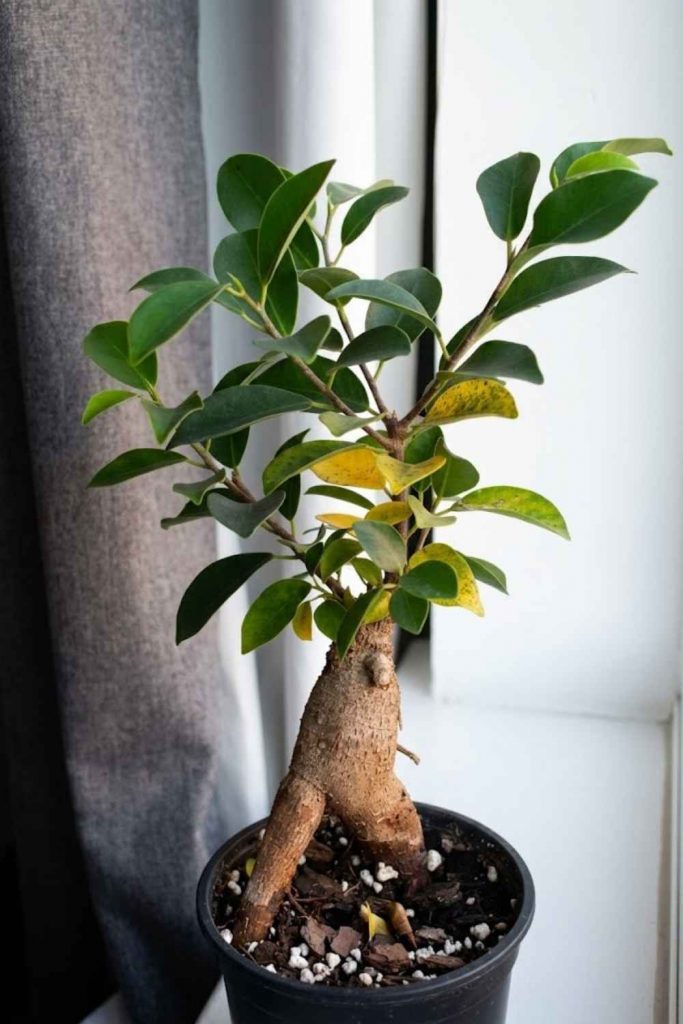
Ficus trees are notorious creatures of habit. When you first bring a Ficus ginseng home from the nursery, or even when you move an established plant to a different room, it undergoes significant adjustment stress.
The sudden change in humidity, airflow, and light levels forces the plant to shed foliage to conserve its energy.
This shock causes healthy-looking leaves to turn a bright, uniform yellow and drop rapidly within a week or two of the move. The leaf drop usually stops on its own once the plant adjusts to its new location.
Pick one permanent, brightly lit location and leave the tree completely undisturbed. Moving the pot around the house in a panic only prolongs the shock and resets the plant’s acclimation timeline.
Keep the immediate environment stable, maintain a consistent watering routine based on soil dryness, and allow the plant four to six weeks to establish new growth.
3. Chronic Low Light
While relocation shock happens quickly, insufficient light causes a slower, more gradual decline. Ficus ginseng trees require bright light to produce enough energy to sustain their dense canopy.
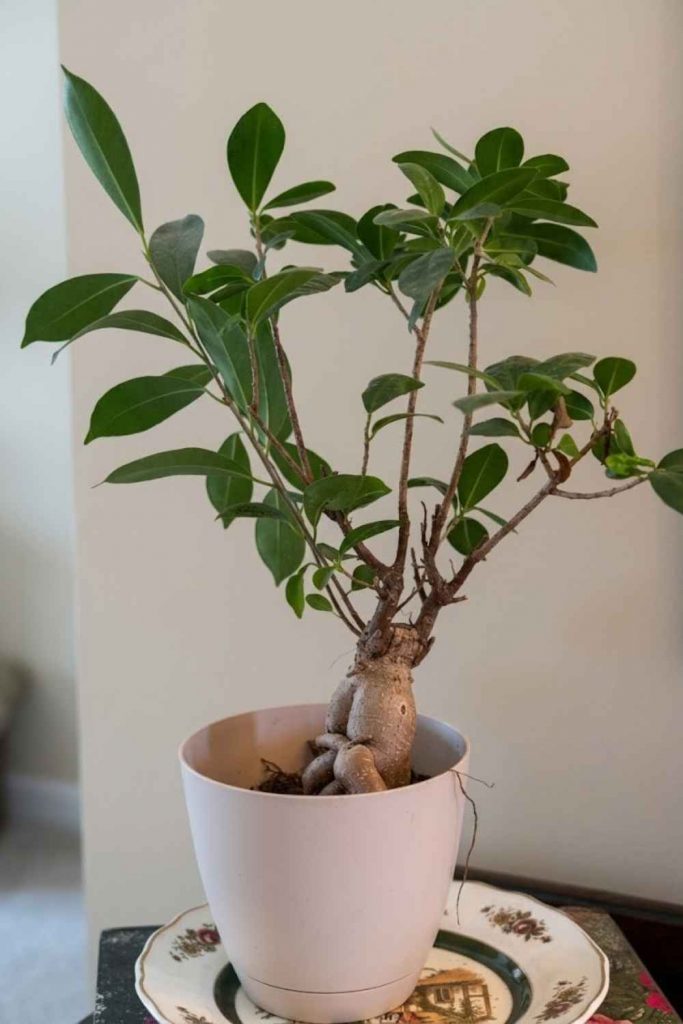
When relegated to a dim interior coffee table, a hallway, or a dark shelf, the tree slowly sheds its lower and interior leaves because it can no longer support them.
In low light, the yellowing is gradual. Leaves near the center of the branches turn yellow one by one and drop cleanly, leaving the inside of the tree looking bare. The remaining green leaves might grow larger and wider apart as the stems stretch toward the nearest window.
Move your bonsai within two to three feet of a bright window, or put it under a dedicated LED grow light for 12 to 14 hours a day. It is common for the tree to drop a few more leaves over the first two weeks as it adjusts to the change in light.
While you should not move the plant from room to room daily, do adjust its position seasonally—give it a bright spot near an east- or west-facing window in summer, then move it closer to a south-facing window or under a grow light when winter days shorten.
4. Soil Drying Out Too Fast (Underwatering)
While overwatering is one of the most common causes of decline, underwatering can be equally damaging, especially in shallow bonsai pots that hold very little soil. If the potting mix dries out completely down to the bottom of the pot, or if you only water lightly without soaking the entire root ball, the lowest roots die off from dehydration.
Underwatered leaves develop dry, crispy yellow edges or tips rather than a soft, watery yellow. The soil will pull away from the inside edges of the pot, and the tree may drop older leaves from the bottom upward to conserve moisture for the top growth.
When you water your bonsai, always water thoroughly until moisture runs freely out of the drainage holes at the bottom of the pot. This ensures the entire root system gets a drink.
Never let the soil dry out to the point of bone-dry dust. If the soil has become so dry that it repels water, submerge the entire bottom half of the bonsai pot in a basin of lukewarm water for 10 to 15 minutes to allow the root ball to rehydrate completely.
FAQs
Can yellow leaves turn green again?
No. Once a leaf turns yellow, the plant has already cut off its nutrient pathways to that leaf, and the tissue cannot recover.
Do not waste energy trying to reverse the color; instead, focus on correcting the care issue to stop new leaves from yellowing.
Why did my Ficus ginseng turn yellow right after I brought it home?
This is normal adjustment stress caused by the sudden move from a humid nursery to a drier indoor room.
Give the tree a bright, warm spot, keep your watering consistent based on soil dryness rather than a calendar, and the shedding should stop naturally within two weeks.
Should I cut off the yellow leaves, or let them fall on their own?
Let them fall naturally. If you touch a yellow leaf and it falls into your hand with a light tap, it is ready. If it resists, leave them alone.
Pulling leaves prematurely can tear the delicate bark and release a sticky, milky latex sap that may irritate skin and should be kept away from pets.
How long will it take for my bonsai to grow new leaves?
If the roots are healthy and the plant is in its spring or summer growing season, you should see tiny green buds along the bare wood within 4 to 6 weeks. Recovery takes longer in winter.
Do not fertilize or overwater while the branches are bare, since the plant has less foliage to process moisture.