Table of Contents
Every summer, homeowners move their houseplants outside under the assumption that open air and natural heat will help them grow. While some houseplants can spend summer outdoors, others are much more sensitive to the stronger light, drying conditions, and weather fluctuations they encounter outside.
Moving them to a typical open patio can quickly lead to faded foliage, crispy edges, wilting, or rot. Before moving your pots outside, consider how they’ll handle the change in conditions.
1. Calathea (Calathea spp.)
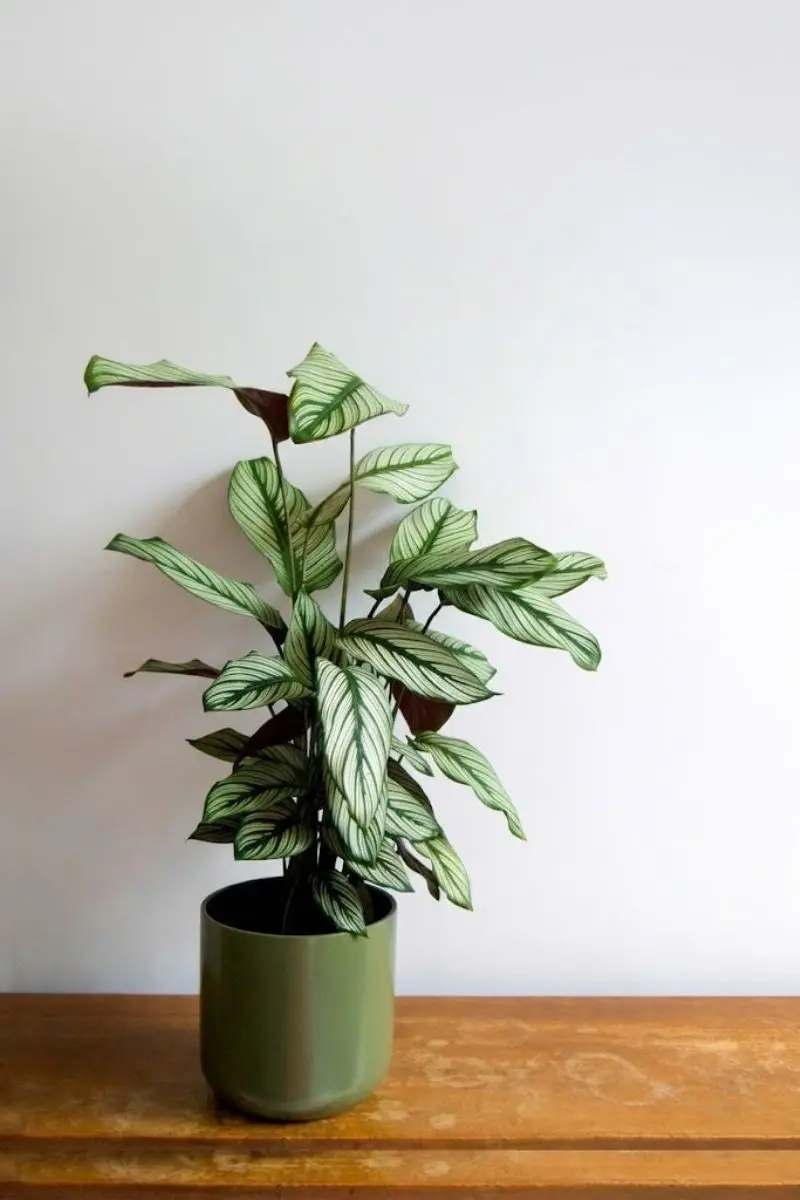
Calatheas are already demanding indoors, and unshaded outdoor environments can make their care even more difficult. Their leaves are highly sensitive to sudden light changes, and even a short period of direct sun can scorch the foliage.
Exposed outdoor conditions can dry the foliage and potting mix much faster than the plant is accustomed to indoors. Save open patio spaces for tougher plants that can handle stronger light and drying conditions.
Keep your Calathea indoors near a humidifier or in a room with bright indirect light and high humidity.
Light: Bright indirect light • Water: Consistent moisture • Pets: Pet friendly • Habit: Clumping grower
2. Peperomia (Peperomia spp.)
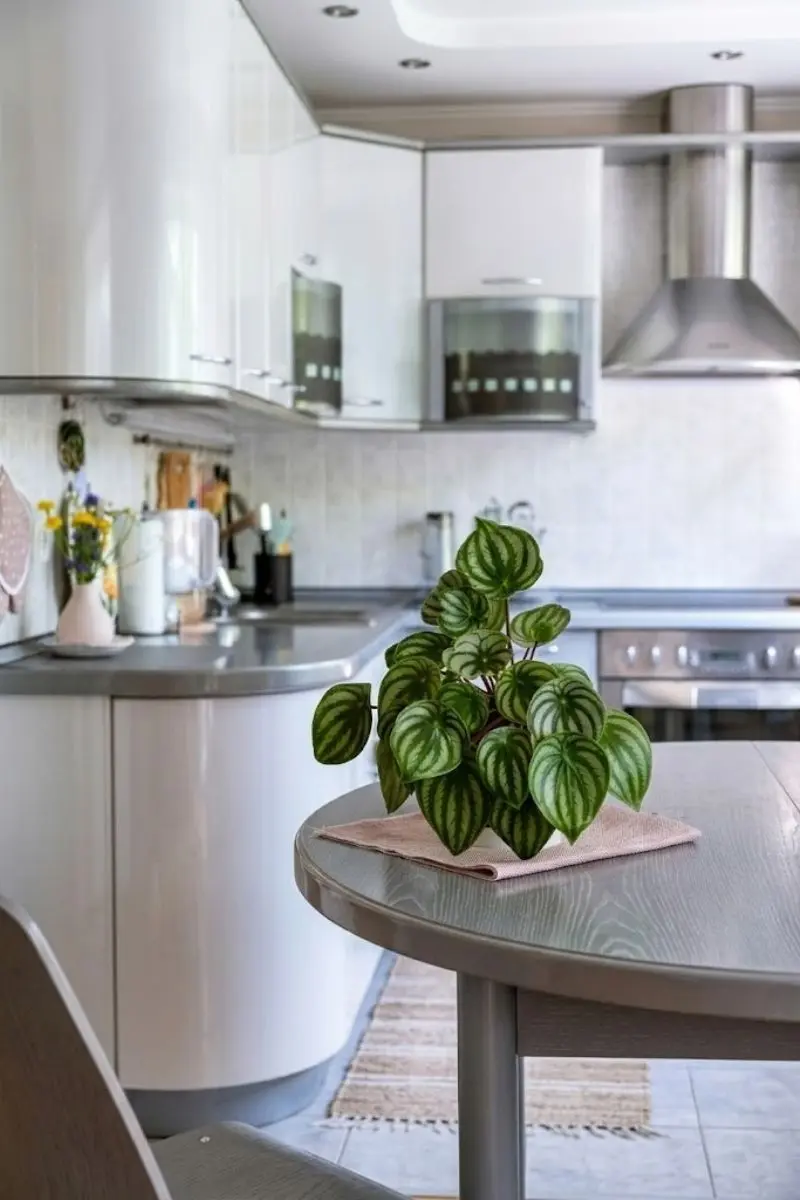
Peperomias prefer warm conditions, bright indirect light, and moderate to high humidity. Because many varieties have thick, succulent-like leaves, it is easy to assume they can handle the heat of an outdoor porch.
However, outdoor conditions can expose Peperomias to stronger light, drying wind, and faster-changing moisture levels than they experience indoors. They are best left styled on an indoor desk or shelf where the air remains stable.
Light: Medium to bright indirect light • Water: Allow the top inch or two of soil to dry • Pets: Pet friendly • Habit: Compact, upright grower
3. African Violet (Saintpaulia spp.)
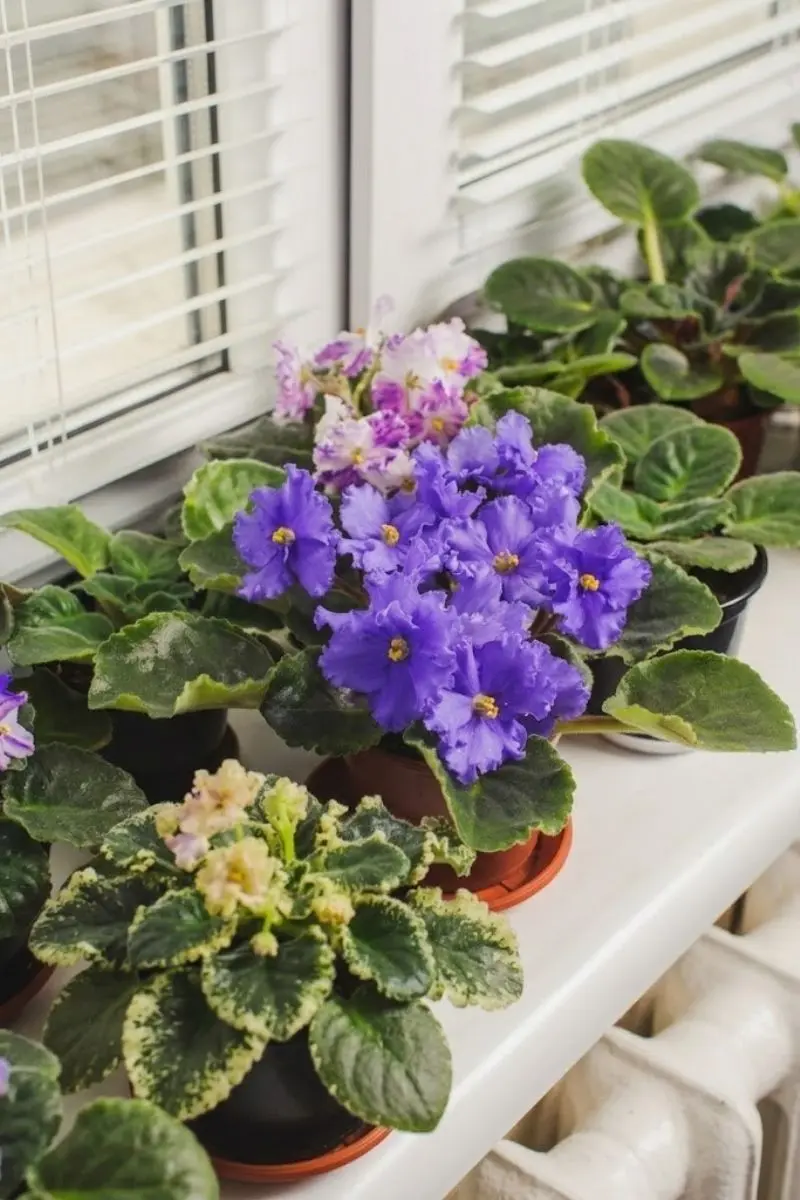
African Violets do best in the stable environment of an indoor windowsill to keep their velvety foliage looking its best. Because their leaves trap water easily, indoor growers typically water them from the bottom to protect the center of the plant.
Moving them outdoors exposes them to unpredictable summer rain showers. Water sitting on the fuzzy leaves can cause spotting, while water collecting in the crown can create a risk of rot.
For summer outdoor color, stick to annual flowers in your window boxes.
Light: Bright indirect light • Water: Water when topsoil feels dry • Pets: Pet friendly • Habit: Compact, rosette grower
4. Nerve Plant (Fittonia spp.)
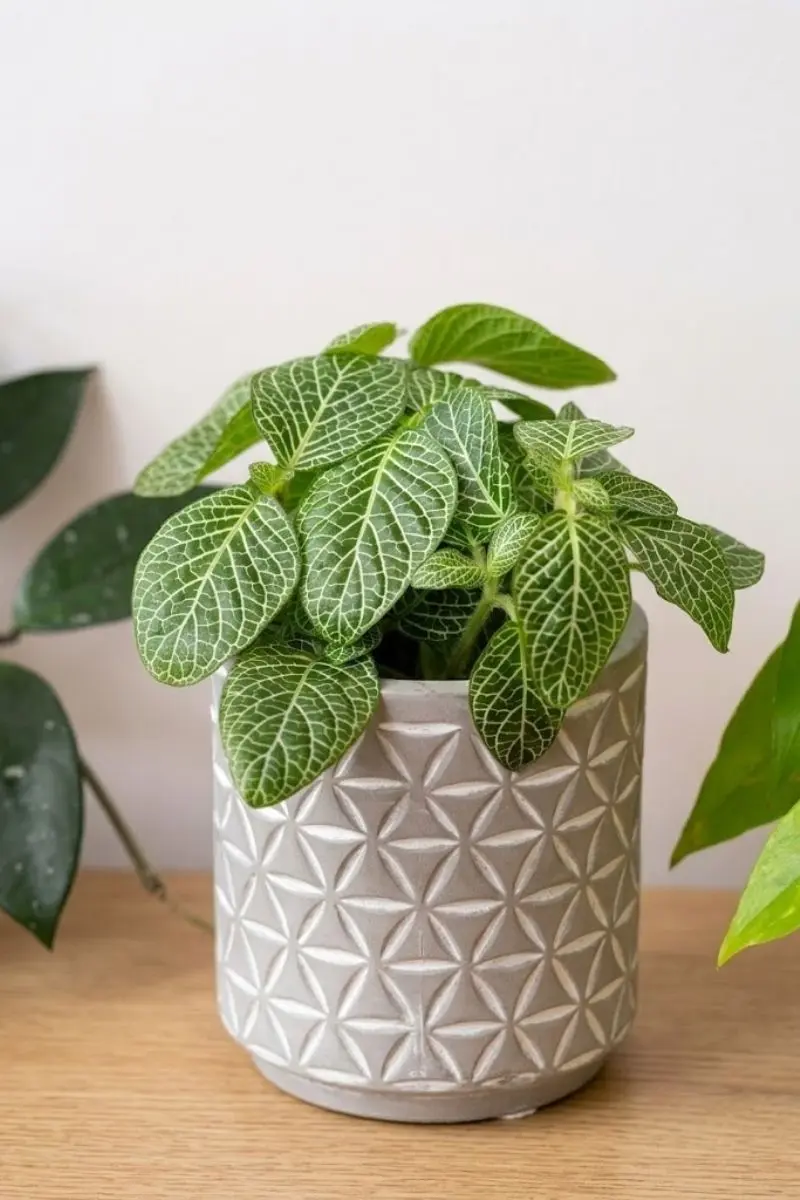
Soil dries out much faster in open air than it does in a living room, which makes the shallow-rooted Fittonia a poor match for an exposed patio.
Outdoor heat and wind can dry its shallow root zone quickly, leaving the foliage wilted or scorched before you realize how fast the pot has dried. Its shallow root system and thin foliage are poorly suited to the rapid drying and temperature swings common in exposed outdoor spaces.
Light: Medium indirect light • Water: Keep evenly moist • Pets: Pet friendly • Habit: Low, creeping grower
5. Maidenhair Fern (Adiantum spp.)
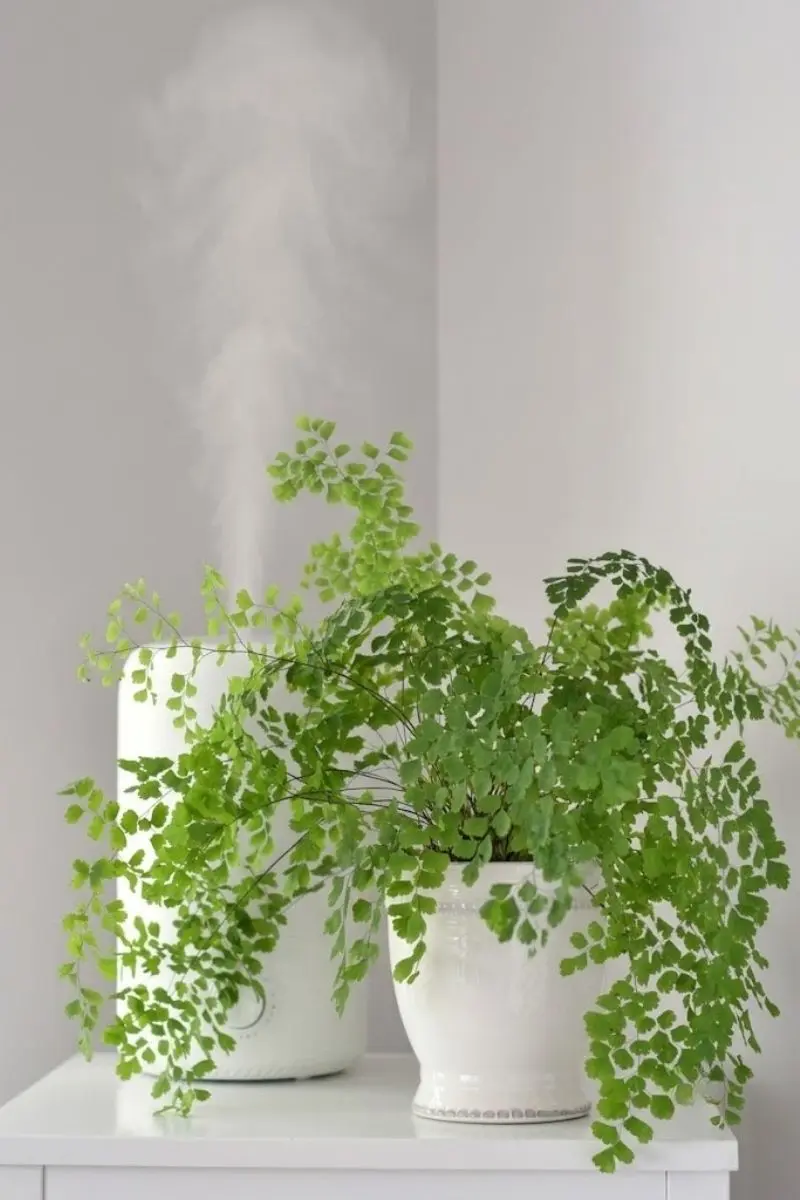
The Maidenhair Fern can spend the summer outdoors if placed in protected shade, but an exposed patio can be hard on its delicate fronds.
Its fine fronds rely on consistently humid conditions to stay green. When it encounters strong outdoor breezes or a drop in ambient humidity, the delicate leaflets rapidly dry out.
Keeping its soil consistently moist can be much harder outdoors, where wind and heat increase the rate of moisture loss.
Light: Bright indirect light • Water: Consistently moist soil • Pets: Pet friendly • Habit: Delicate, fan-shaped grower
6. Moth Orchid (Phalaenopsis spp.)
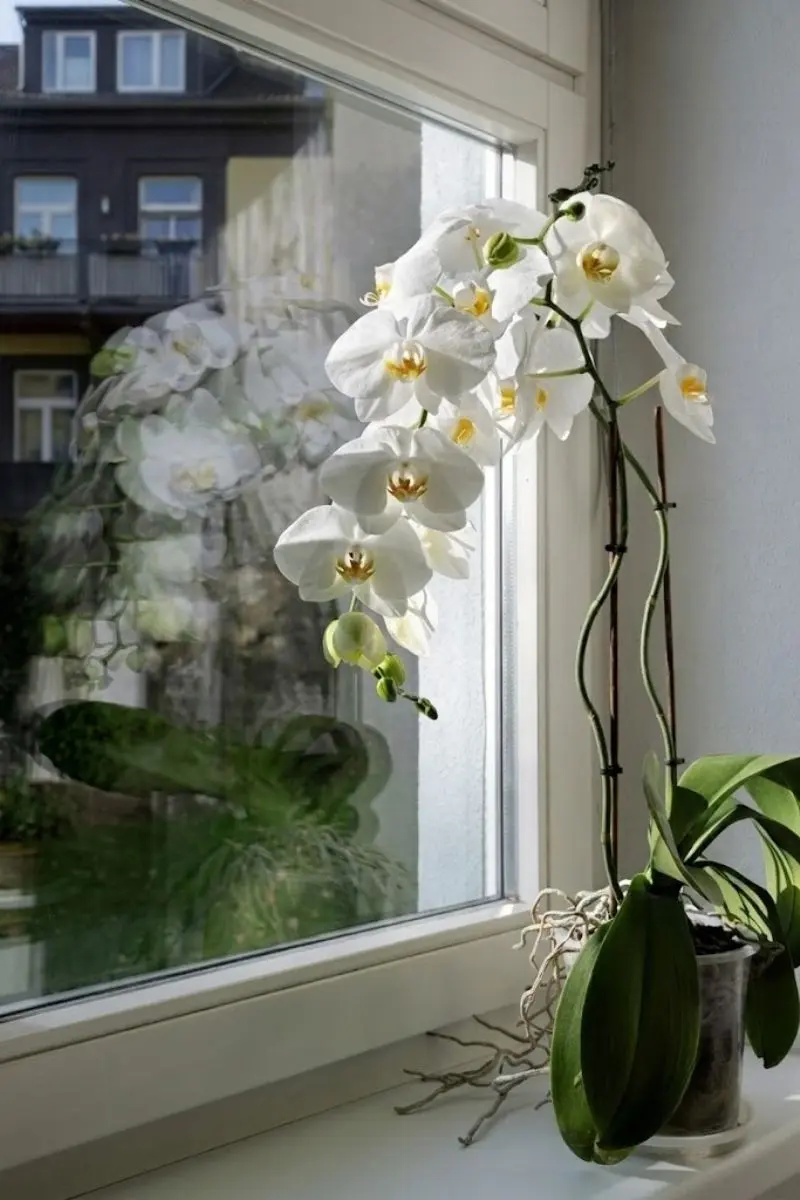
While Phalaenopsis orchids can transition outdoors in highly sheltered settings, a standard, exposed deck creates several avoidable risks for the typical home grower. Intense direct sun can easily scorch their thick leaves, while cool nights and temperature extremes can also stress the plant.
Additionally, open environments expose the crown to unpredictable rainfall; water collecting in the crown can quickly lead to crown rot.
If you cannot provide bright filtered light in a roof-covered space protected from rain, it is safest to keep your orchids inside where temperature and moisture are fully controlled.
Light: Bright filtered light • Water: Water when potting medium is nearly dry • Pets: Pet friendly • Habit: Upright bloomer
Before You Move a Houseplant Outdoors
The main things to consider before moving a houseplant outdoors are:
- Start in filtered shade: For houseplants that can spend summer outdoors, move plants gradually into brighter outdoor conditions rather than placing them directly in full sun. Protect foliage from direct afternoon rays.
- Protect it from wind: Sheltered locations prevent strong breezes from accelerating moisture loss across the foliage and potting mix.
- Watch the soil: Outdoor containers lose water rapidly compared to indoor settings. Check soil moisture frequently during heatwaves.
- Keep rain off sensitive foliage: Water sitting on leaves or collecting in the crown can lead to spotting or rot.
- Safest outdoor setup: Filtered shade or gentle morning sun in a sheltered spot protected from strong winds.
FAQs
Can I move these plants outside if the area is fully shaded?
Shade protects foliage from direct sun, but it doesn’t stop dry wind, rapid soil evaporation, or temperature spikes. Sensitive plants such as Fittonia and Calathea will still struggle in a hot, exposed outdoor location.
How should I acclimate a different houseplant before moving it outside?
For sturdier houseplants, never move them directly into open sunlight.
Start by placing them in outdoor shade for just a few hours a day, gradually increasing their time outside over several days to a couple of weeks, depending on the plant and conditions. This hardening-off process reduces the risk of shock and allows indoor foliage to adapt to stronger outdoor light.
My house gets hot in the summer. Is outside better?
Not necessarily. A hot indoor room can still be safer for sensitive plants than an exposed patio, where direct sun, wind, pests, and rapid drying add new stress.
Keeping the plant inside near a window with a sheer curtain is often a more reliable choice because the air remains still.
How do I know if a plant is suffering outside?
Look for curling leaf edges, a washed-out or bleached color, persistent wilting despite damp soil, or sudden leaf drop.
If you see these signs, move the plant to a more sheltered spot or bring it indoors until conditions improve.
Conclusion
Caring for houseplants is about matching the plant’s needs with your environment. While moving your plants outdoors is well-intentioned, the safest summer setup for these sensitive houseplants is usually the one where you can control light, moisture, wind, and temperature.
By keeping delicate foliage protected and choosing sturdier plants for your exposed outdoor spaces, you can keep both areas healthy all season.