Table of Contents
You do not need massive south-facing windows to enjoy the grounding presence of a large floor plant. Often, the corners that need greenery the most are the dimmest ones in the house — a shadowed hallway, a quiet bedroom alcove, or the far side of a living room that never quite feels finished.
Instead of forcing a sun-loving ficus to struggle through low light, it makes far more sense to choose plants naturally adapted to shaded forest floors and filtered canopies. The right large plant can soften hard architectural lines, bring movement into darker interiors, and make a room feel intentionally lived in rather than underused.
1. Parlor Palm (Chamaedorea elegans)
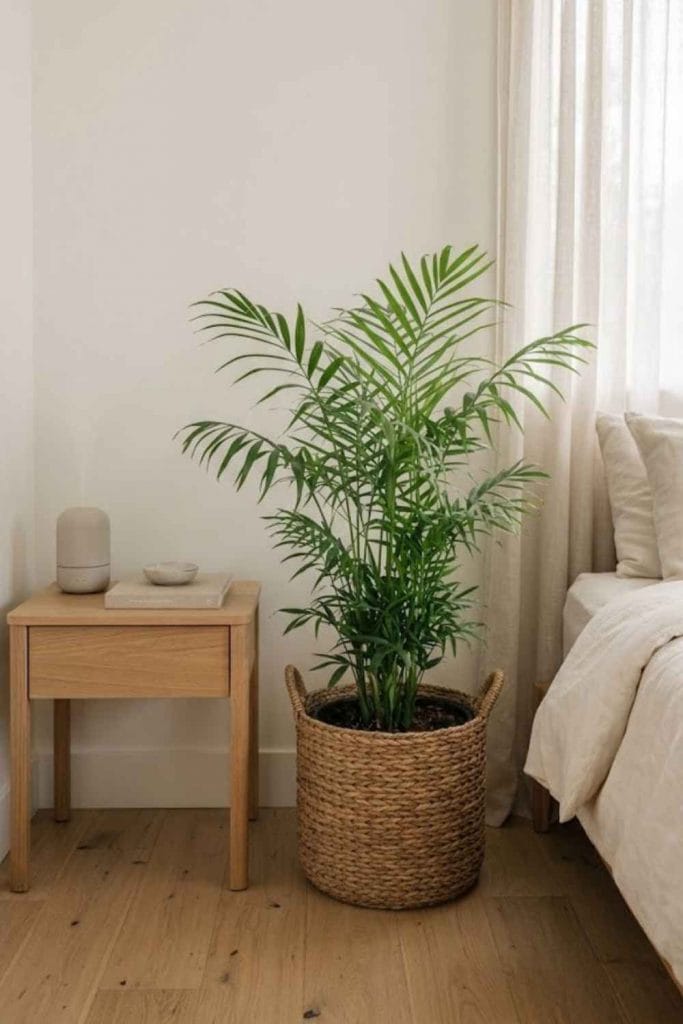
If you want to soften a stark room without introducing something visually heavy, the Parlor Palm does it beautifully. Its feathery fronds create an airy texture that works especially well in bedrooms, dining corners, or low-light apartments where brighter tropical plants would slowly deteriorate.
Because it grows gradually, it stays manageable for years instead of suddenly overwhelming the room after a single growing season.
Dry winter air is usually the only issue. If the frond tips begin crisping near a radiator or heating vent, occasional misting or a nearby humidifier usually keeps the foliage looking healthy.
Low to medium light • Consistent moisture • Pet safe • Airy fountain shape
2. Cast Iron Plant (Aspidistra elatior)
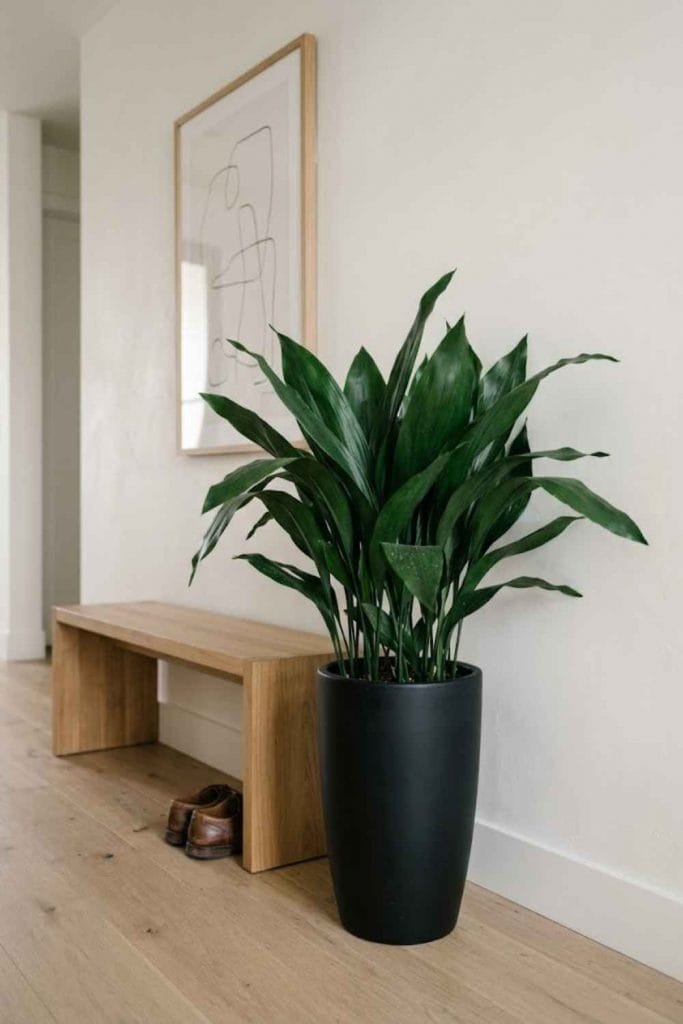
Few plants tolerate difficult interiors with the quiet confidence of a Cast Iron Plant.
It handles dark hallways, inconsistent watering, cold drafts, and neglected corners without collapsing into yellow leaves or sparse stems. The broad, deep-green foliage rises directly from the soil in dense vertical clusters, giving darker spaces a grounded, architectural presence that pairs especially well with minimalist interiors.
The tradeoff is patience. It grows extremely slowly, so a mature specimen is worth the investment if you want immediate scale.
Low light • Minimal watering • Pet safe • Dense upright clumper
3. ZZ Plant (Zamioculcas zamiifolia)
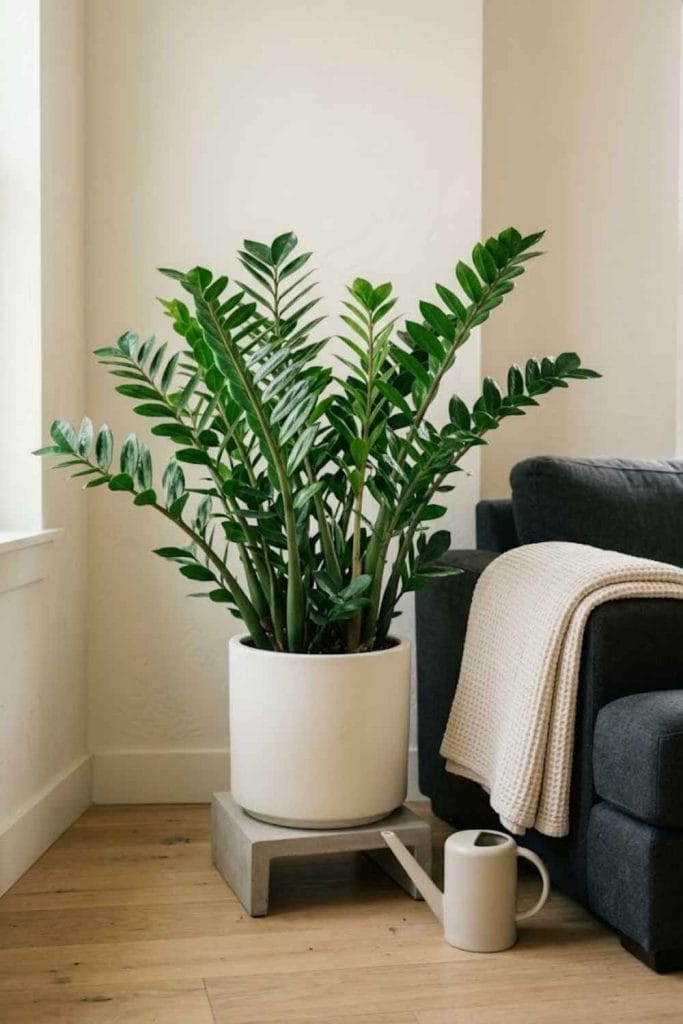
The ZZ Plant has become a favorite for low-light homes because it succeeds where many larger houseplants quietly fail.
Its thick, waxy leaves reflect even small amounts of ambient light, helping dim bedrooms or basement apartments feel less flat and visually stagnant. Underground rhizomes store water for long stretches, which means the plant remains remarkably forgiving if watering slips your mind for a week or two.
What it does not forgive is constantly wet soil. In darker rooms especially, moisture lingers far longer than most people expect, so allowing the pot to dry thoroughly matters far more than sticking to a rigid watering schedule.
Low to medium light • Infrequent watering • Pet toxic • Upright arching stems
4. Dragon Tree (Dracaena marginata)
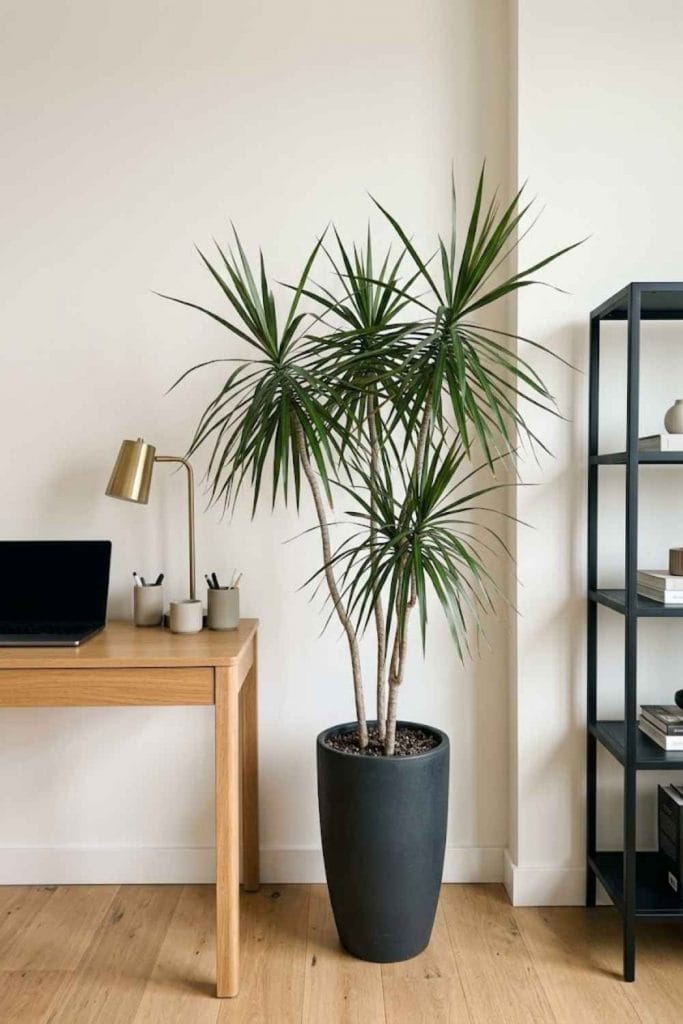
When floor space is limited but a room still needs height, the Dragon Tree is an elegant solution. Its slender canes and ribbon-like foliage create strong vertical movement beside bookshelves, office desks, or media consoles without visually crowding the room.
It adapts surprisingly well to lower light, though mature plants naturally shed their bottom leaves over time as the trunk elongates upward.
Low indirect light • Low watering • Pet toxic • Tall slender canes
⚠️ Caution: Homes with curious pets may need to think about placement more carefully. Cats, in particular, tend to treat the thin leaves like dangling toys, and the foliage can irritate their stomachs if chewed.
5. Kentia Palm (Howea forsteriana)
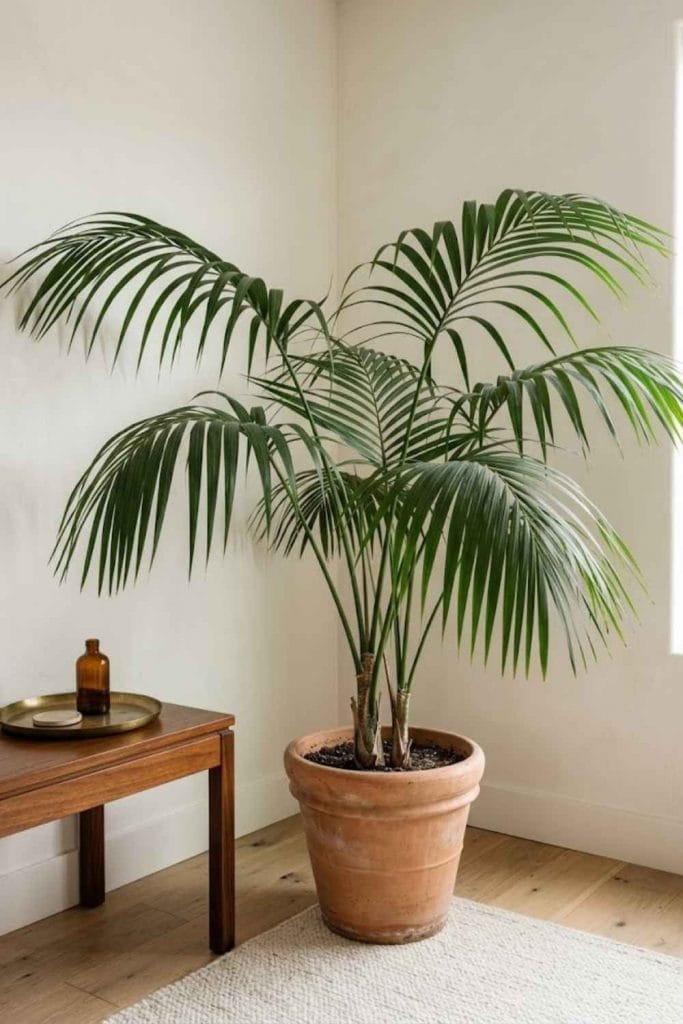
The Kentia Palm brings a calm, understated elegance that instantly makes low-light living rooms feel more refined. Its deep green fronds arch outward gracefully, filling empty corners without becoming visually dense or overpowering.
Unlike fussier palms that decline the moment humidity drops, Kentias remain impressively stable indoors and tolerate dimmer conditions without turning sparse or brittle.
The only real drawback is cost. Large specimens take growers years to produce, which makes them more of a long-term design purchase than an impulse buy.
Low to medium light • Moderate watering • Pet safe • Wide arching fronds
6. Snake Plant (Sansevieria trifasciata)
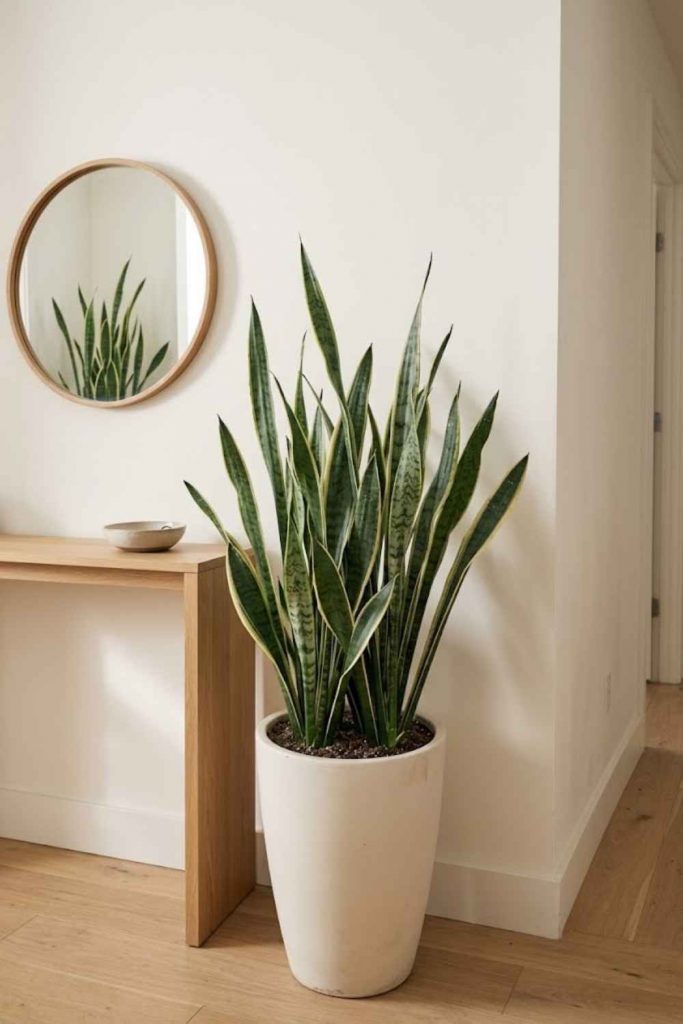
The rigid, upright leaves of a Snake Plant bring instant structure to dark rooms where wider plants would feel bulky or intrusive. It is especially useful in apartments, narrow hallways, or corners where every square foot matters.
It also tolerates neglect exceptionally well, which explains why it survives in so many offices and low-light homes for years at a time.
The biggest mistake people make is watering it too frequently simply because the room looks dry. In darker interiors, the soil stays damp much longer than expected, and overwatering is one of the few things that will genuinely damage the plant.
Low light • Minimal watering • Pet toxic • Strict vertical blades
7. Corn Plant (Dracaena fragrans)
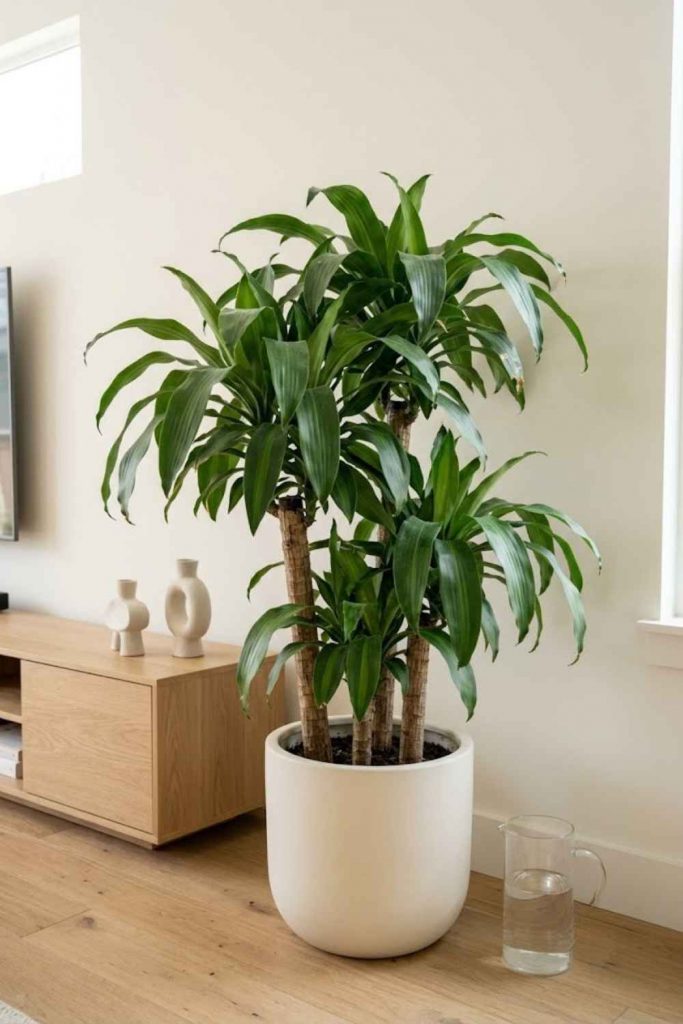
With its thick woody stalks and broad arching foliage, the Corn Plant behaves almost like a compact indoor tree. It helps open layouts feel softer and more layered while still maintaining a clean, organized silhouette.
It is also far less demanding than its tropical appearance suggests. As long as the roots are not sitting in soggy soil, it adapts easily to changing seasonal light and typical indoor conditions.
Brown leaf tips are often tied to mineral-heavy tap water rather than major health problems. Many owners notice cleaner foliage after switching to filtered water or allowing tap water to sit overnight before using it.
Low indirect light • Moderate watering • Pet toxic • Thick tree-like trunk
8. Swiss Cheese Plant (Monstera deliciosa)
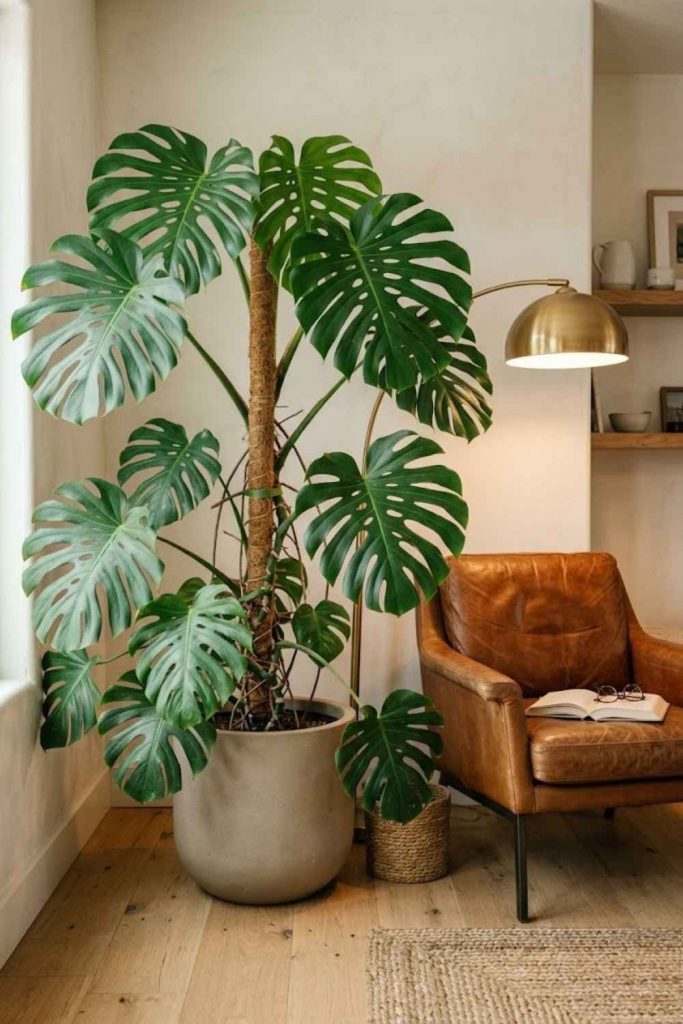
Monsteras naturally prefer brighter rooms, but mature plants can still adapt surprisingly well to lower-light interiors if expectations shift slightly.
In dimmer conditions, growth slows and the dramatic leaf fenestrations become less pronounced. The plant develops a moodier, deeper-green appearance instead — less jungle-like, perhaps, but often more relaxed and architectural inside darker rooms.
A sturdy moss pole helps tremendously here. Without support, the stems eventually sprawl sideways and begin occupying far more floor space than intended.
Because lower light slows evaporation, the soil also stays wet longer. Watering too often causes far more problems than underwatering.
Medium to low light • Moderate watering • Pet toxic • Climbing vining habit
9. Peace Lily (Spathiphyllum)
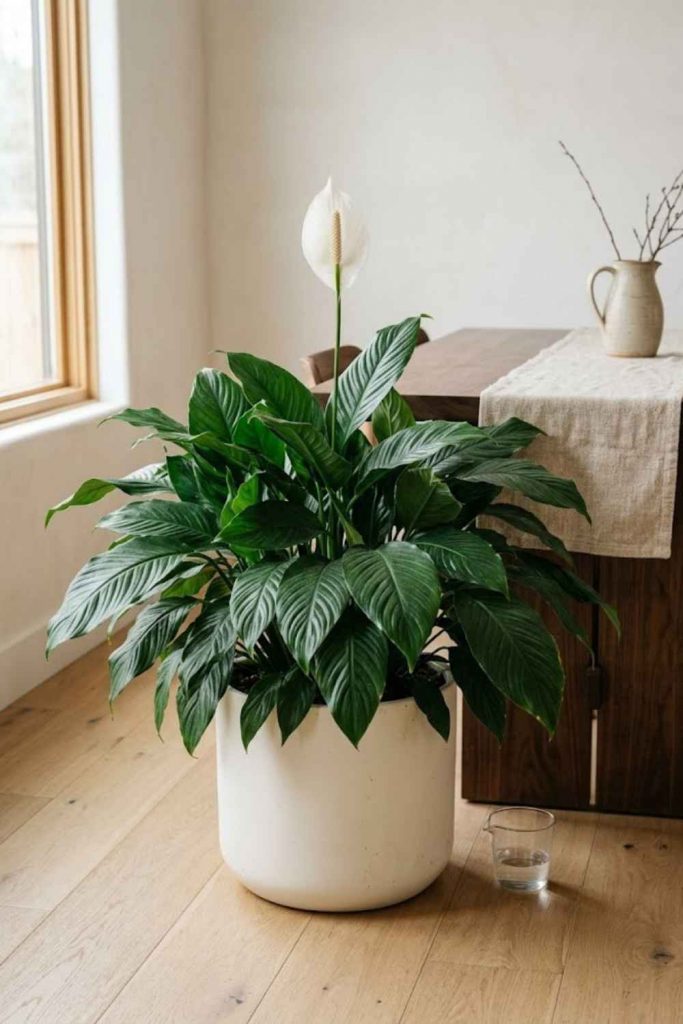
A mature Peace Lily has a way of making dim corners feel instantly calmer. The broad, glossy leaves arch outward in soft layers that contrast beautifully against sharp furniture lines or darker wall colors.
It is also one of the few low-light plants that will still occasionally reward you with elegant white blooms even away from bright windows.
Unlike tougher succulent-style plants, however, Peace Lilies prefer consistently moist soil. They communicate thirst dramatically — the entire plant wilts almost overnight — but recover just as quickly after a deep watering.
Low light • Consistent moisture • Pet toxic • Full mounding form
Quick Plant Picker
- Very dark rooms: Cast Iron Plant • Snake Plant
- Best for beginners: ZZ Plant • Snake Plant
- Pet-friendly homes: Parlor Palm • Kentia Palm • Cast Iron Plant
- Narrow spaces: Dragon Tree • Snake Plant
- Busy households: ZZ Plant • Corn Plant
- Bold statement plants: Kentia Palm • Swiss Cheese Plant
- Soft, calming spaces: Peace Lily • Parlor Palm
Conclusion
Large indoor plants do not need perfect lighting conditions to make a room feel alive. In many homes, the darker corners are actually where greenery creates the biggest visual shift, adding softness, scale, and movement to spaces that otherwise feel static.
The key is choosing plants that naturally align with the way your home already functions. A variety that genuinely tolerates dim light and inconsistent routines will always look more beautiful — and feel less stressful — than one constantly struggling against its environment.