Table of Contents
The easiest houseplants to propagate all share one trait: they naturally produce new roots from stem nodes or leaves with very little intervention.
While expanding an indoor garden often feels like a technical challenge, several common species naturally root from stem or leaf cuttings in normal household conditions.
Success comes down to making the cut in the right place and choosing a propagation method that matches the plant.
1. Golden Pothos (Epipremnum aureum)
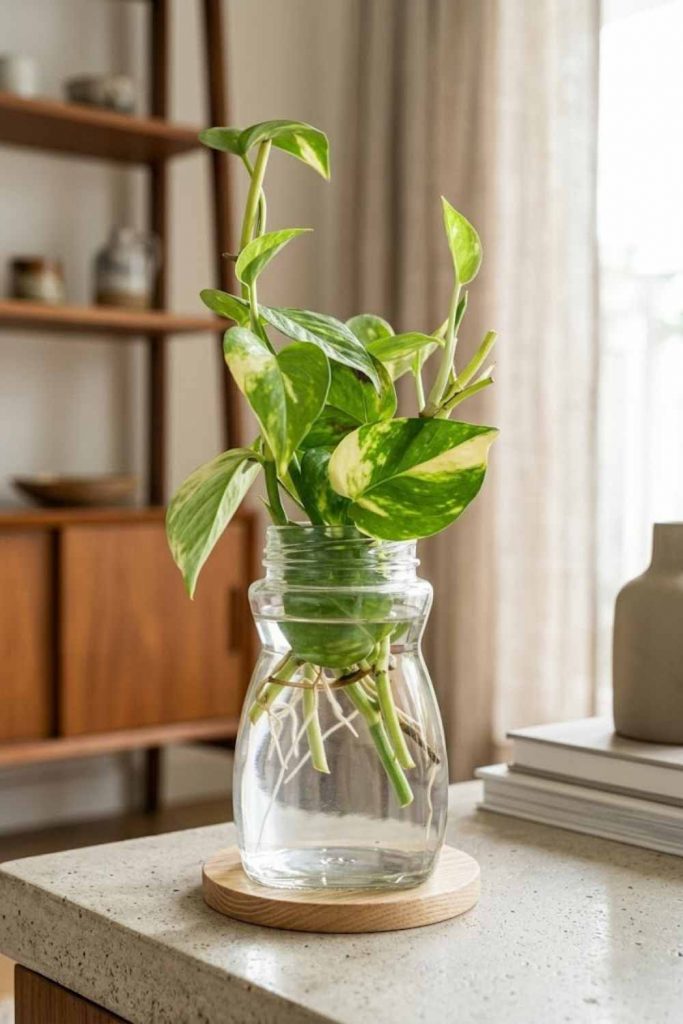
Pothos is one of the best choices for first-time propagation because nearly every healthy stem node roots readily.
To start, locate a trailing vine, snip right below a node, and place the stem in a glass of water where white roots will begin to emerge from the node.
Just don’t leave it in water for too long; water-grown roots can be more sensitive when moved to soil later, so transition the plant to a potting mix as soon as a healthy cluster of roots forms.
Light: Bright indirect • Water: Minimal to moderate • Safety: Pet toxic • Habit: Trailing grower
2. Heartleaf Philodendron (Philodendron hederaceum)
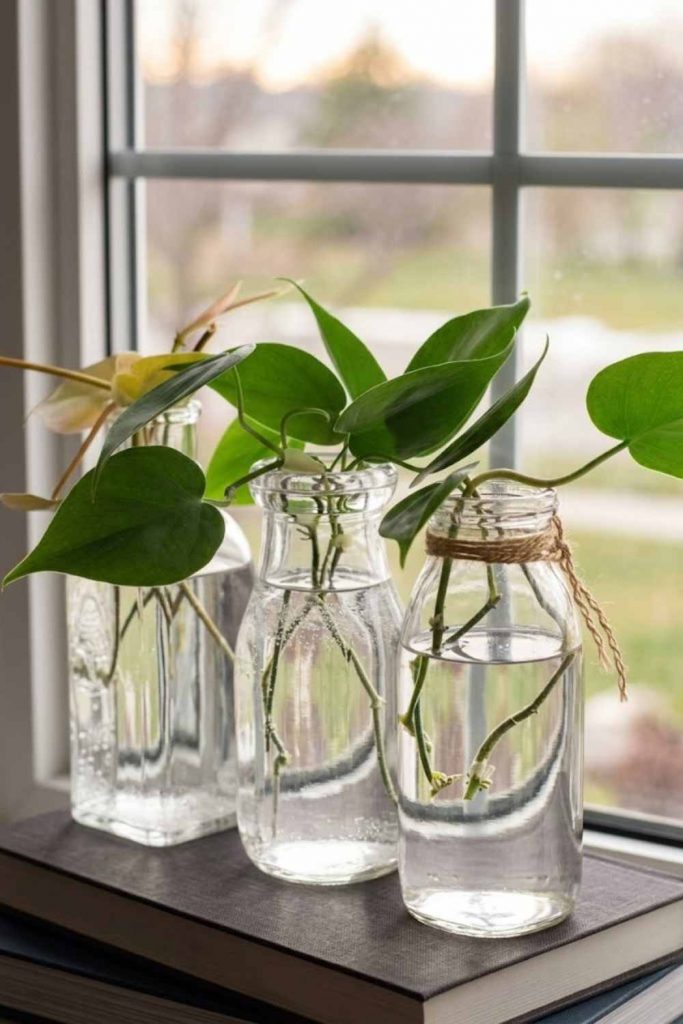
This plant features matte, heart-shaped leaves on very flexible vines.
If your specimen gets too long and thin, cut a leggy stem into several short pieces with nodes and plant them together to quickly create a fuller container.
The initial rooting phase requires a bit of environmental protection; keeping the propagation jar away from cold winter window drafts prevents the stems from rotting before they can establish.
Light: Medium to bright indirect • Water: Moderate • Safety: Pet toxic • Habit: Trailing grower
3. Tradescantia Zebrina (Inch Plant)
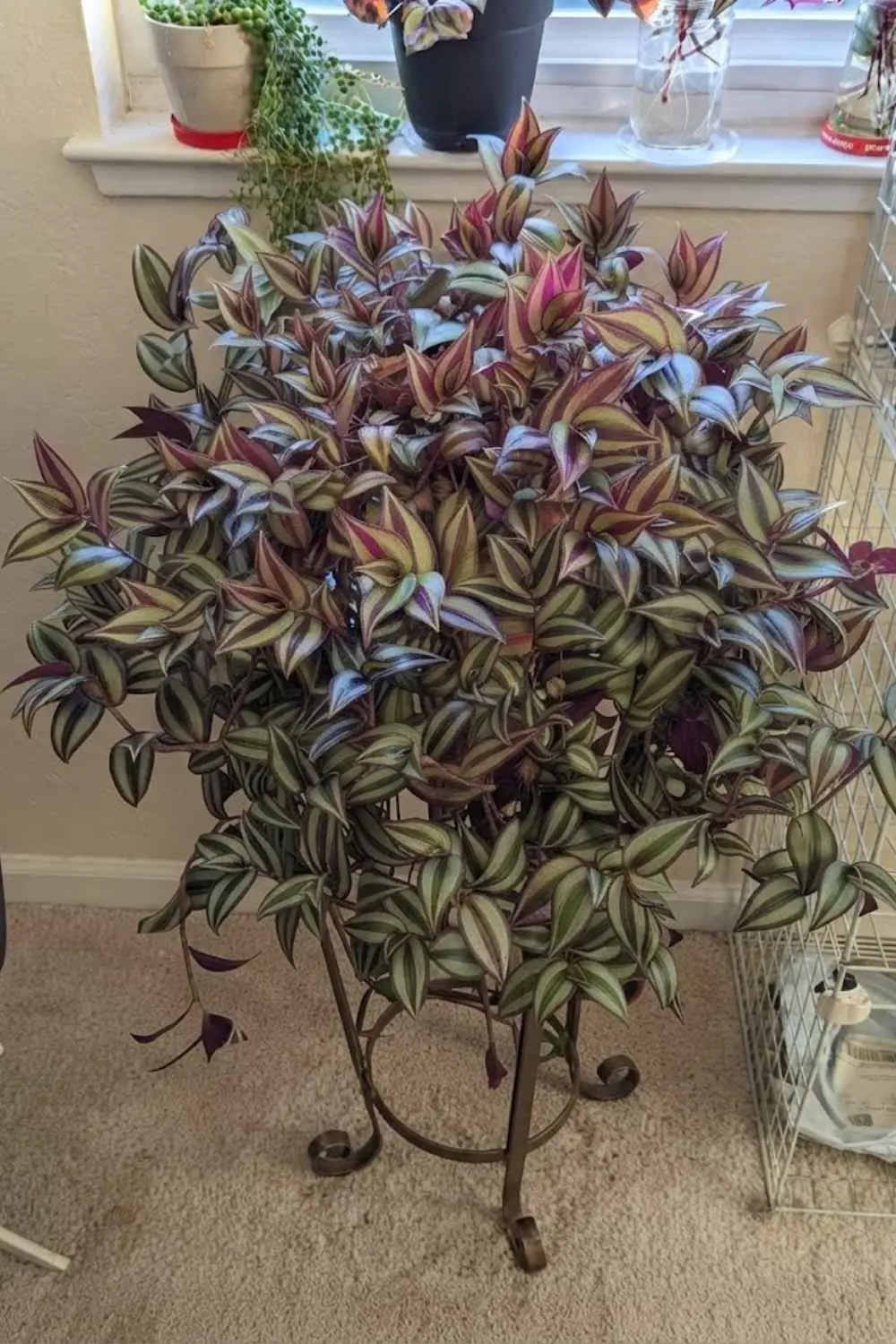
Credit: Reddit @mountain__pew
This purple-striped vine roots readily in soil, so you can skip the water phase entirely if you want a faster setup.
Cut a healthy stem, push it straight into damp potting dirt, and firm it in place.
The primary tradeoff is that the juicy stems are physically brittle and snap easily when handled. Because the base can become bare as the plant ages, taking fresh cuttings can help maintain a full appearance.
Light: Bright indirect • Water: Moderate • Safety: Pet toxic • Habit: Trailing or spreading grower
4. Jade Plant (Crassula ovata)
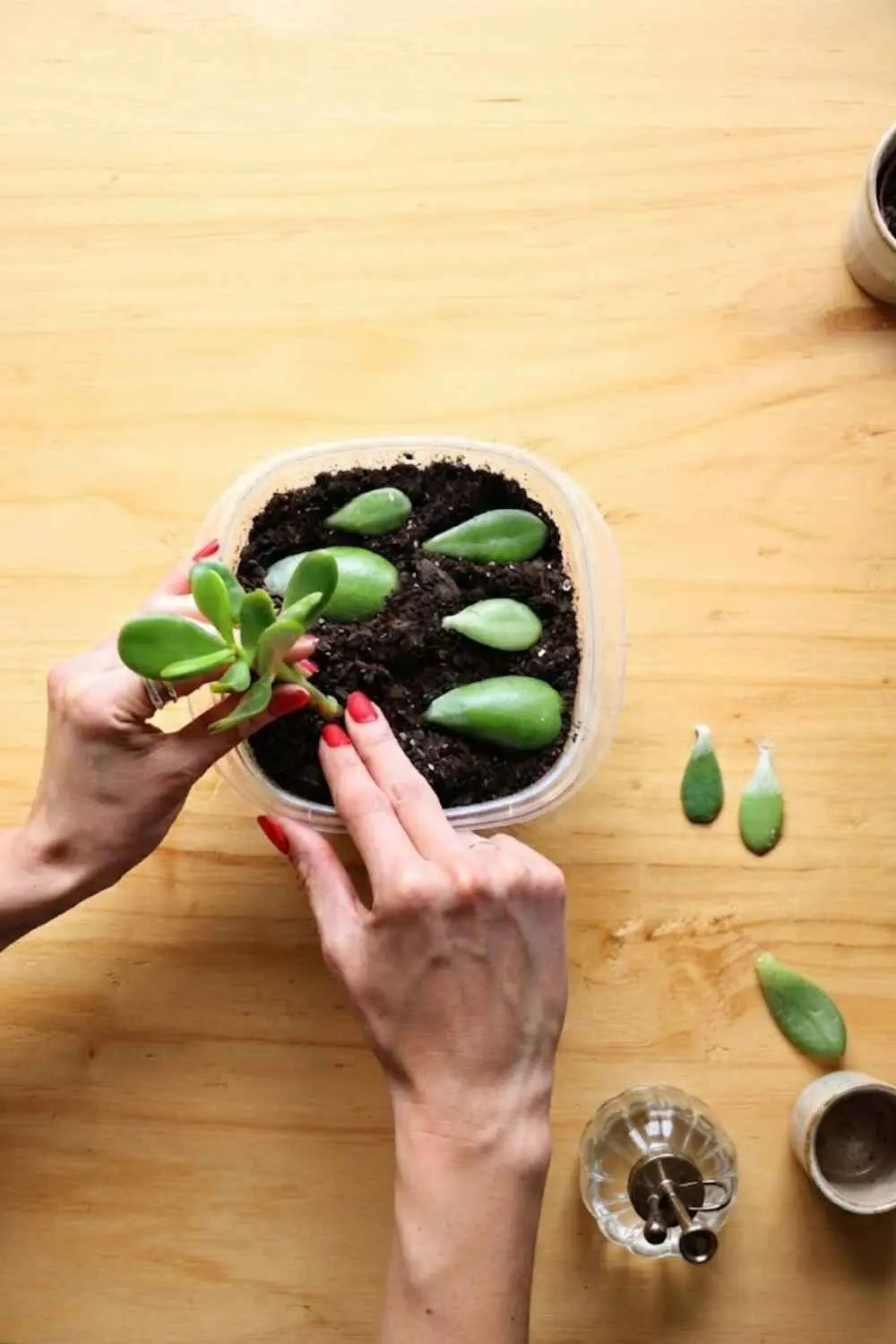
For a low-maintenance succulent option, the Jade Plant can sprout a new start from a branch cutting or a leaf laid flat on dry soil.
The secret to success is allowing the cut end to dry until it forms a firm callus.
If you skip this step and put a fresh, wet cutting directly into damp soil, the open wound can rot easily.
Light: Bright direct to indirect • Water: Low • Safety: Pet toxic • Habit: Upright, bushy grower
5. Monstera Deliciosa (Swiss Cheese Plant)
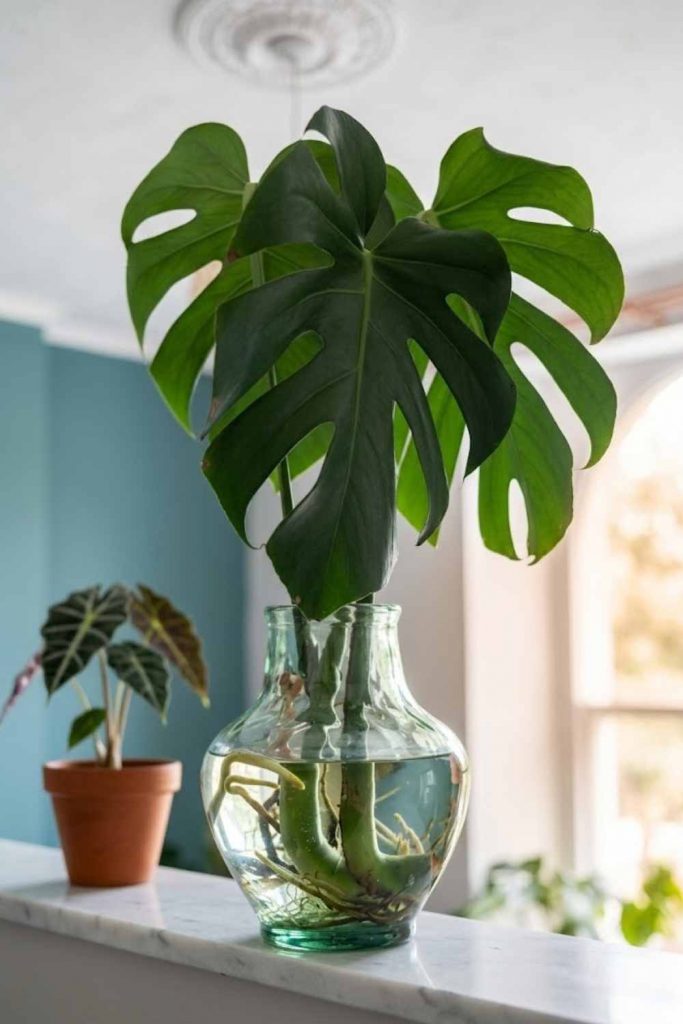
Your cutting must include a thick stem joint (the node); an aerial root is helpful but not essential. A leaf-only cutting may stay green in water for months, but without a node, it cannot produce new growth.
This is the variety to choose if you want a large-scale indoor plant from a single cutting.
Large cuttings can be top-heavy, so use a stable container while rooting.
Light: Bright indirect • Water: Moderate • Safety: Pet toxic • Habit: Climbing or spreading grower
6. Coleus (Coleus scutellarioides)
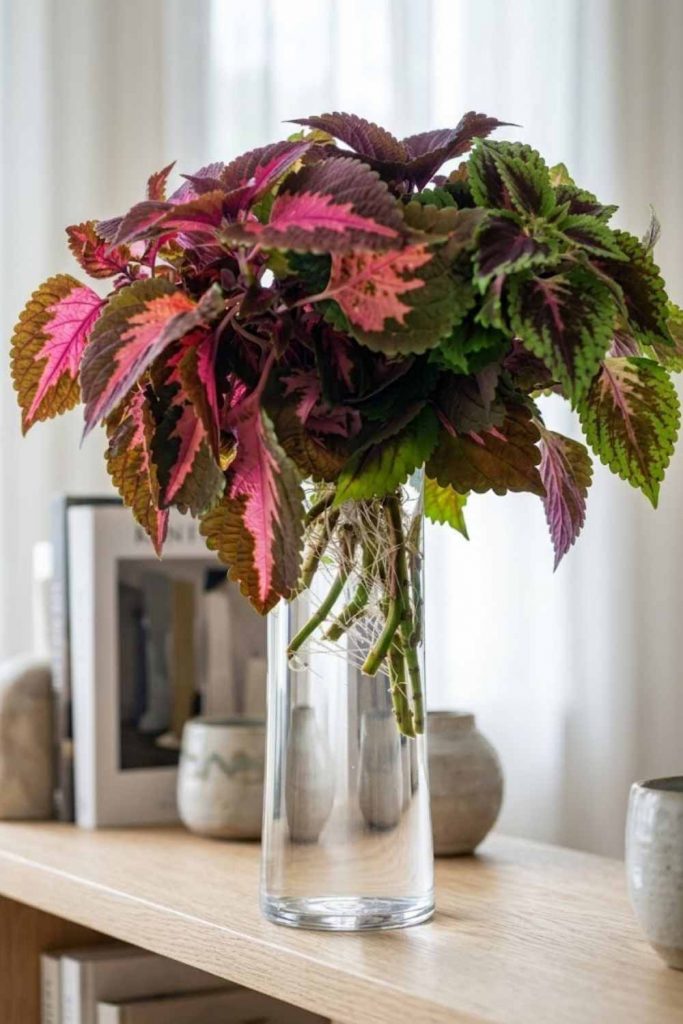
Pinching back your Coleus to keep it compact indoors serves a dual purpose: it shapes the parent plant and provides a constant supply of new propagation material that roots readily in water.
This plant adds bold pink and lime tones to your collection.
The biggest mistake here is placing it too far from a bright window, as it stretches out and becomes weak and leggy without strong light.
Light: Bright indirect • Water: Consistent moderate • Safety: Toxic to pets • Habit: Bushy, upright grower
7. Arrowhead Plant (Syngonium podophyllum)
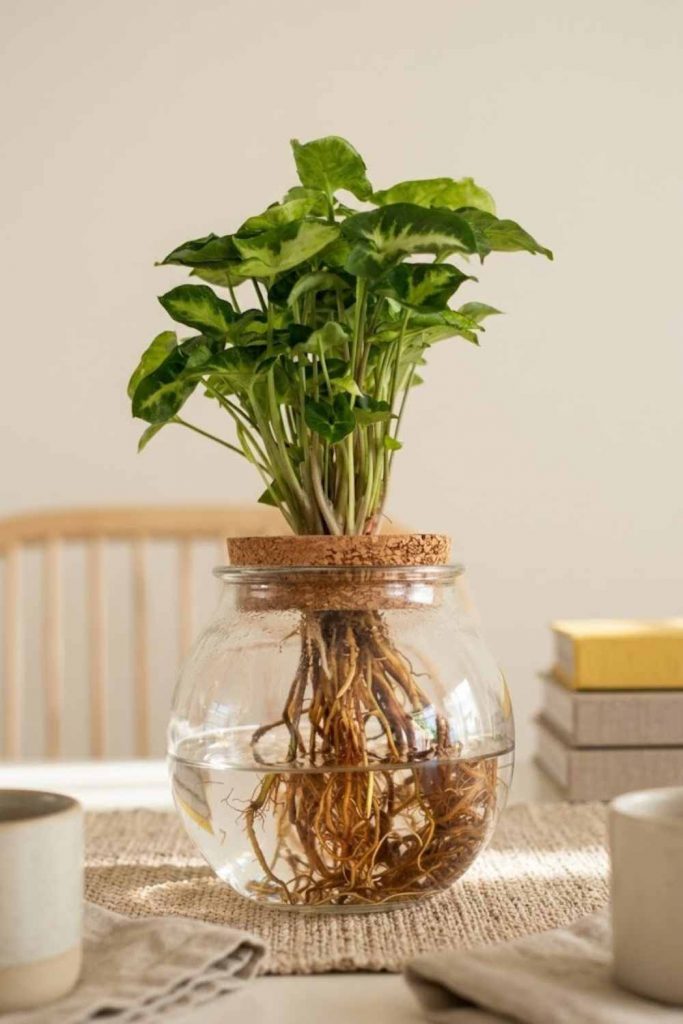
This is one of the easiest climbing houseplants to multiply while keeping a compact, bushy pot.
Look for the thick, knuckle-like joints along the climbing stems and snip right below them to root easily in water.
As mature vines run, the new leaves alter appearance, becoming deeply split. If you prefer the neat, youthful look, continuously take cuttings from these running vines and plant them back into the base.
Light: Medium to bright indirect • Water: Moderate • Safety: Pet toxic • Habit: Climbing or trailing grower
8. Swedish Ivy (Plectranthus verticillatus)
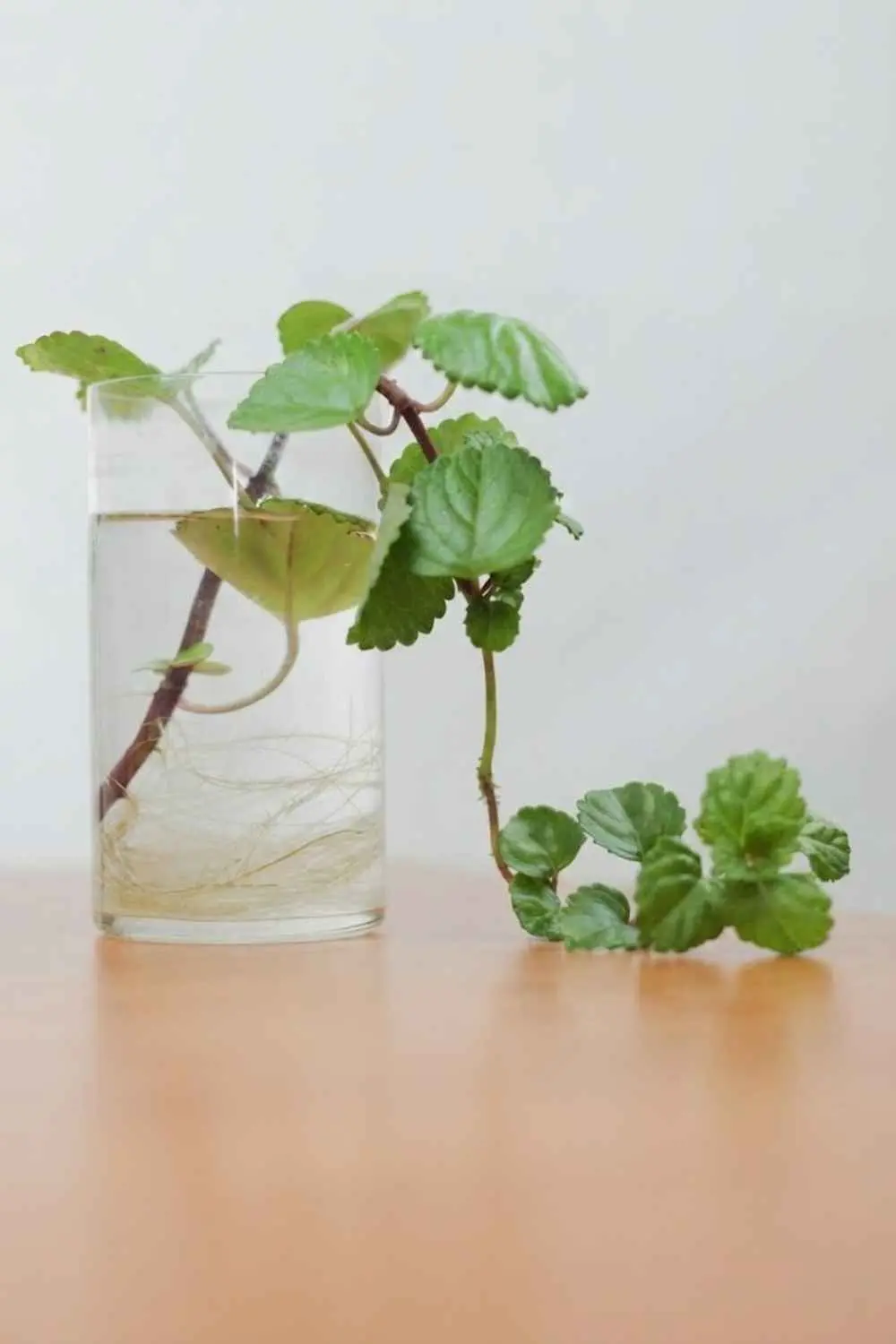
Swedish Ivy roots readily in water and responds well to pruning; taking cuttings encourages a fuller parent plant over time.
It is an ideal pick for hanging baskets where you want a cascading foliage effect.
The critical danger here is a lack of drought tolerance. If you let the plant dry out completely, the soft stems will wilt flat against the pot and quickly drop their lower leaves, leaving a bare base.
Light: Bright indirect • Water: Consistent moderate • Safety: Generally considered pet safe • Habit: Trailing grower
9. Wax Plant (Hoya carnosa)
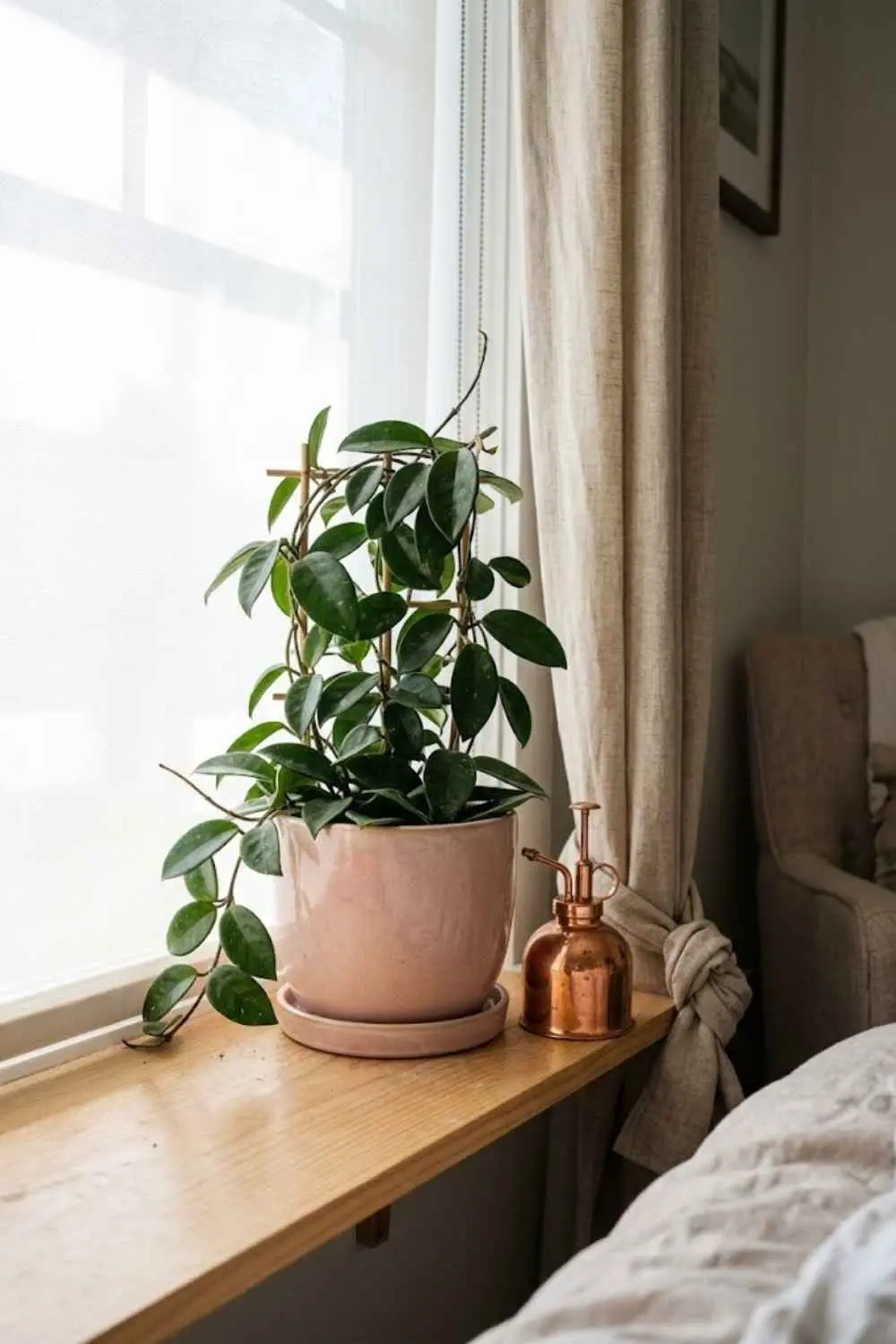
If pet safety is a primary concern, this thick, waxy vine is one of the most reliable options because its non-toxic status is fully verified by the ASPCA.
Short stem cuttings with two or three leaves root effectively when kept warm and moist.
The big danger here is overwatering; Hoyas are highly prone to root rot, so skip standard potting soil and use an airy, chunky mix like orchid bark and perlite.
Light: Bright indirect • Water: Low to moderate • Safety: Pet safe • Habit: Trailing or climbing grower
10. Snake Plant (Dracaena trifasciata)
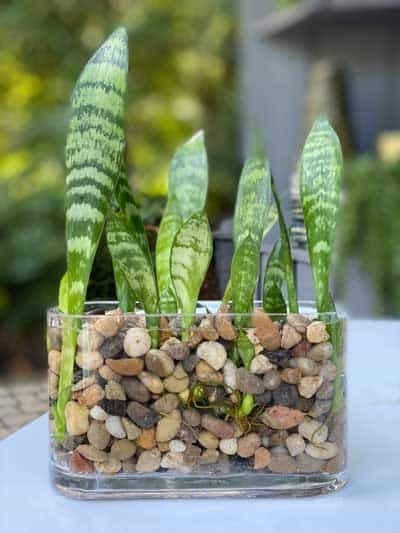
The Snake Plant is an excellent choice if you want an indestructible, drought-tolerant plant and do not mind a slow project.
You can cut a single long leaf horizontally into three-inch sections and insert them into water or sandy soil. Roots may appear within several weeks, but producing new shoots often takes several months.
You must plant the pieces right-side up or they will rot without rooting. Also, leaf cuttings from yellow-edged cultivars generally lose their variegation and produce solid-green plants.
Light: Low to bright indirect • Water: Very low • Safety: Pet toxic • Habit: Vertical, upright grower
Quick Plant Picker
Best for beginners: Golden Pothos (highly resilient, making initial failure difficult).
Fastest rooting: Tradescantia Zebrina (roots readily directly in damp soil, skipping the water phase).
Best for bold foliage: Monstera Deliciosa (classic choice for high visual impact).
Best for forgetful waterers: Jade Plant and Snake Plant (both require drying out completely between care steps).
FAQs
Should I root my cuttings in water or soil?
Water is generally easier for leafy tropical plants like Pothos because it allows you to monitor root progress directly.
However, succulent varieties like Jade must dry out and callus first, and plants like Tradescantia do well when tucked straight into damp soil, eliminating the transition step entirely.
When are roots mature enough for potting soil?
Wait until the cutting has several roots about 1–2 inches long before potting it up.
Planting too early makes it difficult for the cutting to anchor itself and absorb nutrients from the soil efficiently.
What causes a water cutting to turn soft and discolored?
Soft or discolored tissue is often a sign of rot.
Cut away the affected portion back to healthy tissue, clean the container thoroughly, and refresh the water regularly with clean, room-temperature water.
Conclusion
Starting with forgiving plants like Pothos or Jade makes propagation approachable for beginners.
Once you learn where to cut and how each plant roots, a single healthy houseplant can provide plenty of new starts to fill your home or share with friends.